
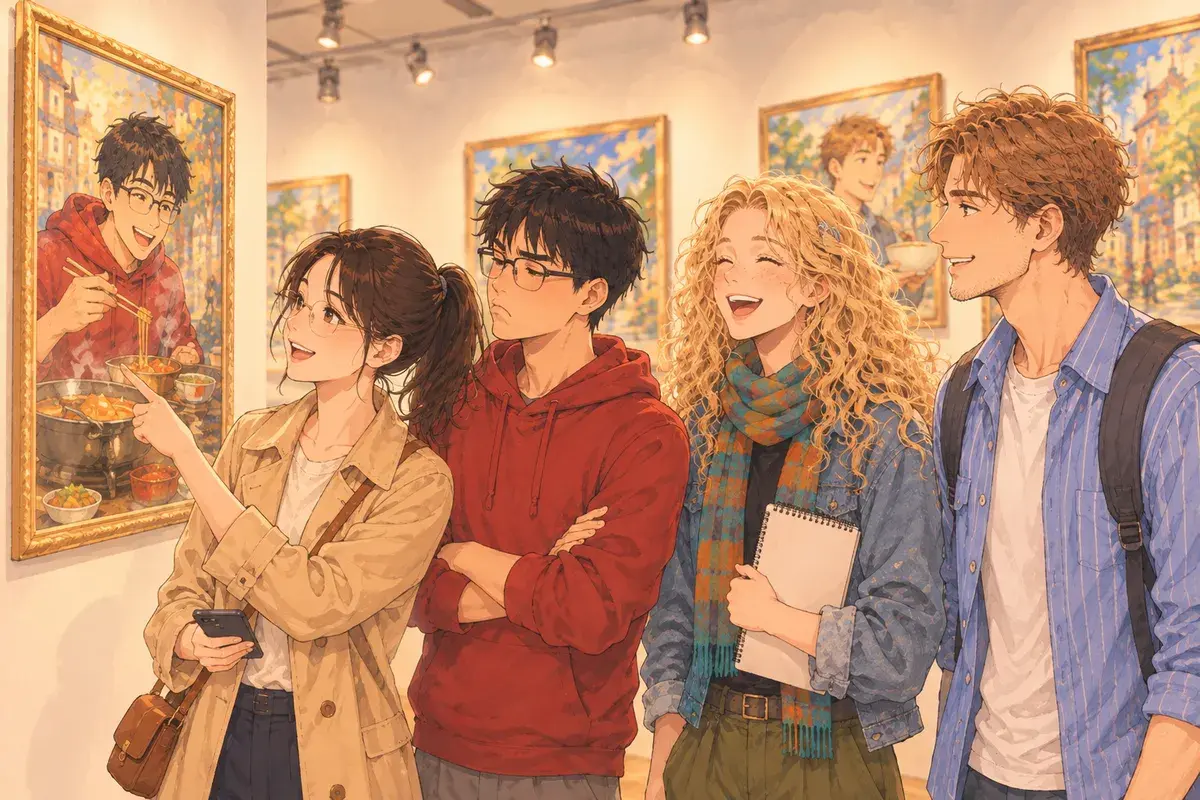
Chinese dialogue with translation · B1 · 15 lines
我生你的气了 I'm mad at you!
Comic · 15 panels
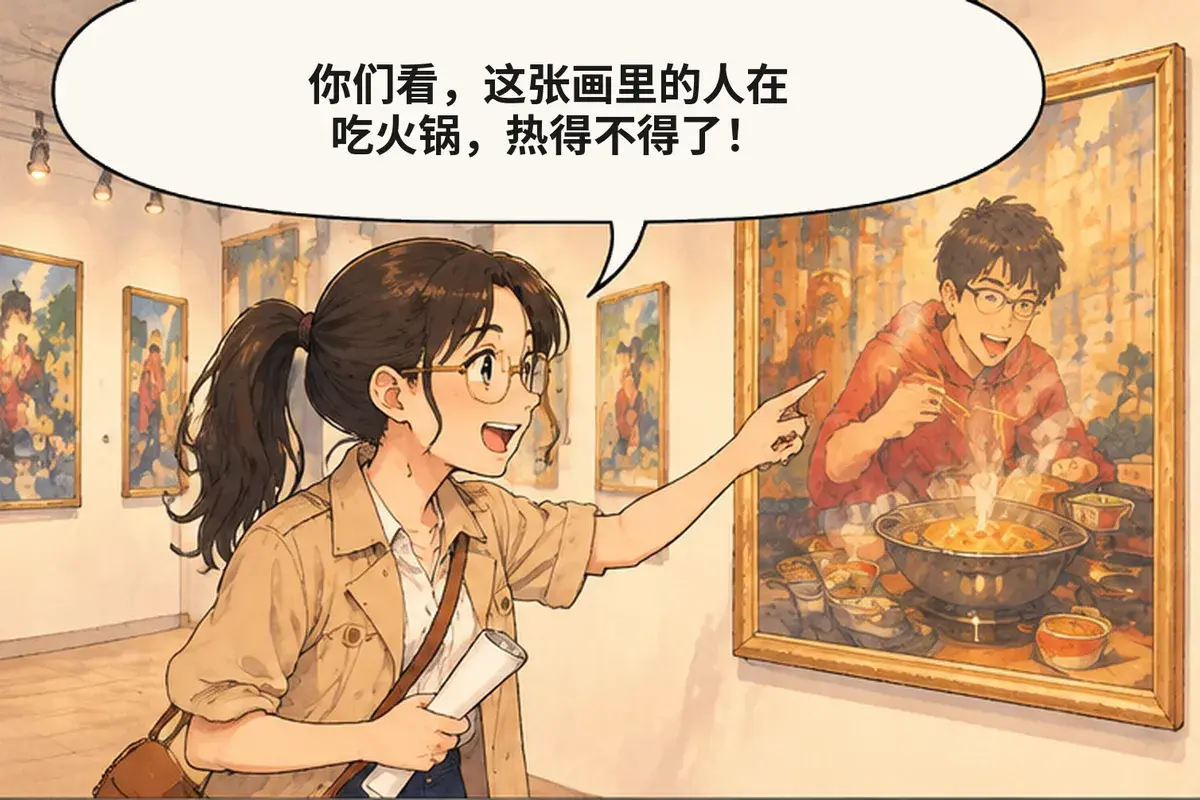
- 晓雨
你们看,这张画里的人在吃火锅,热得不得了!
Look, the person in this painting is eating hot pot and is so hot they can't stand it! (to several people)
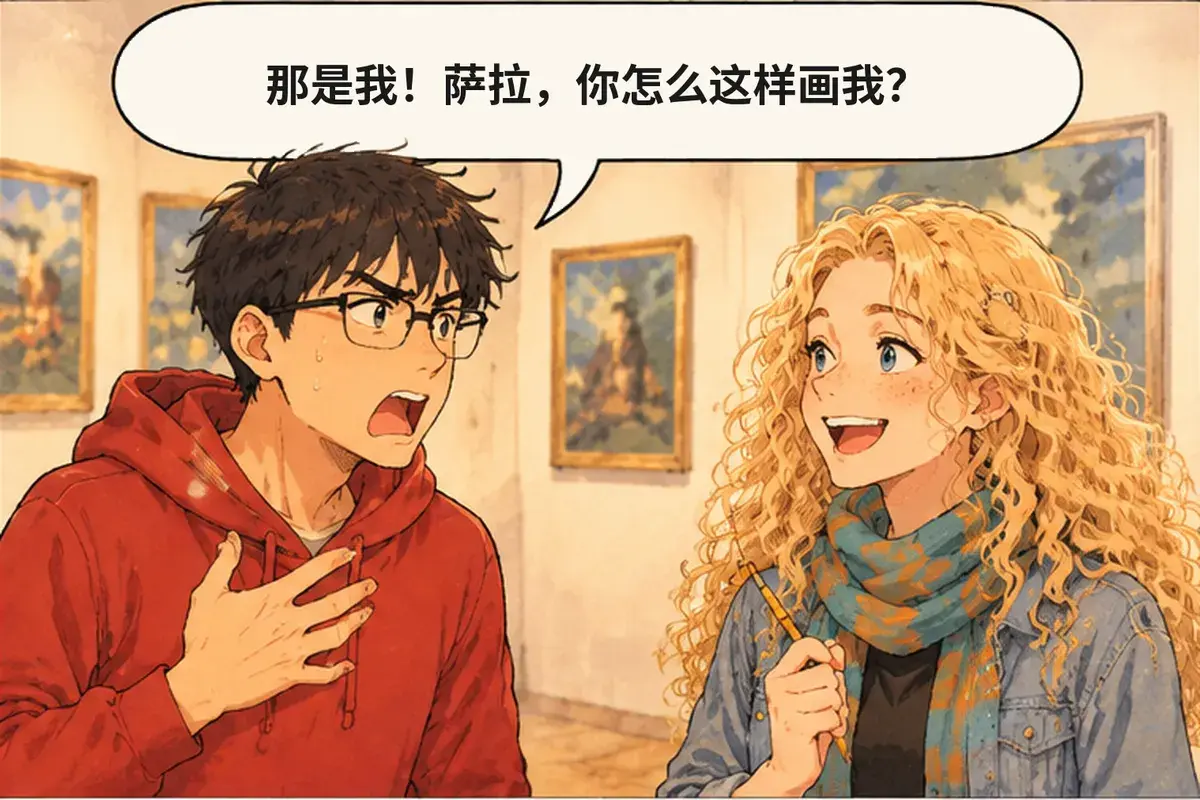
- 张磊
那是我!萨拉,你怎么这样画我?
That's me! Sara, why did you paint me like this?
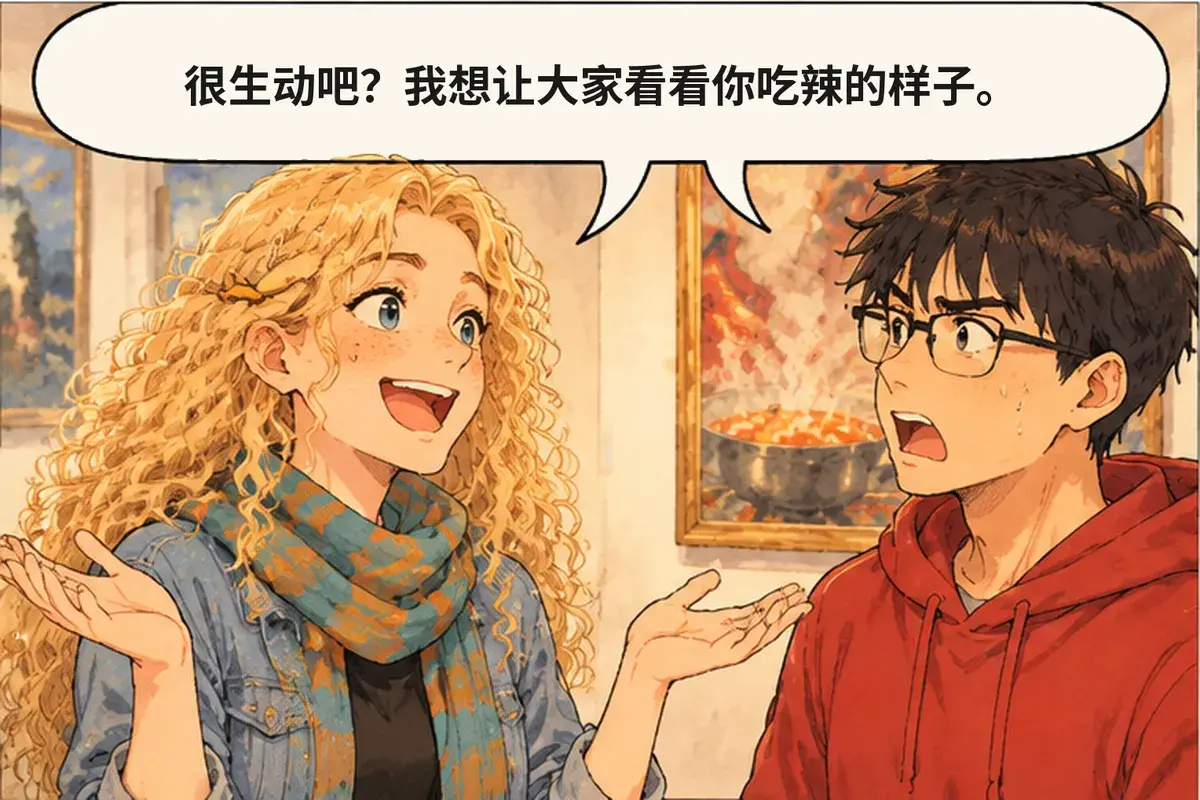
- 萨拉
很生动吧?我想让大家看看你吃辣的样子。
Pretty lively, right? I wanted everyone to see what you look like eating spicy food.
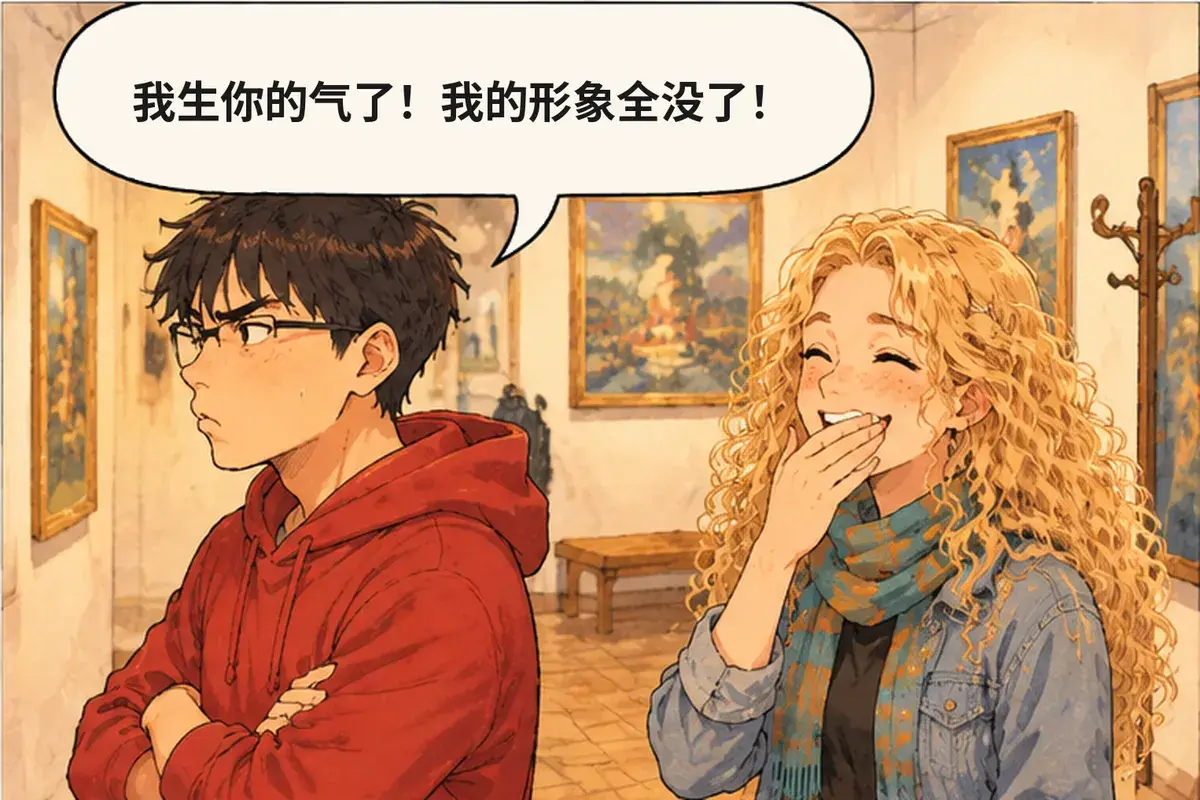
- 张磊
我生你的气了!我的形象全没了!
I'm mad at you! My image is totally gone!
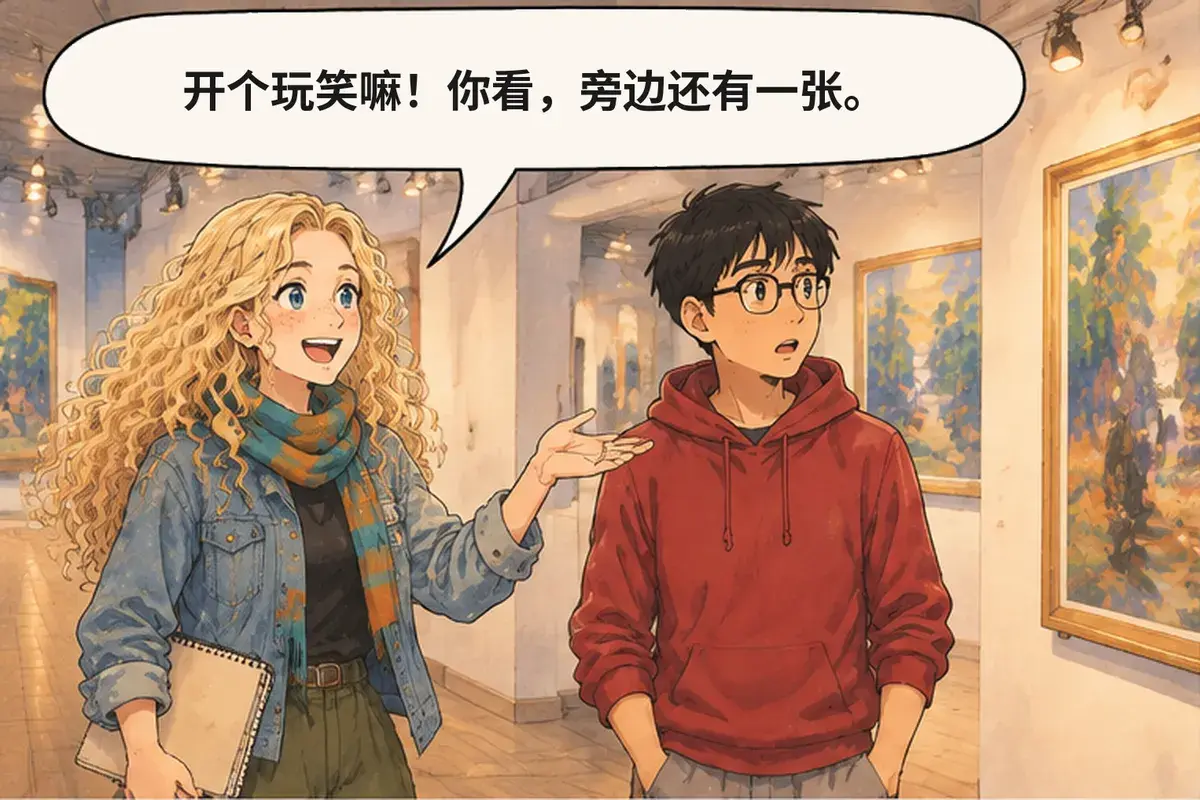
- 萨拉
开个玩笑嘛!你看,旁边还有一张。
Come on, it's just a joke! Look, there's another one next to it.
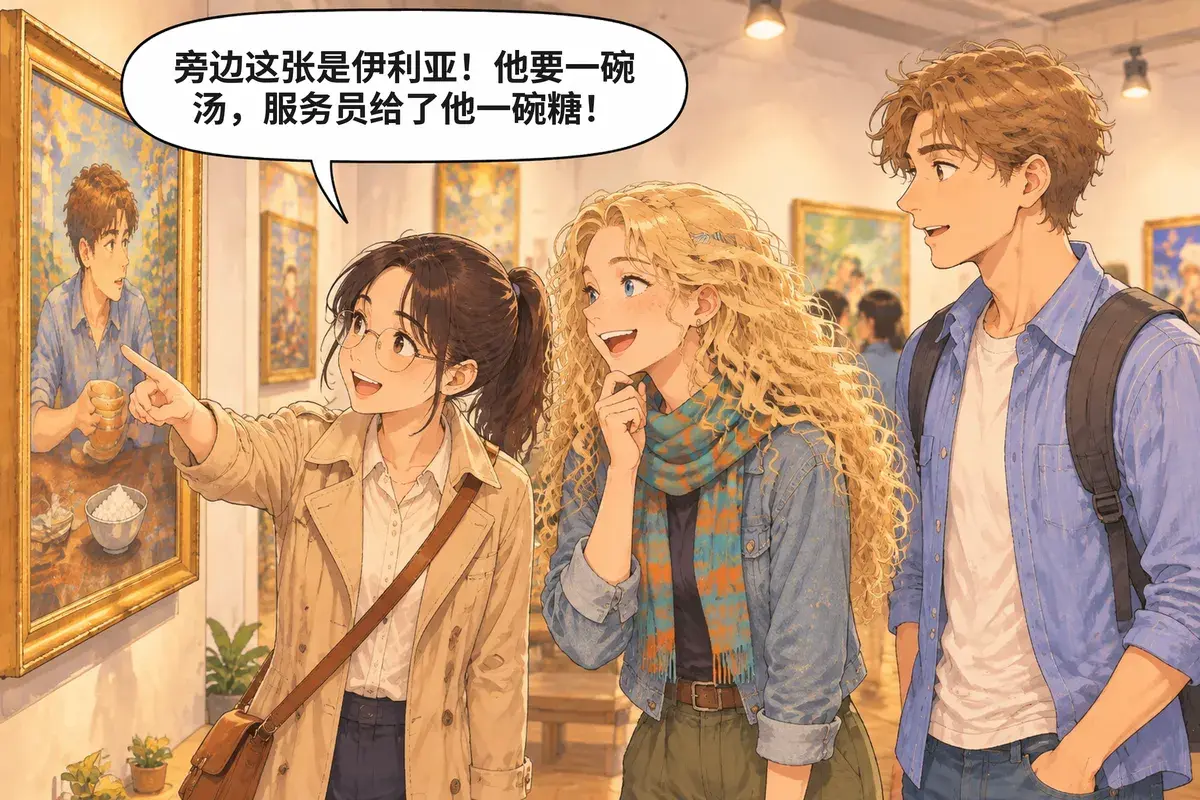
- 晓雨
旁边这张是伊利亚!他要一碗汤,服务员给了他一碗糖!
The one next to it is Ilya! He asks for a bowl of soup, and the waiter gives him a bowl of sugar!
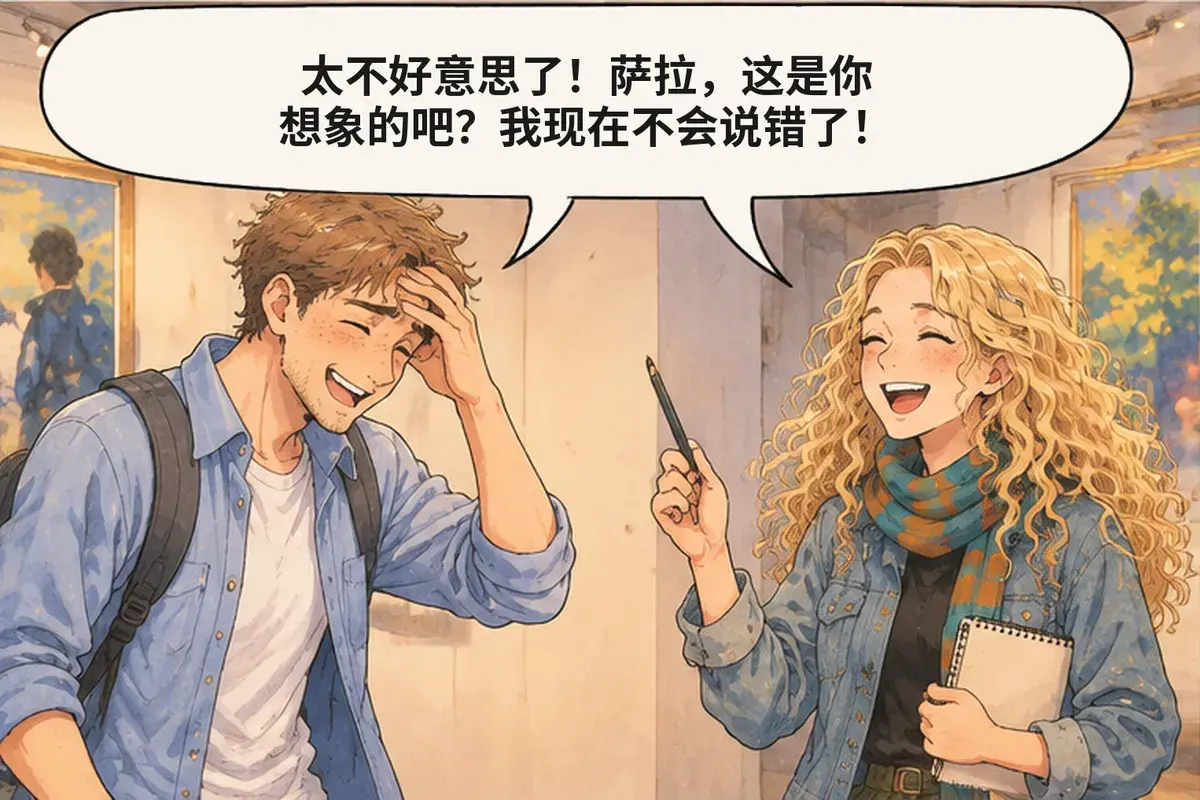
- 伊利亚
太不好意思了!萨拉,这是你想象的吧?我现在不会说错了!
How embarrassing! Sara, you made this up, right? I don't make that mistake anymore!
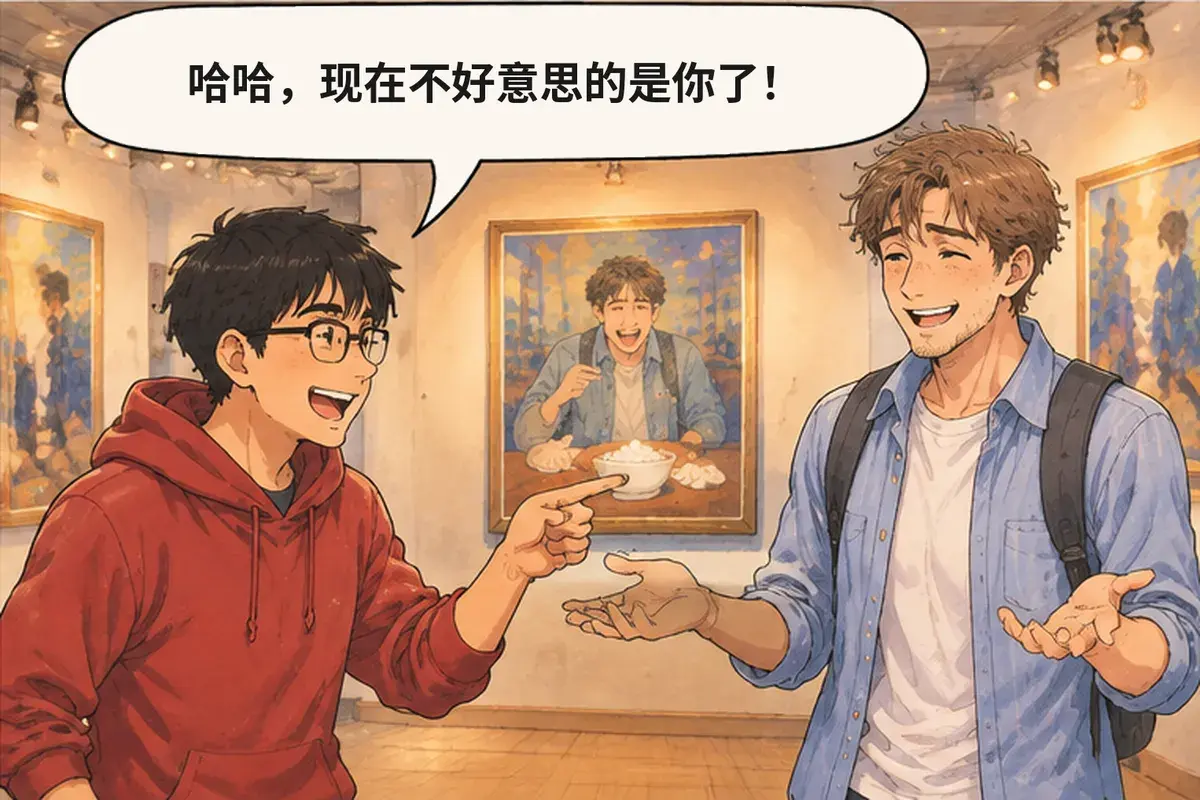
- 张磊
哈哈,现在不好意思的是你了!
Ha-ha, now you're the one who's embarrassed!
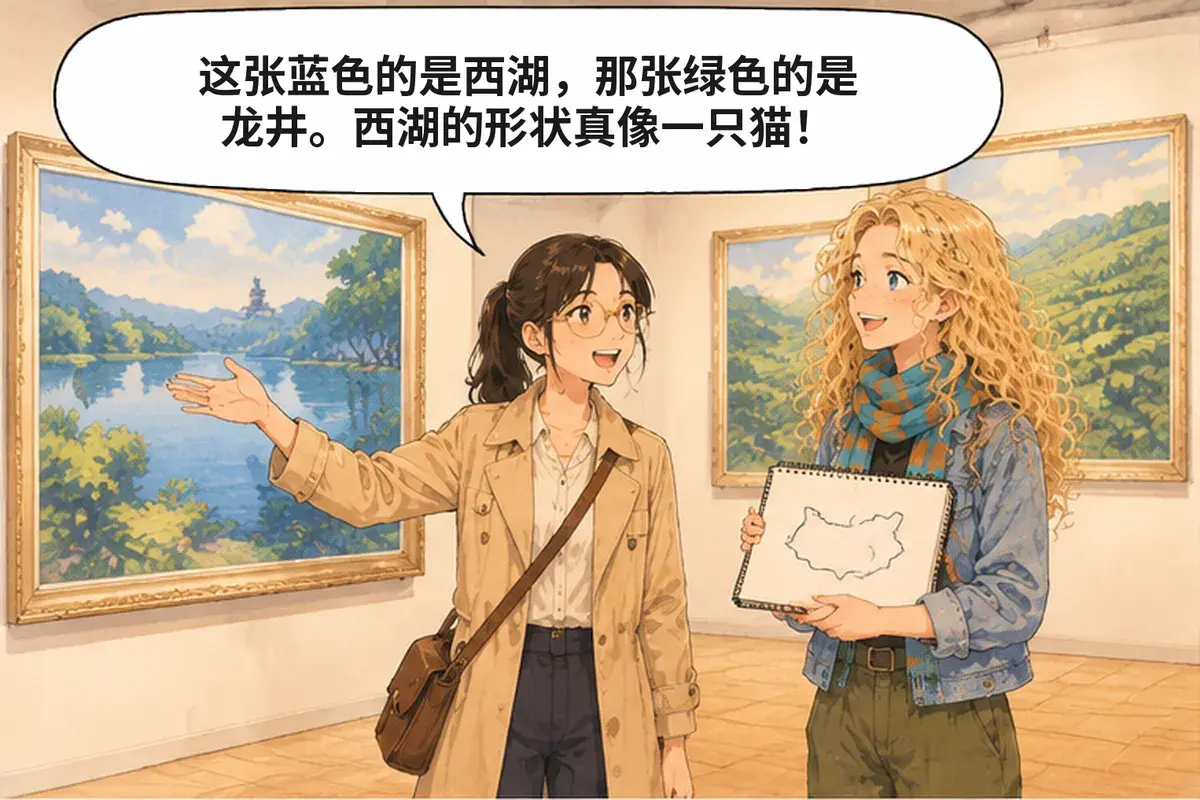
- 晓雨
这张蓝色的是西湖,那张绿色的是龙井。西湖的形状真像一只猫!
This blue one is West Lake, and that green one is Longjing. The shape of West Lake really looks like a cat!
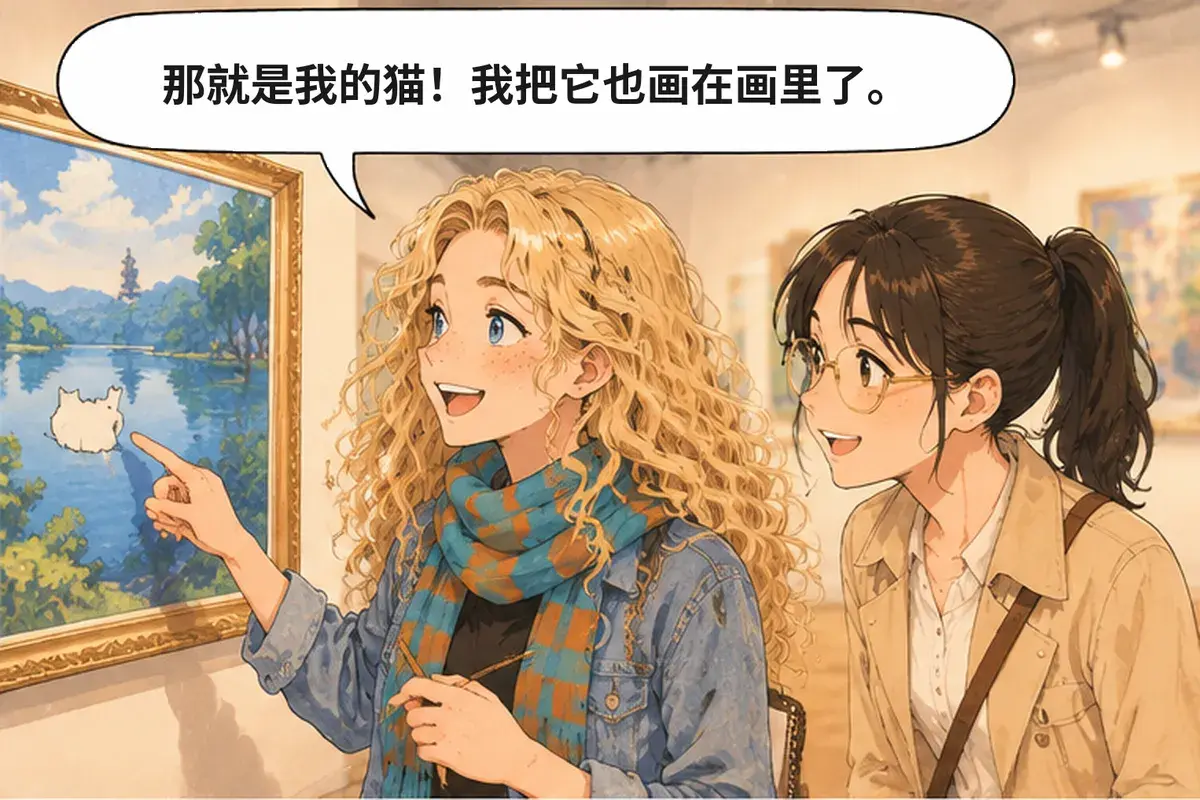
- 萨拉
那就是我的猫!我把它也画在画里了。
That's my cat! I painted it into the picture too.
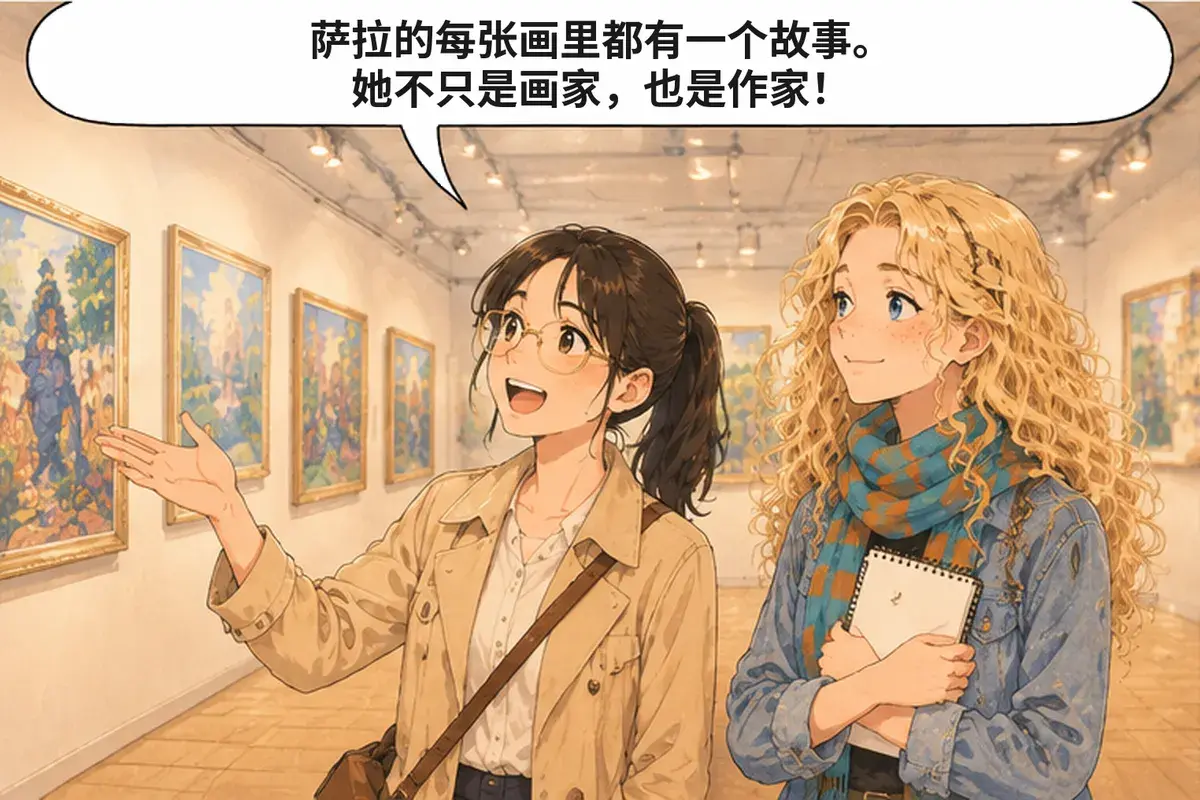
- 晓雨
萨拉的每张画里都有一个故事。她不只是画家,也是作家!
There's a story in every one of Sara's paintings. She's not just a painter, she's a writer too!
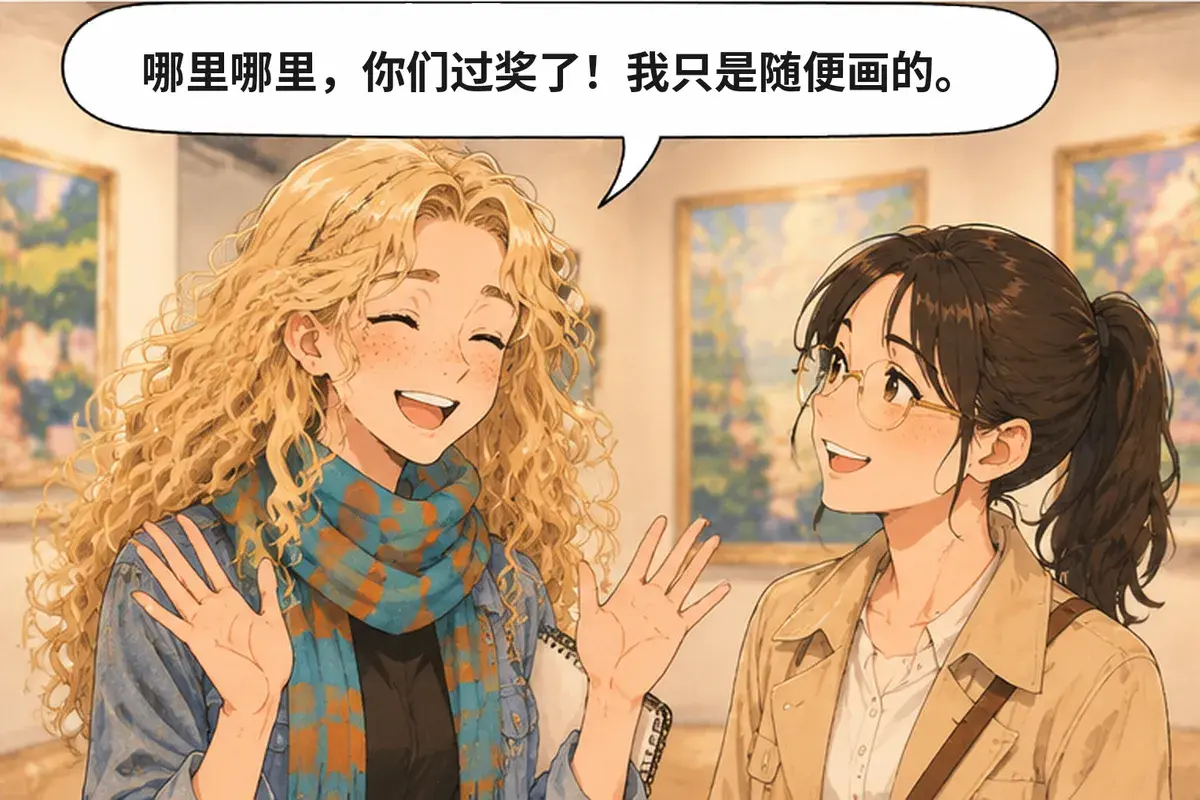
- 萨拉
哪里哪里,你们过奖了!我只是随便画的。
Not at all, not at all, you're too kind! I just paint whatever comes to mind. (to several people)
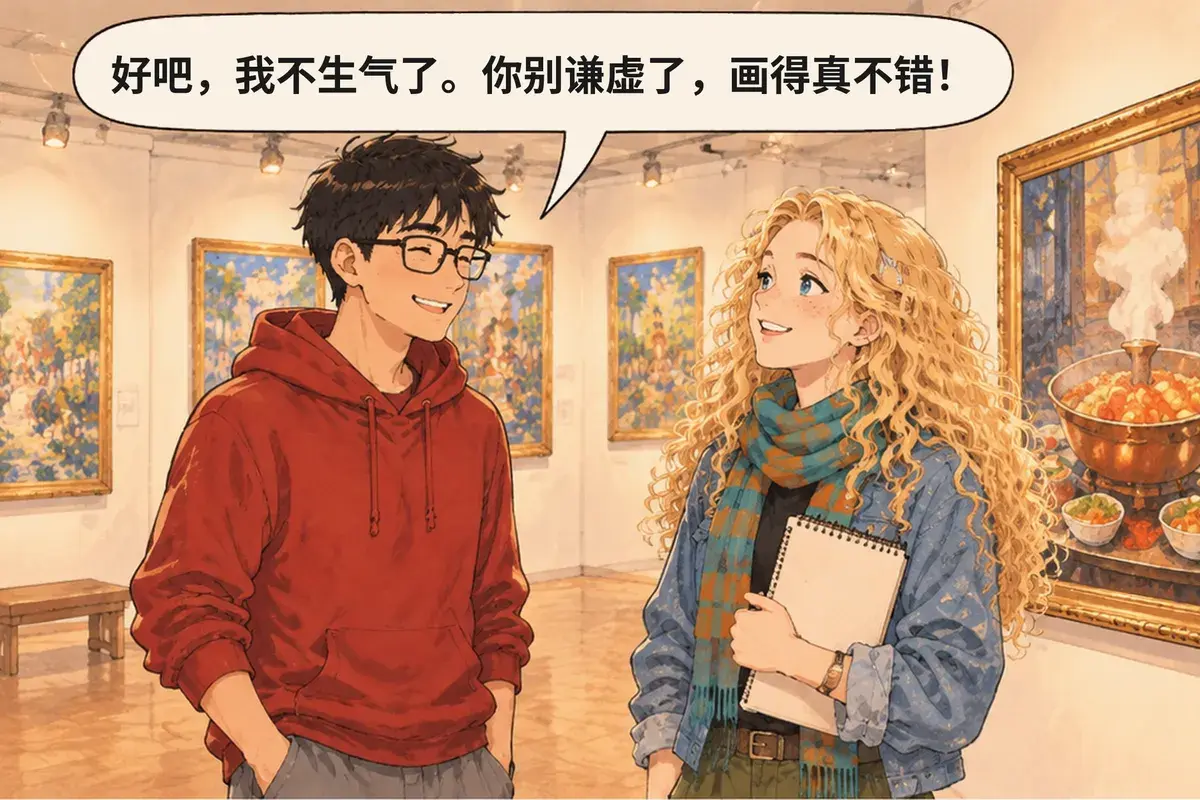
- 张磊
好吧,我不生气了。你别谦虚了,画得真不错!
Okay, I'm not mad anymore. Don't be modest, you paint really well!
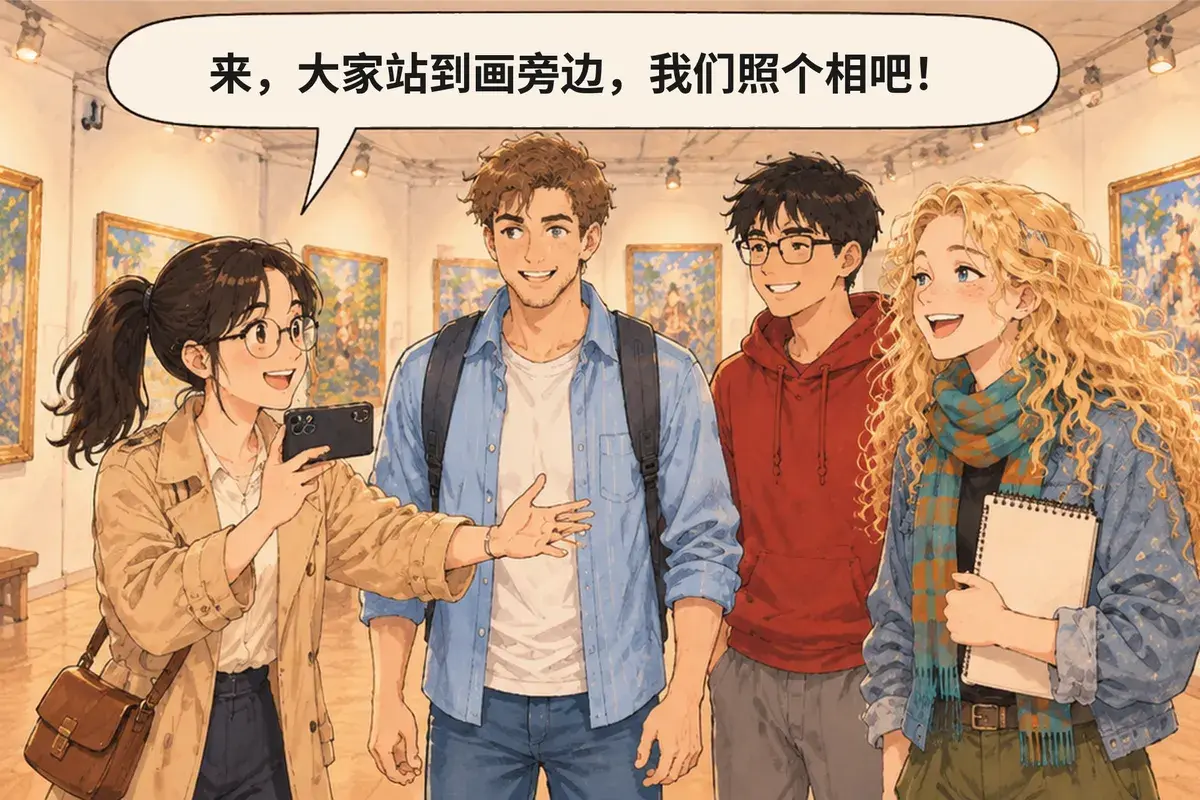
- 晓雨
来,大家站到画旁边,我们照个相吧!
Come on, everyone, stand next to the paintings and let's take a picture!
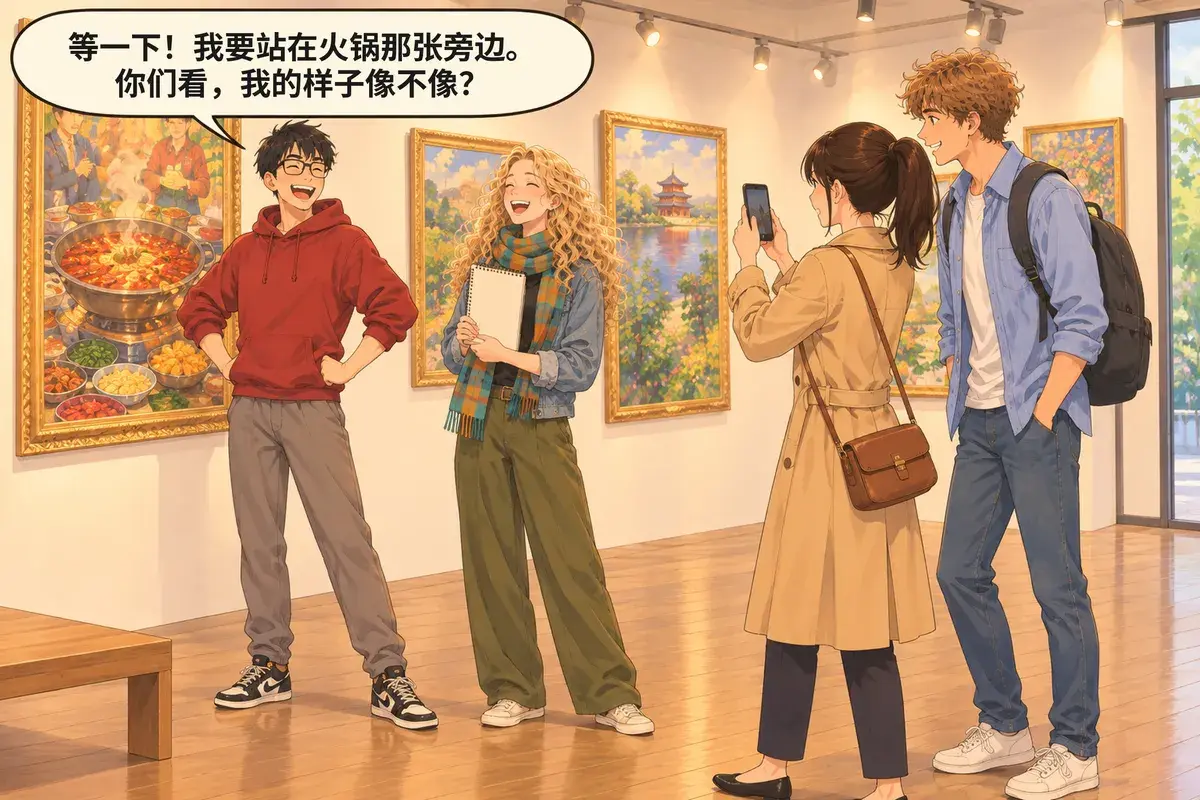
- 张磊
等一下!我要站在火锅那张旁边。你们看,我的样子像不像?
Wait a moment! I want to stand next to the hot pot one. Look, do I look like it? (to several people)
Grammar for this text
- 我 生 你 的 气 了! — I'm mad at you! A verb + object word:
生气("to get mad") splits, and the person goes in the middle:生 你 的 气. English puts "at you" after the verb, but Chinese puts你 的inside, before气. You can't say ✗生气 你. The了at the end means "now it's like this": "I'm mad at you now". - 开 个 玩笑 嘛! — Come on, it's just a joke!
开 玩笑("to joke") splits too:个goes between开and玩笑and means "just once, casually".嘛is a particle that means "well, it's obvious". It softens the line and makes a little excuse. - 我们 照 个 相 吧! — Let's take a picture!
照相("to take a picture") splits the same way:照 个 相.吧makes it a suggestion: "let's". - 我 不 生气 了。 — I'm not mad anymore. When nothing goes inside, the word stays whole:
不 生气, not ✗不 生 气. - 他 要 一 碗 汤, 服务员 给 了 他 一 碗 糖! — He asks for a bowl of soup, and the waiter gives him a bowl of sugar! This is a joke about tones:
汤(tāng) "soup" and糖(táng) "sugar" differ only in the tone. - 我 的 形象 全 没 了! — My image is totally gone!
形象means "image". Zhang Lei jokes that in the painting he is red and sweaty. - 你 别 谦虚 了, — Don't be modest.
别 … 了means "stop …ing". People answer praise modestly (哪里哪里,过奖 了), and friends reply with别 谦虚 了.
Words and grammar of the unit: Praise someone and answer praise.
Learn the words from the texts with flashcards
In the app, you can tap any word in a text to see its translation, forms and examples, and new words stick with flashcards. 15 minutes a day.
Start for freeEverything is open for free. No card needed to sign up.