
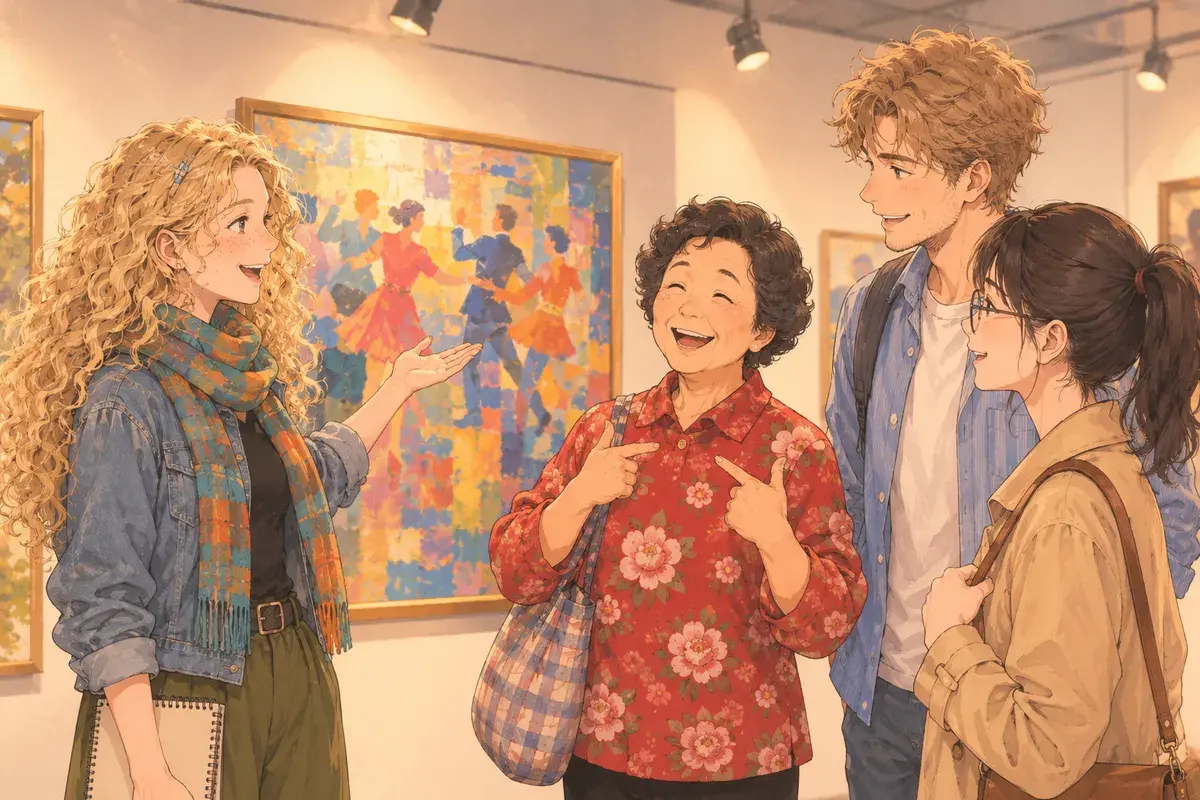
Chinese dialogue with translation · B1 · 16 lines
你帮了我很大的忙 You helped me a lot
Comic · 16 panels

- 萨拉
欢迎欢迎!你们终于来了!
Welcome, welcome! You're finally here! (to several people)
- 王阿姨
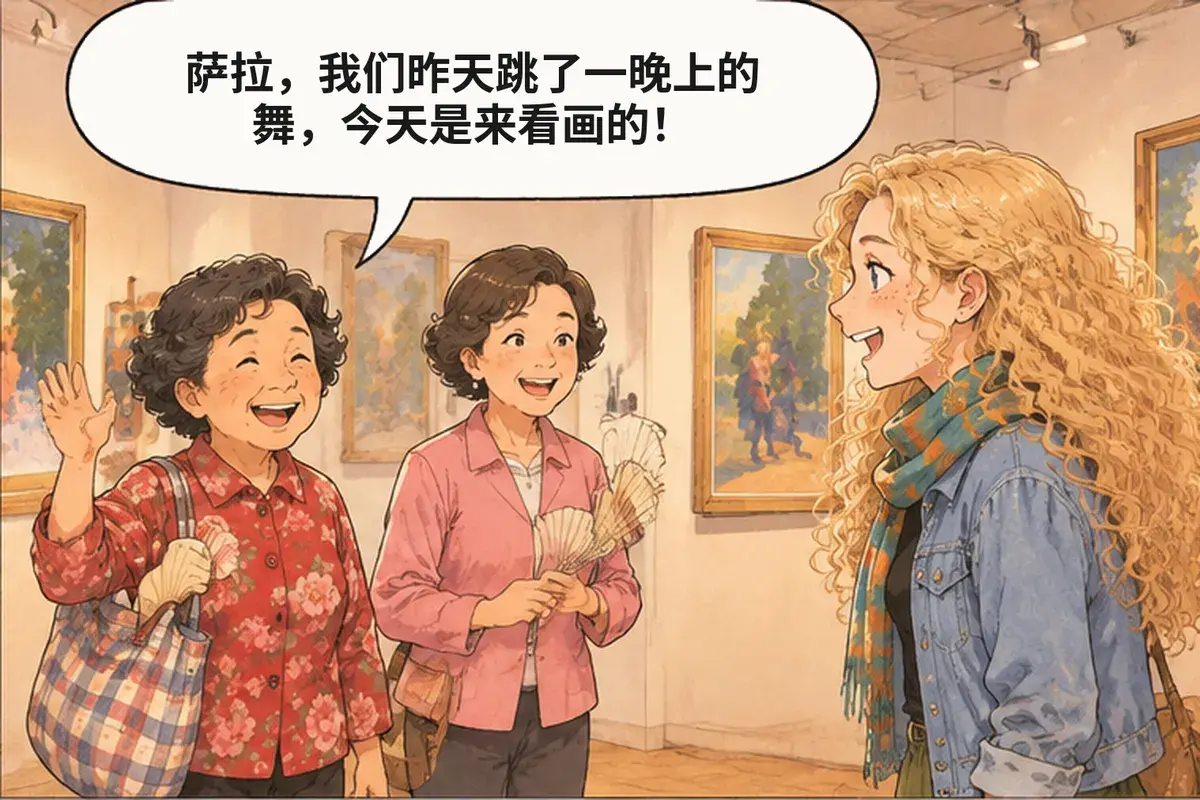
萨拉,我们昨天跳了一晚上的舞,今天是来看画的!
Sara, we danced all evening yesterday, and today we came to see the paintings!
- 萨拉
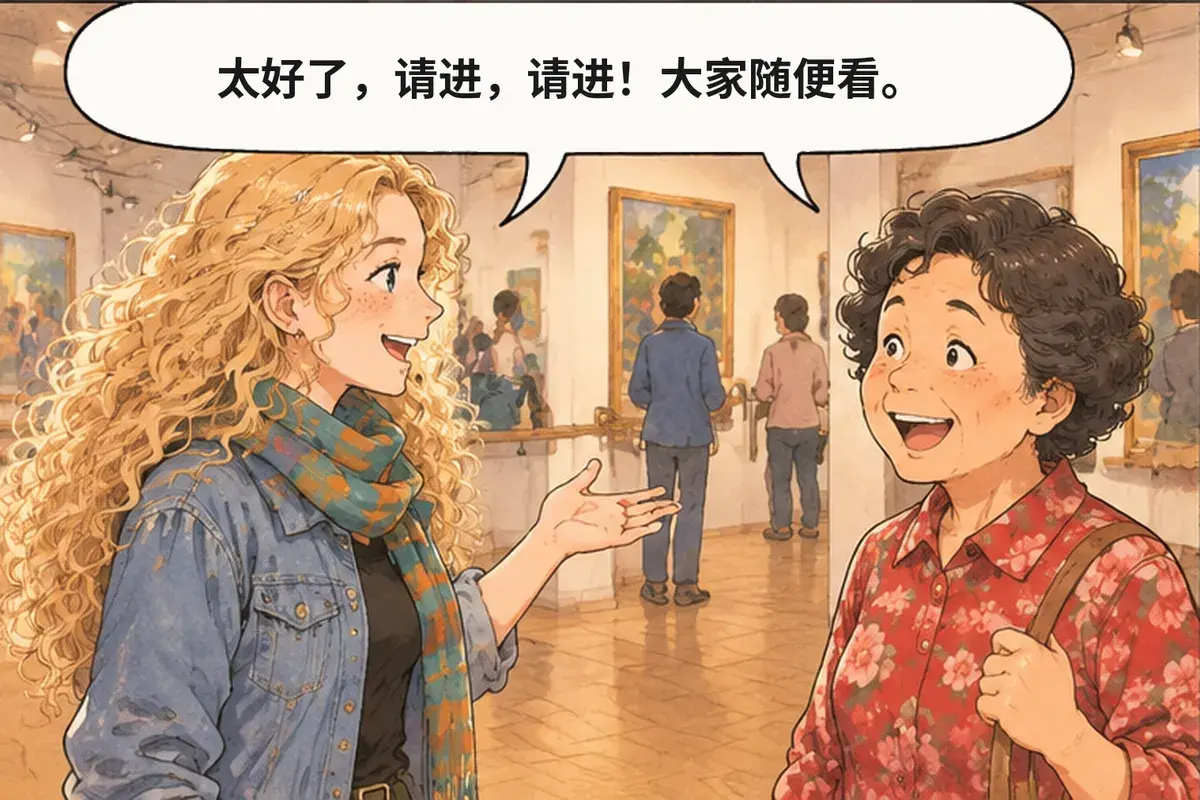
太好了,请进,请进!大家随便看。
Great, please come in, come in! Everyone, feel free to look around.
- 王阿姨
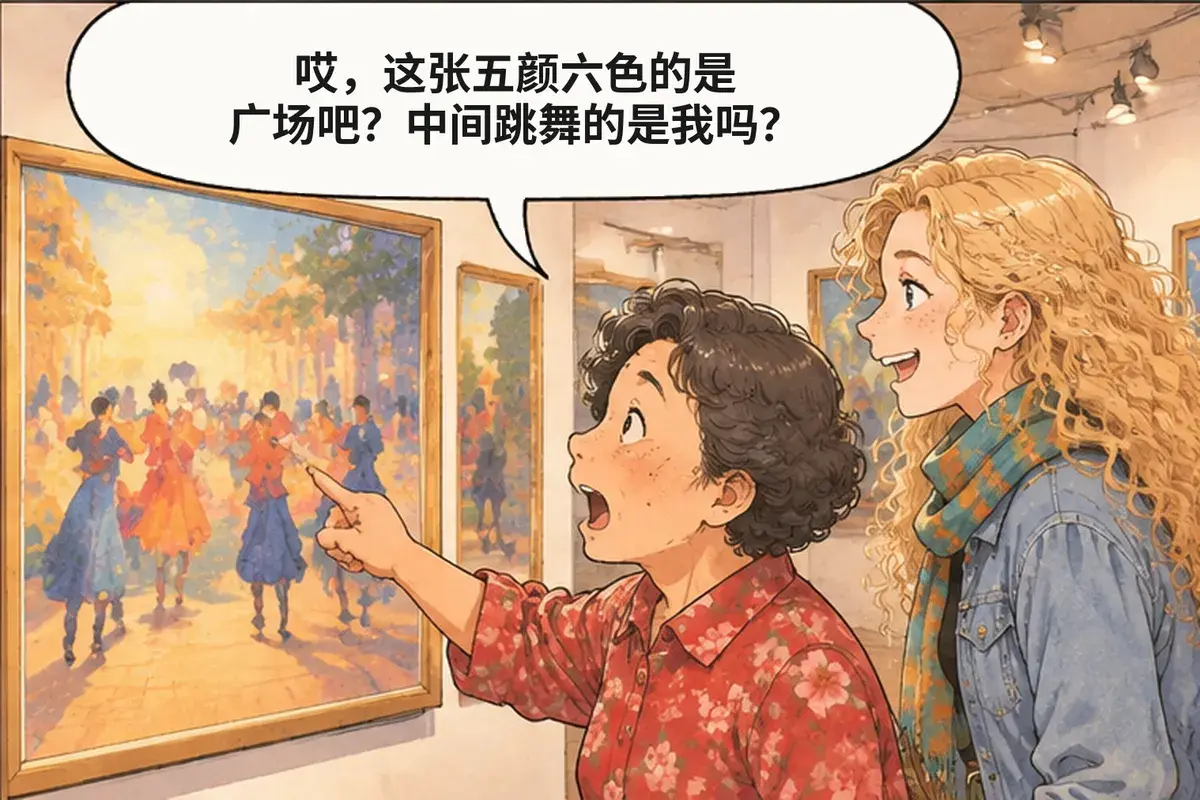
哎,这张五颜六色的是广场吧?中间跳舞的是我吗?
Oh, this colorful one is the square, right? Is the one dancing in the middle me?
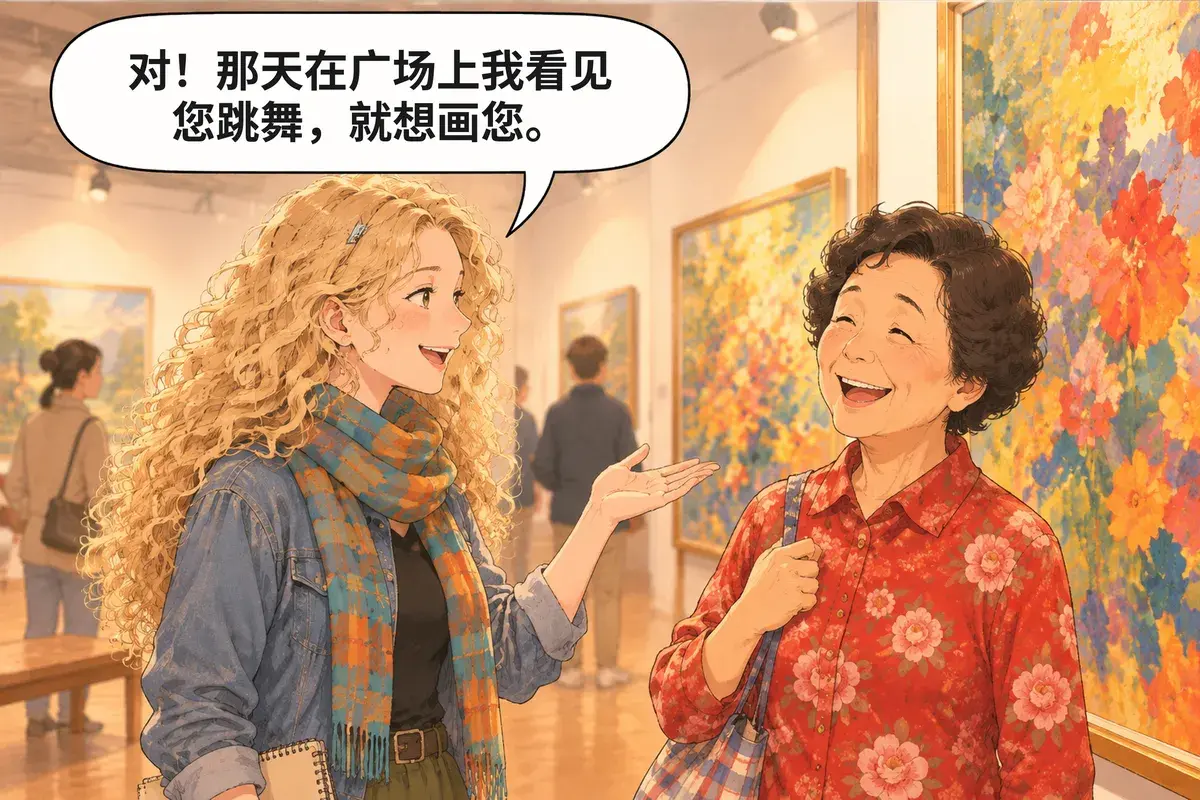
- 萨拉
对!那天在广场上我看见您跳舞,就想画您。
Yes! That day at the square I saw you dancing, and I wanted to paint you. (polite)
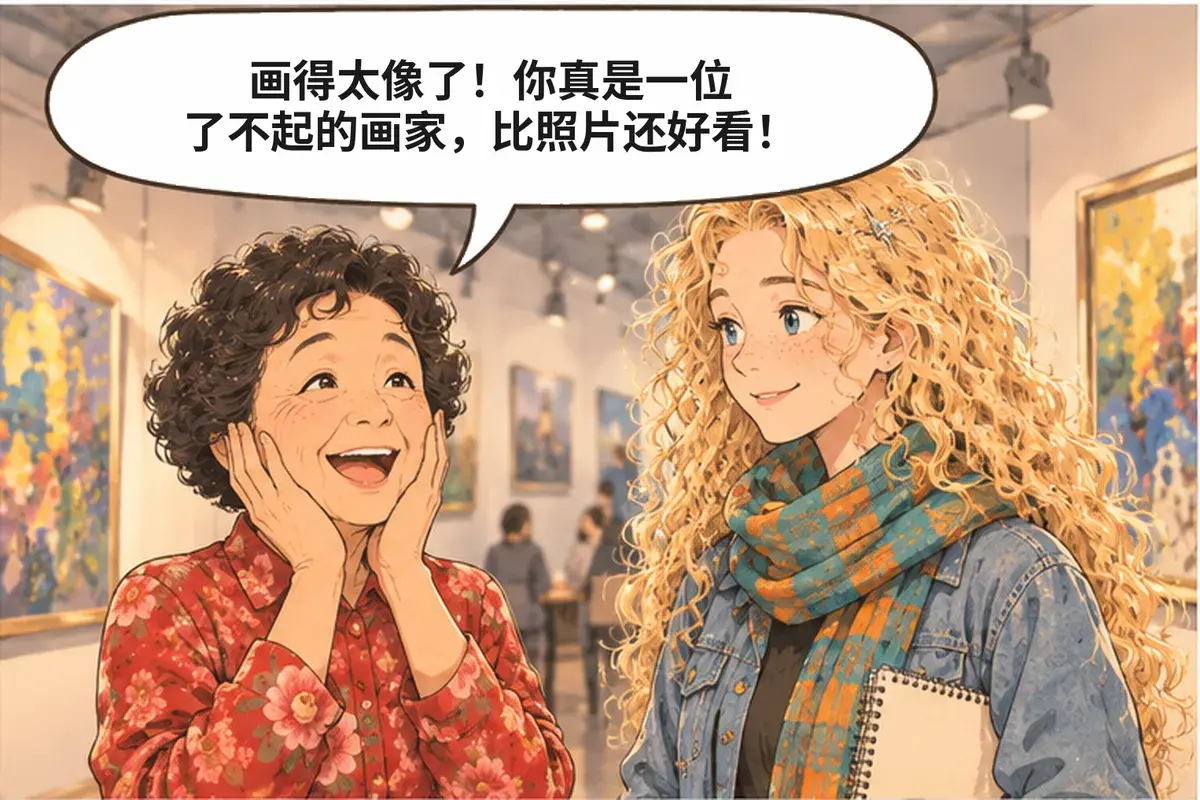
- 王阿姨
画得太像了!你真是一位了不起的画家,比照片还好看!
It's such a good likeness! You're truly a remarkable painter, and it looks even better than a photo!
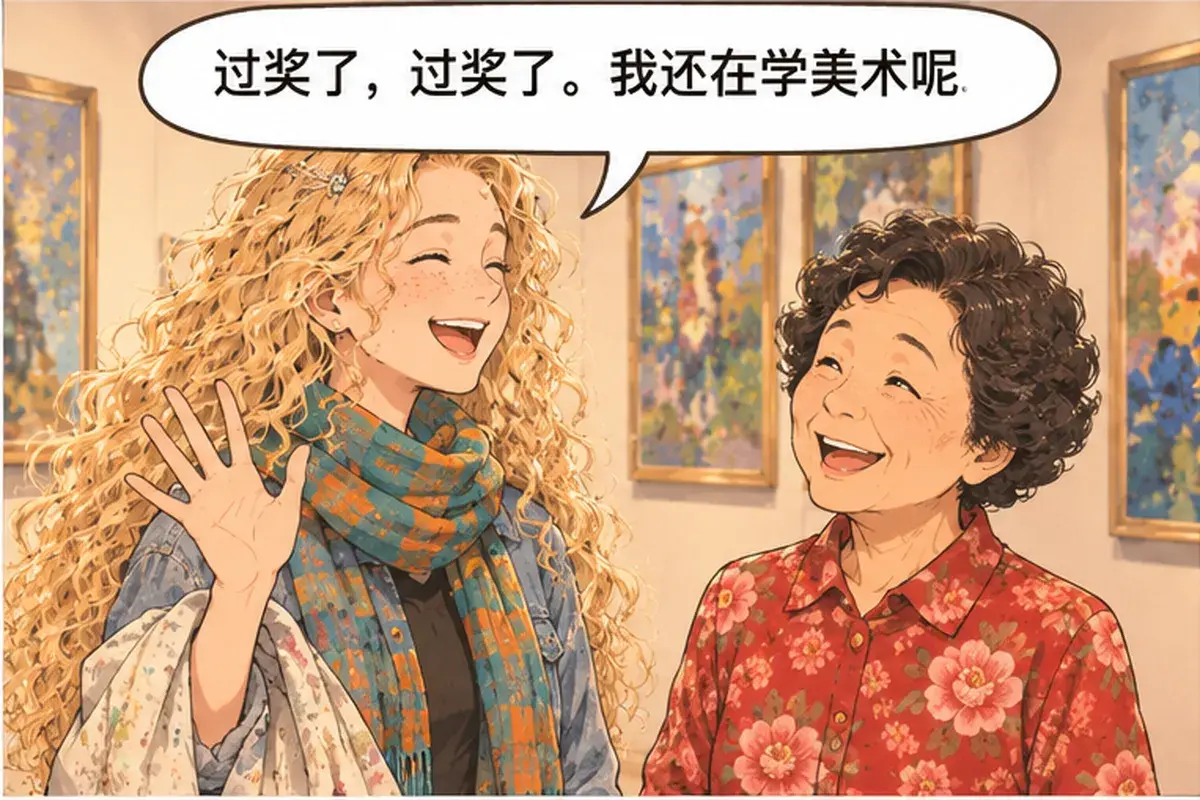
- 萨拉
过奖了,过奖了。我还在学美术呢。
You're too kind, you're too kind. I'm still studying art.
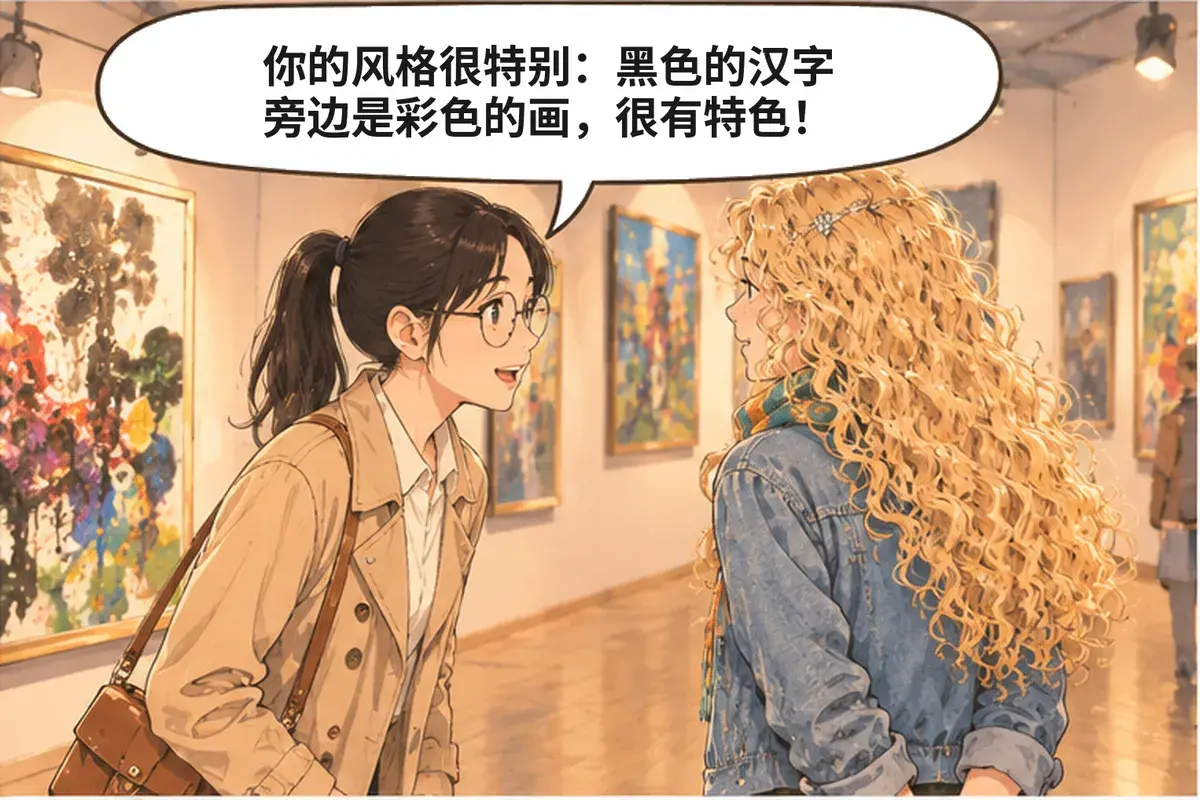
- 晓雨
你的风格很特别:黑色的汉字旁边是彩色的画,很有特色!
Your style is really unique: colorful paintings next to black Chinese characters. It has so much character!
- 伊利亚
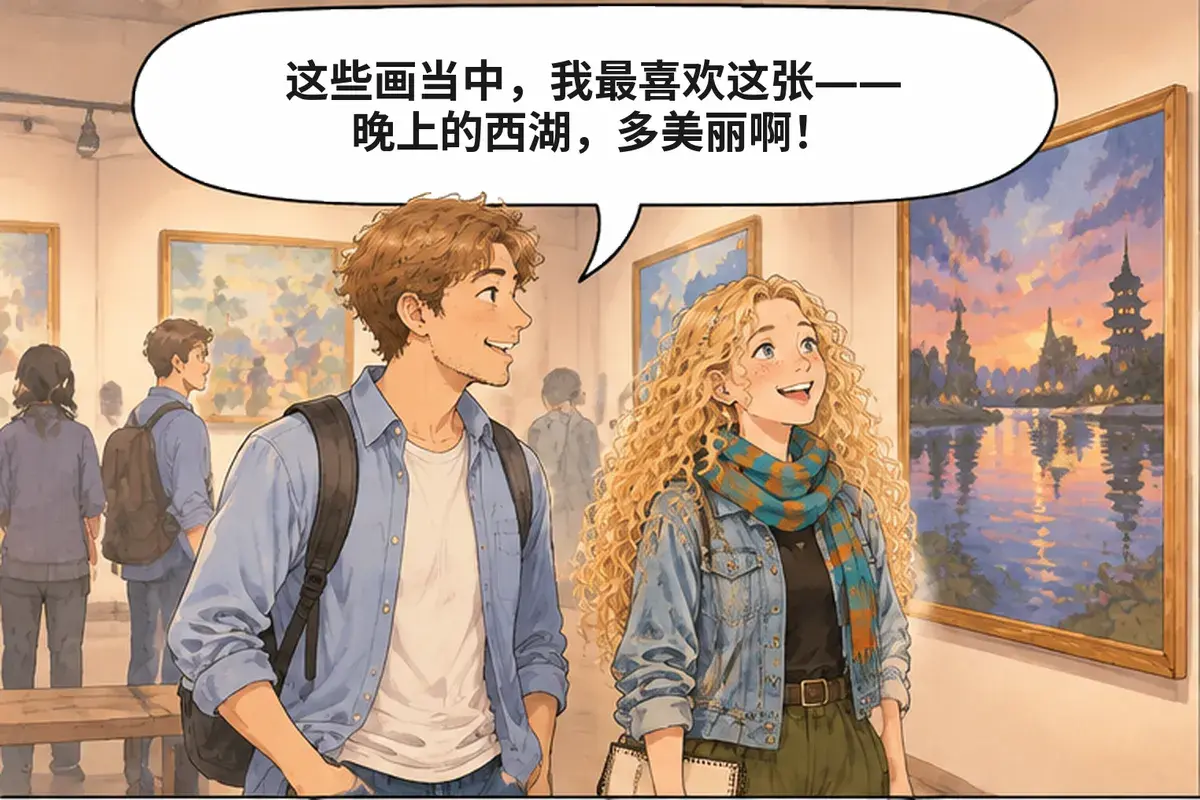
这些画当中,我最喜欢这张——晚上的西湖,多美丽啊!
Of all these paintings, I like this one best: West Lake at night. How beautiful!
- 萨拉
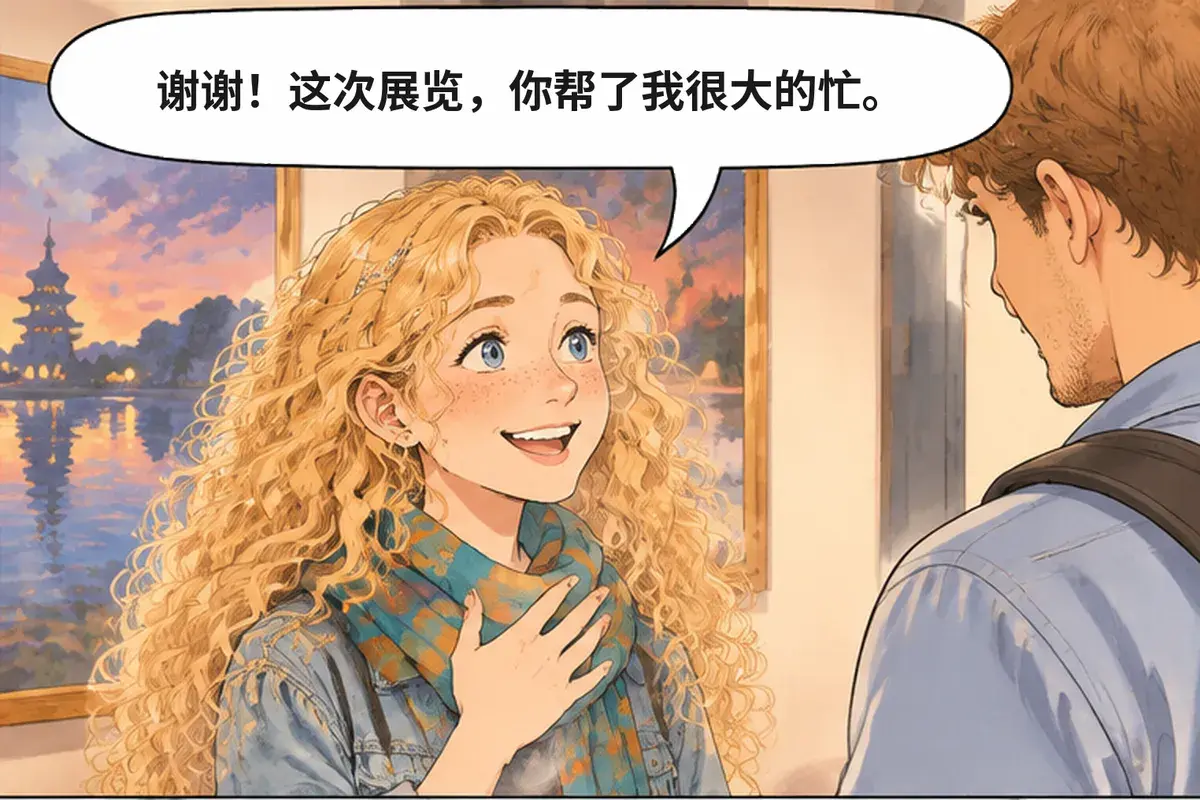
谢谢!这次展览,你帮了我很大的忙。
Thanks! You helped me a lot with this exhibition.
- 伊利亚
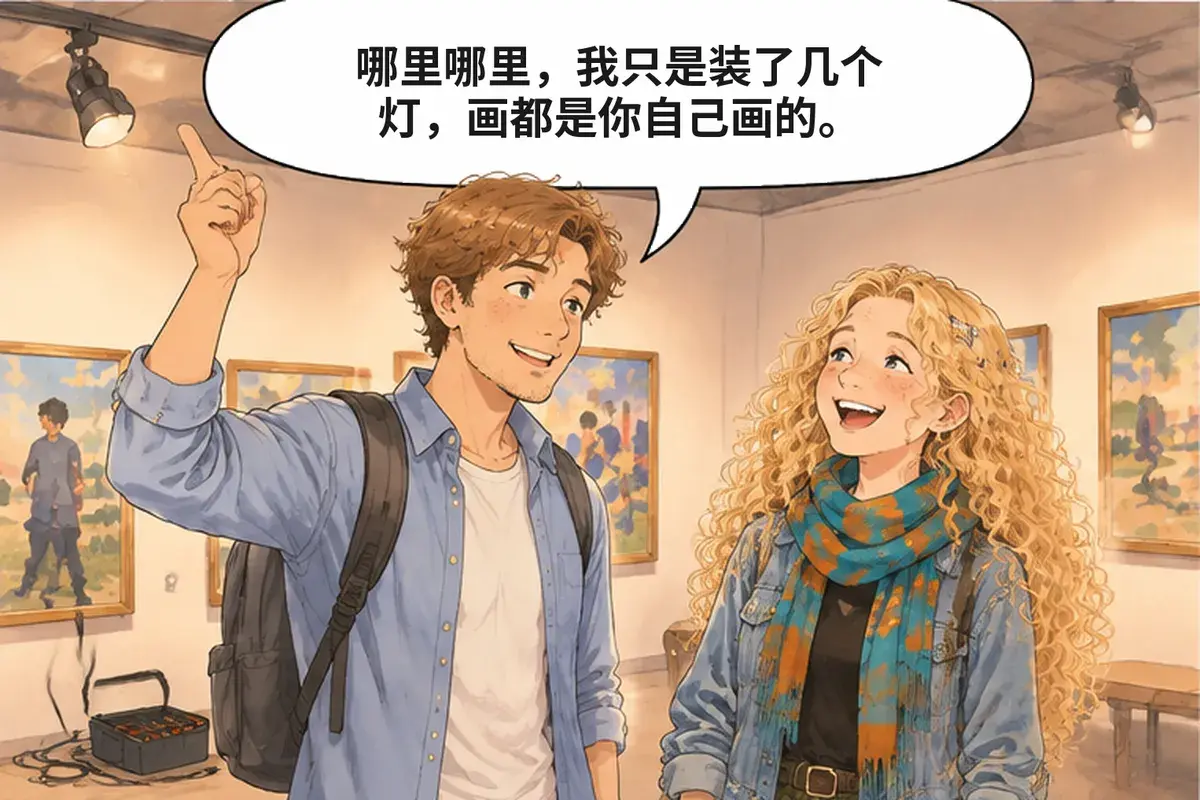
哪里哪里,我只是装了几个灯,画都是你自己画的。
Not at all, not at all. I only put up a few lights. You painted all the paintings yourself.
- 王阿姨
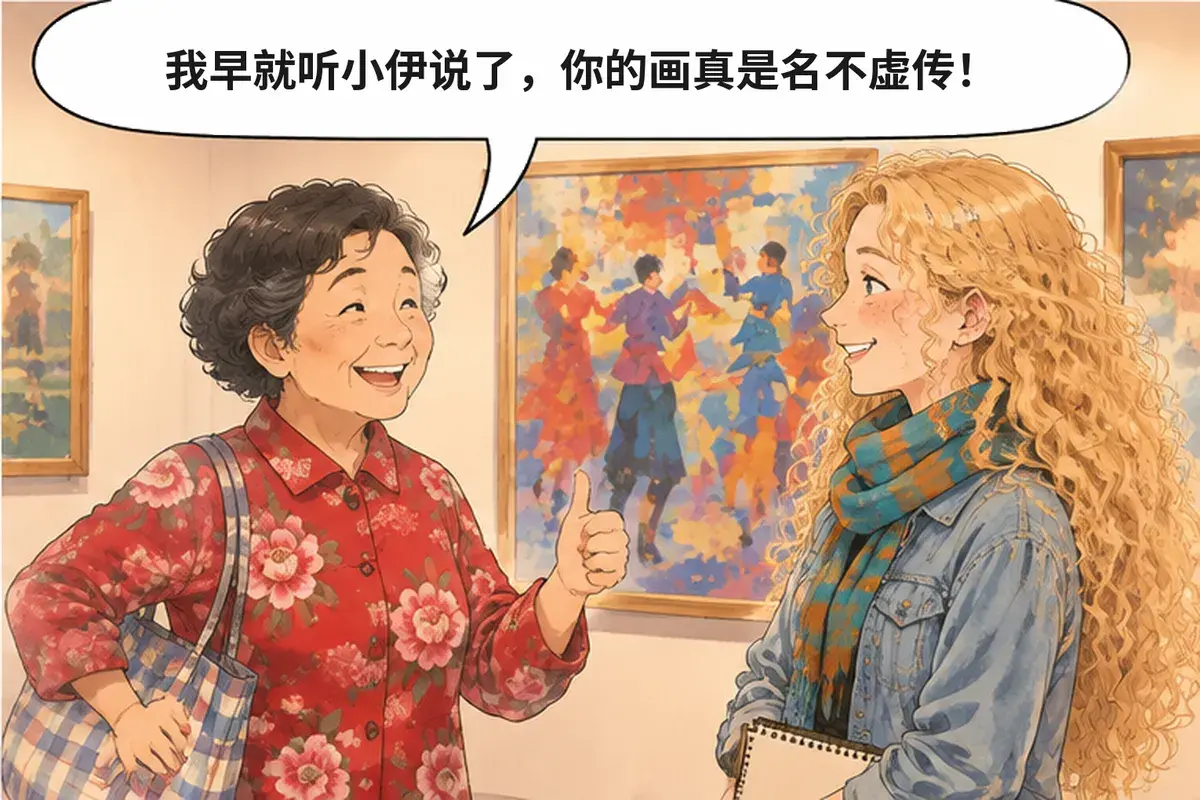
我早就听小伊说了,你的画真是名不虚传!
I heard about them from Xiao Yi a long time ago. Your paintings really live up to their reputation!
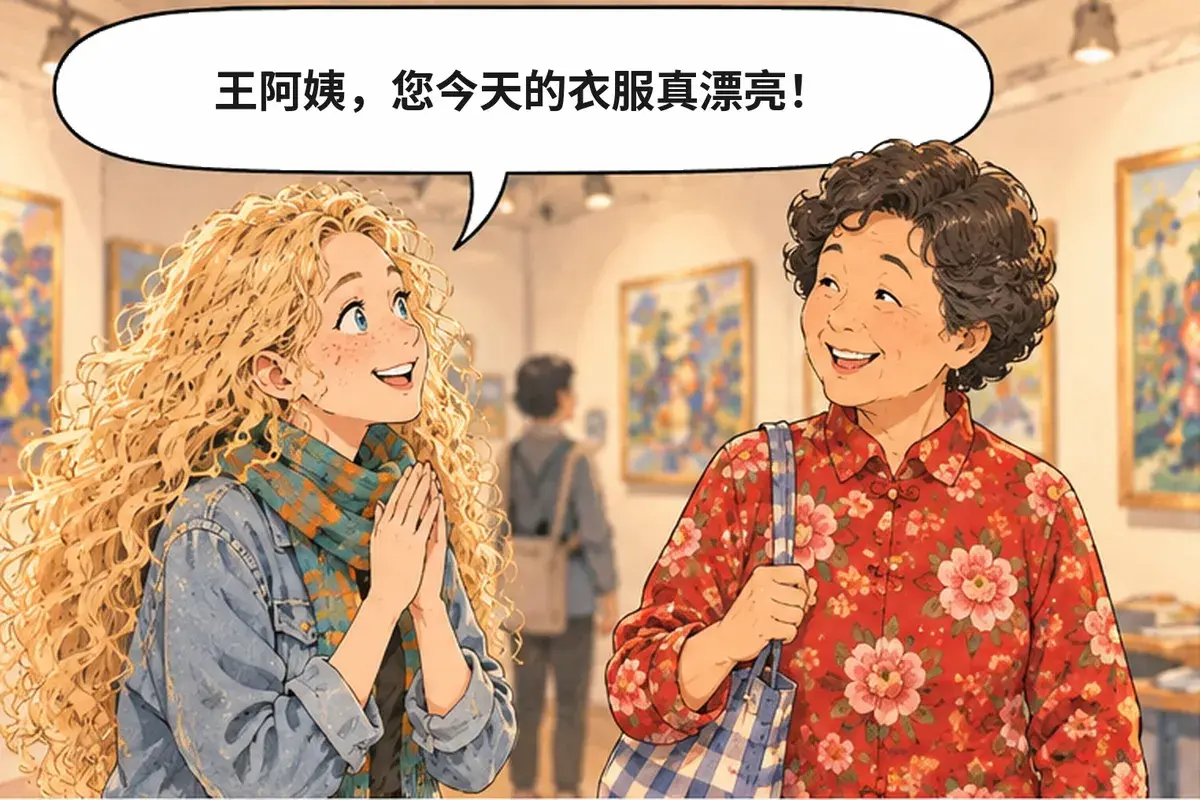
- 萨拉
王阿姨,您今天的衣服真漂亮!
Auntie Wang, your clothes are so beautiful today! (polite)
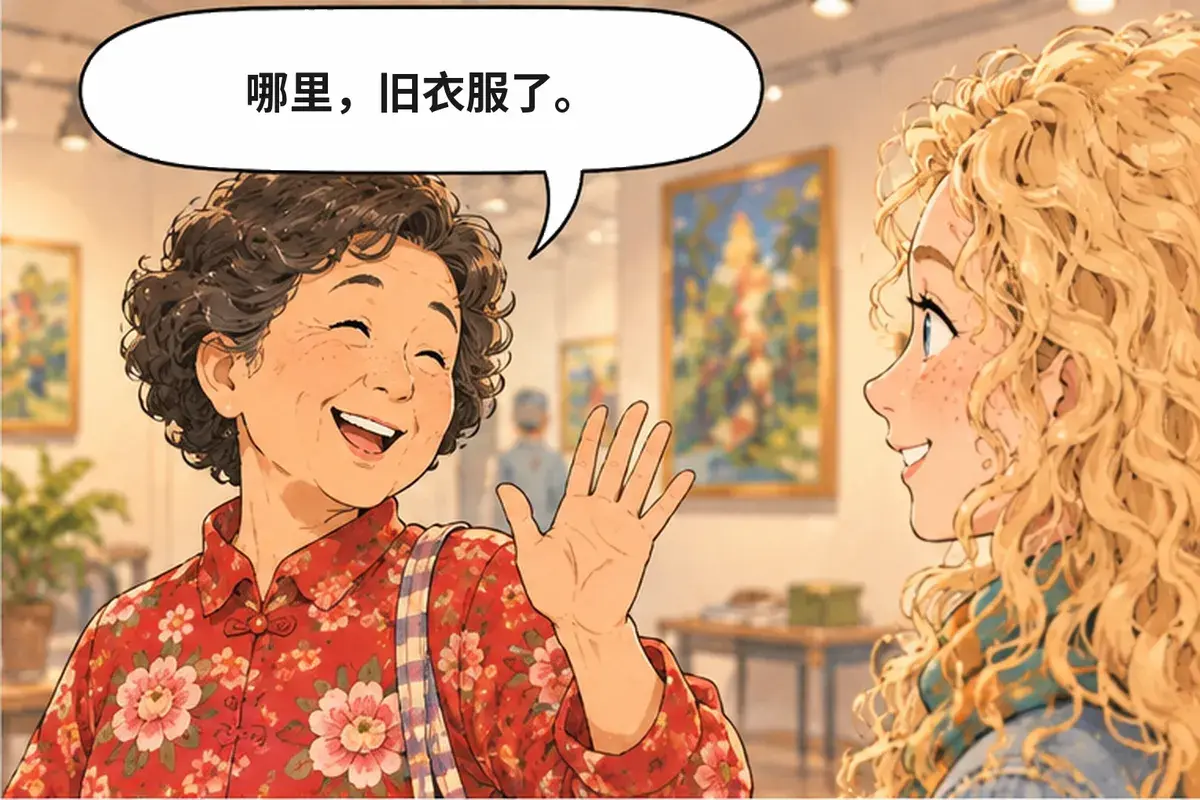
- 王阿姨
哪里,旧衣服了。
Oh, no. They're old clothes now.
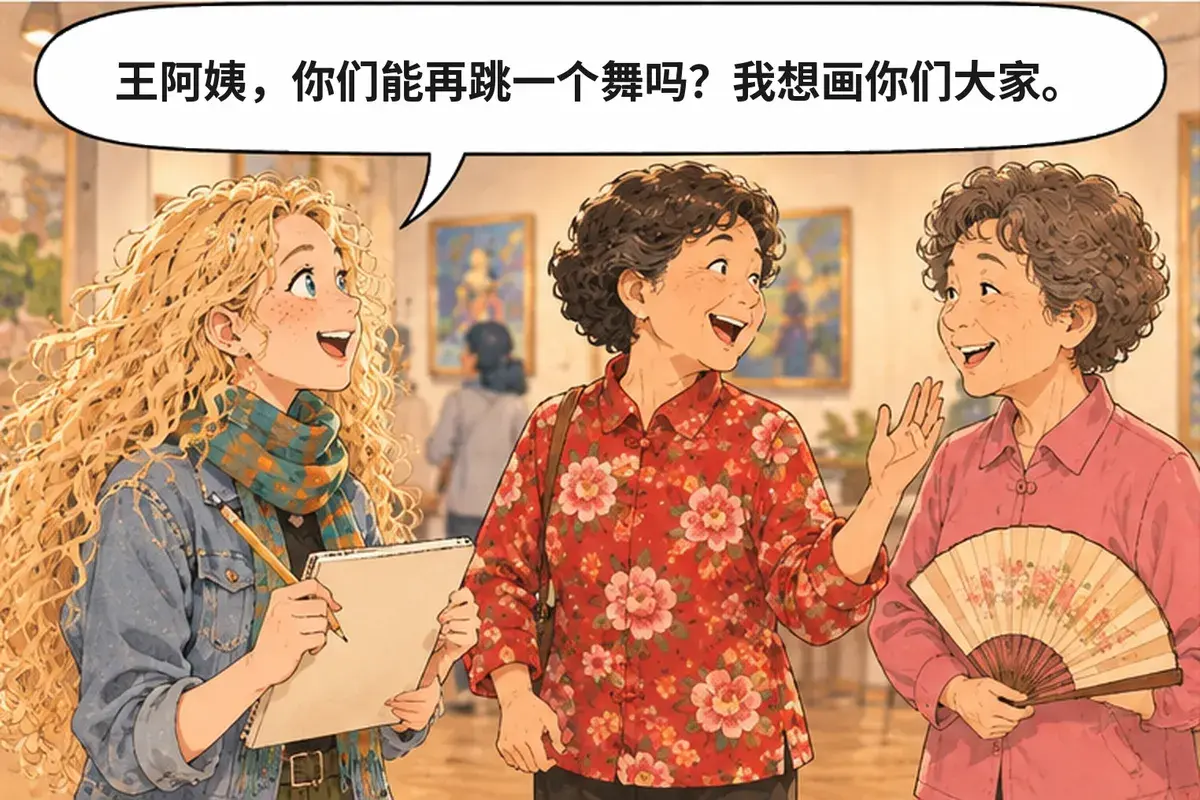
- 萨拉
王阿姨,你们能再跳一个舞吗?我想画你们大家。
Auntie Wang, could you dance one more dance? I'd like to paint all of you. (to several people)
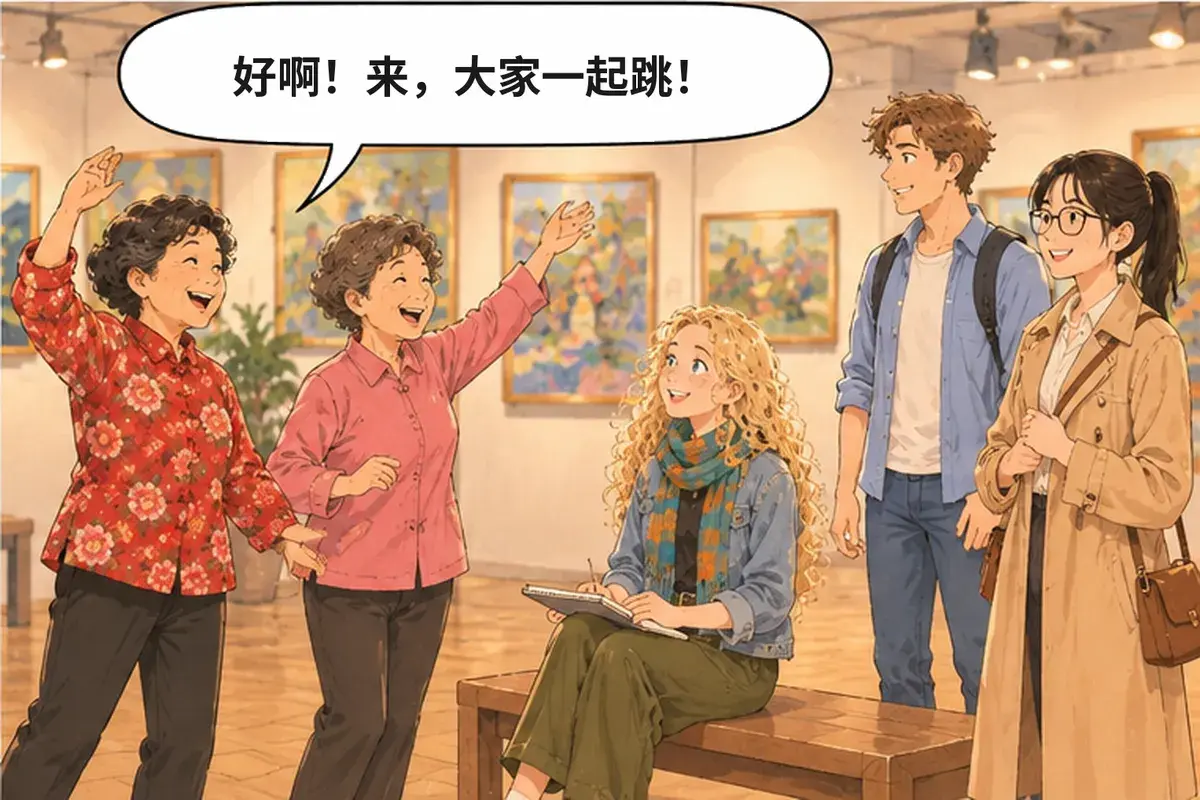
- 王阿姨
好啊!来,大家一起跳!
Sure! Come on, everyone, let's all dance together!
Grammar for this text
- 你 帮 了 我 很 大 的 忙。 — You helped me a lot. A verb + object word:
帮忙("to help") splits, and了, the person and the amount go inside. Literally it is "you helped me a very big help". Here忙doesn't mean "busy"; it means "the matter someone helps with". There is more in the grammar of this unit. - 我们 昨天 跳 了 一 晚上 的 舞, — We danced all evening yesterday. Another split word:
跳舞("to dance") is cut in two, and了and the length of time go inside. English puts "all evening" at the end, but Chinese puts it between跳and舞. - 过奖 了, 过奖 了。 — You're too kind, you're too kind.
过means "too much" and奖means "praise": "you've praised me too much". It is a modest answer to a compliment, and people often say it twice. - 哪里哪里, — Not at all, not at all. Literally "where? where?", as in "where is the good part?". It is the best-known modest answer to praise (nǎli nǎli). Auntie Wang answers with just
哪里, which is also common. - 旧 衣服 了。 — They're old clothes now. Here
了means "it has become so". In China people don't accept a compliment on clothes directly. They say the piece is old or cheap. - 你 的 画 真 是 名不虚传! — Your paintings really live up to their reputation!
名不虚传means "the fame is not empty". People say it when a person or a place turns out to be as good as everyone said. That's why Auntie Wang first says she heard about the paintings from Xiao Yi (Ilya). - 你 真 是 一 位 了不起 的 画家, — You're truly a remarkable painter.
位is a polite measure word for people.了不起(liǎobuqǐ) means "remarkable": it is a ready-made compliment.
Words and grammar of the unit: Praise someone and answer praise.
Learn the words from the texts with flashcards
In the app, you can tap any word in a text to see its translation, forms and examples, and new words stick with flashcards. 15 minutes a day.
Start for freeEverything is open for free. No card needed to sign up.