

Chinese dialogue with translation · B1 · 14 lines
谢谢你们帮我的忙 Thank you all for helping me
Comic · 14 panels
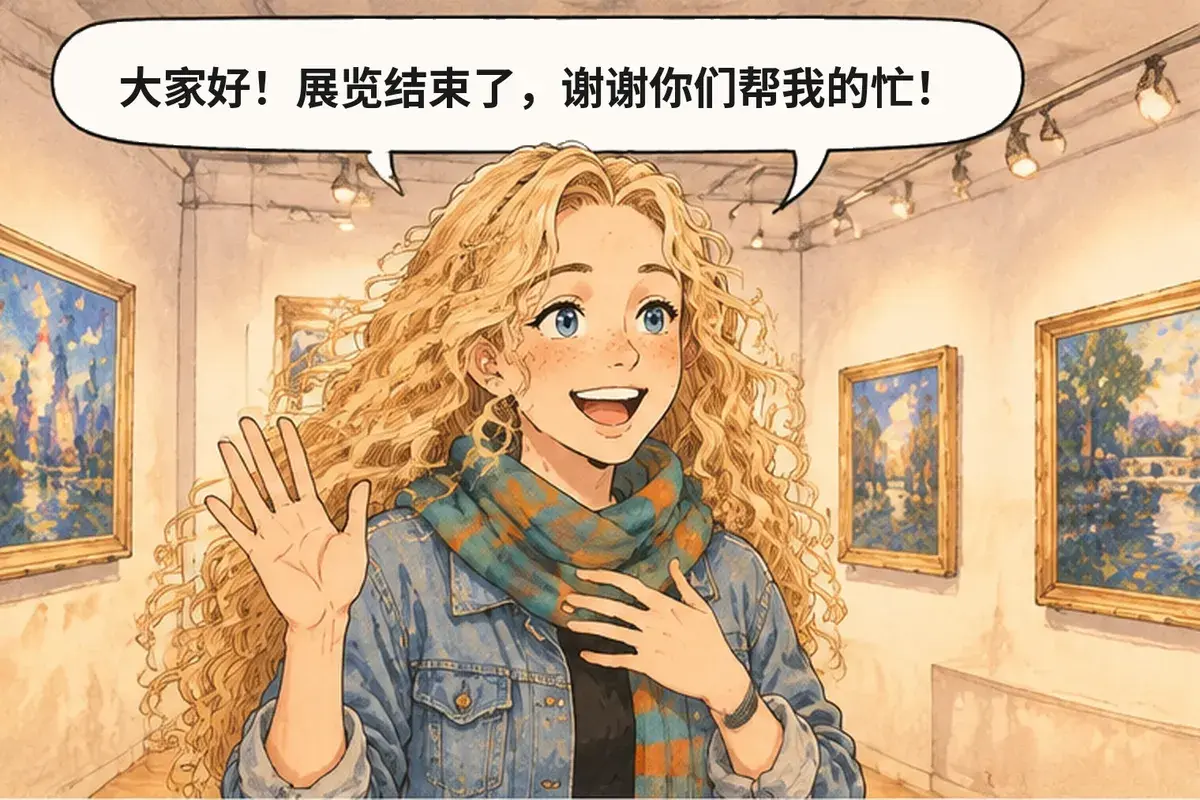
- 萨拉
大家好!展览结束了,谢谢你们帮我的忙!
Hi, everyone! The exhibition is over. Thank you for helping me! (to several people)
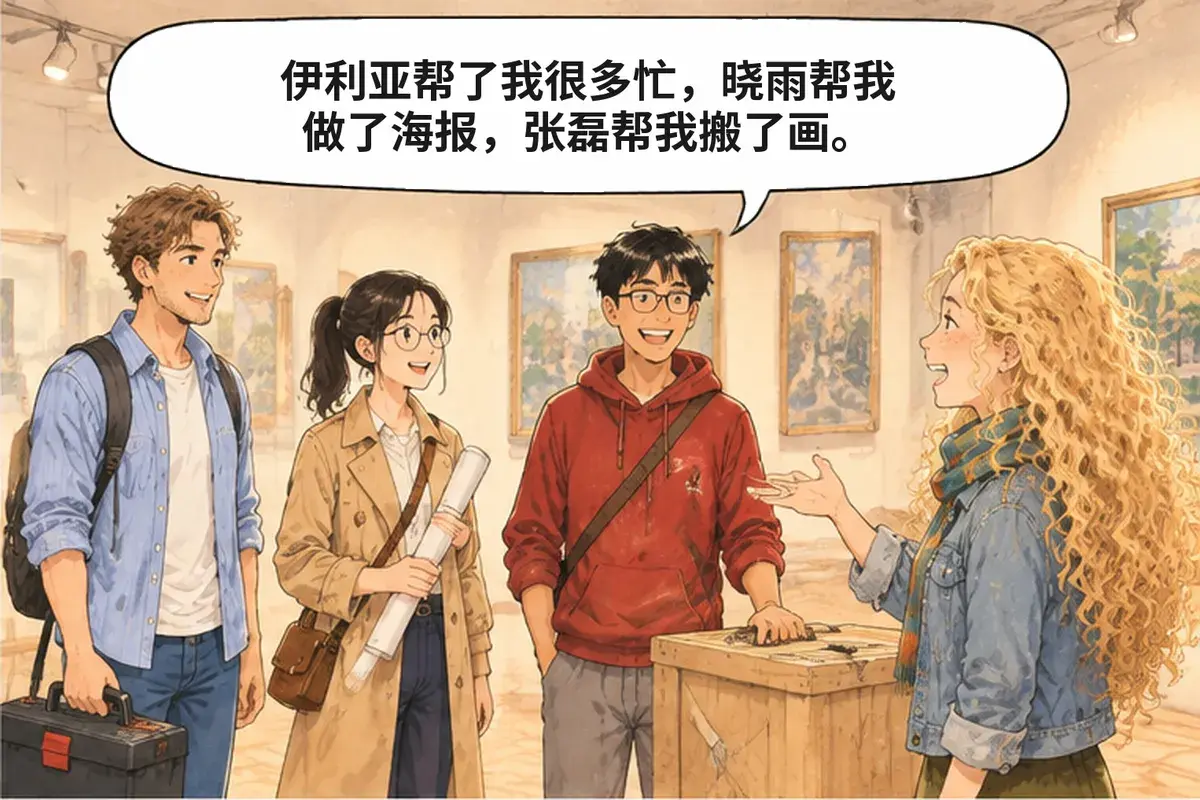
- 萨拉
伊利亚帮了我很多忙,晓雨帮我做了海报,张磊帮我搬了画。
Ilya helped me out a lot, Xiaoyu helped me make the poster, and Zhang Lei helped me move the paintings.
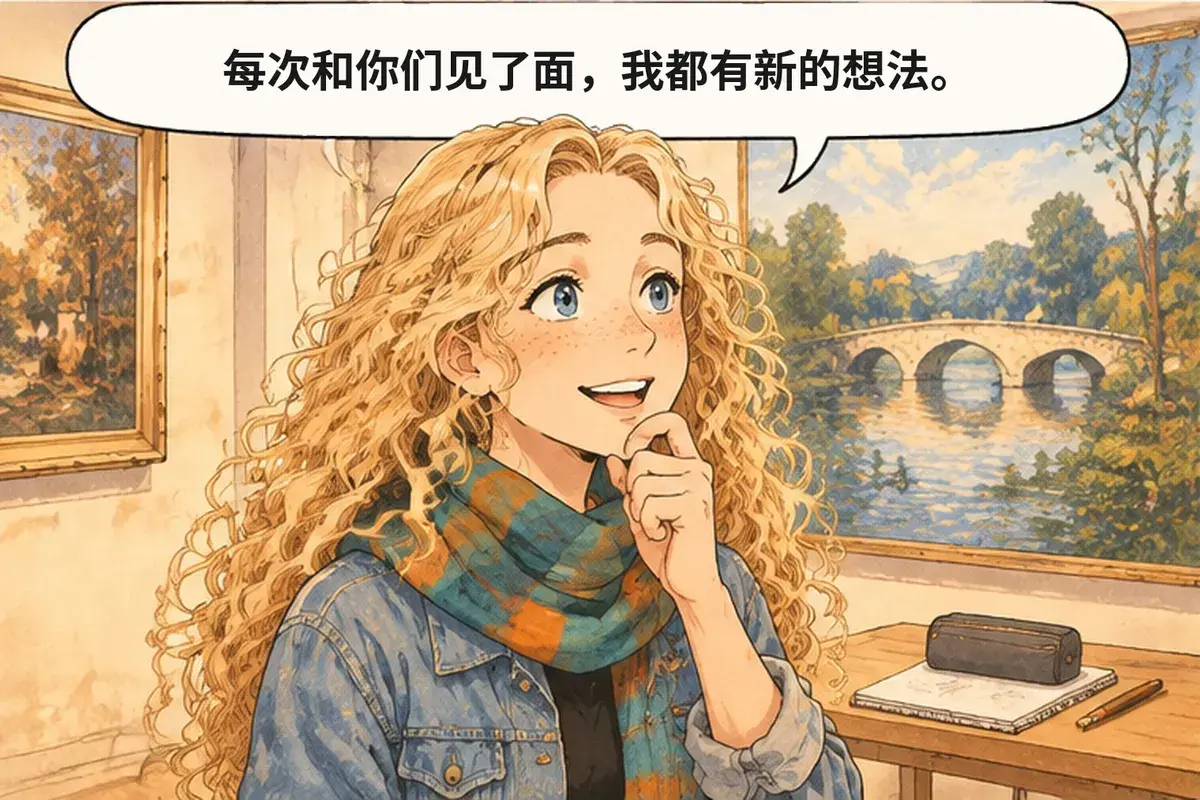
- 萨拉
每次和你们见了面,我都有新的想法。
Every time I meet with you, I get new ideas. (to several people)
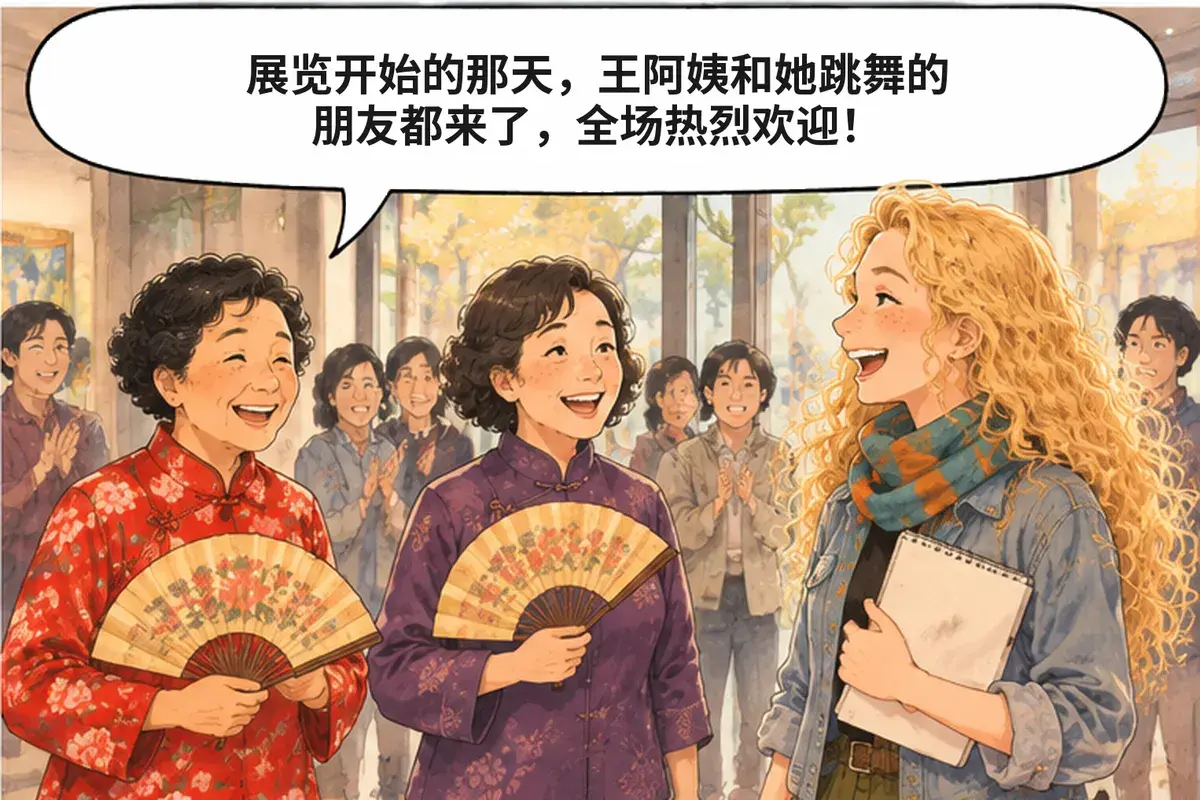
- 萨拉
展览开始的那天,王阿姨和她跳舞的朋友都来了,全场热烈欢迎!
On the day the exhibition opened, Auntie Wang and her dancing friends all came, and the whole room gave them a warm welcome!
- 萨拉
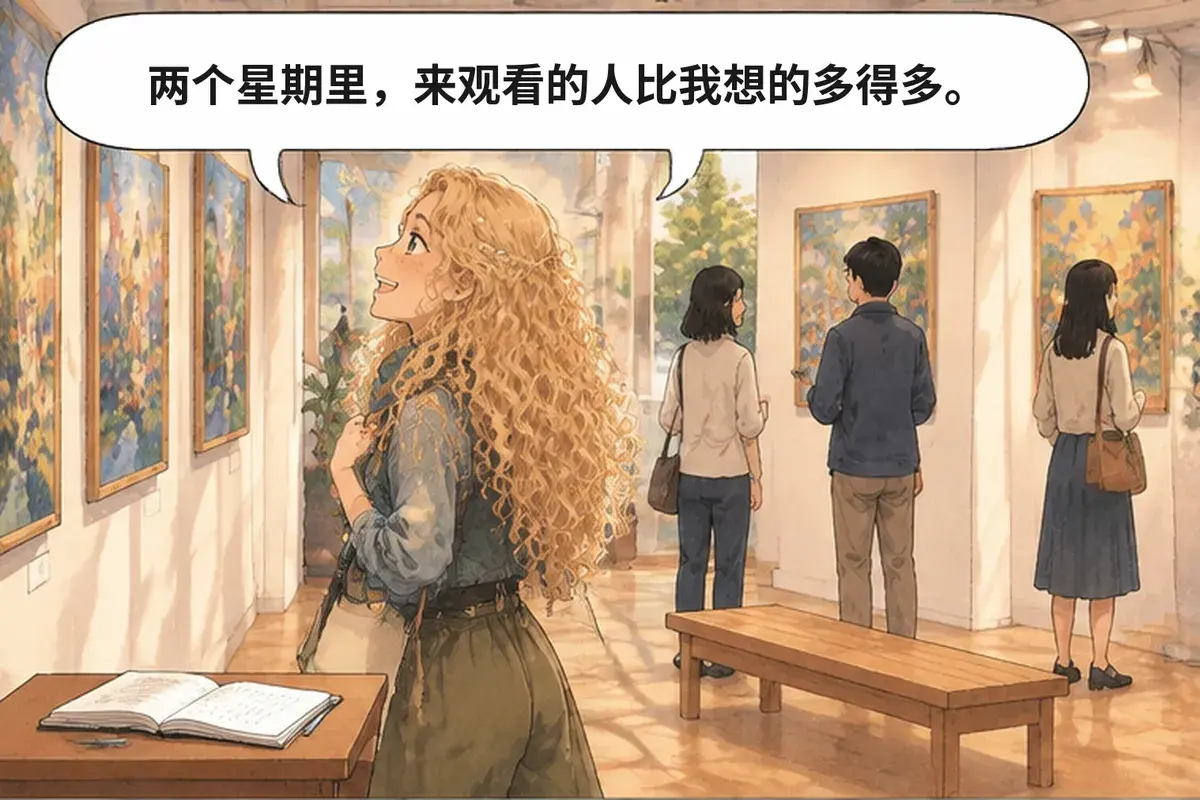
两个星期里,来观看的人比我想的多得多。
Over the two weeks, far more people came to see it than I'd expected.
- 萨拉
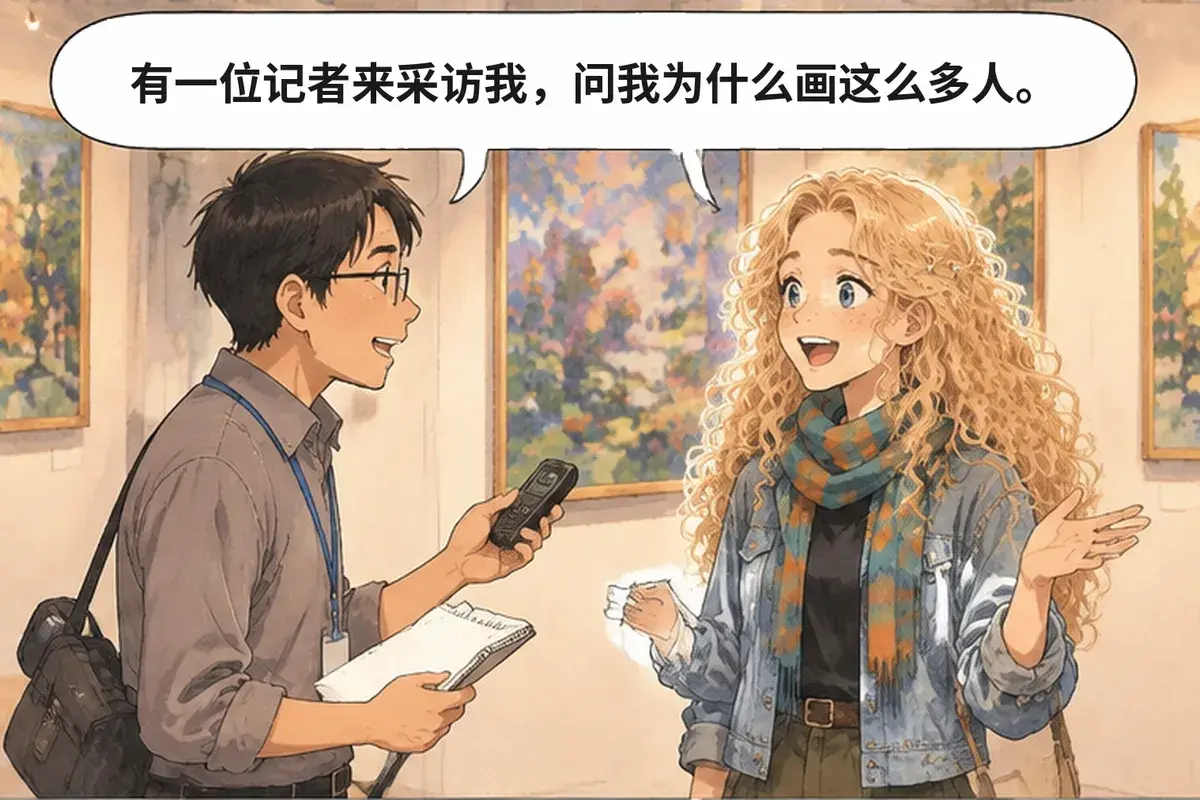
有一位记者来采访我,问我为什么画这么多人。
A reporter came to interview me and asked why I painted so many people.

- 萨拉
后来一本杂志和几家媒体也报道了我们的展览。
Later, a magazine and several media outlets also reported on our exhibition.
- 萨拉
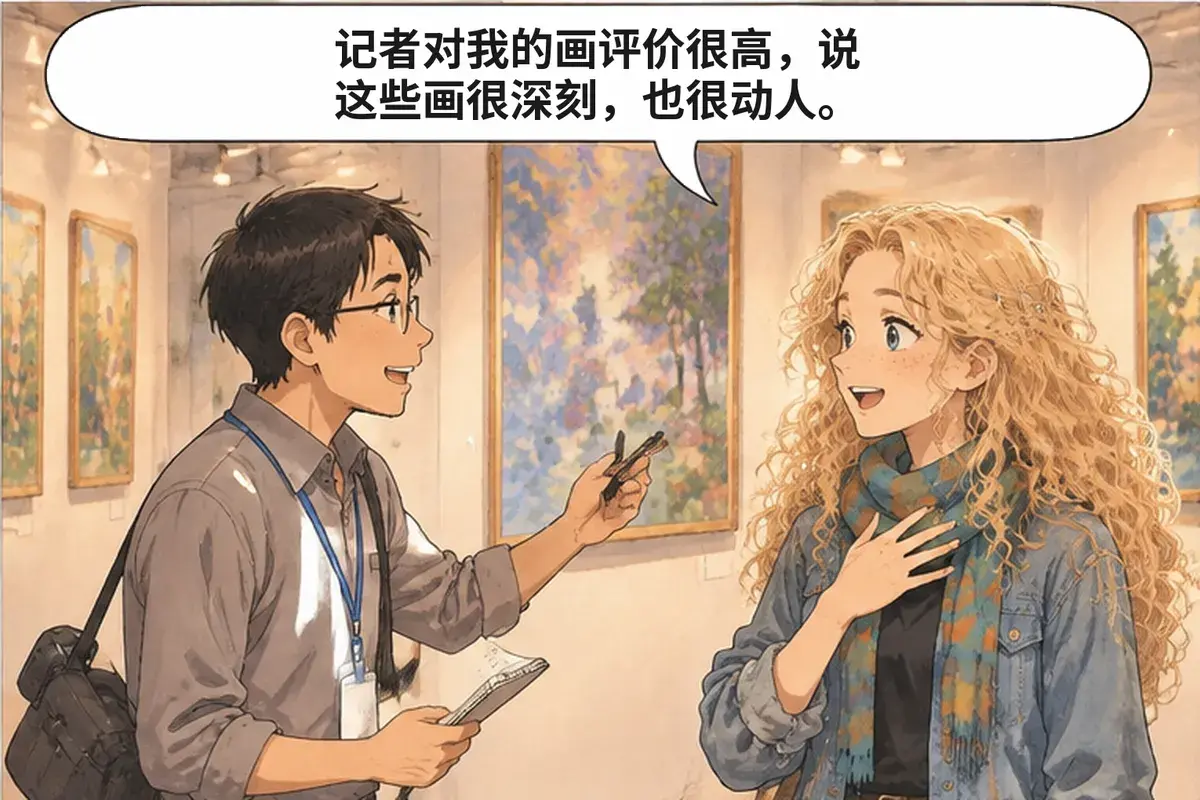
记者对我的画评价很高,说这些画很深刻,也很动人。
The reporter spoke very highly of my paintings and said they were profound and also moving.
- 萨拉
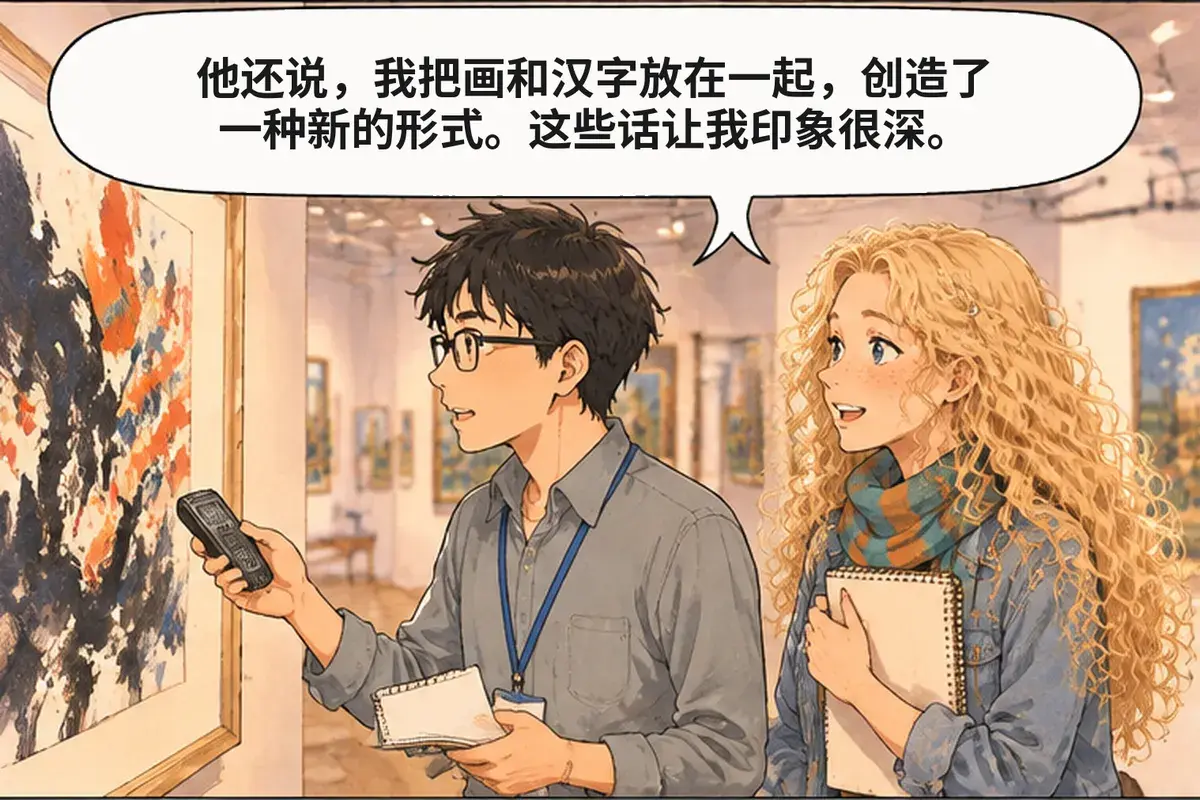
他还说,我把画和汉字放在一起,创造了一种新的形式。这些话让我印象很深。
He also said that by putting paintings and Chinese characters together, I'd created a new form. Those words made a deep impression on me.

- 萨拉
其实我只是想用画表达我对杭州的情感:这个城市又现代,又有文化。
Actually, I just wanted to use my paintings to express my feelings for Hangzhou: this city is both modern and full of culture.
- 萨拉
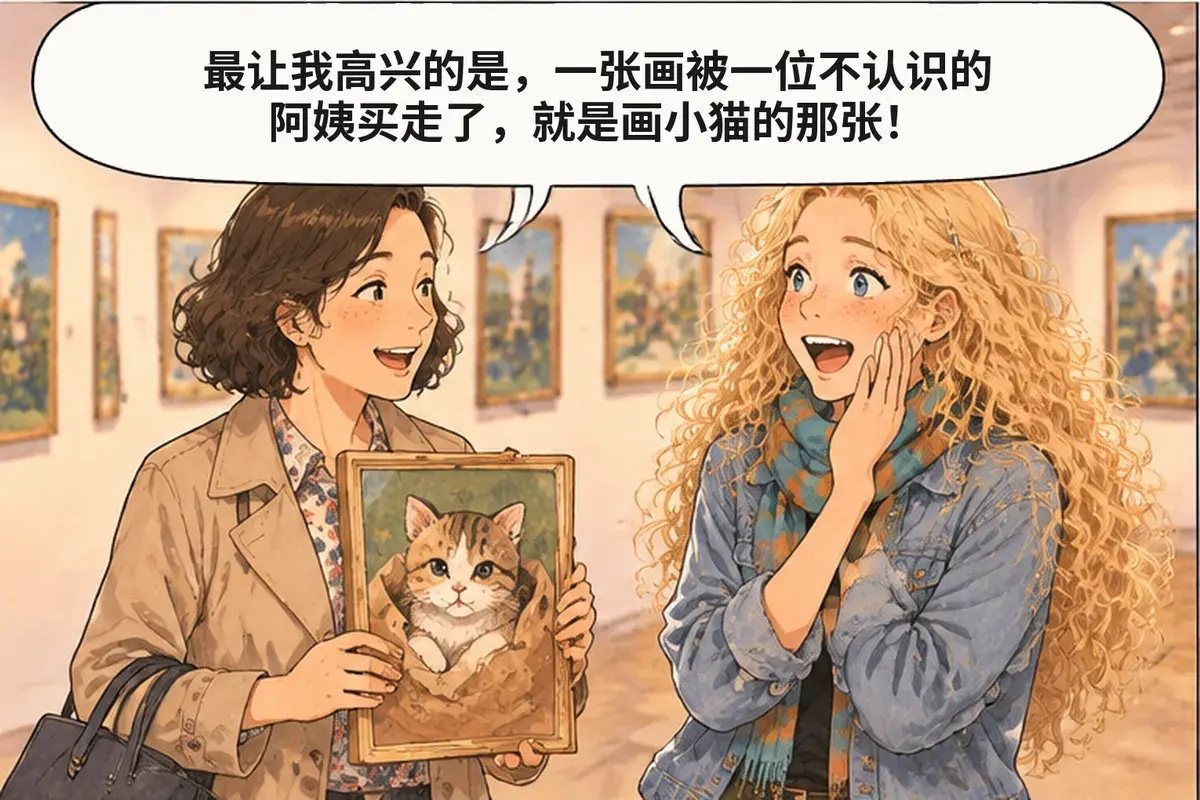
最让我高兴的是,一张画被一位不认识的阿姨买走了,就是画小猫的那张!
What made me happiest is that one painting, the one with the kitten, was bought by an auntie I didn't know!
- 萨拉
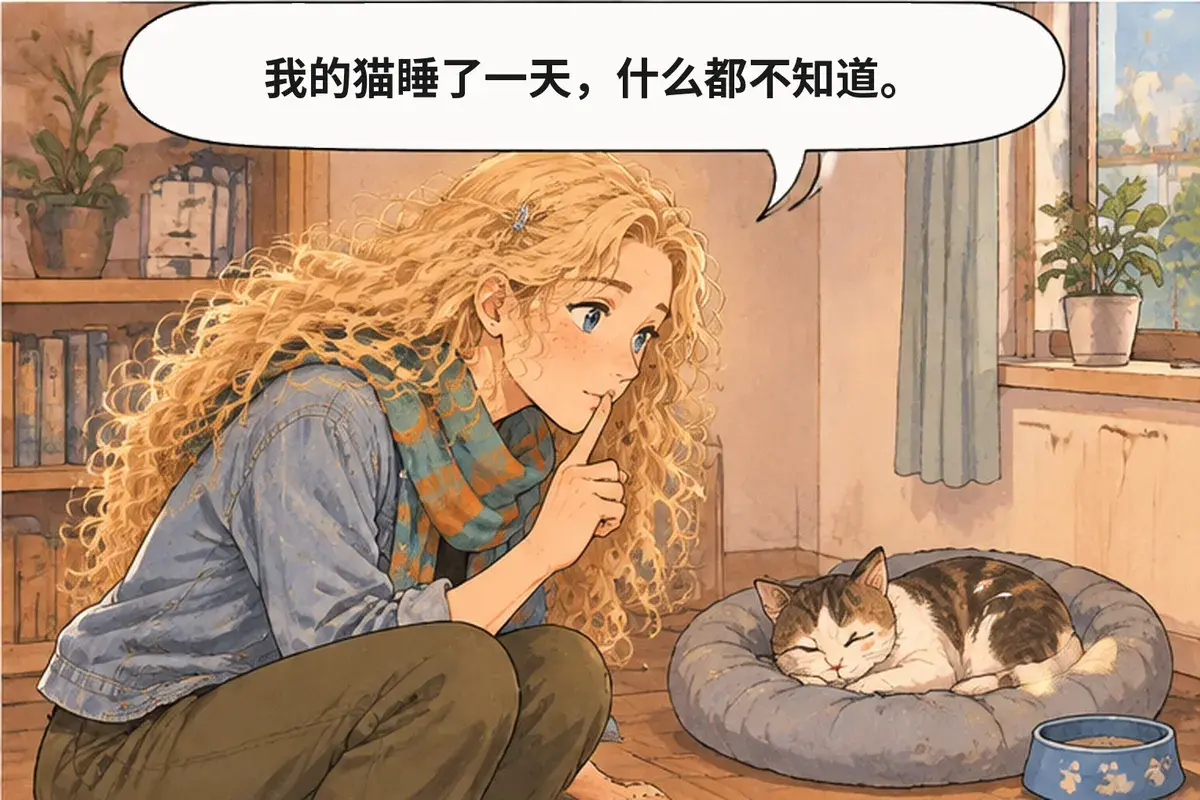
我的猫睡了一天,什么都不知道。
My cat slept all day and doesn't know anything.

- 萨拉
画的作者是我,可是这个展览是大家的。我觉得像做梦一样!
I'm the author of the paintings, but this exhibition belongs to everyone. It feels like a dream!

- 萨拉
谢谢大家的称赞,以后我还要创作更多的画!
Thank you all for your praise. In the future I'll create even more paintings!
Grammar for this text
- 谢谢 你们 帮 我 的 忙! — Thank you all for helping me! The split word
帮忙: the person goes between帮and忙, with的. Compare 伊利亚 帮 了 我 很 多 忙 — Ilya helped me out a lot: here了, the person and the amount很 多all went inside. You can't say ✗帮忙 我. - 每 次 和 你们 见 了 面, — Every time I've met with you,
见面is split so that了can go inside: "after we've met". The person you meet goes before the verb:和 你们 见面, not ✗见面 你们. Here面means "face", not "noodles". - 一 张 画 被 一 位 不 认识 的 阿姨 买 走 了, — One painting was bought by an auntie I didn't know.
被introduces the person who did it. It is usually used for unpleasant things, but here Sara is joking: the painting was "taken away", and that makes her happy.买 走means "buy and take away". - 我 把 画 和 汉字 放 在 一起, — I put paintings and Chinese characters together. This is a full
把sentence with the ending放 在 一起, "put together". - 有 一 位 记者 来 采访 我, — A reporter came to interview me.
采访(cǎifǎng) means "to interview". You know the character采from采茶"to pick tea". - 这 个 城市 又 现代, 又 有 文化。 — This city is both modern and full of culture.
又 …, 又 …means "both … and …".有 文化about a city means "rich in culture". - 我 觉得 像 做梦 一样! — It feels like a dream!
像 … 一样means "like …", and做梦means "to dream". People say this when they can't believe their luck.
Words and grammar of the unit: Praise someone and answer praise.
Learn the words from the texts with flashcards
In the app, you can tap any word in a text to see its translation, forms and examples, and new words stick with flashcards. 15 minutes a day.
Start for freeEverything is open for free. No card needed to sign up.