

Chinese dialogue with translation · A1 · 14 lines
杭州没有上海热闹 Hangzhou isn't as lively as Shanghai
Comic · 14 panels

- 伊利亚
上海真大啊!你看那边的楼,太高了!
Shanghai is really big! Look at the buildings over there, they're so tall!

- 晓雨
对,上海的楼比杭州高。
Yes, the buildings in Shanghai are taller than in Hangzhou.

- 伊利亚
这边的楼很老,但是很好看。你来过这里吗?
The buildings on this side are old, but they're pretty. Have you ever been here?
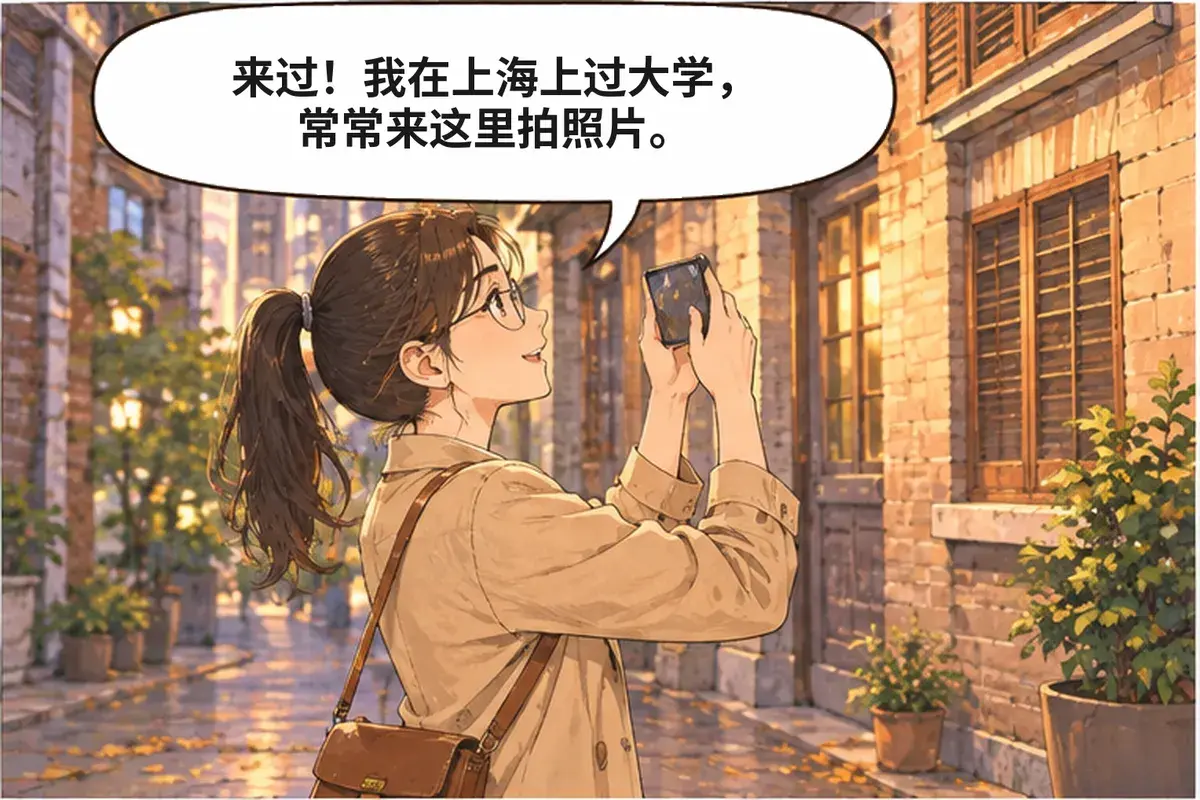
- 晓雨
来过!我在上海上过大学,常常来这里拍照片。
I have! I went to university in Shanghai, and I often came here to take photos.

- 伊利亚
真的?那你觉得上海好还是杭州好?
Really? So which do you think is better, Shanghai or Hangzhou?

- 晓雨
上海很好玩,商场也很多,但是东西比杭州贵。
Shanghai is fun, and there are lots of malls too, but things are more expensive than in Hangzhou.

- 伊利亚
房子也贵吗?
Are apartments expensive too?

- 晓雨
非常贵!一个小房子,一个月一万。
Very expensive! A small apartment is 10,000 a month.

- 伊利亚
一万?在上海住太花钱了!我的房子一个月三千五。
10,000? Living in Shanghai costs too much money! My apartment is 3,500 a month.

- 晓雨
对啊。杭州没有上海热闹,但是比上海安静。
Right. Hangzhou isn't as lively as Shanghai, but it's quieter than Shanghai.

- 伊利亚
我喜欢安静的城市。
I like quiet cities.
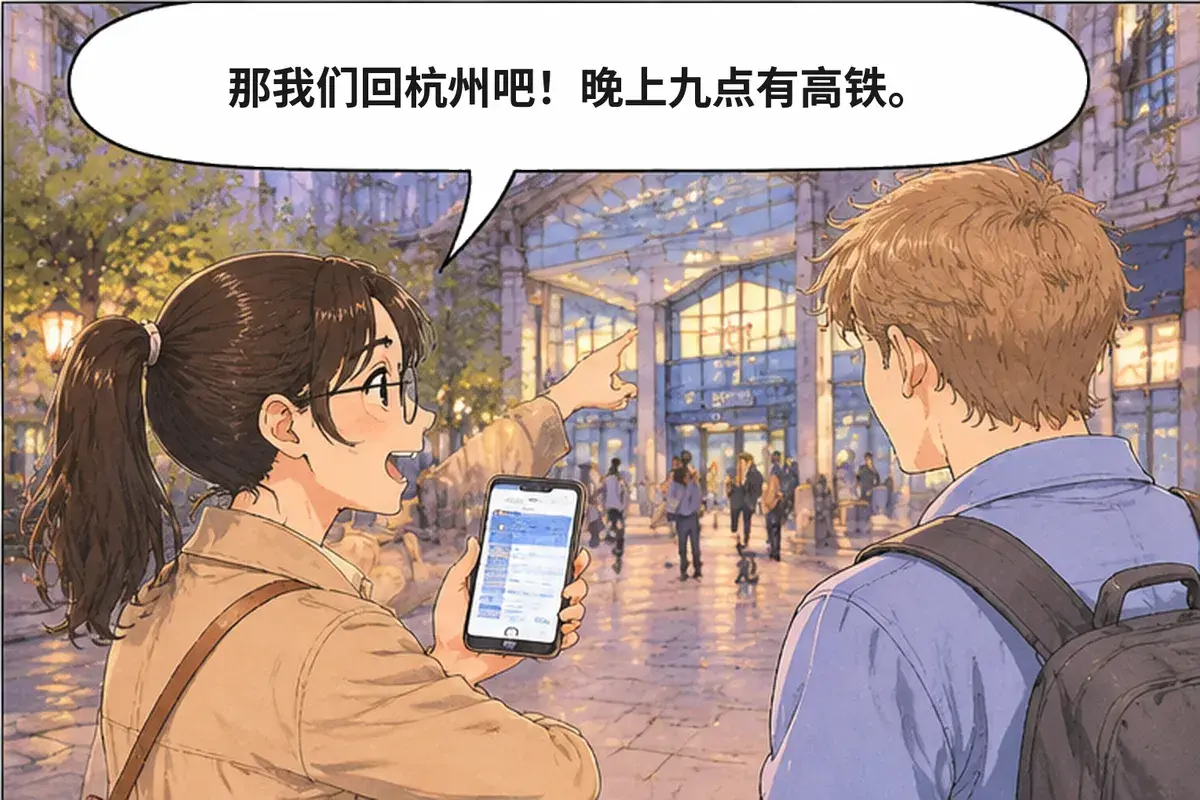
- 晓雨
那我们回杭州吧!晚上九点有高铁。
Then let's go back to Hangzhou! There's a high-speed train at nine in the evening.

- 伊利亚
好!在我们那里,大家常常坐飞机,高铁很少。
OK! Where we live, everyone often takes the plane; there are very few high-speed trains.

- 晓雨
高铁比飞机方便,机场太远了。车票也没有机票贵。
The high-speed train is more convenient than the plane; the airport is too far away. A train ticket also isn't as expensive as a plane ticket.
Grammar for this text
上海 的 楼 比 杭州 高 — a comparison with 比: the adjective 高 doesn't change, and there's no 很 before it. 杭州 here is short for 杭州 的 楼: when it's clear what you mean, you don't repeat it, just like English "than in Hangzhou".
杭州 没有 上海 热闹, 但是 比 上海 安静 — in a comparison 没有 means "not as … as". 热闹 (rènao) is "lively, bustling", and it's praise: lots of people, lights, a festive mood. Chinese people love 热闹, so Xiaoyu quickly adds a plus for Hangzhou: 安静 "quiet".
你 来 过 这里 吗? — 来 过! — to answer a question with 过, you repeat the verb with 过 instead of saying "yes". In 我 在 上海 上 过 大学, 上 大学 is "to go to university", and 过 says it happened at some point: now Xiaoyu lives in Hangzhou.
一 个 月 一万 — 万 (wàn) is ten thousand. Chinese counts big numbers in ten-thousands: 30,000 is 三万. 一万 is read yíwàn. There's no verb, just like English "10,000 a month".
我 的 房子 一 个 月 三千 五 — 3,500: in speech 三千 五 is "three thousand five (hundred)"; the word for "hundred" at the end is left out.
太 花 钱 了 — 花 钱 is "to spend money"; 太…了 is "too" (unit 5).
Where they're standing: on the Shanghai riverfront. On one bank of the river there are old buildings from the early 1900s, on the other, skyscrapers.
Words and grammar of the unit: Compare cities and buy an umbrella.
Learn the words from the texts with flashcards
In the app, you can tap any word in a text to see its translation, forms and examples, and new words stick with flashcards. 15 minutes a day.
Start for freeEverything is open for free. No card needed to sign up.