

Chinese dialogue with translation · A1 · 13 lines
这把伞比那把便宜 This umbrella is cheaper than that one
Comic · 13 panels

- 伊利亚
你好,有伞吗?外边下雨了。
Hi, do you have umbrellas? It's started raining outside.
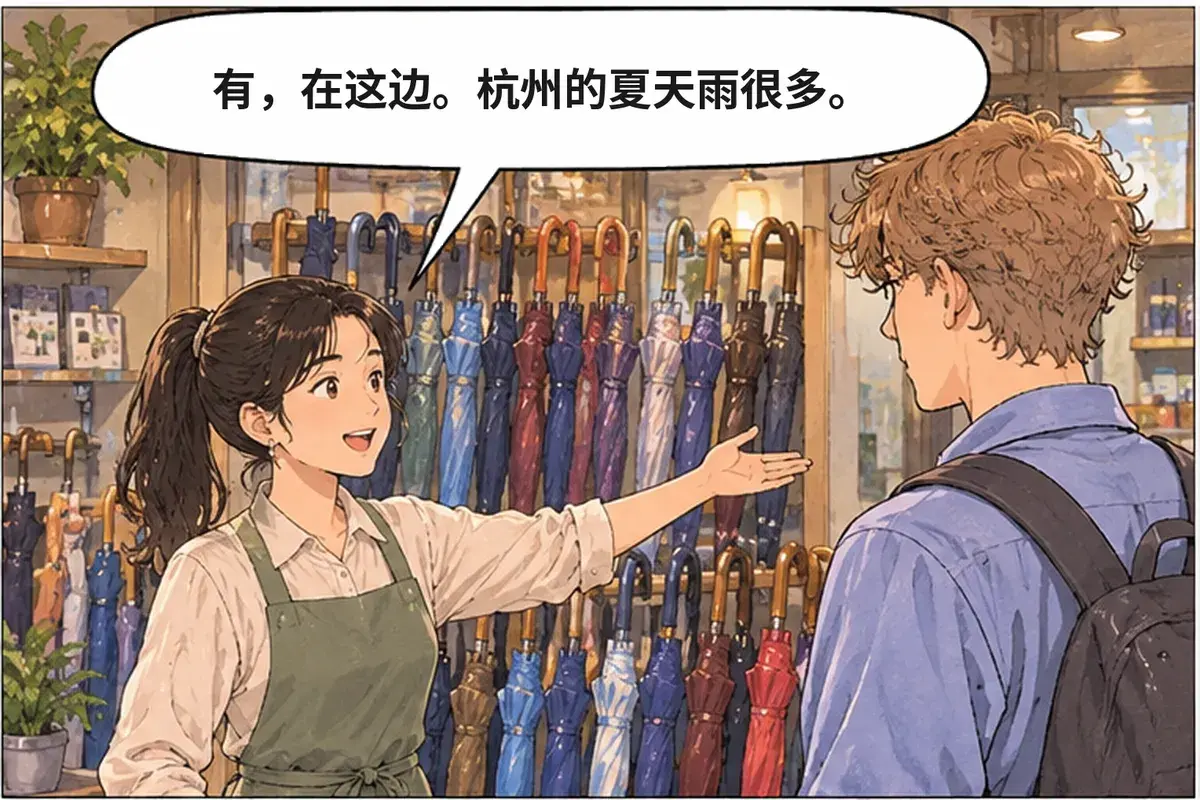
- 店员
有,在这边。杭州的夏天雨很多。
We do, over here. There's a lot of rain in Hangzhou in summer.
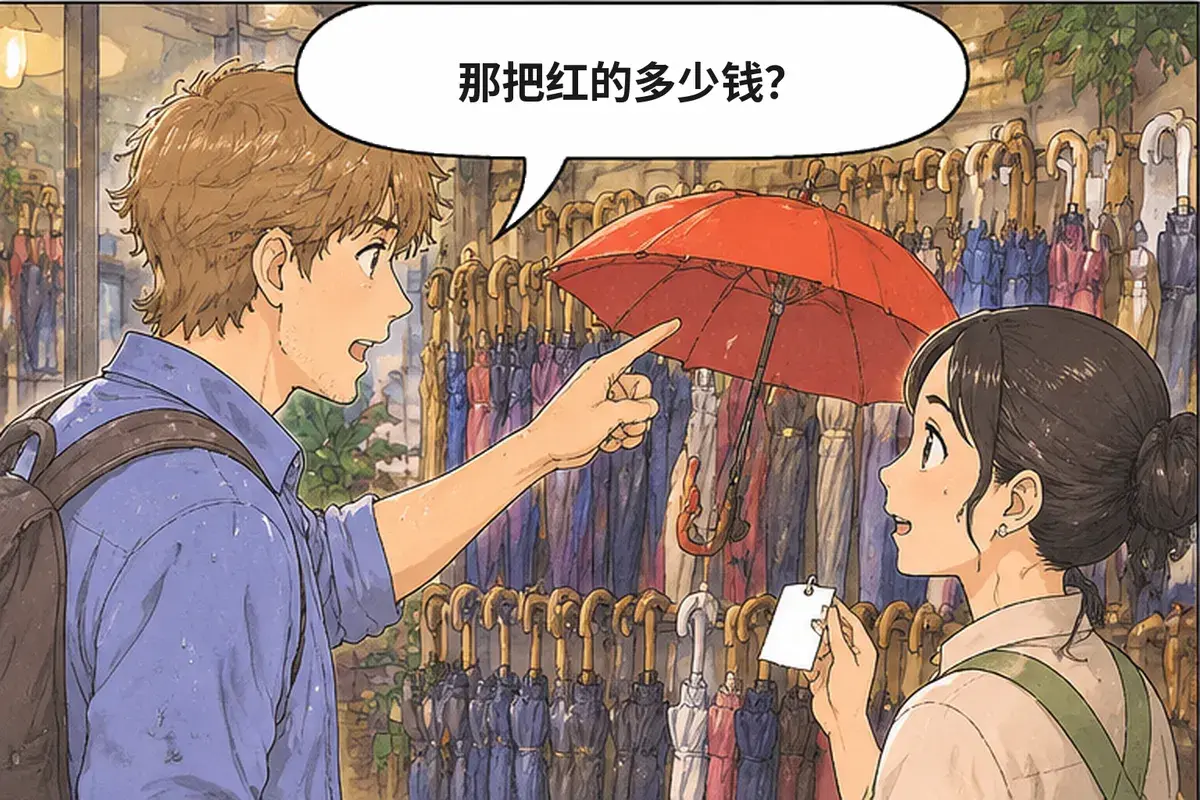
- 伊利亚
那把红的多少钱?
How much is that red one?

- 店员
八十块。这把白的五十块。
Eighty yuan. This white one is fifty yuan.

- 伊利亚
这把伞比那把便宜。是不是小一点?
This umbrella is cheaper than that one. Is it a little smaller?
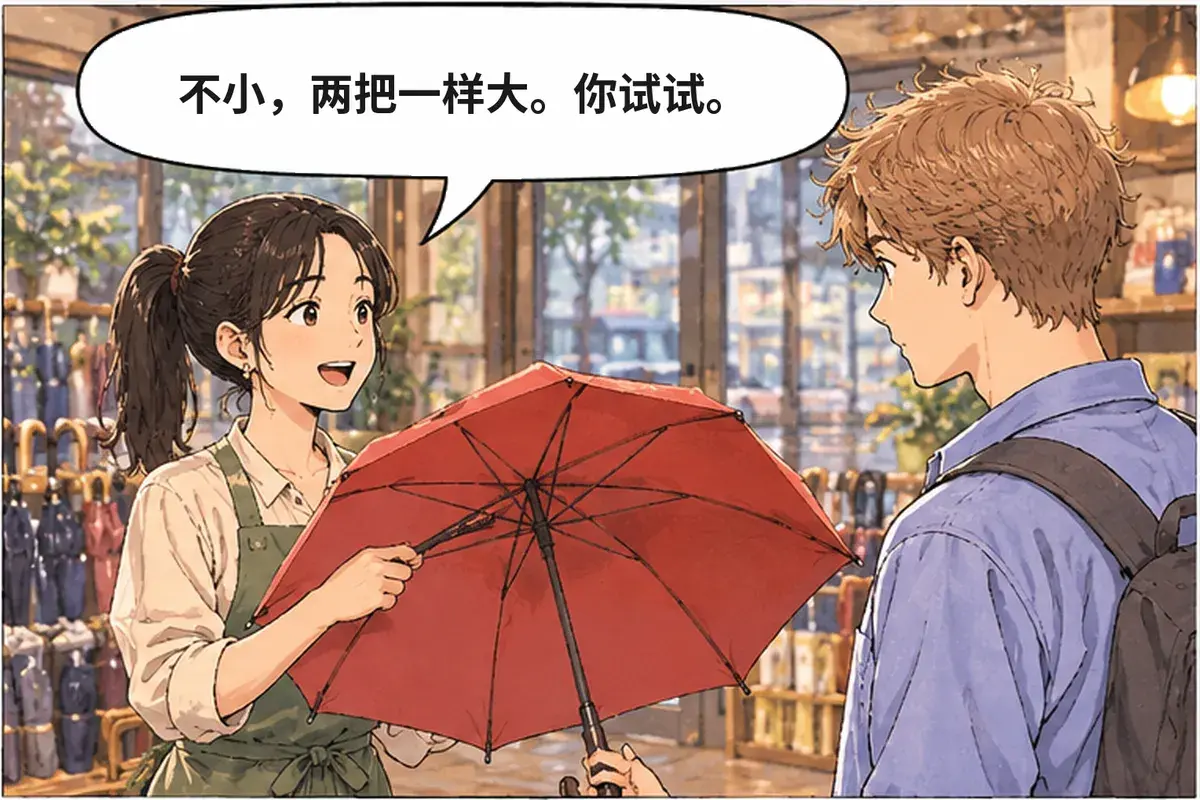
- 店员
不小,两把一样大。你试试。
It's not small; the two are the same size. Give it a try.

- 伊利亚
不错!真的一样大。为什么红的比白的贵?
Not bad! They really are the same size. Why is the red one more expensive than the white one?
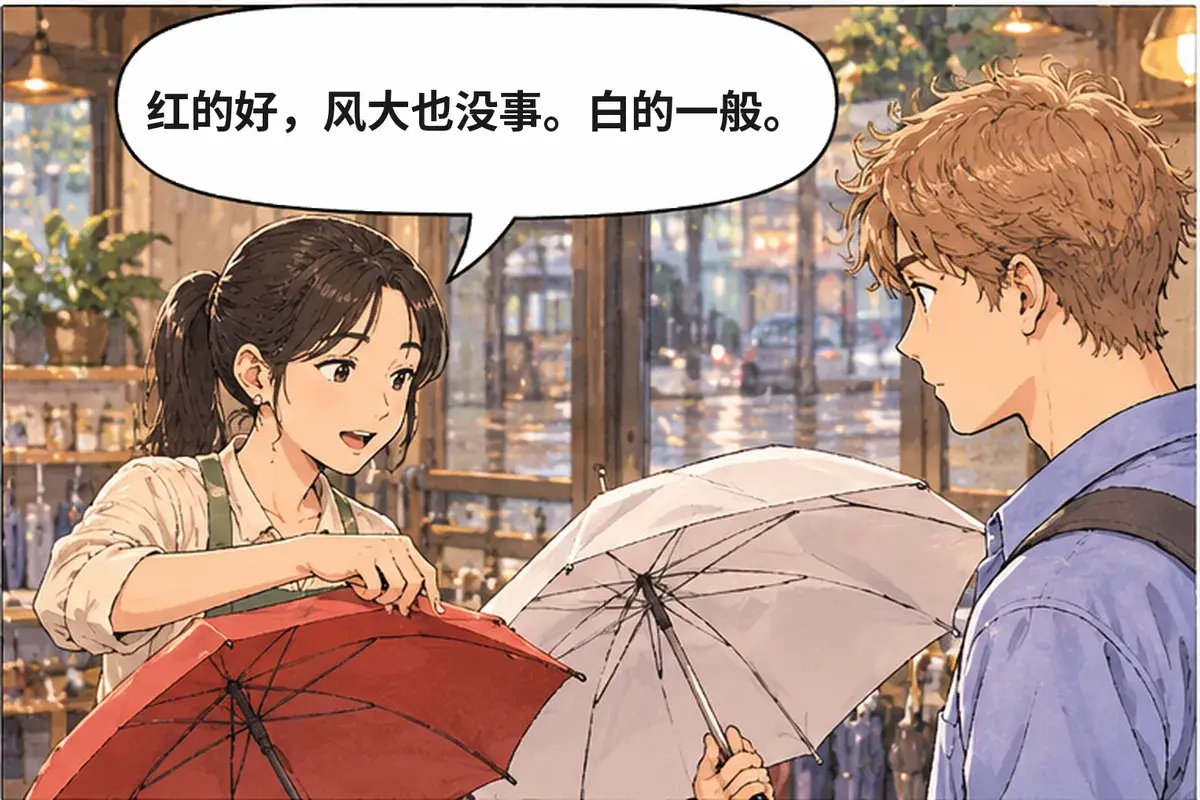
- 店员
红的好,风大也没事。白的一般。
The red one is good: even in a strong wind it's fine. The white one is so-so.

- 伊利亚
“一般”是什么意思?
What does "so-so" mean?

- 店员
不太好,也不太坏。
Not very good, but not very bad either.
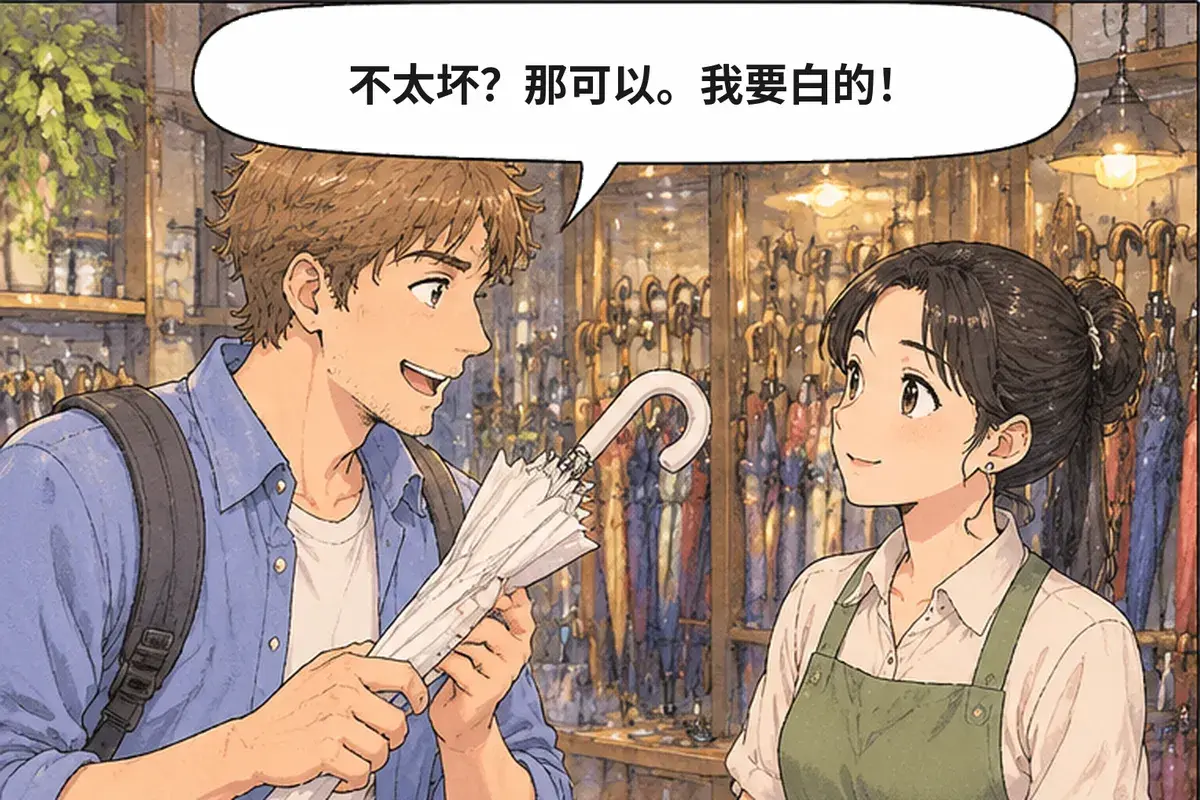
- 伊利亚
不太坏?那可以。我要白的!
Not very bad? Then that's fine. I'll take the white one!
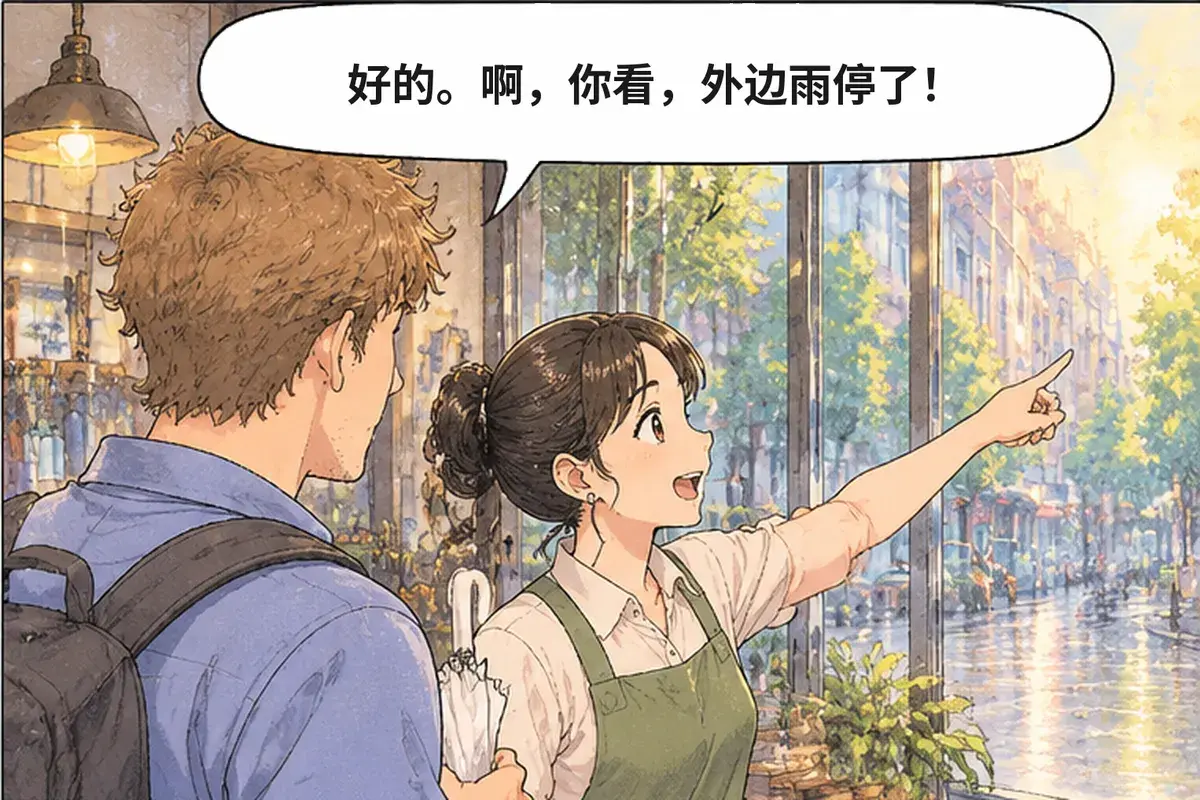
- 店员
好的。啊,你看,外边雨停了!
OK. Oh, look, the rain has stopped outside!

- 伊利亚
没事,明天也下雨。
It's fine, it'll rain tomorrow too.
Grammar for this text
这 把 伞 比 那 把 便宜 — 把 (bǎ) is the measure word for umbrellas (and other things with a handle). After 这 and 那 you need a measure word. 那 把 has no 伞: it's clear what's meant, like English "that one". This is not the 把 sentence from textbooks: that comes at A2.
两 把 一样 大 — 一样 + adjective: "the same size". "Different" is 不 一样.
你 试试 — 试试 is "give it a try": a doubled verb sounds softer, "just once, a little", like 看看. The salesclerk suggests opening the umbrella right in the store, and that's fine.
“一般” 是 什么 意思? — 一般 (yìbān) is "so-so, ordinary". If a seller calls their own product 一般, they're honestly not praising it. In the answer 不 太 好, 也 不 太 坏, the words 不 太 soften it: "not very".
风 大 也 没事 — 也 here means "even": "even if the wind is strong, it's fine".
外边 下 雨 了 — 了 at the end means "it has become so" (unit 14): there was no rain, and now it's started. From mid-June Hangzhou has the "plum rains" (梅雨, méiyǔ): rain almost every day for about a month. That's why Ilya calmly says 明天 也 下 雨.
不错! — literally "not wrong", and it means "good": everyday praise, like English "not bad".
The salesclerk says plain 你 to Ilya, not the polite 您: that's normal in a store.
Words and grammar of the unit: Compare cities and buy an umbrella.
Learn the words from the texts with flashcards
In the app, you can tap any word in a text to see its translation, forms and examples, and new words stick with flashcards. 15 minutes a day.
Start for freeEverything is open for free. No card needed to sign up.