
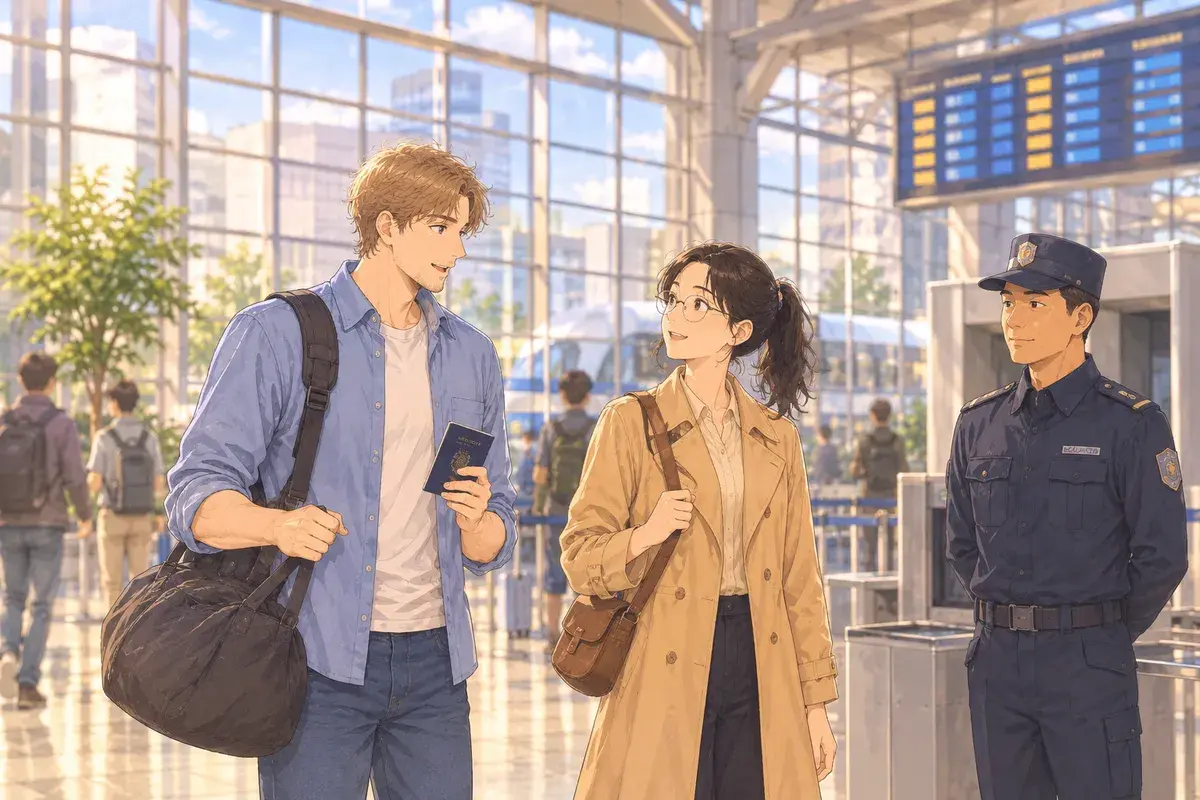
Chinese dialogue with translation · A1 · 15 lines
我的护照呢? Where's my passport?
Comic · 12 panels
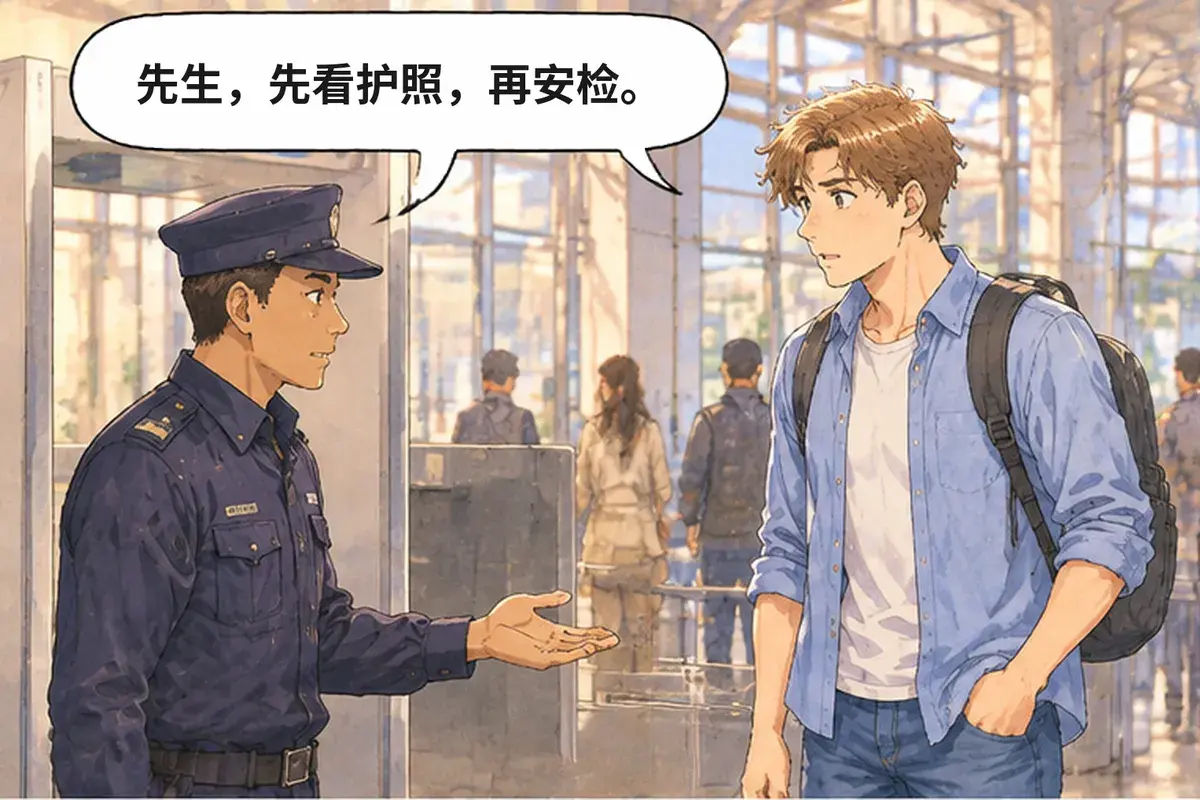
- 保安
先生,先看护照,再安检。
Sir, passport check first, then the security check.
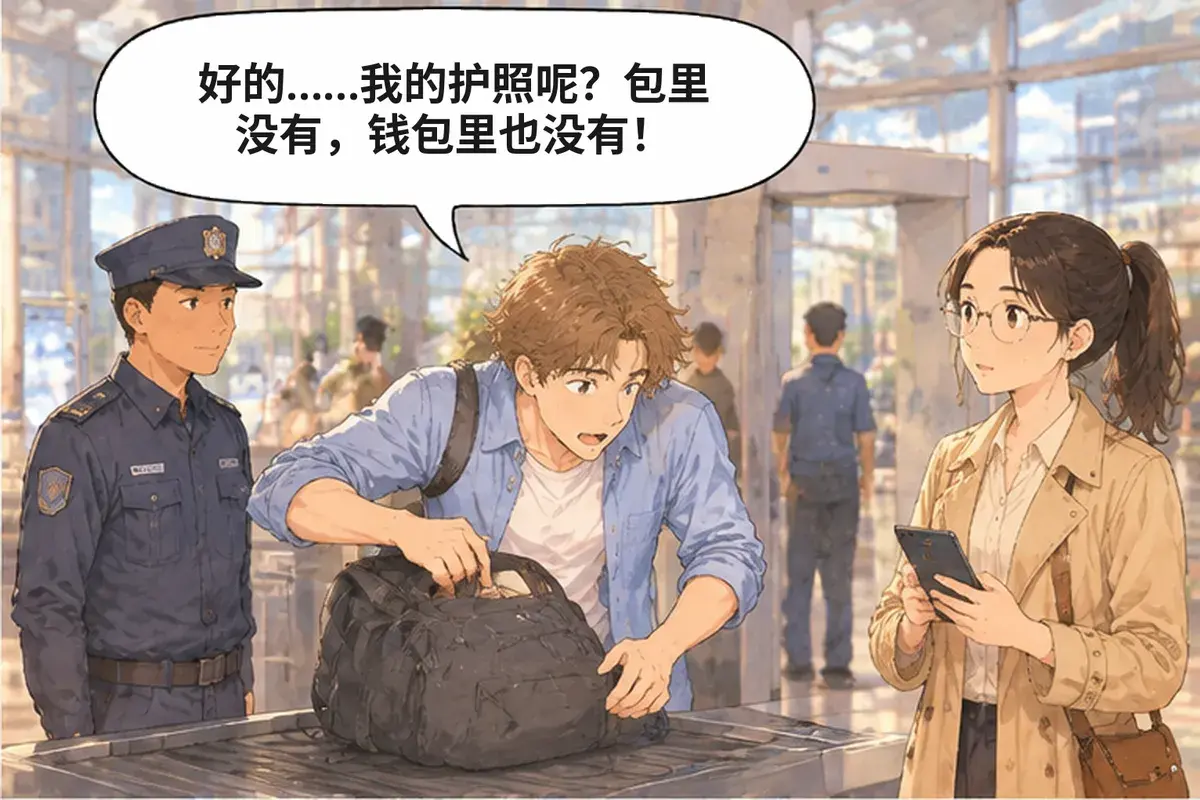
- 伊利亚
好的……我的护照呢?包里没有,钱包里也没有!
OK… Where's my passport? It's not in my bag, and it's not in my wallet either!
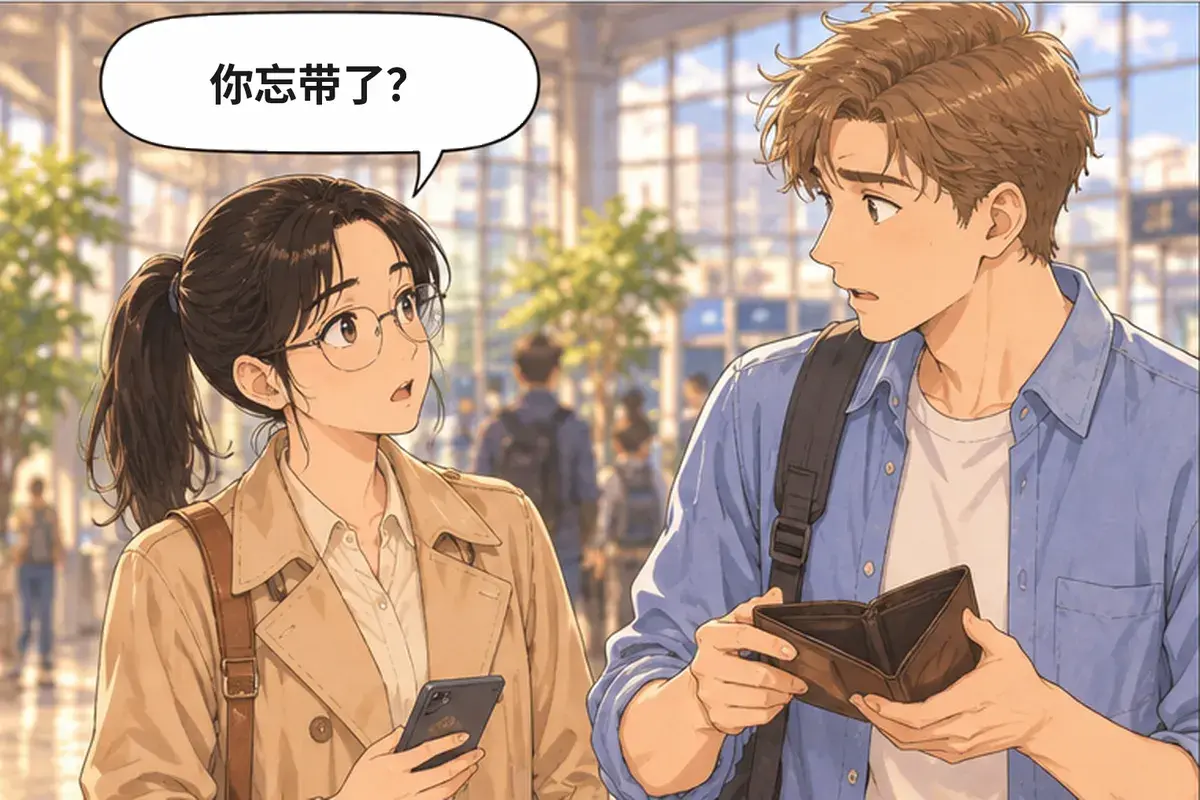
- 晓雨
你忘带了?
Did you forget to bring it?
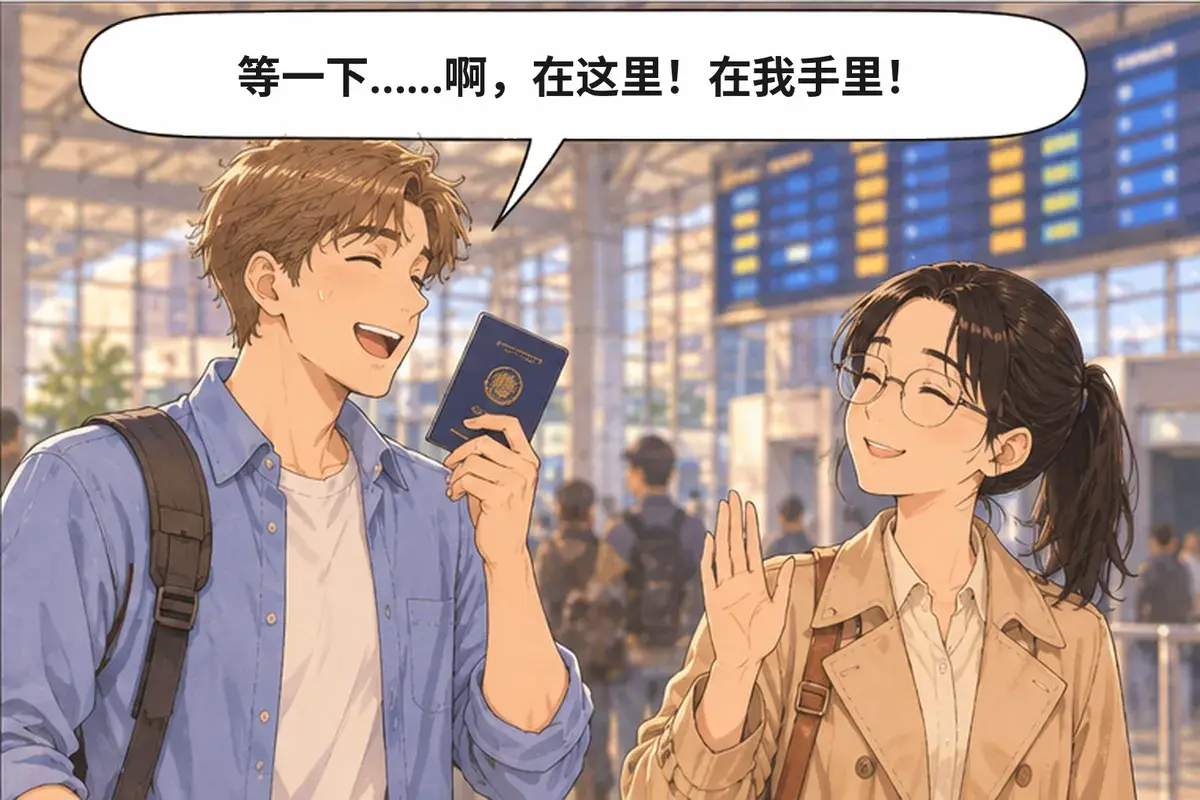
- 伊利亚
等一下……啊,在这里!在我手里!
Wait a moment… Oh, here it is! It's in my hand!
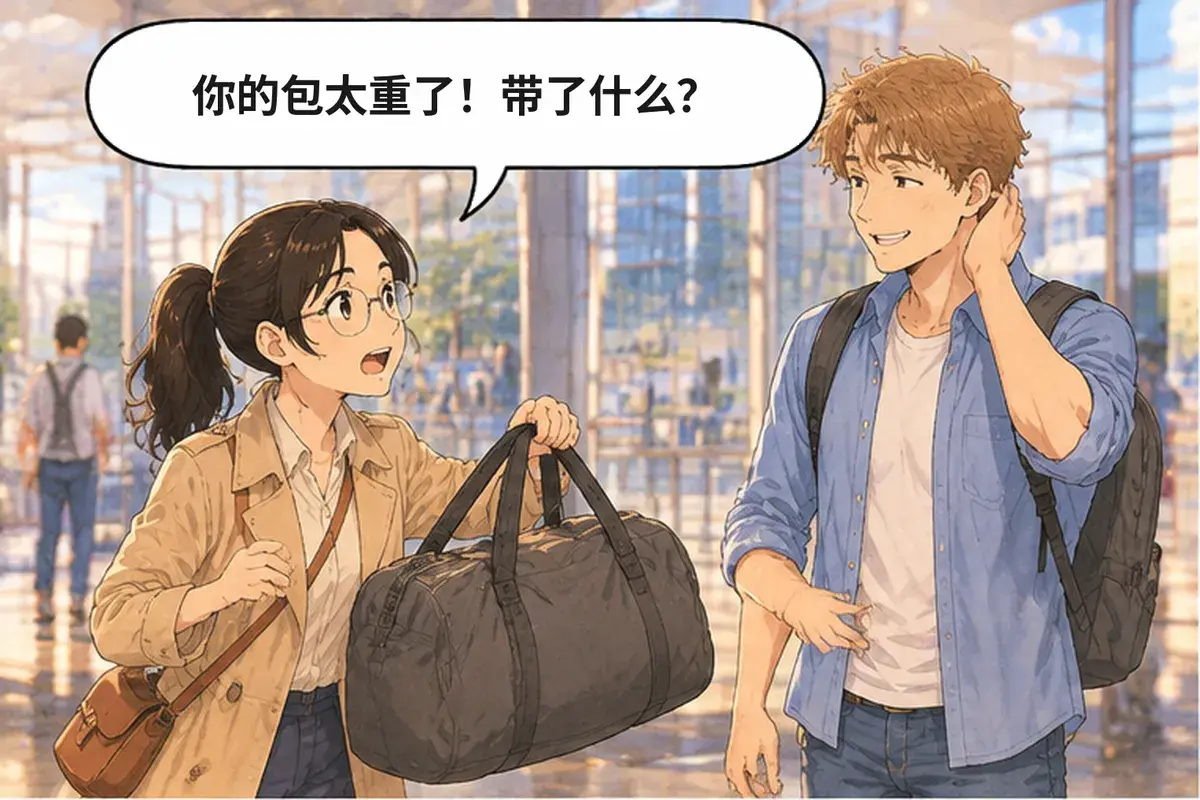
- 晓雨
你的包太重了!带了什么?
Your bag is too heavy! What did you bring?
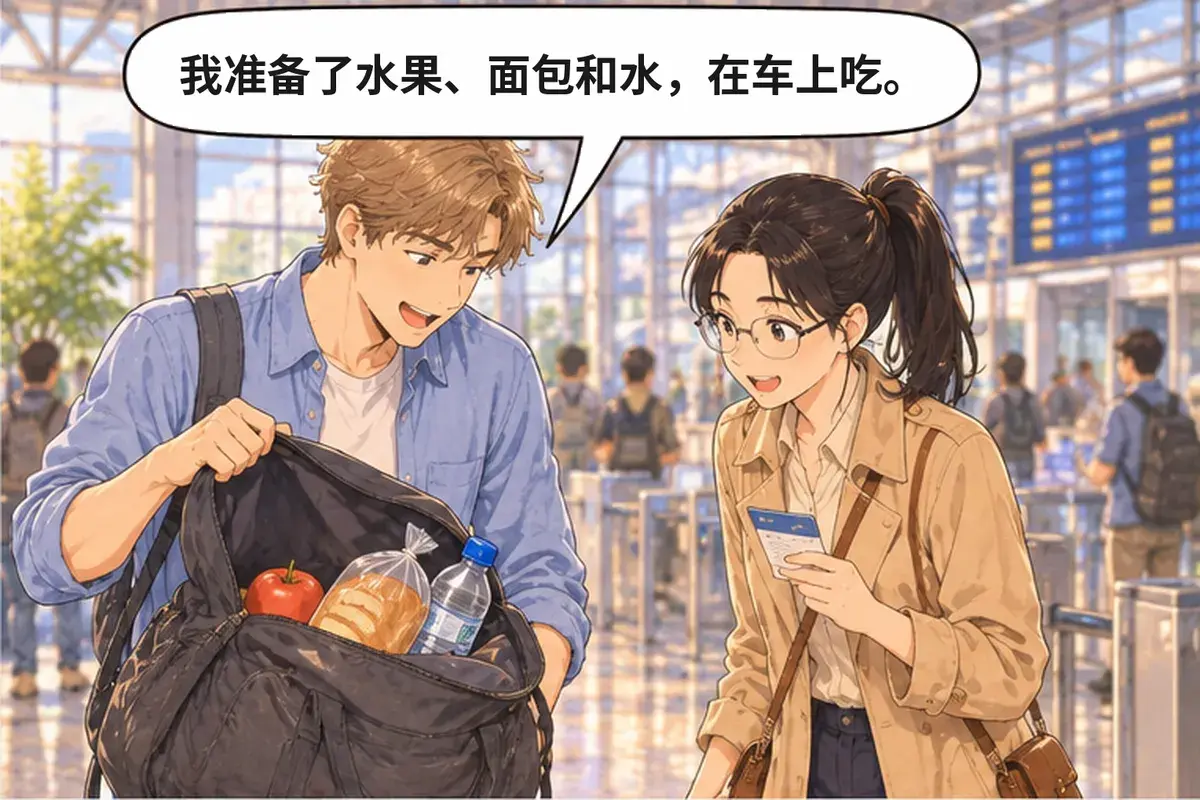
- 伊利亚
我准备了水果、面包和水,在车上吃。
I packed some fruit, bread and water to eat on the train.
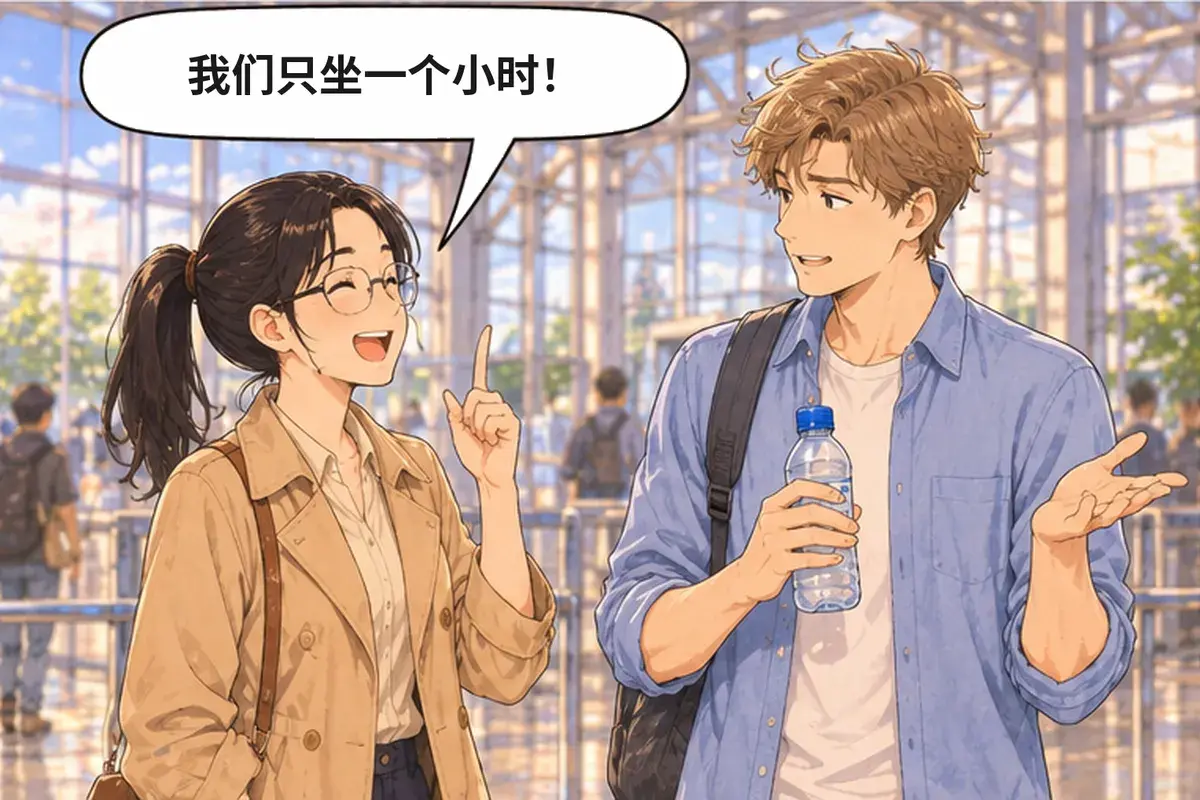
- 晓雨
我们只坐一个小时!
We're only riding for one hour!
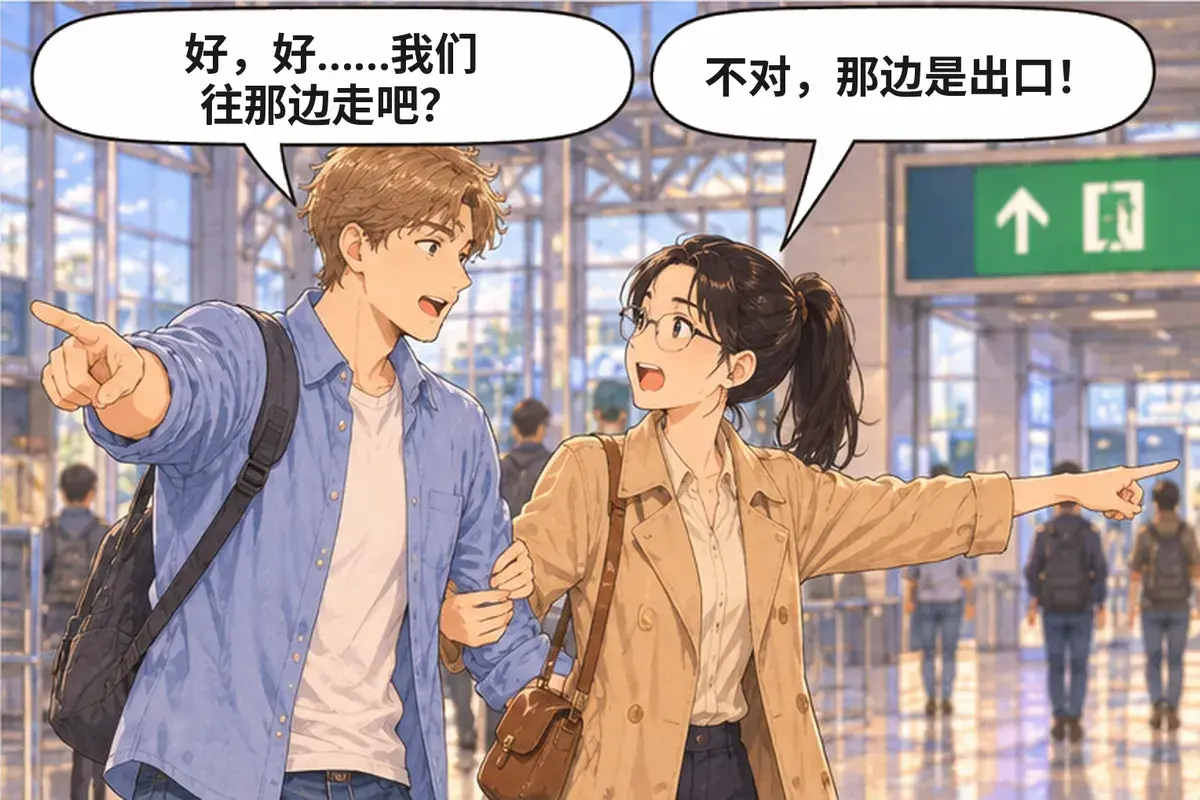
- 伊利亚
好,好……我们往那边走吧?
OK, OK… Shall we go that way?
- 晓雨
不对,那边是出口!
No, that's the exit over there!
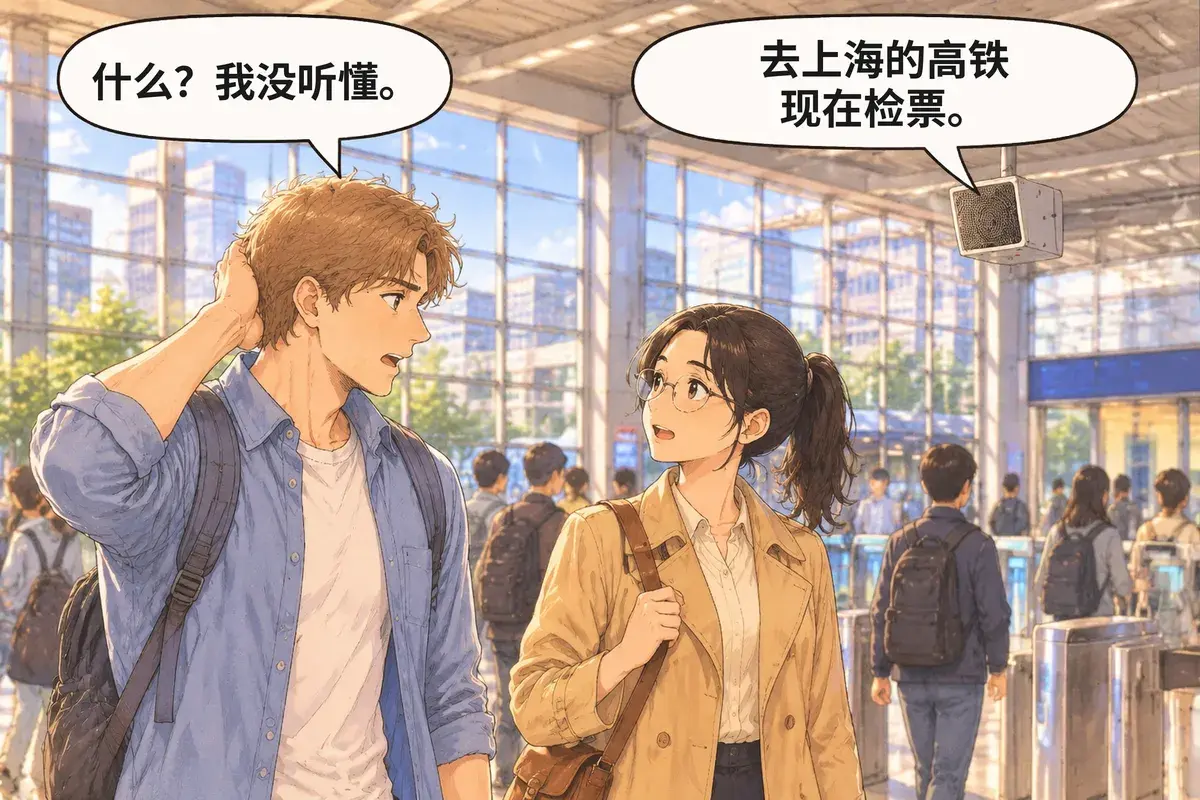
- 广播
去上海的高铁现在检票。
The high-speed train to Shanghai is now boarding.
- 伊利亚
什么?我没听懂。
What? I didn't understand.
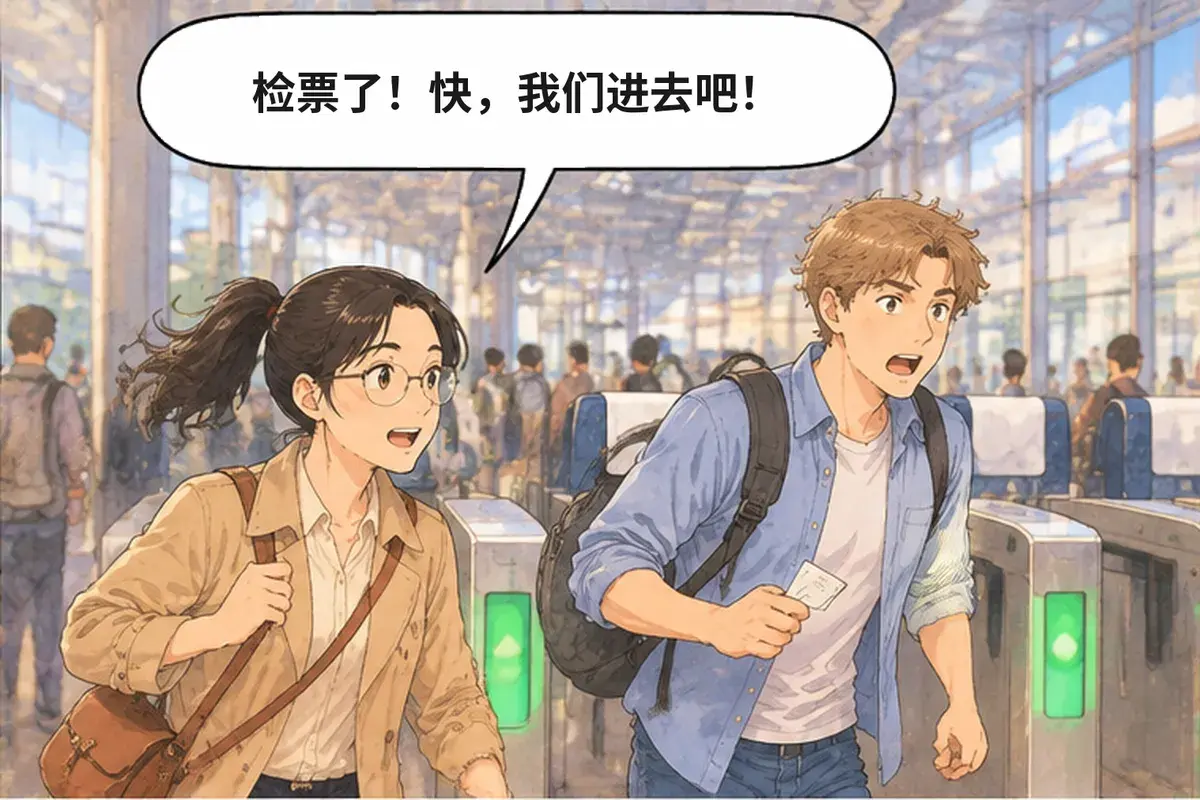
- 晓雨
检票了!快,我们进去吧!
Boarding has started! Quick, let's go in!
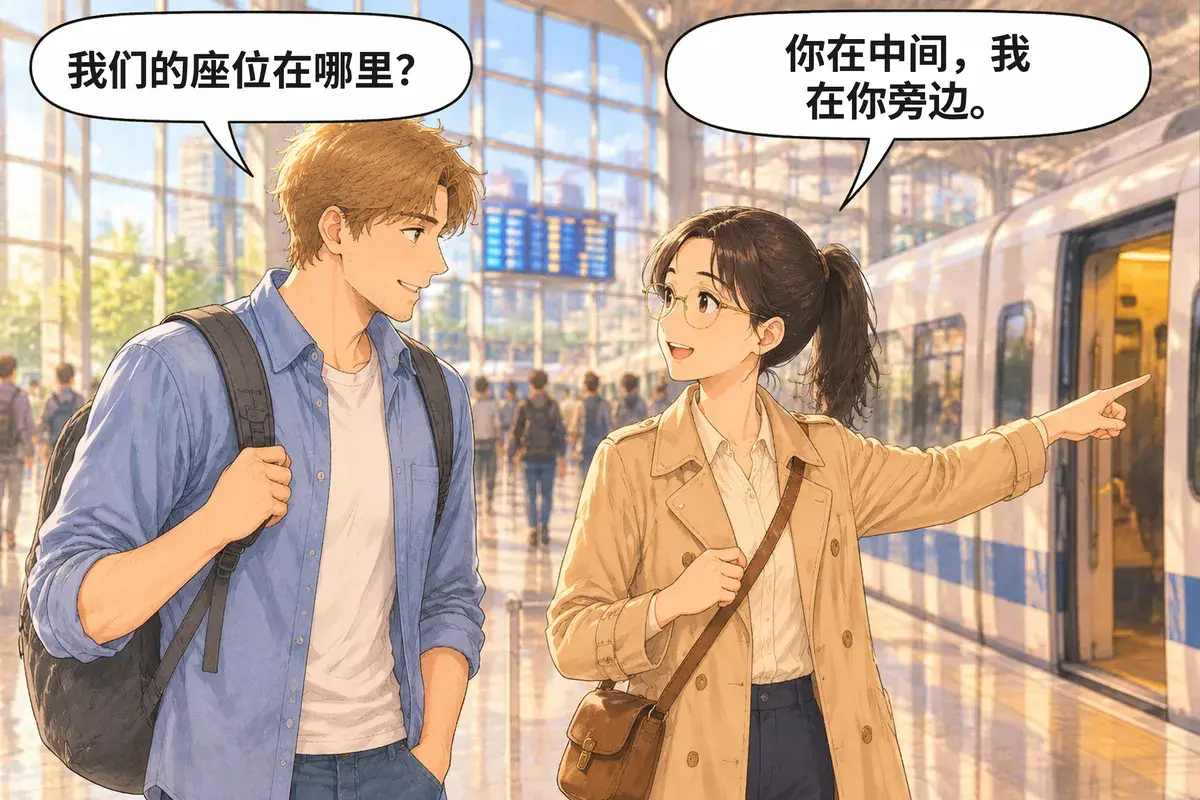
- 伊利亚
我们的座位在哪里?
Where are our seats?
- 晓雨
你在中间,我在你旁边。
You're in the middle, I'm next to you.
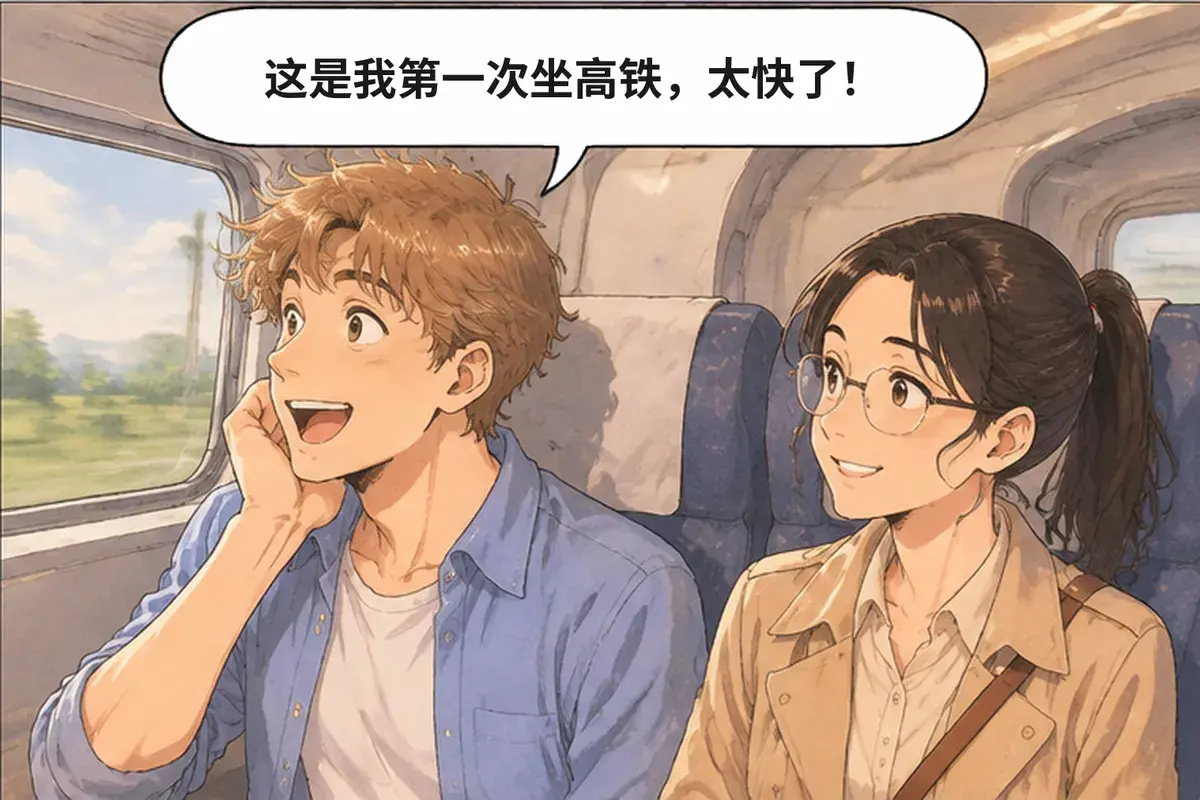
- 伊利亚
这是我第一次坐高铁,太快了!
This is my first time on a high-speed train, it's so fast!
Grammar for this text
先生, 先 看 护照, 再 安检。 — two different words in a row: 先生 (xiānsheng) is "sir", how guards and salesclerks address a man they don't know; 先 … 再 … is "first …, then …". At the station entrance they check your passport first, then X-ray your bags, like in the subway (unit 4).
我 的 护照 呢? — 呢 after a thing, with no verb, means "where's …?": you ask this when something has gone missing.
你 忘 带 了? — 忘 带 is "to forget to bring"; 了 at the end says "that's what happened".
在 我 手 里! — 手 里 is "in the hand": a place is named like this, "hand + inside". The passport was in Ilya's hand the whole time.
你 的 包 太 重 了! 带 了 什么? — Xiaoyu helps put the bag on the security belt. Ilya packed food as if for a long train trip, but the ride is only an hour.
在 车上 吃 — 车上 (chēshang) is "on the train, in the car, on the bus": Chinese says "on the vehicle".
我们 往 那边 走 吧? — 吧 in a question: "shall we go that way?": Ilya is suggesting it. 那边 is "that side", 这边 is "this side".
去 上海 的 高铁 现在 检票。 — an announcement. 检票 is "ticket check", that is, boarding; usually there's no paper ticket, and at boarding they check your passport. 去 上海 的 高铁 is "the train going to Shanghai": everything that describes a thing comes before it, with 的 (unit 8). English puts "to Shanghai" after "train".
检票 了! — 了 at the end: "it has started" (unit 14).
你 在 中间, 我 在 你 旁边。 — what something is next to comes before 旁边: 你 旁边 — "next to you". In second class a row has three seats and two seats, and Ilya got the middle one of the three.
这 是 我 第 一 次 坐 高铁 — 第 一 次 (dì yī cì) is "the first time": 第 turns a number into an ordinal number, and 次 is the measure word for "times". 一 after 第 is said in the 1st tone.
Words and grammar of the unit: Buy a high-speed train ticket.
Learn the words from the texts with flashcards
In the app, you can tap any word in a text to see its translation, forms and examples, and new words stick with flashcards. 15 minutes a day.
Start for freeEverything is open for free. No card needed to sign up.