

Chinese dialogue with translation · A1 · 11 lines
你喝茶还是咖啡? Are you having tea or coffee?
Comic · 11 panels

- 晓雨
伊利亚,你喝茶还是咖啡?
Ilya, are you having tea or coffee?

- 伊利亚
我想喝水。有冰水吗?
I'd like to have some water. Is there any ice water?

- 晓雨
冰水?不好!我们喝热的。
Ice water? Not good! We drink hot drinks.

- 伊利亚
好,我喝茶。这是什么茶?
OK, I'll have tea. What kind of tea is this?
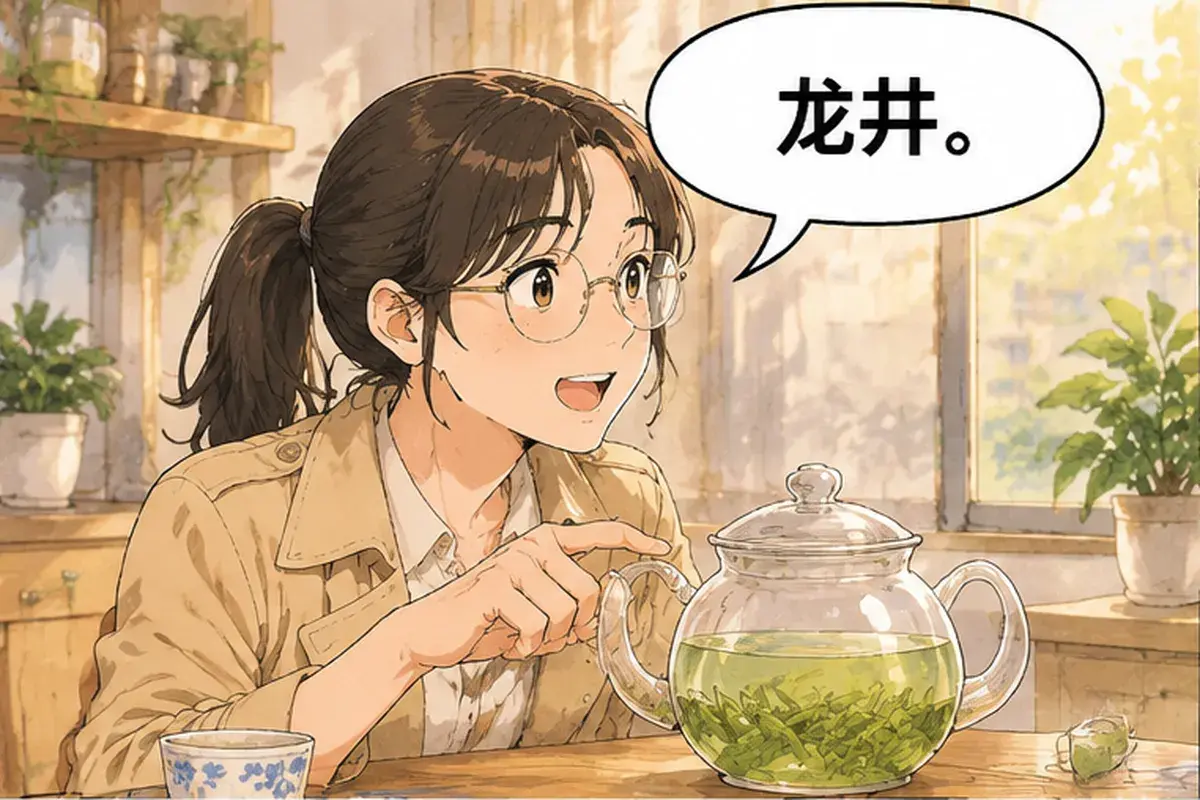
- 晓雨
龙井。
Longjing.
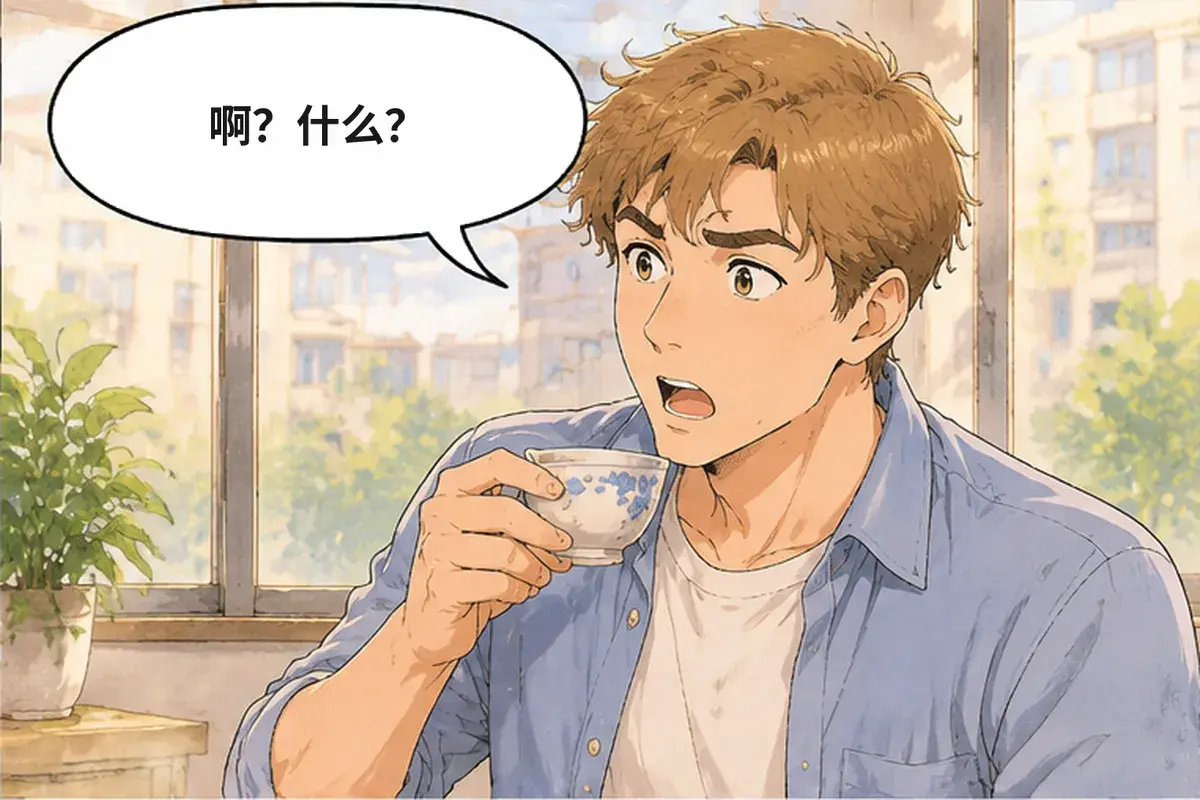
- 伊利亚
啊?什么?
Huh? What?
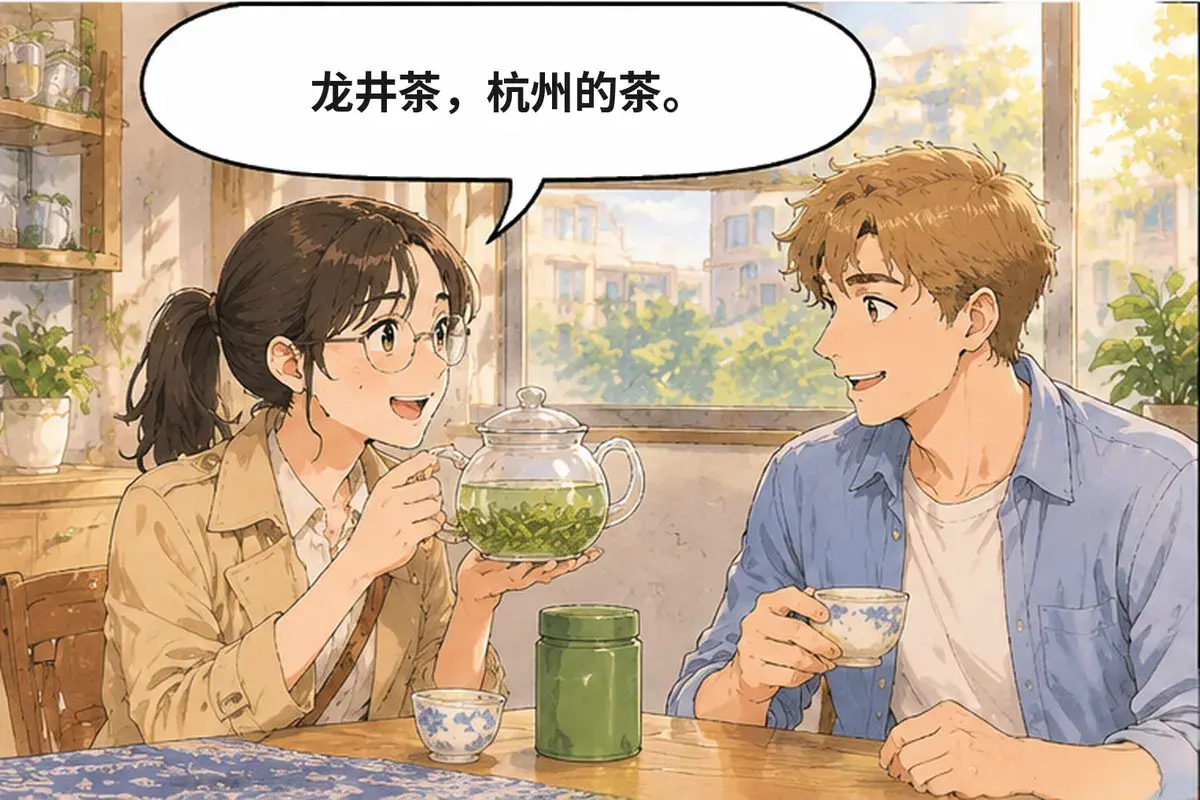
- 晓雨
龙井茶,杭州的茶。
Longjing tea, the tea of Hangzhou.
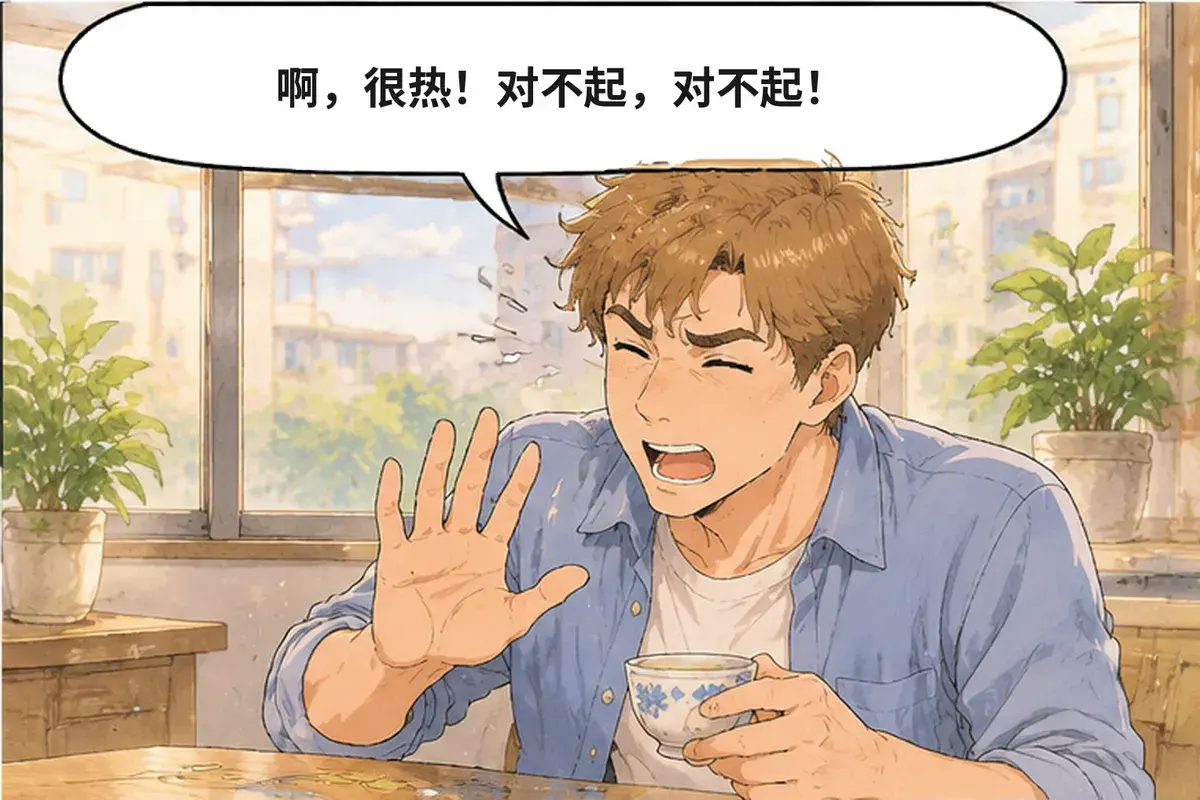
- 伊利亚
啊,很热!对不起,对不起!
Oh, it's hot! Sorry, sorry!

- 晓雨
没事,没事!你没事吧?
It's nothing, it's nothing! You're OK, right?

- 伊利亚
没事。茶很好喝!
I'm fine. The tea is delicious!

- 晓雨
是啊!冰水不好喝。
Yeah! Ice water doesn't taste good.
Grammar for this text
冰 水? 不 好! 我们 喝 热 的。 — in China people drink warm and hot drinks even in summer, and ice water is thought to be bad for you. 我们 here means "we Chinese". 不 好 — "not good": the adjective goes without 是.
你 喝 茶 还是 咖啡? — a question with a choice: 还是, no 吗. One verb, 喝, works for both options.
我 想 喝 水。 — 想 is softer than 要: "I'd like to have". After 想 comes an action — 喝.
龙井 茶, 杭州 的 茶。 — Longjing is a famous green tea from the villages near West Lake; people drink it without sugar or milk. 杭州 的 茶 — "Hangzhou's tea": 的 after a place name means "whose, from where", as in 我 的 手机.
啊, 很 热! — 很 here isn't "very": it's just "it's hot!". Ilya burned himself and spilled the tea — that's why he says 对不起, 对不起!
你 没事 吧? — "you're OK, right?": 没事 — "nothing's wrong", and 吧 in a question means "right?", when you expect the answer "yes". You answer with the same word: 没事。
是 啊! — "yeah!": agreement; 啊 makes it livelier.
Words and grammar of the unit: Order milk tea and coffee.
Learn the words from the texts with flashcards
In the app, you can tap any word in a text to see its translation, forms and examples, and new words stick with flashcards. 15 minutes a day.
Start for freeEverything is open for free. No card needed to sign up.