
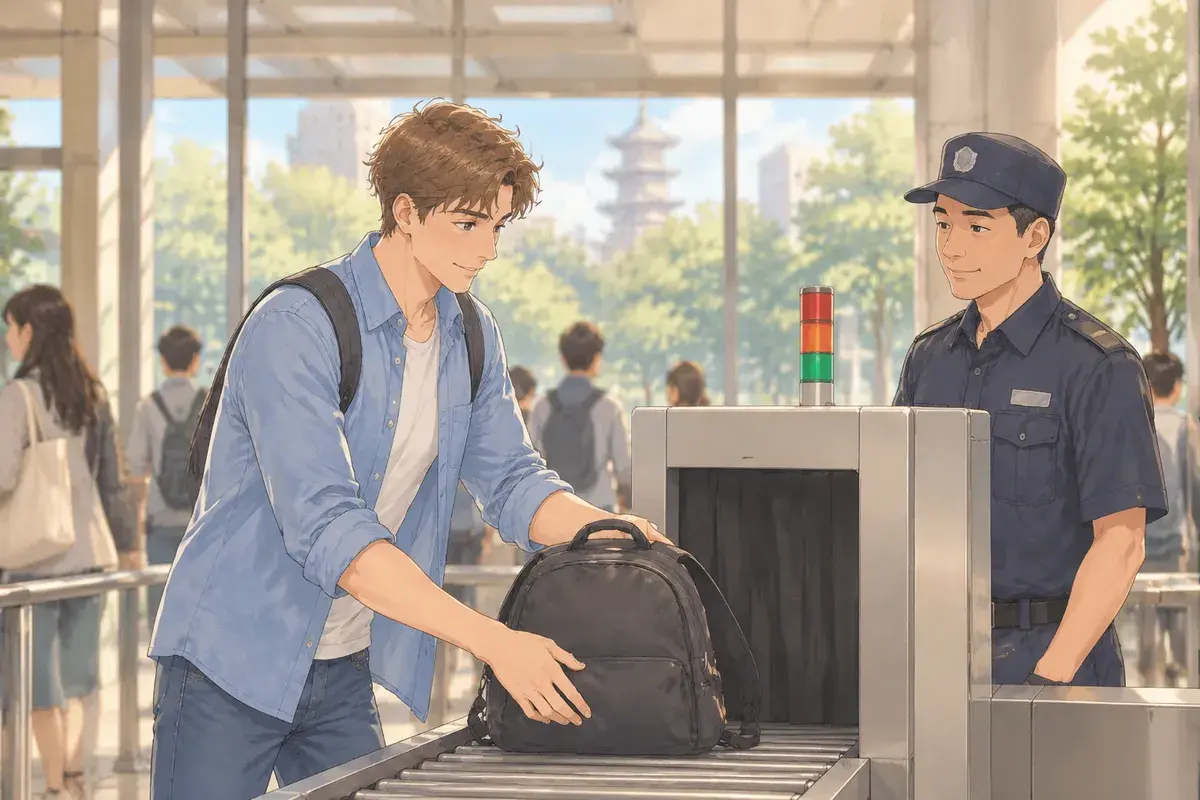
Chinese dialogue with translation · A1 · 12 lines
喝一口! Take a sip!
Comic · 8 panels
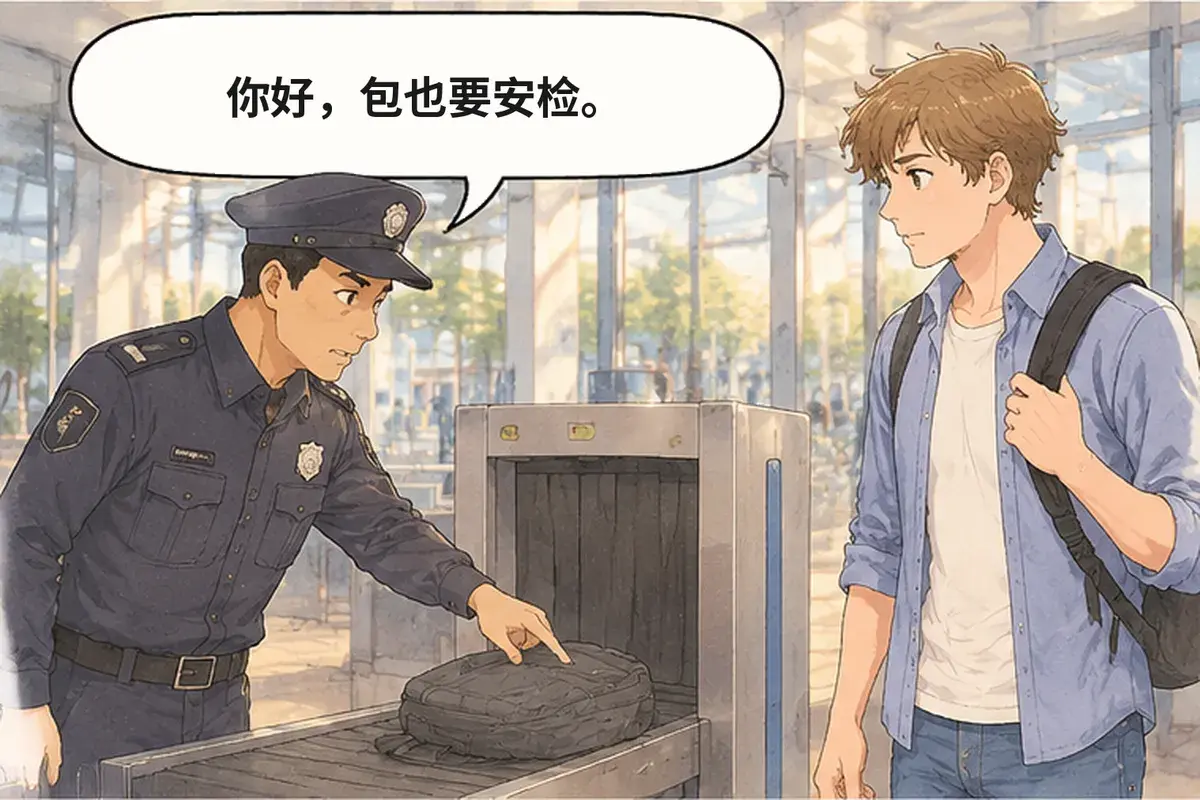
- 保安
你好,包也要安检。
Hello, the bag has to go through the security check too.
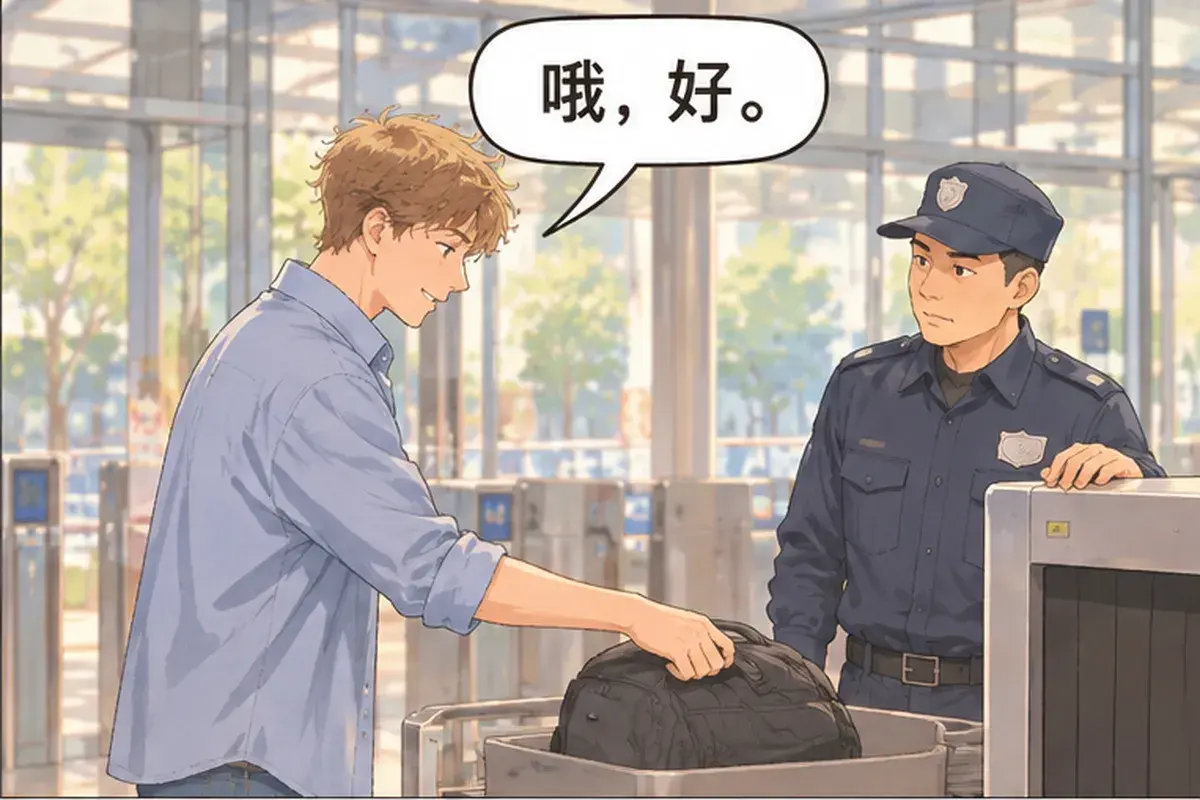
- 伊利亚
哦,好。
Oh, OK.
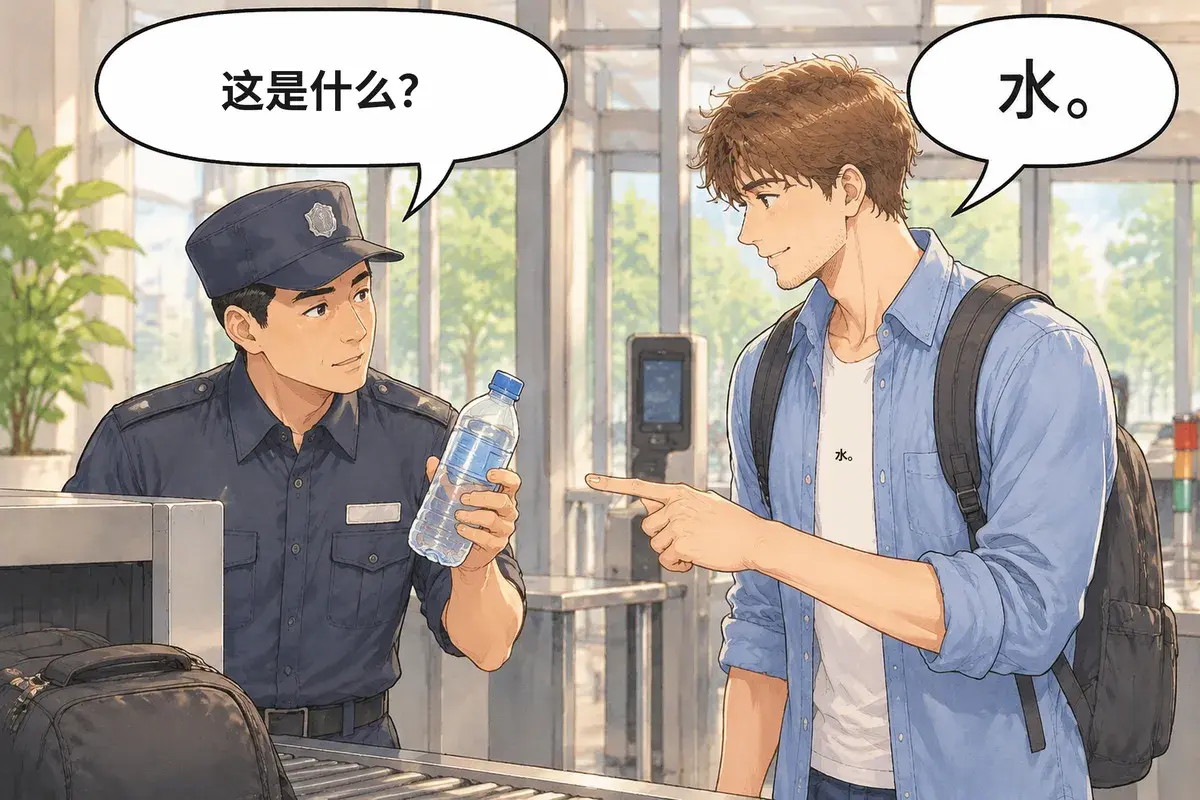
- 保安
这是什么?
What's this?
- 伊利亚
水。
Water.
- 保安
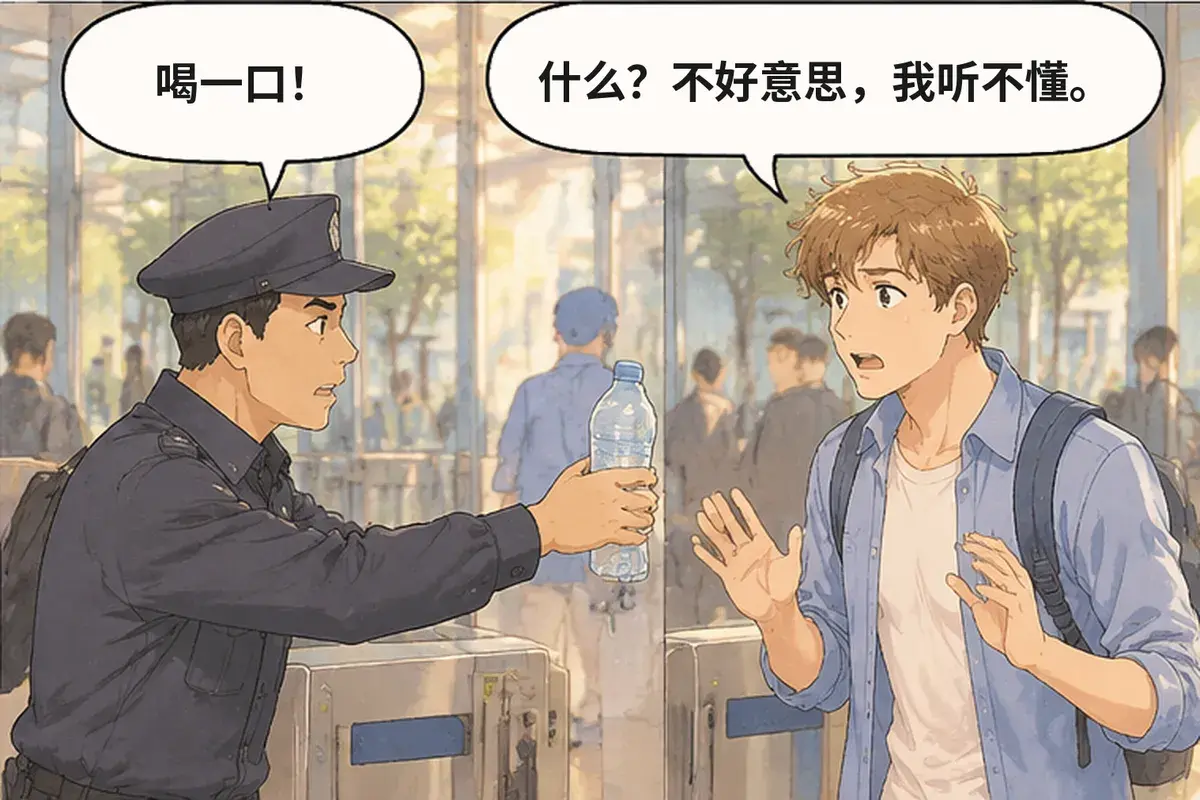
喝一口!
Take a sip!
- 伊利亚
什么?不好意思,我听不懂。
What? Sorry, I don't understand.
- 保安
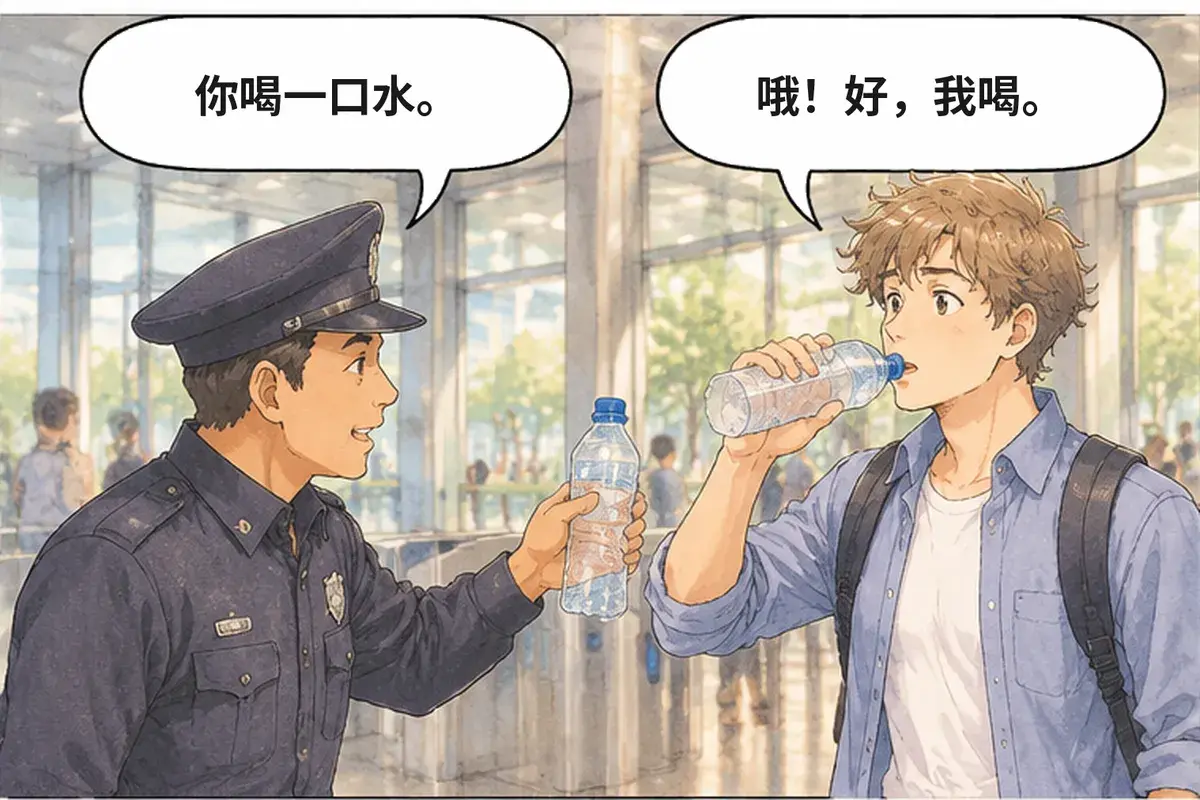
你喝一口水。
Take a sip of water.
- 伊利亚
哦!好,我喝。
Oh! OK, I'll drink it.
- 保安
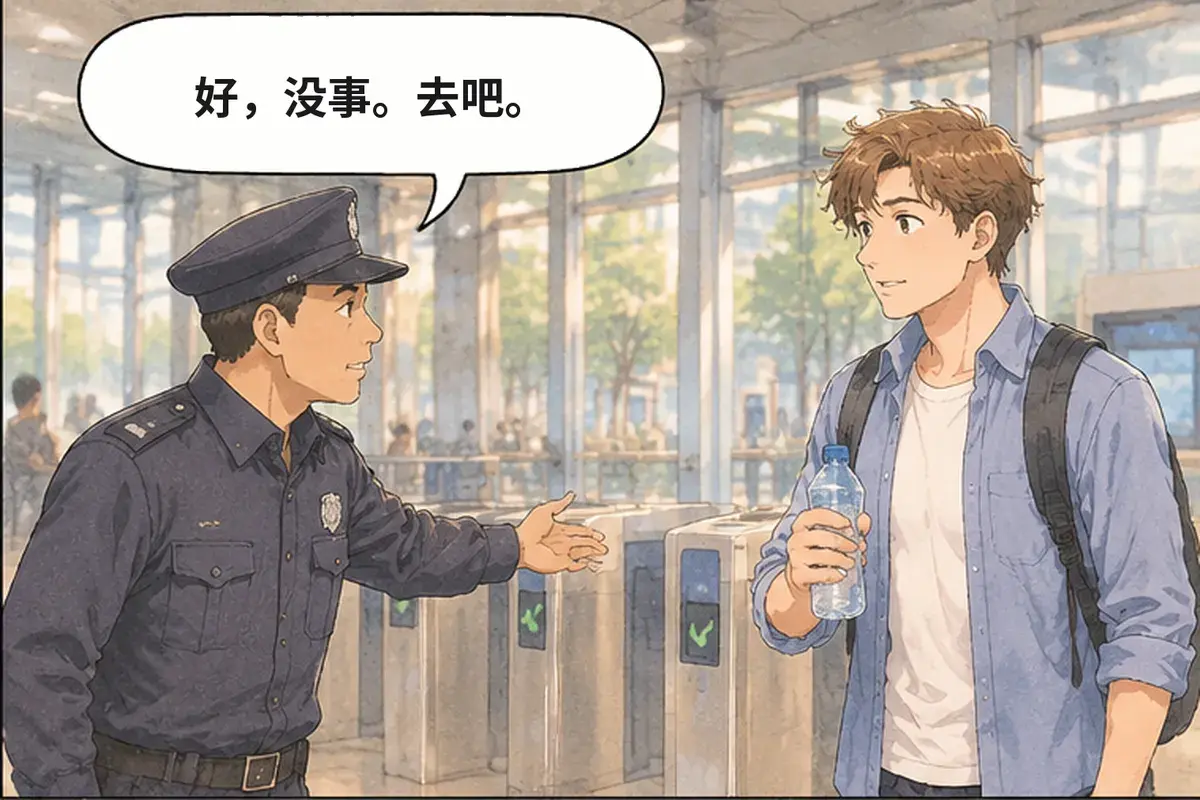
好,没事。去吧。
OK, it's fine. Go ahead.
- 伊利亚
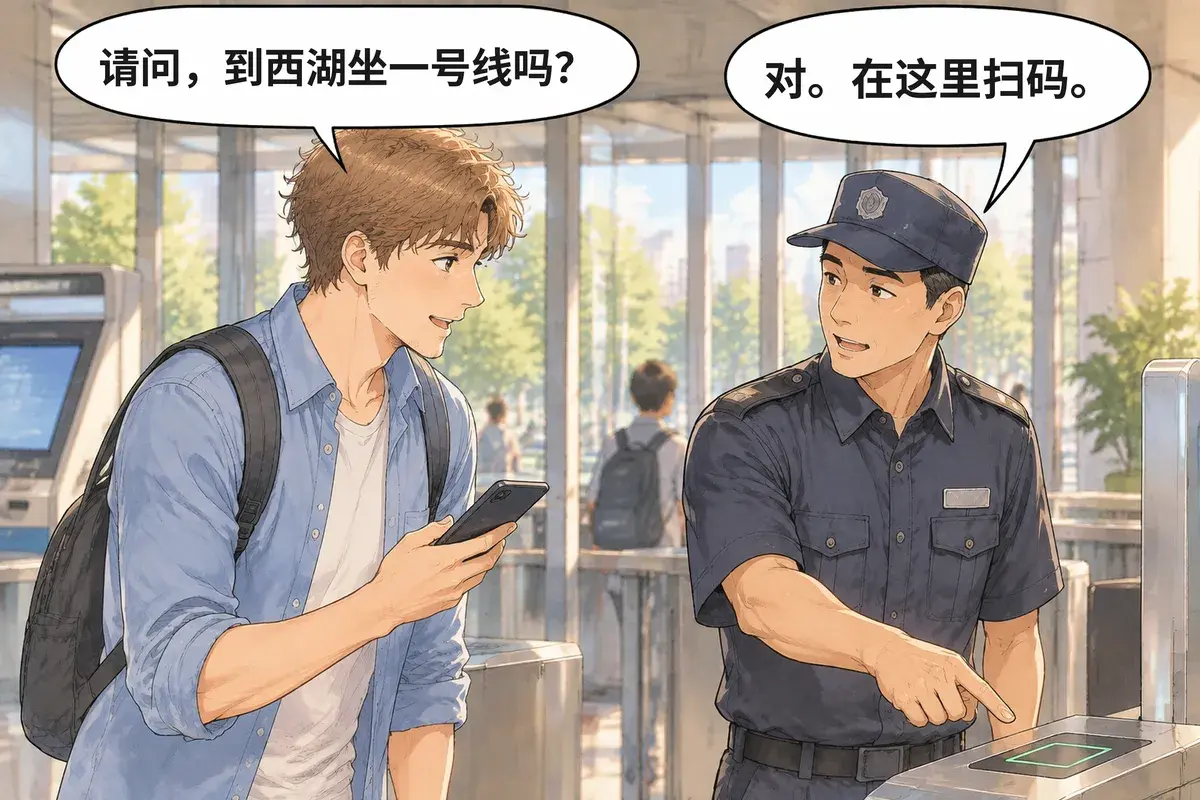
请问,到西湖坐一号线吗?
Excuse me, do I take Line 1 to West Lake?
- 保安
对。在这里扫码。
Yes. Scan the QR code here.
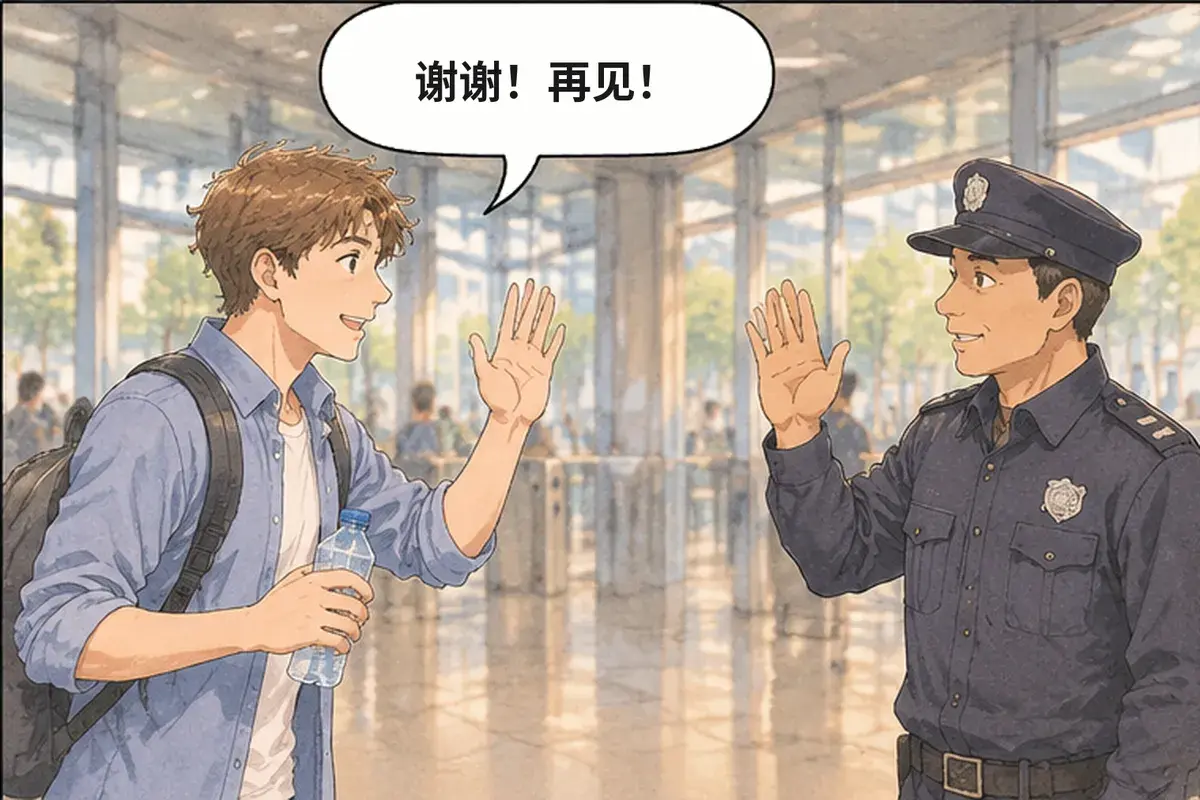
- 伊利亚
谢谢!再见!
Thanks! Goodbye!
Grammar for this text
喝 一 口! — the security guard asks Ilya to take a sip from his bottle in front of him: this is how the Chinese subway checks that it's really water inside. 口 is "mouth", and after a number it's "a sip": 一 口 "one sip". The word between the number and the thing has to be there; more about these measure words in unit 9. 一 口 is said yì kǒu: before a 3rd tone, 一 is said with the 4th tone.
包 也 要 安检。 — 要 here isn't "want" but "need to": "the bag has to go through the security check too". 也 "too" goes before the verb. 安检 is the security check: the bag goes on the X-ray belt.
不好意思, 我 听不懂。 — 听不懂 means "I don't understand (what I hear)": 听 "to listen" + 不 + 懂 "to understand". The 不 in the middle is light: tīngbudǒng. For now, learn it as a ready-made word; how these forms work comes at A2.
去 吧。 — "go ahead": 吧 softens it, so it's not an order but "you can go through".
请问, 到 西湖 坐 一号 线 吗? — 请问 is the polite start of a question to a stranger, "excuse me". When you ask the way, you first say where to (到 西湖 "to West Lake"), then ask how (坐 一号 线 "take Line 1"). When you talk about your own trip, the order is the usual one: 坐 地铁 到 西湖 "take the subway to West Lake" (this is how verbs hook onto each other; more in unit 10). 坐 means "to sit", but with transportation it's "to take, to ride". In 一号 线 (yīhào xiàn), 一 is a number, and its tone doesn't change.
在 这里 扫码。 — the place (在 这里) goes before the verb: Chinese says only "here scan", while English says "scan here". 扫码 means pointing your phone at a QR code: that's how you get through the subway turnstile.
Words and grammar of the unit: Get through security and take the subway.
Learn the words from the texts with flashcards
In the app, you can tap any word in a text to see its translation, forms and examples, and new words stick with flashcards. 15 minutes a day.
Start for freeEverything is open for free. No card needed to sign up.