

Chinese dialogue with translation · A1 · 14 lines
我来杭州工作 I came to Hangzhou to work
Comic · 14 panels

- 陈老师
你们好!欢迎来我们学校,我是陈老师。
Hello! Welcome to our school. I'm Teacher Chen. (to several people)

- 伊利亚
您好,陈老师!我叫伊利亚。
Hello, Teacher Chen! My name is Ilya. (polite)
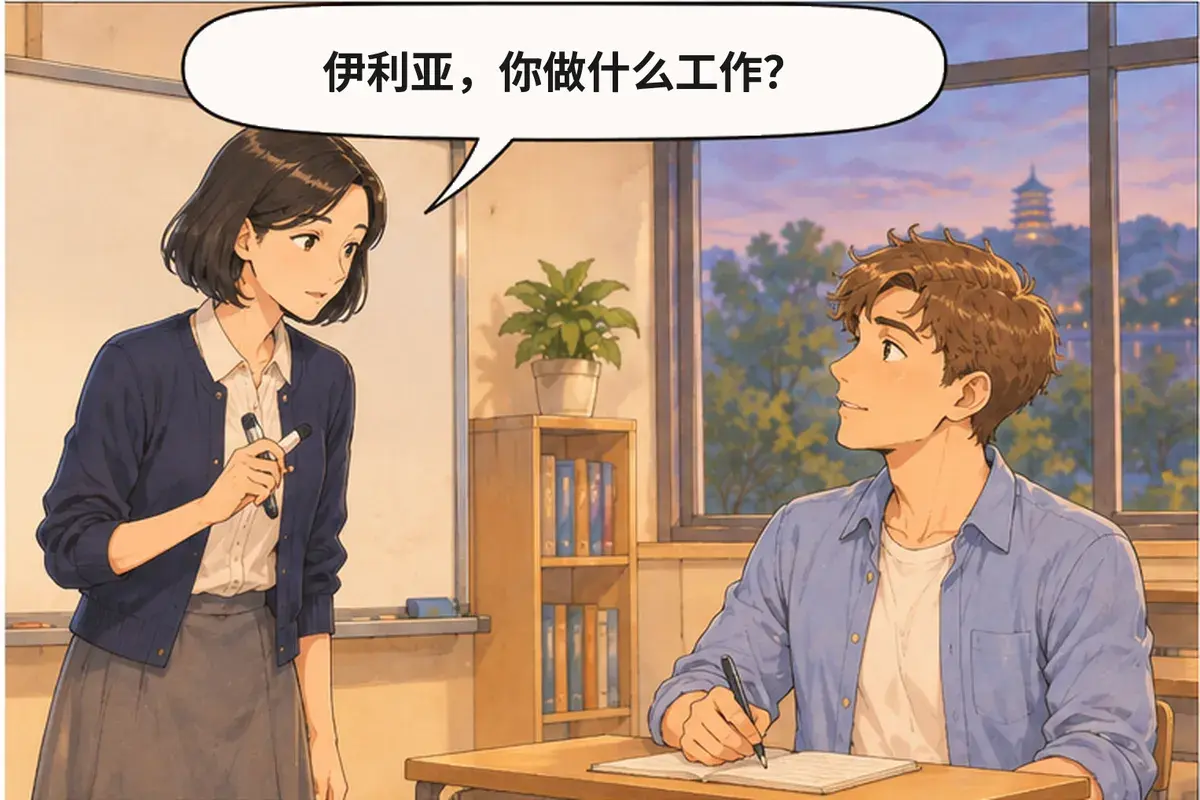
- 陈老师
伊利亚,你做什么工作?
Ilya, what do you do for work?
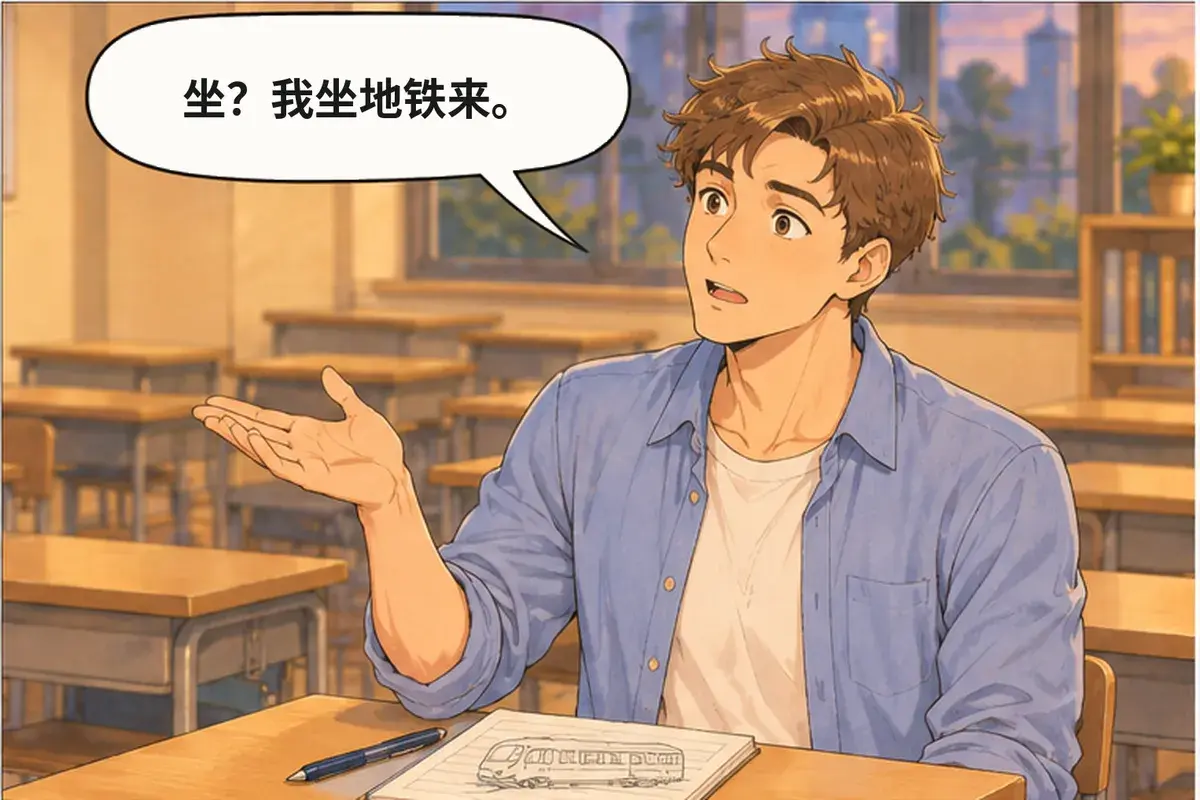
- 伊利亚
坐?我坐地铁来。
Ride? I come by subway.
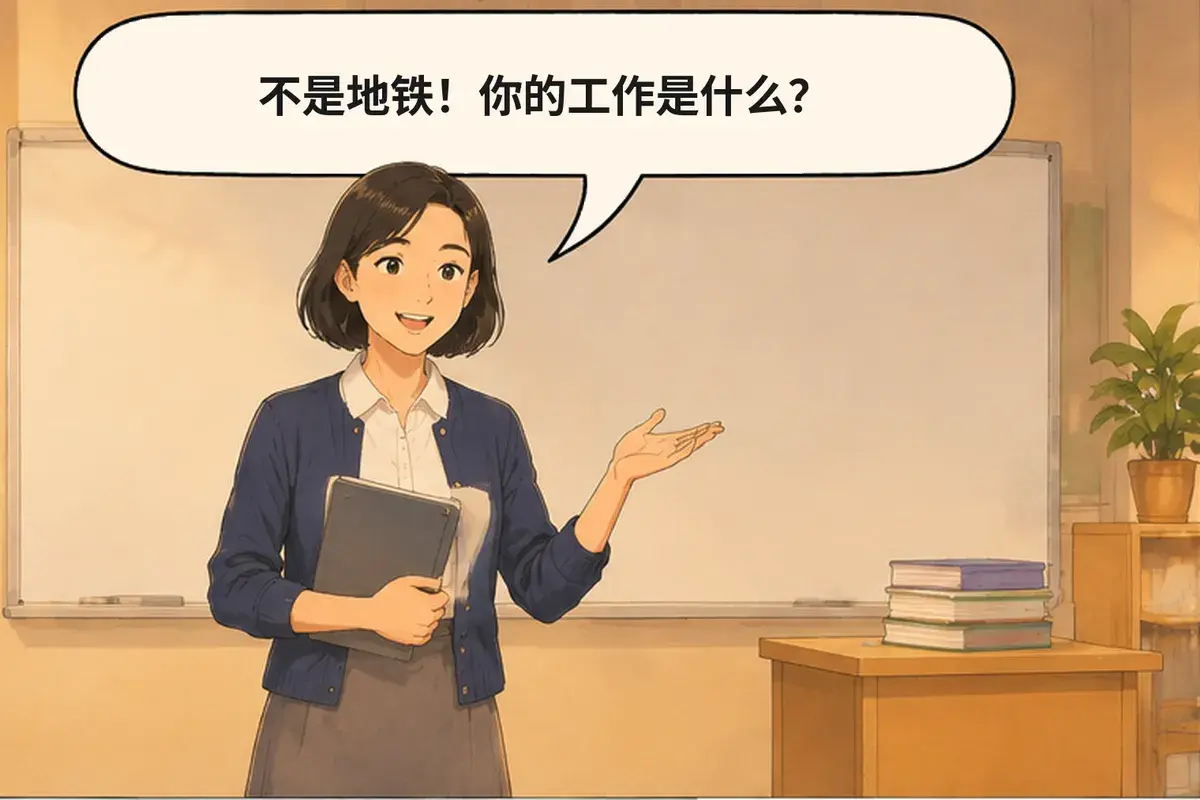
- 陈老师
不是地铁!你的工作是什么?
Not the subway! What's your job?
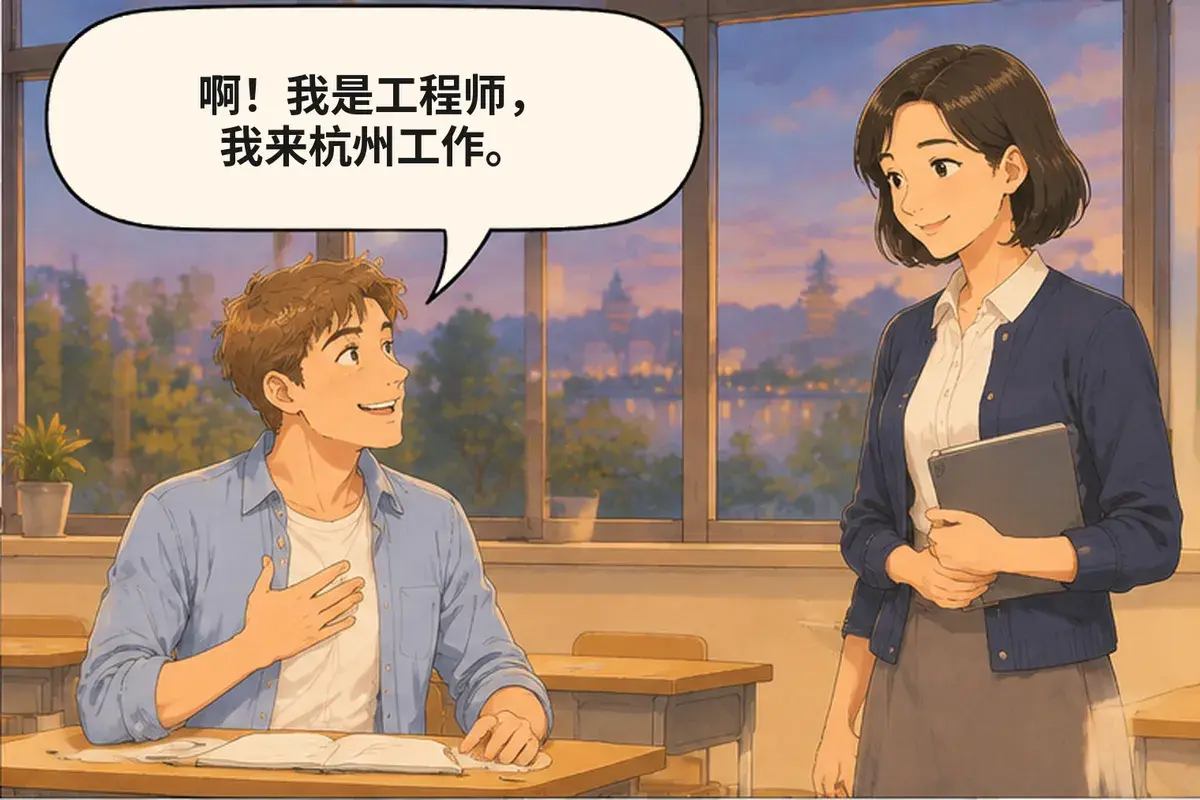
- 伊利亚
啊!我是工程师,我来杭州工作。
Oh! I'm an engineer. I came to Hangzhou to work.
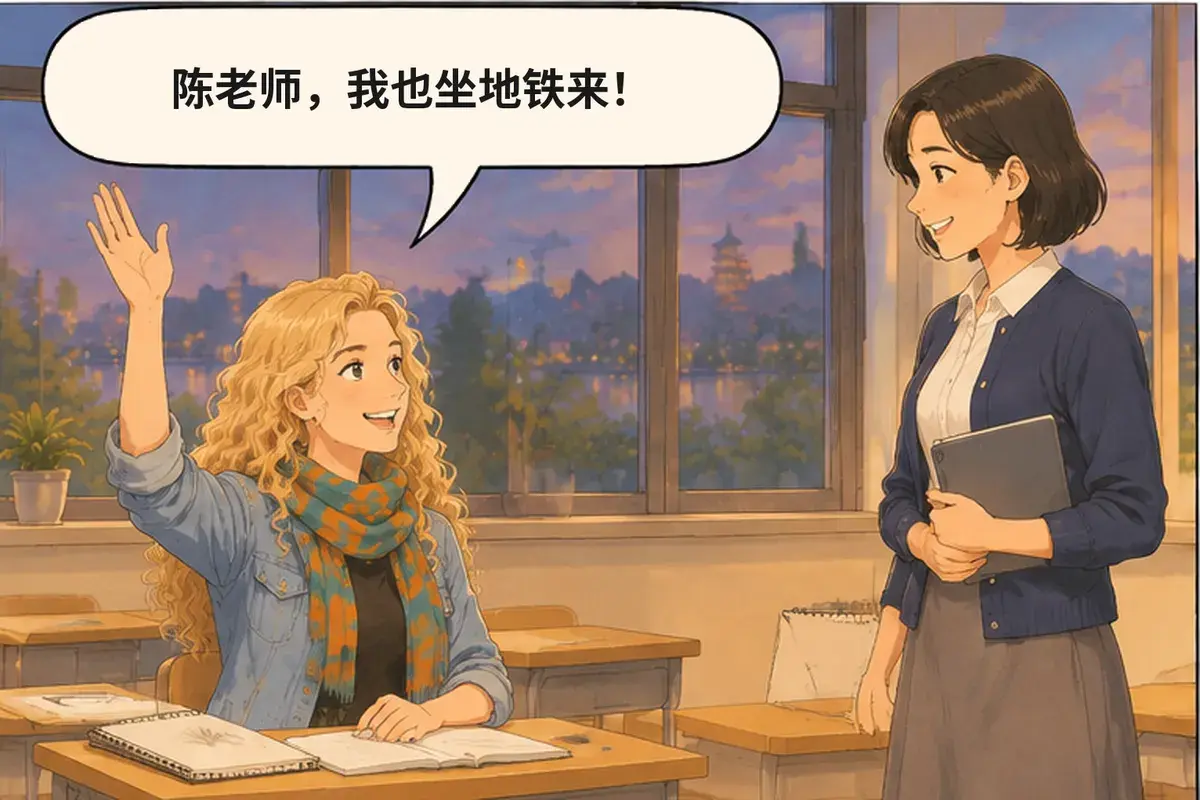
- 萨拉
陈老师,我也坐地铁来!
Teacher Chen, I come by subway too!
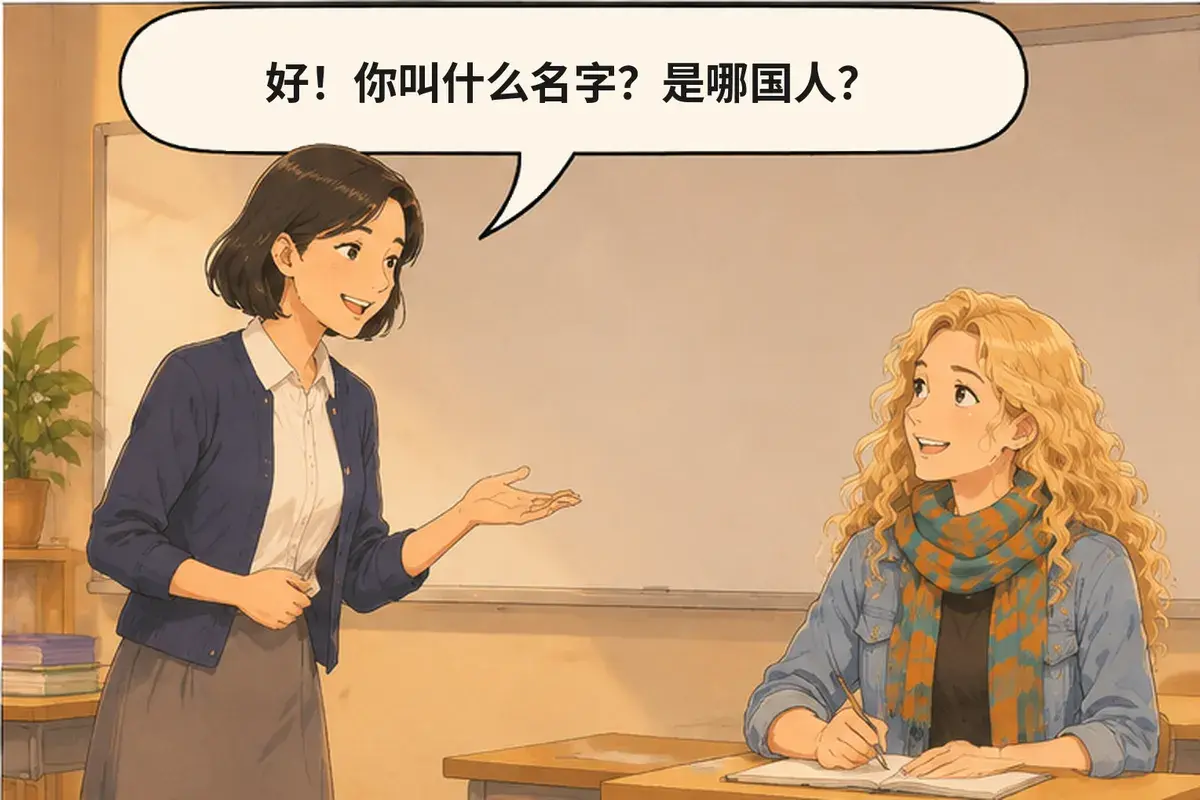
- 陈老师
好!你叫什么名字?是哪国人?
Good! What's your name? What country are you from?
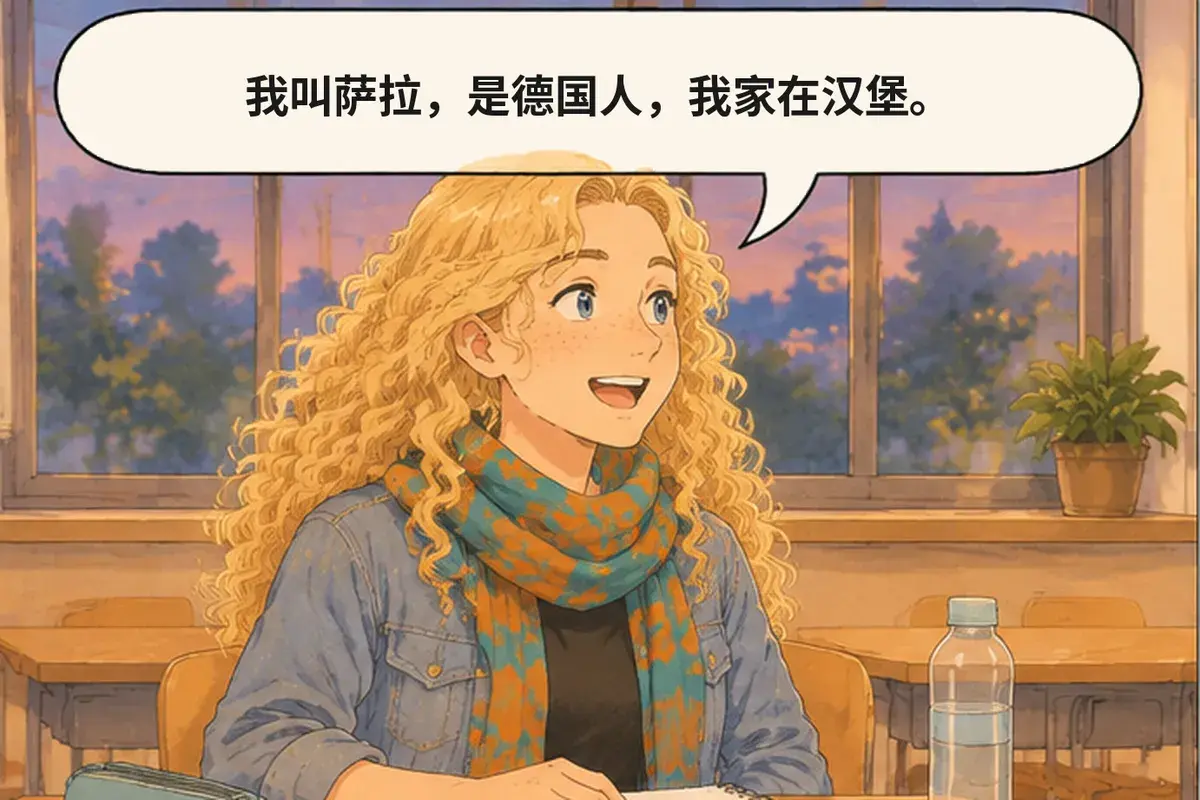
- 萨拉
我叫萨拉,是德国人,我家在汉堡。
My name is Sara. I'm German, and my home is in Hamburg.
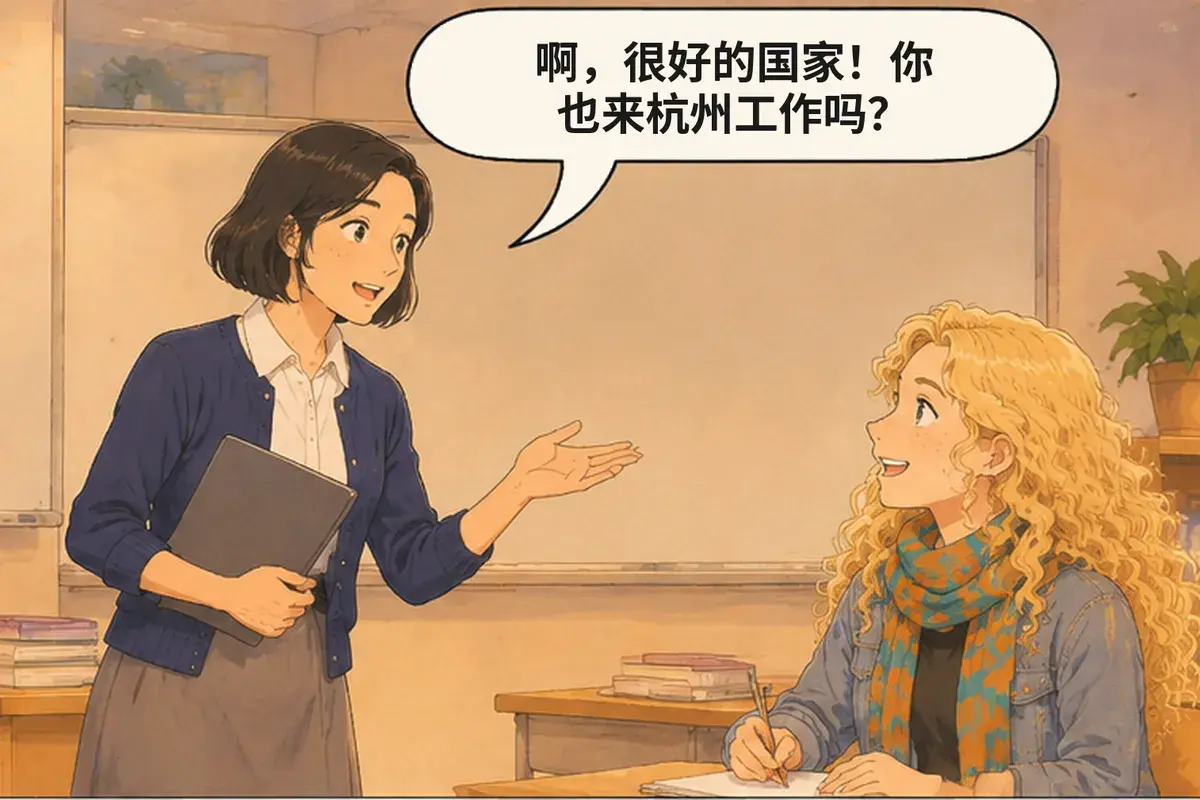
- 陈老师
啊,很好的国家!你也来杭州工作吗?
Oh, a great country! Did you come to Hangzhou to work too?
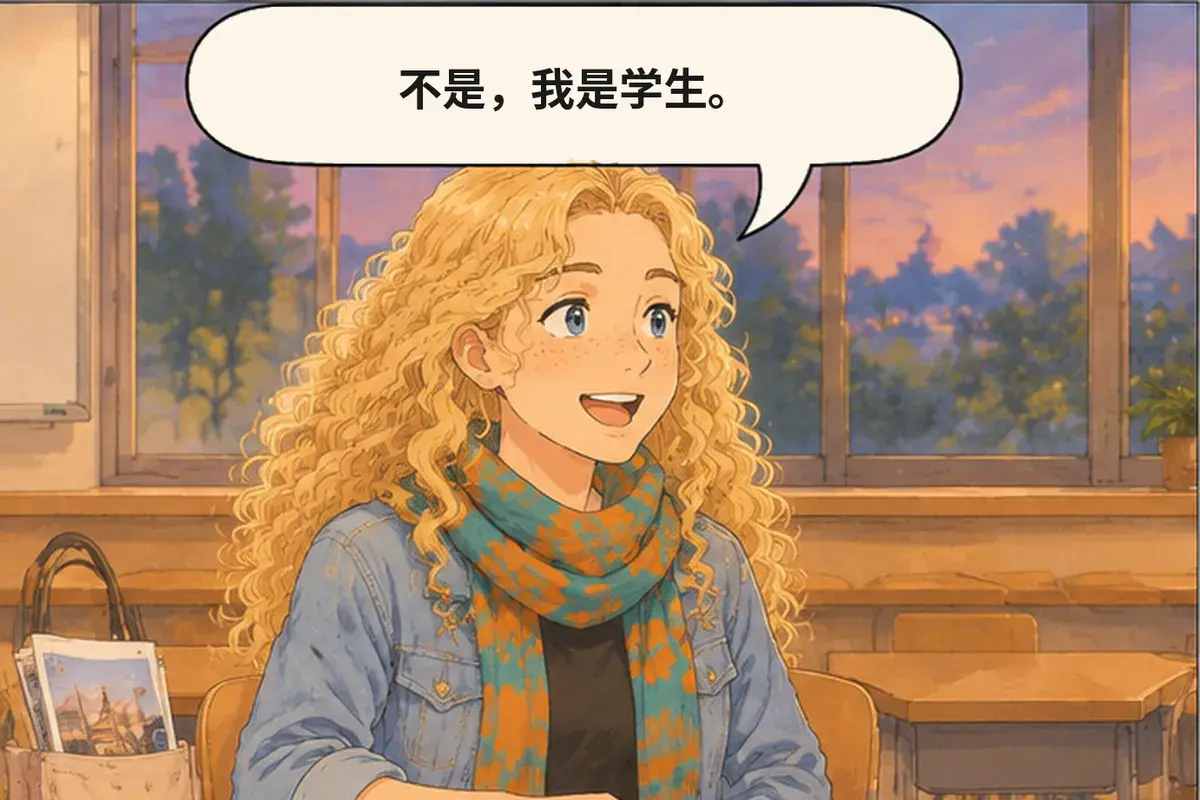
- 萨拉
不是,我是学生。
No, I'm a student.

- 陈老师
好。这是你们的书,一个人一本。
OK. These are your books, one per person. (to several people)

- 伊利亚
萨拉,我们是同学!加个微信吧?
Sara, we're classmates! Shall we add each other on WeChat?
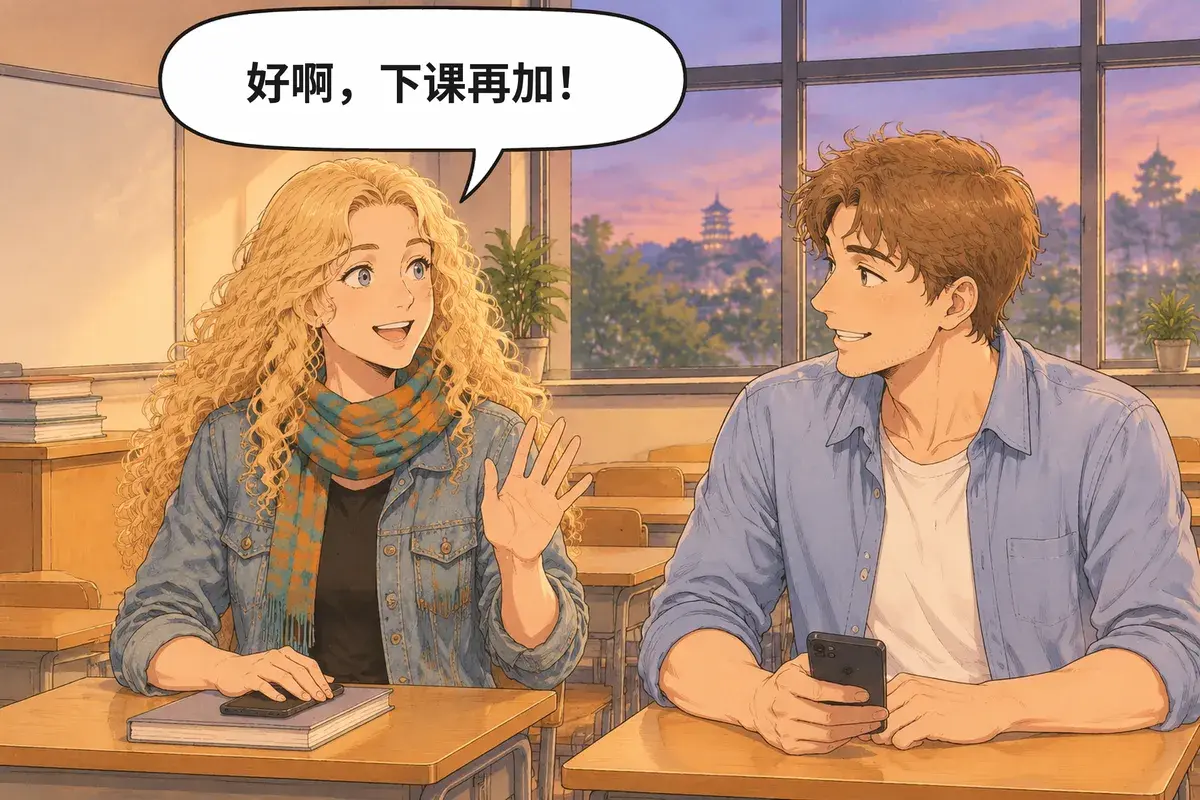
- 萨拉
好啊,下课再加!
Sure! We'll add each other after class!
Grammar for this text
你 做 什么 工作? — "What do you do for work?", literally "what work do you do?". 做 (zuò) "to do" sounds exactly like 坐 (zuò) "to ride, to sit": the same syllable, the same tone. Ilya heard zuò shénme and thought he was being asked how he travels. Chinese speakers tell such words apart from the meaning.
我 坐 地铁 来 — first "by what", then "come": two actions in a row, in the order they happen. English says it the other way around: "come by subway".
我 来 杭州 工作 — the same: first "came to Hangzhou", then "work". There's no word for the "to" in "to work".
是 哪 国 人? — literally "a person of which country?": 哪 (nǎ) "which" + 国 "country". The answer is 是 德国 人 "I'm German".
很 好 的 国家! — 国家 (guójiā) is "country" as a word on its own. In the question "which country are you from?" you don't need it: 哪 国 人 is enough.
我 是 工程师 — a job is named with 是: "I'm an engineer", with no word for "an".
一 个 人 一 本 — "one person, one": one book each. 本 is the measure word for books; the book itself isn't named a second time.
不 是, 我 是 学生。 — 不 是 at the start of an answer is just "no", even when the question had no 是.
下课 再 加! — 再 here means "then, later": "when class is over, then we'll add each other". You don't look at your phone during class.
陈 老师 — a teacher is called by surname + 老师; using the first name isn't done.
Words and grammar of the unit: Talk about yourself and your family.
Learn the words from the texts with flashcards
In the app, you can tap any word in a text to see its translation, forms and examples, and new words stick with flashcards. 15 minutes a day.
Start for freeEverything is open for free. No card needed to sign up.