
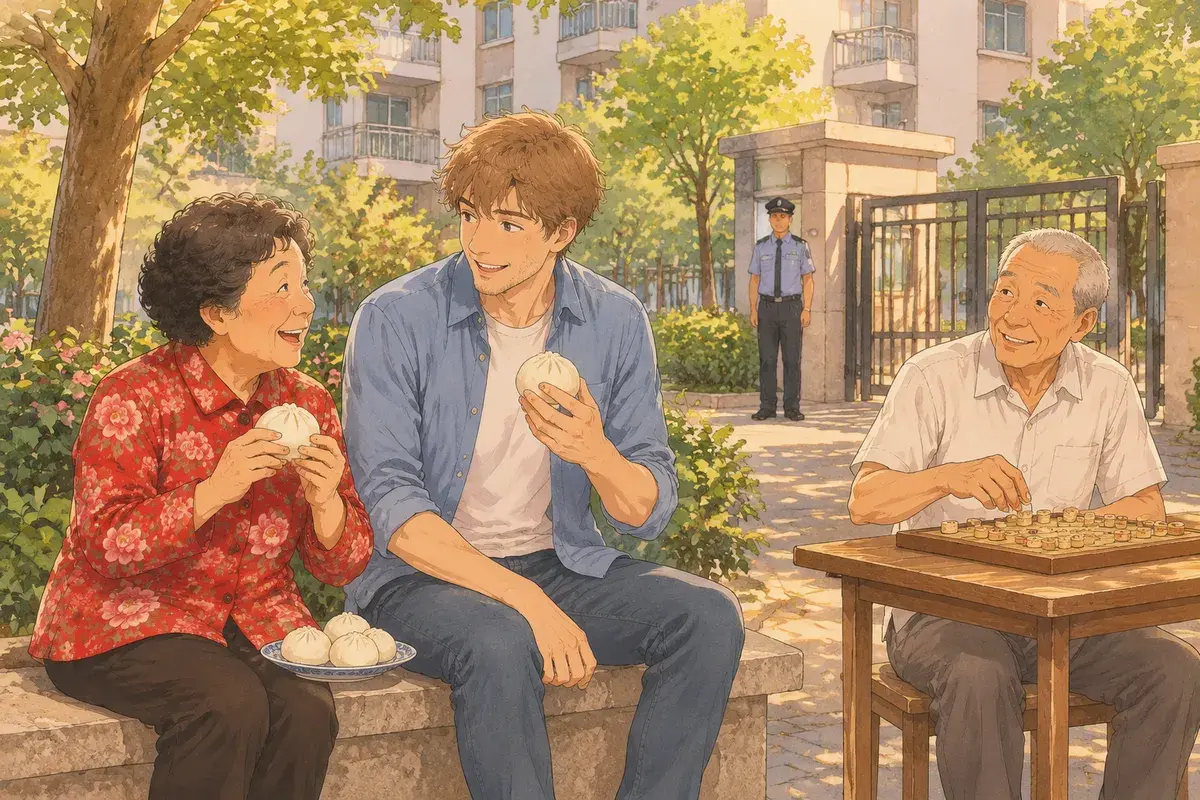
Chinese dialogue with translation · A1 · 14 lines
你有女朋友吗? Do you have a girlfriend?
Comic · 10 panels
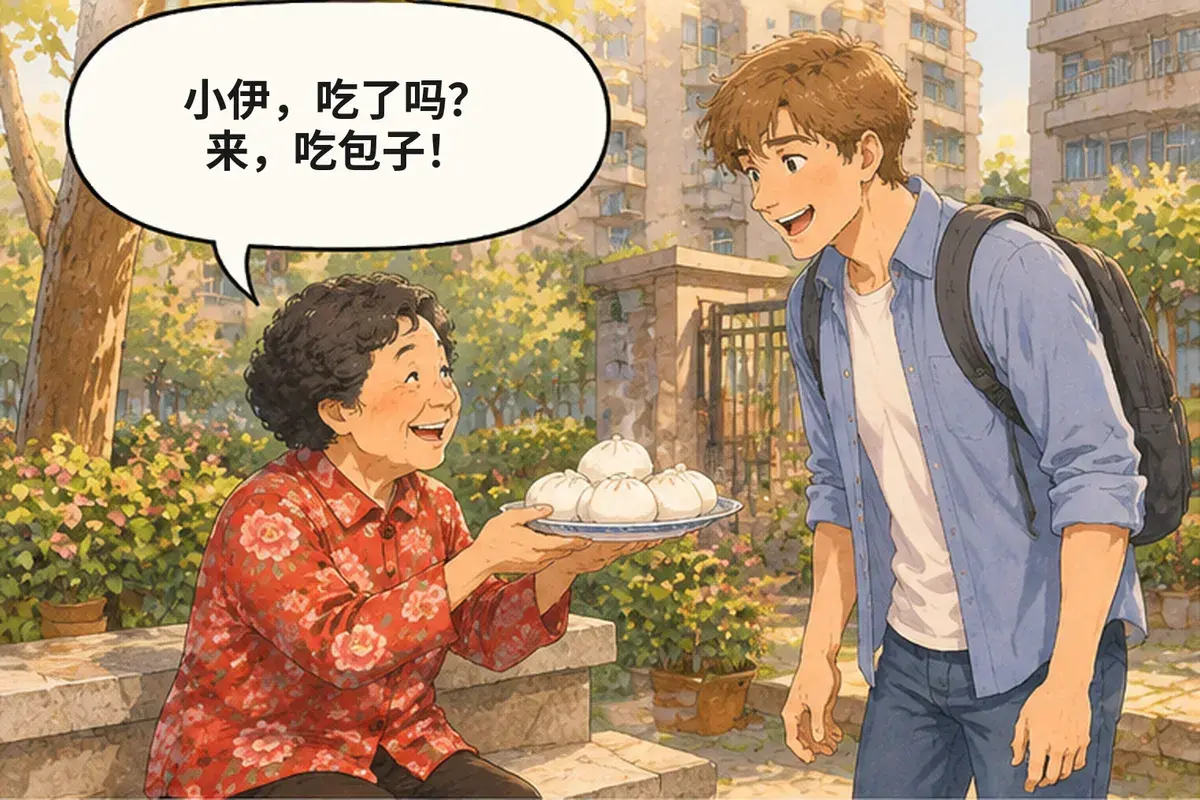
- 王阿姨
小伊,吃了吗?来,吃包子!
Xiao Yi, have you eaten yet? Come on, have some steamed buns!
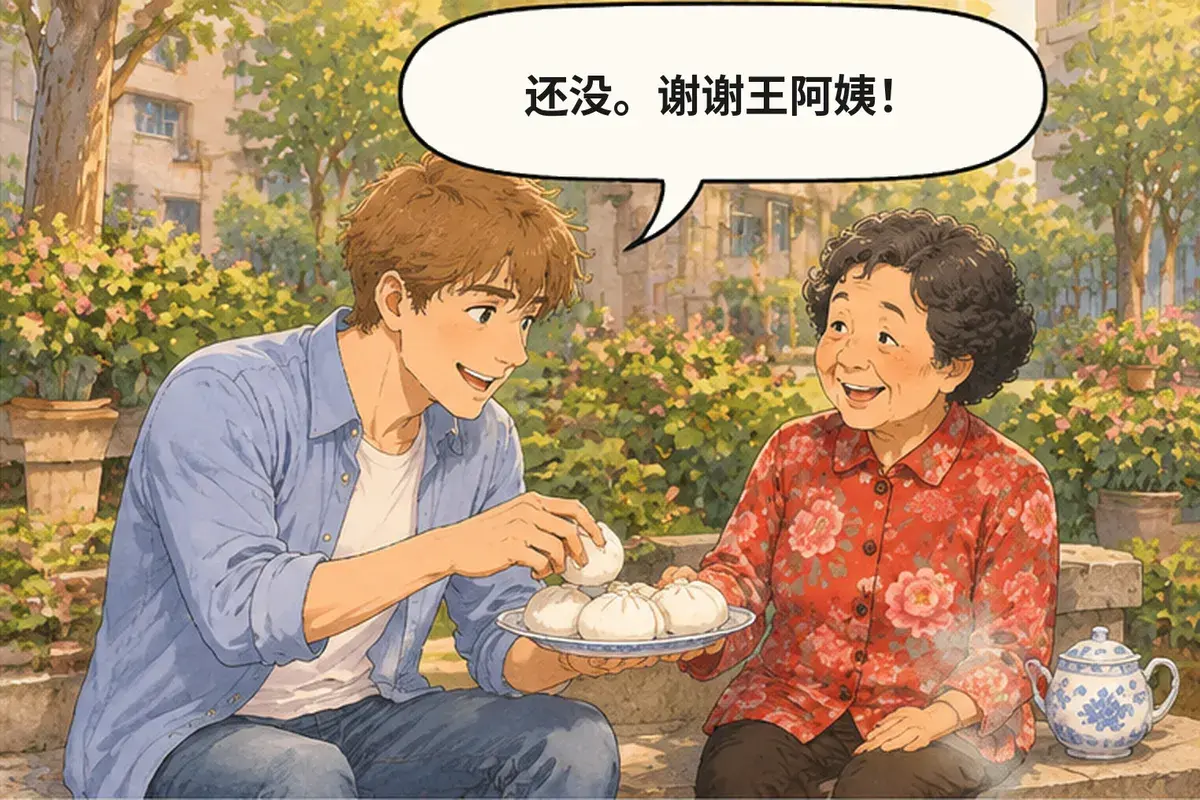
- 伊利亚
还没。谢谢王阿姨!
Not yet. Thanks, Auntie Wang!
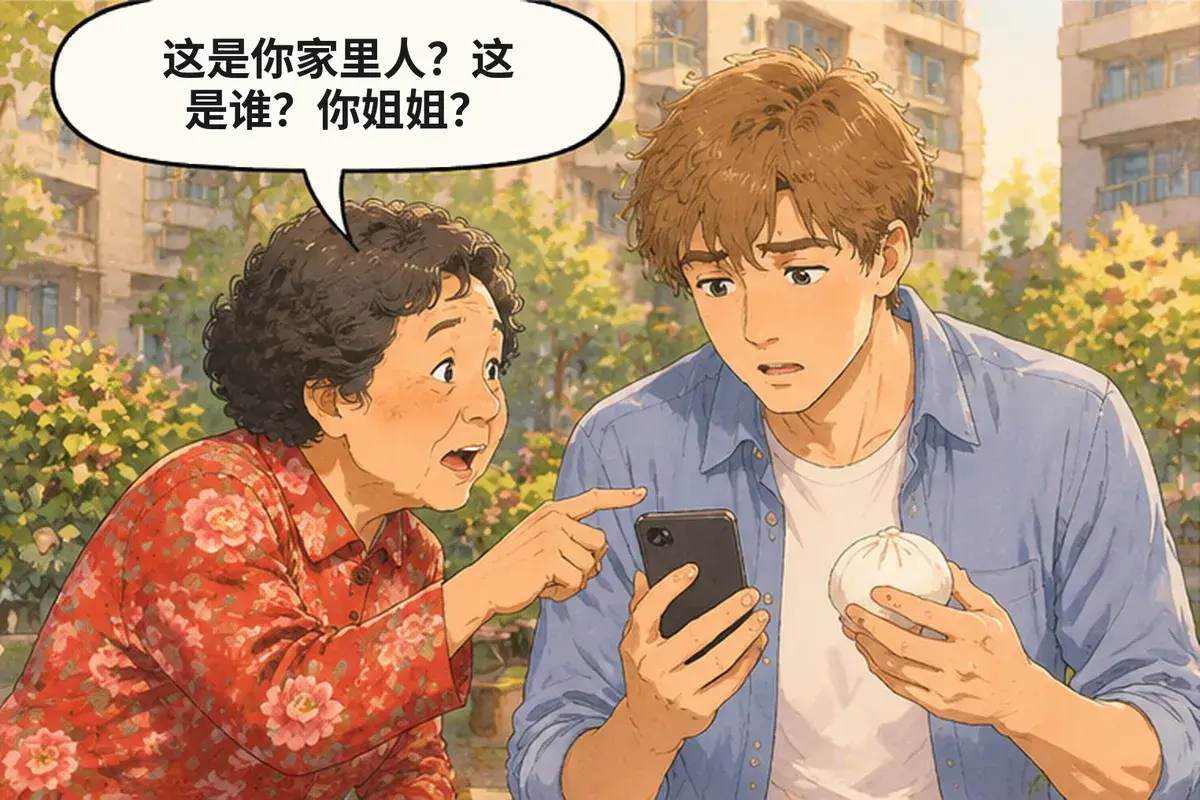
- 王阿姨
这是你家里人?这是谁?你姐姐?
Is this your family? Who's this? Your older sister?
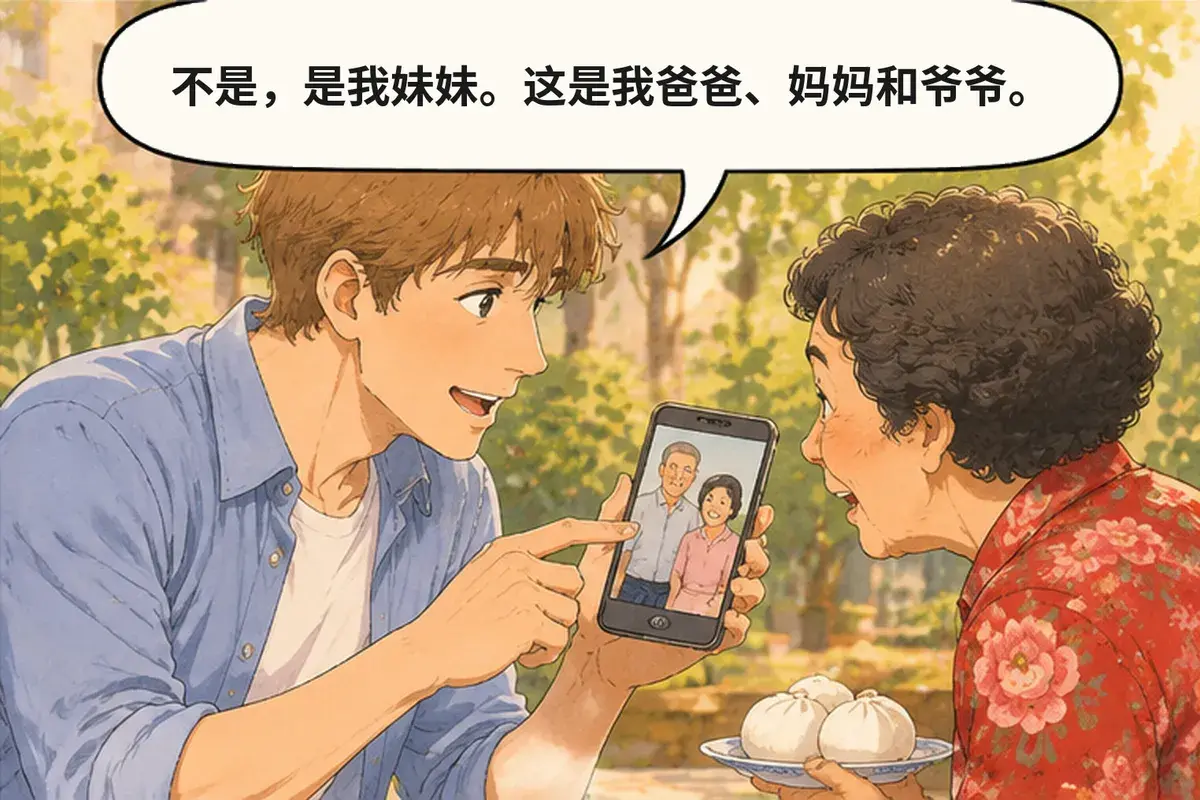
- 伊利亚
不是,是我妹妹。这是我爸爸、妈妈和爷爷。
No, it's my younger sister. These are my dad, mom, and grandpa.
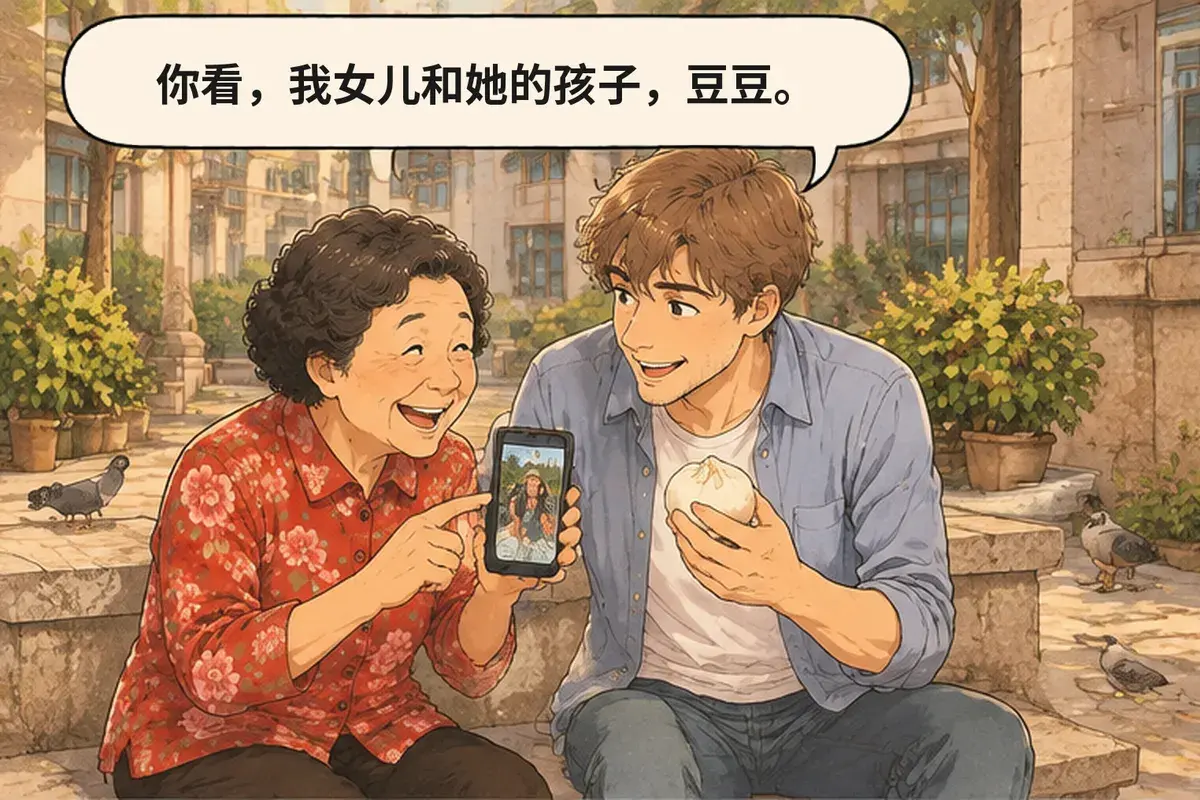
- 王阿姨
你看,我女儿和她的孩子,豆豆。
Look, my daughter and her child, Doudou.
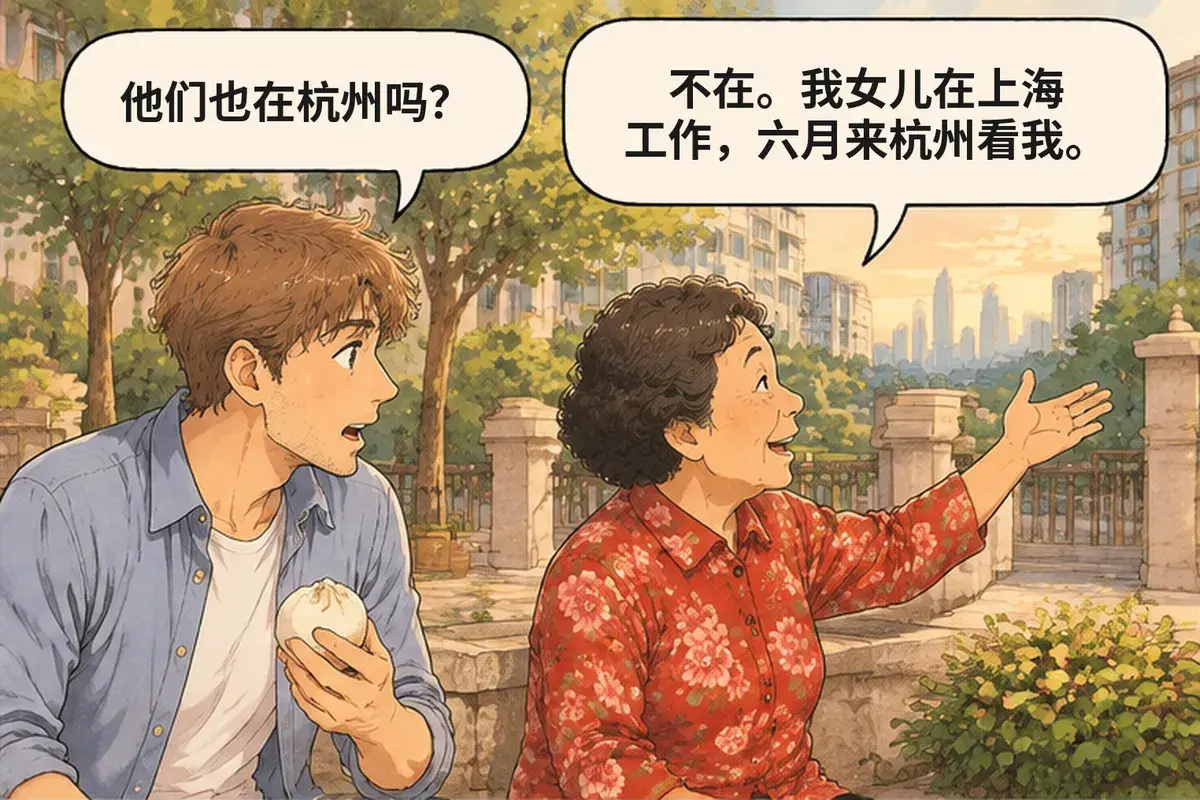
- 伊利亚
他们也在杭州吗?
Are they in Hangzhou too?
- 王阿姨
不在。我女儿在上海工作,六月来杭州看我。
No, they're not. My daughter works in Shanghai. In June she's coming to Hangzhou to see me.
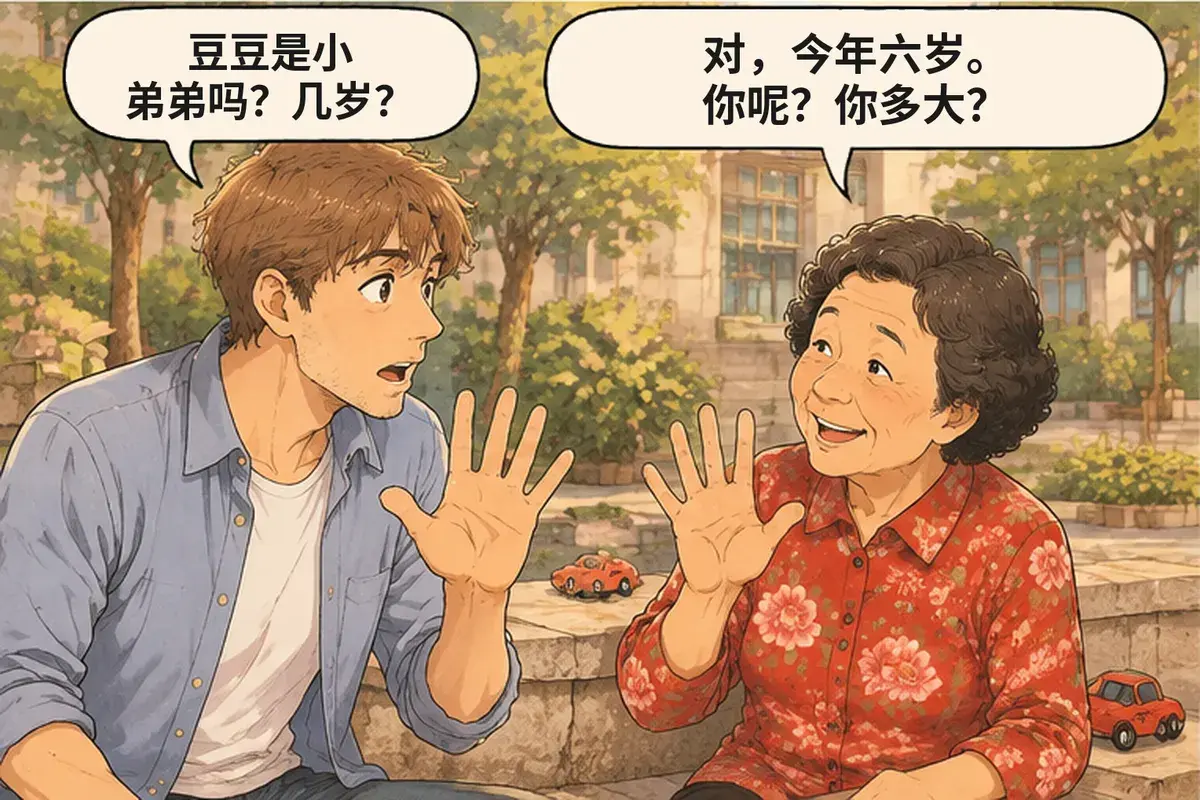
- 伊利亚
豆豆是小弟弟吗?几岁?
Is Doudou a little boy? How old is he?
- 王阿姨
对,今年六岁。你呢?你多大?
Yes, he's six this year. And you? How old are you?
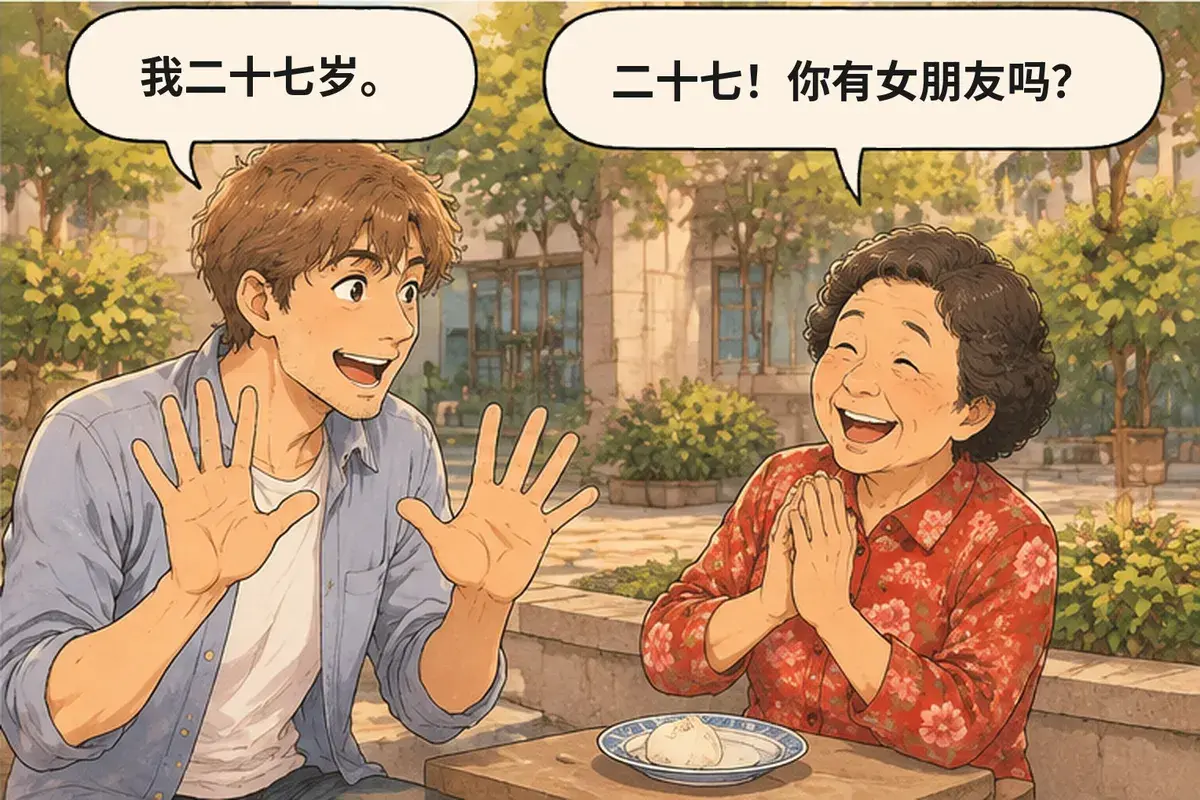
- 伊利亚
我二十七岁。
I'm twenty-seven.
- 王阿姨
二十七!你有女朋友吗?
Twenty-seven! Do you have a girlfriend?
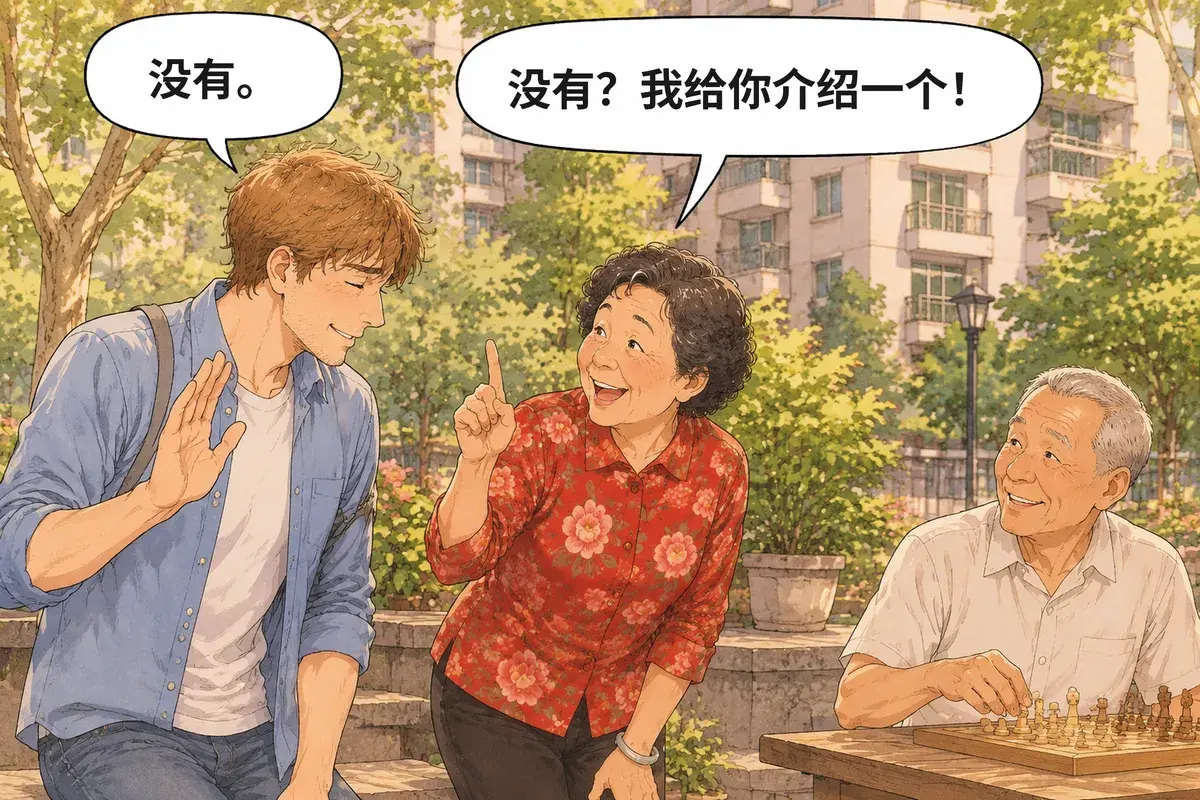
- 伊利亚
没有。
No, I don't.
- 王阿姨
没有?我给你介绍一个!
You don't? I'll introduce you to one!
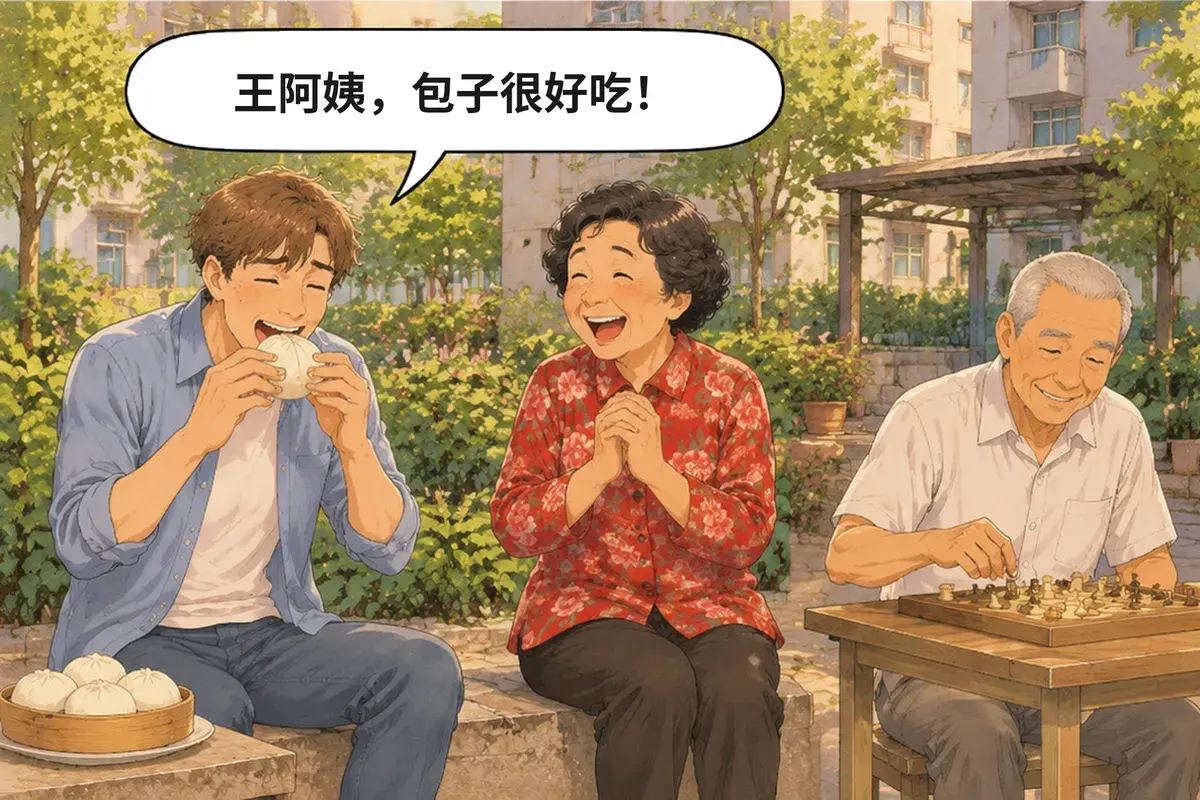
- 伊利亚
王阿姨,包子很好吃!
Auntie Wang, the steamed buns are delicious!
Grammar for this text
小伊, 吃 了 吗? — "Xiao Yi, have you eaten yet?" This is how older people, especially neighbors, say hello. It's not an invitation to eat, it's more like "how are you?". The answer is 吃 了 ("yes, I have") or, like Ilya, 还 没 ("not yet"). 了 here means "done"; more about it in unit 12, for now learn the phrase as a whole. Auntie Wang feeds him anyway, of course: 来, 吃 包子! — 来 here is "come on, here", not "come".
我 给 你 介绍 一 个! — "I'll introduce you to one (a girl)!" Who it is, is clear anyway, so only 一 个 is left, like 一 本 without the book. You know 给 as "to give" (unit 9); here it means "for you": "I'll introduce for you". Older neighbors love matchmaking, and they mean well.
二十 七! 你 有 女朋友 吗? — in China, asking someone's age and whether he has a girlfriend isn't rude; it's normal interest.
豆豆 是 小 弟弟 吗? — you can't tell from a child's nickname whether it's a boy or a girl. People say it this way about kids: 小 弟弟 is "a little boy", 小 妹妹 is "a little girl". 几 岁? — you ask 几 岁 about a child and 多大 about an adult: 你 呢? 你 多大? The answer has no verb: 我 二十 七 岁。
这 是 你 家里 人? 这 是 谁? 你 姐姐? — in conversation a question often has no 是 and no 吗, just the intonation: "your older sister?" 家里 人 is "family, the people at home": 家里 (jiāli) means "at home, in the family".
不 是, 是 我 妹妹。 — Chinese has no word for just "sister": an older sister is 姐姐, a younger one is 妹妹. Brothers work the same way: a younger brother is 弟弟. 爸爸、 妈妈 和 爷爷 — 爷爷 (yéye) is "grandpa", your dad's father; 和 "and" goes before the last item in the list.
六月 来 杭州 看 我 — two actions in a row: "come to Hangzhou" and "see me". The time word 六月 (liùyuè) "June" shows that it's in the future: the verb doesn't change.
不 在。 — a question with 在 is answered with the same verb: "no, they're not here".
Words and grammar of the unit: Talk about yourself and your family.
Learn the words from the texts with flashcards
In the app, you can tap any word in a text to see its translation, forms and examples, and new words stick with flashcards. 15 minutes a day.
Start for freeEverything is open for free. No card needed to sign up.