

Chinese dialogue with translation · A1 · 13 lines
一天三次,饭后吃 Three times a day, after meals
Comic · 12 panels
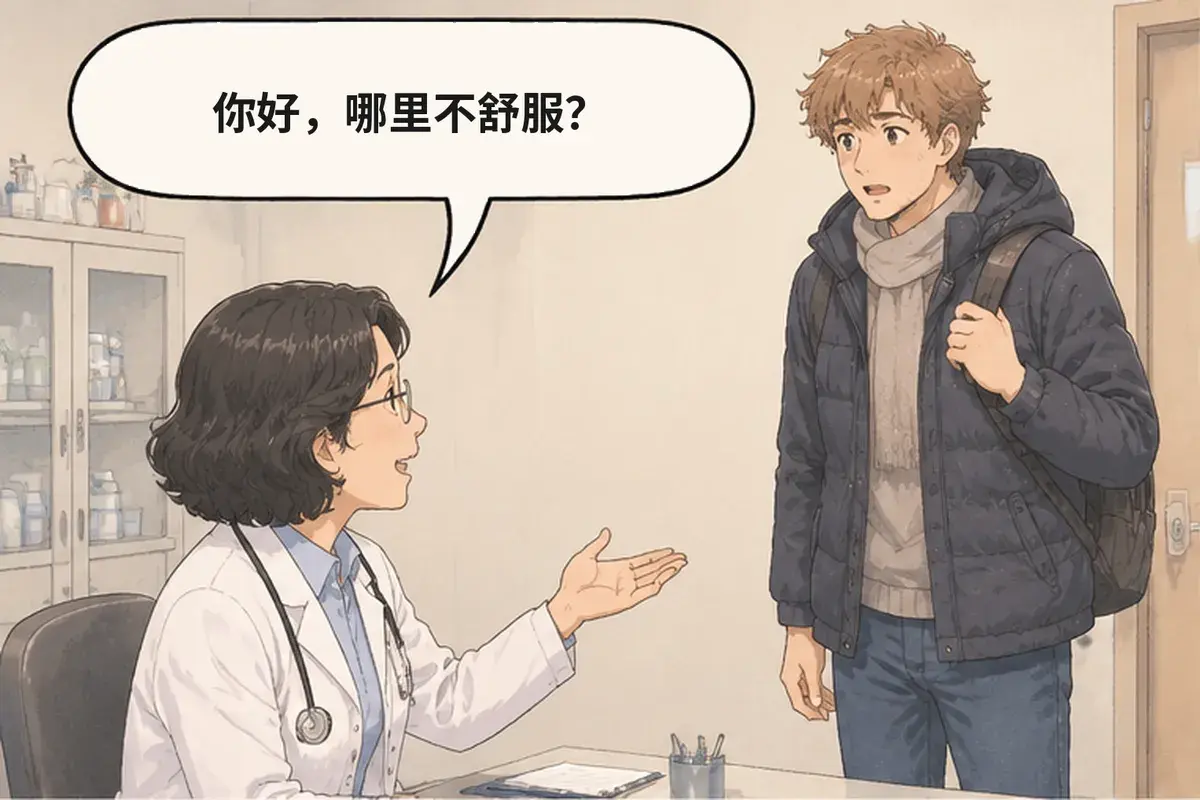
- 医生
你好,哪里不舒服?
Hello, where do you feel unwell?
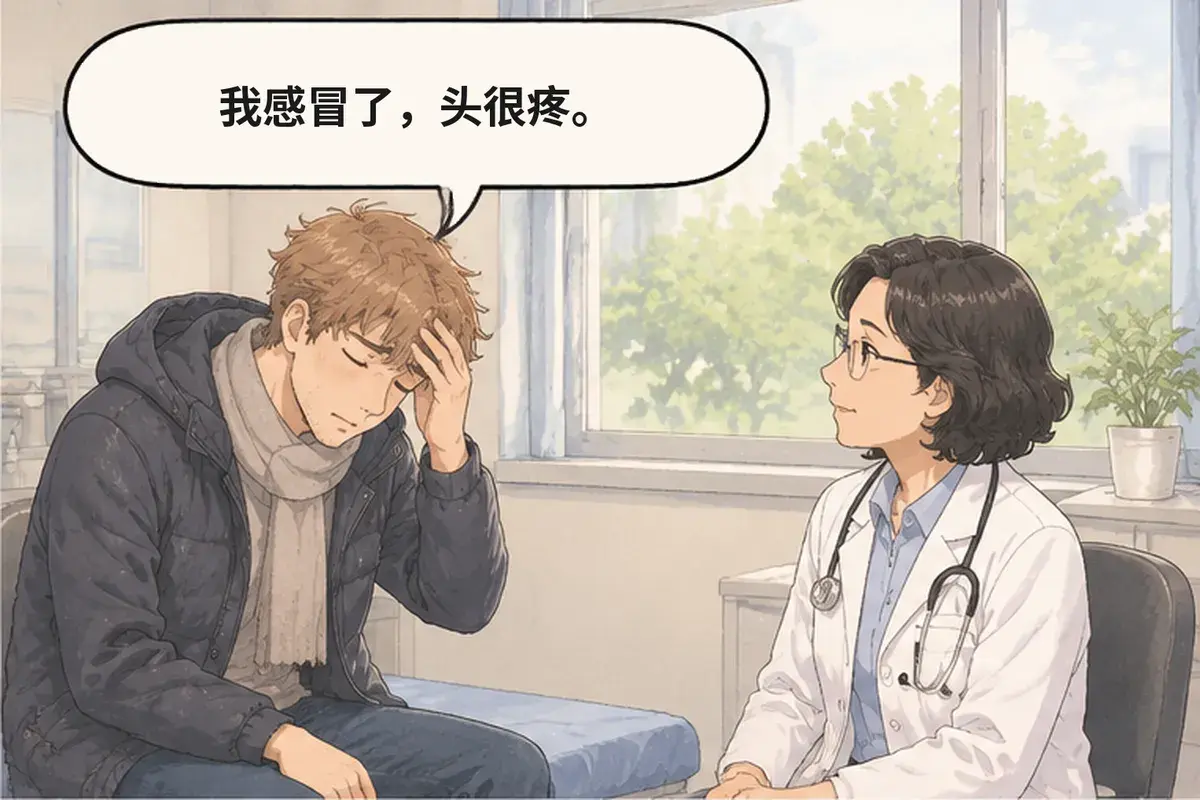
- 伊利亚
我感冒了,头很疼。
I've caught a cold, and my head really hurts.
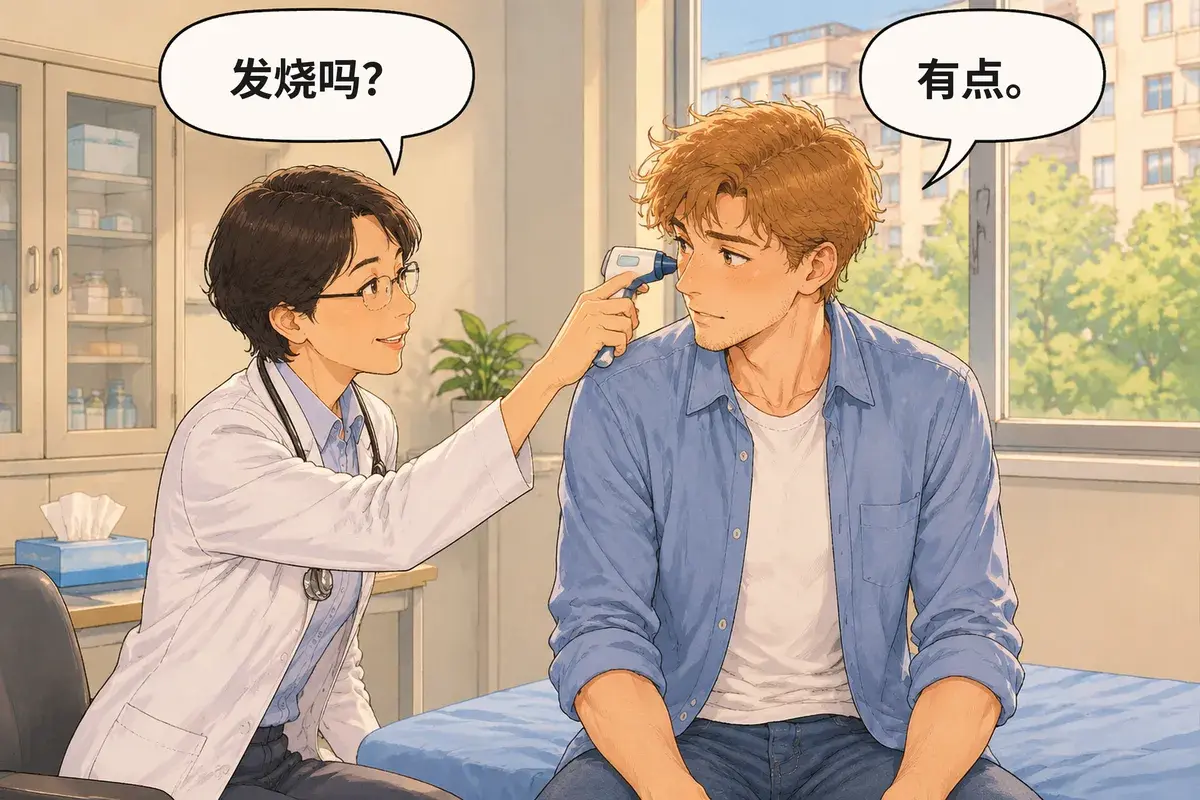
- 医生
发烧吗?
Do you have a fever?
- 伊利亚
有点。
A little.
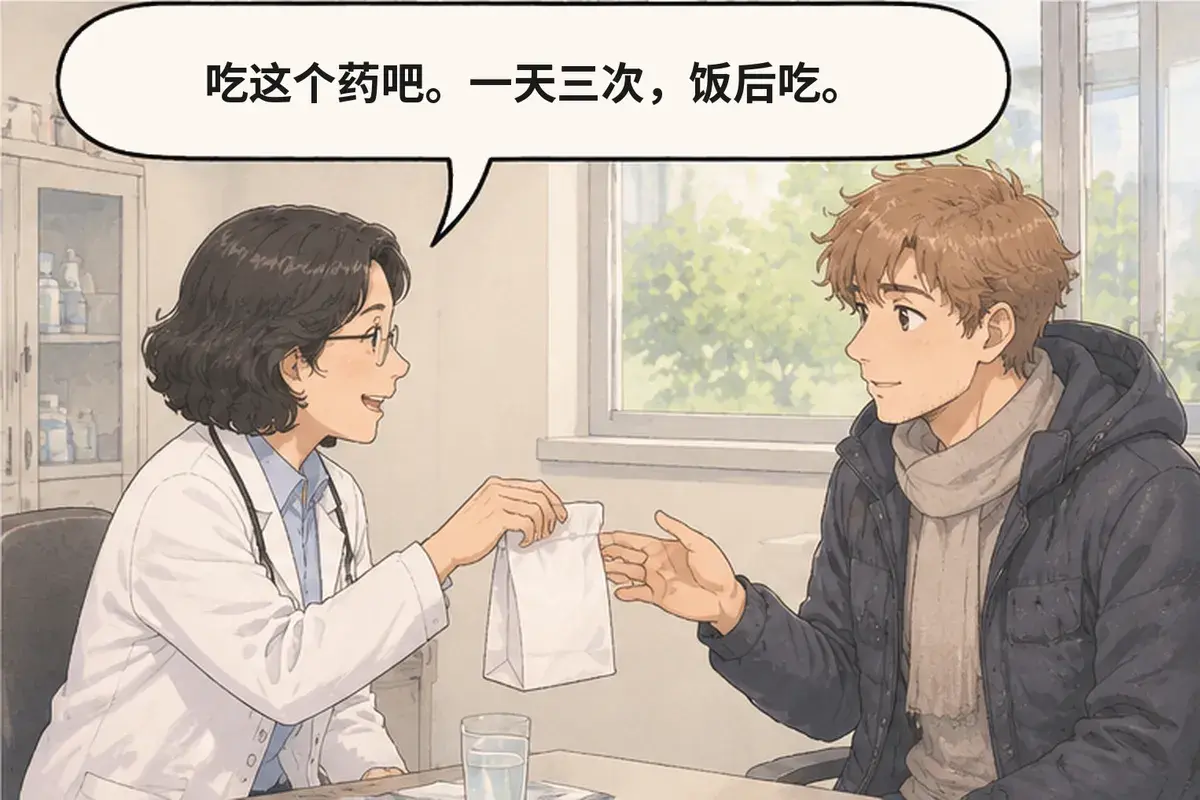
- 医生
吃这个药吧。一天三次,饭后吃。
Take this medicine. Three times a day, after meals.
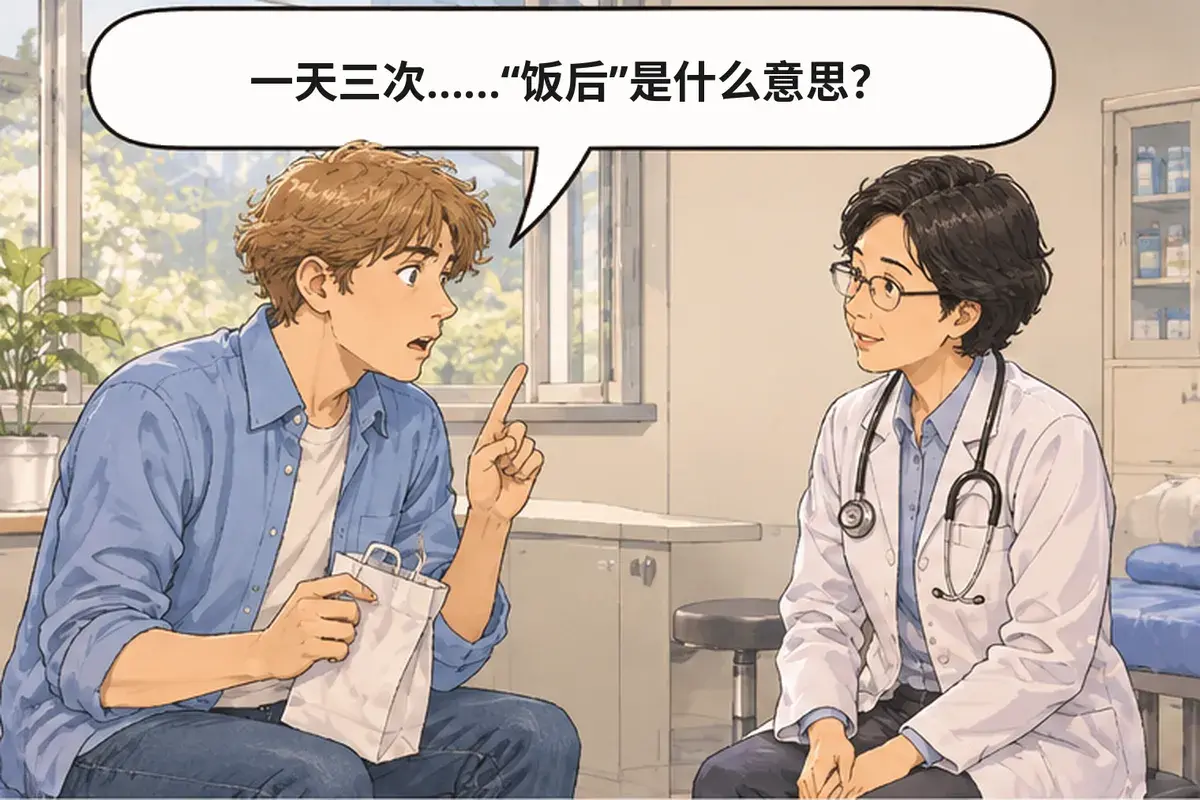
- 伊利亚
一天三次……“饭后”是什么意思?
Three times a day… What does "fàn hòu" mean?
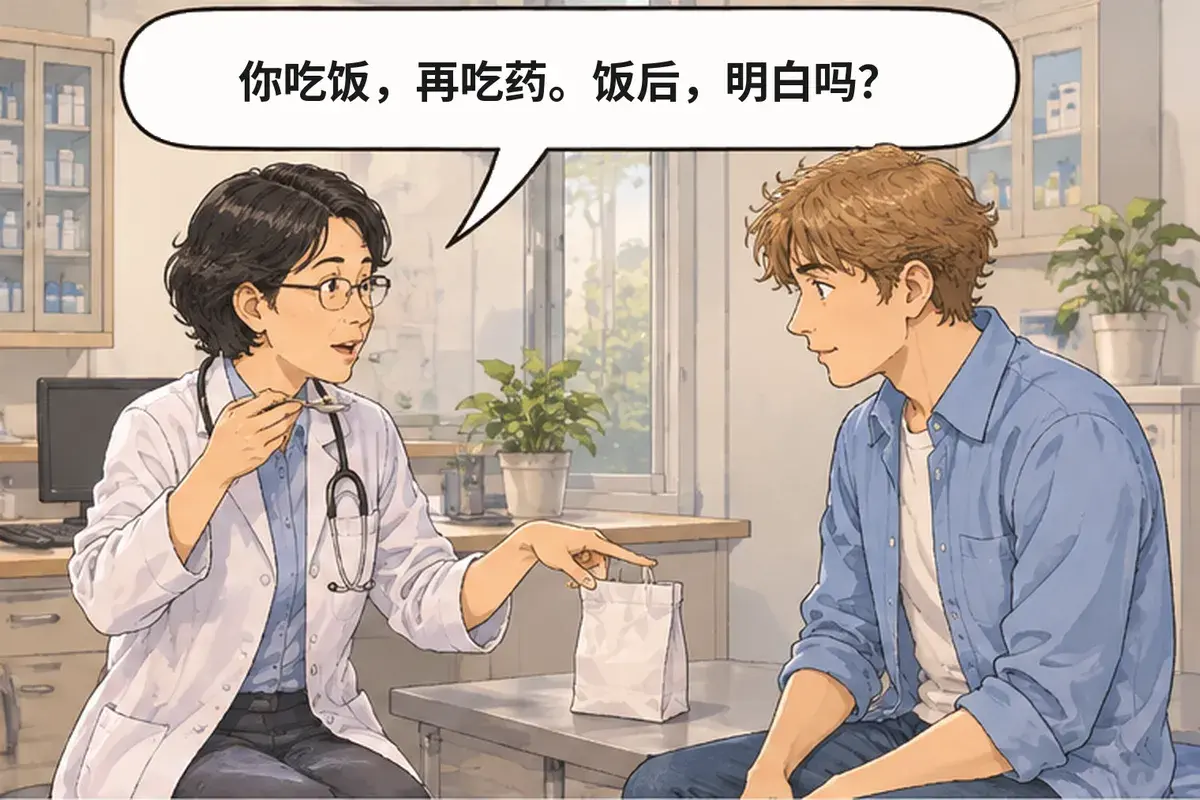
- 医生
你吃饭,再吃药。饭后,明白吗?
You eat, then you take the medicine. After meals, understand?
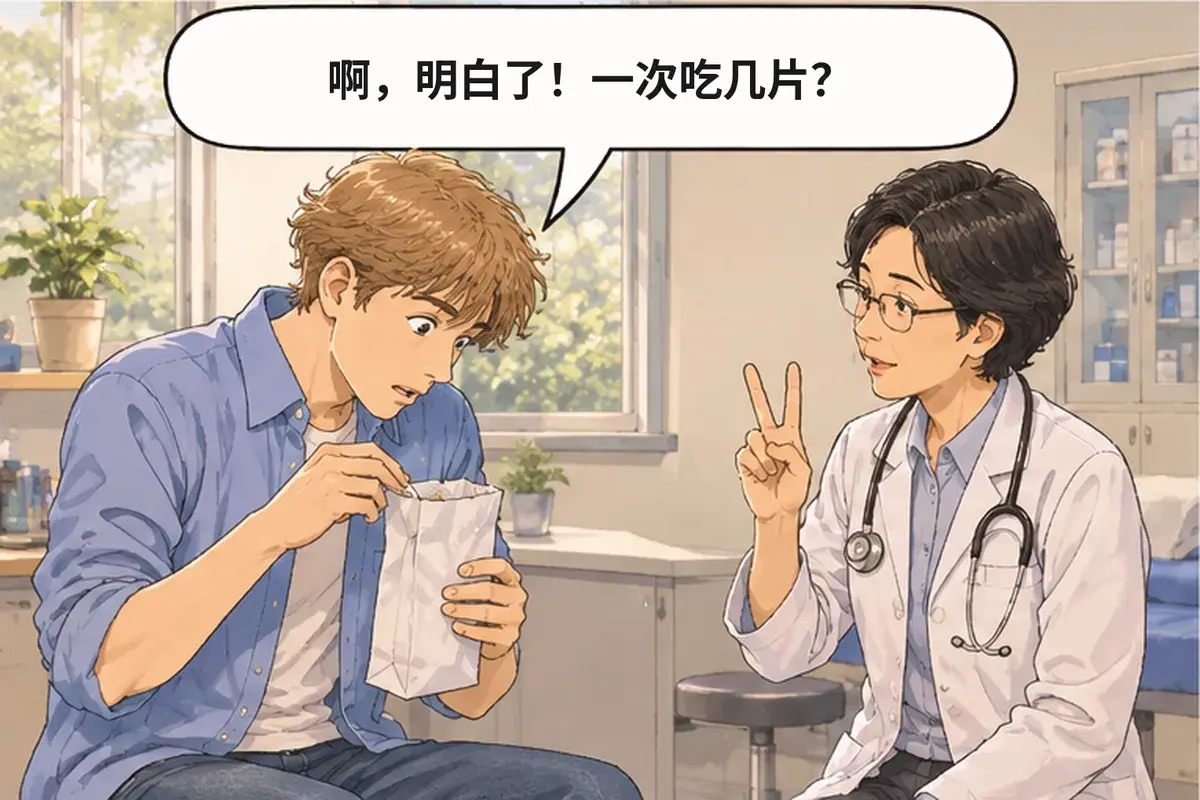
- 伊利亚
啊,明白了!一次吃几片?
Ah, now I understand! How many pills do I take at a time?
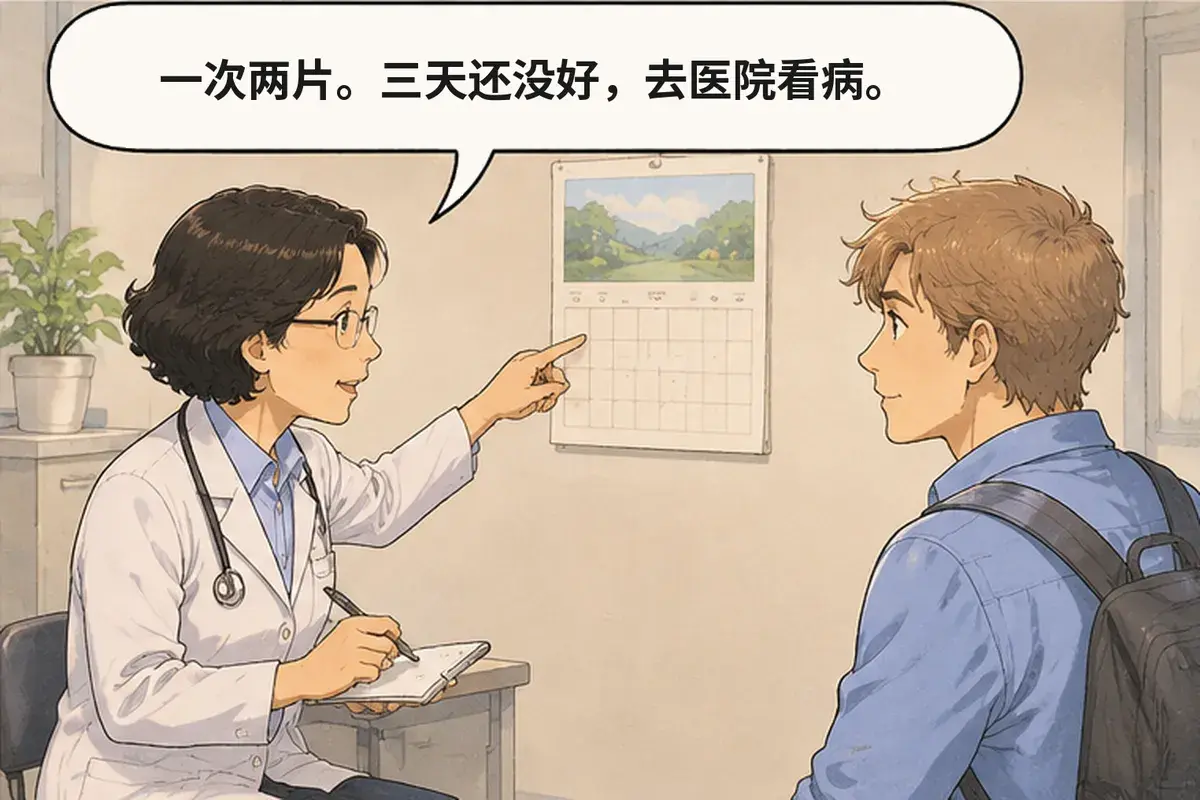
- 医生
一次两片。三天还没好,去医院看病。
Two pills at a time. If you're still not better in three days, go to the hospital and see a doctor.
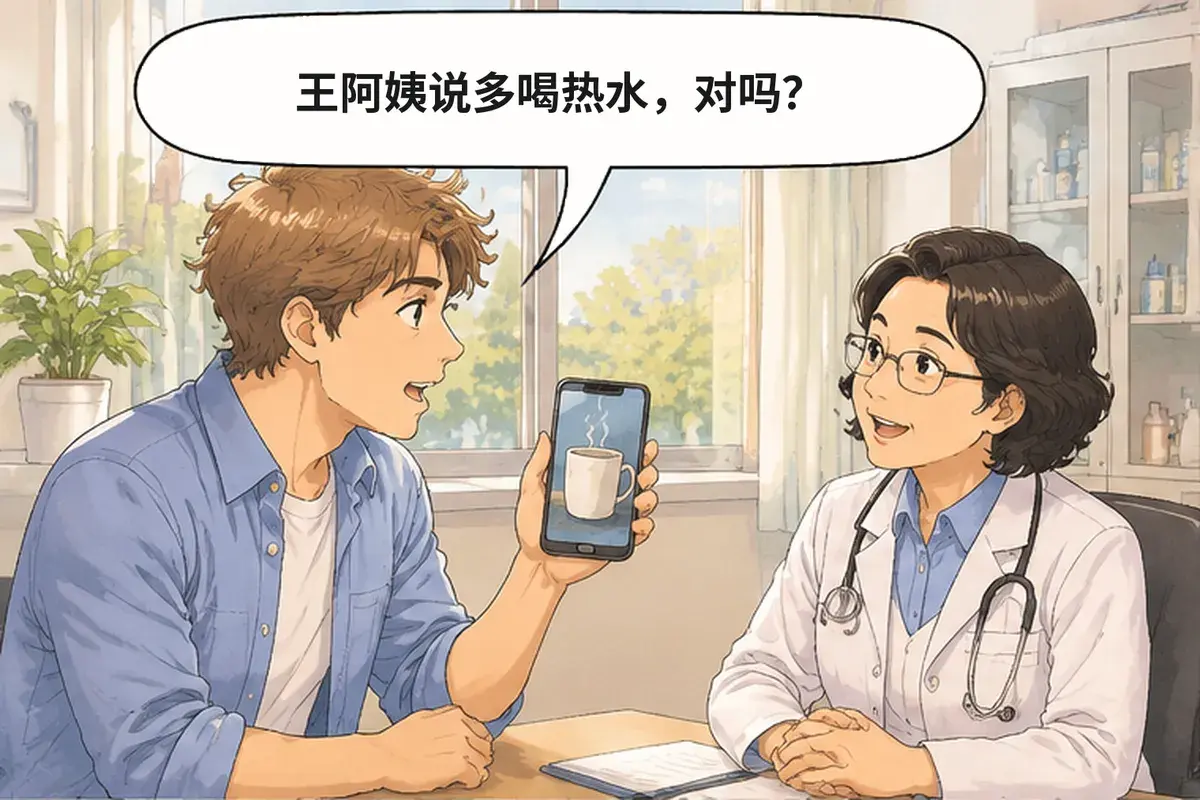
- 伊利亚
王阿姨说多喝热水,对吗?
Auntie Wang says to drink more hot water, is that right?
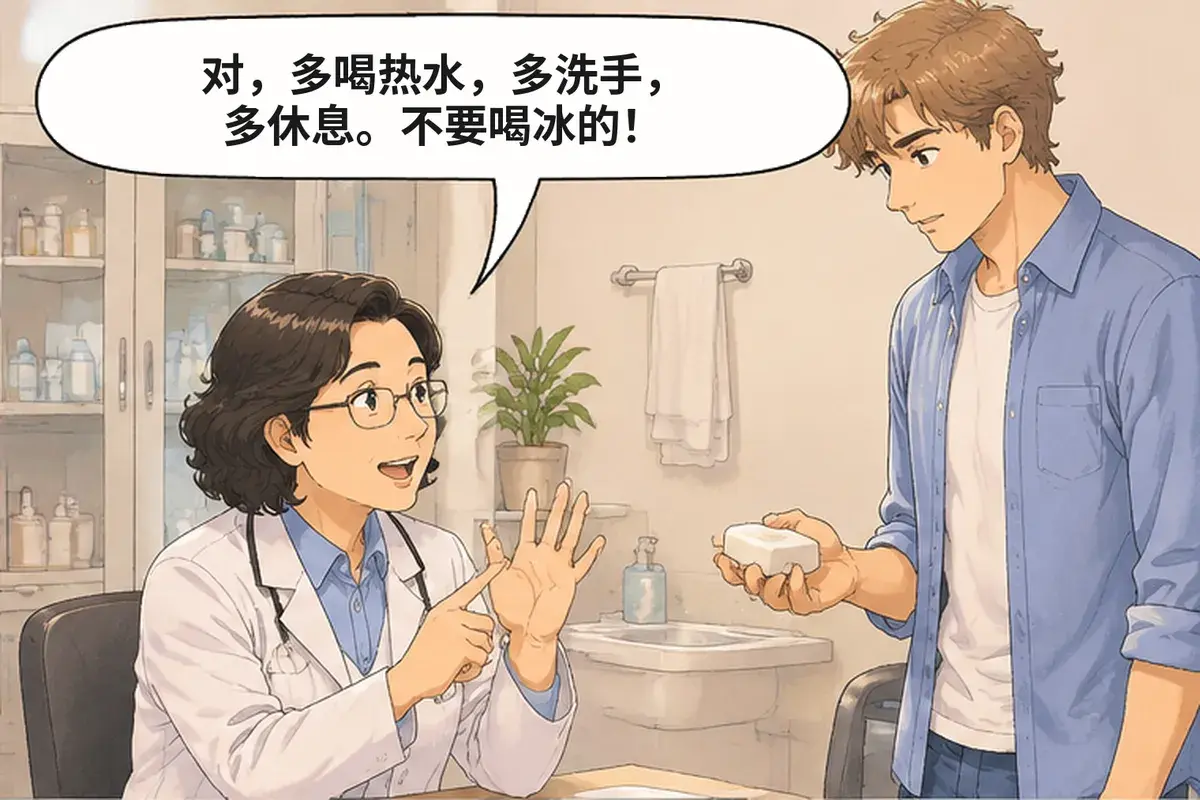
- 医生
对,多喝热水,多洗手,多休息。不要喝冰的!
Right: drink more hot water, wash your hands more often, get more rest. And don't drink anything cold!
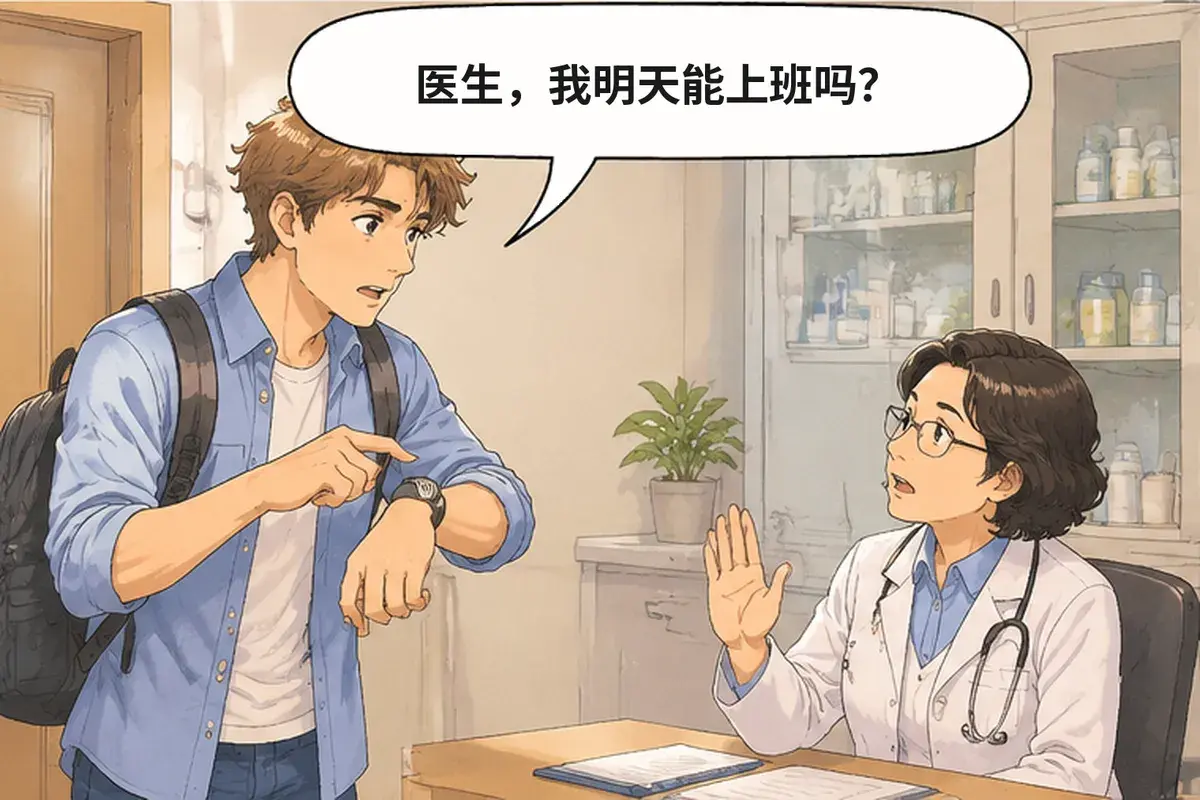
- 伊利亚
医生,我明天能上班吗?
Doctor, can I go to work tomorrow?
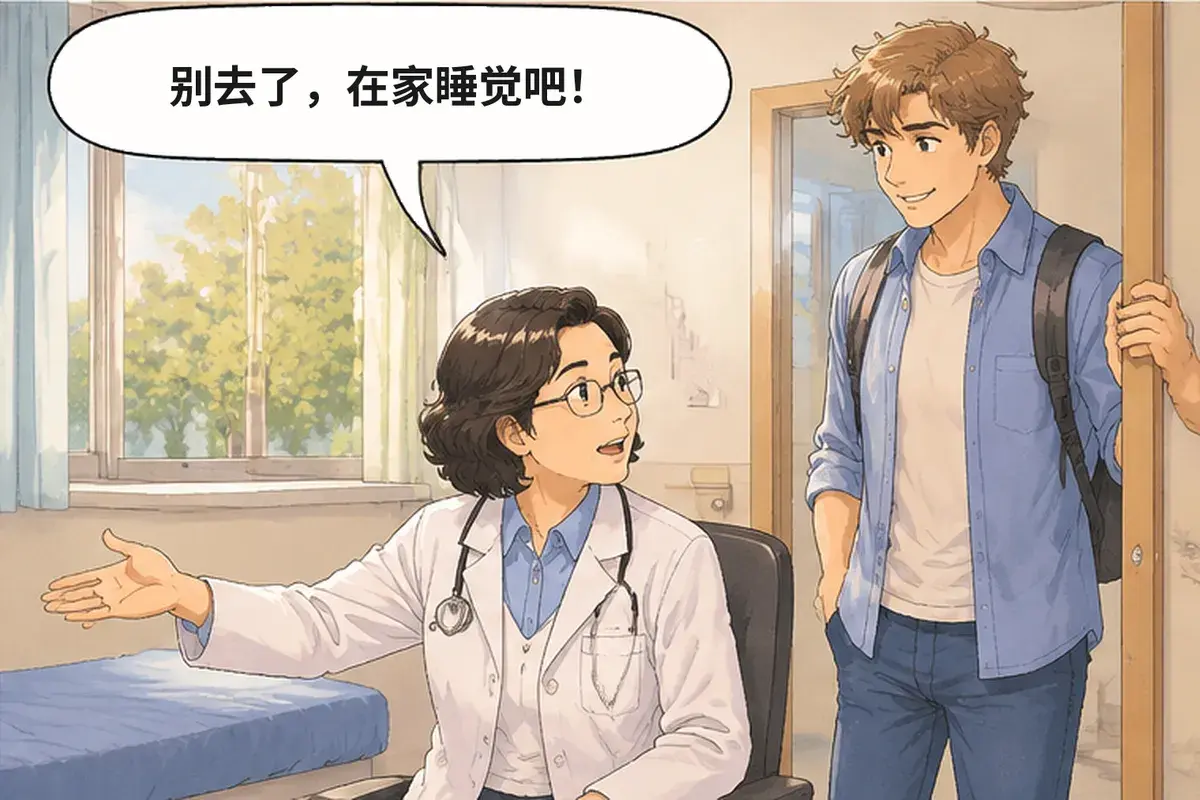
- 医生
别去了,在家睡觉吧!
Don't go. Stay home and sleep!
Grammar for this text
一 天 三 次, 饭 后 吃 — the reverse of the English order: first the period (一 天 — yì tiān, "a day"), then how many times (三 次). 次 is the measure word for times. 饭 后 is "after meals": 后 (hòu) "after" goes after the event. The longer word 以后 comes at A2.
吃 这 个 药 吧 — in Chinese you "eat" medicine (吃 药), even cough syrup. In English you "take" it.
哪里 不 舒服? — literally "where is it uncomfortable?". That's how a doctor or a pharmacist starts the conversation.
“饭 后” 是 什么 意思? — an honest question back: if you didn't understand a word, repeat it and ask what it means.
你 吃饭, 再 吃 药 — 再 here means "then, after that": first eat, then the medicine.
一 次 吃 几 片? — 一 次 is "at a time". 片 (piàn) is the measure word for pills: 两 片 药 is "two pills". In casual talk people also count pills with the all-purpose 个, but doctors and medicine boxes say 片.
三 天 还 没 好, 去 医院 看病 — there's no word for "if": the condition simply comes first. 还 没 好 is "still not better": 没, because getting better hasn't happened.
多 喝 热水, 多 洗 手, 多 休息 — three pieces of advice with 多 + verb. In English 多 洗 手 is "wash your hands more often".
不要 喝 冰 的! — 不要 (búyào) before a verb means "don't": the same as 别, a bit firmer. Don't mix it up with the two words 不 要, "I don't want": 我 不 要 冰 (unit 3). 冰 的 is "something cold, with ice": here 的 stands for the thing itself. Chinese people firmly believe that someone with a cold should drink only warm things.
别 去 了 — 了 at the end: "don't go anymore", the plans have changed.
In a Chinese pharmacy the person behind the counter wears a white coat, and people call them 医生.
Words and grammar of the unit: Say that you're sick.
Learn the words from the texts with flashcards
In the app, you can tap any word in a text to see its translation, forms and examples, and new words stick with flashcards. 15 minutes a day.
Start for freeEverything is open for free. No card needed to sign up.