

Chinese dialogue with translation · A1 · 9 lines
周经理,我想请假 Manager Zhou, I'd like to ask for time off
Comic · 9 panels

- 伊利亚
周经理,您好。我感冒了,有点发烧。
Hello, Manager Zhou. I've caught a cold, and I have a slight fever. (polite)
- 周经理
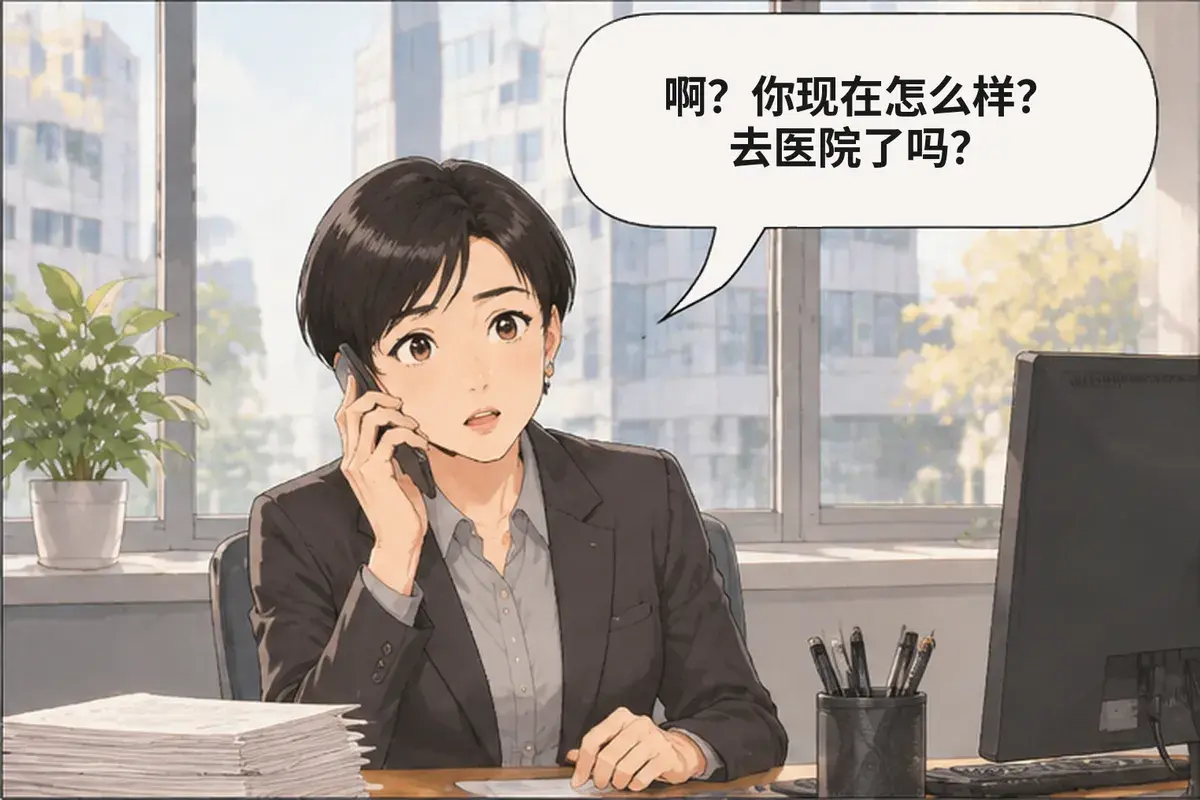
啊?你现在怎么样?去医院了吗?
Oh? How are you now? Did you go to the hospital?

- 伊利亚
没去。小病,我去药店买了药。
I didn't go. It's a minor illness; I went to the pharmacy and bought medicine.

- 伊利亚
周经理,我想请假,可以吗?有些工作我在家做。
Manager Zhou, I'd like to ask for time off, is that OK? I'll do some of the work from home.
- 周经理
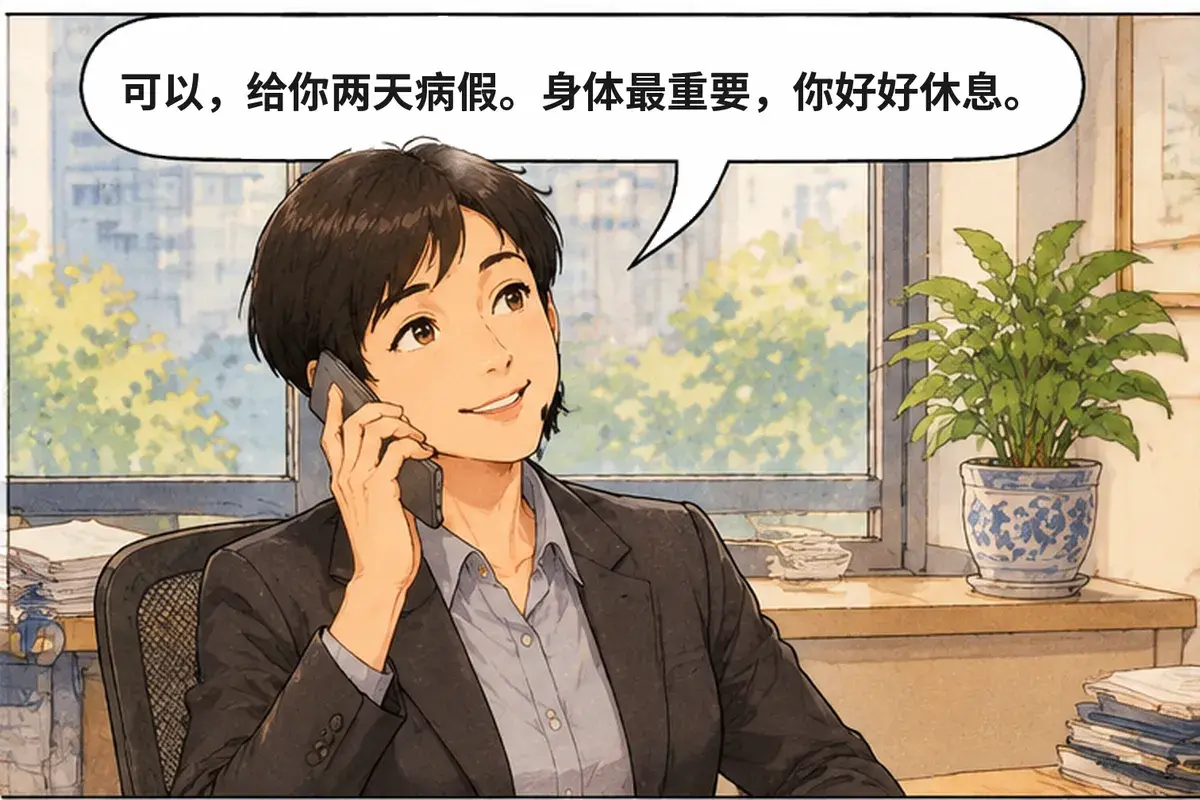
可以,给你两天病假。身体最重要,你好好休息。
Sure, I'll give you two days of sick leave. Your health is the most important thing, get a good rest.

- 周经理
不用!明天别来了。工作的事,我告诉晓雨。
No need to work! Don't come in tomorrow. As for work, I'll tell Xiaoyu.
- 伊利亚
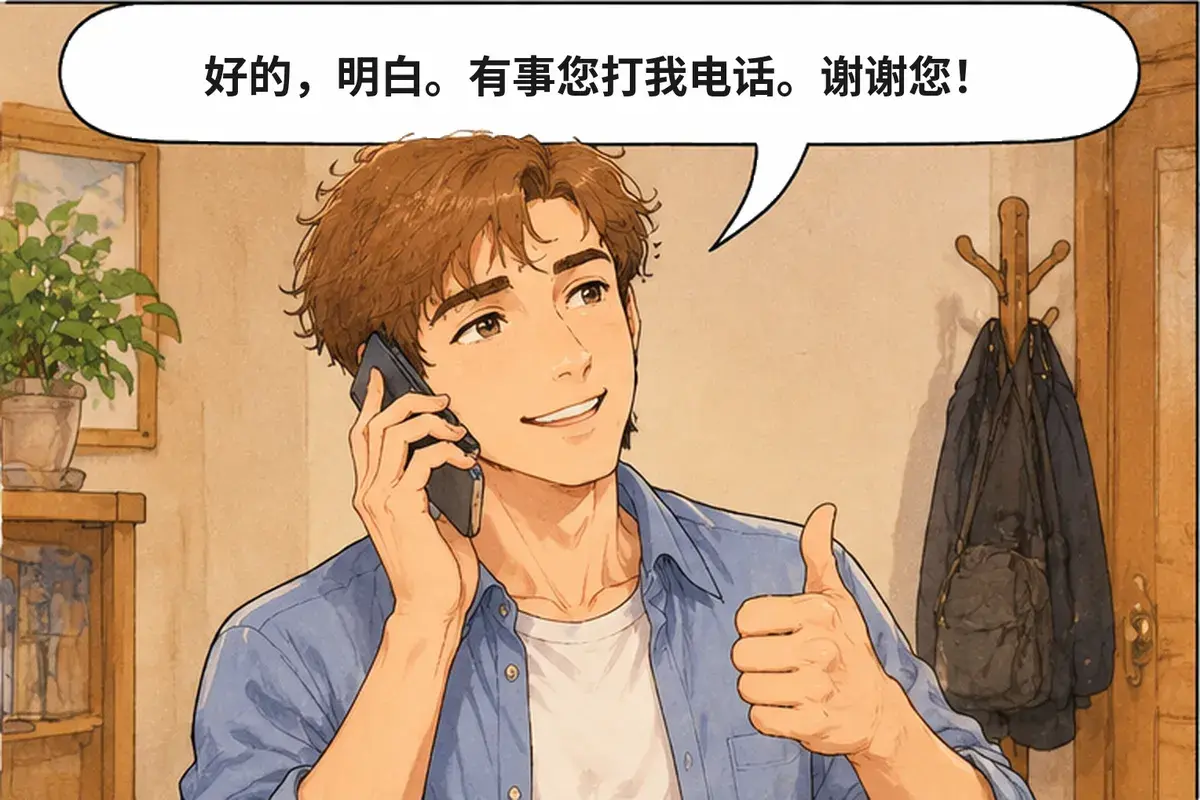
好的,明白。有事您打我电话。谢谢您!
OK, understood. If anything comes up, call me. Thank you! (polite)
- 周经理
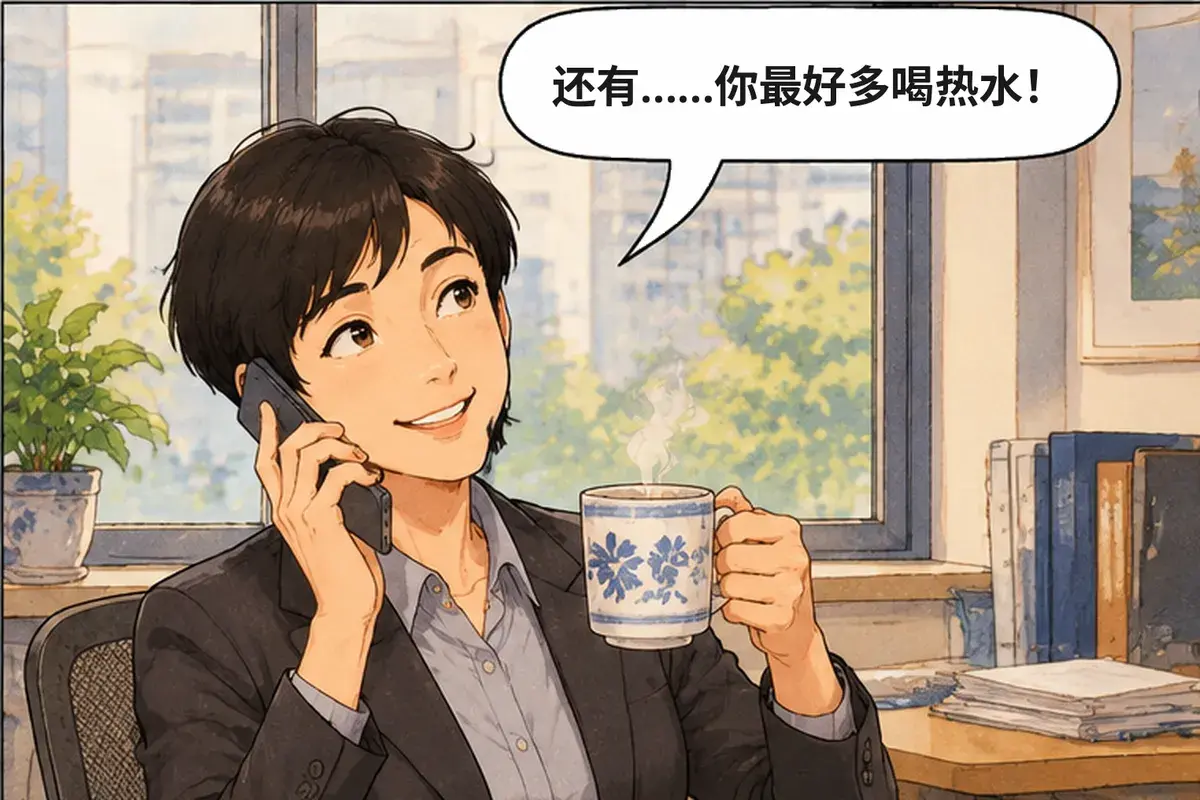
还有……你最好多喝热水!
And also… you'd better drink lots of hot water!

- 伊利亚
您也说“多喝热水”!好,我喝。
You say "drink more hot water" too! OK, I'll drink it. (polite)
Grammar for this text
周 经理, 我 想 请假 — 请假 (qǐngjià) is "to ask for time off": for a day, because you're sick, or for something you need to do. You ask your boss, often by voice message on WeChat, like Ilya. Manager Zhou is the head of the department; Ilya calls her 您, and she calls him 你. In English both are just "you".
有些 工作 我 在 家 做 — 有些 (yǒuxiē) means "some, certain": 有些 工作 is "some of the work". Ilya puts it first, as the topic: "some of the work — I'll do it at home".
去 医院 了 吗? — 了 means "done" (unit 12): "did you go?". The answer has no 了: 没 去.
小 病 — "a minor illness, nothing much": 病 is "illness". People say it to reassure someone: it's nothing serious.
给 你 两 天 病假 — 病假 (bìngjià) is "sick leave": days off work because you're ill. 请 病假 is "to take sick leave"; just asking for time off for any reason is 请假.
身体 最 重要 — 身体 is "body", but in a phrase like this it's "health". Chinese people say it a lot: a boss lets a sick worker go home, a mom gives advice.
你 好好 休息 — 好好 (hǎohǎo) before a verb means "properly, really well". Doubled words are an A2 topic; for now learn the phrase as a whole.
不用! 明天 别 来 了 — 不用 is "no need": the manager turns down Ilya's offer to work from home. 别 … 了 is "no need anymore": "don't come in tomorrow".
工作 的 事, 我 告诉 晓雨 — first the topic ("as for work"), then the sentence itself. Chinese often does this.
有 事 您 打 我 电话 — "if anything comes up, call me". 有 事 is "if something comes up", 打 我 电话 is "to call me": in conversation people say this more often than the full 给 我 打 电话.
你 最好 多 喝 热水 — 最好 (zuìhǎo) is "you'd better, it's best to": gentle advice, it goes before the verb. "The tastiest" is written apart: 最 好吃.
您 也 说 “多 喝 热水”! — a joke: even the strict manager gives the same advice as Auntie Wang.
Words and grammar of the unit: Say that you're sick.
Learn the words from the texts with flashcards
In the app, you can tap any word in a text to see its translation, forms and examples, and new words stick with flashcards. 15 minutes a day.
Start for freeEverything is open for free. No card needed to sign up.