

Chinese dialogue with translation · A1 · 13 lines
多喝热水! Drink more hot water!
Comic · 13 panels
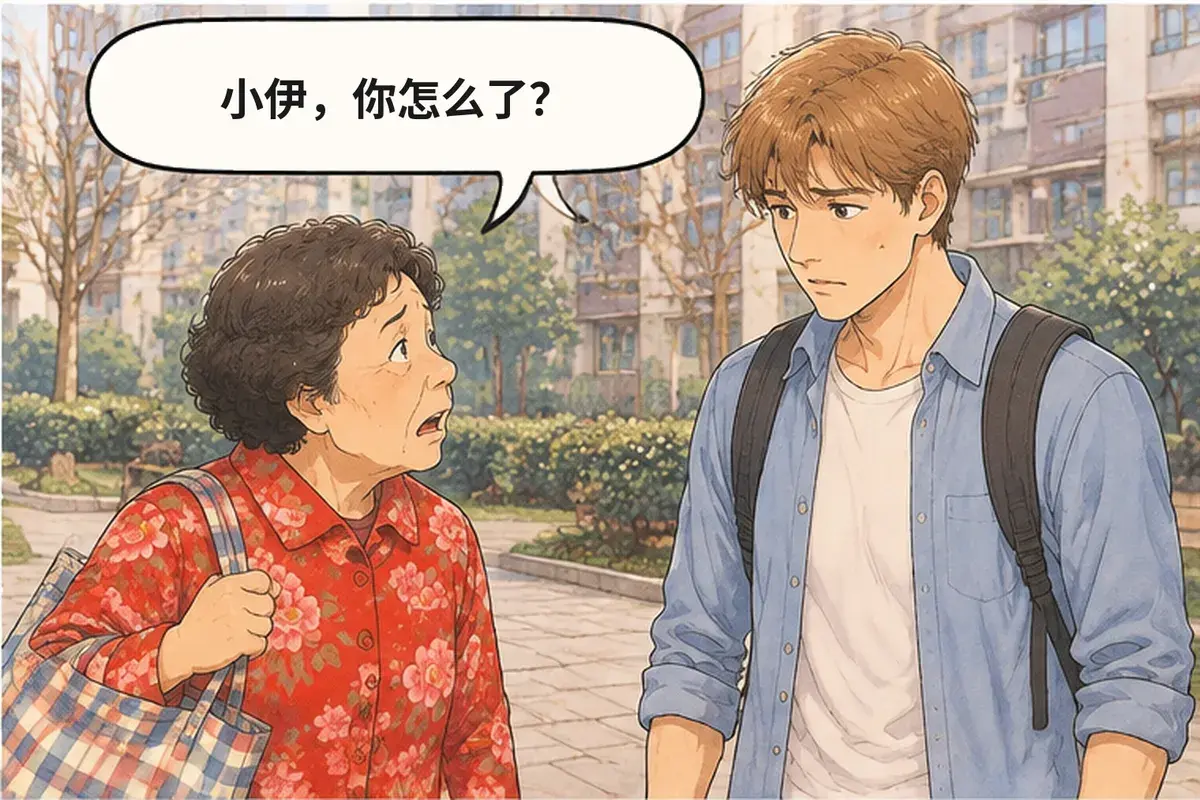
- 王阿姨
小伊,你怎么了?
Xiao Yi, what's wrong?

- 伊利亚
王阿姨,我有点不舒服。
Auntie Wang, I feel a bit unwell.

- 王阿姨
是不是发烧了?
You've got a fever, haven't you?

- 伊利亚
有点发烧,头也有点疼。
A slight fever, and my head hurts a bit too.
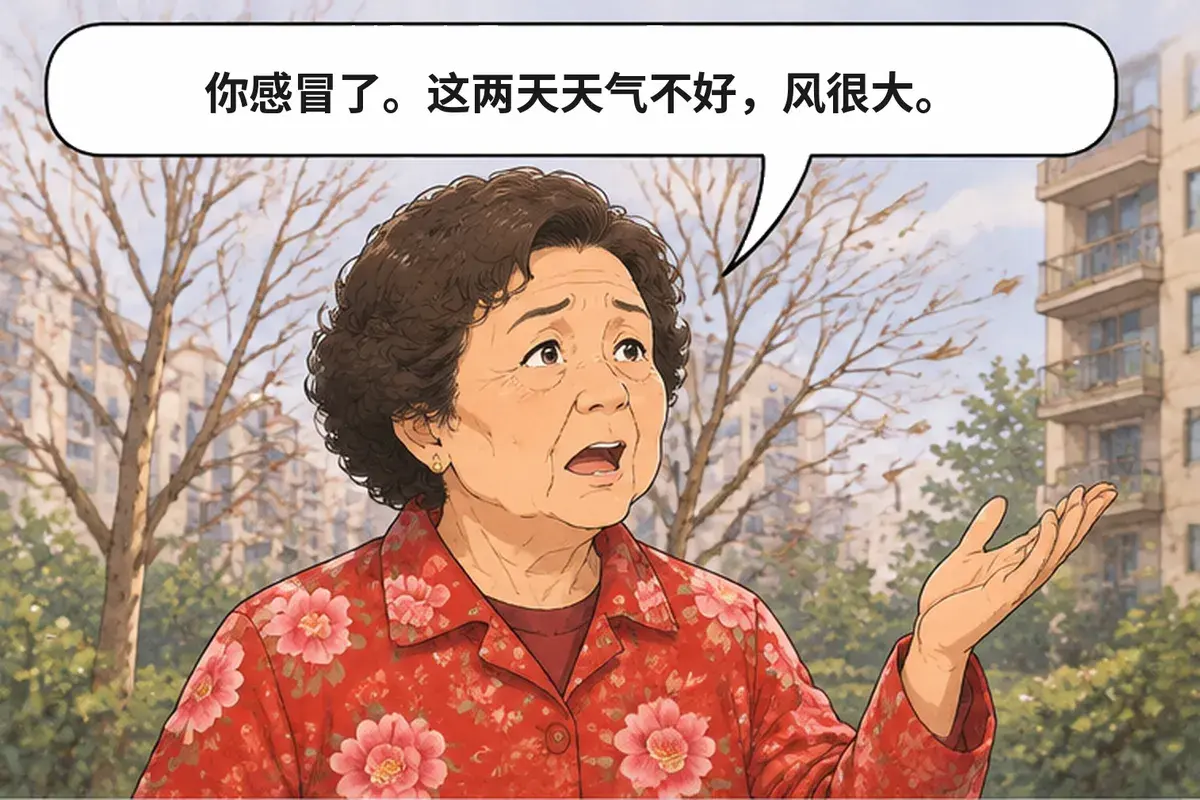
- 王阿姨
你感冒了。这两天天气不好,风很大。
You've caught a cold. The weather's been bad the last few days, and it's very windy.

- 伊利亚
对,昨天晚上下雨,我走路回家。
Yes, it rained last night, and I walked home.

- 王阿姨
下雨还走路?多穿一件衣服,多喝热水!
It was raining and you still walked? Put on one more layer, drink more hot water!

- 伊利亚
热水?我喜欢喝冰的……
Hot water? I like drinking ice-cold stuff…
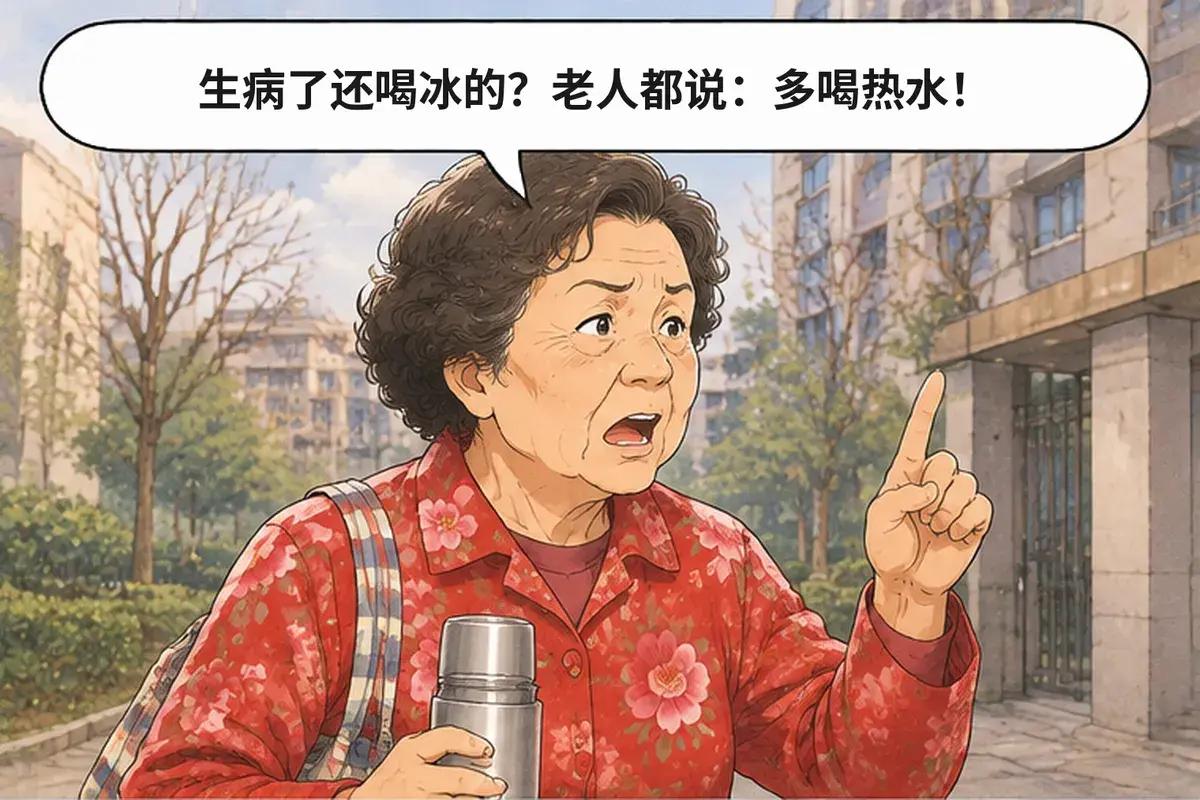
- 王阿姨
生病了还喝冰的?老人都说:多喝热水!
You're sick and you still drink ice-cold stuff? Old people all say: drink more hot water!

- 伊利亚
好,好,我喝热水。
OK, OK, I'll drink hot water.
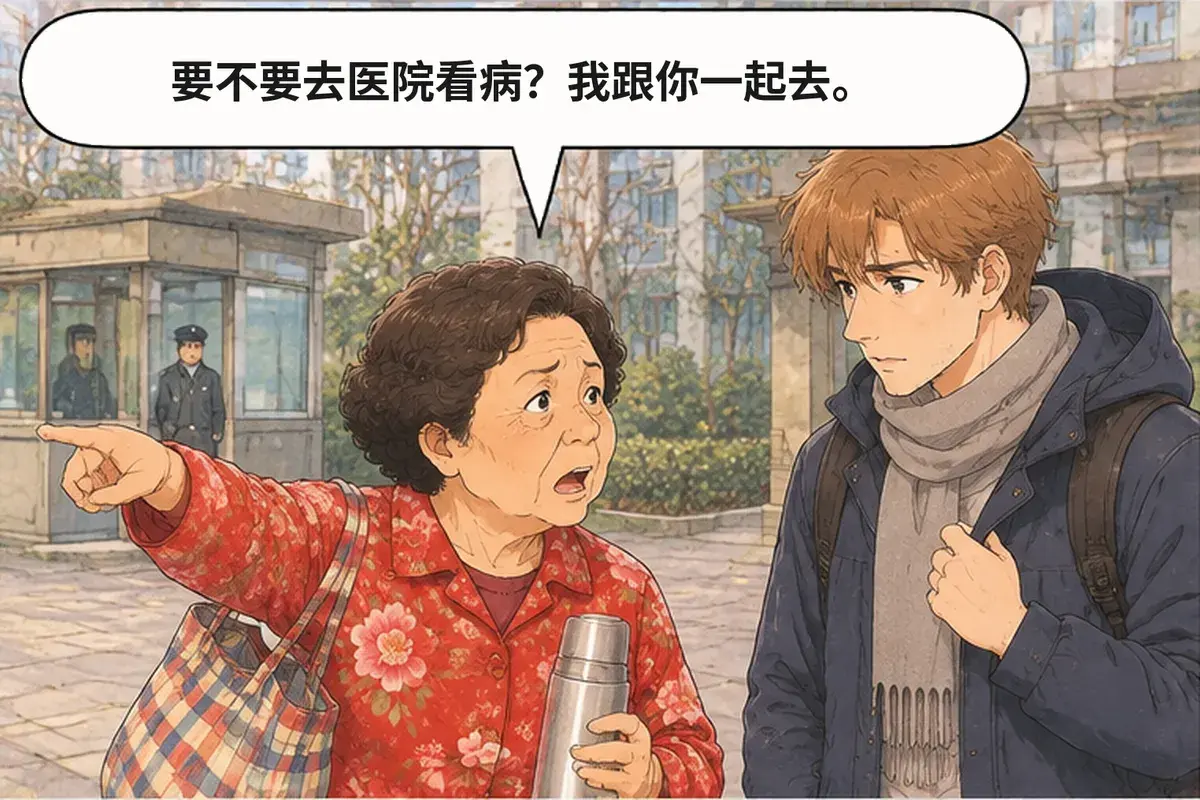
- 王阿姨
要不要去医院看病?我跟你一起去。
Do you want to go to the hospital and see a doctor? I'll go with you.

- 伊利亚
不用,不用!我去药店买药。
No need, no need! I'm going to the pharmacy to buy medicine.

- 王阿姨
那快去吧。身上有钱吗?晚上我给你送汤!
Then hurry up and go. Do you have money on you? I'll bring you soup this evening!
Grammar for this text
你 怎么 了? — "what's wrong?", "what happened?". A set phrase: 怎么 "how" + 了 "it has become", literally "how has it become?". People ask it when they see that someone isn't well.
我 有点 不 舒服 — 有点 (yǒudiǎn) goes before something unpleasant: "a bit unwell". 不 舒服 is how people say they don't feel well. The rule is in the unit grammar.
是 不 是 发烧 了? — a yes-no question by repeating (unit 7): "it's a fever, isn't it?". 了 means "it has become so": the fever has come on.
这 两 天 — literally "these two days", meaning "the last few days". Nobody means exactly two days.
下 雨 还 走路? — 还 here means "and still": it was raining, and you walked anyway. Auntie Wang scolds him, but kindly.
多 穿 一 件 衣服, 多 喝 热水! — 多 before a verb means "more": wear one more piece of clothing, drink more hot water. 件 is the measure word for clothes. "Drink hot water" and "dress warmer" are Chinese grandmas' advice for everything.
我 喜欢 喝 冰 的 — 冰 的 is "the ice-cold kind": 的 stands in for the word "water" (unit 8).
要 不 要 去 医院 看病? — "do you want to go to the hospital and see a doctor?" 看病 is literally "to look at an illness".
身上 有 钱 吗? — 身上 (shēnshang) is "on you, with you", literally "on the body". Auntie Wang looks after Ilya like a grandson: does he have money for the medicine?
晚上 我 给 你 送 汤! — 给 你 is "to you", 送 is "to bring" (unit 9). Auntie Wang feeds everyone.
Words and grammar of the unit: Say that you're sick.
Learn the words from the texts with flashcards
In the app, you can tap any word in a text to see its translation, forms and examples, and new words stick with flashcards. 15 minutes a day.
Start for freeEverything is open for free. No card needed to sign up.