

Chinese dialogue with translation · A1 · 11 lines
你会说英语吗? Can you speak English?
Comic · 8 panels

- 周经理
伊利亚,你会说英语吗?
Ilya, can you speak English?
- 伊利亚
会一点。有什么事吗?
A little. Is something up?
- 周经理
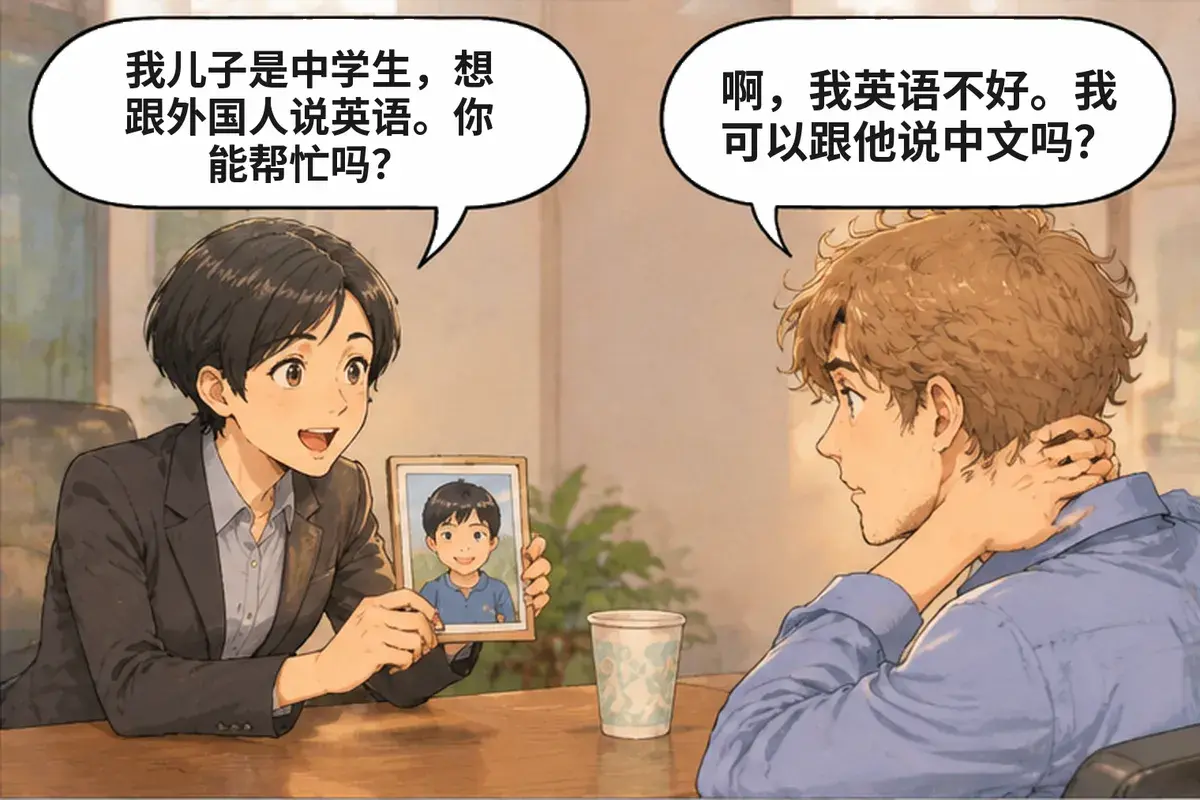
我儿子是中学生,想跟外国人说英语。你能帮忙吗?
My son is in high school, and he wants to speak English with a foreigner. Can you help?
- 伊利亚
啊,我英语不好。我可以跟他说中文吗?
Oh, my English isn't good. May I speak Chinese with him?

- 周经理
中文?他中文很好啊!
Chinese? His Chinese is very good!

- 伊利亚
对,对。那他有什么爱好?
Right, right. So what are his hobbies?

- 周经理
打球。他不喜欢跟别人说话,也不喜欢写字。
Playing ball. He doesn't like talking to other people, and he doesn't like writing characters either.

- 伊利亚
打球我会!星期六我们可以一起打。
Playing ball — that I know how to do! On Saturday we can play together.
- 周经理
太好了!星期六我开车送他去你们小区。
Great! On Saturday I'll drive him to your compound.

- 伊利亚
好!您也打球吗?
OK! Do you play ball too? (polite)
- 周经理
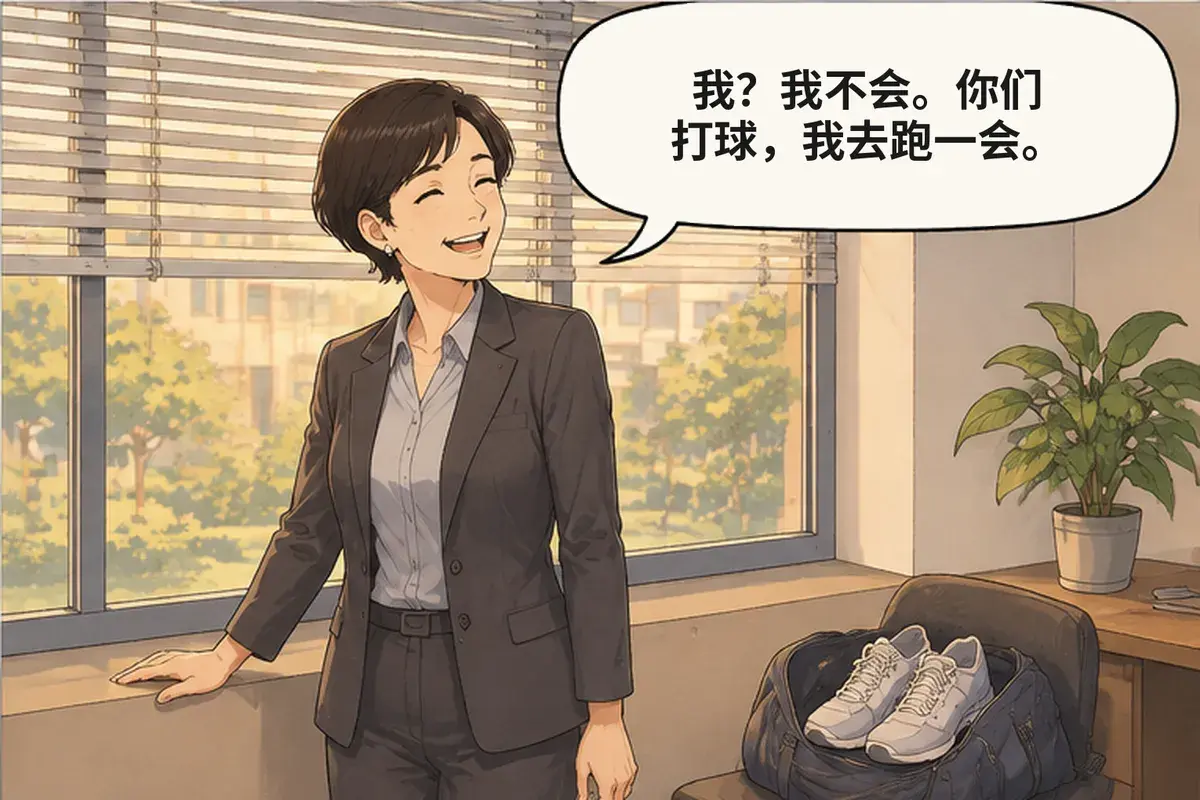
我?我不会。你们打球,我去跑一会。
Me? I don't know how. You two play ball, and I'll go for a little run.
Grammar for this text
你 会 说 英语 吗? — you ask about languages with 会: it's a skill. Manager Zhou says the plain 你 to Ilya: she's older and senior. Ilya answers her with the polite 您.
有 什么 事 吗? — "is something up?": this is how you ask why someone called you. A bare 为什么? to a boss sounds rude, almost "and why should I?".
我 儿子 是 中学生 — 中学生 is a middle or high school student, 12 to 18 years old in China. Just "student" is 学生 (unit 10).
我 可以 跟 他 说 中文 吗? — 可以…吗? is "may I…?", asking for permission. 跟 他 — "with him" — goes before the verb.
他 中文 很 好 啊! — the manager is joking: of course her son speaks Chinese perfectly — he's Chinese. 啊 at the end adds "of course!".
他 不 喜欢 跟 别人 说话 — 别人 (biérén) is "other people, others": only about people. "Something else" is 别的 (unit 9). 跟 别人 — "with others" — goes before the verb, like 跟 他.
也 不 喜欢 写 字 — 写 字 is "to write characters", that is, just "to write": people say this about writing by hand, especially about schoolkids. 也 不 means "doesn't … either".
打球 我 会! — the thing being talked about comes first: "playing ball — that I know how to do!"
星期六 我们 可以 一起 打。 — 可以 makes a suggestion: "we could play together".
我 开车 送 他 去 你们 小区。 — two verbs in a row, like 坐 地铁 来 (unit 10): 开车 — "by car", 送 — "to take someone", 去 你们 小区 — where to.
我 去 跑 一会。 — 一会 after a verb means "for a little while" (unit 13).
Words and grammar of the unit: Say what you can do.
Learn the words from the texts with flashcards
In the app, you can tap any word in a text to see its translation, forms and examples, and new words stick with flashcards. 15 minutes a day.
Start for freeEverything is open for free. No card needed to sign up.