

Thai dialogue with translation · A1 · 9 lines
บ่ายสองโมง Two in the afternoon
Comic · 9 panels
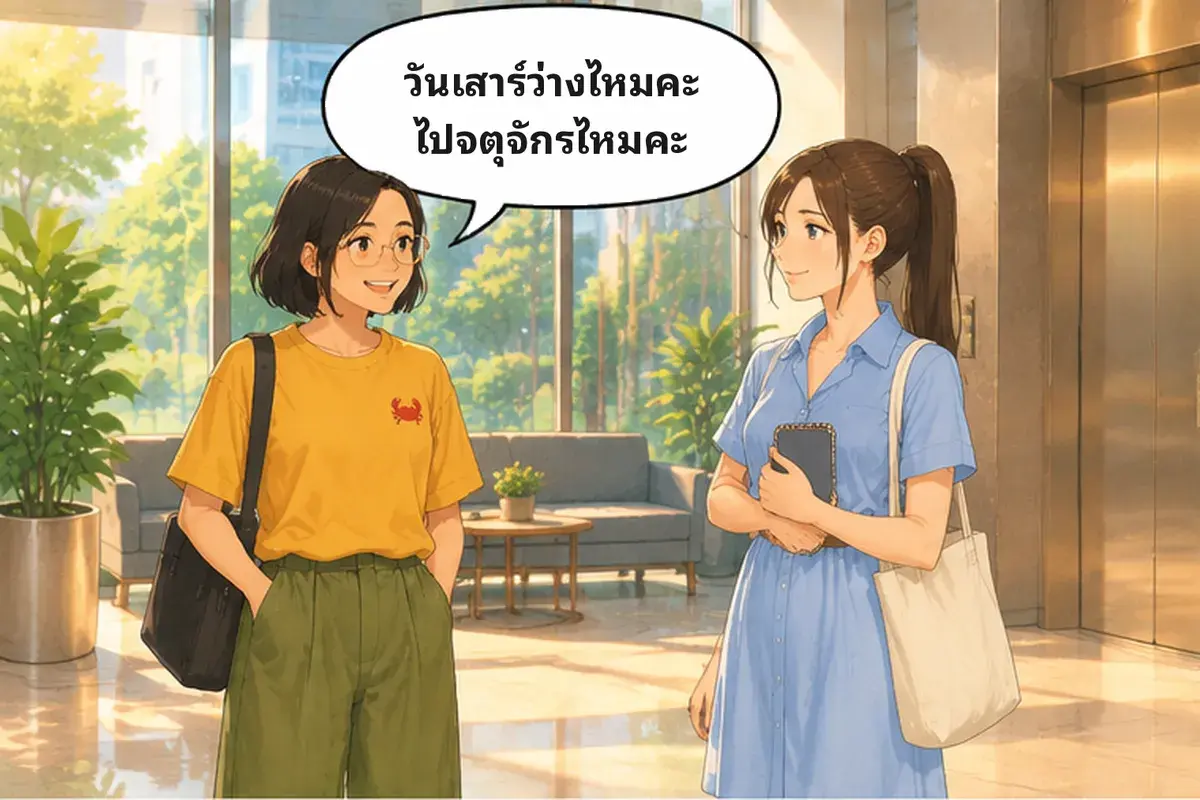
- ปู
วันเสาร์ว่างไหมคะ ไปจตุจักรไหมคะ
Are you free on Saturday? Shall we go to Chatuchak? (woman speaking)

- ยานา
ว่างค่ะ ไปค่ะ เจอกันกี่โมงคะ
I'm free. I'll go! What time should we meet? (woman speaking)

- ปู
บ่ายสองโมงค่ะ ฉันตื่นสายบ่อย
At two in the afternoon. I often get up late (woman speaking).

- ดีมา
สองทุ่มใช่ไหมครับ
Eight in the evening, right? (man speaking)

- ปู
ไม่ใช่ค่ะ สองทุ่มคือกลางคืน บ่ายสองโมงคือกลางวัน
No, that's not right. Eight in the evening is nighttime. Two in the afternoon is daytime (woman speaking).

- ดีมา
อ๋อ บ่ายสองโมงครับ
Oh, I see! Two in the afternoon (man speaking).

- ยานา
เจอกันที่ไหนคะ
Where should we meet? (woman speaking)

- ปู
หน้าลิฟต์ค่ะ อย่ามาสายนะคะ
In front of the elevator. Don't come late, OK? (woman speaking)

- ยานา
ฉันจดค่ะ วันเสาร์เวลาบ่ายสองโมง
I'm writing it down (woman speaking). Saturday, time: two in the afternoon.
Grammar for this text
- บ่ายสองโมง — two in the afternoon. The number goes between
บ่ายandโมง: this is how you name the hours from 1 to 3 p.m. To ask 'what time?': เจอกันกี่โมงคะ — What time should we meet? (woman speaking)กี่โมงgoes at the end, as in the set phrase from the unit grammar. - สองทุ่ม is 8 p.m., not 2 p.m. The number is the same, but the word after it is different:
ทุ่มis for the hours from seven in the evening. Dima heard 'two' and got it wrong; Pu corrects him with ไม่ใช่ค่ะ ('no, that's not right'). - สองทุ่มคือกลางคืน —
คือ(kʉʉ) means 'is, that is': this is how you explain what something is ('A is B'). More aboutคือin unit 20.กลางคืนis the dark part of the day,กลางวัน(glaang-wan) the light part. - ฉันตื่นสายบ่อย — I often get up late (woman speaking).
สาย(sǎai) means 'late' here, andบ่อย('often') goes at the end of the sentence. - อย่ามาสายนะคะ —
อย่า+ verb means 'don't' (unit 13).นะคะmakes it softer: a request, not an order. - วันเสาร์เวลาบ่ายสองโมง — this is how you write it in a note: the day, then
เวลา('time'), then the hour.
Words and grammar of the unit: Agree on a time to meet.
Learn the words from the texts with flashcards
In the app, you can tap any word in a text to see its translation, forms and examples, and new words stick with flashcards. 15 minutes a day.
Start for freeEverything is open for free. No card needed to sign up.