

Thai dialogue with translation · A1 · 9 lines
จมูกแดง A red nose
Comic · 6 panels

- ครูแนน
เคน จมูกแดงนะคะ เป็นหวัดใช่ไหมคะ
Ken, your nose is red. You have a cold, right? (woman speaking)

- เคน
ครับ น้ำมูกไหล ไอนิดหน่อย ปวดหูด้วยครับ
Yes. My nose is running, I'm coughing a little, and my ear aches too (man speaking).
- ครูแนน
นี่ทิชชู่ค่ะ
Here's a tissue (woman speaking).
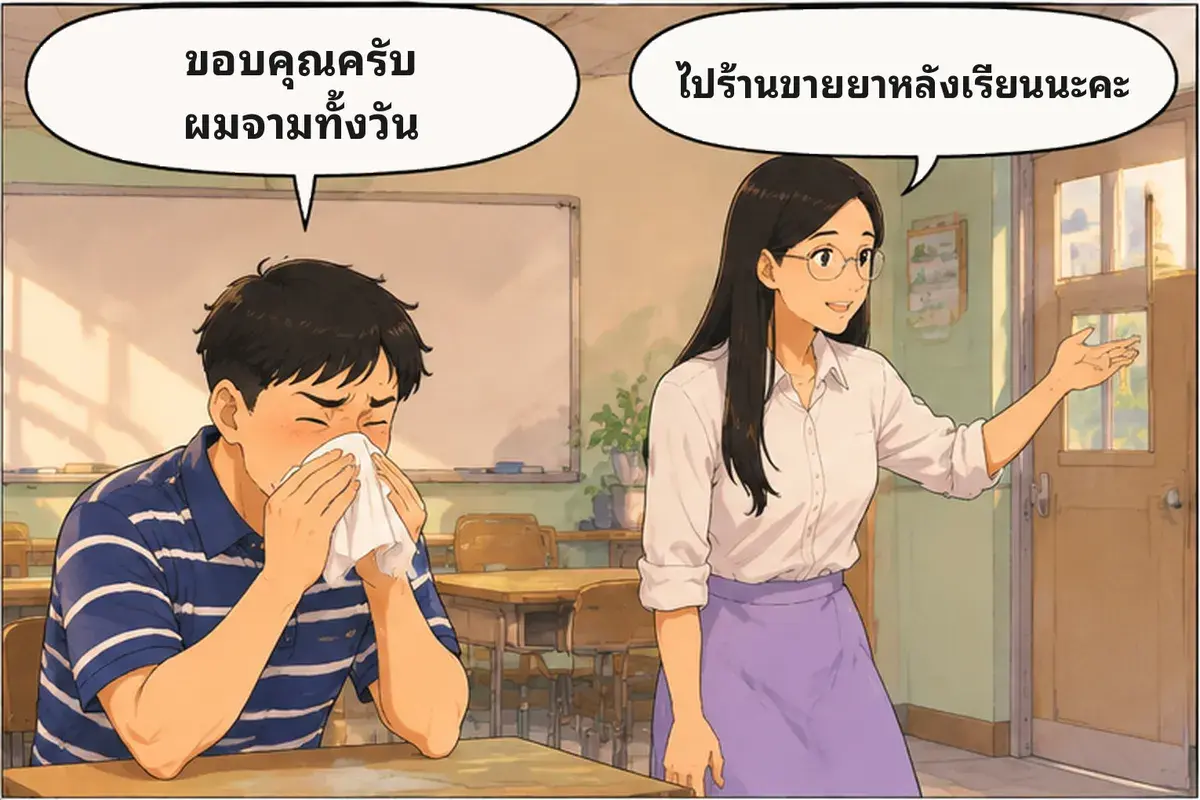
- เคน
ขอบคุณครับ ผมจามทั้งวัน
Thank you. I've been sneezing all day (man speaking).
- ครูแนน
ไปร้านขายยาหลังเรียนนะคะ
Go to the pharmacy after class, OK? (woman speaking)
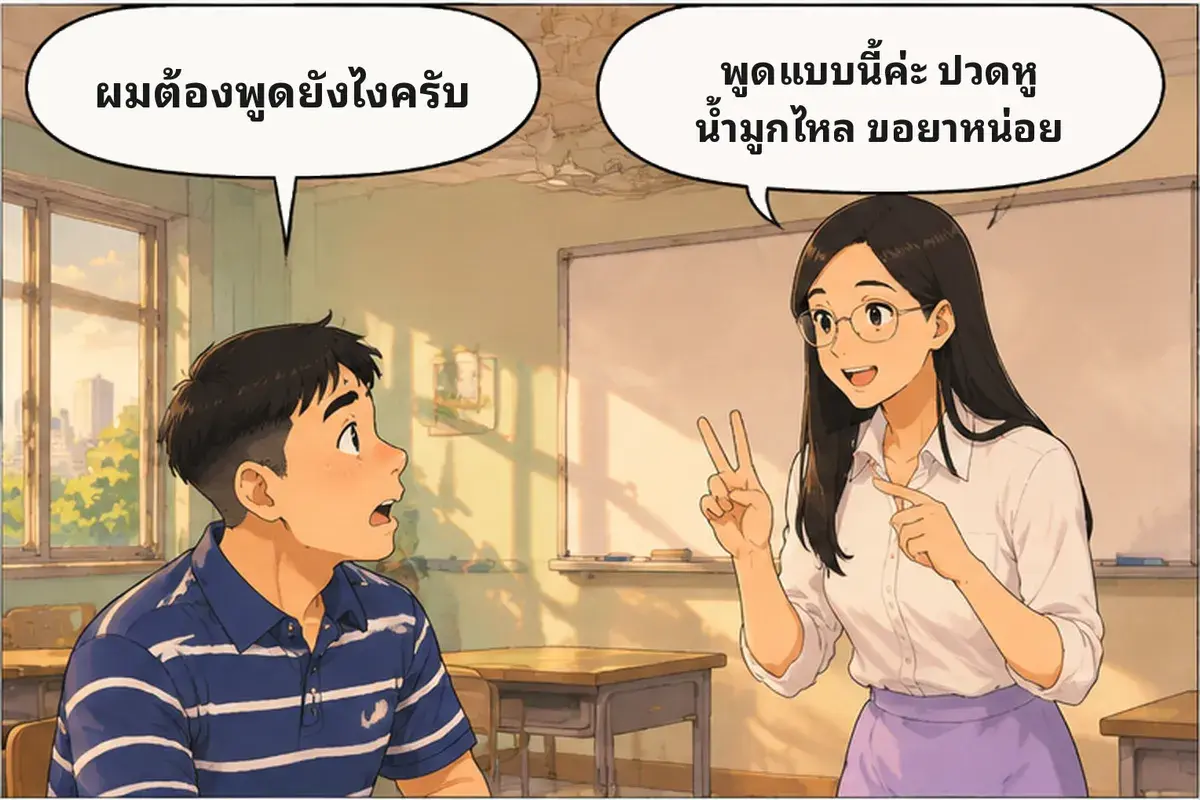
- เคน
ผมต้องพูดยังไงครับ
How do I have to say it? (man speaking)
- ครูแนน
พูดแบบนี้ค่ะ ปวดหู น้ำมูกไหล ขอยาหน่อย
Say it like this (woman speaking): my ear aches, my nose is running, some medicine, please.

- เคน
ปวดหู น้ำมูกไหล ขอยาหน่อยครับ ใช่ไหมครับ
My ear aches, my nose is running, some medicine, please. Is that right? (man speaking)

- ครูแนน
ใช่ค่ะ เก่งมากค่ะ ถ้ามีไข้ ไปหาหมอนะคะ
Yes. Very good! If you get a fever, go see a doctor, OK? (woman speaking)
Grammar for this text
- จมูกแดงนะคะ — Your nose is red (woman speaking):
จมูกis the nose, and the describing wordแดงcomes after it.นะmakes the sentence softer. - เป็นหวัดใช่ไหมคะ — You have a cold, right? (woman speaking)
ใช่ไหมat the end means 'right?': that's how you double-check. - น้ำมูกไหล — a runny nose, literally 'mucus runs'. ปวดหู — an earache:
หูis the ear, and the pain is dull, so it'sปวด. - ไอนิดหน่อย — I'm coughing a little:
ไอmeans 'to cough'. ผมจามทั้งวัน — I've been sneezing all day (man speaking):จาม— to sneeze,ทั้งวัน— all day (unit 15). ทิชชู่ is a paper tissue, from the English word 'tissue'. - ไปร้านขายยาหลังเรียนนะคะ — Go to the pharmacy after class, OK? (woman speaking):
ไปand the place, with no word for 'to';หลัง เรียน— after class. - ผมต้องพูดยังไงครับ — How do I have to say it? (man speaking):
ต้องmeans 'have to',ยังไง— how. Ken asks for a ready-made phrase. - พูดแบบนี้ค่ะ — Say it like this (woman speaking):
แบบนี้means 'like this'. Then come three short pieces that will get you through any pharmacy: what hurts (ปวดหู), what else is wrong (น้ำมูกไหล), and the requestขอยาหน่อย, some medicine, please (ขอ…หน่อย— unit 12).
Words and grammar of the unit: Explain what hurts at a pharmacy.
Learn the words from the texts with flashcards
In the app, you can tap any word in a text to see its translation, forms and examples, and new words stick with flashcards. 15 minutes a day.
Start for freeEverything is open for free. No card needed to sign up.