

Thai dialogue with translation · A1 · 11 lines
ตื่นกี่โมง What time do you get up?
Comic · 9 panels

- โจ
ดีมาตื่นกี่โมงครับ
Dima, what time do you get up? (man speaking)

- ดีมา
หกโมงเช้าเสมอครับ ผมแปรงฟัน วิ่งทุกเช้า
Always at six in the morning. I brush my teeth and run every morning (man speaking).

- โจ
ก่อนวิ่งกินอะไรไหมครับ
Do you eat anything before running? (man speaking)
- ดีมา
กล้วยครับ หลังวิ่งกินข้าวที่ร้านป้านี
A banana. After running, I eat at Auntie Ni's stall (man speaking).

- โจ
เรียนภาษาไทยเริ่มกี่โมงครับ
What time does Thai class start? (man speaking)
- ดีมา
เก้าโมงเช้าครับ เสร็จเที่ยง
At nine in the morning. It's done at noon (man speaking).
- โจ
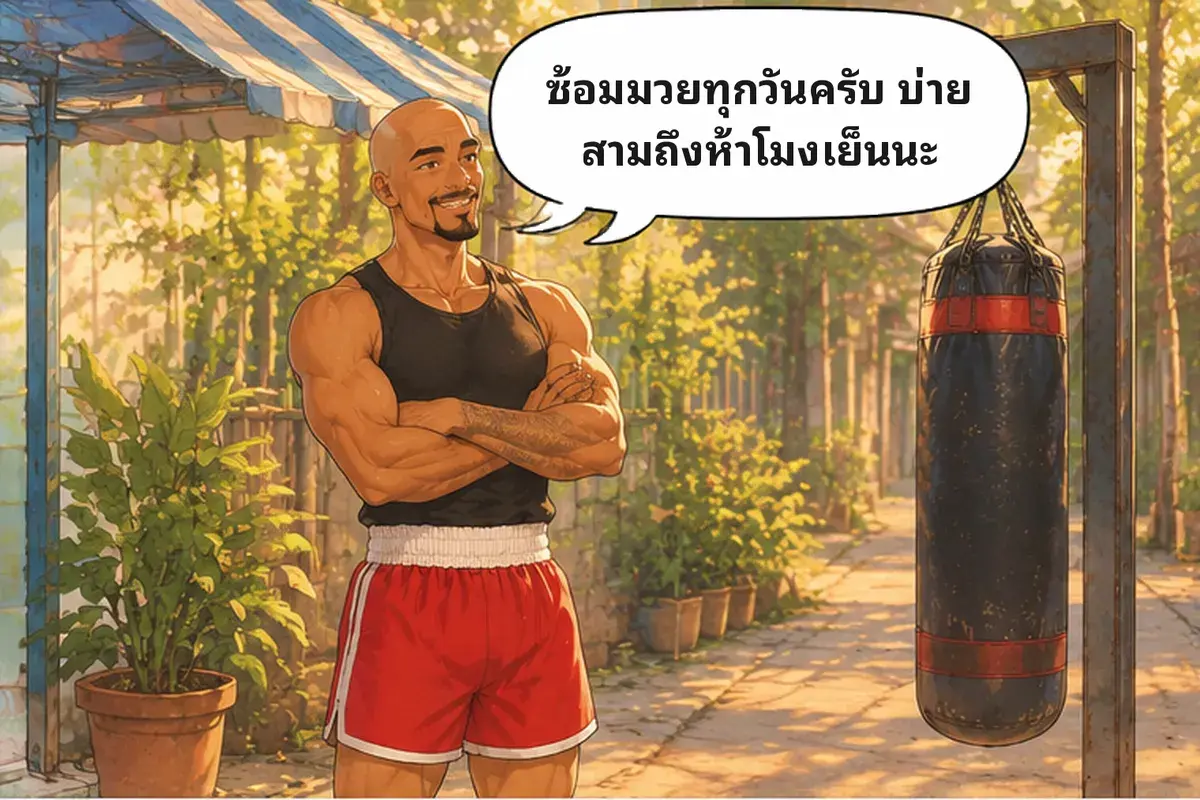
ซ้อมมวยทุกวันครับ บ่ายสามถึงห้าโมงเย็นนะ
Boxing practice every day. From three in the afternoon to five in the evening, OK? (man speaking)

- ดีมา
ผมยุ่งมากครับ วันอาทิตย์ด้วยไหมครับ
I'm very busy. Sunday too? (man speaking)
- โจ
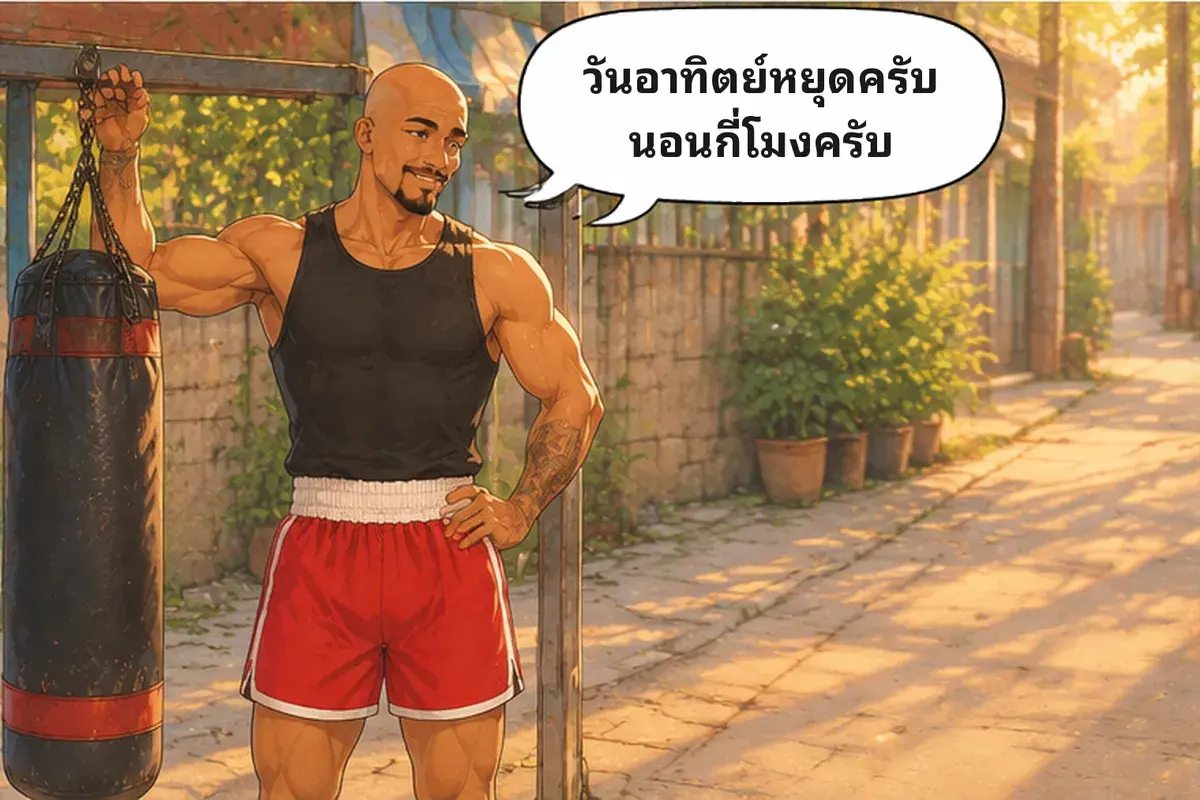
วันอาทิตย์หยุดครับ นอนกี่โมงครับ
Sunday is a day off. What time do you go to bed? (man speaking)

- ดีมา
ตีหนึ่งครับ บางทีตีสอง
At one in the morning. Sometimes at two (man speaking).

- โจ
ดึกมากครับ นอนก่อนเที่ยงคืนนะ
That's very late. Go to bed before midnight, OK? (man speaking)
Grammar for this text
- หกโมงเช้า, เก้าโมงเช้า — the morning hours from six to eleven: number +
โมงเช้า. The wordเสมอ('always') goes at the end: หกโมงเช้าเสมอครับ. - ตีหนึ่ง, ตีสอง — the hours of the night (from 1 to 5 a.m.) are named with the word
ตี, 'to hit', the way a clock strikes the hour. The number comes after it, not before it as withโมง. - บ่ายสามถึงห้าโมงเย็น — from three in the afternoon to five in the evening.
ถึง(tʉ̌ng) means 'to, until' between two times. With the first time you can leave outโมง. Five in the evening isห้าโมงเย็น: number +โมงเย็น, for the hours from 4 to 6 p.m. - เริ่มกี่โมง and เสร็จเที่ยง —
เริ่มmeans 'starts',เสร็จ'finishes, ends'. Noon isเที่ยง, with no number; midnight isเที่ยงคืน. - ทุกเช้า, ซ้อมมวยทุกวัน —
ทุก(túk) means 'every':ทุกเช้าis every morning;ทุกวันis a ready-made word, 'every day'. - ก่อนวิ่ง, หลังวิ่ง, ก่อนเที่ยงคืน —
ก่อนis 'before',หลังis 'after'; the word comes before what it refers to, like in English. Andบางที('sometimes') goes at the start: บางทีตีสอง.
Words and grammar of the unit: Agree on a time to meet.
Learn the words from the texts with flashcards
In the app, you can tap any word in a text to see its translation, forms and examples, and new words stick with flashcards. 15 minutes a day.
Start for freeEverything is open for free. No card needed to sign up.