

Thai dialogue with translation · A1 · 12 lines
มีร่มไหมครับ Do you have any umbrellas?
Comic · 8 panels
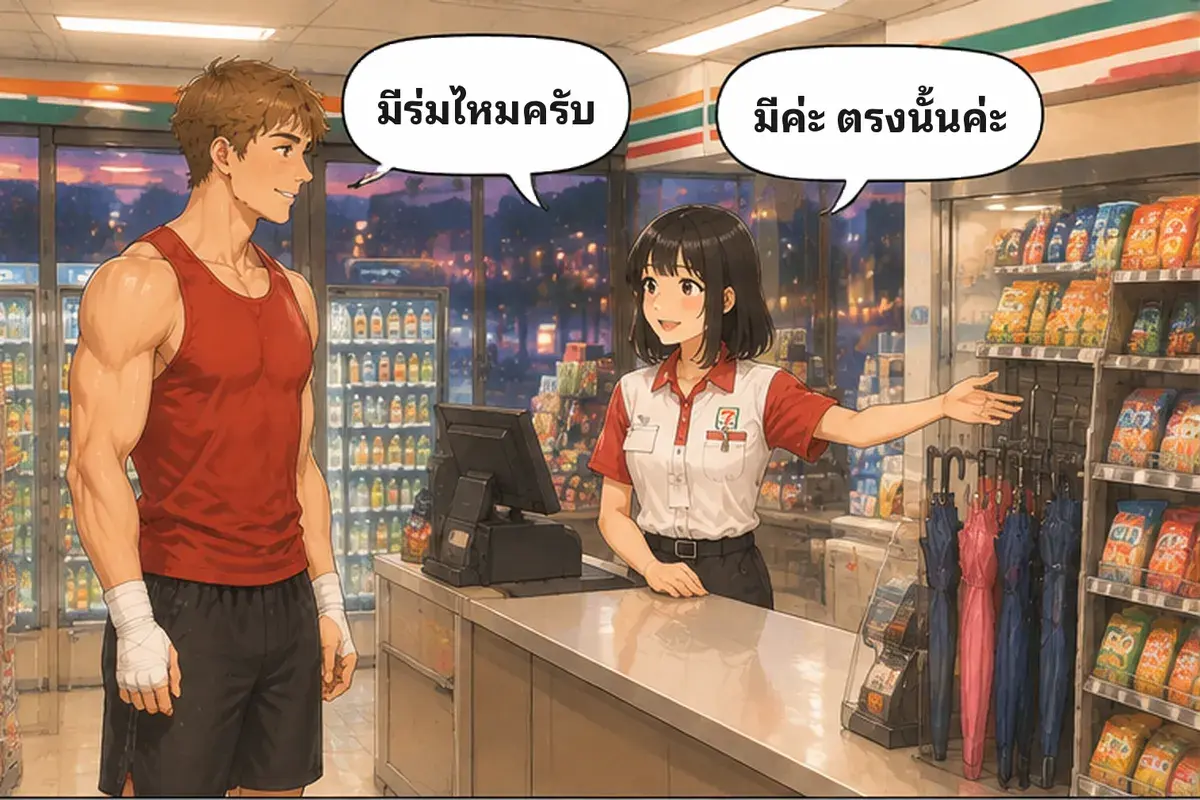
- ดีมา
มีร่มไหมครับ
Do you have any umbrellas? (man speaking)
- พนักงาน
มีค่ะ ตรงนั้นค่ะ
Yes, we do. Over there (woman speaking).

- ดีมา
ที่ไหนครับ ไม่เห็น
Where? I don't see them (man speaking).

- พนักงาน
ข้างล่างค่ะ ใต้ขนม
Down at the bottom, under the snacks (woman speaking).

- ดีมา
เอาอันนี้ครับ ขนมด้วย
I'll take this one. And the snacks too (man speaking).

- พนักงาน
อุ่นไหมคะ
Heat it up? (woman speaking)
- ดีมา
อุ่นครับ
Heat it up, please (man speaking).

- พนักงาน
รับถุงไหมคะ
Do you need a plastic bag? (woman speaking)
- ดีมา
ไม่ต้องครับ ใส่ในกระเป๋า
No need. I'll put it in my bag (man speaking).
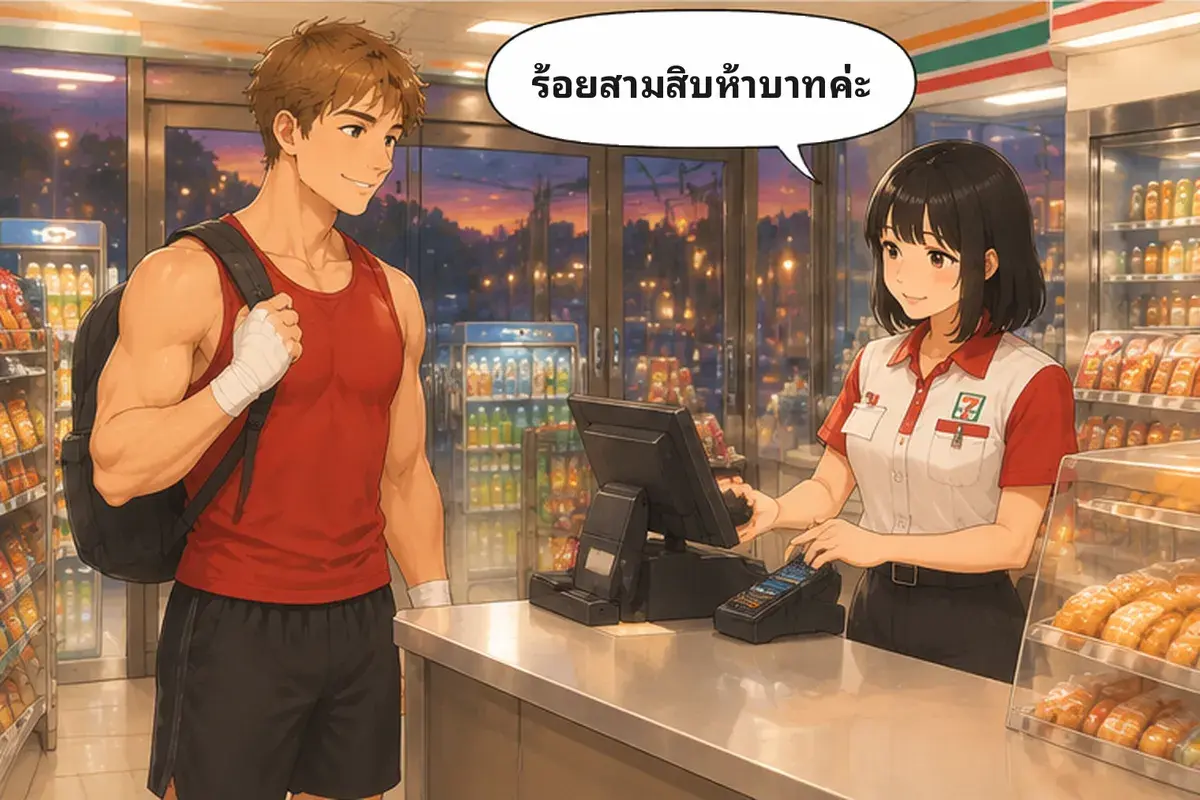
- พนักงาน
ร้อยสามสิบห้าบาทค่ะ
A hundred thirty-five baht (woman speaking).
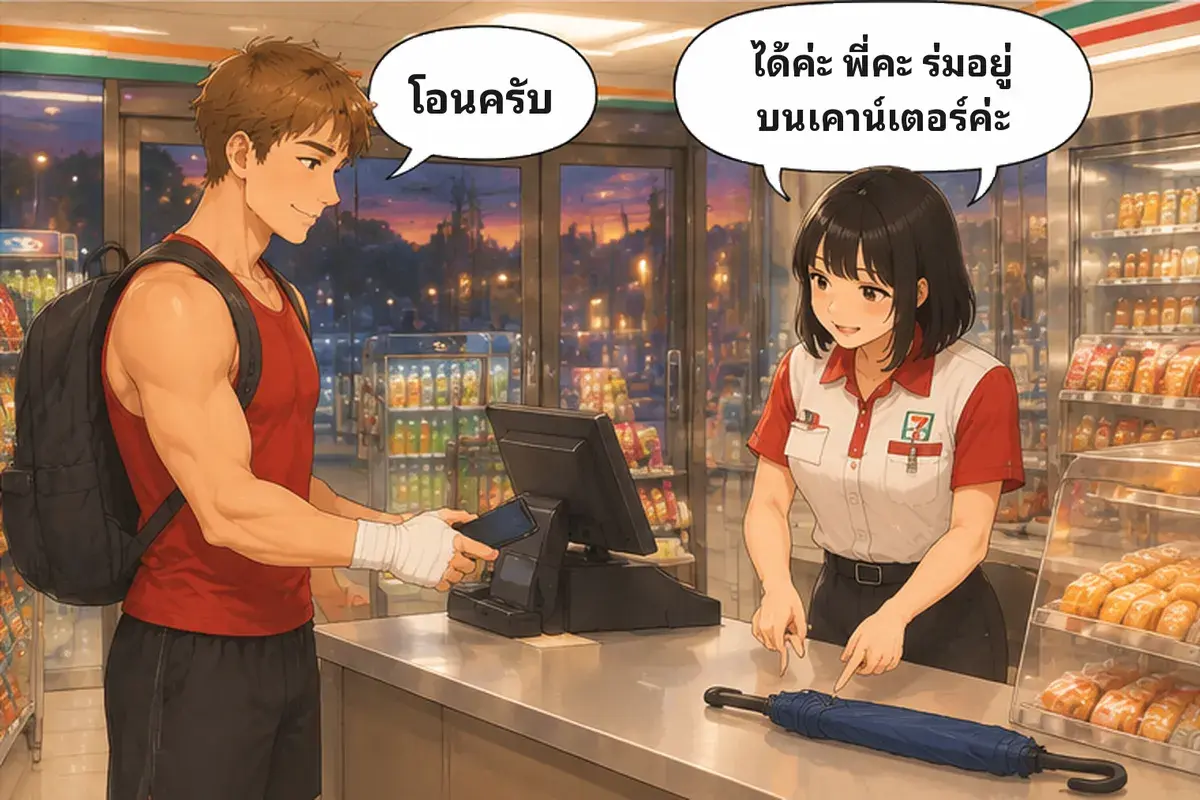
- ดีมา
โอนครับ
By transfer (man speaking).
- พนักงาน
ได้ค่ะ พี่คะ ร่มอยู่บนเคาน์เตอร์ค่ะ
OK. Hey, your umbrella is on the counter! (woman speaking)
Grammar for this text
- มีร่มไหมครับ — 'Do you have any umbrellas?'. When it rains, this is the first question in any 7-Eleven. The answer repeats the word: มีค่ะ ('yes, we do'); if not, the answer is ไม่มี, 'there aren't any' (the rule is in the unit grammar).
- ไม่เห็น — 'I don't see them'. เห็น means to see with your eyes; ไม่ goes before the verb. For now, learn เห็น by ear: it has letters you haven't covered yet.
- ข้างล่างค่ะ and ใต้ขนม — 'down at the bottom' and 'under the snacks'. The verb อยู่ is left out: in an answer to 'where?' you don't need it, the place is enough. ใต้ goes before the word, like English 'under'.
- อุ่นไหมคะ — 'Heat it up?'. The cashier asks this when you buy ready-made food. Answer by repeating the word: อุ่นครับ means yes, and ไม่ต้องครับ means no need.
- ไม่ต้องครับ — a set phrase, 'no need'. Use it to say no to a plastic bag (ถุง), to sauce, to anything. The rule for ต้อง is in unit 15.
- พี่คะ — this is how the cashier calls a customer: พี่ ('older brother or sister') is a polite way to address any adult. อยู่บนเคาน์เตอร์ means 'is on the counter': บน is 'on' and goes before the place word.
Words and grammar of the unit: Ask where things are.
Learn the words from the texts with flashcards
In the app, you can tap any word in a text to see its translation, forms and examples, and new words stick with flashcards. 15 minutes a day.
Start for freeEverything is open for free. No card needed to sign up.