

Thai dialogue with translation · A1 · 9 lines
ห้องน้ำอยู่ที่ไหนคะ Where's the restroom?
Comic · 6 panels
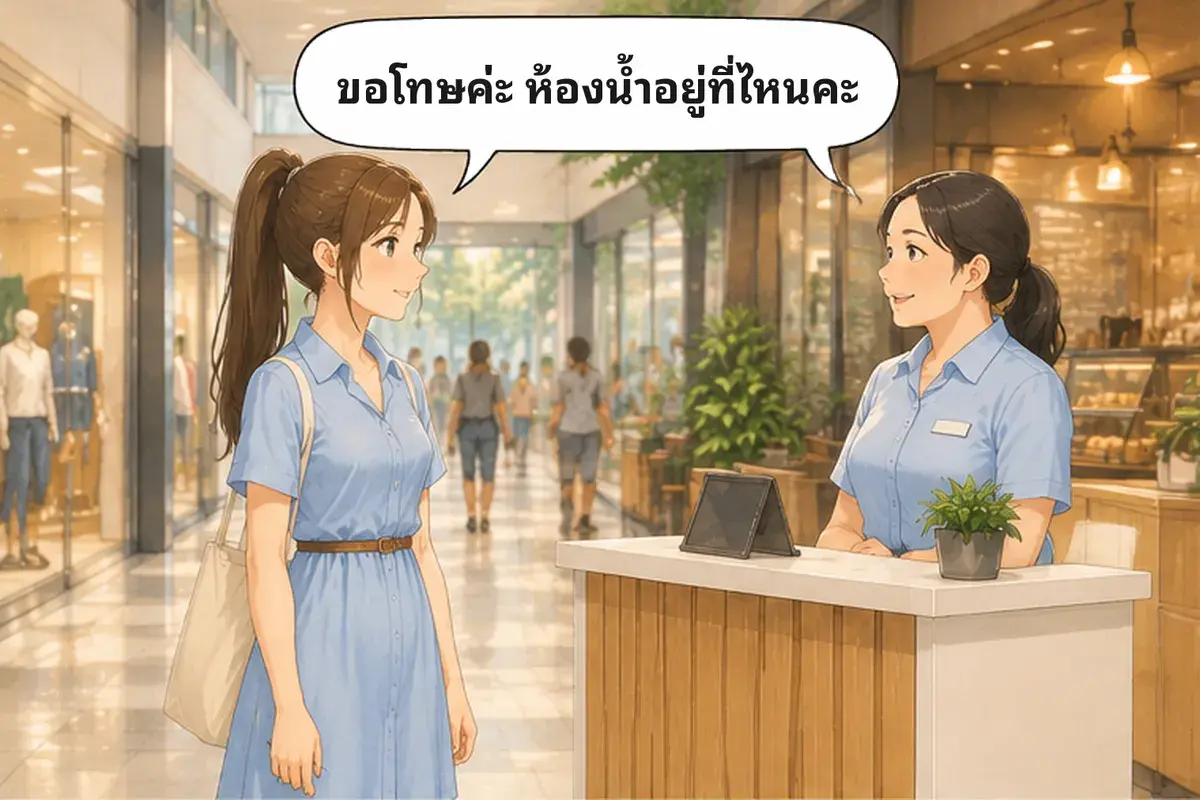
- ยานา
ขอโทษค่ะ ห้องน้ำอยู่ที่ไหนคะ
Excuse me, where's the restroom? (woman speaking)

- พนักงาน
ชั้นนี้ไม่มีค่ะ อยู่ชั้นสองข้างลิฟต์
There isn't one on this floor. It's on the second floor, next to the elevator (woman speaking).
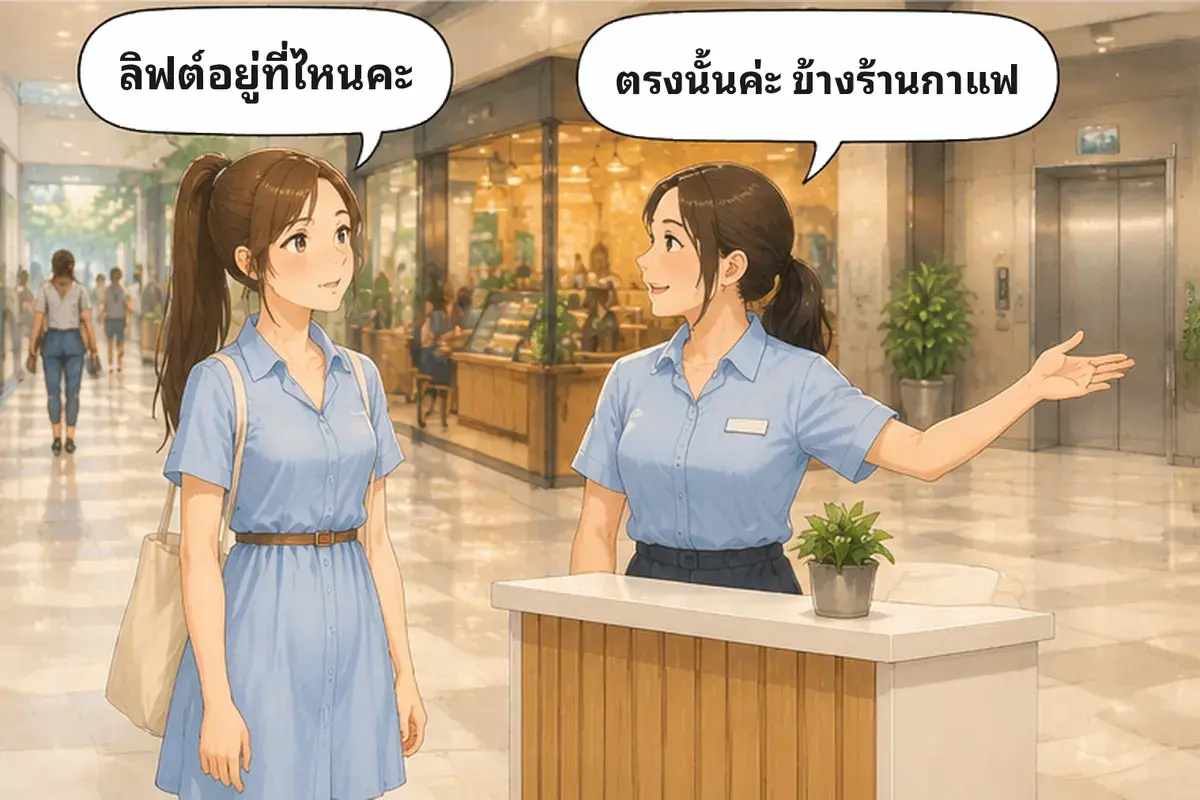
- ยานา
ลิฟต์อยู่ที่ไหนคะ
Where's the elevator? (woman speaking)
- พนักงาน
ตรงนั้นค่ะ ข้างร้านกาแฟ
Over there, next to the coffee shop (woman speaking).
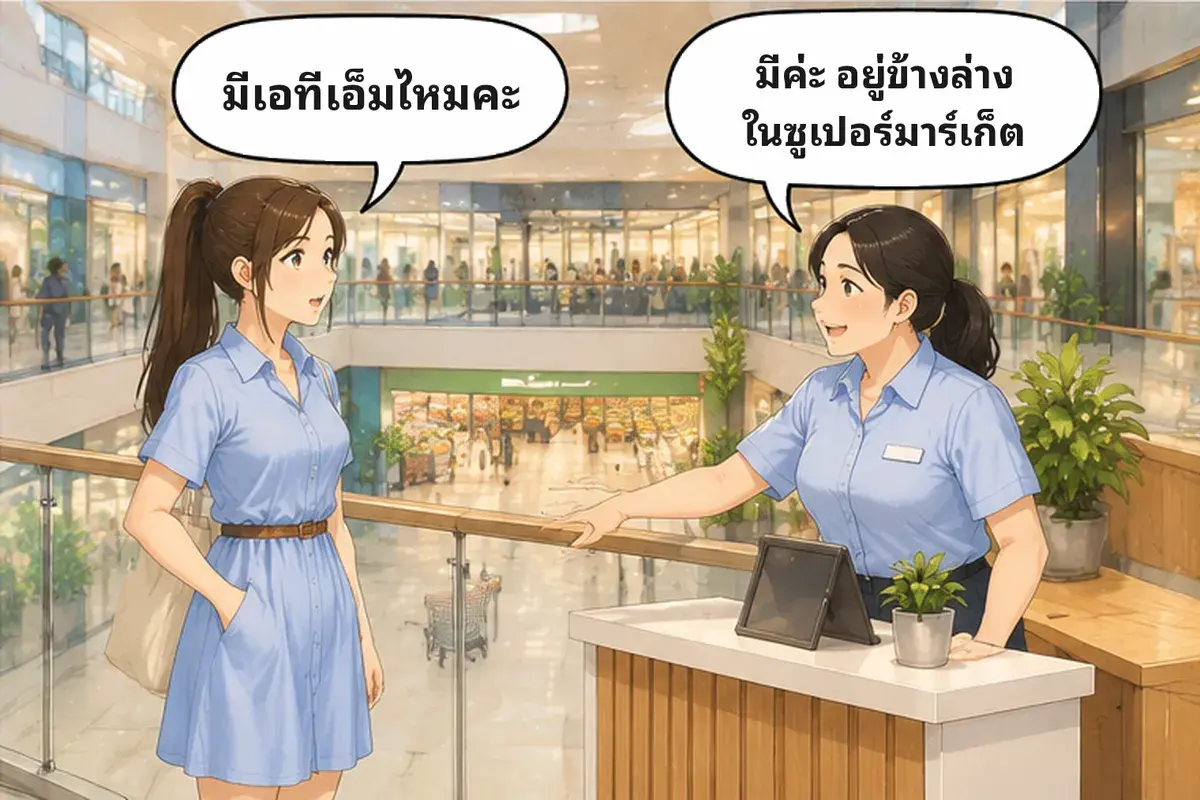
- ยานา
มีเอทีเอ็มไหมคะ
Is there an ATM? (woman speaking)
- พนักงาน
มีค่ะ อยู่ข้างล่าง ในซูเปอร์มาร์เก็ต
Yes, there is. It's downstairs, in the supermarket (woman speaking).

- ยานา
ห้องน้ำฟรีไหมคะ
Is the restroom free of charge? (woman speaking)
- พนักงาน
ฟรีค่ะ
It's free of charge (woman speaking).

- ยานา
ขอบคุณค่ะ
Thank you (woman speaking).
Grammar for this text
- ขอโทษค่ะ — 'Excuse me'. This is how you get a stranger's attention before a question. Saying it first and then asking is more polite than asking 'where's the restroom?' straight away.
- ห้องน้ำอยู่ที่ไหนคะ — 'Where's the restroom?'. The pattern is simple: thing + อยู่ที่ไหน + คะ. ห้องน้ำ (hɔ̂ɔng-náam) is literally 'water room': both the toilet and the bathroom. The rule for อยู่ที่ไหน is in this unit's grammar.
- ชั้นนี้ไม่มีค่ะ — 'There isn't one on this floor'. ไม่มี means 'there isn't' in one word. นี้ (this) comes after the word: ชั้นนี้ is 'this floor'. The floor number also comes after the word: อยู่ชั้นสอง means 'it's on the second floor'.
- ตรงนั้นค่ะ — 'Over there'. This is the answer when the place is in sight and you can point to it. If the place is right next to you, people say ตรงนี้ (unit 6).
- มีเอทีเอ็มไหมคะ — 'Is there an ATM?'. The pattern is มี … ไหม; the answer repeats the word: มีค่ะ. The rule is in the unit grammar.
- ชั้น — a word you can already read yourself: ช is a low-class consonant, so
้over it gives the high tone (chán). ร้าน (ráan) and นี้ (níi) are read the same way.
Words and grammar of the unit: Ask where things are.
Learn the words from the texts with flashcards
In the app, you can tap any word in a text to see its translation, forms and examples, and new words stick with flashcards. 15 minutes a day.
Start for freeEverything is open for free. No card needed to sign up.