
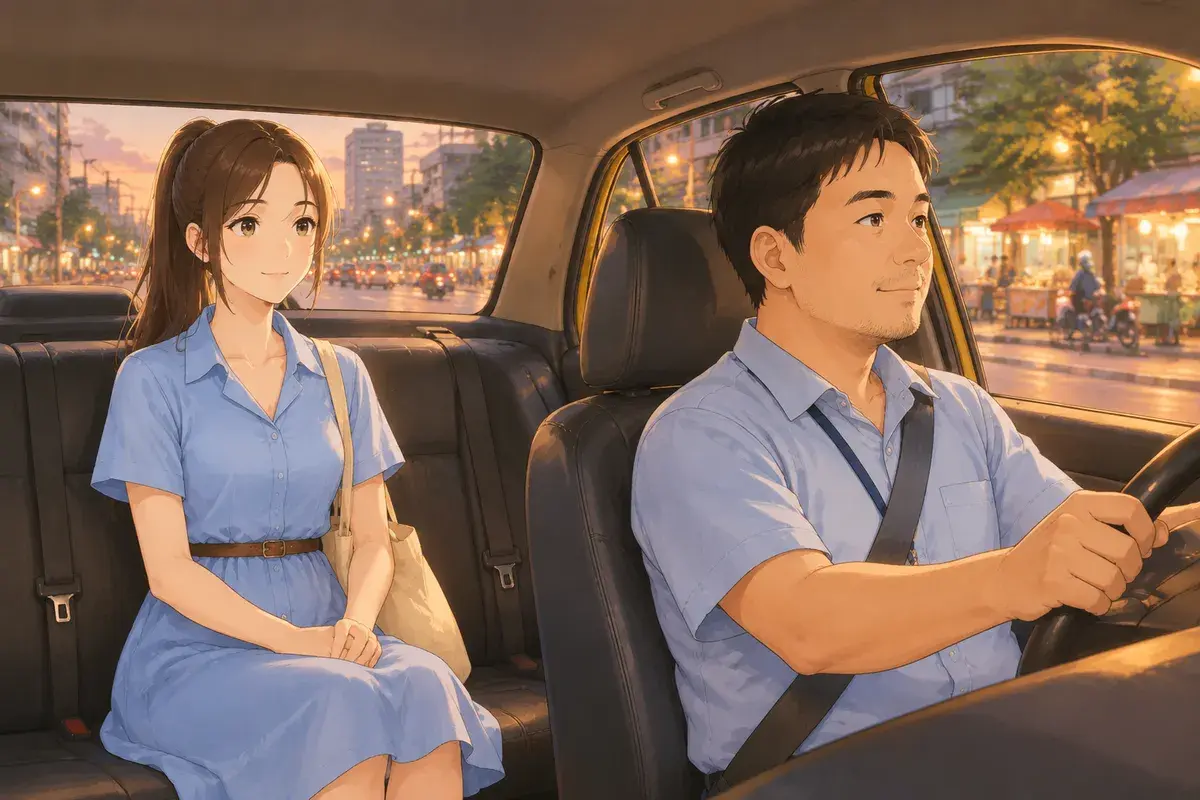
Thai dialogue with translation · A1 · 7 lines
ไปทางไหนครับ Which way do we go?
Comic · 7 panels
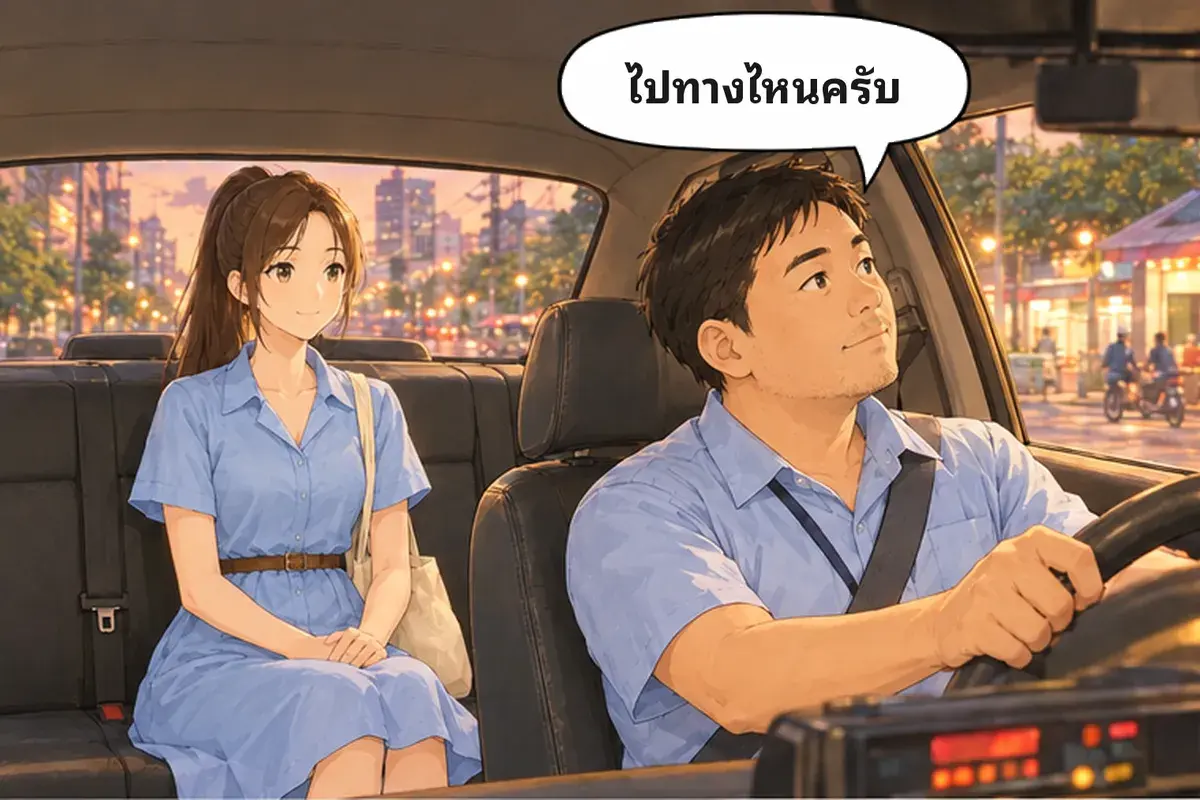
- คนขับ
ไปทางไหนครับ
Which way do we go? (man speaking)
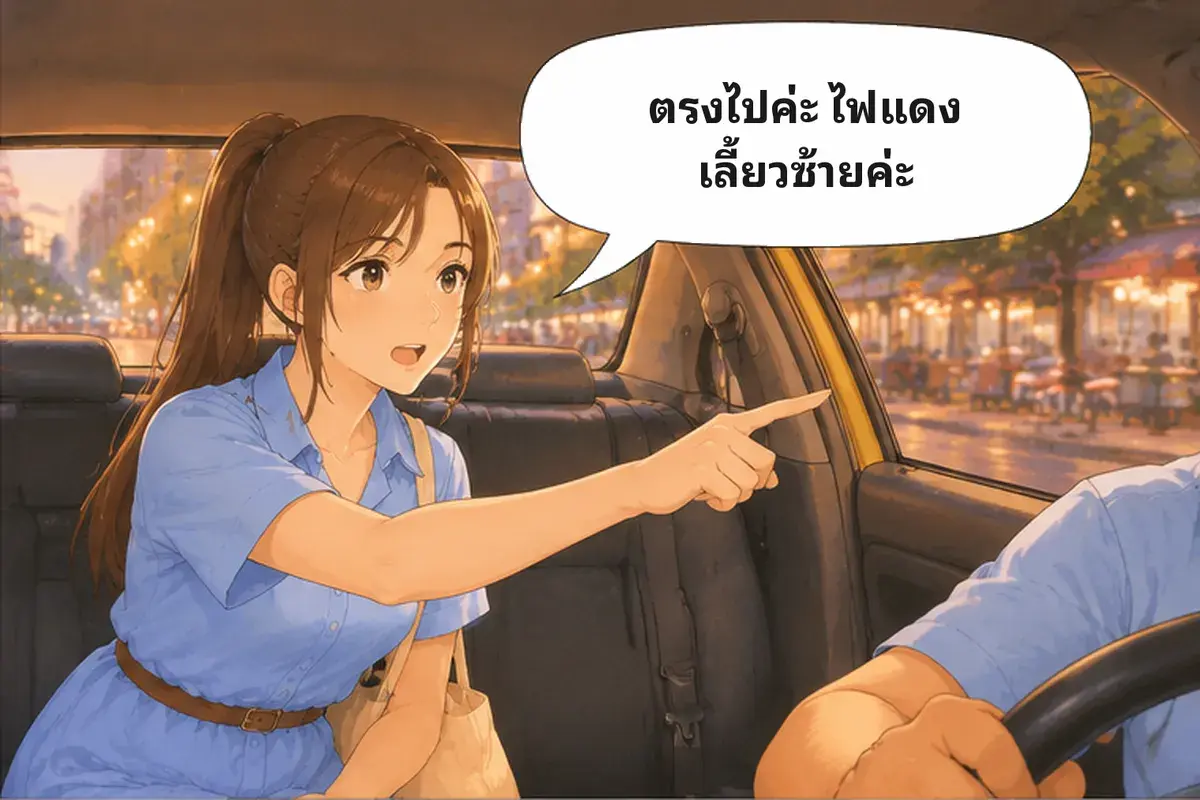
- ยานา
ตรงไปค่ะ ไฟแดงเลี้ยวซ้ายค่ะ
Go straight. Turn left at the light (woman speaking).
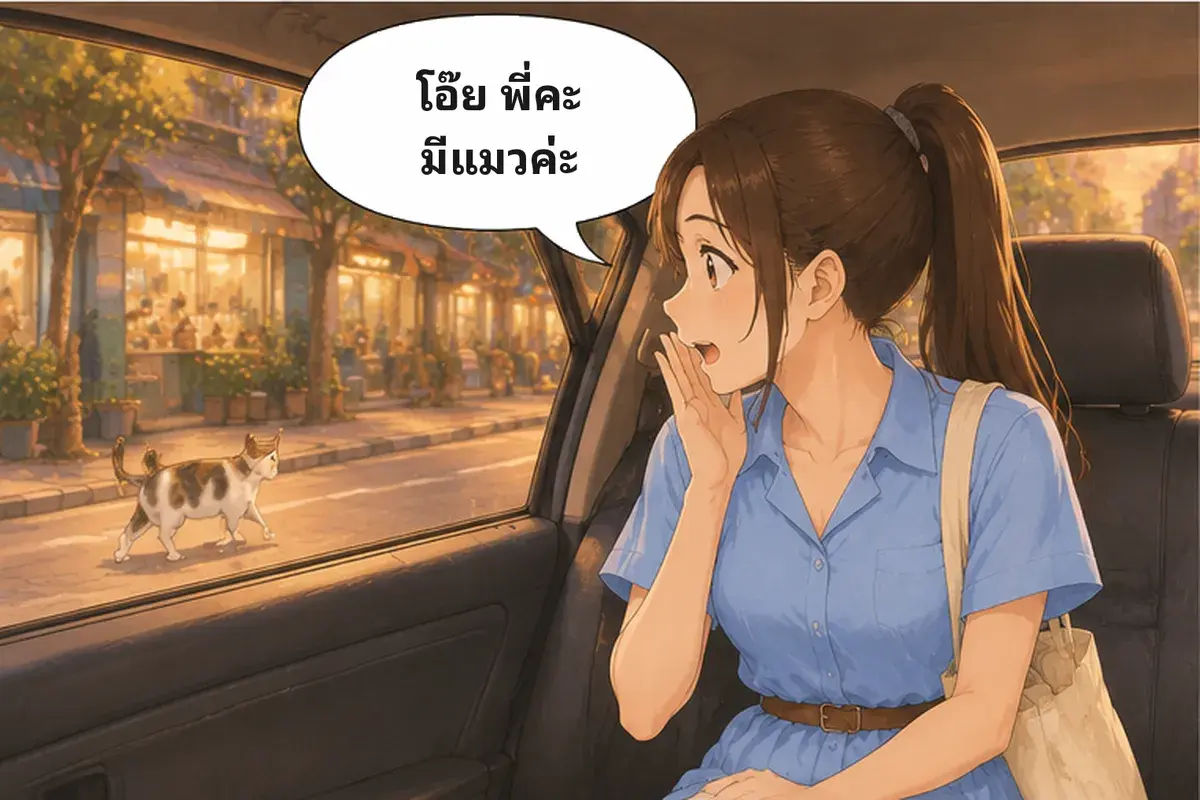
- ยานา
โอ๊ย พี่คะ มีแมวค่ะ
Oh no! Excuse me, there's a cat! (woman speaking)
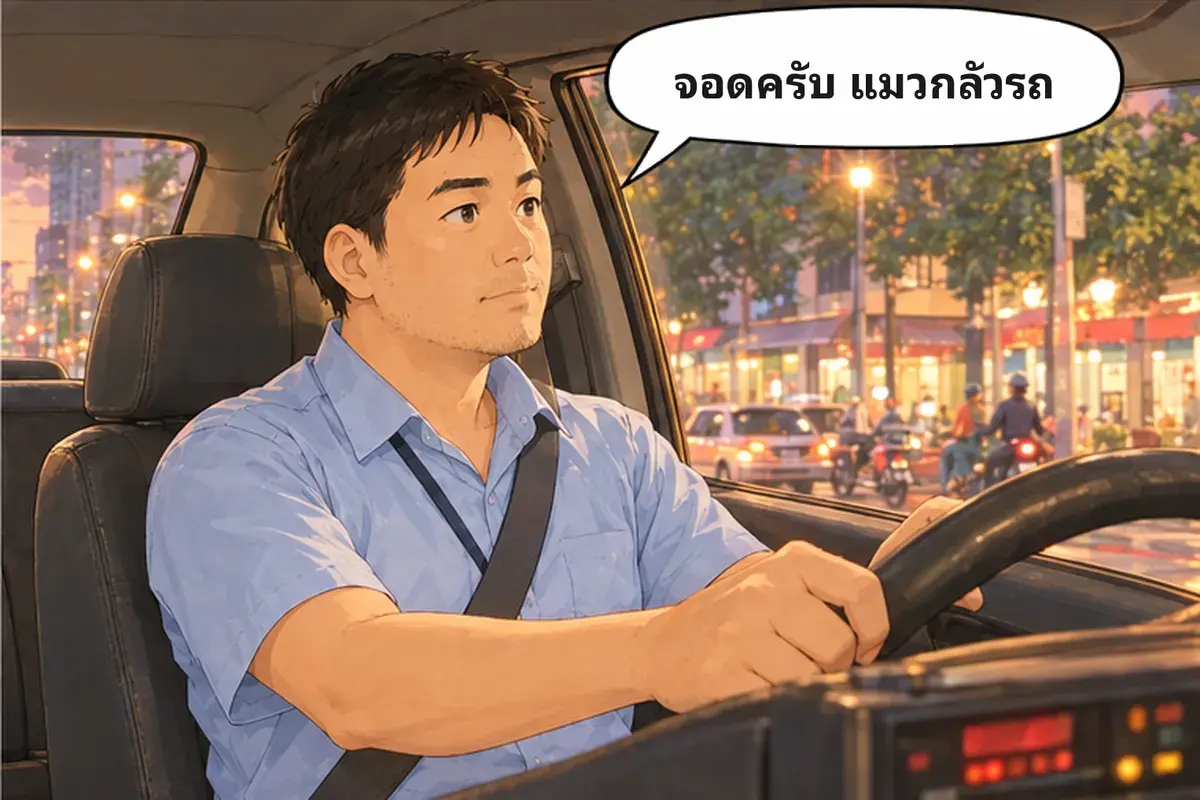
- คนขับ
จอดครับ แมวกลัวรถ
I'm stopping (man speaking). The cat is afraid of cars.

- ยานา
รถดังมากค่ะ แมวไปค่ะ
Cars are very loud. The cat went away (woman speaking).

- คนขับ
ไปครับ ซอยเจ็ดใกล้ครับ
Let's go. Soi 7 is close (man speaking).

- ยานา
ช่วยจอดตรงนี้หน่อยค่ะ
Please stop right here (woman speaking).
Grammar for this text
- ไปทางไหนครับ — 'Which way do we go?' ทาง (taang) — way, road. The driver asks which route suits you; you answer with short commands, not full sentences.
- ตรงไปค่ะ — 'Go straight.' ตรงไป works as one word: don't split it. There's no 'you': in everyday speech it's dropped.
- มีแมวค่ะ — 'There's a cat!' มี — there is: this is how you point out something you've just seen. A cat on the road in a soi is nothing unusual, and the driver stops at once.
- จอดครับ — 'I'm stopping.' One verb plus ครับ is enough. ช่วยจอดตรงนี้หน่อยค่ะ is the same with the set pattern ช่วย … หน่อย: more polite than just จอดตรงนี้.
- แมวกลัวรถ — 'The cat is afraid of cars.' Who is afraid comes before กลัว, what they're afraid of comes after it. รถดังมาก — 'Cars are very loud': ดัง means 'loud' and also 'famous'.
- แมวไปค่ะ and ไปครับ — one word ไป with two meanings: the cat 'went away', and the driver says 'let's go'. The verb doesn't change. ซอยเจ็ดใกล้ครับ — ใกล้ (glâi) means 'close'.
Words and grammar of the unit: Tell a taxi driver where to go.
Learn the words from the texts with flashcards
In the app, you can tap any word in a text to see its translation, forms and examples, and new words stick with flashcards. 15 minutes a day.
Start for freeEverything is open for free. No card needed to sign up.