

Thai dialogue with translation · A1 · 8 lines
กลางซอยตรงไหนครับ Where exactly in the middle of the soi?
Comic · 4 panels
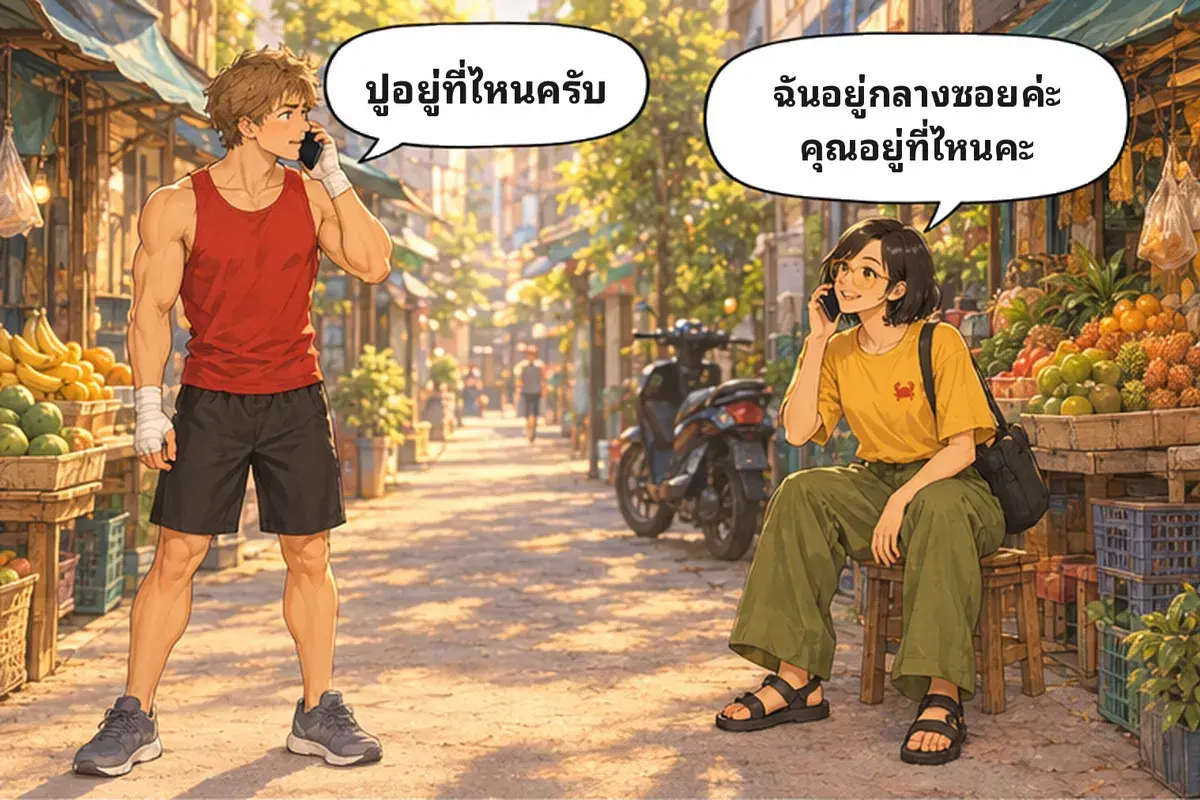
- ดีมา
ปูอยู่ที่ไหนครับ
Pu, where are you? (man speaking)
- ปู
ฉันอยู่กลางซอยค่ะ คุณอยู่ที่ไหนคะ
I'm in the middle of the soi. Where are you? (woman speaking)
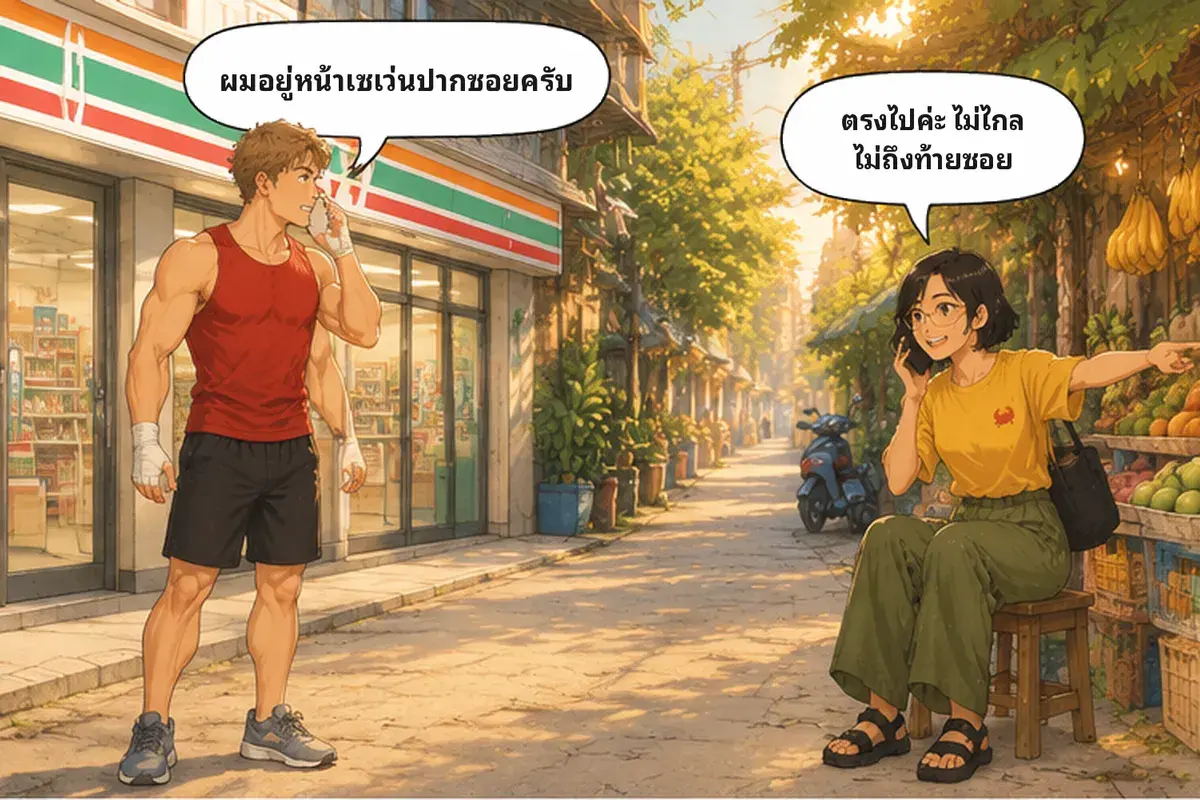
- ดีมา
ผมอยู่หน้าเซเว่นปากซอยครับ
I'm in front of the 7-Eleven at the mouth of the soi (man speaking).
- ปู
ตรงไปค่ะ ไม่ไกล ไม่ถึงท้ายซอย
Go straight. It's not far, not as far as the end of the soi (woman speaking).
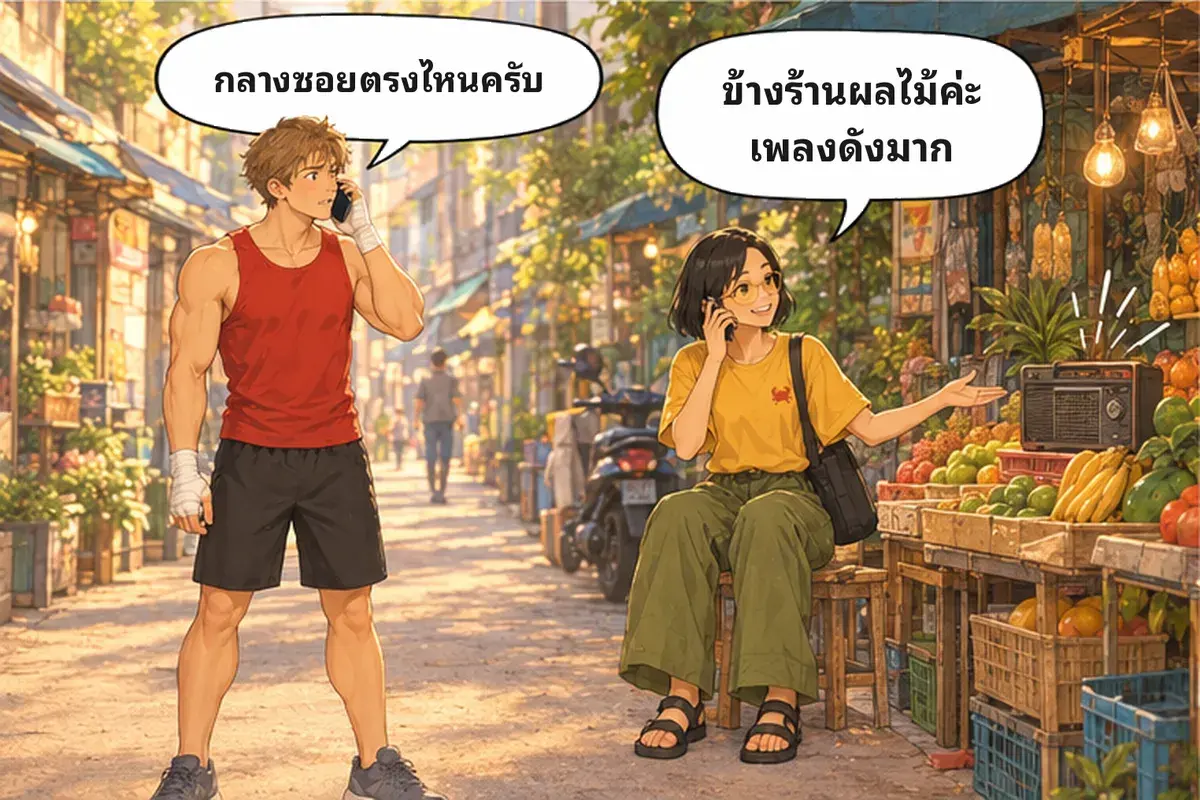
- ดีมา
กลางซอยตรงไหนครับ
Where exactly in the middle of the soi? (man speaking)
- ปู
ข้างร้านผลไม้ค่ะ เพลงดังมาก
Next to the fruit stall. The music is very loud (woman speaking).
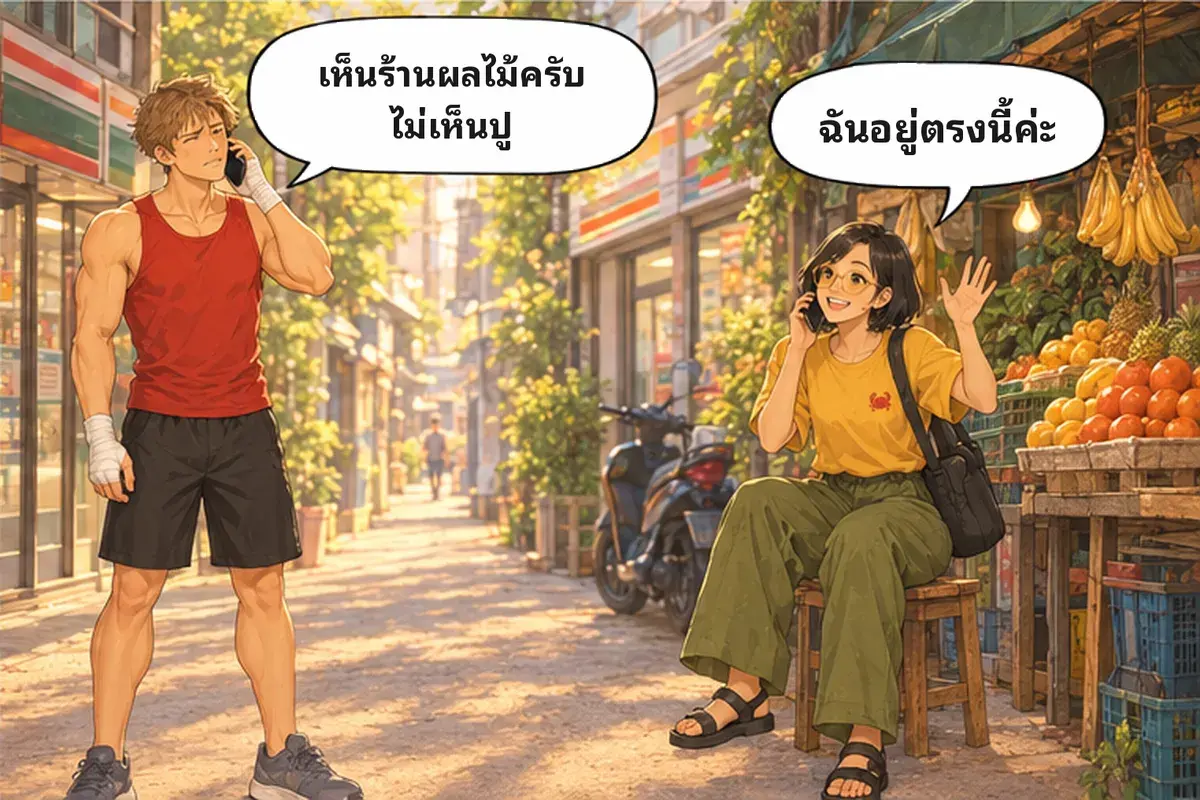
- ดีมา
เห็นร้านผลไม้ครับ ไม่เห็นปู
I see the fruit stall. I don't see you, Pu (man speaking).
- ปู
ฉันอยู่ตรงนี้ค่ะ
I'm right here (woman speaking).
Grammar for this text
- ปูอยู่ที่ไหนครับ — 'Pu, where are you?'. On the phone, this is the first question. Instead of 'you', Dima says her name: that's how Thais often talk to people they know.
- ฉันอยู่กลางซอยค่ะ — 'I'm in the middle of the soi'. กลาง ('middle') goes before the place word, like English 'in the middle of'.
- ปากซอย — the mouth of the soi, literally 'soi mouth': the spot where a side street meets the main road. The far end is ท้ายซอย. In Bangkok this is how people explain where they are: at the mouth of the soi, in the middle (กลางซอย) or at the end.
- ตรงไปค่ะ — 'Go straight'. A set phrase from unit 6: you can say it to a driver or to someone on foot.
- ไม่ถึงท้ายซอย — 'not as far as the end of the soi': ถึง means 'to, as far as' (unit 4).
- กลางซอยตรงไหนครับ — 'Where exactly in the middle of the soi?'. Here ตรง means 'the exact spot', and ตรงไหน means 'where exactly'. Don't mix it up with ตรงไป: the same syllable ตรง, but a different meaning.
- เพลงดังมาก — 'The music is very loud'. Pu gives a landmark you can hear: music from the shops carries far. ดัง means loud, มาก means very (it comes after the word).
- ฉันอยู่ตรงนี้ค่ะ — 'I'm right here'. ตรงนี้ is the spot next to the speaker (unit 6).
Words and grammar of the unit: Ask where things are.
Learn the words from the texts with flashcards
In the app, you can tap any word in a text to see its translation, forms and examples, and new words stick with flashcards. 15 minutes a day.
Start for freeEverything is open for free. No card needed to sign up.