
Serbian story with translation · B1 · 16 lines
Шта ми недостаје, а шта не бих мењала What I miss and what I wouldn't change
Comic · 16 panels
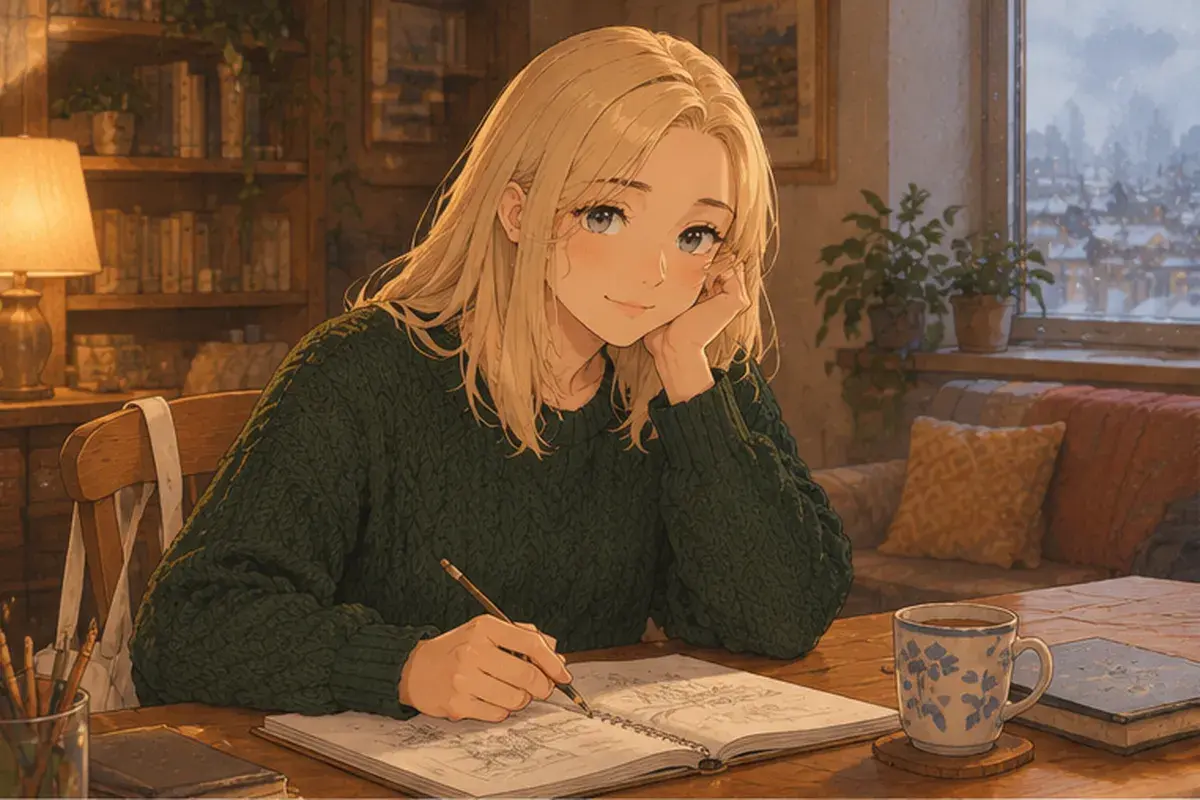
Кад ме неко пита шта ми недостаје, а шта не бих мењала, не могу да одговорим једном речју.
When someone asks me what I miss and what I wouldn't change, I can't answer in one word (woman speaking).
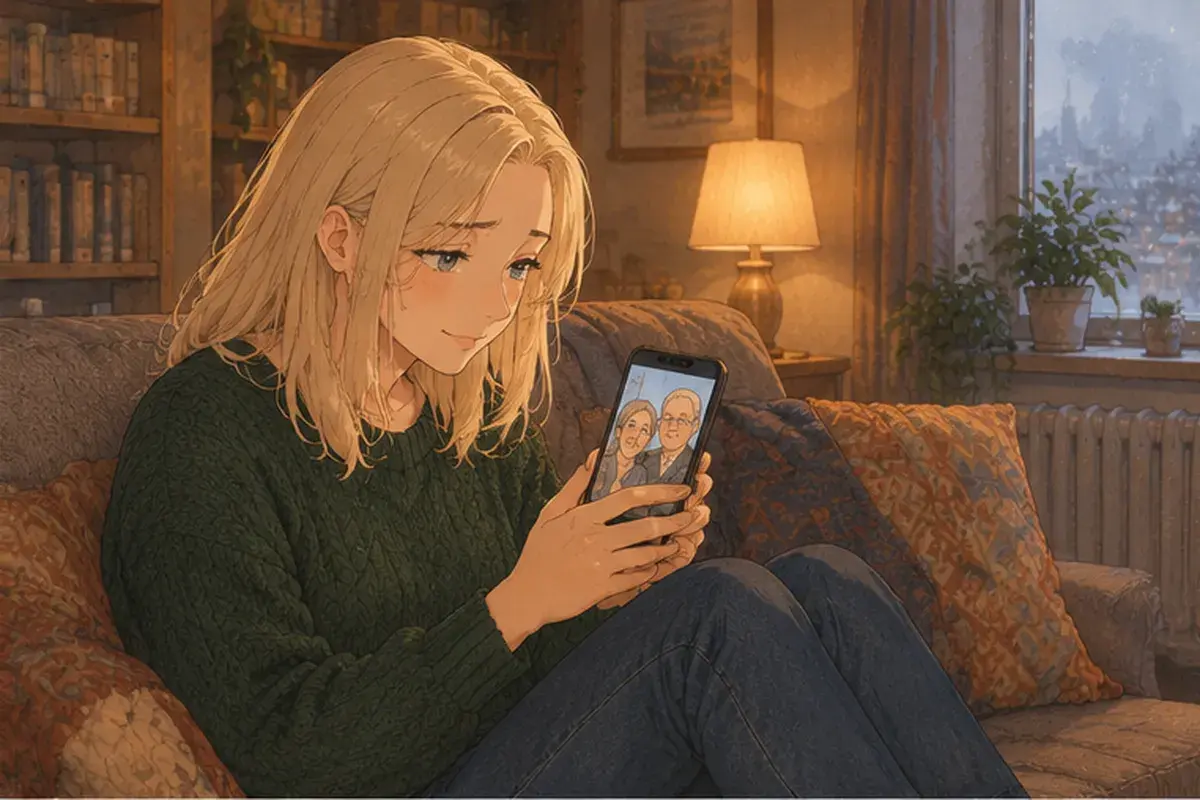
Мама и тата су ми одувек били блиски, а сада их видим само преко екрана.
Mom and Dad have always been close to me, and now I only see them through a screen.
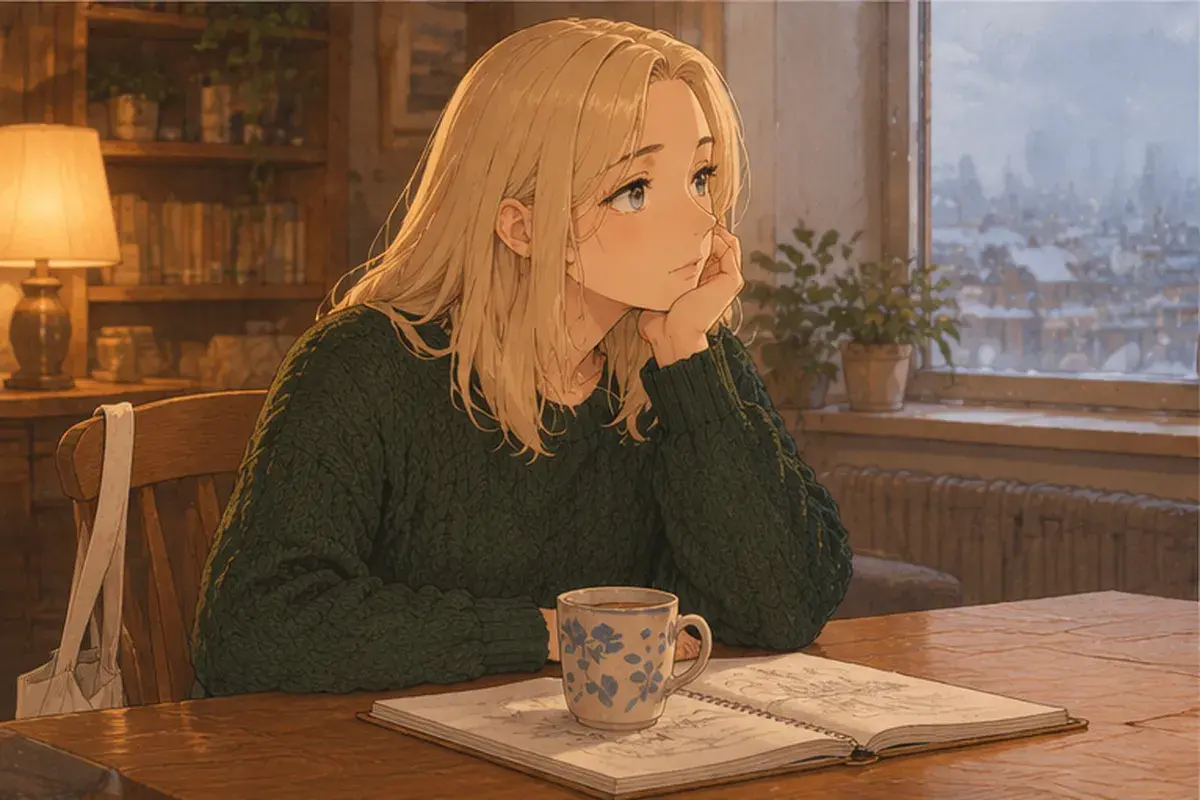
Највише ми недостаје то што око мене нико не говори мој матерњи језик. На српском већ разговарам о послу, али кад сам тужна, понекад не налазим праве речи.
What I miss most is that nobody around me speaks my native language. I already talk about work in Serbian, but when I'm sad, sometimes I can't find the right words (woman speaking).
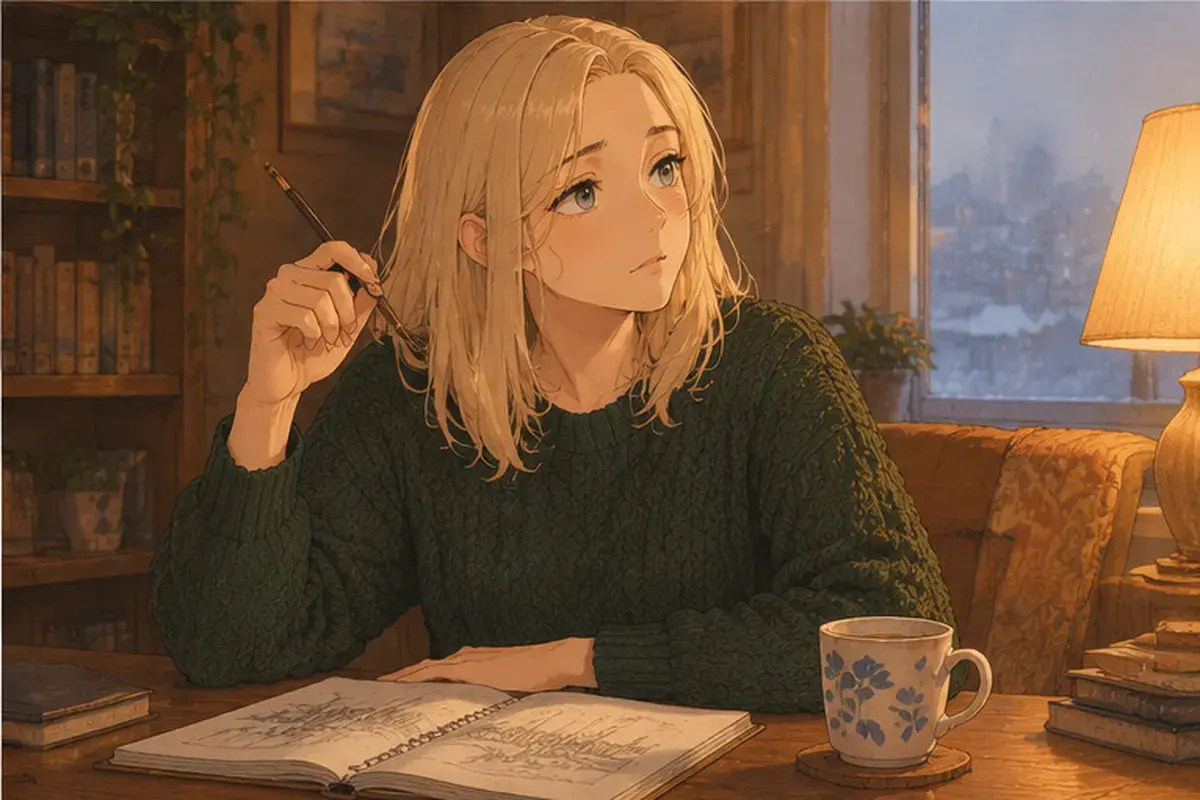
Тада се осећам усамљено, а самоћа у страном граду зна да буде тешка. Док цртам, мисао о кући ми стално долази, као да неко куца на врата.
Then I feel lonely, and solitude in a foreign city can be hard. While I draw, the thought of home keeps coming to me, as if someone is knocking at the door.
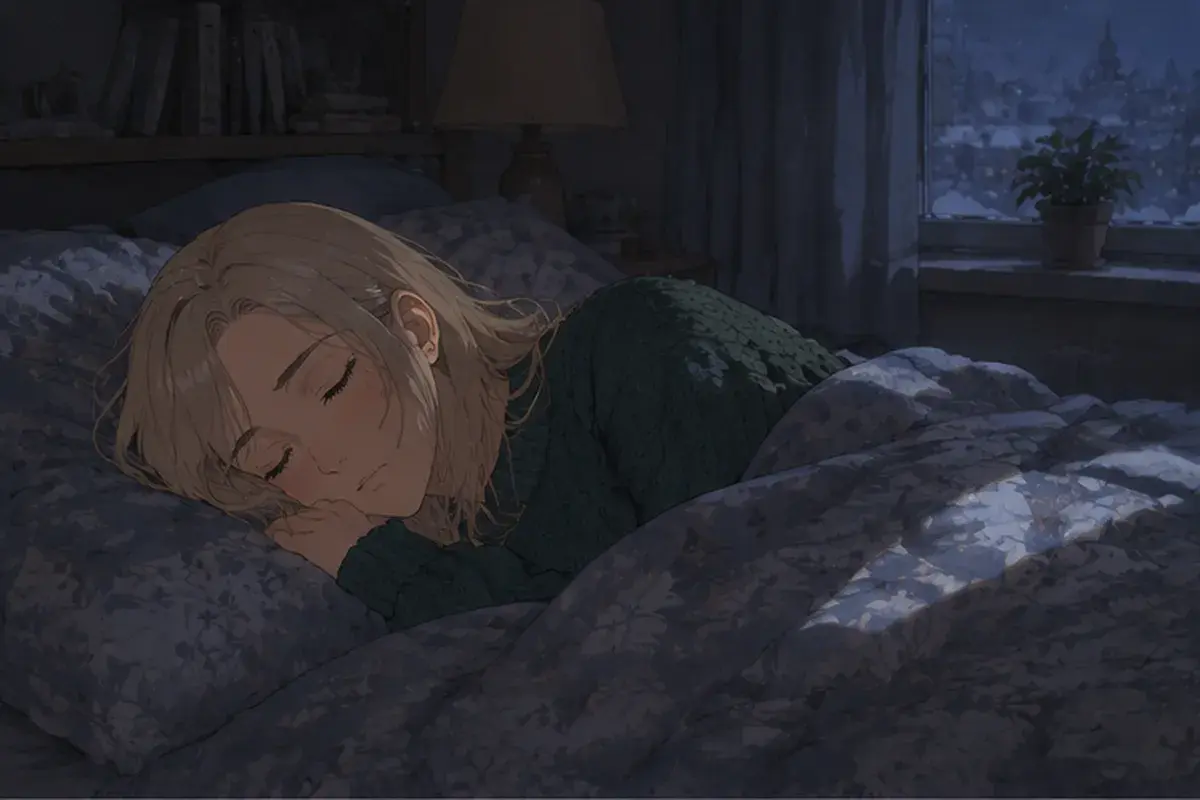
Ноћу често сањам исти сан: ходам по снегу испред наше школе. Кад се пробудим, као да ми је део душе остао тамо.
At night I often have the same dream: I'm walking in the snow in front of our school. When I wake up, it's as if part of my soul stayed there.
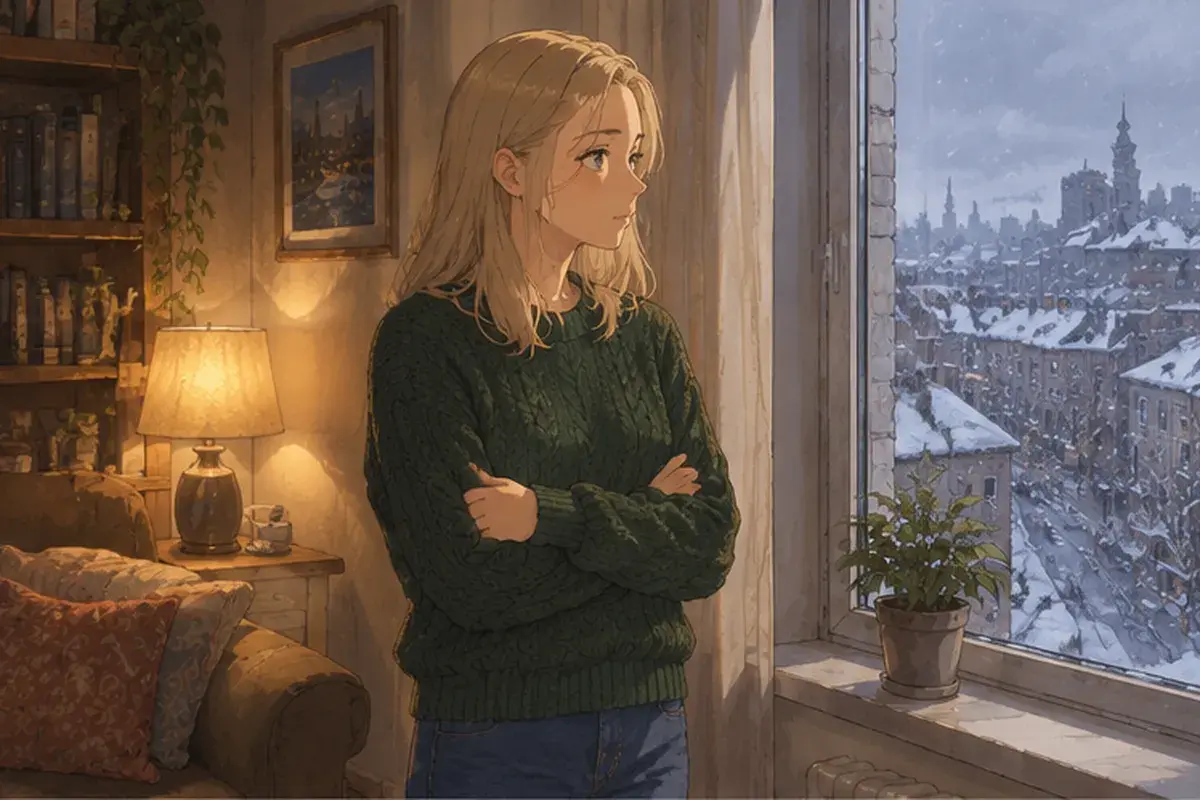
Зима је најтеже доба године, јер су дани сиви и хладни.
Winter is the hardest time of the year, because the days are gray and cold.
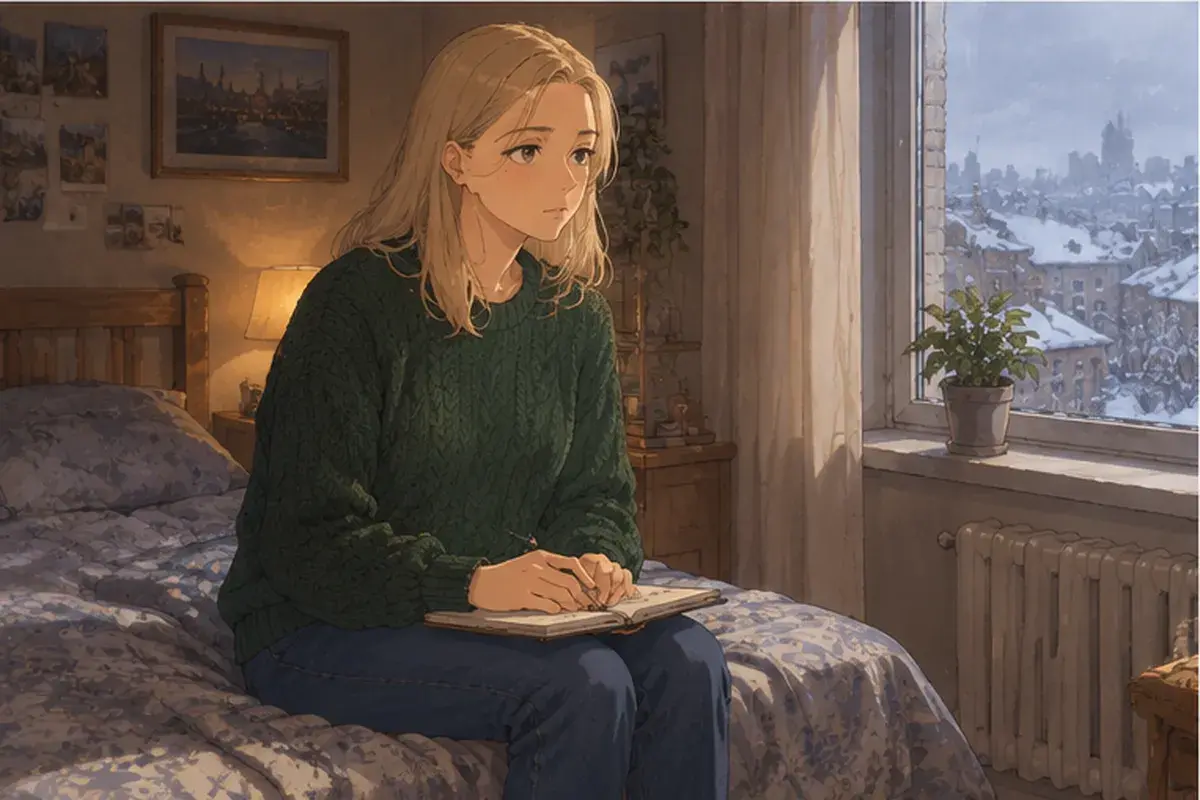
Свесна сам да живот у иностранству има своју цену. Остављати кућу иза себе није једна одлука. То је много малих одлука које сваког дана бираш поново.
I'm aware that life abroad has its price (woman speaking). Leaving a home behind is not one decision. It's many small decisions that you make again every day.
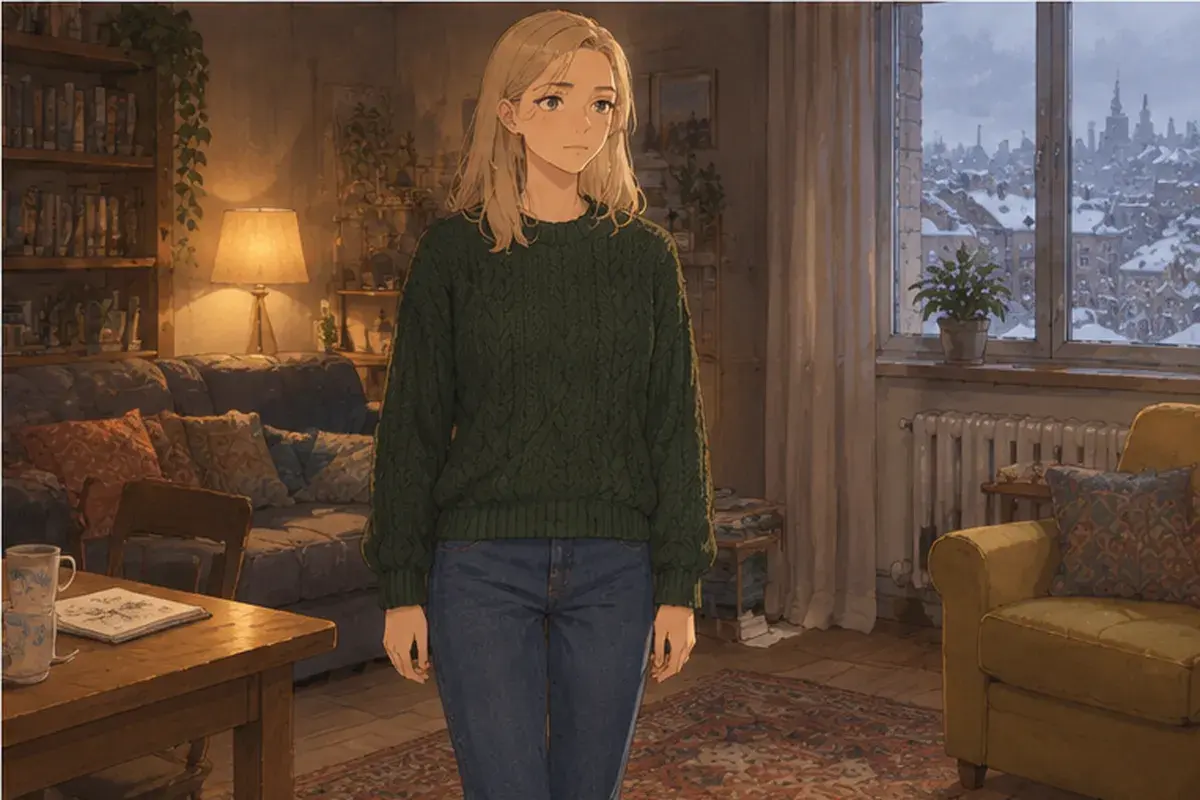
Зато мислим да храброст није кад се не бојиш. Храброст је кад останеш и кад ти је тешко.
That's why I think courage isn't when you're not afraid. Courage is when you stay even when it's hard.
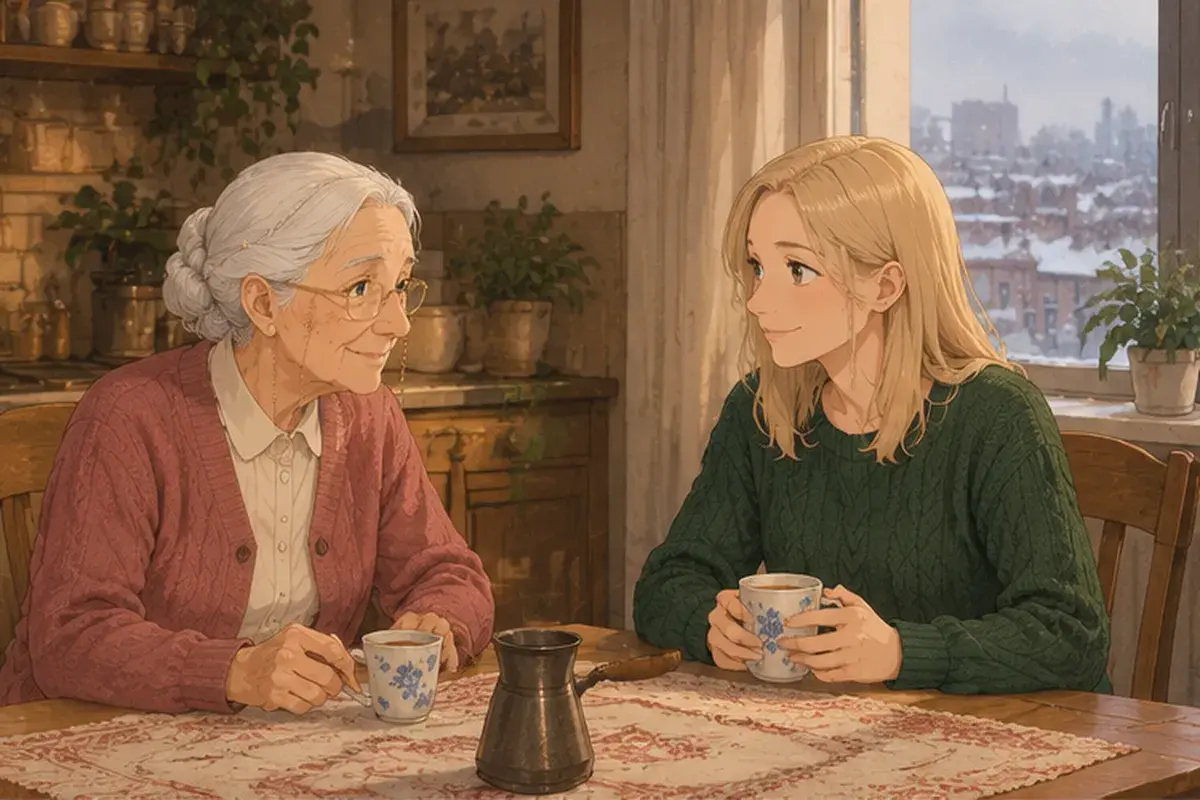
Радмила не покушава да ме утеши речима, него само каже: „Хајде да попијемо кафу.“
Radmila doesn't try to comfort me with words, she just says: "Let's have coffee."

Милица ме је подржала чим сам јој рекла да ми је први месец тежак.
Milica supported me as soon as I told her my first month was hard (woman speaking).
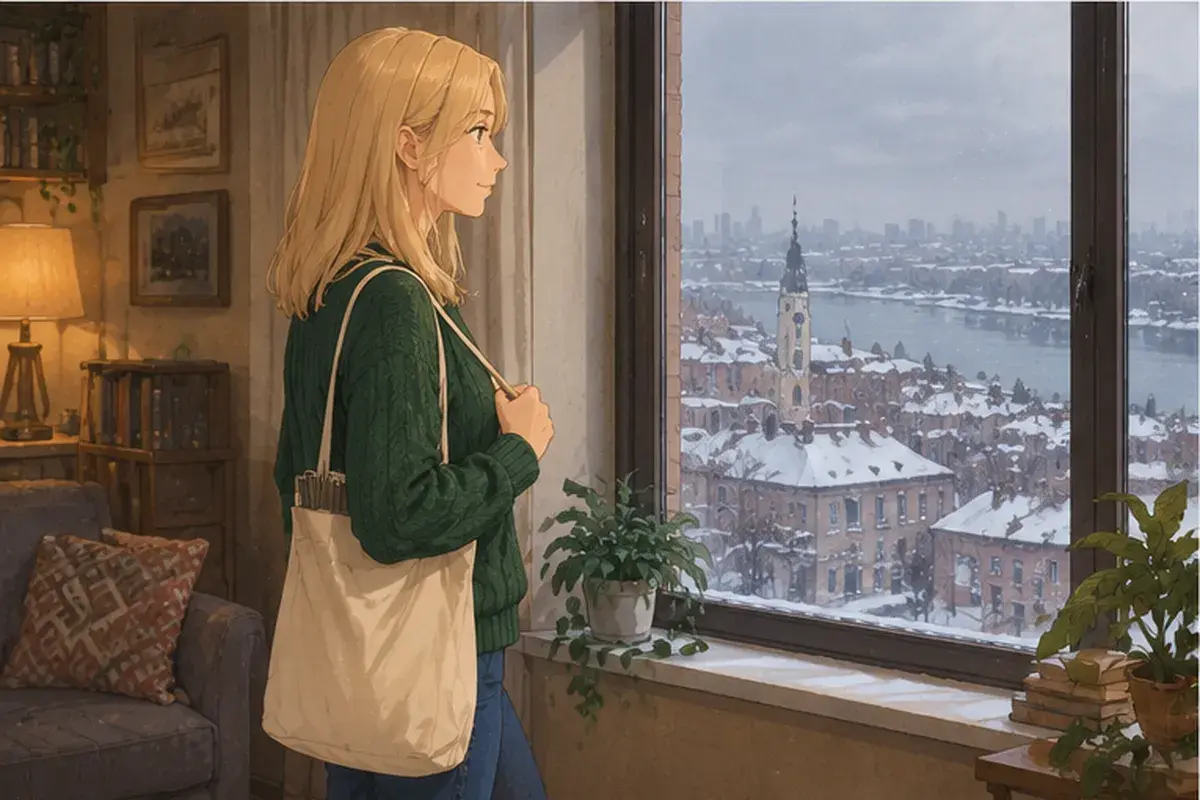
Зато имам поверење у њих две, а град ми више није стран.
That's why I have trust in the two of them, and the city is no longer a stranger to me.
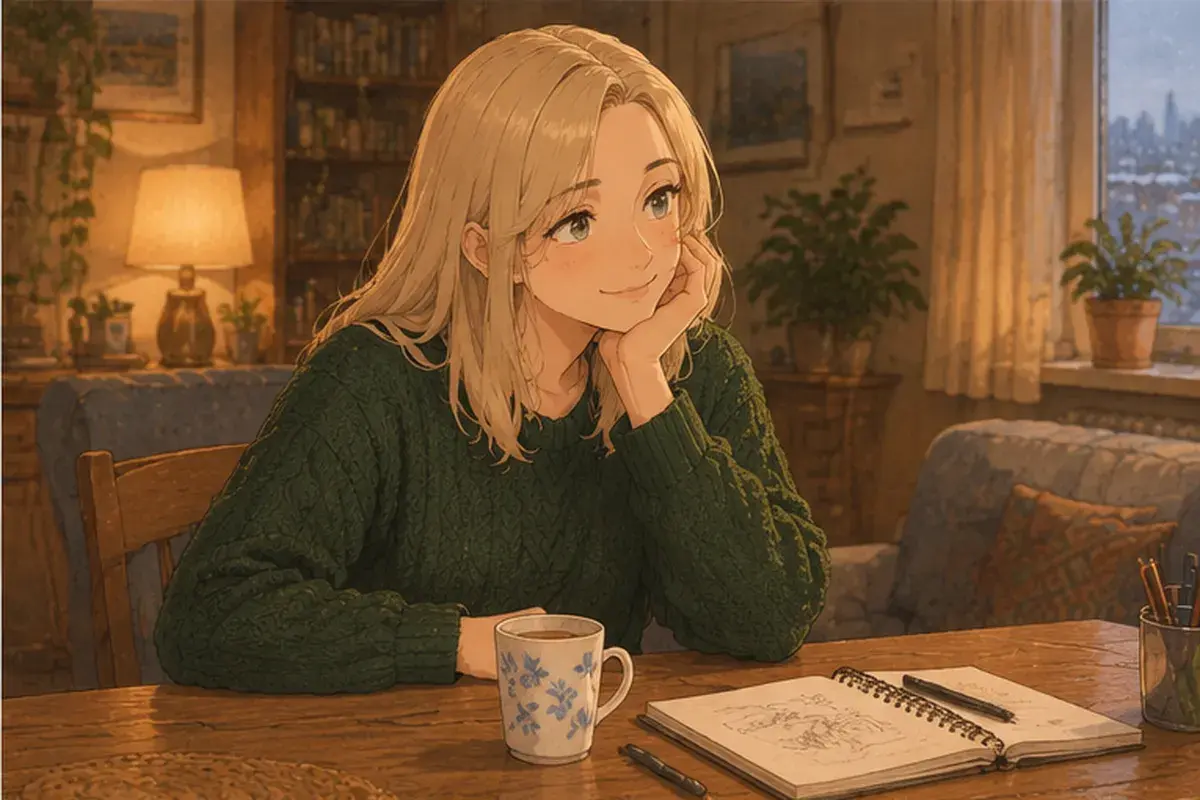
Неко би рекао да је судбина што сам их упознала. Ја мислим да је то била срећна случајност.
Someone might say it's fate that I met them. I think it was a happy coincidence (woman speaking).
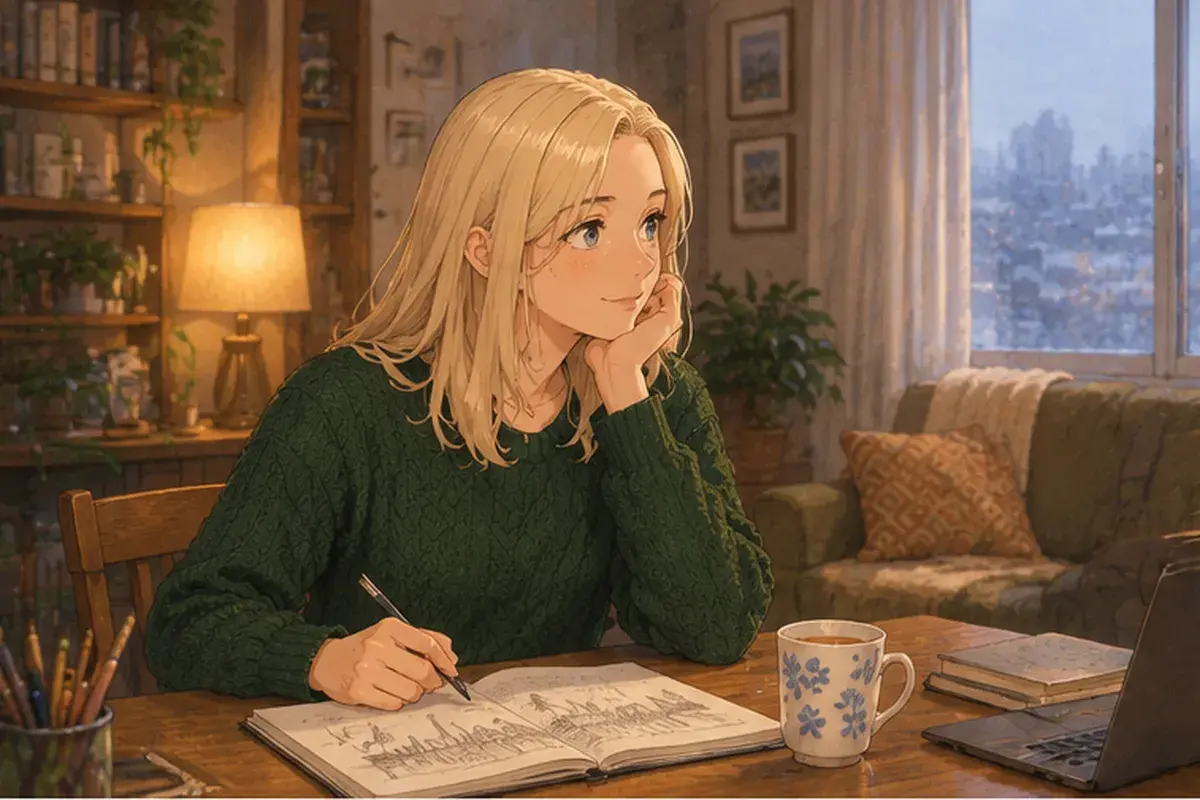
Док сам одрастала у родном граду, мислила сам да је он центар света. Кад одрастеш, видиш да свет има много центара.
While I was growing up in my hometown, I thought it was the center of the world (woman speaking). When you grow up, you see that the world has many centers.
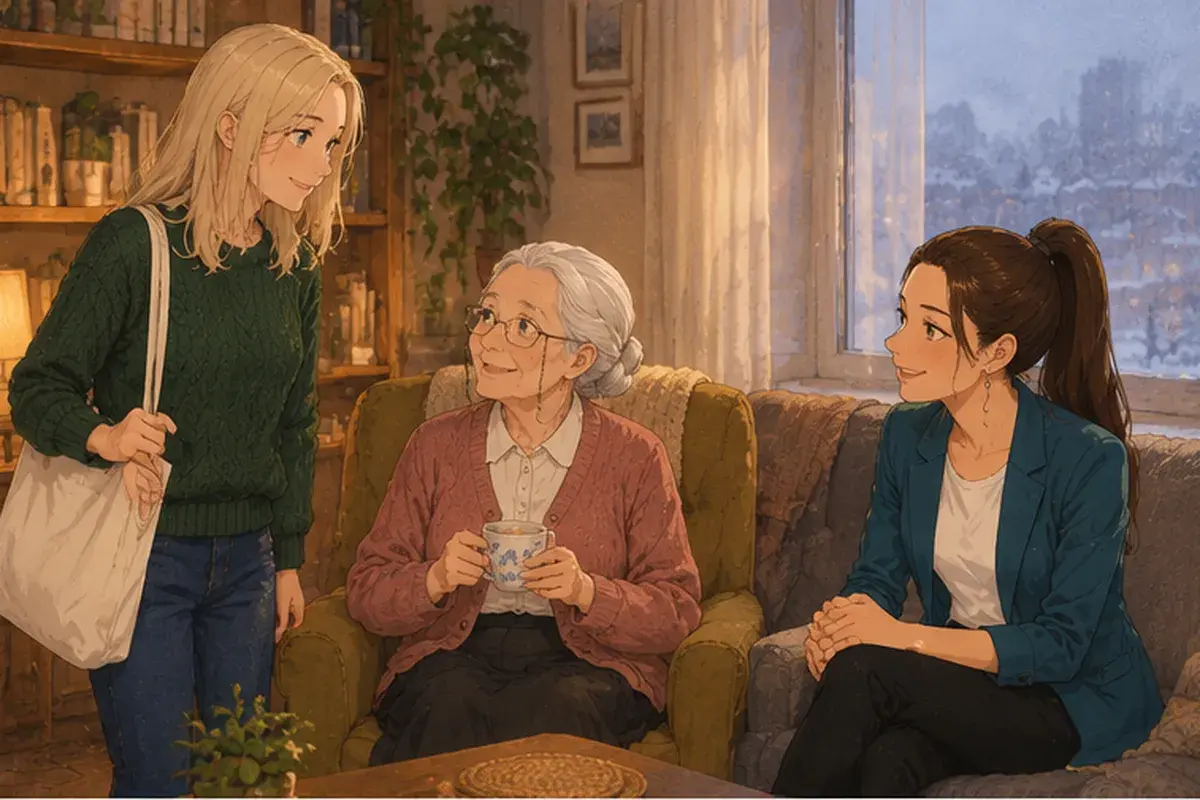
Данас знам да сваки удаљен град може да постане близак кад у њему имаш своје људе.
Today I know that any faraway city can become close when you have your own people there.
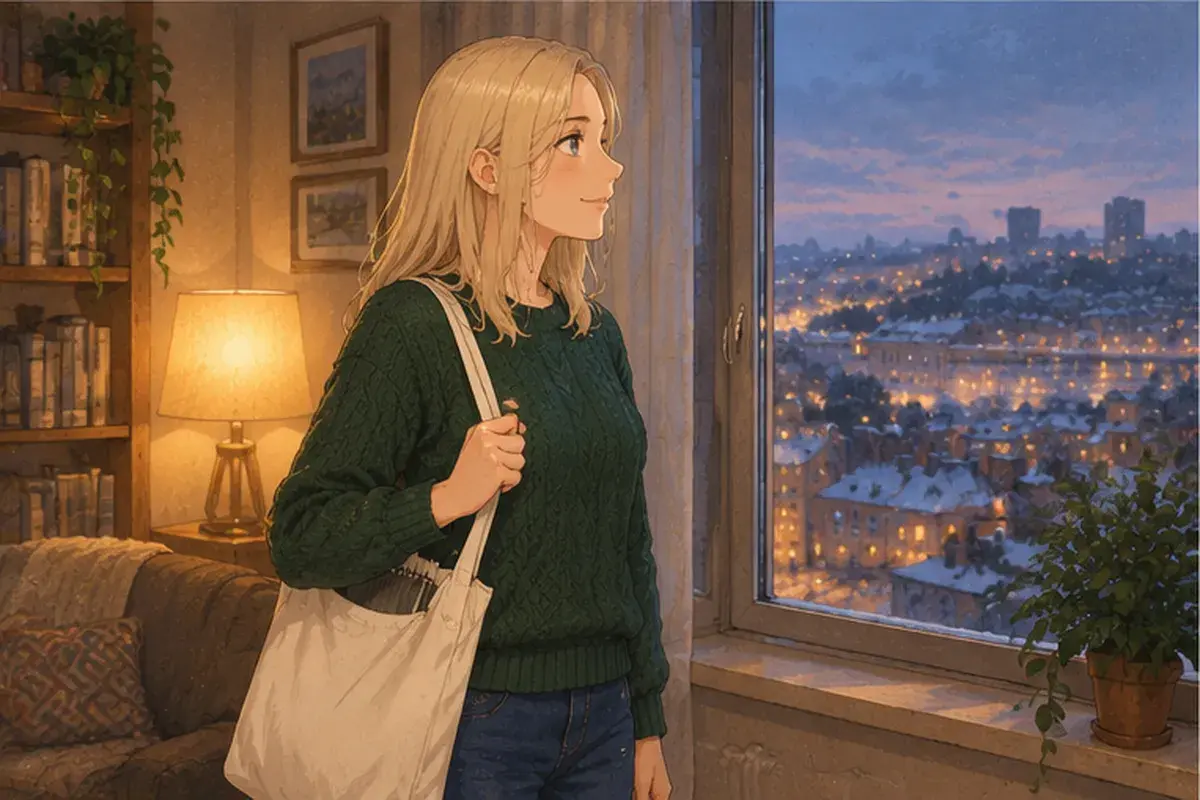
Не жалим што сам отишла, иако ми је понекад врло тешко.
I don't regret that I left, even though sometimes it's very hard (woman speaking).
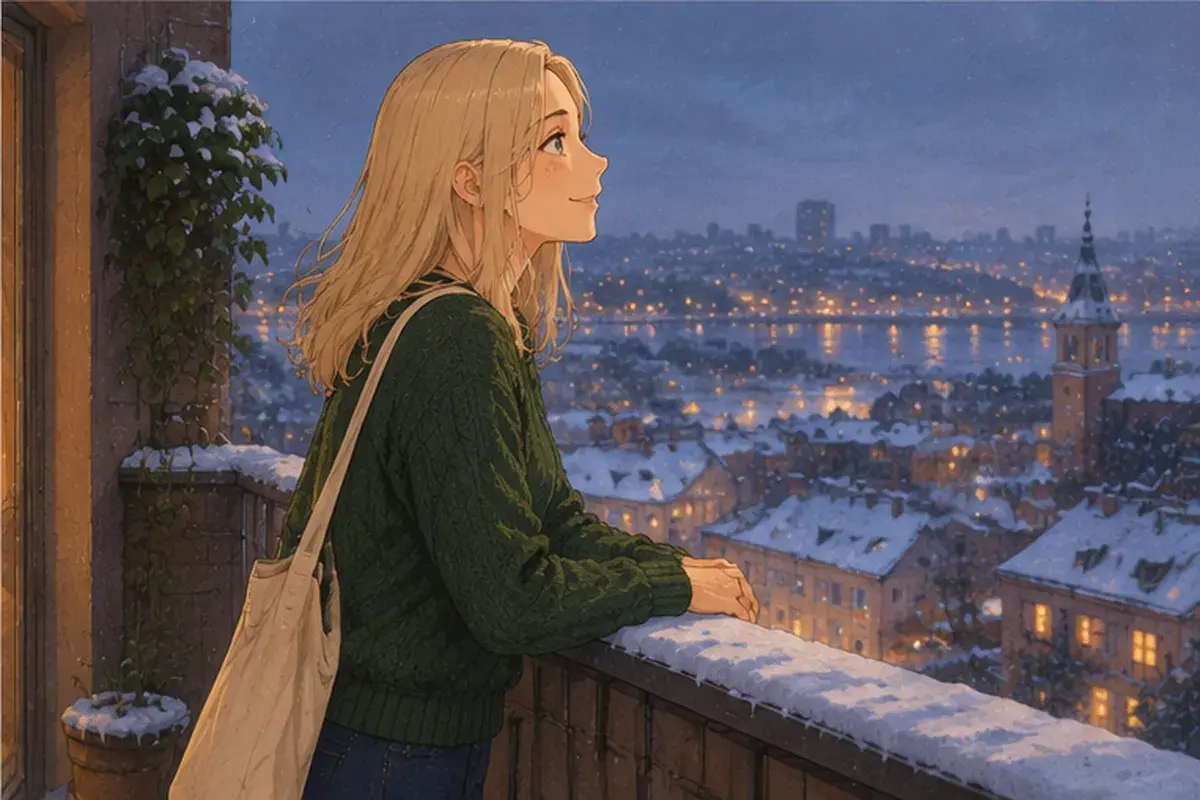
Да сам остала код куће, никад не бих сазнала колико могу сама. Зато не бих мењала ни ову даљину, иако ме понекад боли.
If I had stayed home, I would never have found out how much I can do on my own (woman speaking). That's why I wouldn't change even this distance, even though it hurts sometimes.
Grammar for this text
Кад ме неко пита шта ми недостаје, а шта не бих мењала—пита шта ми недостајеis an indirect question (unit 10): the question word stays, as in English "asks what I miss".не бих мењалаmeans "I wouldn't change" (бих+ the -o/-la form).Највише ми недостаје то што око мене нико не говори мој матерњи језик— the subject isто што…("the fact that…"), soнедостајеis singular (see theнедостајатиblock above).нико не говориhas two negatives, which is correct in Serbian: "nobody speaks".Остављати кућу иза себе није једна одлука— an infinitive can be the subject: "leaving a home behind is not one decision".иза себеmeans "behind oneself".Храброст је кад останеш и кад ти је тешко—кад+ a perfective verb (останеш); "you" here means "anyone".Кад одрастеш, видиш—одрастиmeans "to grow up" (a result: you are grown).Док сам одрастала—одрастатиmeans "to be growing up" (a process): the choice of aspect (unit 9), like "I wrote" vs. "I was writing".Милица ме је подржала чим сам јој рекла—чимmeans "as soon as" (unit 6);јојmeans "to her" (dative).Неко би рекао да је судбина што сам их упознала—биis the conditional, as in A2: "someone would say".судбинаis something decided in advance,случајностis something by chance: Ana chooses the second.Да сам остала код куће, никад не бих сазнала колико могу сама— the unreal past (unit 17):да сам осталаmeans "if I had stayed",не бих сазналаmeans "I would never have found out".самаis the feminine form ofсам("alone, by myself").
Words and grammar of the unit: Talk about missing home.
Learn the words from the texts with flashcards
In the app, you can tap any word in a text to see its translation, forms and examples, and new words stick with flashcards. 15 minutes a day.
Start for freeEverything is open for free. No card needed to sign up.