
Serbian dialogue with translation · B1 · 13 lines
Није чудо што ти је тешко It's no wonder you're having a hard time
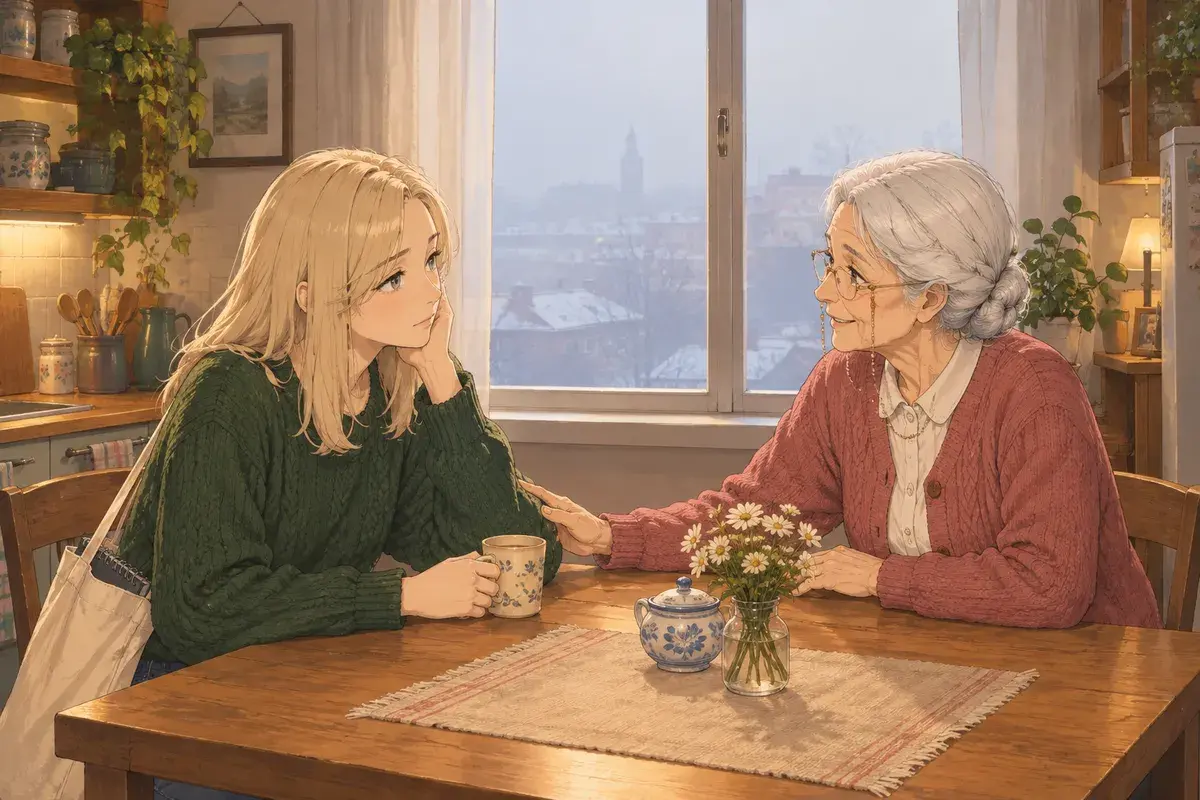
Comic · 13 panels
- Радмила
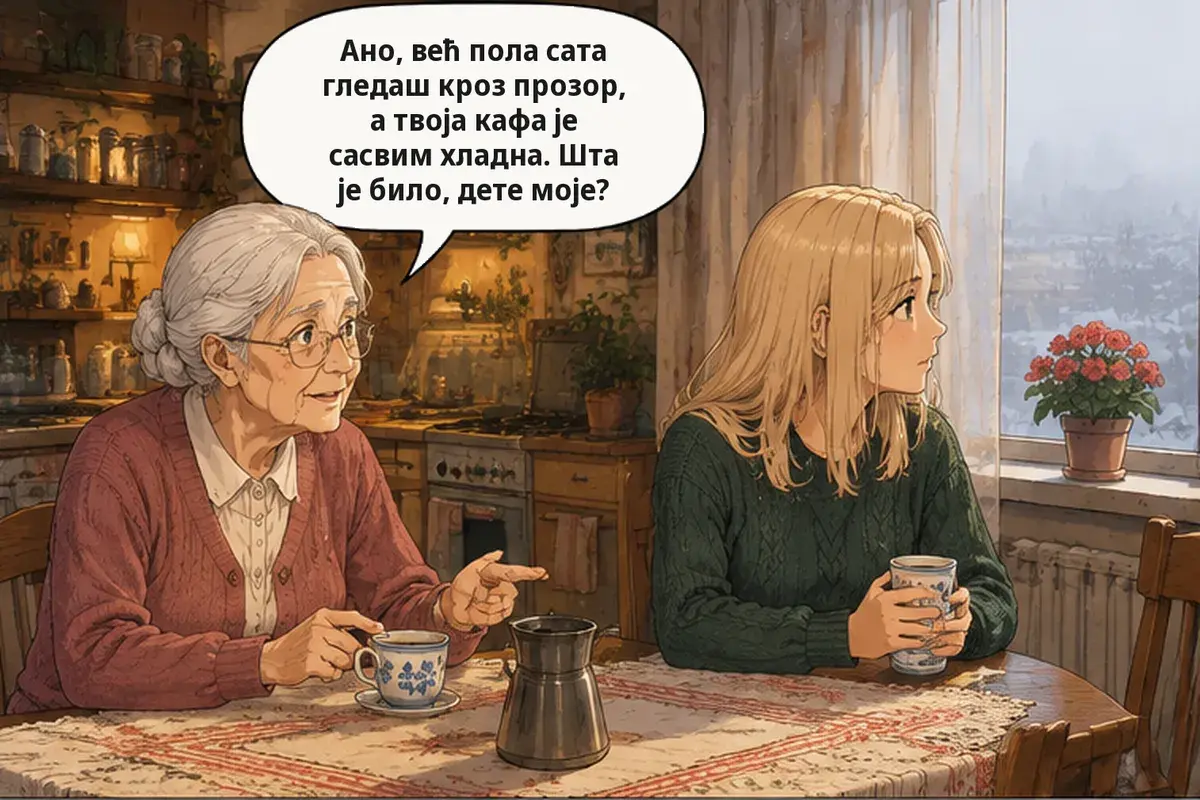
Ано, већ пола сата гледаш кроз прозор, а твоја кафа је сасвим хладна. Шта је било, дете моје?
Ana, you've been looking out the window for half an hour, and your coffee is completely cold. What's wrong, dear?
- Ана
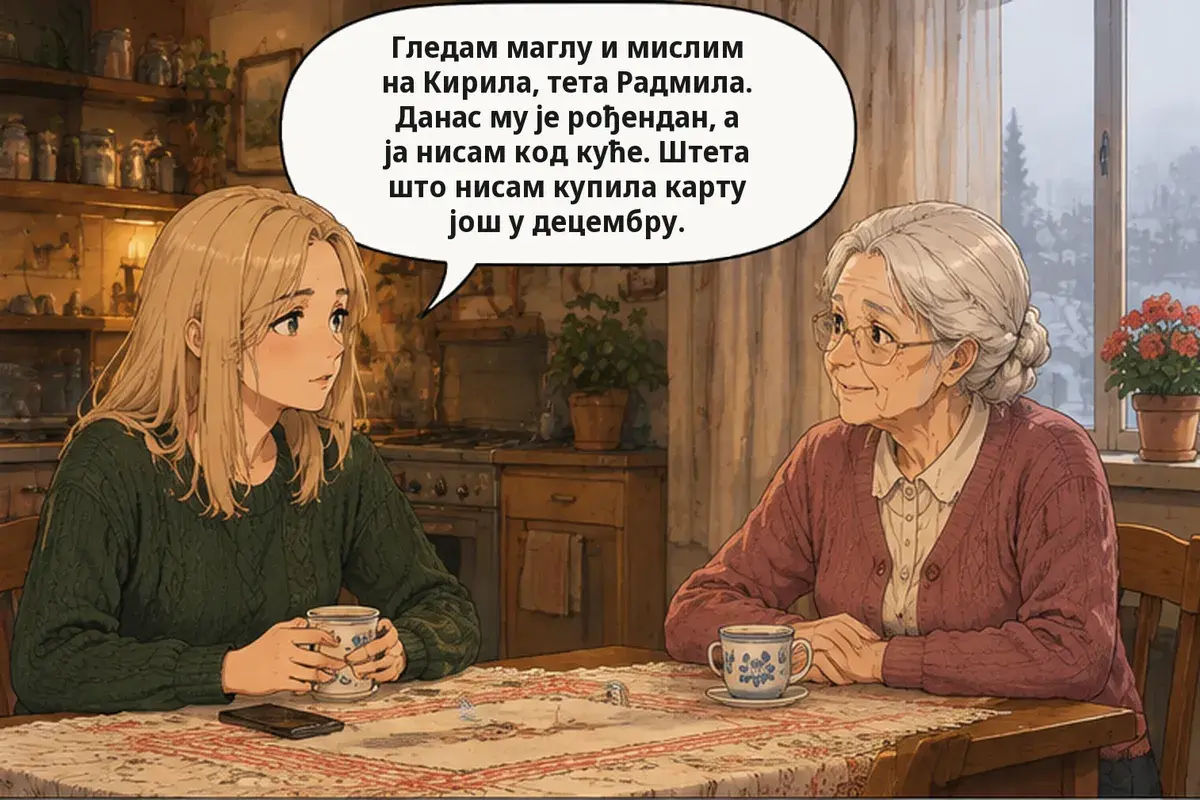
Гледам маглу и мислим на Кирила, тета Радмила. Данас му је рођендан, а ја нисам код куће. Штета што нисам купила карту још у децембру.
I'm looking at the fog and thinking about Kiril, Aunt Radmila. Today is his birthday, and I'm not home. It's a pity I didn't buy the ticket back in December (woman speaking).
- Радмила
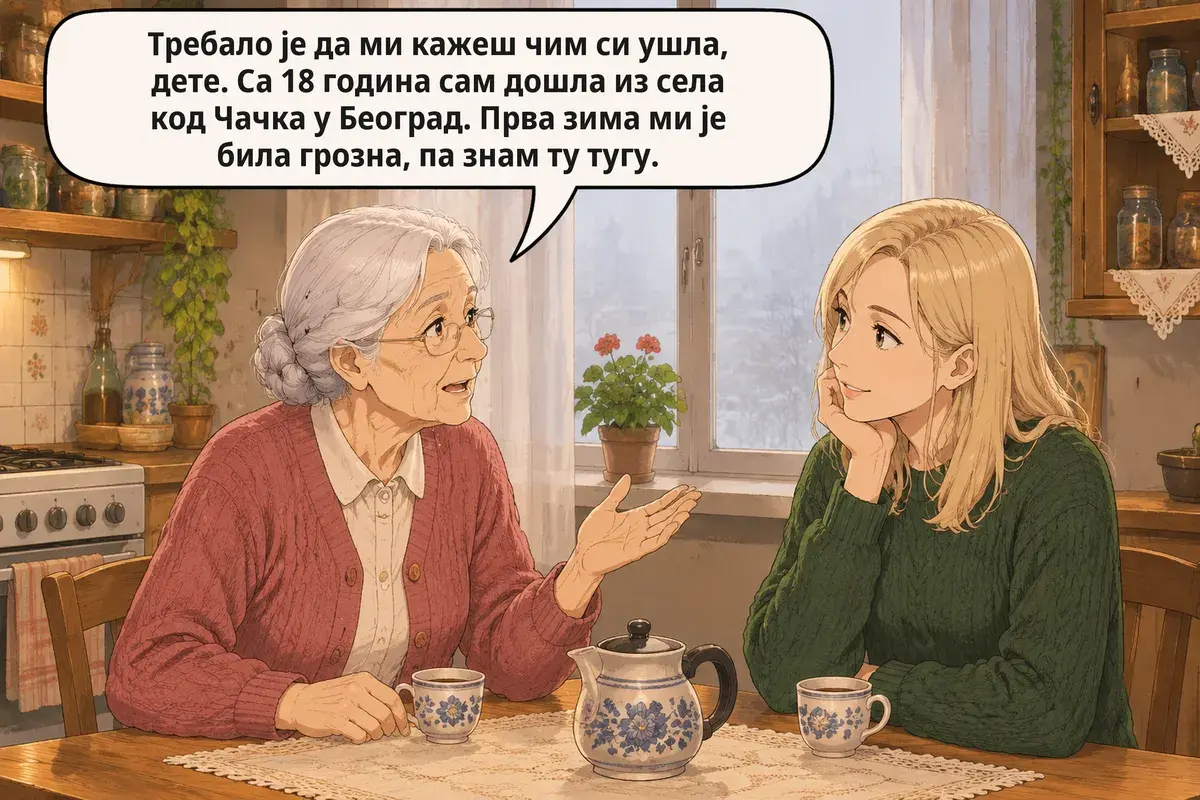
Требало је да ми кажеш чим си ушла, дете. Са 18 година сам дошла из села код Чачка у Београд. Прва зима ми је била грозна, па знам ту тугу.
You should have told me as soon as you came in, dear (to a woman). When I was 18, I came to Belgrade from a village near Čačak (woman speaking). The first winter was awful, so I know that sadness.
- Ана
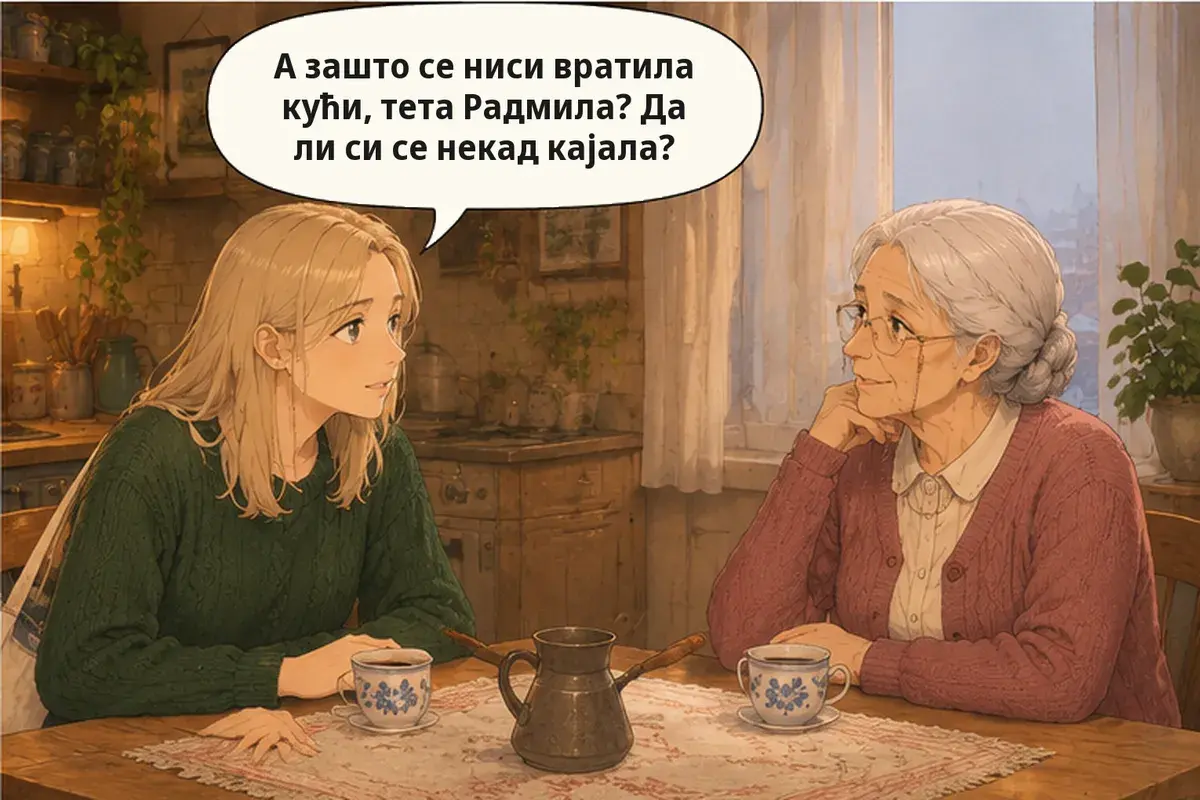
А зашто се ниси вратила кући, тета Радмила? Да ли си се некад кајала?
And why didn't you go back home, Aunt Radmila? Did you ever regret it? (to a woman)
- Радмила
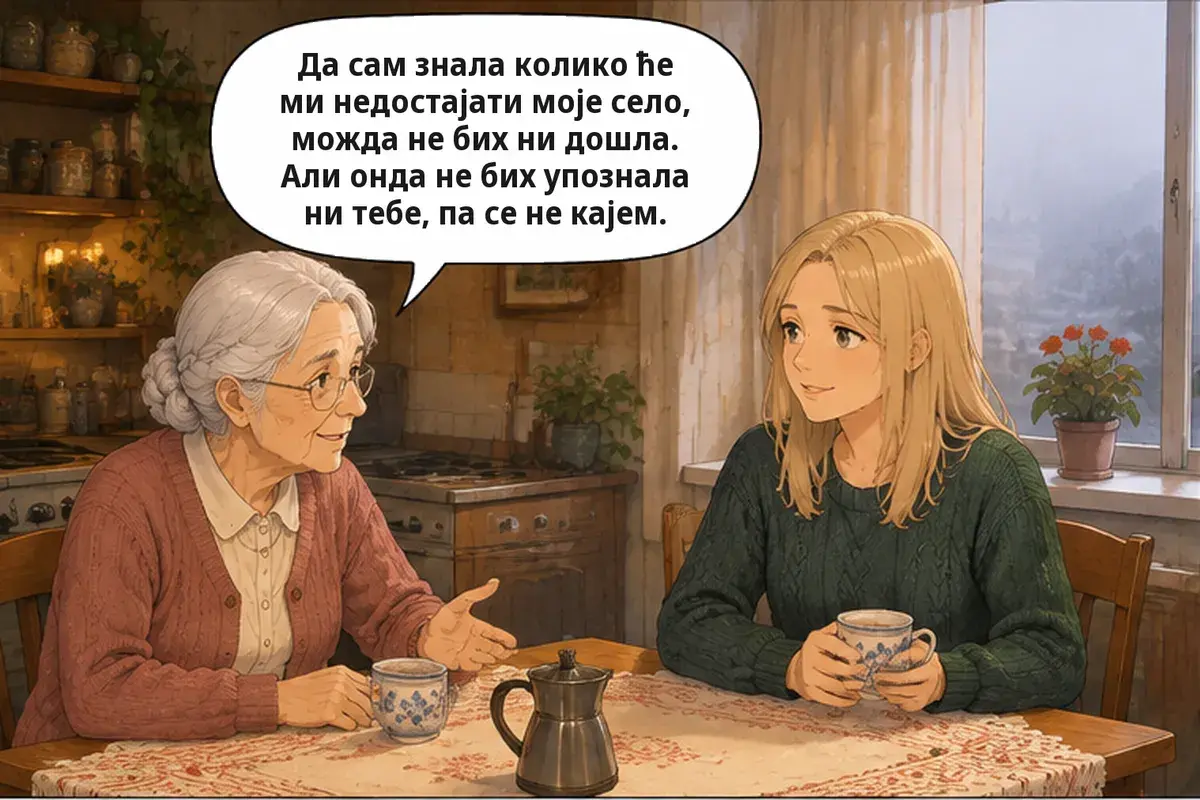
Да сам знала колико ће ми недостајати моје село, можда не бих ни дошла. Али онда не бих упознала ни тебе, па се не кајем.
If I had known how much I'd miss my village, maybe I wouldn't have come at all. But then I wouldn't have met you either, so I don't regret it (woman speaking).
- Ана
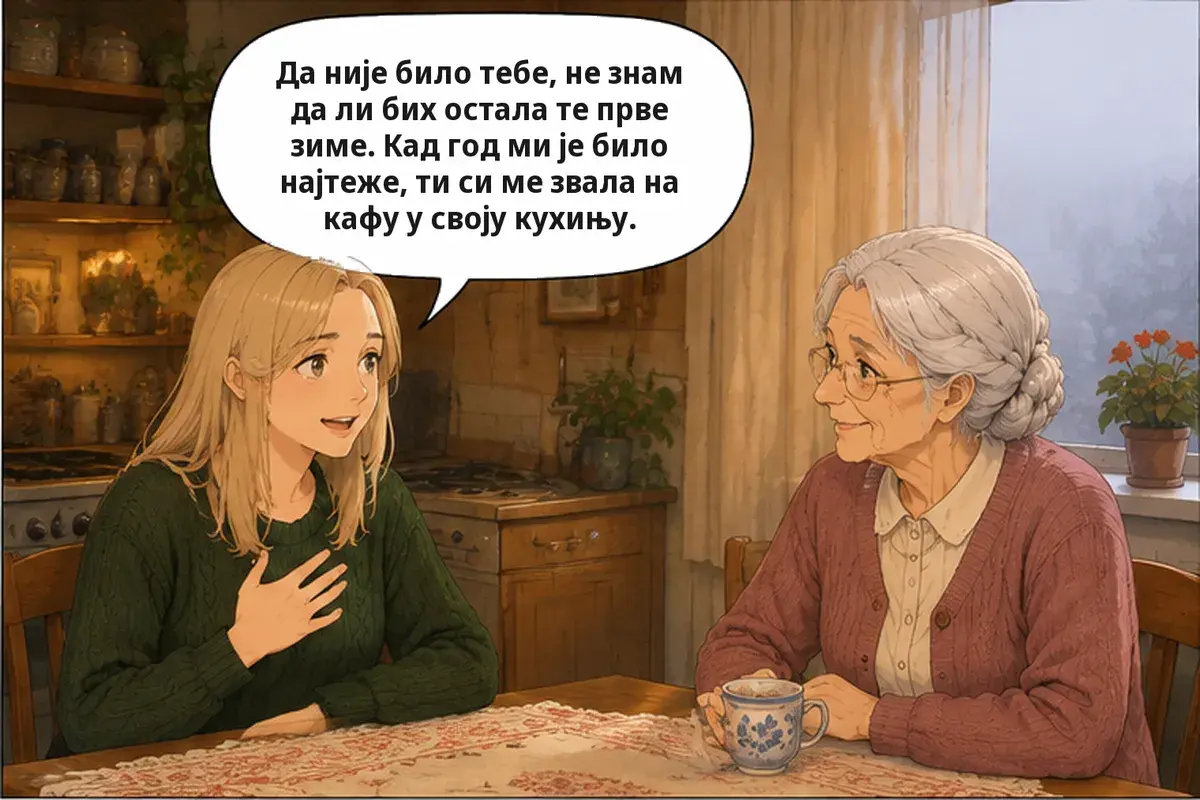
Да није било тебе, не знам да ли бих остала те прве зиме. Кад год ми је било најтеже, ти си ме звала на кафу у своју кухињу.
If it hadn't been for you, I don't know if I would have stayed that first winter (woman speaking). Whenever things were hardest for me, you invited me for coffee in your kitchen (to a woman).
- Радмила
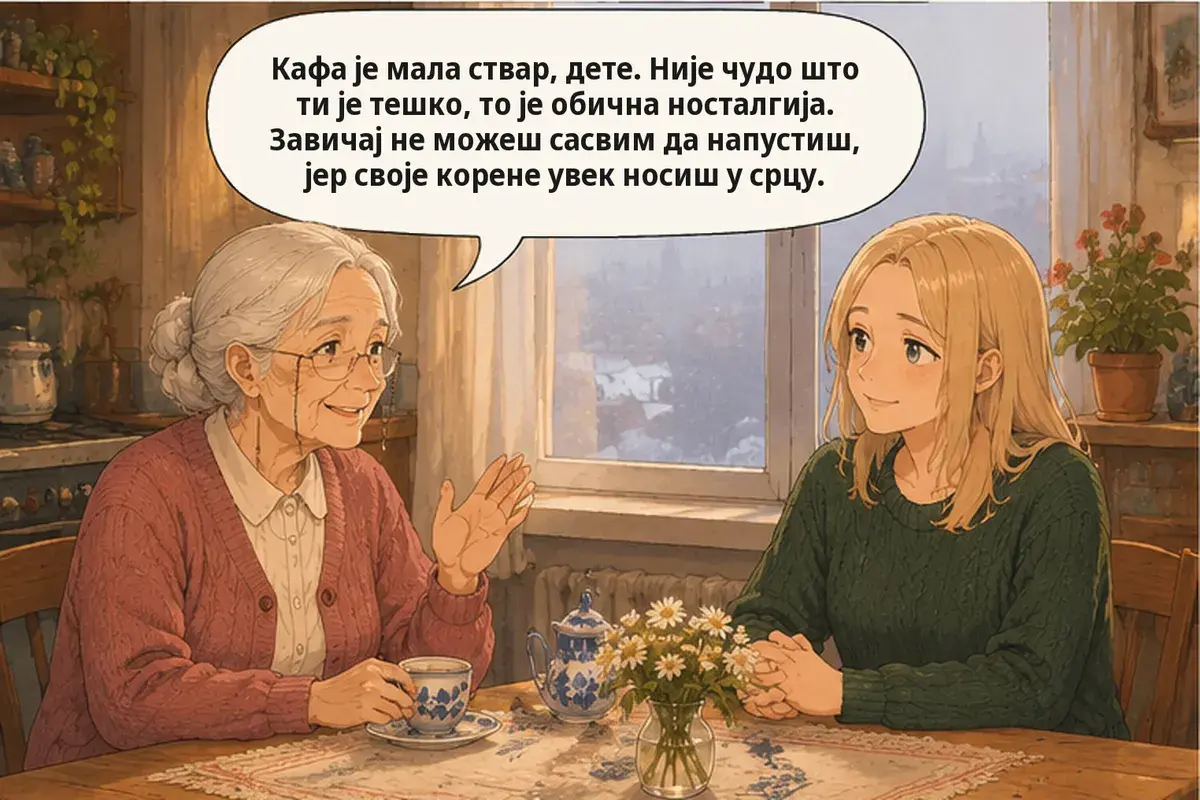
Кафа је мала ствар, дете. Није чудо што ти је тешко, то је обична носталгија. Завичај не можеш сасвим да напустиш, јер своје корене увек носиш у срцу.
Coffee is a small thing, dear. It's no wonder you're having a hard time, it's just plain homesickness. You can't completely leave your home region, because you always carry your roots in your heart.
- Ана
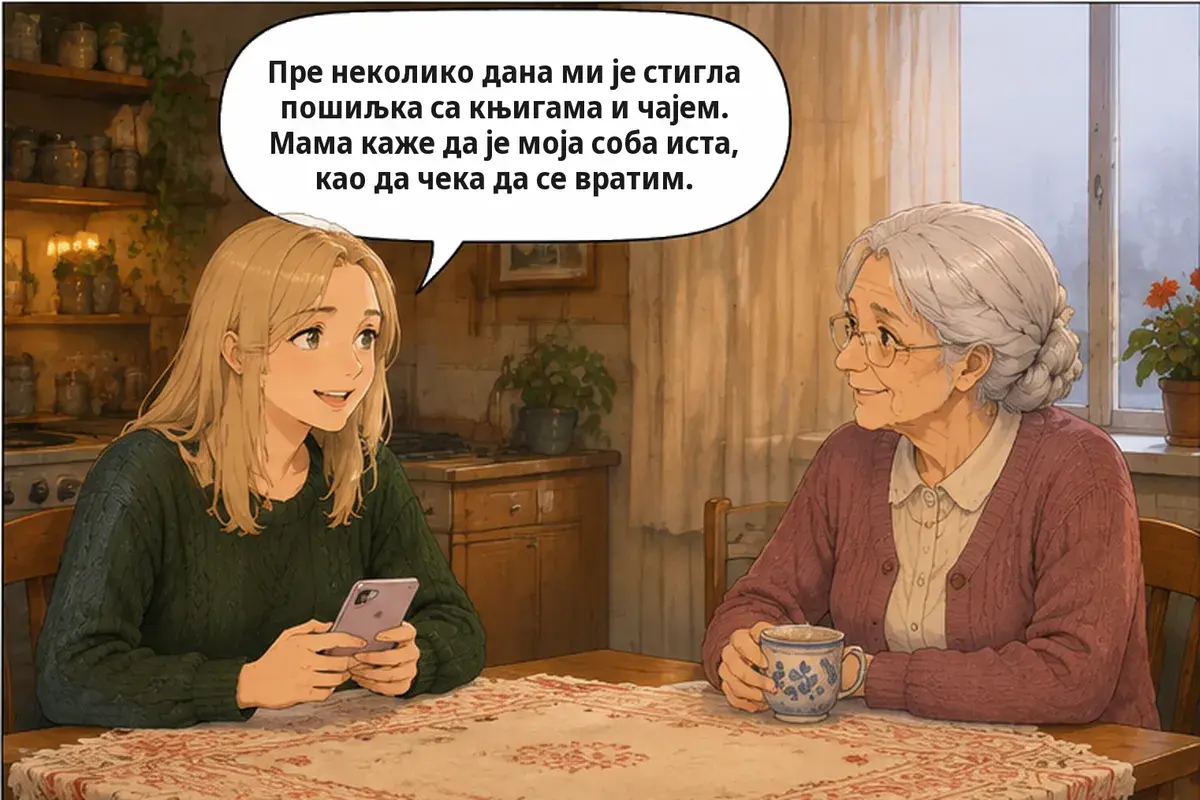
Пре неколико дана ми је стигла пошиљка са књигама и чајем. Мама каже да је моја соба иста, као да чека да се вратим.
A few days ago a package with books and tea arrived for me. Mom says my room is just the same, as if it's waiting for me to come back.
- Радмила
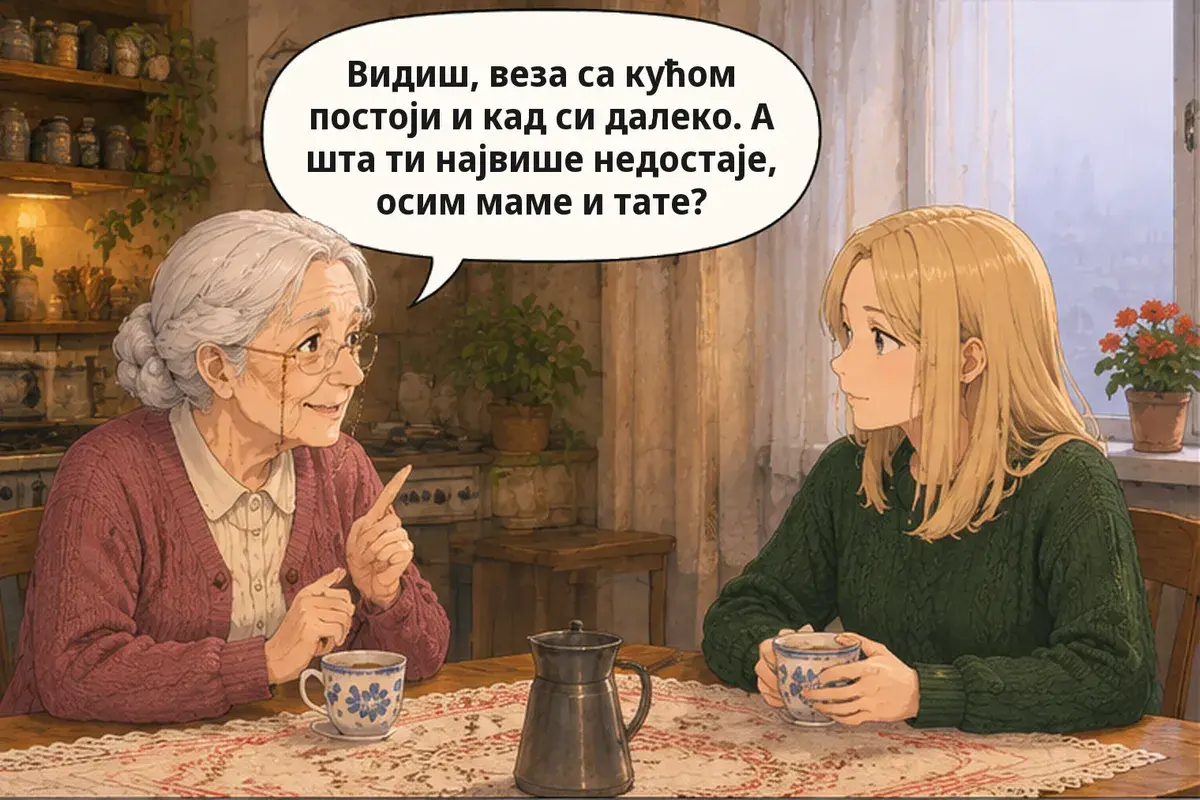
Видиш, веза са кућом постоји и кад си далеко. А шта ти највише недостаје, осим маме и тате?
You see, the connection with home is still there even when you're far away. And what do you miss most, besides Mom and Dad?
- Ана
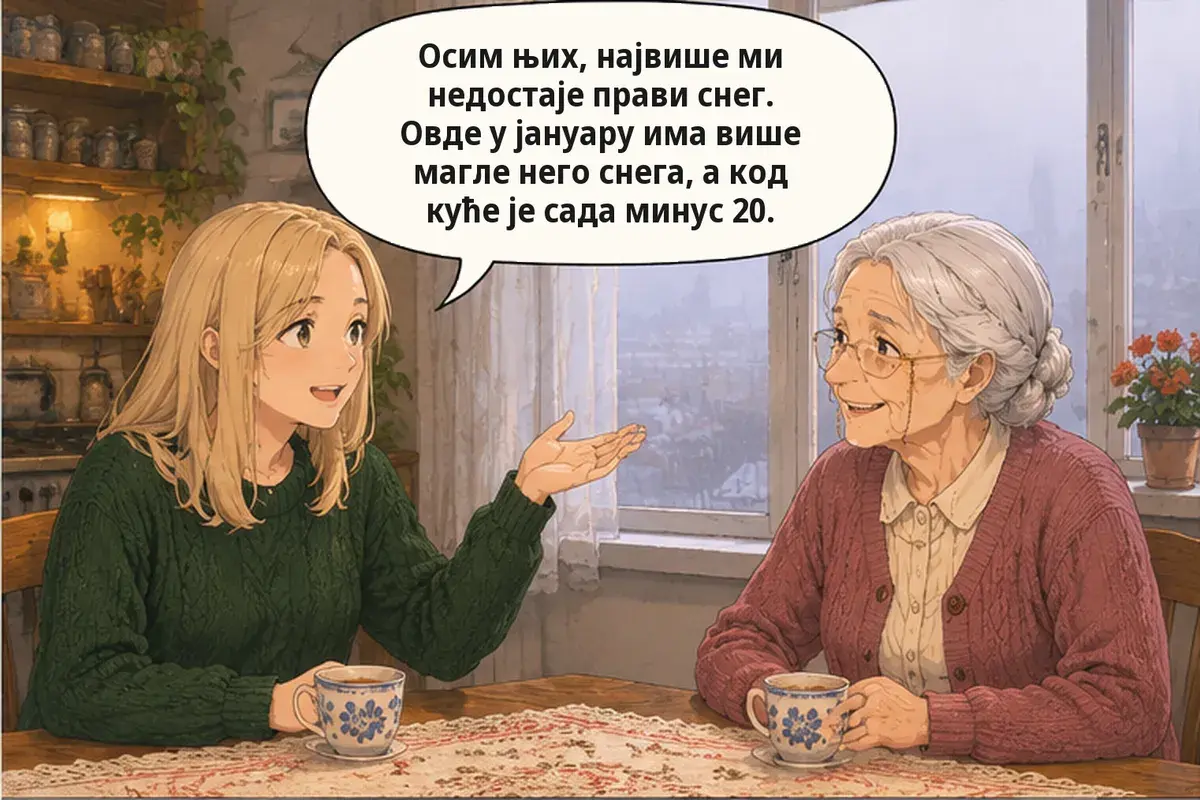
Осим њих, највише ми недостаје прави снег. Овде у јануару има више магле него снега, а код куће је сада минус 20.
Besides them, I miss real snow the most. Here in January there's more fog than snow, and back home it's minus 20 right now.
- Радмила
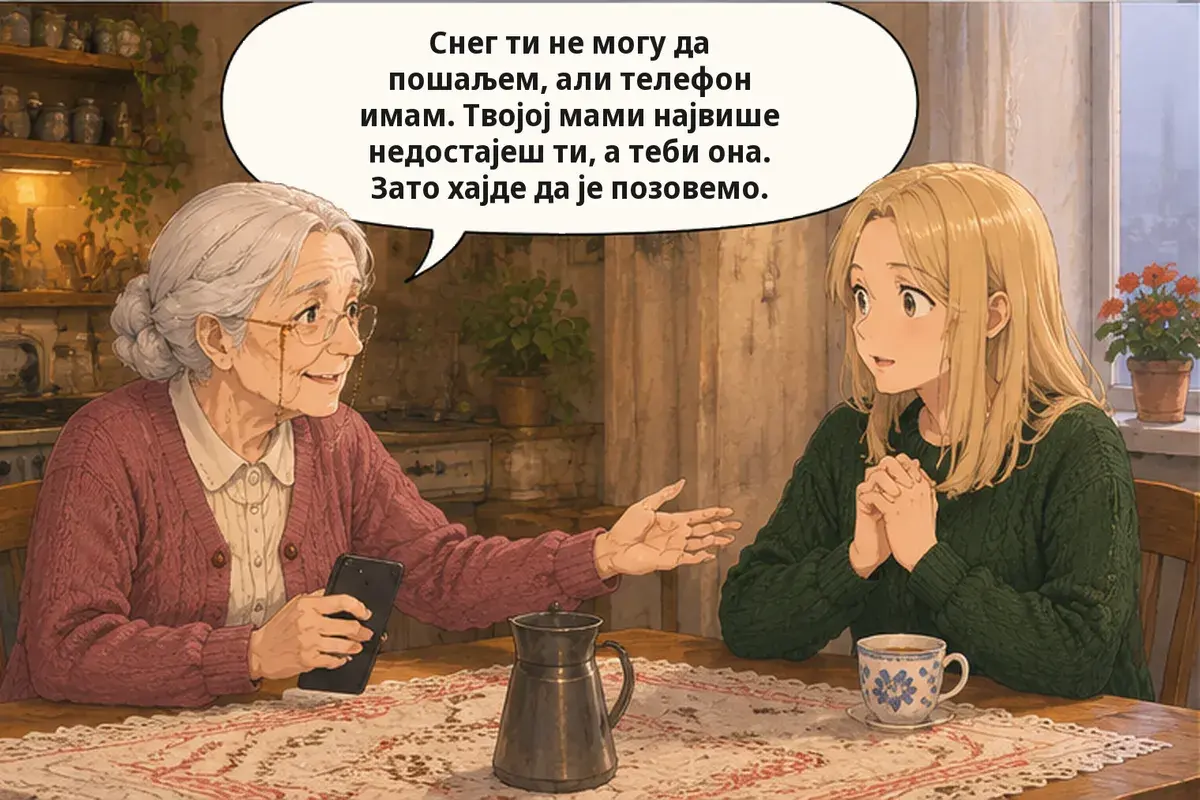
Снег ти не могу да пошаљем, али телефон имам. Твојој мами највише недостајеш ти, а теби она. Зато хајде да је позовемо.
I can't send you snow, but I do have a phone. Your mom misses you the most, and you miss her. So let's call her.
- Ана
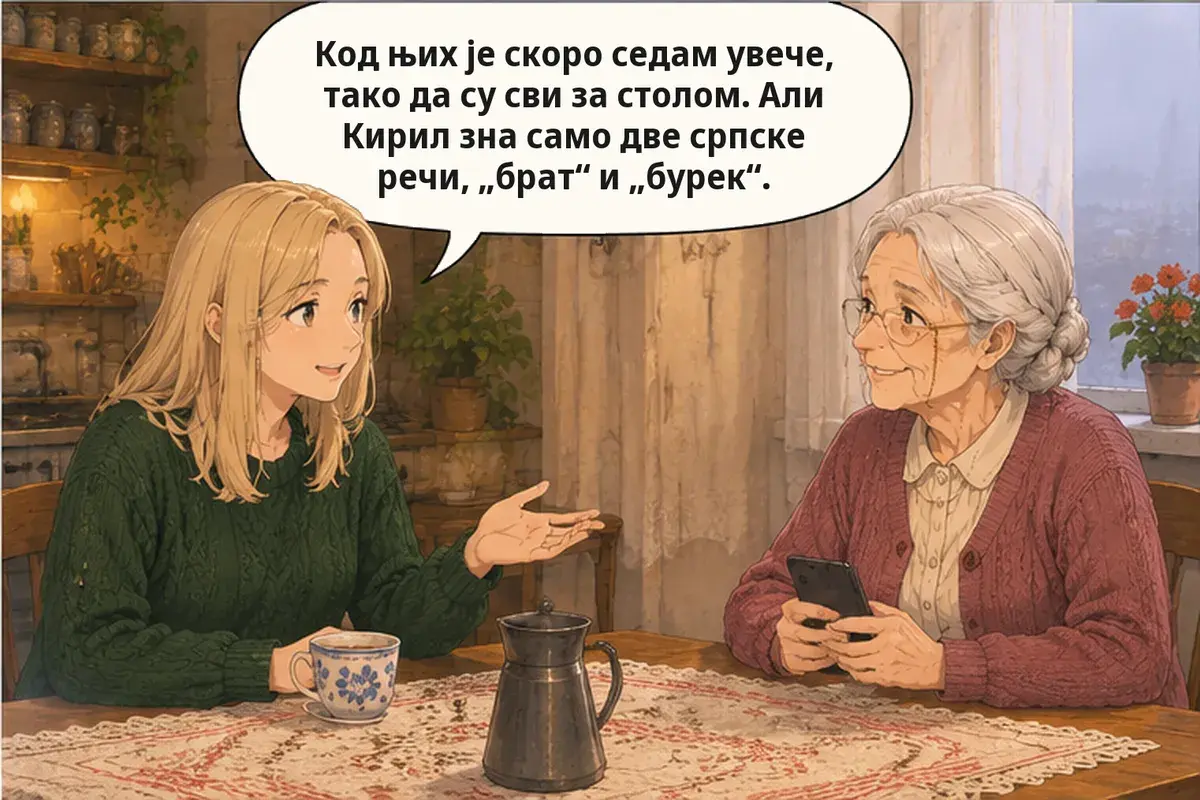
Код њих је скоро седам увече, тако да су сви за столом. Али Кирил зна само две српске речи, „брат“ и „бурек“.
It's almost seven in the evening there, so everyone is at the table. But Kiril only knows two Serbian words, "brat" and "burek".
- Радмила
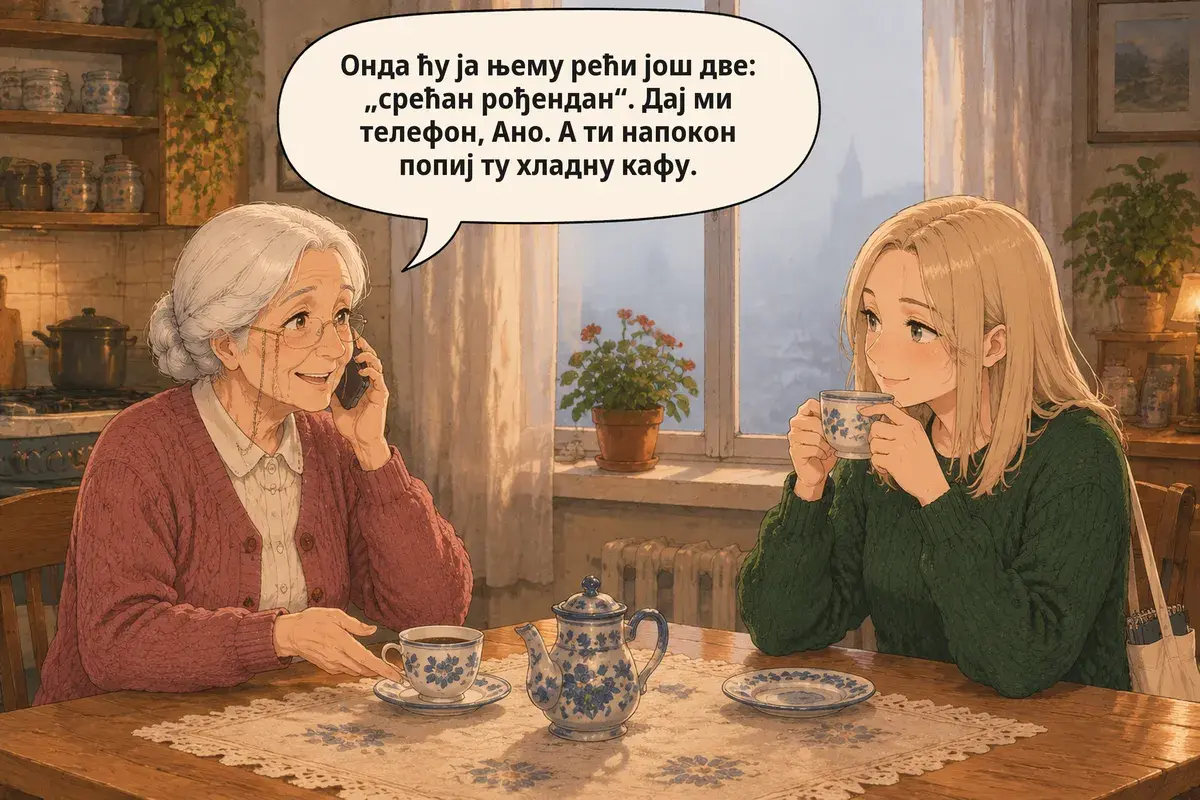
Онда ћу ја њему рећи још две: „срећан рођендан“. Дај ми телефон, Ано. А ти напокон попиј ту хладну кафу.
Then I'll tell him two more: "srećan rođendan". Give me the phone, Ana. And you, finally drink that cold coffee.
Grammar for this text
Да сам знала колико ће ми недостајати моје село, можда не бих ни дошла— this is the unreal past (if-sentences, unit 17, the block above):да сам зналаmeans "if I had known" andне бих дошлаmeans "I wouldn't have come". Hereдаmeans "if", not "so that".колико ће ми недостајатиmeans "how much I will miss it".Да није било тебе— "if it hadn't been for you":да није било+ the genitive (тебе).не знам да ли бих остала— "I don't know if I would have stayed":да лиstarts an indirect question (unit 10); in English it becomes "if".Кад год ми је било најтеже— "whenever things were hardest for me" (unit 6).Требало је да ми кажеш чим си ушла—Требало је да+ the present means "you should have".Требало јеnever changes; the verb afterдаshows the person:кажешis "you tell", so the whole phrase is "you should have told me". Hereчимmeans "as soon as" (unit 6).Штета што нисам купила карту—Штета што+ the past tense means "it's a pity that I didn't buy".Није чудо што ти је тешко— "it's no wonder you're having a hard time":чудоhere is "wonder", andтиis the dative ("to you"), likeХладно ми је(I'm cold).Твојој мами највише недостајеш ти, а теби она— the person who misses is in the dative (мами,теби). The person who is missed is the subject, soнедостајешagrees withти. The full explanation is in theнедостајатиblock above.Осим њих— "besides them":осим+ the genitive (A2, unit 17).тако да су сви за столом—тако даmeans "so" (unit 11). Kiril's time is four hours later, so it is almost seven in the evening there.
Words and grammar of the unit: Talk about missing home.
Learn the words from the texts with flashcards
In the app, you can tap any word in a text to see its translation, forms and examples, and new words stick with flashcards. 15 minutes a day.
Start for freeEverything is open for free. No card needed to sign up.