
Serbian story with translation · B1 · 18 lines
На Каленић по бадњак To Kalenić market for the badnjak
Comic · 17 panels
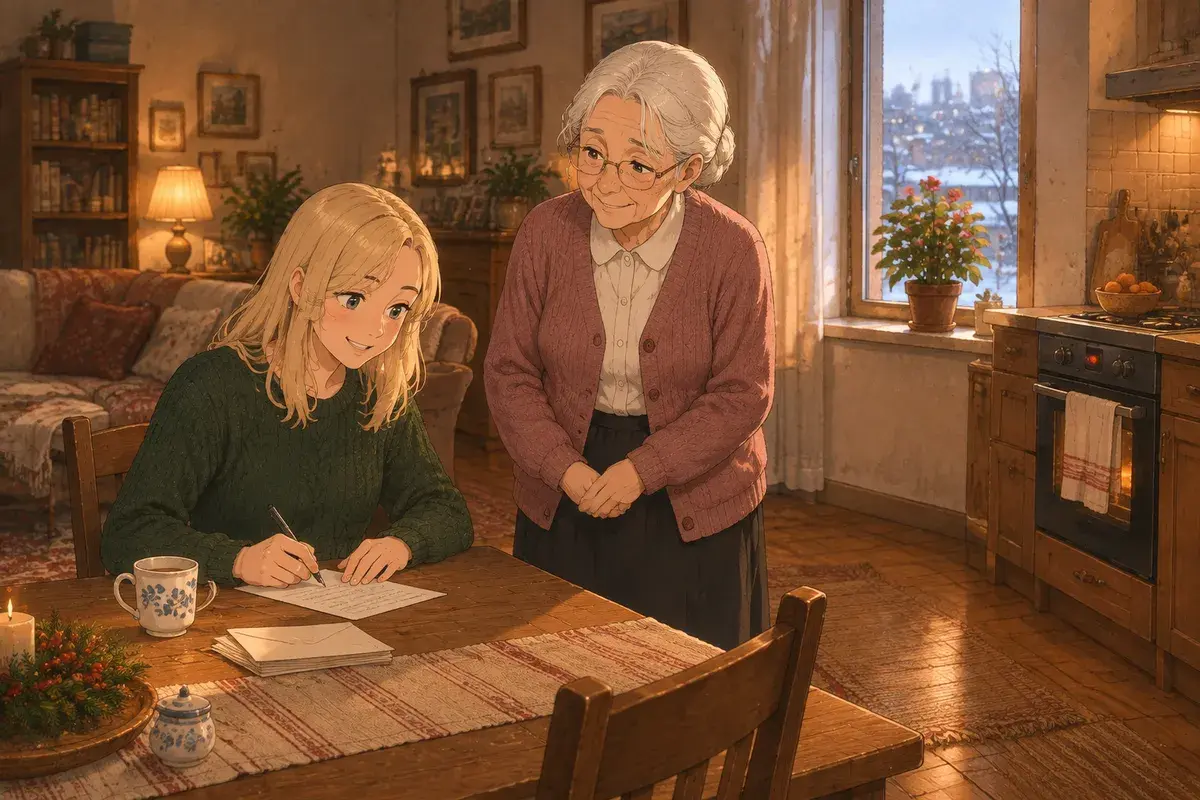
Драга мама, драги тата,
Dear Mom, dear Dad,
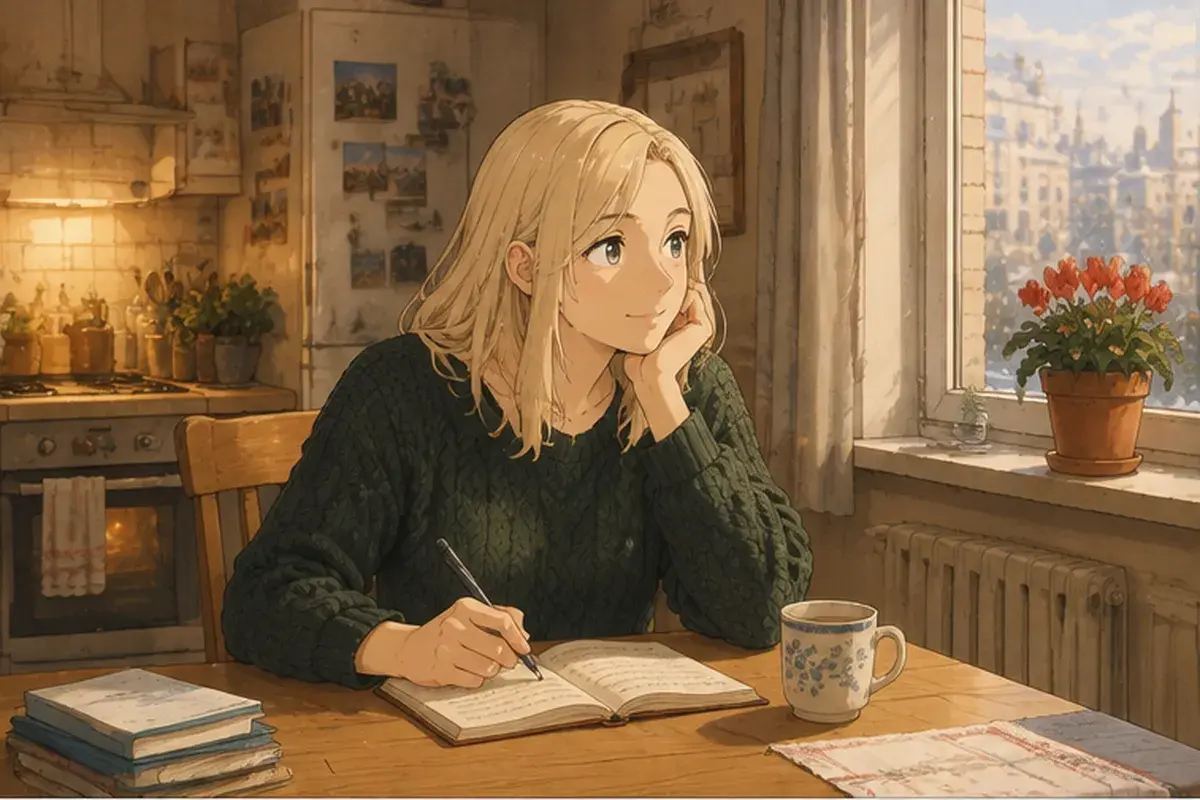
Пишем вам у суботу ујутру док пијем кафу и гледам кроз прозор. Празници су прошли, а ја морам све да вам испричам.
I'm writing to you on Saturday morning while I drink coffee and look out the window (to several people). The holidays are over, and I have to tell you everything (to several people).
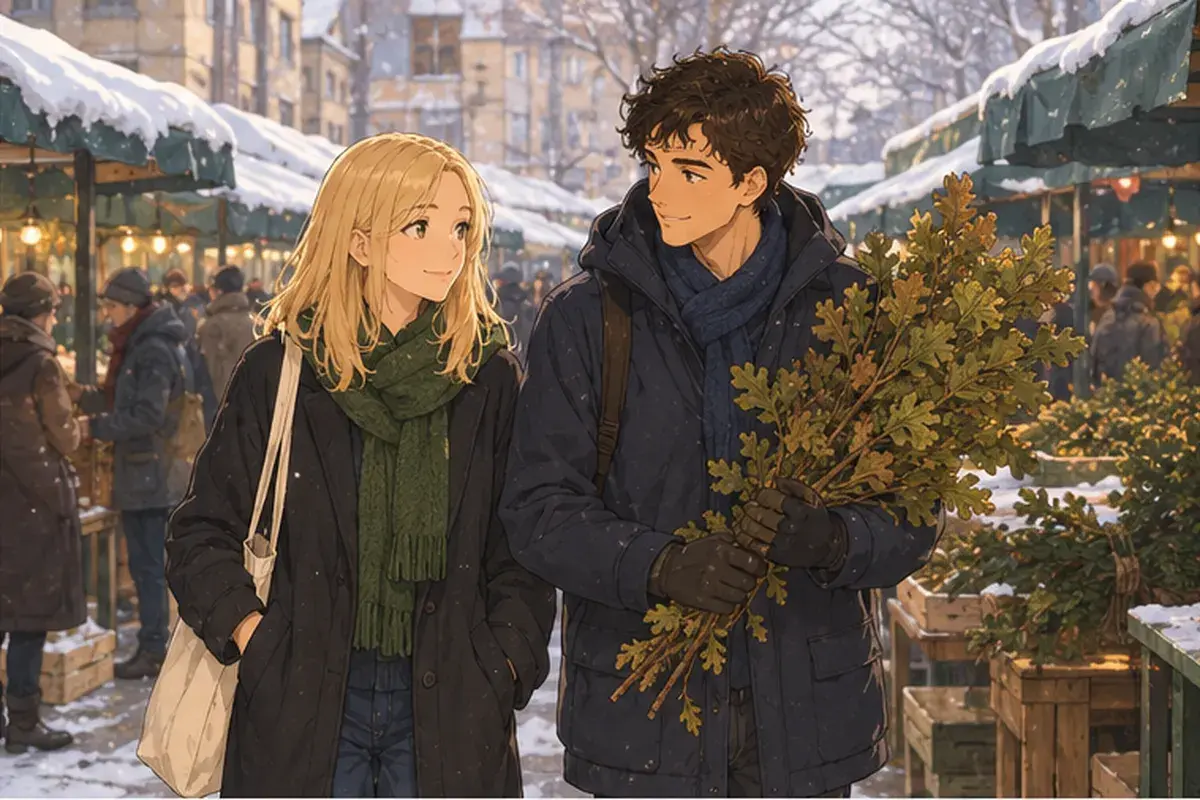
Бадњи дан је био у четвртак, па сам са Стефаном пре посла отишла на Каленић по бадњак.
Christmas Eve was on Thursday, so before work I went with Stefan to Kalenić market to get a badnjak (woman speaking).
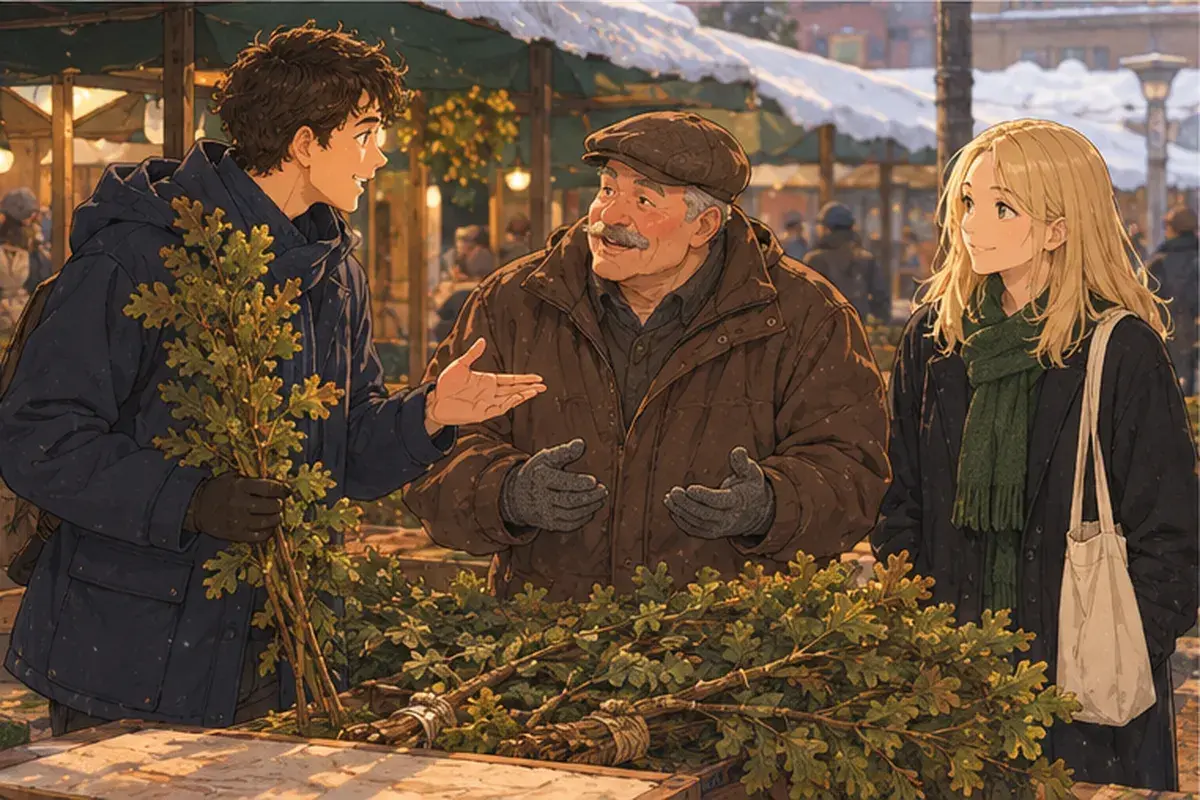
Стефан је скоро пола сата бирао бадњак, причајући са продавцем као са старим пријатељем.
Stefan spent almost half an hour choosing a badnjak, chatting with the seller as if with an old friend.

Био је снежан дан, као код куће, само без правог мраза.
It was a snowy day, like back home, only without real frost.
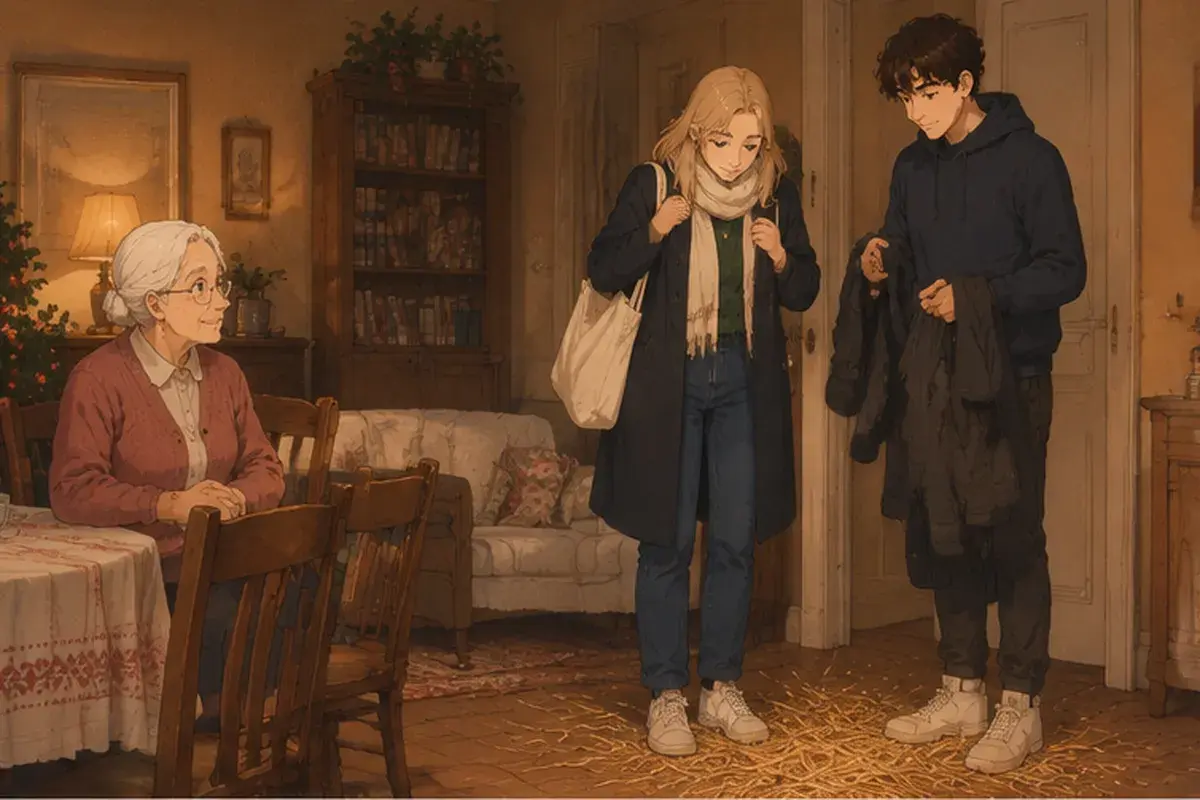
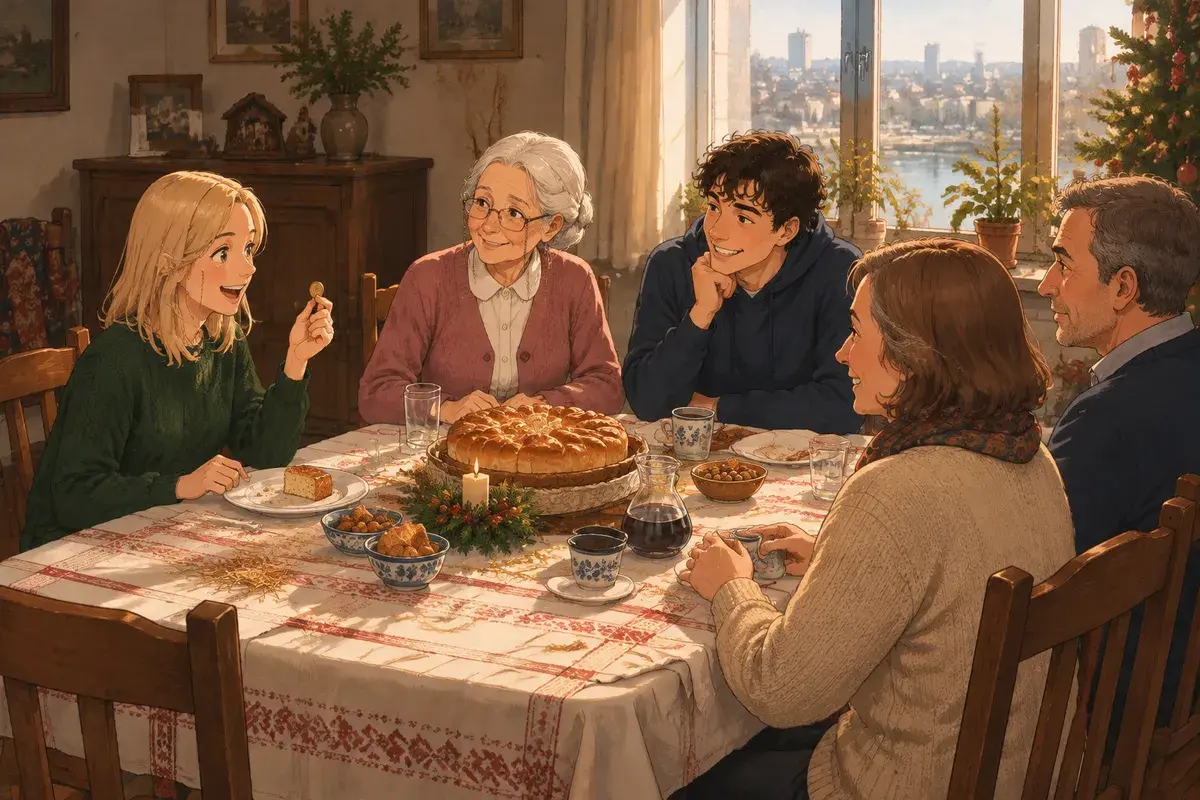
Увече смо отишли код Радмиле, а у дневној соби је на поду већ лежала слама.
In the evening we went to Radmila's, and in the living room there was already straw lying on the floor.
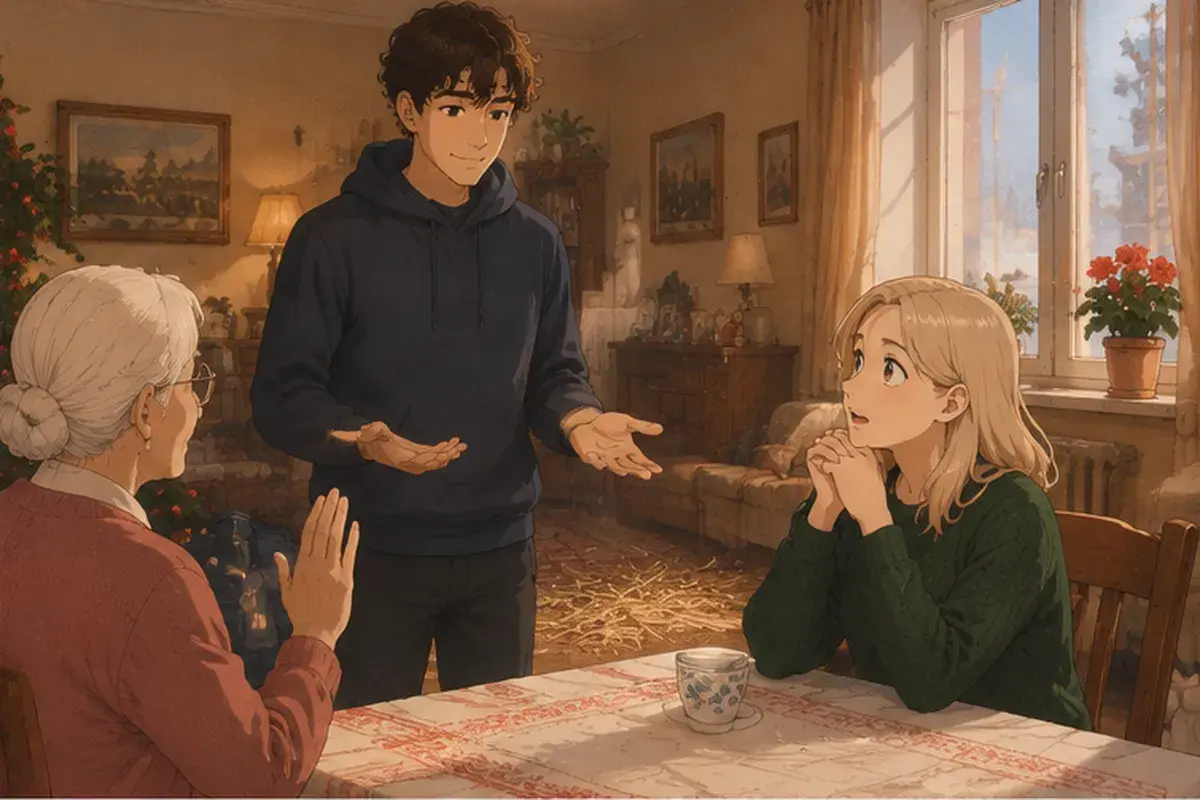
Стефан ми је објаснио да у његовој породици слама на поду лежи одувек. Радмила је само рекла: „Не питај ништа, Ано, него седи и једи.“
Stefan explained to me that in his family there has always been straw on the floor. Radmila just said: "Don't ask anything, Ana, just sit down and eat."
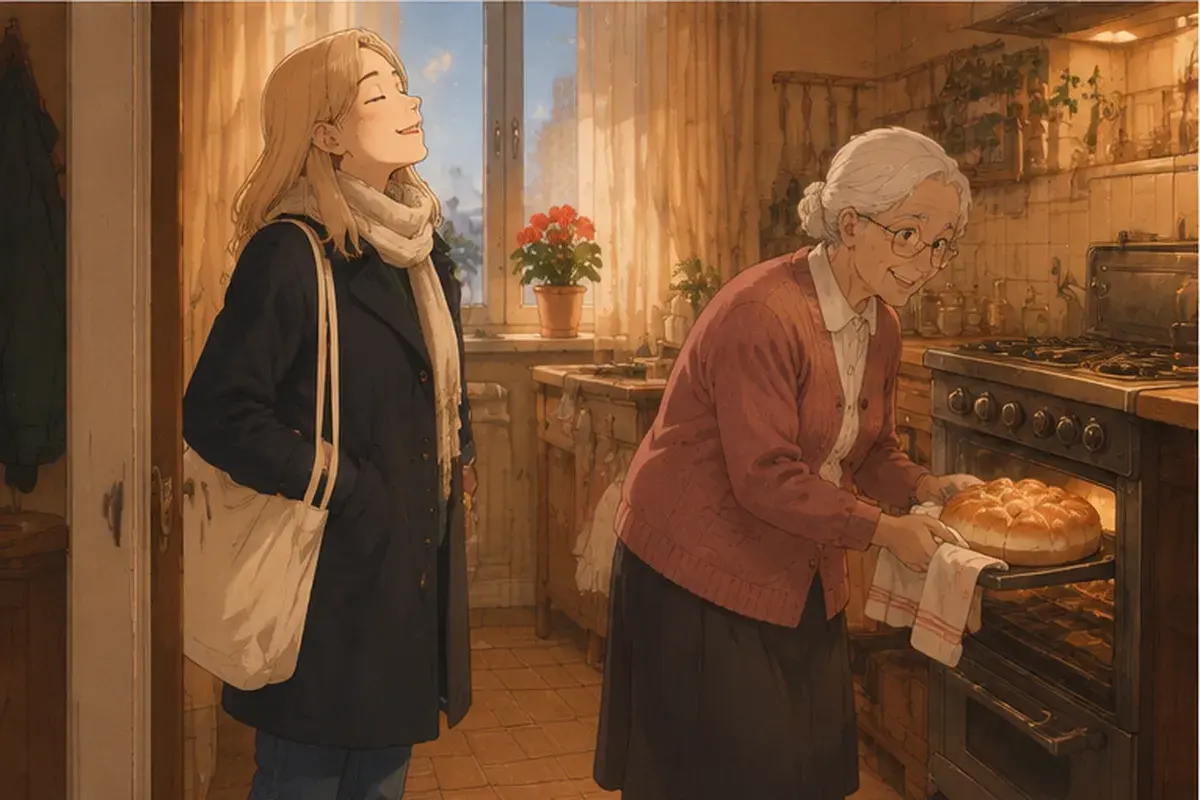
На Божић сам дошла код Радмиле у подне, а чесница је већ мирисала из кухиње.
On Christmas I came to Radmila's at noon, and the smell of česnica was already coming from the kitchen (woman speaking).
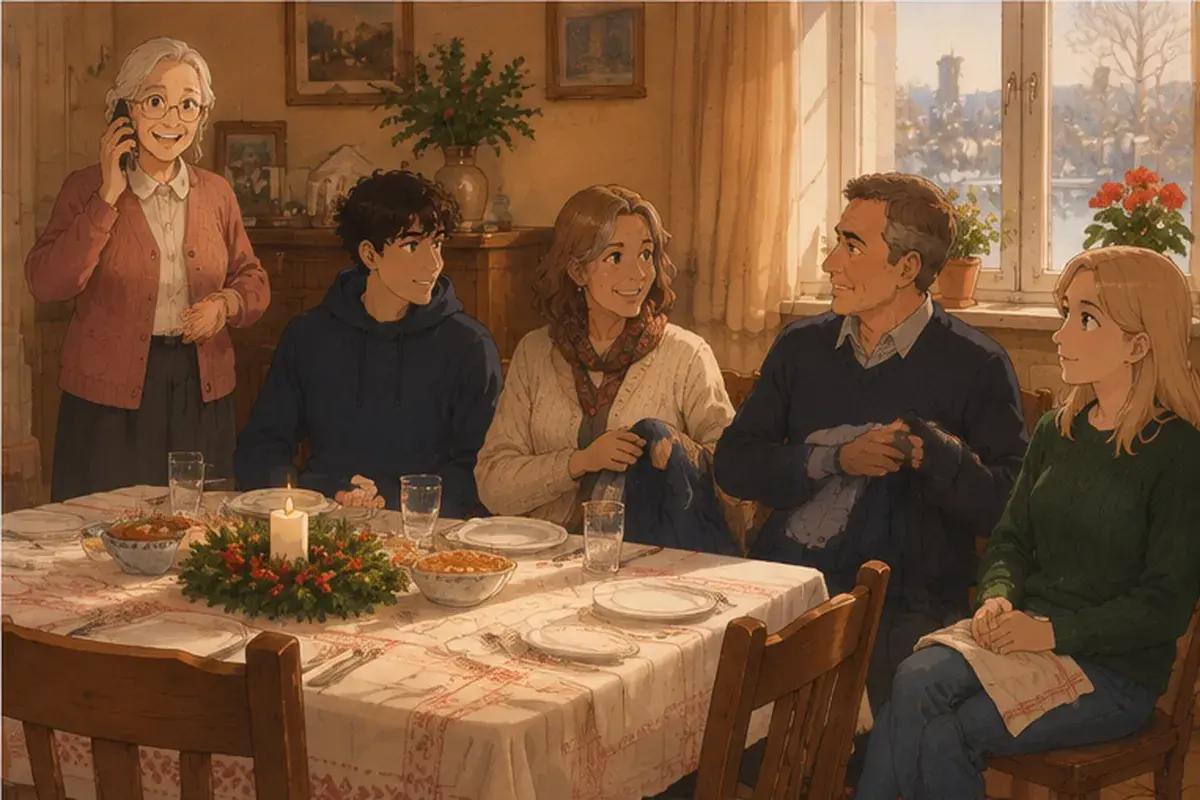
Божићни ручак је почео око један, кад су стигли Стефанови родитељи из Чачка. Гордана је звала из Ниша да честита празник.
Christmas lunch started around one, when Stefan's parents arrived from Čačak. Gordana called from Niš to wish everyone a happy holiday.
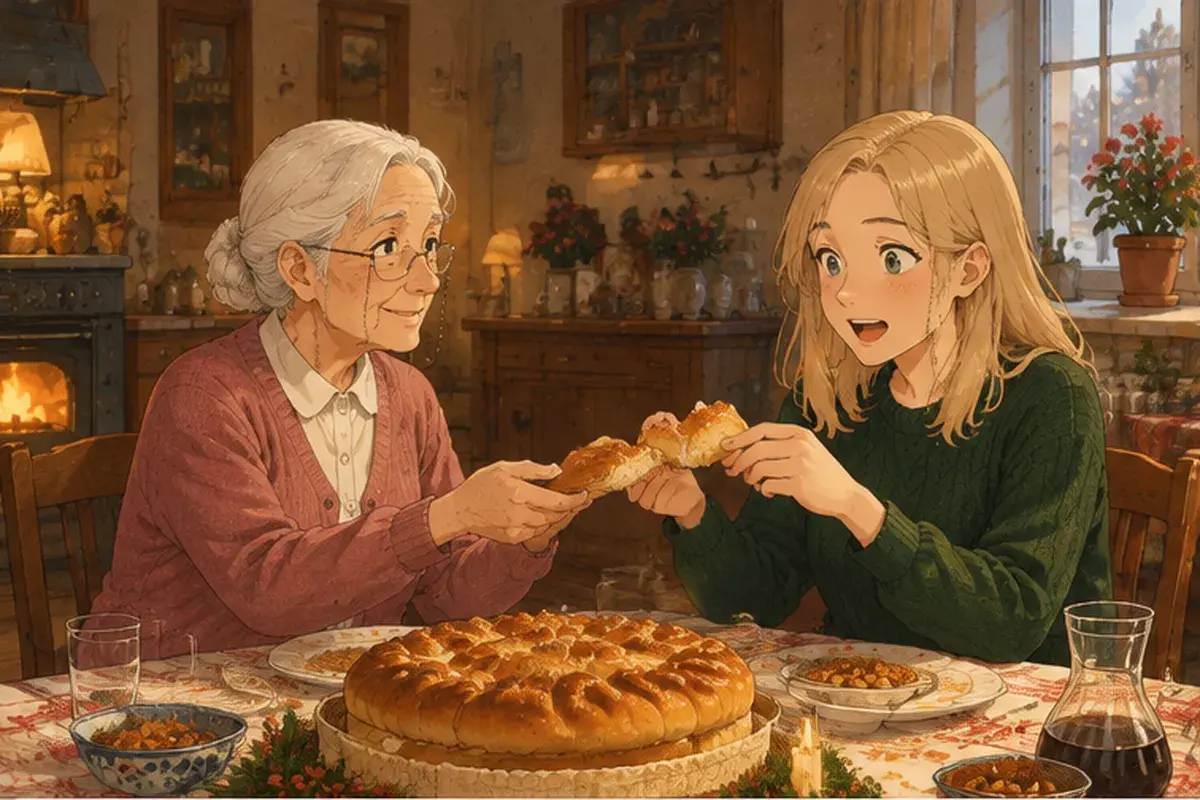
Радмила је свима дала по комад чеснице, а у мом комаду је био новчић.
Radmila gave everyone a piece of česnica, and in my piece there was a coin.
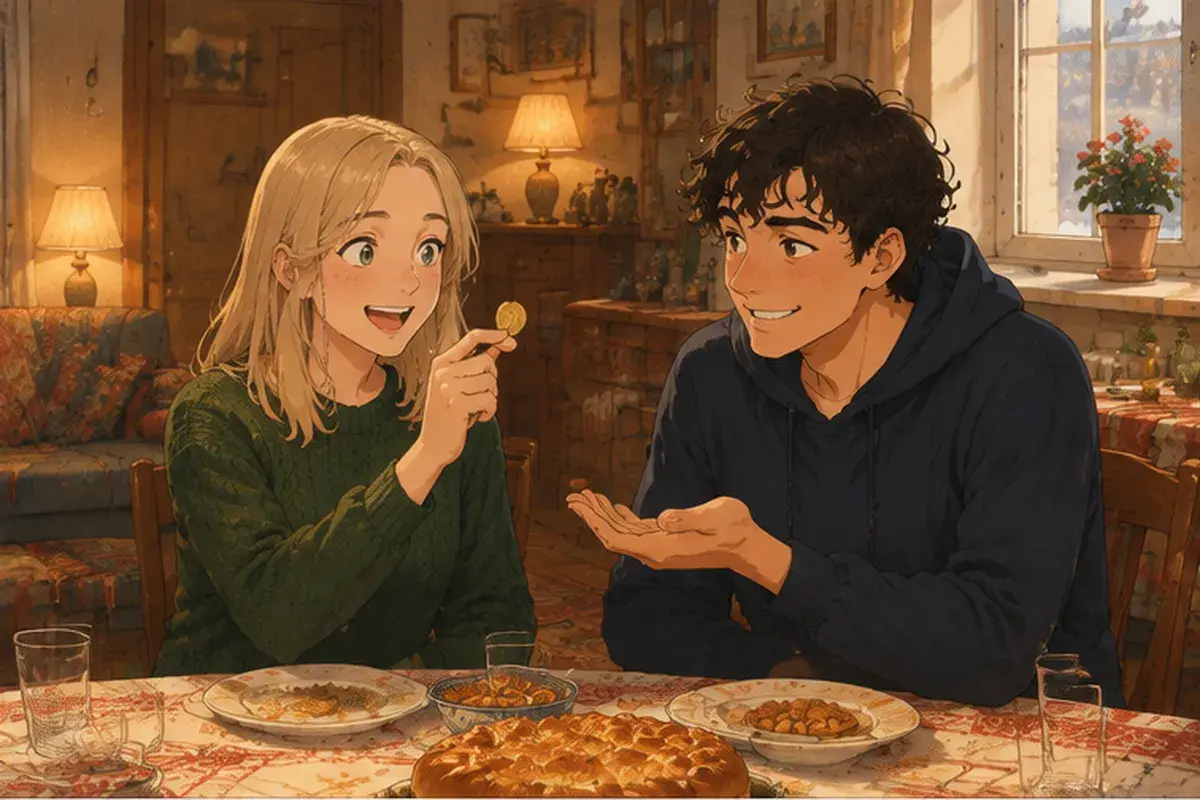
Стефан каже да новчић носи срећу целе године, па се одмах понудио да га чува уместо мене.
Stefan says the coin brings luck all year, so he immediately offered to keep it instead of me.
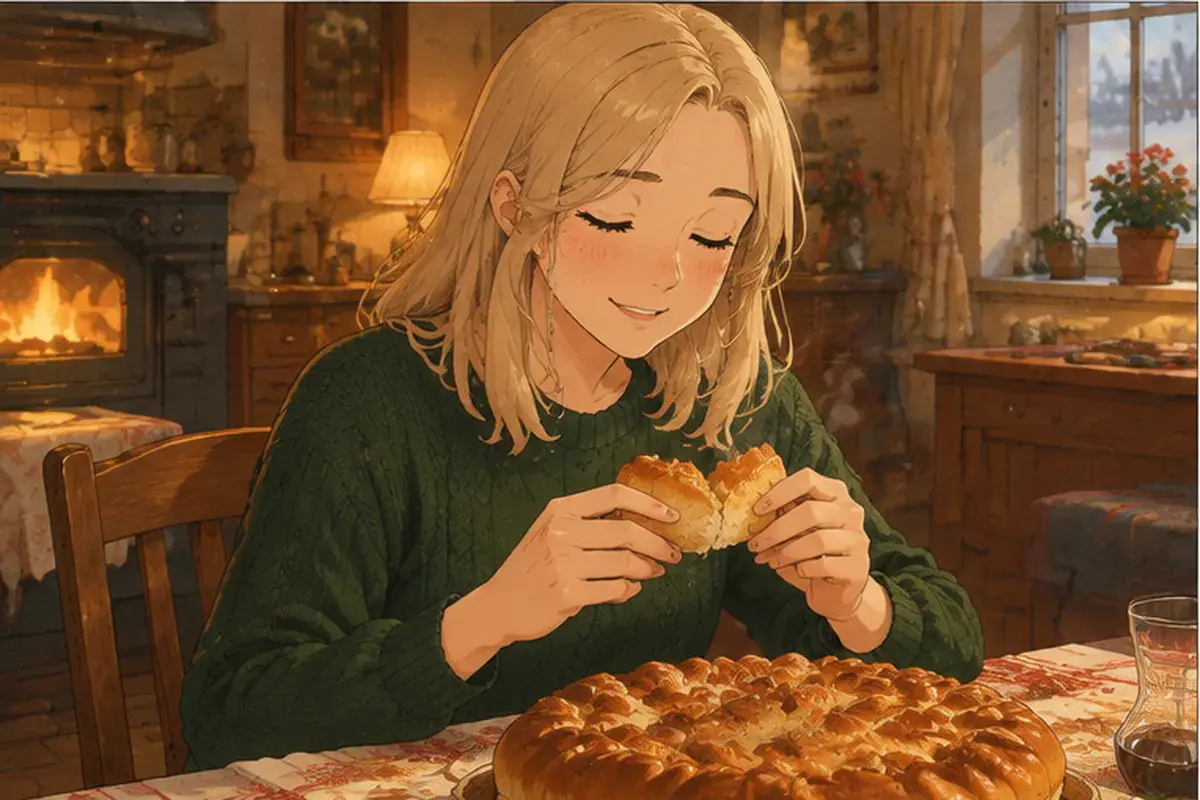
Чесница је имала укус домаћег хлеба, још топлог.
The česnica tasted like homemade bread, still warm.
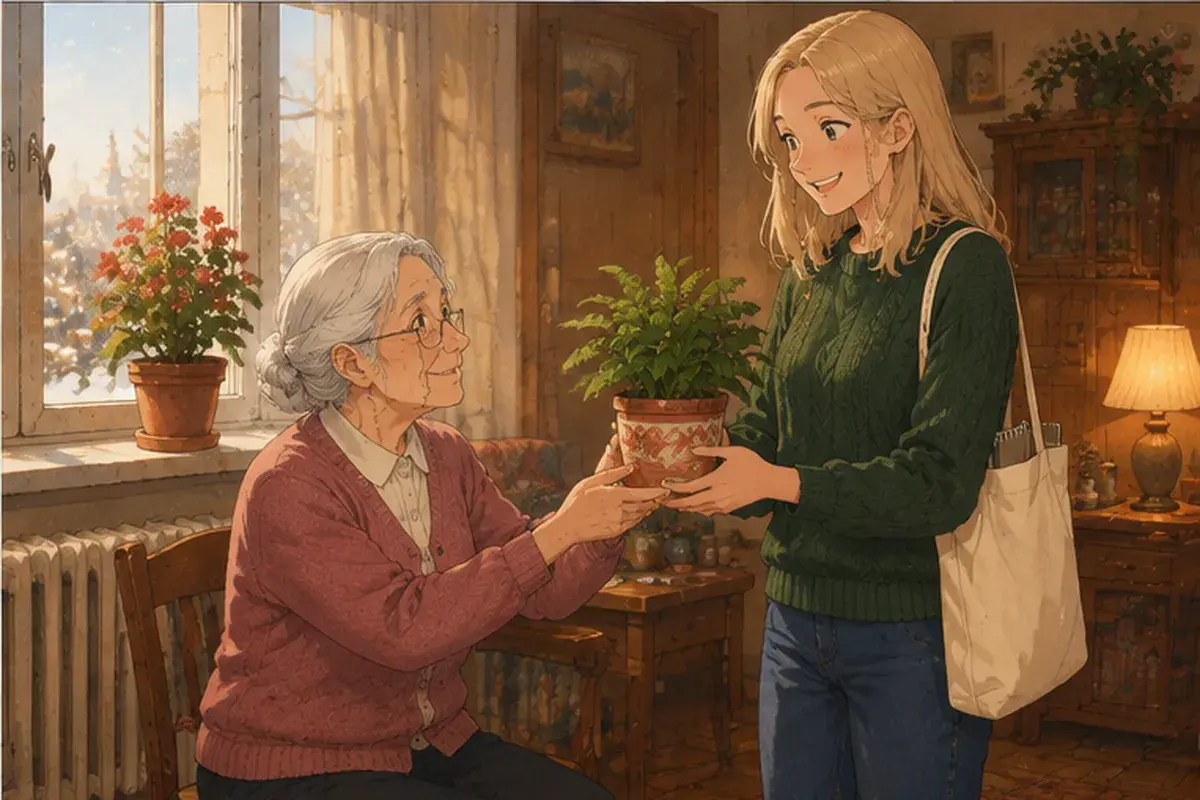
Радмила ми је после заједничког ручка дала цвет који сада стоји поред мог прозора.
After the shared lunch, Radmila gave me a flower that now stands by my window.
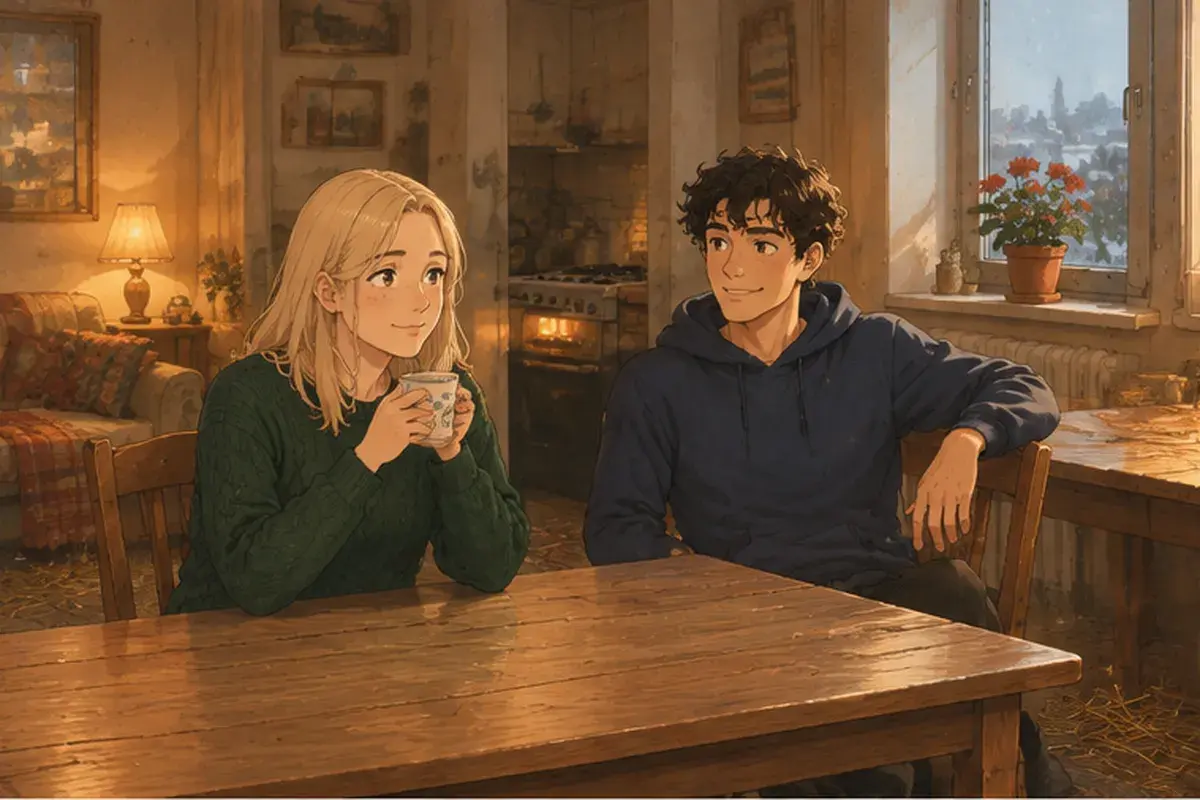
Код куће је највећи празник Нова година, а Божић је само мирнији дан са породицом. Овде је Божић пре свега окупљање породице око великог стола.
Back home the biggest holiday is New Year's, and Christmas is just a calmer day with the family. Here, Christmas is above all a gathering of the family around a big table.
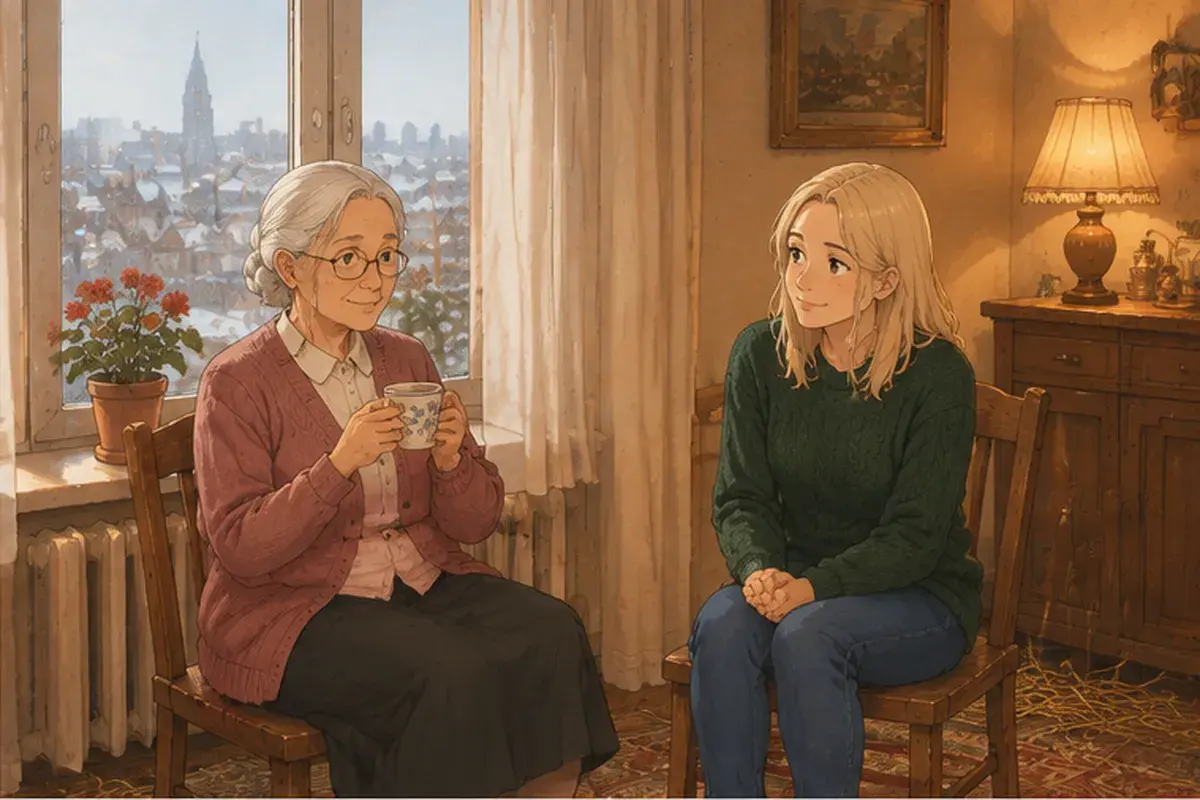
Лепота овог празника је у томе што нико не жури. Другим речима, овде је и сам ручак празник.
The beauty of this holiday is that nobody is in a hurry. In other words, here the lunch itself is a holiday.
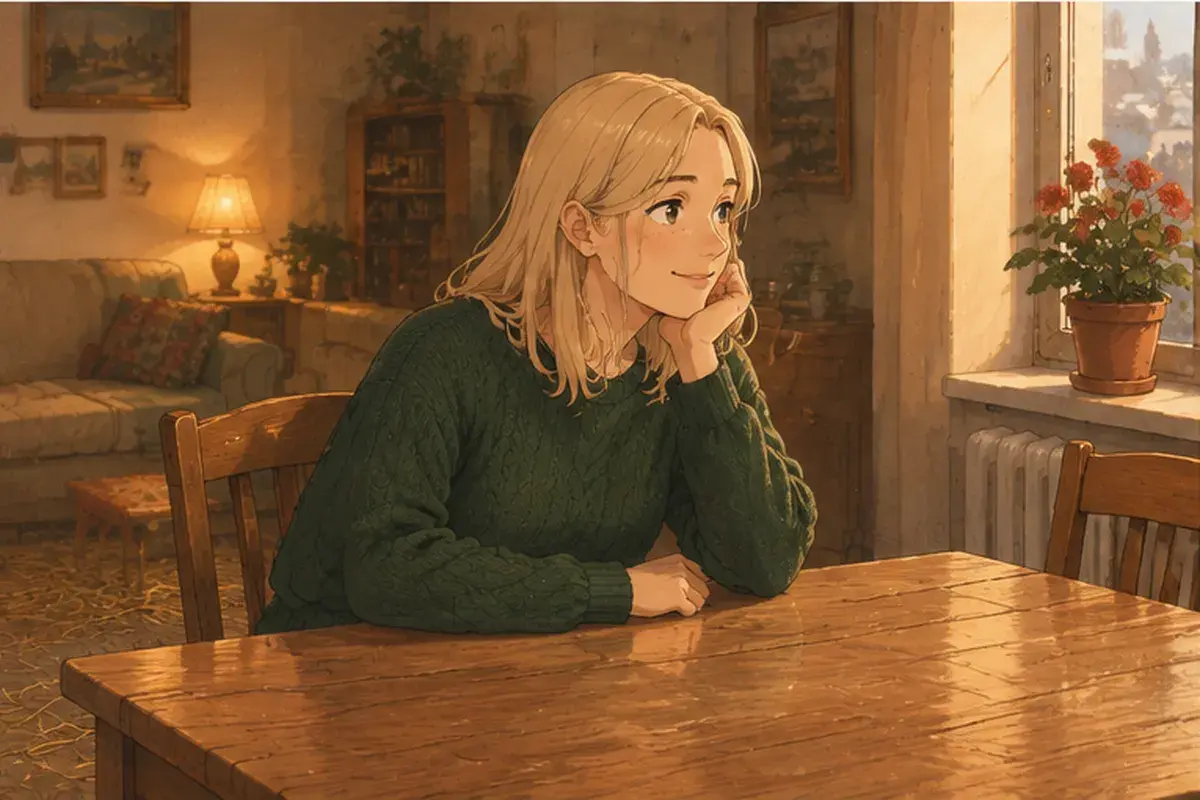
Седећи за Радмилиним столом, мислила сам на вас и на наше празнике. Било ми је лепо, али сам пожелела да сте и ви ту.
Sitting at Radmila's table, I thought of you and of our holidays (woman speaking, to several people). I felt good, but I wished you were here too (woman speaking, to several people).
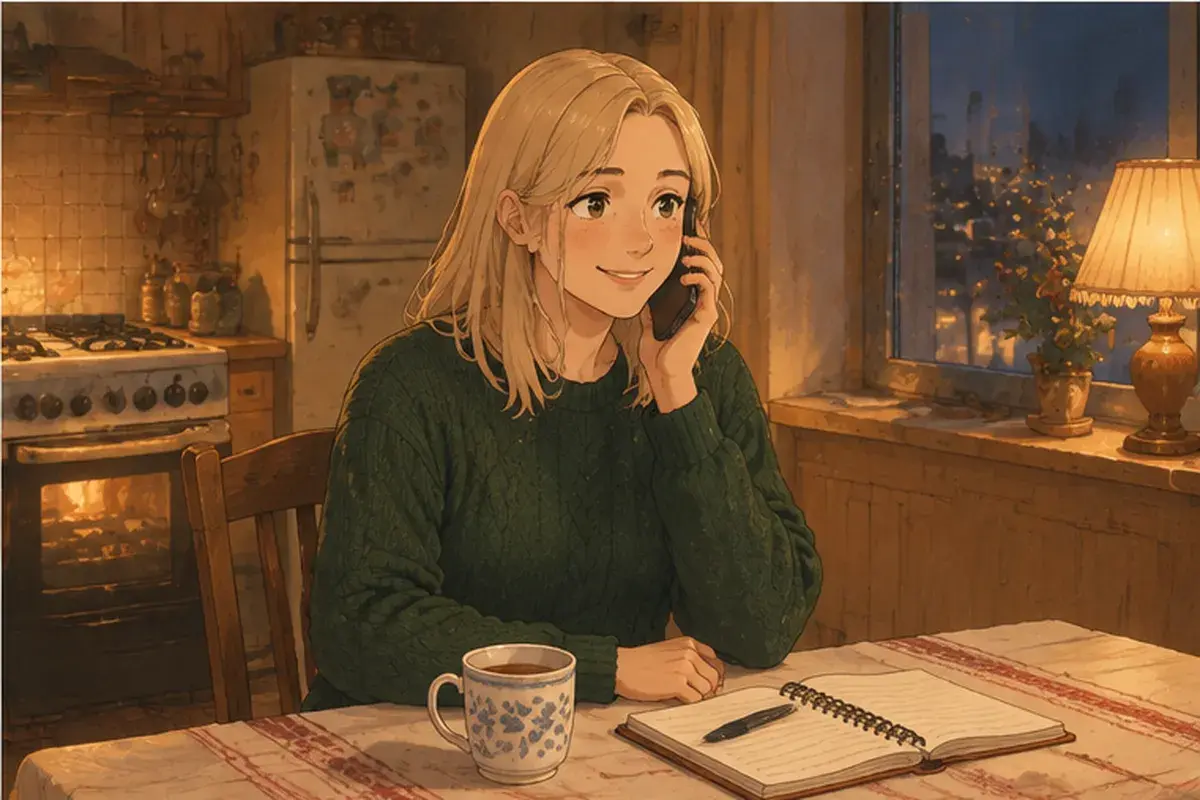
Велики пољубац вама и Кирилу, а кад будете имали времена, позовите ме.
A big kiss to you and Kiril, and when you have time, call me (to several people).
Ваша Ана
Yours, Ana
Grammar for this text
Седећи за Радмилиним столом, мислила сам на вас и на наше празнике.—седећиis the -ći form ofседети(они седе): "sitting". The person who is sitting is also the one who is thinking: Ana.Радмилинимmeans "Radmila's" (a possessive made from a name; the rule is in unit 21).мислила сам на васmeans "I thought of you".Стефан је скоро пола сата бирао бадњак, причајући са продавцем као са старим пријатељем.—причајућиcomes fromпричати(они причају): "chatting".бираоis imperfective (an ongoing action): the choosing went on for half an hour.бадњакis a branch (usually oak) that people bring into the house on Christmas Eve; it is a family custom.Радмила је само рекла: „Не питај ништа, Ано, него седи и једи.“— these are commands to one friend (the ti form):питај,седи,једи.Аноis the vocative (the form for calling someone; A2, unit 23): in English it is just "Ana". Afterнеcomesништа: the double negative is required in Serbian. A comma goes beforeнего.а у мом комаду је био новчић—новчићis the coin hidden in theчесница; by custom it brings luck.новчић носи срећу целе године—целе годинеis the genitive of time: "all year".уместо менеmeans "instead of me" (unit 4).Велики пољубац вама и Кирилу, а кад будете имали времена, позовите ме.—будете ималиmeans "when you have time": a ready-made polite phrase (see unit 15).позовитеis a polite command (the vi form).Кирилуis the dative ofКирил: "to Kiril".Драга мама, драги тата— the opening of a letter to family. To strangers you would writeПоштовани…and end withС поштовањем.Ваша Ана— the closing of a letter to family: "Yours, Ana".
Words and grammar of the unit: Celebrate New Year's and Christmas.
Learn the words from the texts with flashcards
In the app, you can tap any word in a text to see its translation, forms and examples, and new words stick with flashcards. 15 minutes a day.
Start for freeEverything is open for free. No card needed to sign up.