
Serbian story with translation · B1 · 15 lines
Сваки век је оставио свој слој Every century left its layer
Comic · 15 panels
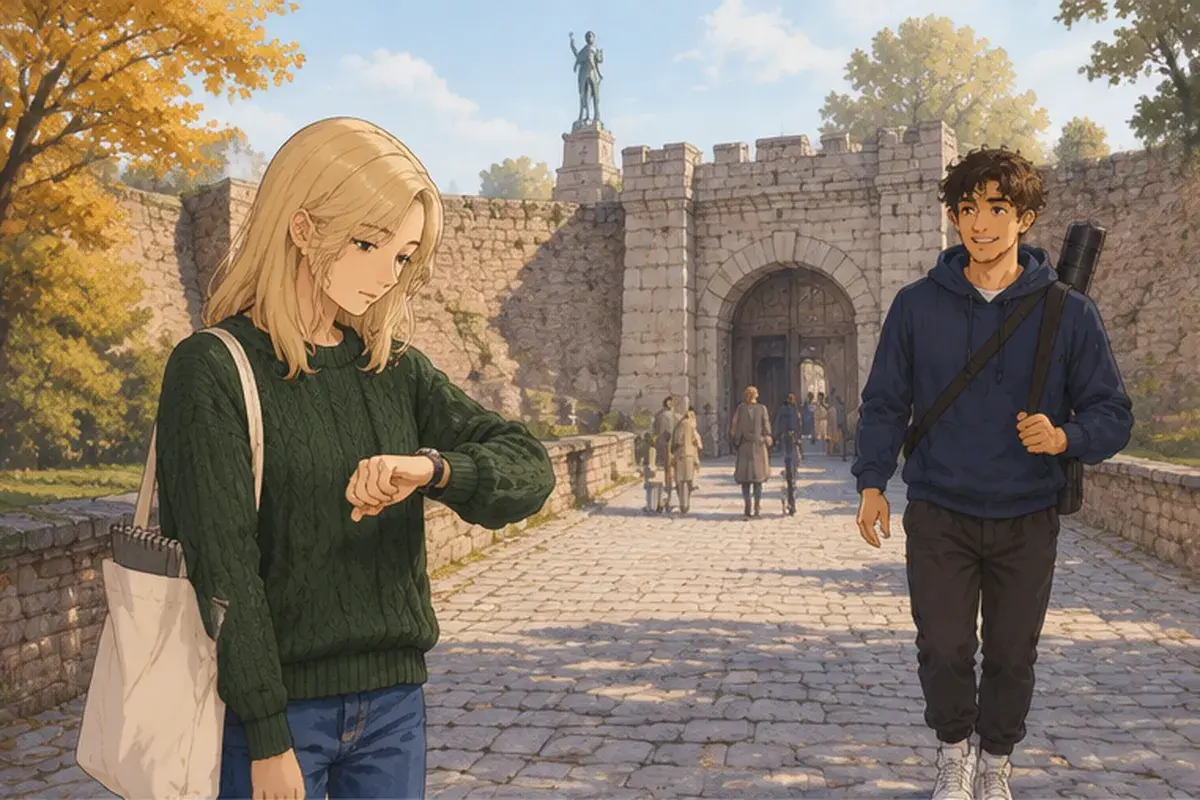
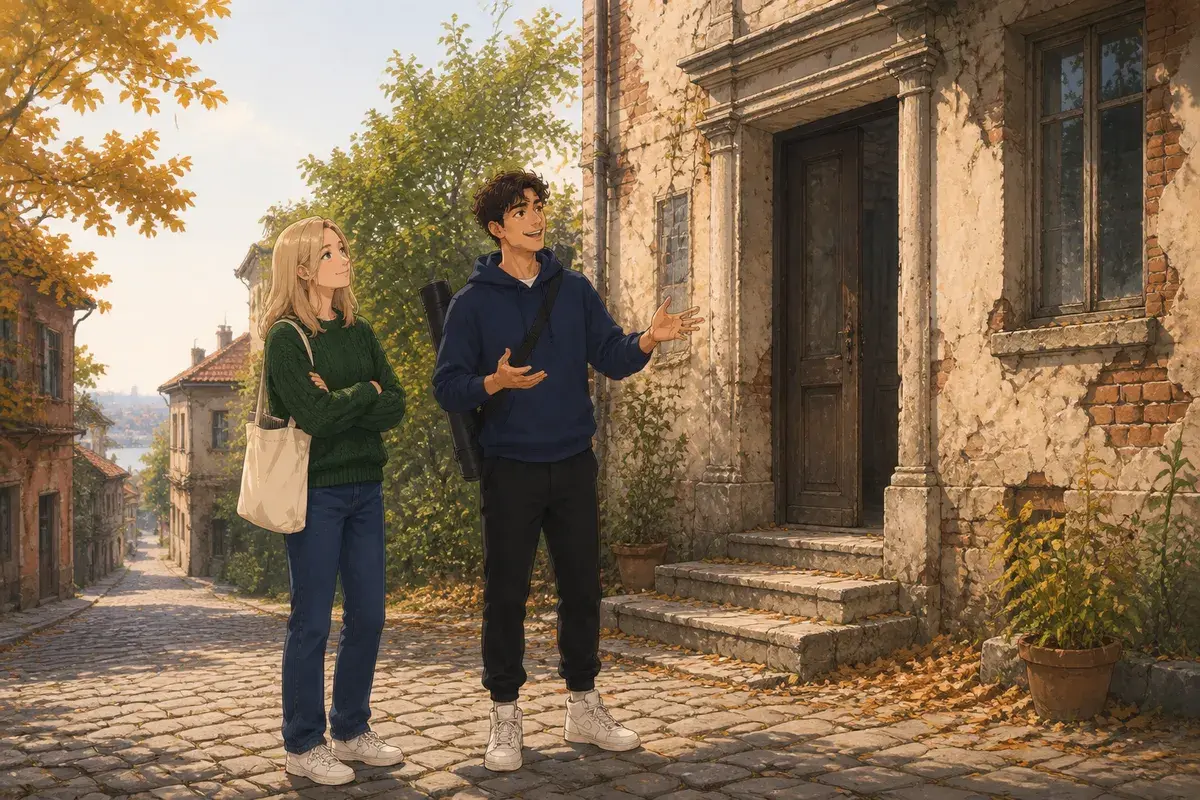
У суботу сам стајала код Калемегдана у десет, а Стефан је каснио. Кад је стигао, рекао је да је аутобус са Врачара ишао споро. Обећао је да ће ми показати стари Београд.
On Saturday at ten I was standing near Kalemegdan (woman speaking), and Stefan was late. When he arrived, he said the bus from Vračar had been going slowly. He promised to show me old Belgrade.
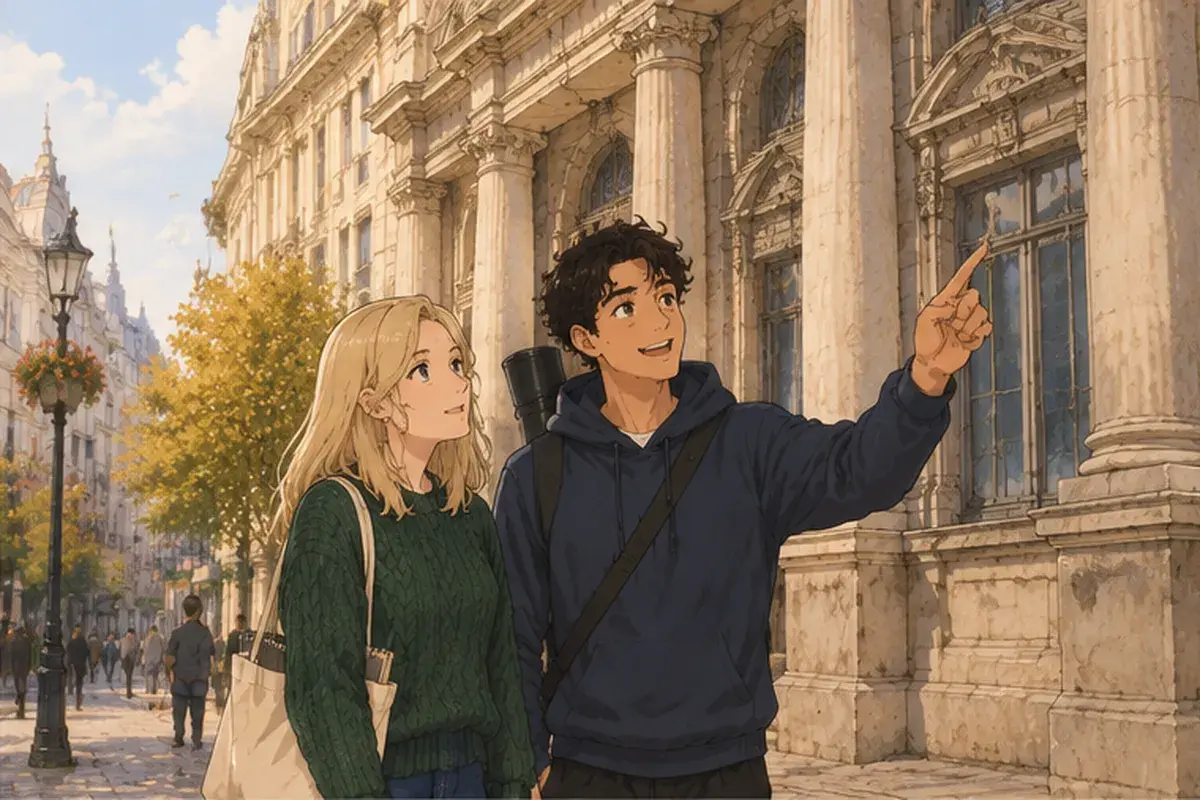
Прво ме је одвео до једне палате на Кнез Михаиловој. Њену фасаду су обновили пре неколико година.
First he took me to a palace on Knez Mihailova Street. They renovated its facade a few years ago.
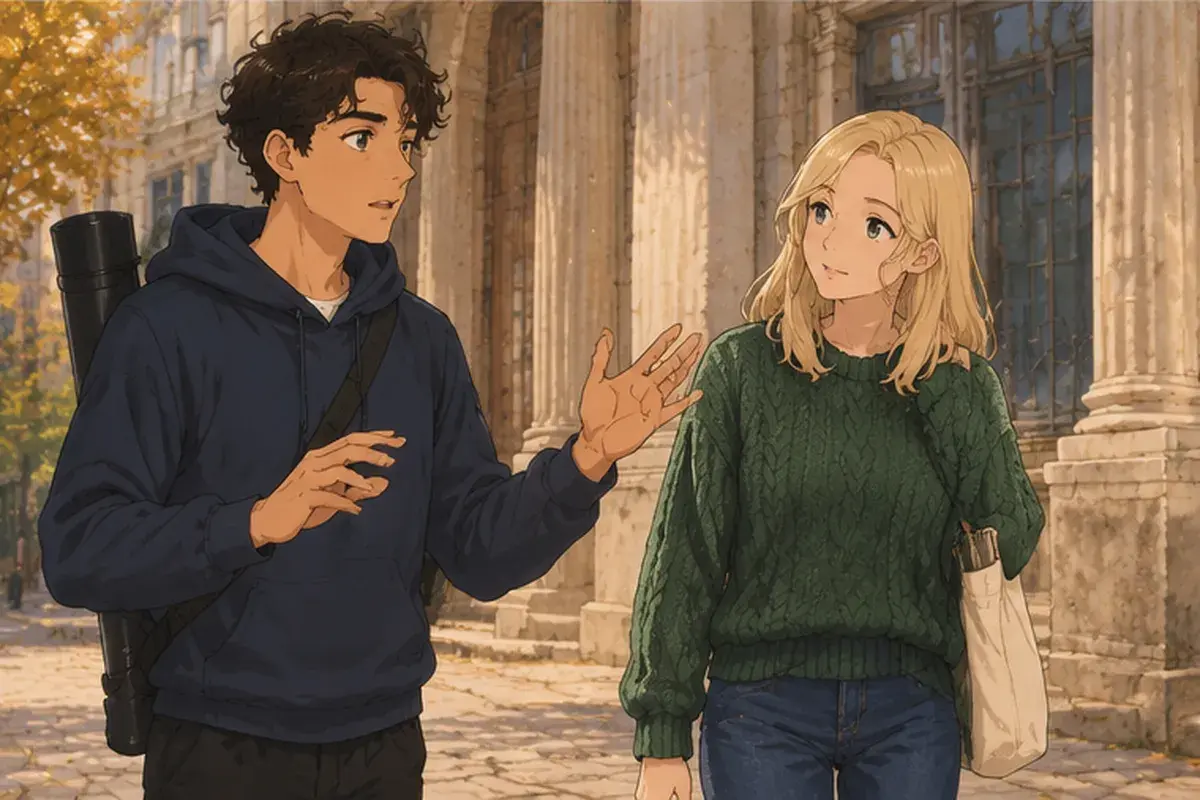
„Погледај стубове и прозоре“, рекао је Стефан. „Саградили су је у деветнаестом веку, а тада је стил био модеран.“
“Look at the columns and the windows,” Stefan said. “They built it in the nineteenth century, and the style was modern then.”
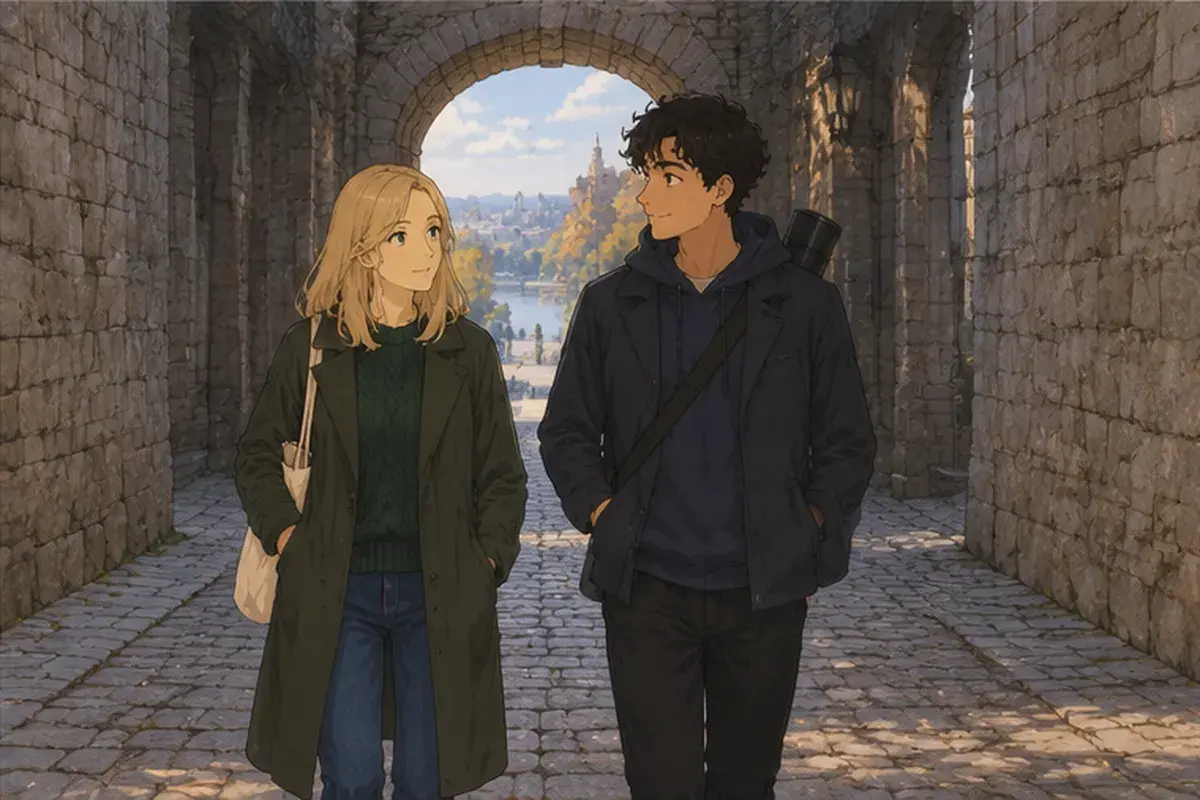
Затим смо ушли у тврђаву, где су зидине високе и хладне.
Then we went into the fortress, where the walls are high and cold.
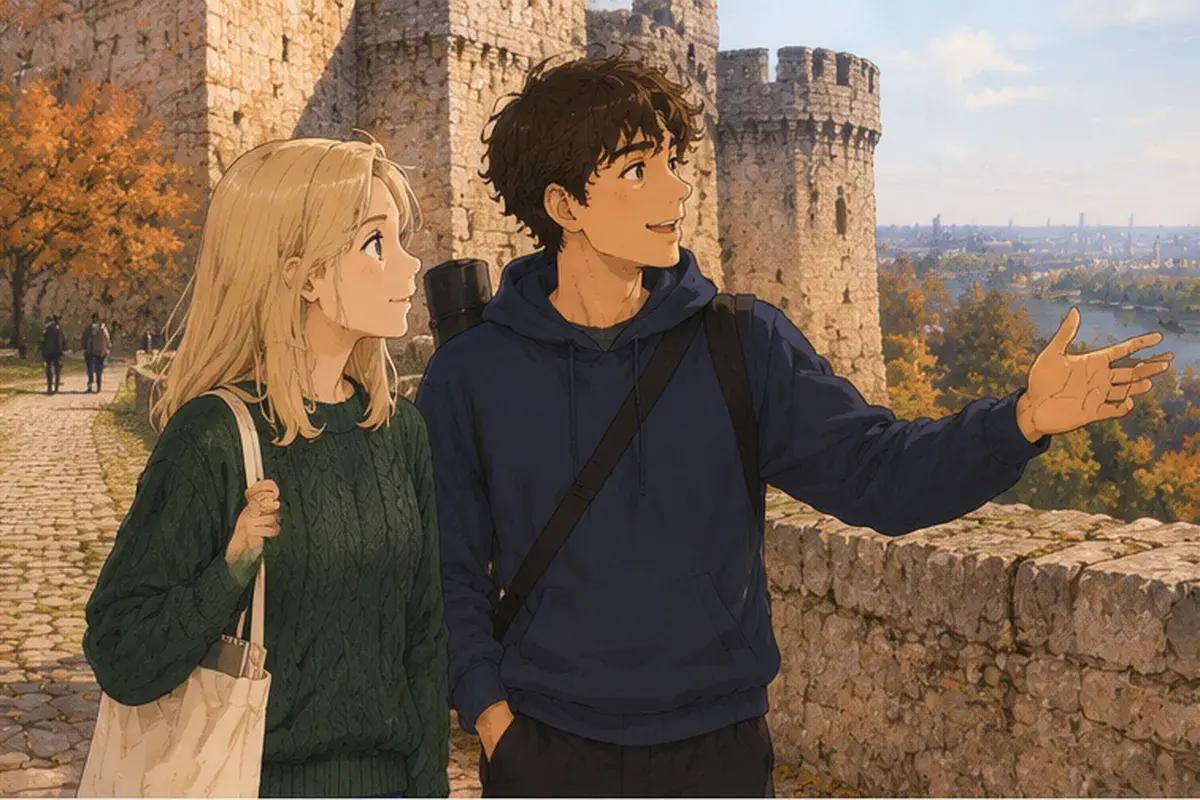
„Овде је пре скоро две хиљаде година био римски град Сингидунум“, рекао је он. „Касније је овде била и турска тврђава, а сваки век је оставио свој слој.“
“Almost two thousand years ago there was a Roman town here, Singidunum,” he said. “Later there was also a Turkish fortress here, and every century left its layer.”

Стефан каже да је град много пута срушен и поново саграђен.
Stefan says the city has been destroyed many times and built again.
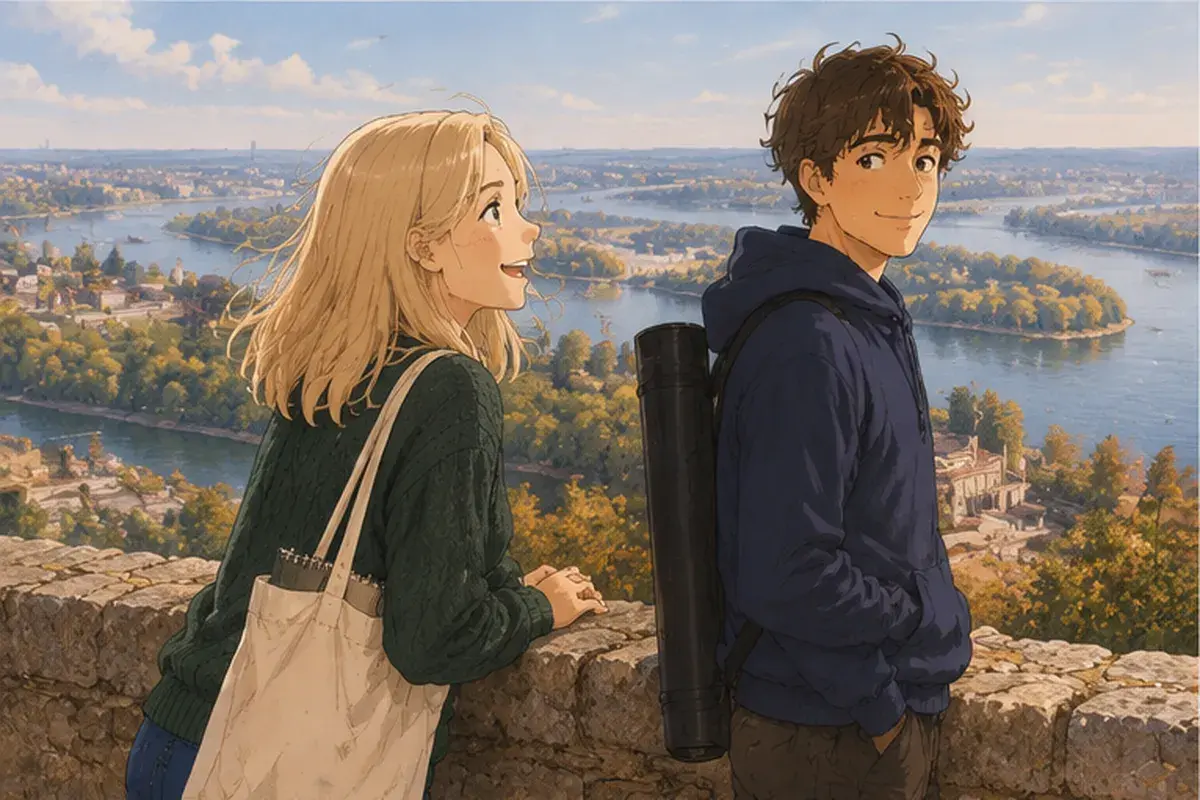
Са зидина смо посматрали ушће, где су се две реке спојиле у једну. Рекла сам да је поглед предиван, а Стефан је рекао да идемо даље, јер нас чека Дорћол.
From the walls we watched the confluence, where two rivers joined into one. I said the view was wonderful, and Stefan said we should move on, because Dorćol was waiting for us (woman speaking).
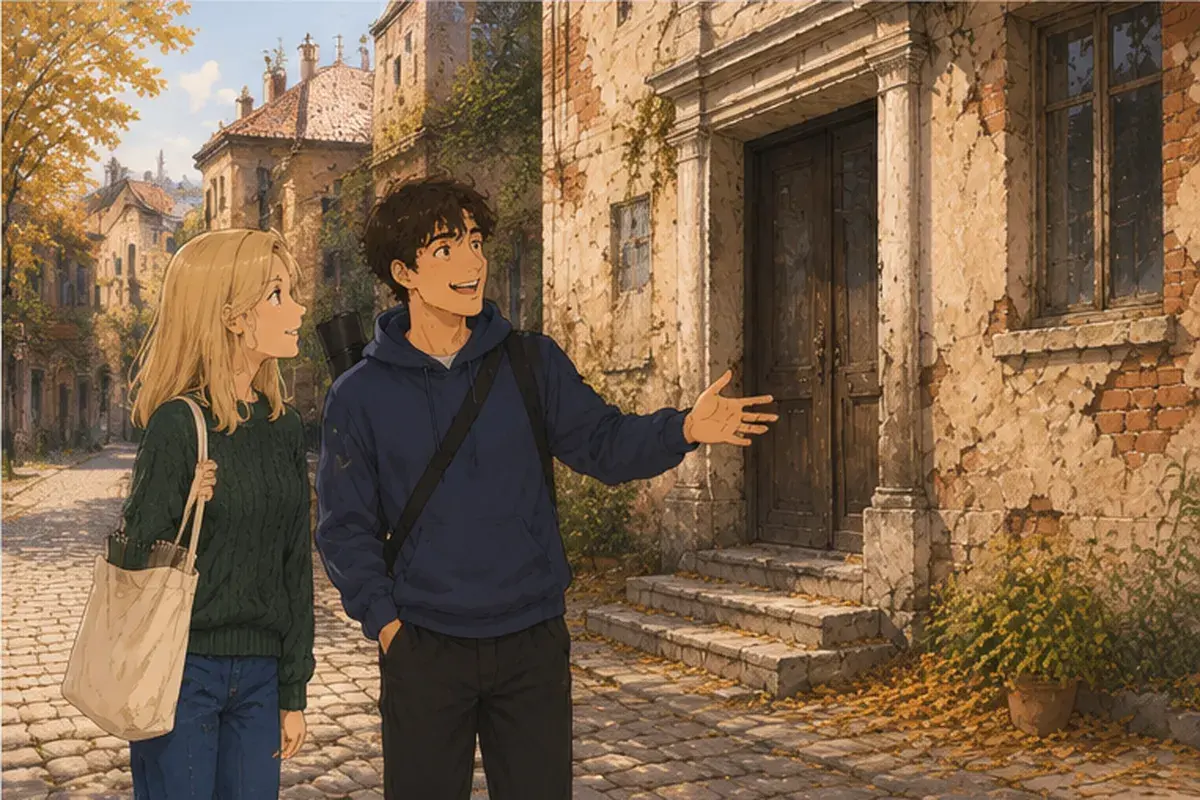
Затим смо сишли на Дорћол, до куће која је више личила на рушевину него на дом. „Ево је, зар није прелепа?“ питао је Стефан.
Then we went down to Dorćol, to a house that looked more like a ruin than a home. “Here it is, isn't it gorgeous?” Stefan asked.
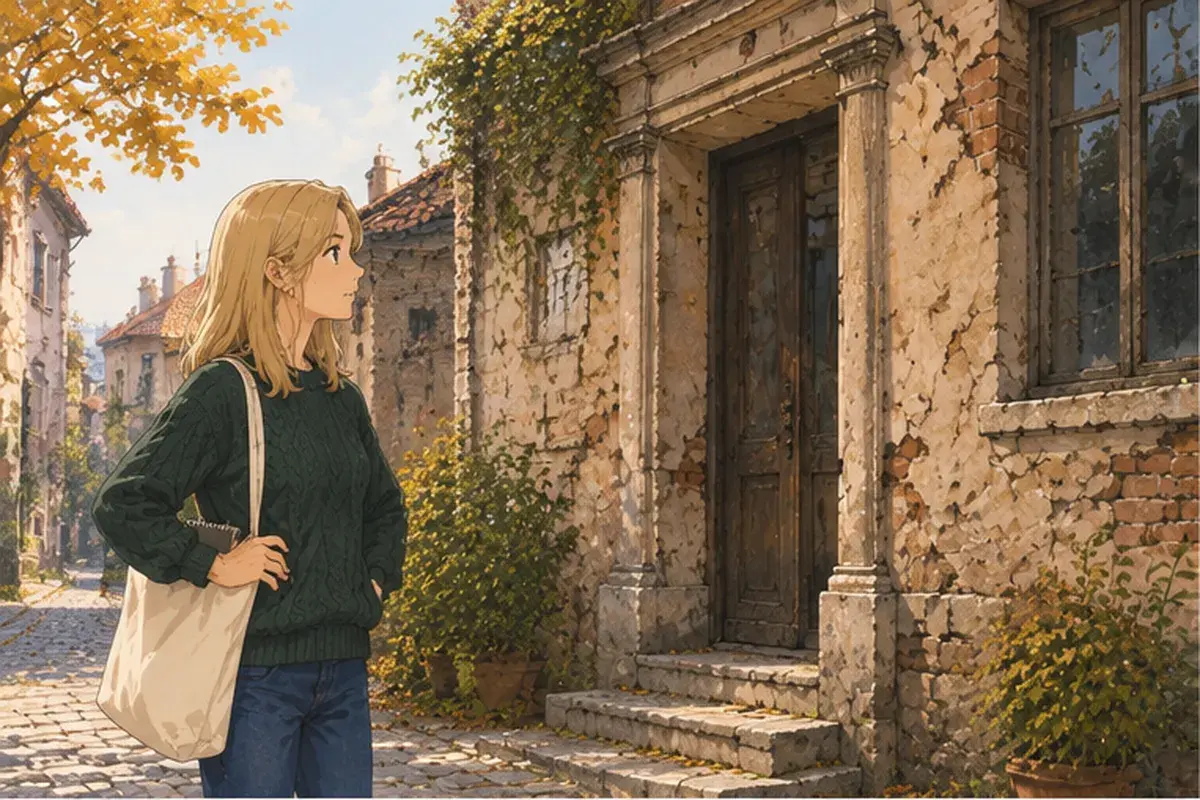
„Стефане, ово није прелепа кућа“, рекла сам искрено, „ово је обична рушевина.“
“Stefan, this isn't a gorgeous house,” I said honestly, “this is just a ruin.” (woman speaking)
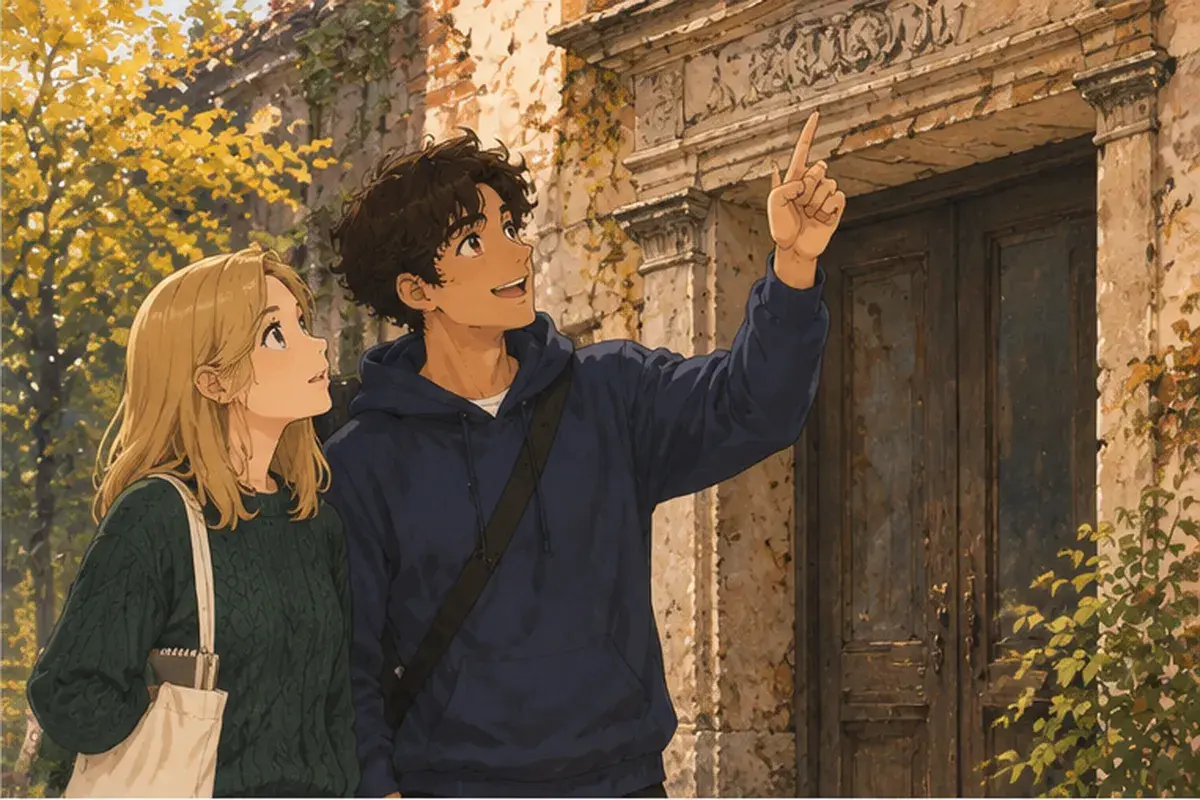
Стефан се насмејао и показао ми натпис над вратима, стар више од сто година. То је кућа чији је сваки власник додао нешто своје, па се на фасади виде три разна стила.
Stefan laughed and showed me an inscription above the door, more than a hundred years old. It's a house whose every owner added something of their own, so you can see three different styles on the facade.
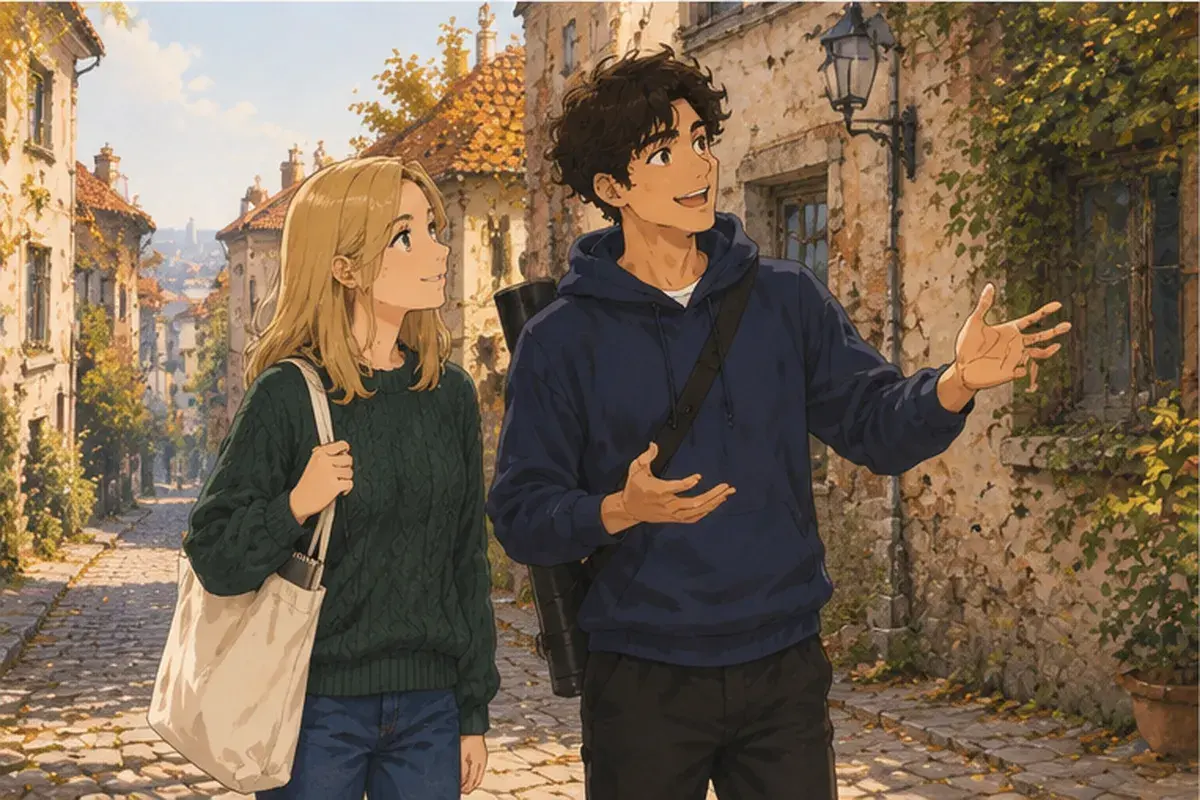
„Реч Дорћол је турска и значи раскрсница четири пута“, рекао је Стефан. „Овде је некад била чаршија, а многи занати су имали своје улице.“
“The word Dorćol is Turkish and means the crossroads of four roads,” Stefan said. “There used to be a čaršija here, and many crafts had their own streets.”
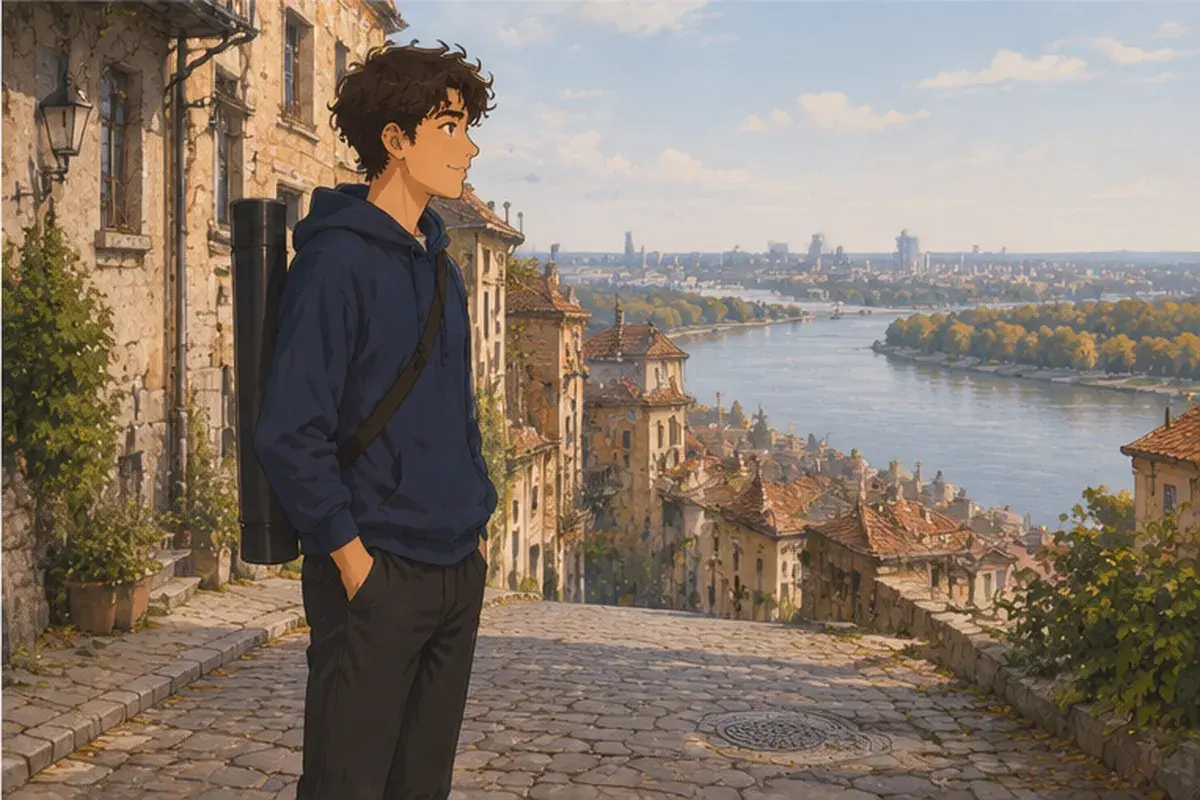
„Занатлије су овде радили и живели, а трговина је ишла према Дунаву.“
“Craftsmen worked and lived here, and trade went toward the Danube.”
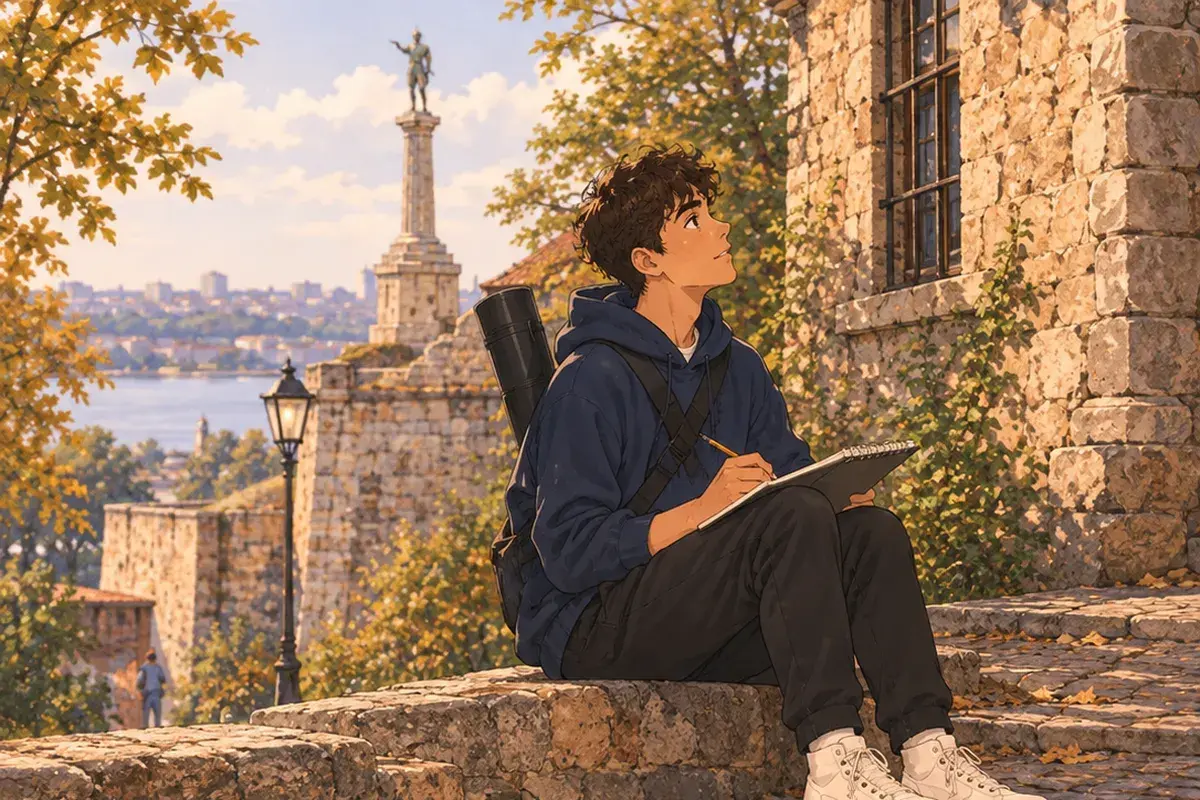
Стефан ће једног дана бити архитекта, а сада пише о овим кућама за факултет. Хоће да их нацрта и опише пре него што их неко сруши.
One day Stefan will be an architect, and for now he's writing about these houses for college. He wants to draw and describe them before somebody tears them down.
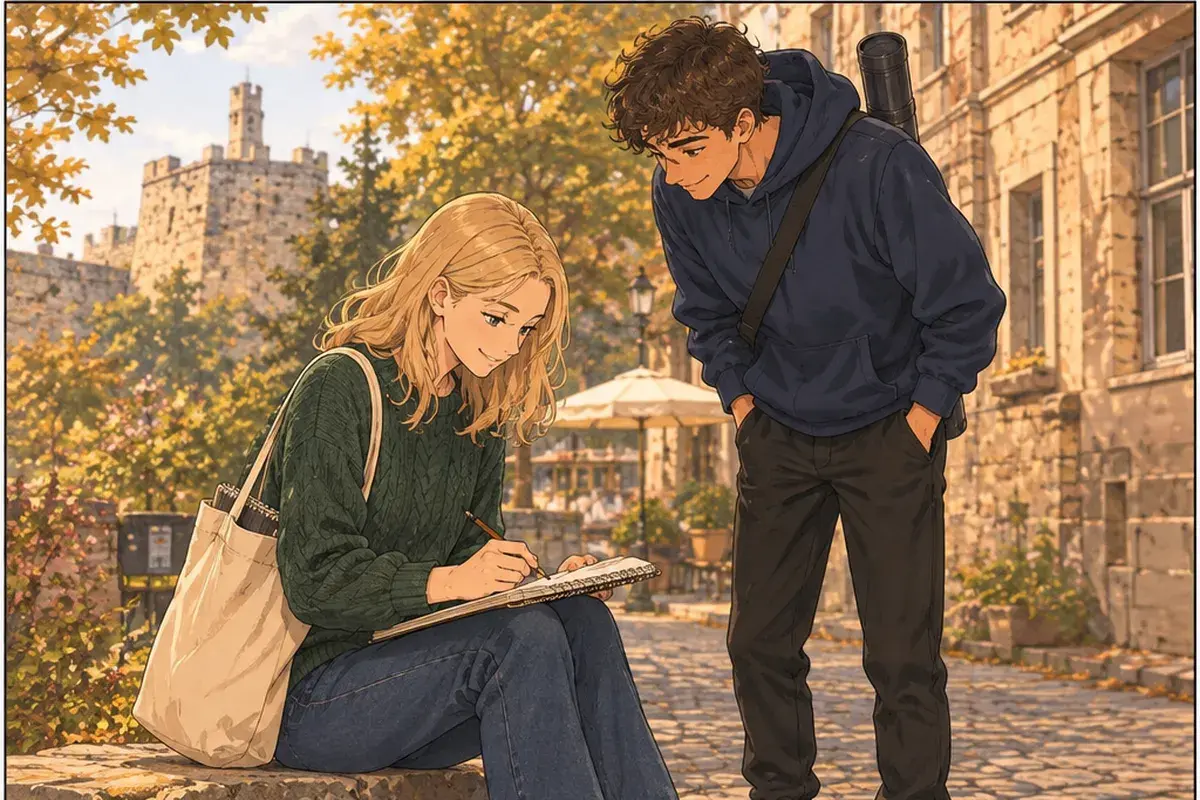
Узела сам папир и, седећи на камену, нацртала кућу са натписом. Стефан је рекао да ће мој цртеж показати професору.
I took a piece of paper and, sitting on a stone, drew the house with the inscription (woman speaking). Stefan said he'd show my drawing to his professor.
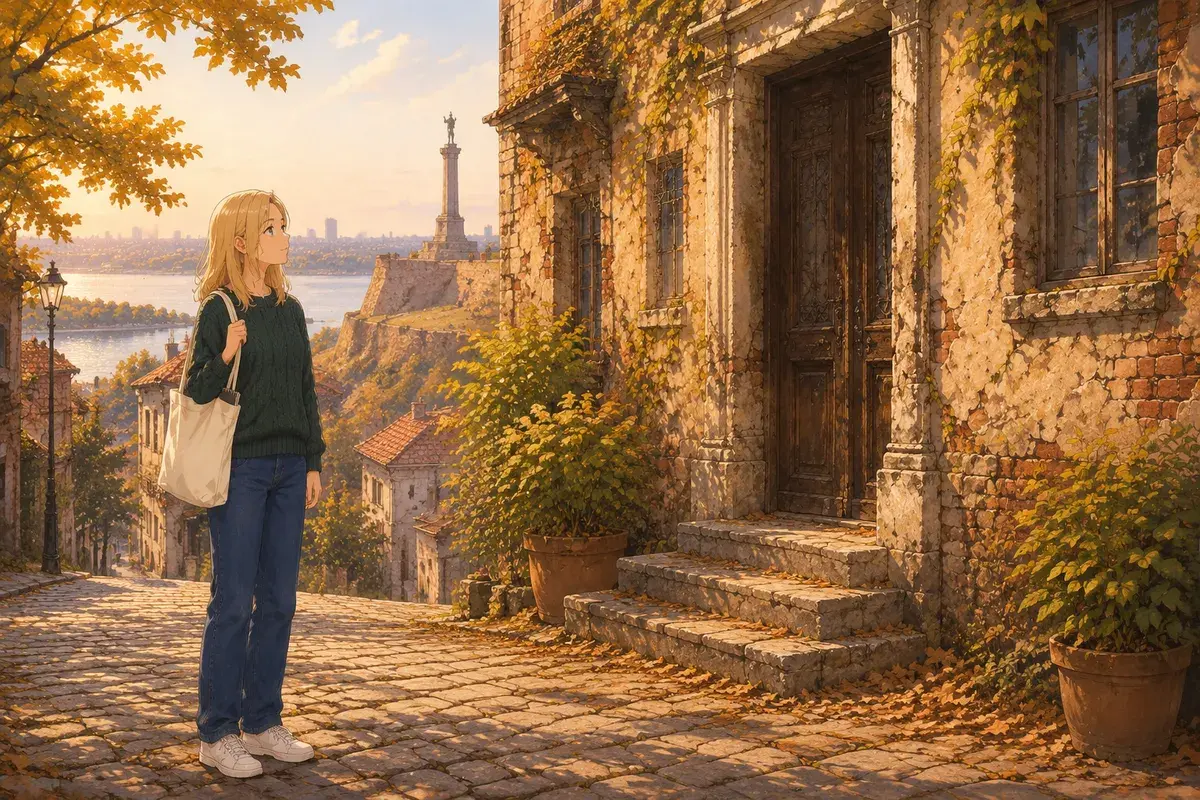
Сада кад пролазим поред те куће, више не видим рушевину, него део прошлости који још стоји.
Now when I walk past that house, I no longer see a ruin, but a piece of the past that still stands.
Grammar for this text
Обећао је да ће ми показати стари Београд.—обећати да+ future:да ће ми показатиmeans “that he would show me”. The short unstressed words (clitics)ћеandмиcome right afterда, and there is no comma beforeда“that”.стари Београдis the long adjective form: “the old Belgrade”, the one everyone means (see the note in the unit grammar).Ево је, зар није прелепа?—ево јеmeans “here it is”:јеis “it, her” (aboutкућу), not the verb “is”.зар нијеmeans “isn't it…?”: a question that expects the answer “yes”.Саградили су је у деветнаестом веку, а тада је стил био модеран.—јеafterсуis not a verb but “it, her” (aboutпалату): “they built it”.у деветнаестом векуis an ordinal number in the locative (see the block on centuries).Стефан каже да је град много пута срушен и поново саграђен.—срушенandсаграђенare passive participles (“destroyed”, “built”), likeотворено(“open”) on signs. Unit 8 covers them; we ourselves say “they destroyed and built”.где су се две реке спојиле у једну—спојити сеmeans “to join, to merge”.спојилеis the feminine plural form (две реке). The clitics go in this order:су, thenсе.Реч Дорћол је турска и значи раскрсница четири пута— a trap:четири путаusually means “four times”, but hereпутis “road”: “a crossroads of four roads”.пре него што их неко сруши—пре него што+ a perfective verb: “before somebody tears them down” (unit 6).
Words and grammar of the unit: Take a walk through old Belgrade.
Learn the words from the texts with flashcards
In the app, you can tap any word in a text to see its translation, forms and examples, and new words stick with flashcards. 15 minutes a day.
Start for freeEverything is open for free. No card needed to sign up.