

Serbian dialogue with translation · B1 · 12 lines
Ово је добра зграда, само се све чује кроз зидове This is a good building, you can just hear everything through the walls
Comic · 12 panels
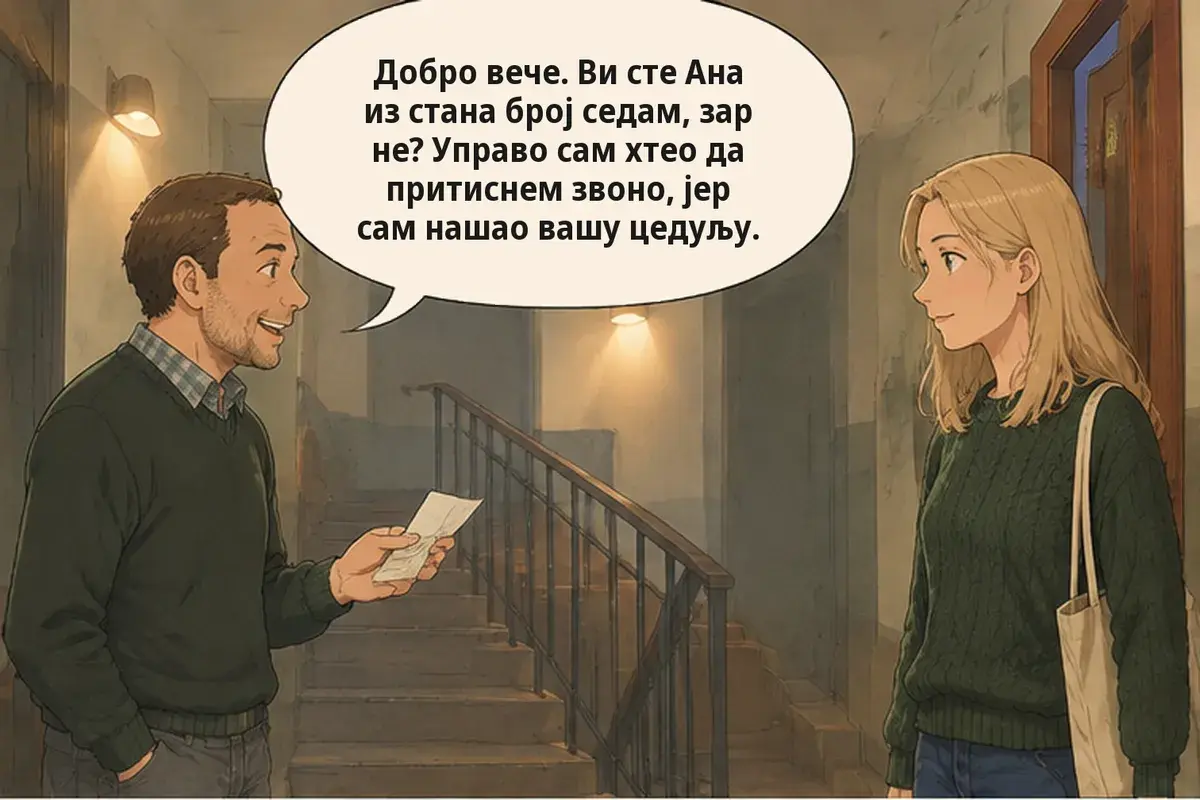
- Комшија
Добро вече. Ви сте Ана из стана број седам, зар не? Управо сам хтео да притиснем звоно, јер сам нашао вашу цедуљу.
Good evening. You're Ana from apartment number seven, right? I was just about to ring the bell, because I found your note (man speaking, formal).
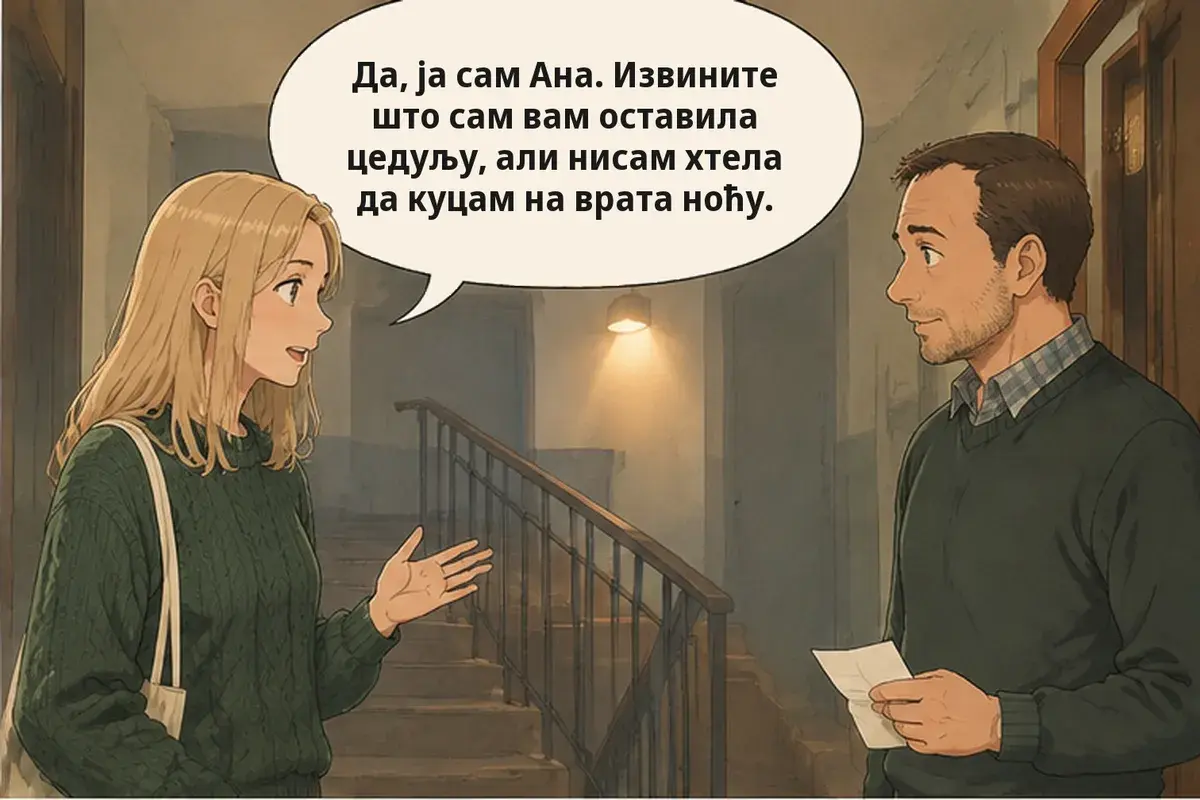
- Ана
Да, ја сам Ана. Извините што сам вам оставила цедуљу, али нисам хтела да куцам на врата ноћу.
Yes, I'm Ana. Sorry for leaving you a note, but I didn't want to knock on the door at night (woman speaking, formal).
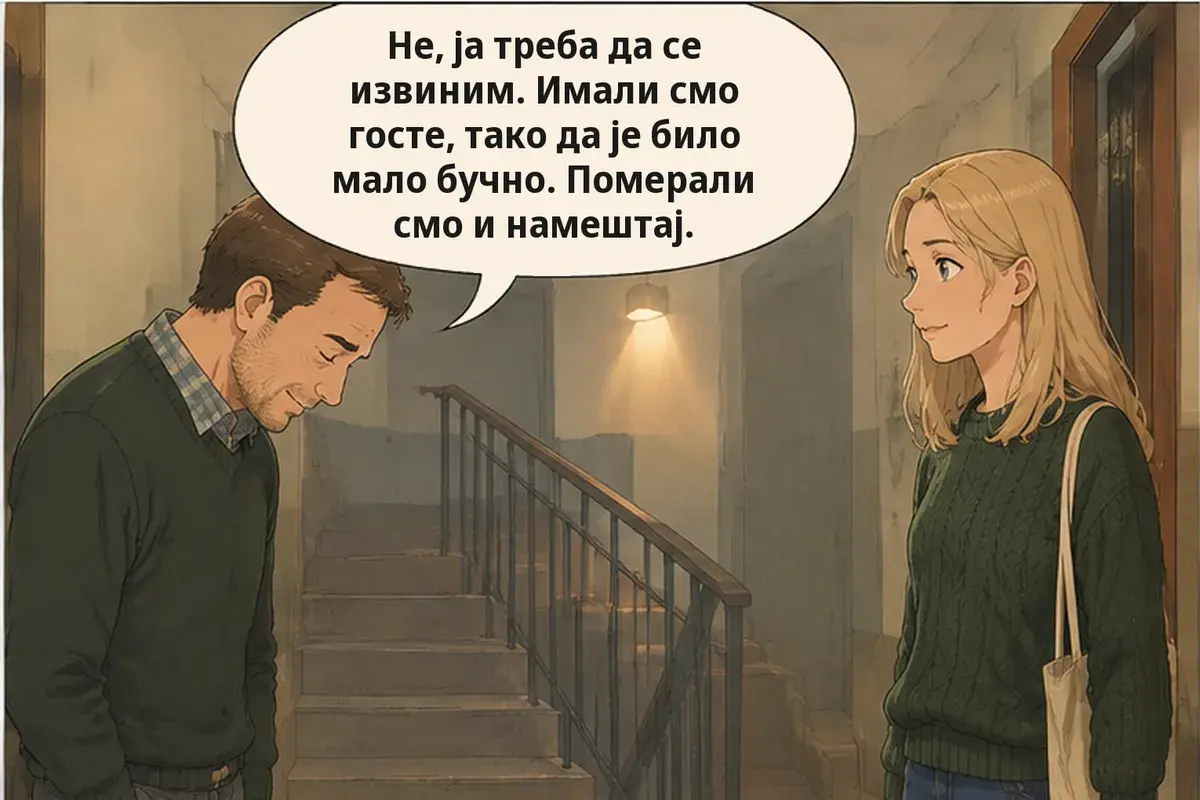
- Комшија
Не, ја треба да се извиним. Имали смо госте, тако да је било мало бучно. Померали смо и намештај.
No, I'm the one who should apologize. We had guests, so it was a little noisy. We also moved furniture around.
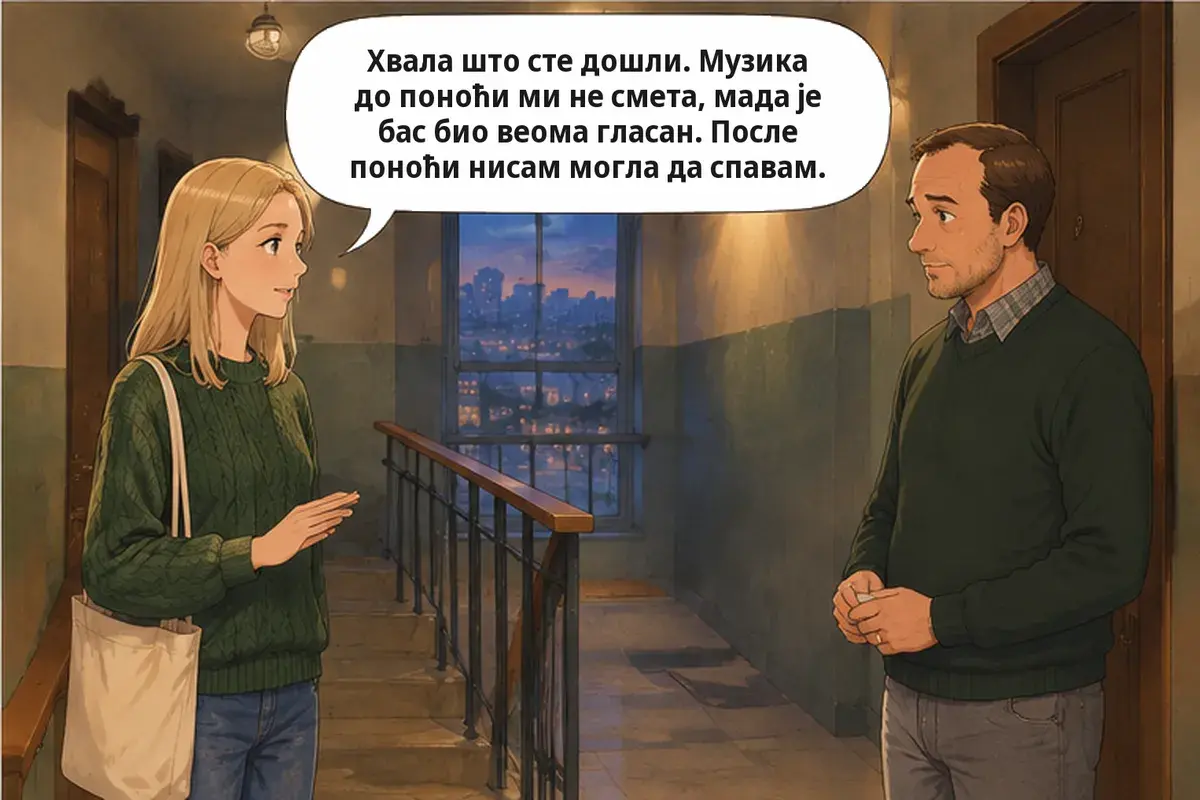
- Ана
Хвала што сте дошли. Музика до поноћи ми не смета, мада је бас био веома гласан. После поноћи нисам могла да спавам.
Thanks for coming (formal). Music until midnight doesn't bother me, though the bass was very loud. After midnight I couldn't sleep (woman speaking).
- Комшиница
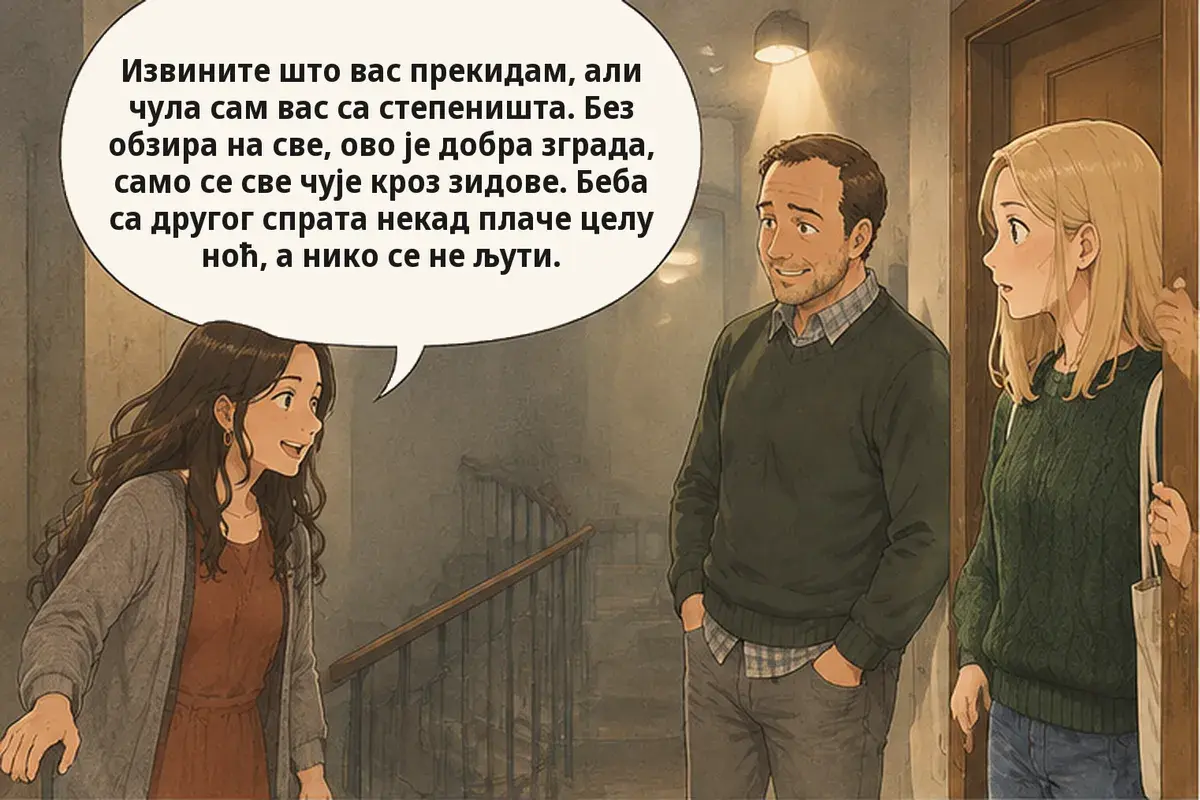
Извините што вас прекидам, али чула сам вас са степеништа. Без обзира на све, ово је добра зграда, само се све чује кроз зидове. Беба са другог спрата некад плаче целу ноћ, а нико се не љути.
Sorry to interrupt you, but I heard you from the stairs (woman speaking, to several people). No matter what, this is a good building, you can just hear everything through the walls. The baby from the third floor sometimes cries all night, and nobody gets angry.

- Ана
Бебу не могу да молим за тишину, а вас могу. Зато сам одлучила да прво лепо замолим, а не да се љутим.
I can't ask a baby for silence, but I can ask you (formal). That's why I decided to ask nicely first, and not to get angry (woman speaking).
- Комшија
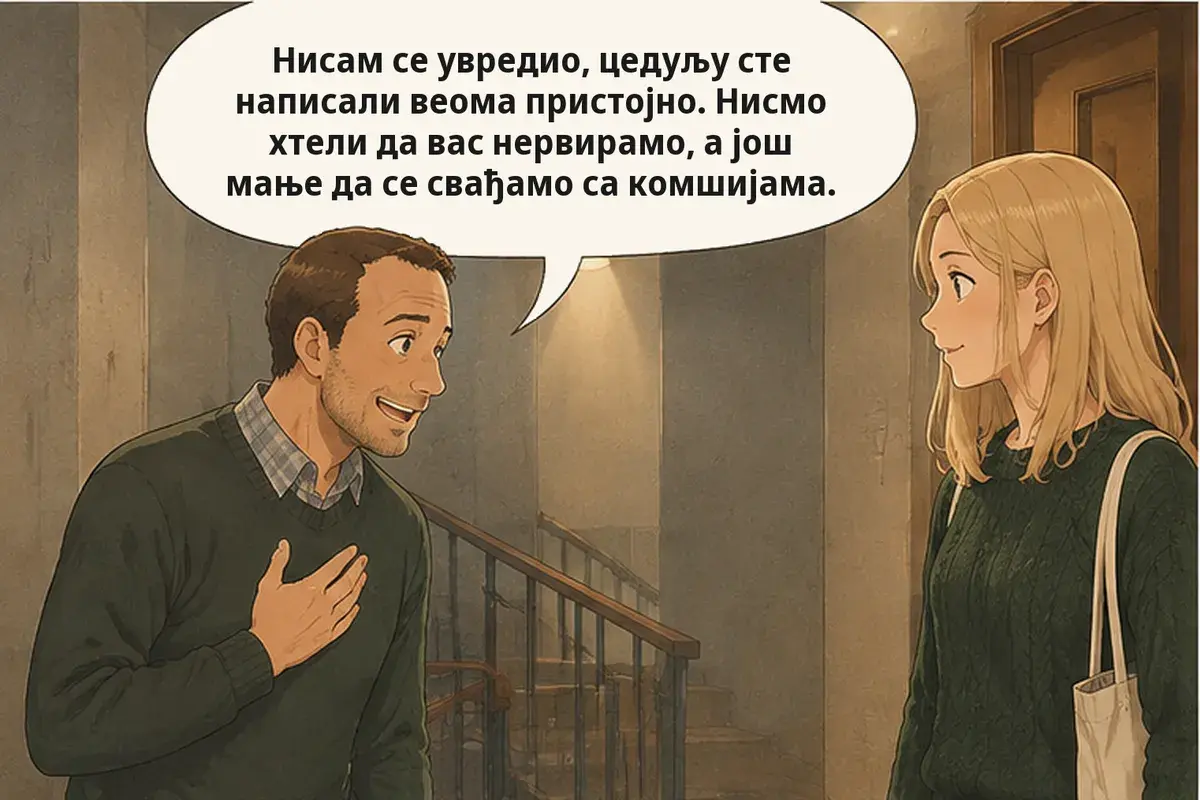
Нисам се увредио, цедуљу сте написали веома пристојно. Нисмо хтели да вас нервирамо, а још мање да се свађамо са комшијама.
I'm not offended, you wrote the note very politely (man speaking, formal). We didn't want to annoy you, let alone argue with the neighbors.
- Комшиница
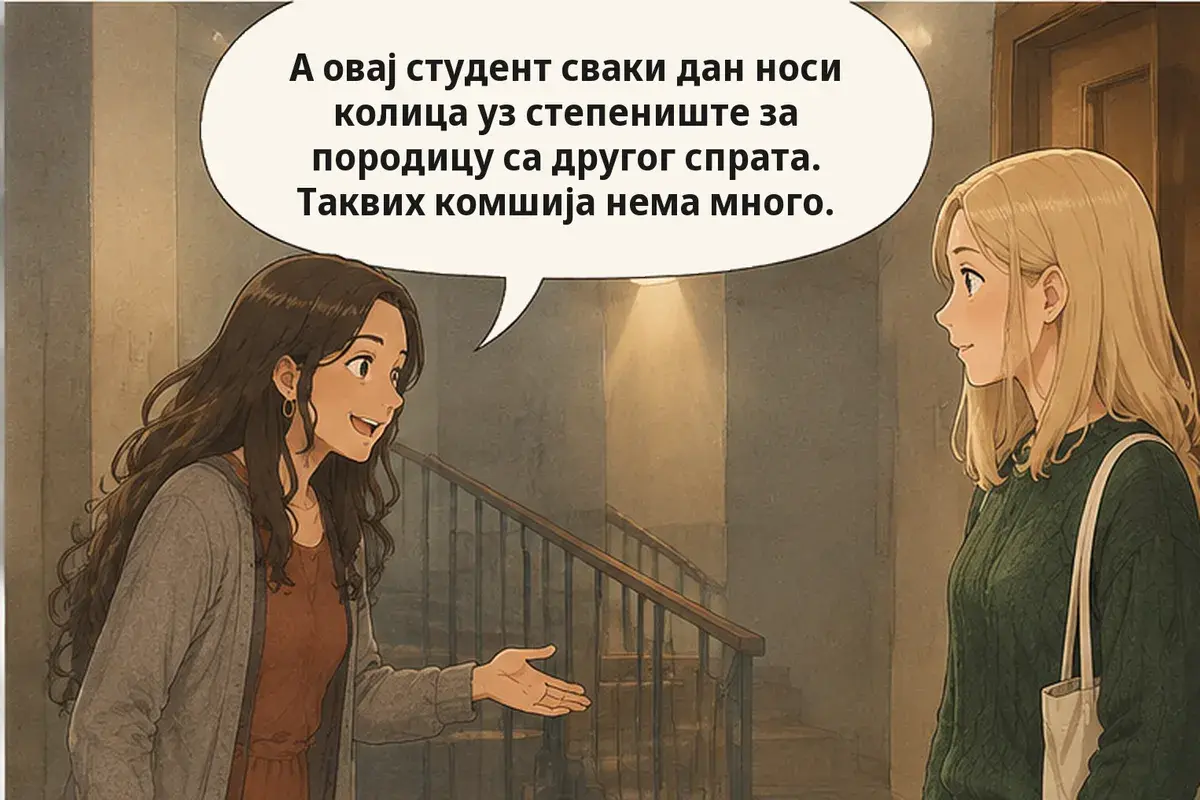
А овај студент сваки дан носи колица уз степениште за породицу са другог спрата. Таквих комшија нема много.
And this student carries the stroller up the stairs every day for the family on the third floor. There aren't many neighbors like that.
- Ана
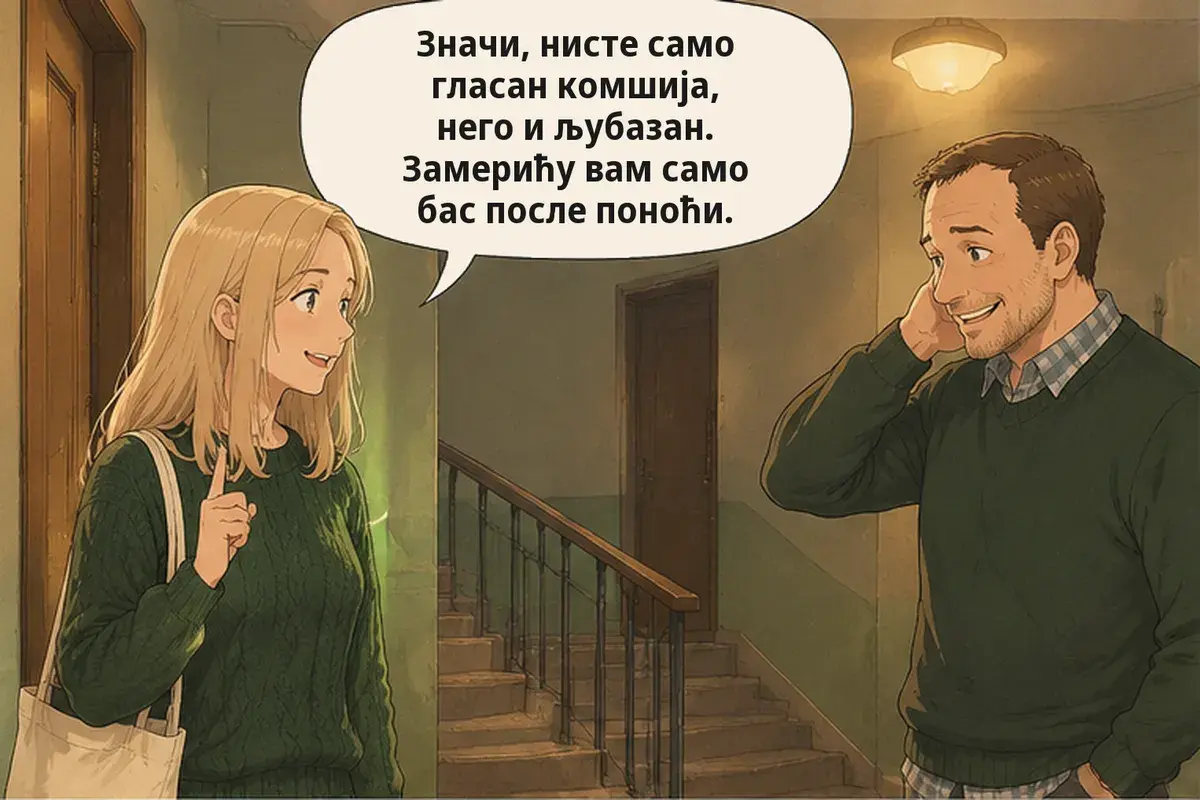
Значи, нисте само гласан комшија, него и љубазан. Замерићу вам само бас после поноћи.
So you're not just a loud neighbor, but a kind one too. The only thing I'll hold against you is the bass after midnight (to a man, formal).
- Комшија
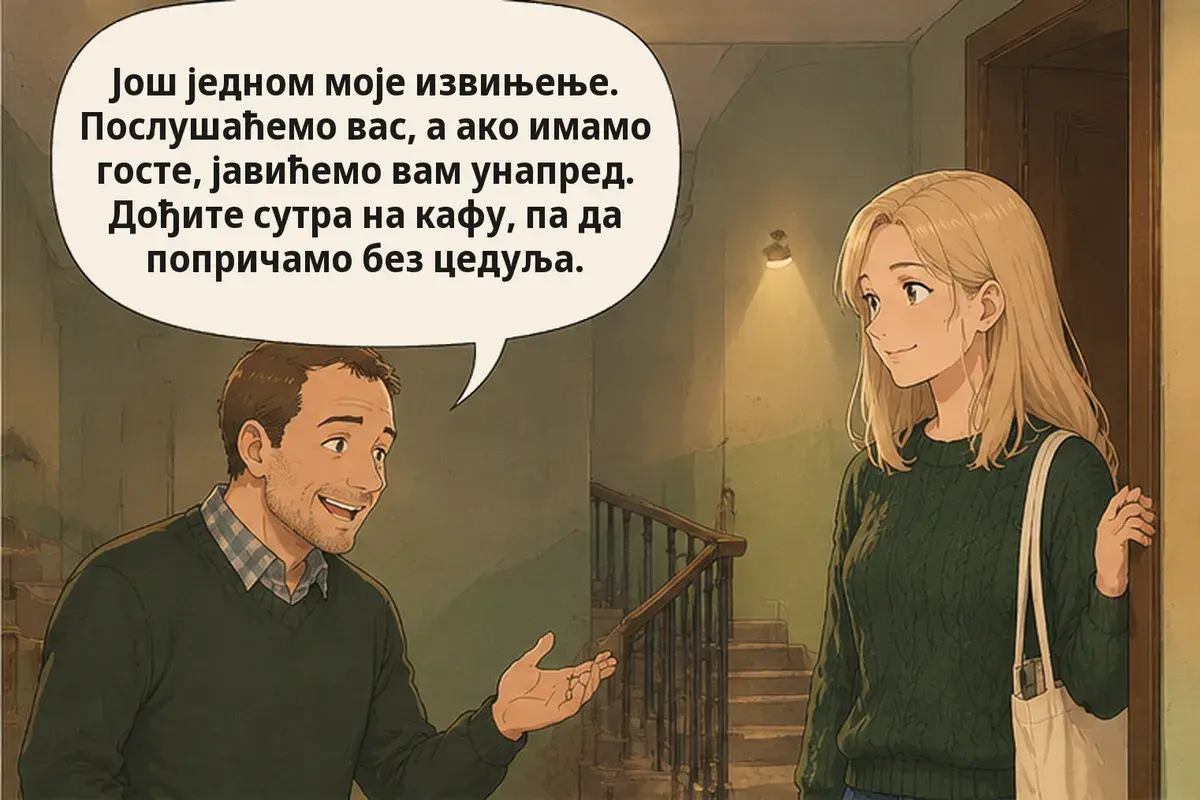
Још једном моје извињење. Послушаћемо вас, а ако имамо госте, јавићемо вам унапред. Дођите сутра на кафу, па да попричамо без цедуља.
Once again, my apologies. We'll listen to you, and if we have guests, we'll let you know in advance. Come over for coffee tomorrow, so we can have a talk without notes (formal).

- Ана
Радо ћу доћи сутра у шест. Тридесет првог децембра и ја имам госте, па вас унапред молим за разумевање.
I'll gladly come tomorrow at six. On December thirty-first I'm having guests too, so I'm asking you for understanding in advance (formal).

- Комшиница
Нисте се свађали, него сте се помирили за пет минута. Видите да и први сусрет на степеништу може да буде леп.
You didn't argue, you made up in five minutes (to several people). You see, even a first meeting on the stairs can be nice.
Grammar for this text
Извините што вас прекидам, али чула сам вас са степеништа.: this is the polite way to cut in:Извините што вас прекидам(sorry to interrupt you). There's no comma beforeшто, but there is one beforeали.степеништаis the genitive ofстепениште(stairwell) afterса(from).Без обзира на све, ово је добра зграда, само се све чује кроз зидове.:без обзира наmeans "regardless of", and the accusative follows it:на све.Без обзира на свеmeans "no matter what". The phrase comes first, so a comma follows it.се све чујеmeans "you can hear everything": the impersonalсе(unit 8).кроз зидовеmeans "through the walls".Бебу не могу да молим за тишину, а вас могу.:молити за+ accusative means "to ask for something". In the second partмогуstands alone, without repeating the rest: "but I can ask you".Нисам се увредио, цедуљу сте написали веома пристојно.:увредити сеmeans "to be offended";увредиоis the masculine -o/-la form, so the speaker is a man.пристојноmeans "politely". Ana is one person, butсте написалиis plural: with the formalви, the -o/-la form takes the plural ending, even for one person.Замерићу вам само бас после поноћи.:замеритиmeans "to hold something against someone";замерићуis the future (I'll hold it against), andвамis the dative (you). It's a joke: Ana forgives everything except the bass after midnight.Послушаћемо вас, а ако имамо госте, јавићемо вам унапред.:послушаћемоis the future ofпослушати(to listen to, to do as someone says). Theакоpart comes first in its half, so a comma follows it. There's also a comma beforeа.Нисте се свађали, него сте се помирили за пет минута.:свађати се(to argue) is imperfective, an ongoing action;помирити се(to make up) is perfective, one finished action with a result.негоcomes after a negative: "not ..., but ...".
Words and grammar of the unit: Complain politely to your neighbors.
Learn the words from the texts with flashcards
In the app, you can tap any word in a text to see its translation, forms and examples, and new words stick with flashcards. 15 minutes a day.
Start for freeEverything is open for free. No card needed to sign up.