

Serbian dialogue with translation · B1 · 15 lines
Купац жели да поручи бурек у три корака The customer wants to order burek in three steps
Comic · 15 panels
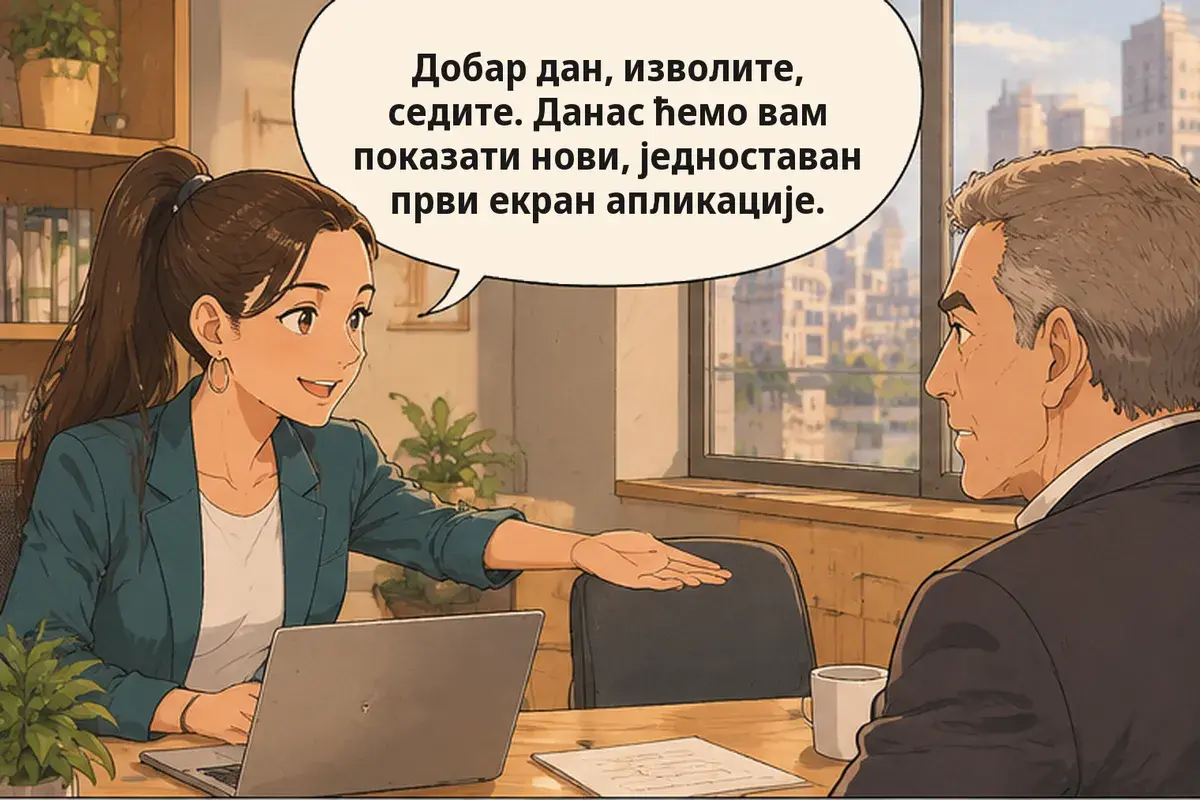
- Милица
Добар дан, изволите, седите. Данас ћемо вам показати нови, једноставан први екран апликације.
Good afternoon, please, have a seat (formal). Today we'll show you the new, simple first screen of the app (formal).
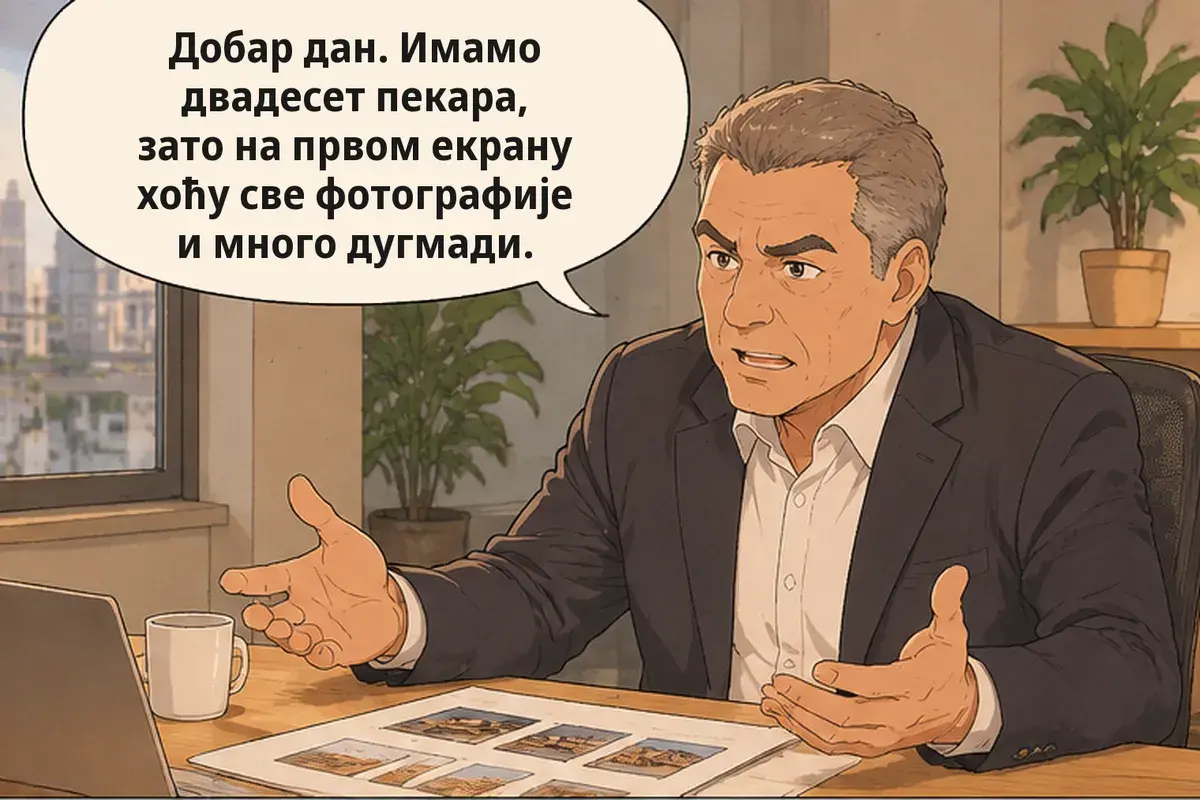
- Клијент
Добар дан. Имамо двадесет пекара, зато на првом екрану хоћу све фотографије и много дугмади.
Good afternoon. We have twenty bakeries, so on the first screen I want all the photos and lots of buttons.
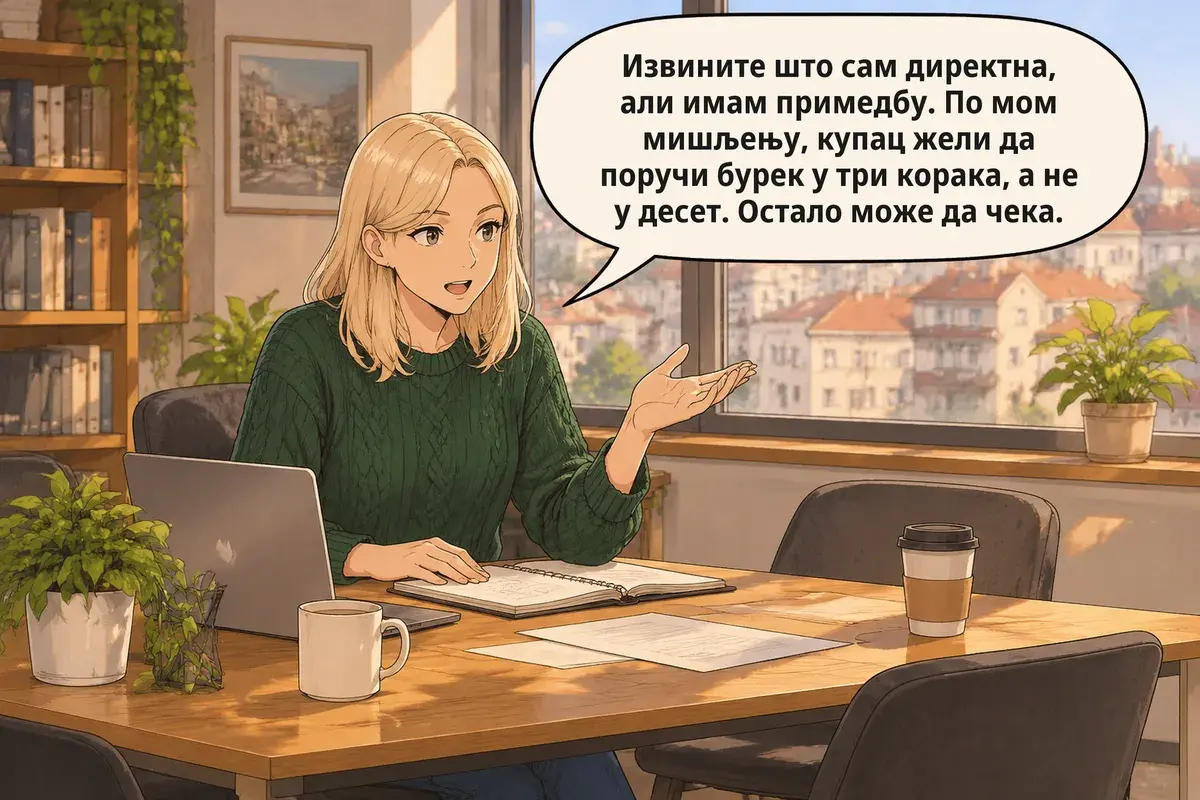
- Ана
Извините што сам директна, али имам примедбу. По мом мишљењу, купац жели да поручи бурек у три корака, а не у десет. Остало може да чека.
I'm sorry for being direct, but I have an objection (woman speaking, formal). In my opinion, the customer wants to order burek in three steps, not ten. The rest can wait.
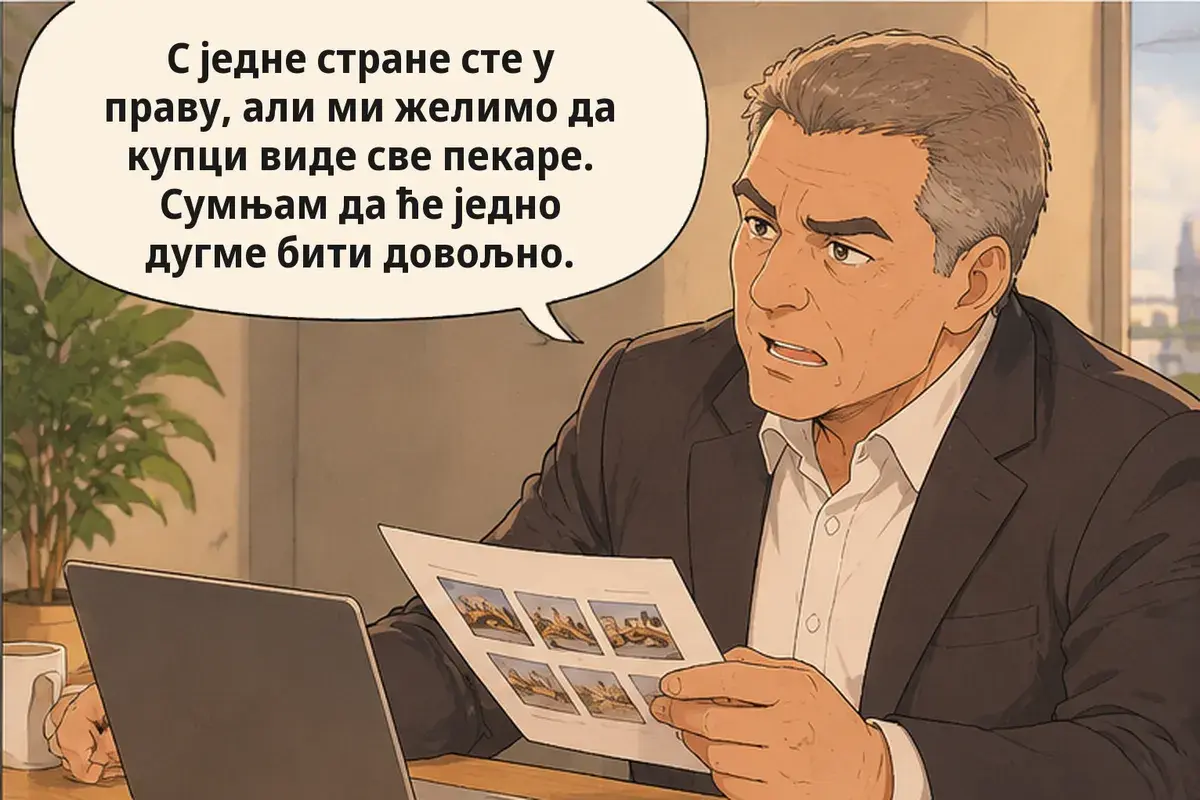
- Клијент
С једне стране сте у праву, али ми желимо да купци виде све пекаре. Сумњам да ће једно дугме бити довољно.
On the one hand you're right, but we want customers to see all the bakeries (formal). I doubt one button will be enough.
- Душан
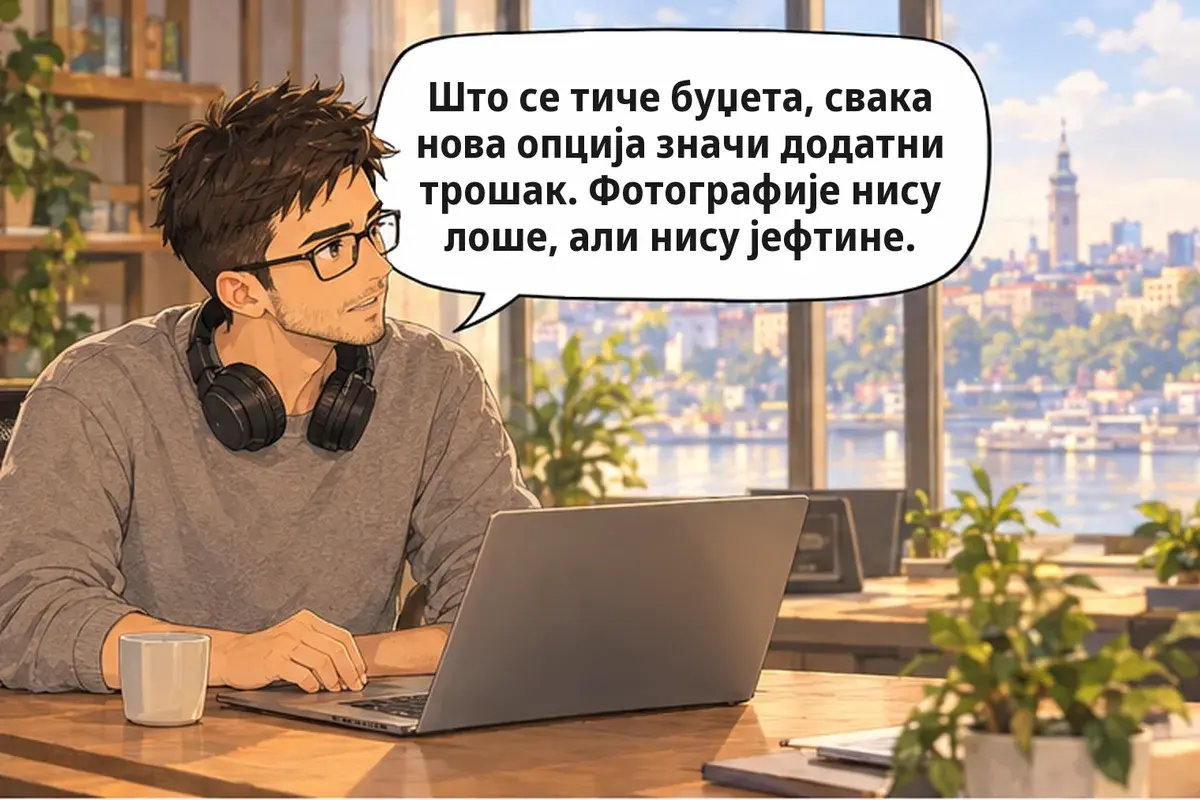
Што се тиче буџета, свака нова опција значи додатни трошак. Фотографије нису лоше, али нису јефтине.
As for the budget, every new option means an extra cost. The photos aren't bad, but they aren't cheap.
- Клијент
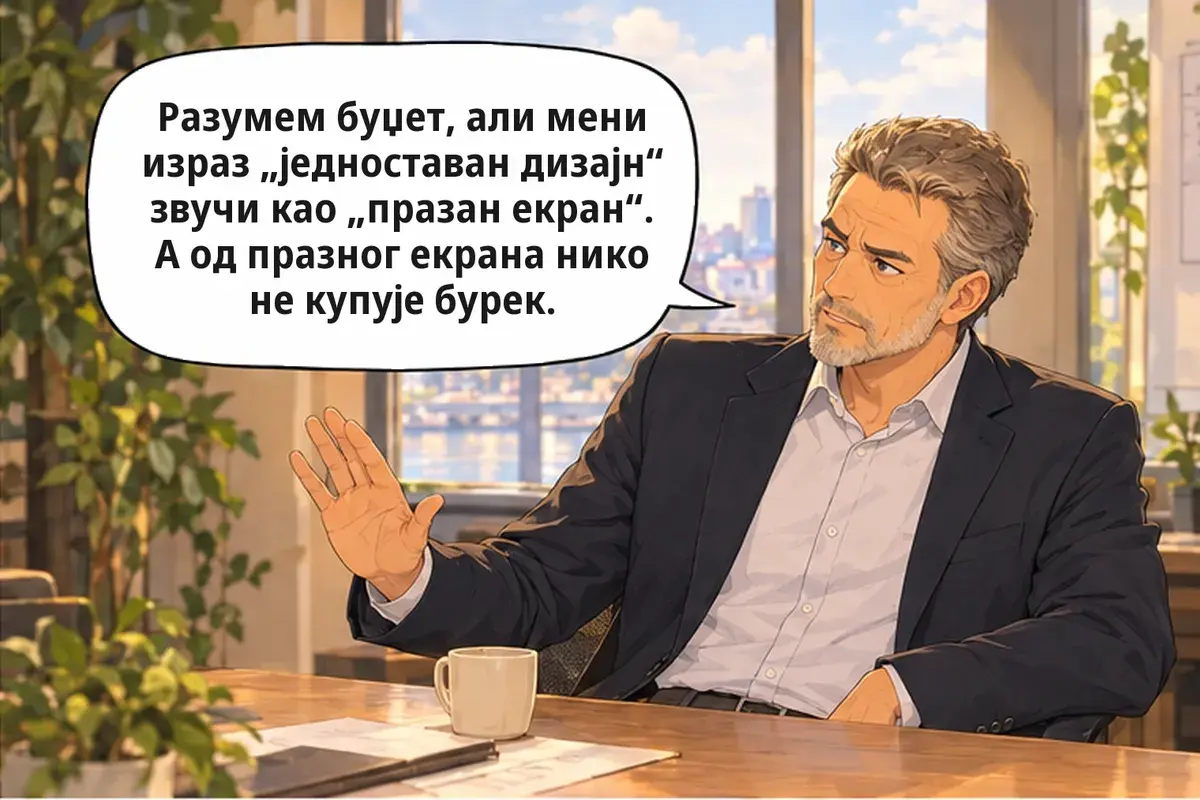
Разумем буџет, али мени израз „једноставан дизајн“ звучи као „празан екран“. А од празног екрана нико не купује бурек.
I understand the budget, but to me the phrase "simple design" sounds like "empty screen." And nobody buys burek from an empty screen.
- Ана
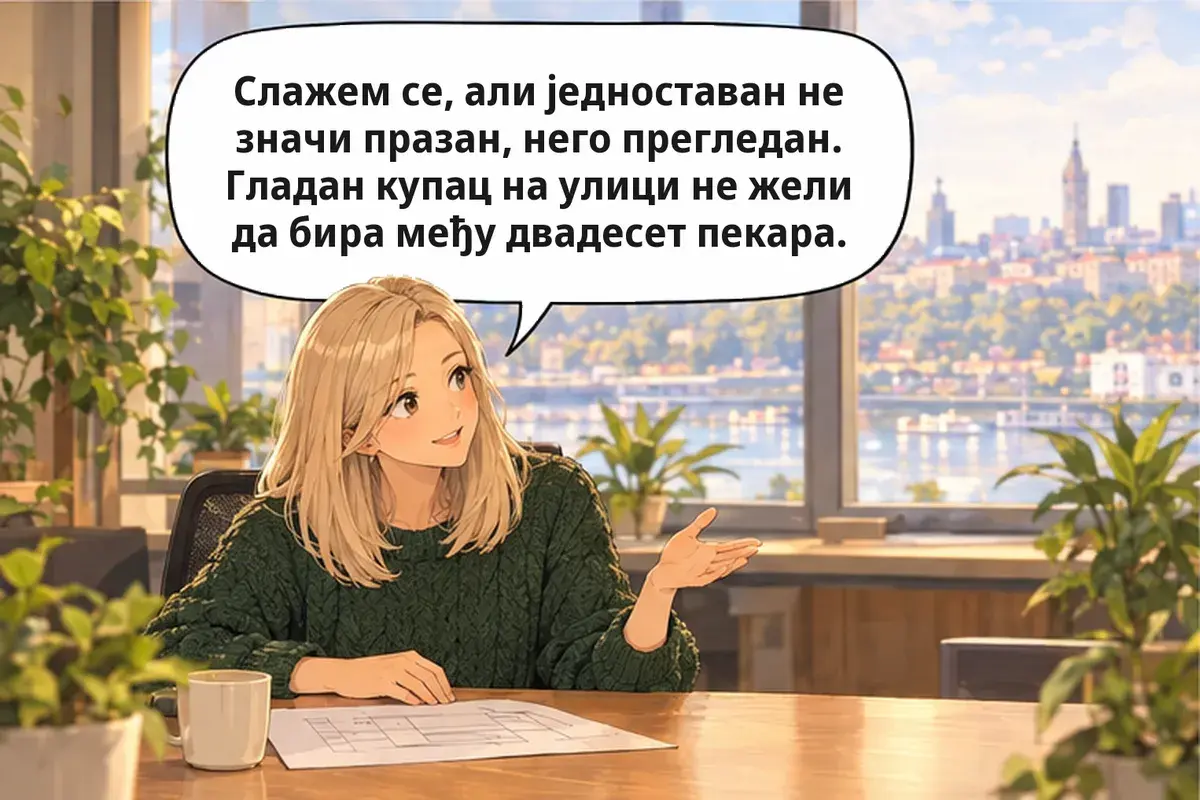
Слажем се, али једноставан не значи празан, него прегледан. Гладан купац на улици не жели да бира међу двадесет пекара.
I agree, but simple doesn't mean empty, it means clear. A hungry customer on the street doesn't want to choose among twenty bakeries.
- Милица
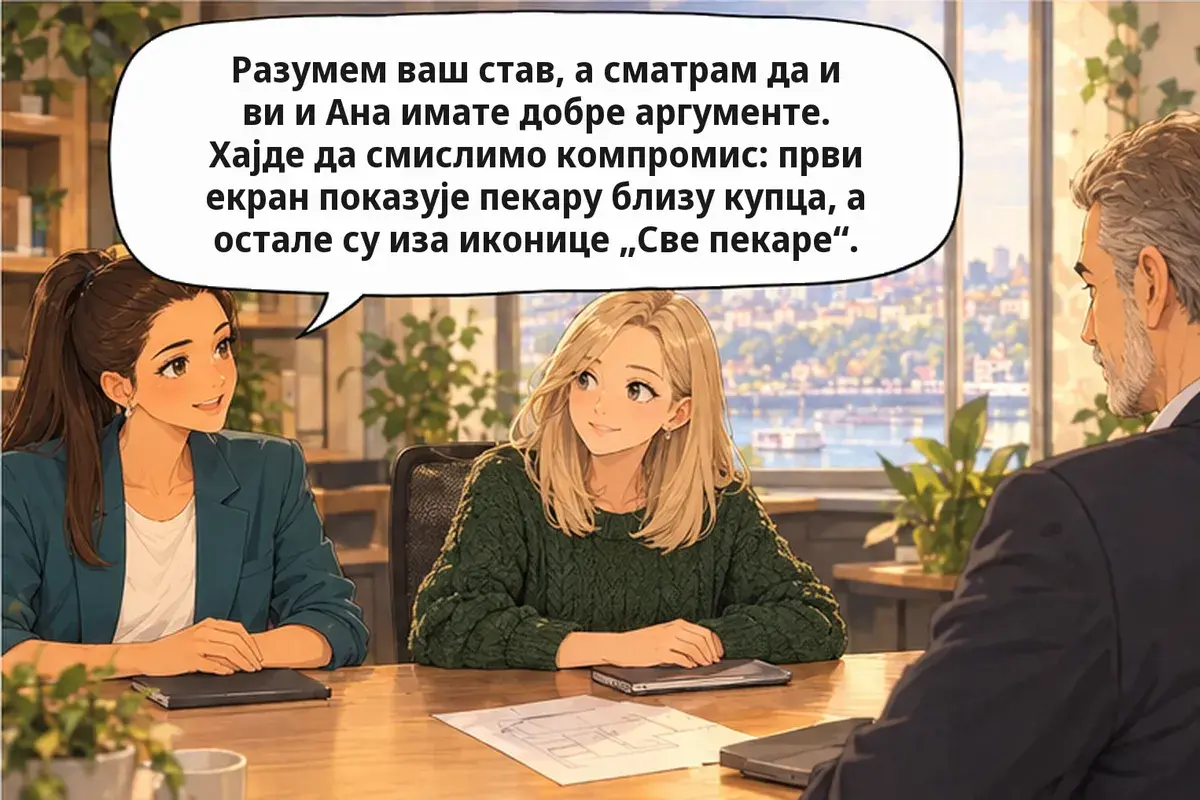
Разумем ваш став, а сматрам да и ви и Ана имате добре аргументе. Хајде да смислимо компромис: први екран показује пекару близу купца, а остале су иза иконице „Све пекаре“.
I understand your position, and I believe both you and Ana have good arguments (formal). Let's come up with a compromise: the first screen shows the bakery near the customer, and the others are behind the "All bakeries" icon.
- Клијент
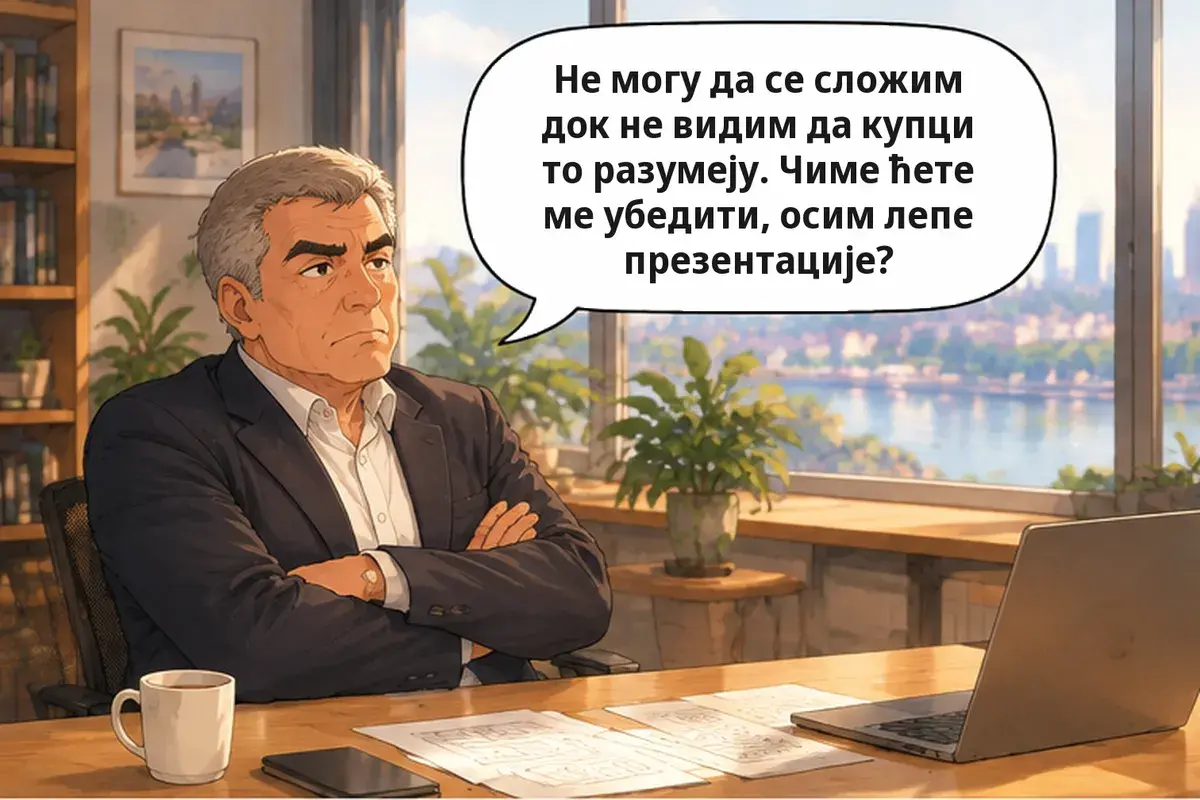
Не могу да се сложим док не видим да купци то разумеју. Чиме ћете ме убедити, осим лепе презентације?
I can't agree until I see that customers understand it. What will you use to convince me, other than a nice presentation? (formal)
- Милица
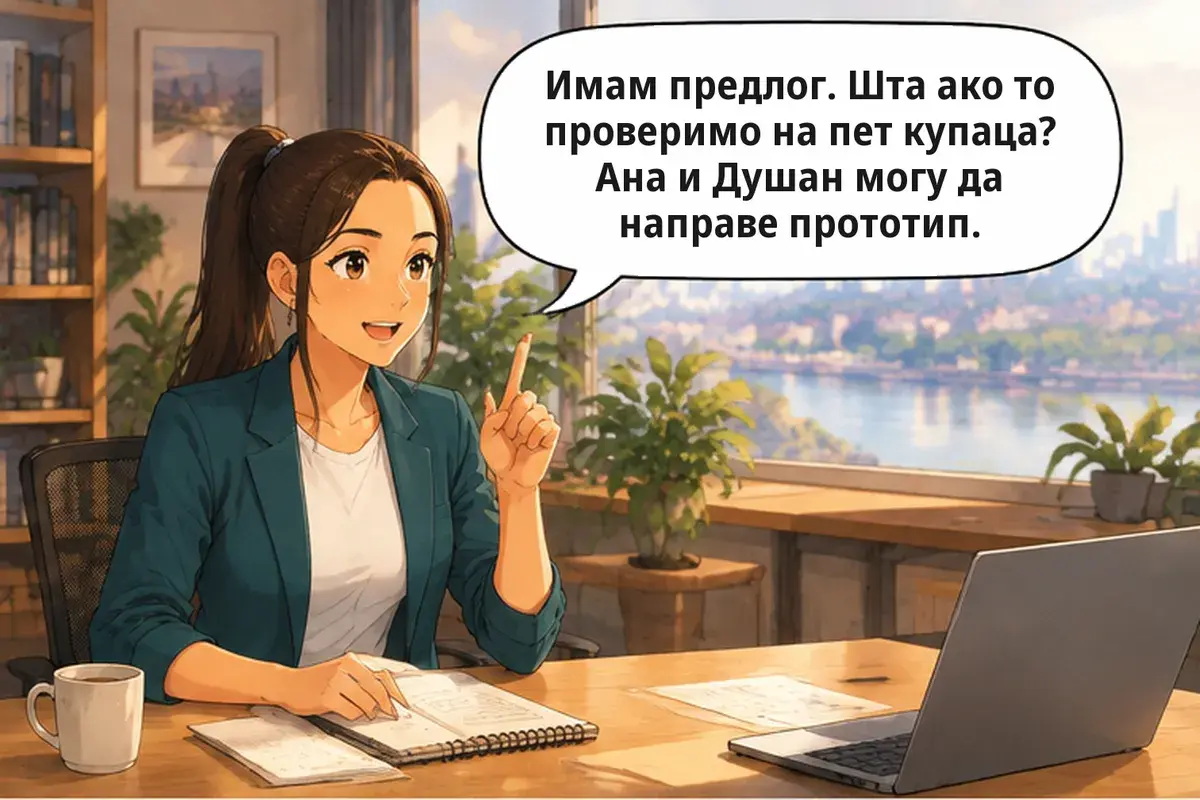
Имам предлог. Шта ако то проверимо на пет купаца? Ана и Душан могу да направе прототип.
I have a suggestion. What if we check it with five customers? Ana and Dušan can build a prototype.
- Клијент
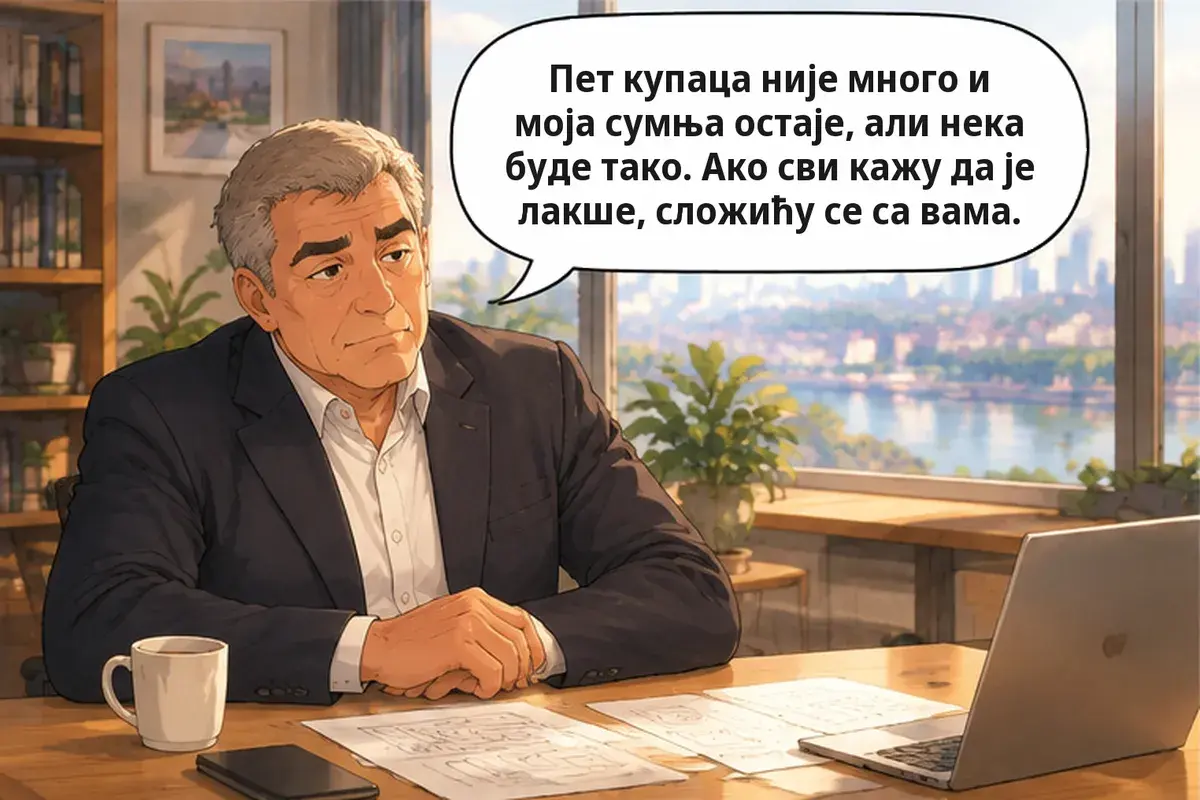
Пет купаца није много и моја сумња остаје, али нека буде тако. Ако сви кажу да је лакше, сложићу се са вама.
Five customers isn't many and my doubt remains, but so be it. If everyone says it's easier, I'll agree with you (formal).

- Ана
Онда имамо договор. Прототип ћу направити до петка, а купци га тестирају у понедељак.
Then we have a deal. I'll make the prototype by Friday, and the customers will test it on Monday.
- Душан
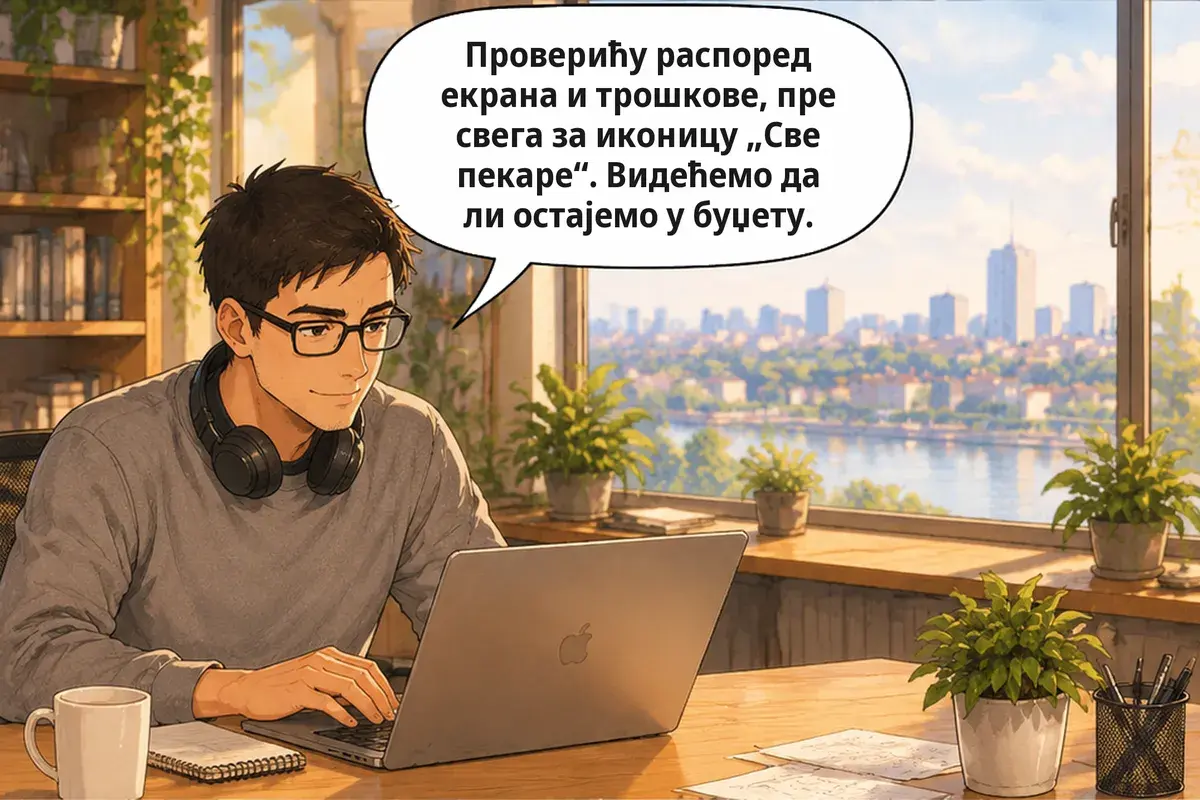
Проверићу распоред екрана и трошкове, пре свега за иконицу „Све пекаре“. Видећемо да ли остајемо у буџету.
I'll check the screen layout and the costs, first of all for the "All bakeries" icon. We'll see whether we stay within the budget.
- Милица
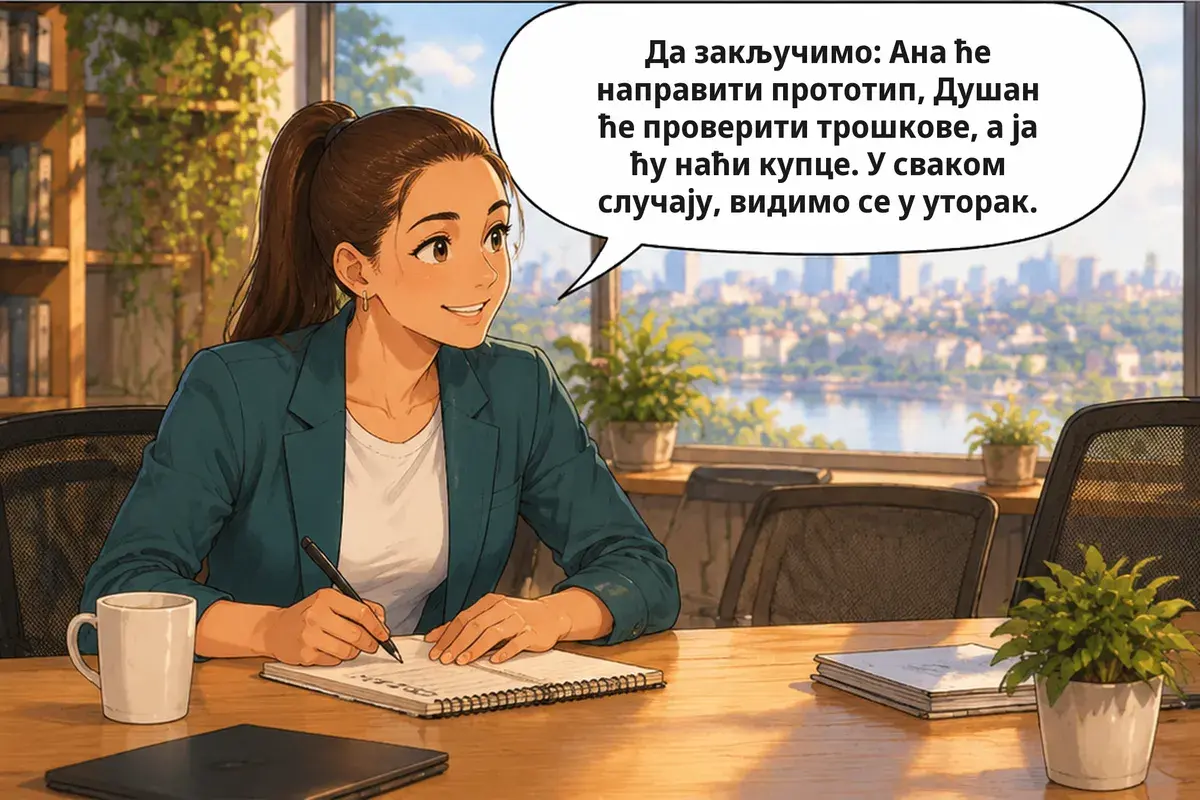
Да закључимо: Ана ће направити прототип, Душан ће проверити трошкове, а ја ћу наћи купце. У сваком случају, видимо се у уторак.
Let's sum up: Ana will make the prototype, Dušan will check the costs, and I'll find the customers. In any case, see you on Tuesday.
- Клијент
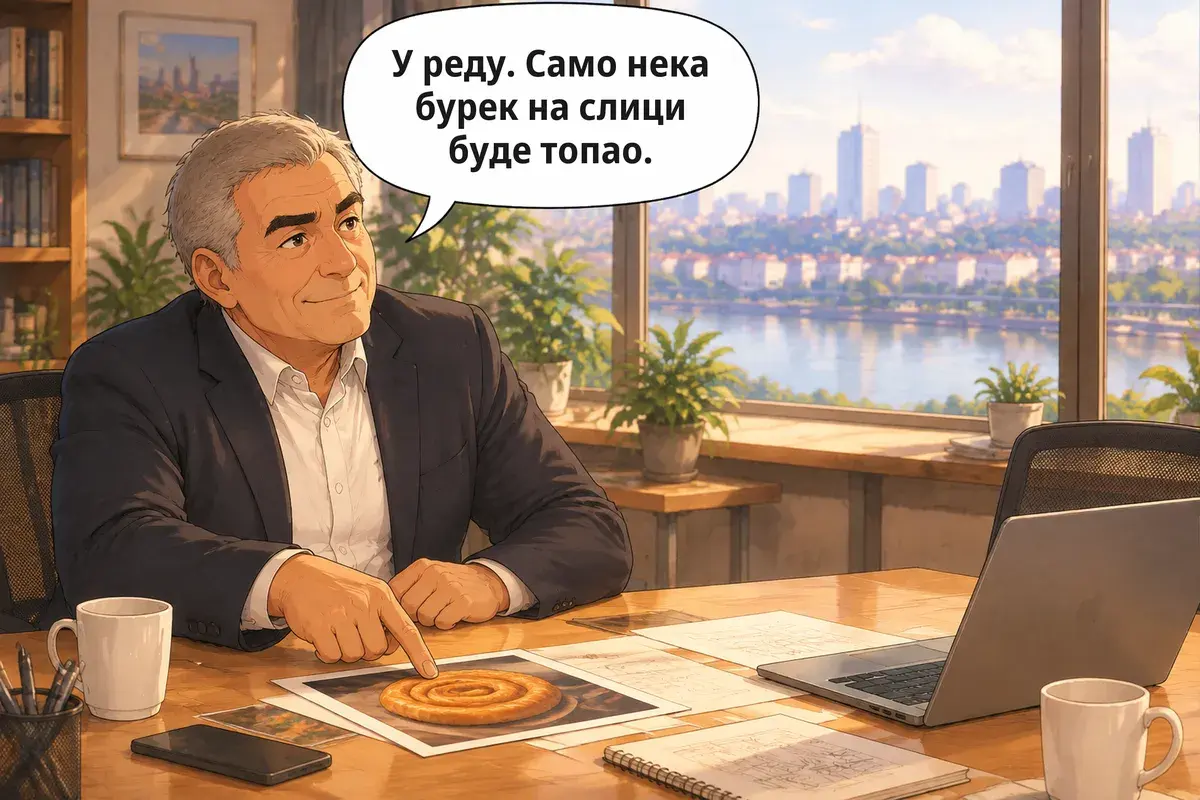
У реду. Само нека бурек на слици буде топао.
All right. Just make sure the burek in the picture is hot.
Grammar for this text
По мом мишљењу, купац жели да поручи бурек у три корака, а не у десет.—по мом мишљењуmeans "in my opinion" (по+ the locative). It's an introductory phrase, so a comma follows it.поручиis a perfective verb afterда: "wants to order".С једне стране сте у праву, али ми желимо да купци виде све пекаре.—с једне странеmeans "on the one hand" (с+ the genitive).сте у правуis "you're right" (formal), literally "you are in the right". The cliticстеcomes after three words, and that is allowed. There is a comma beforeали, but none beforeда("that").Што се тиче буџета, свака нова опција значи додатни трошак.—што се тиче+ the genitive means "as for, when it comes to". Learn the phrase as a whole; a comma follows it.Слажем се, али једноставан не значи празан, него прегледан.—слажем сеmeans "I agree" (слагати се). After a negative,негоmeans "but rather", and a comma goes before it.Не могу да се сложим док не видим да купци то разумеју.—сложити сеis the perfective pair ofслагати сеand means "to come to an agreement": "I can't agree until I see that the customers understand it" (док неis from unit 6).Хајде да смислимо компромис—хајде да+ the present means "let's" (unit 1).смислимоcomes from the perfective verbсмислити.Шта ако то проверимо на пет купаца?— "What if we check this with five customers?" Afterакоuse a perfective verb (проверимо), just like afterкад(A2). English uses the plain present here too.Само нека бурек на слици буде топао.—нека+будеmeans "let it be".будеis a form ofбитиafterдаandнека(будем, будеш, буде, будемо, будете, буду).
Words and grammar of the unit: Stand your ground in a meeting.
Learn the words from the texts with flashcards
In the app, you can tap any word in a text to see its translation, forms and examples, and new words stick with flashcards. 15 minutes a day.
Start for freeEverything is open for free. No card needed to sign up.