

Serbian story with translation · A1 · 10 lines
Ово је нова листа This is a new list
Comic · 7 panels

Данас сам први пут у Београду.
Today I'm in Belgrade for the first time.
Кућа је стара, а стан јако леп.
The house is old, but the apartment is very beautiful.
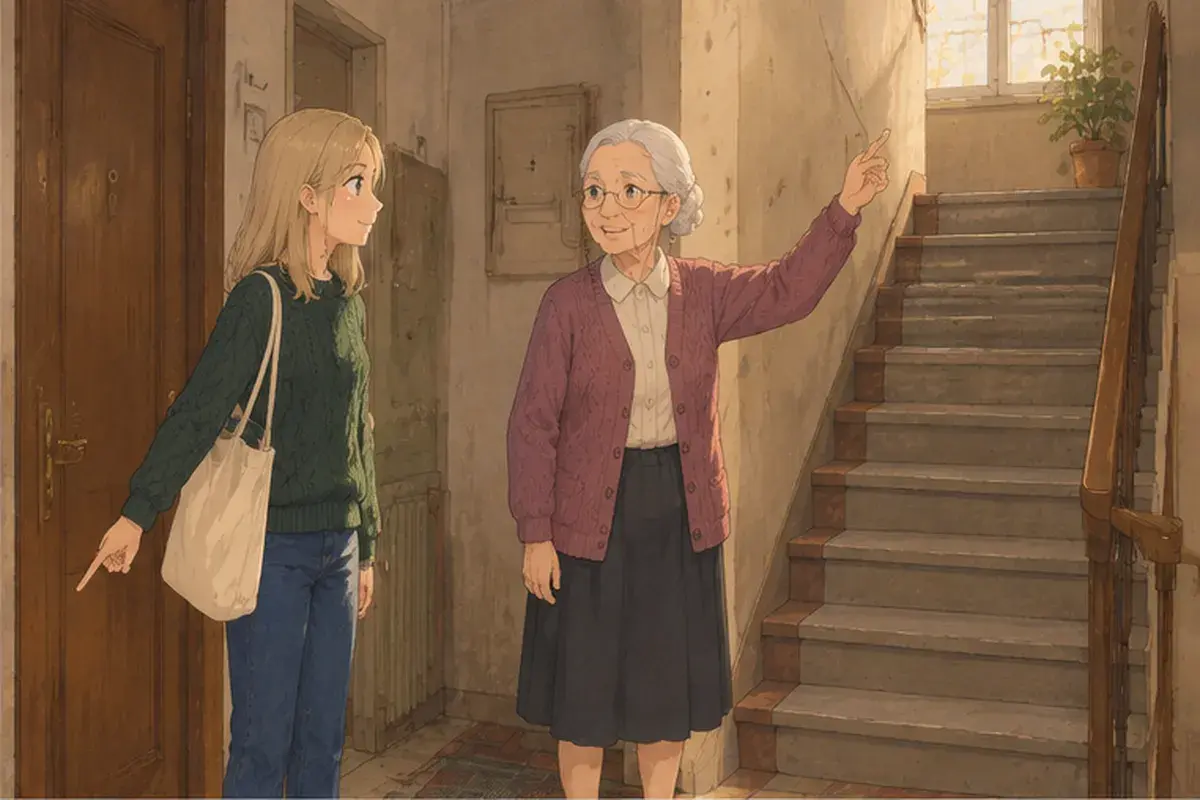
Ја живим доле, а Радмила горе.
I live downstairs, and Radmila lives upstairs.
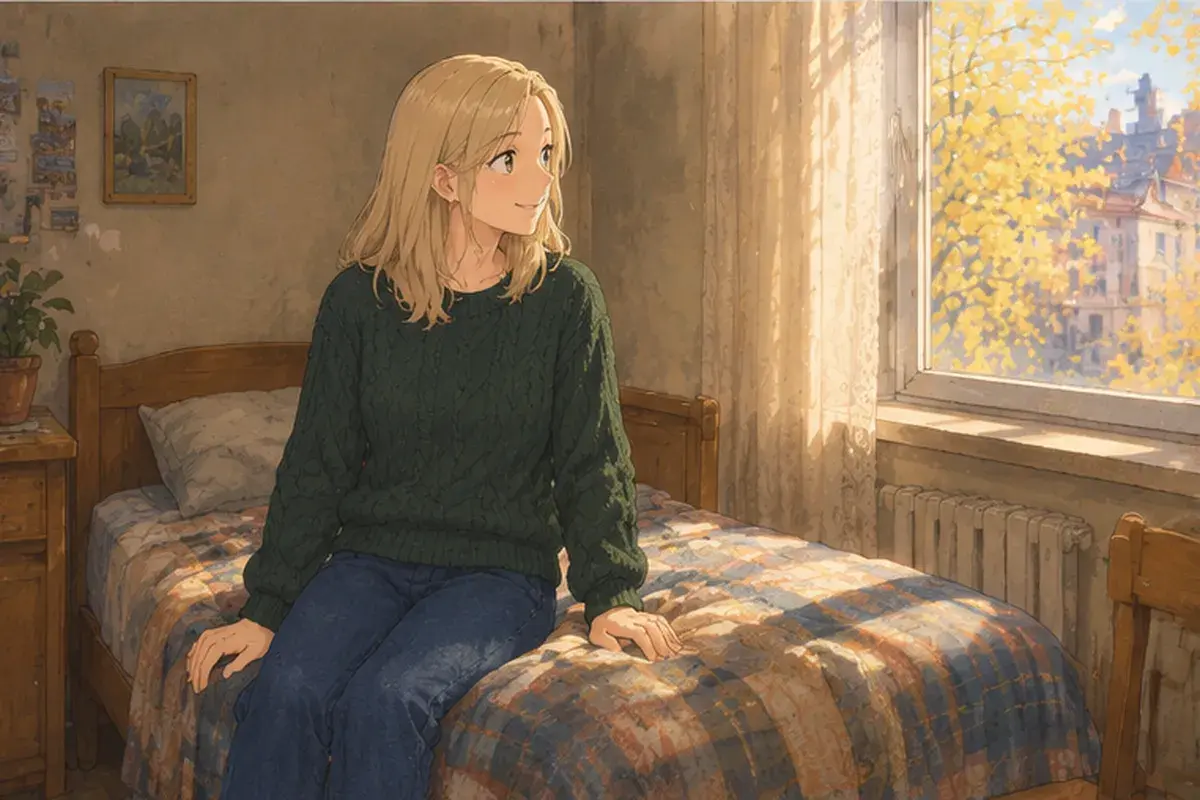
Соба има кревет и прозор.
The room has a bed and a window.
Сад сам код куће.
Now I'm at home.

Оно тамо је столица. Код нас „столица“ значи главни град!
That over there is a chair. Back home, "stolica" means capital city!

Ово је нова листа. Прва реч је „столица“.
This is a new list. The first word is "stolica".
Друга реч је „комшија“. Радмила је комшиница.
The second word is "komšija". Radmila is a neighbor.

„Пријатељ“ није чудна реч. Пријатељ значи пријатељ!
"Prijatelj" isn't a strange word. Prijatelj means friend!
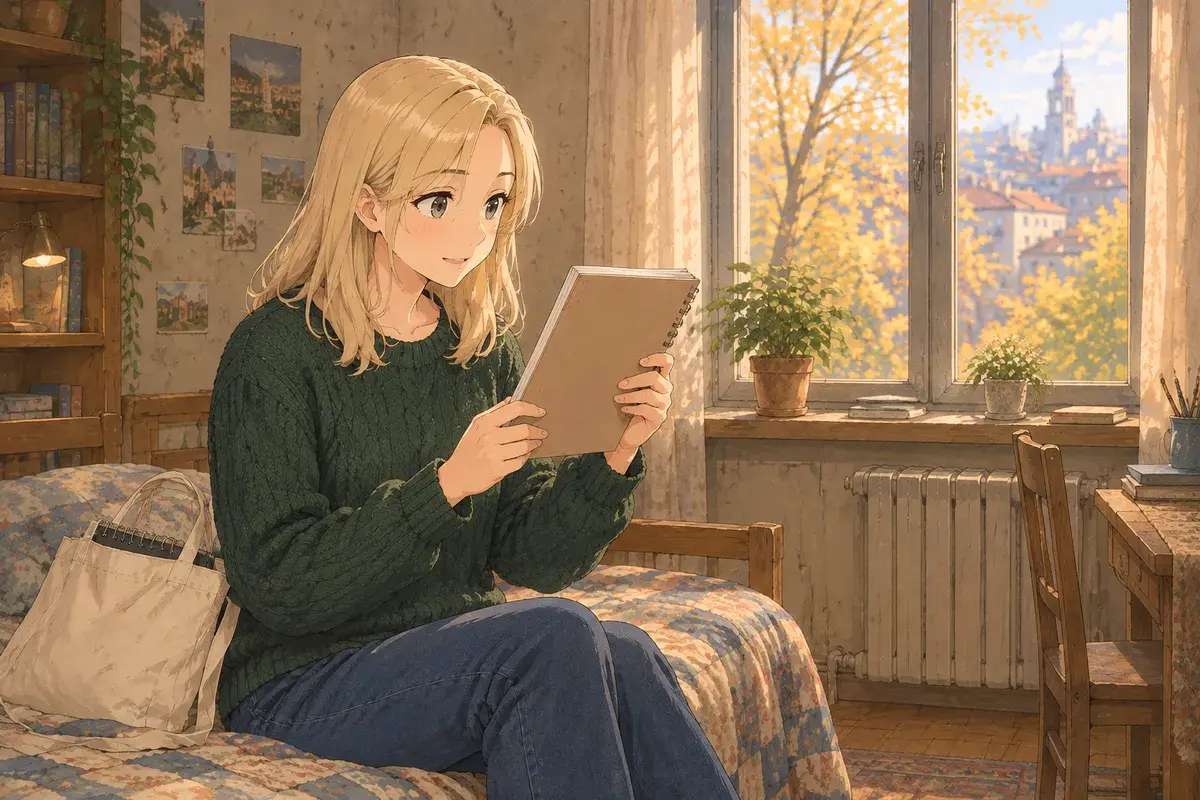
Соба је мала, а листа велика.
The room is small, but the list is big.
Grammar for this text
Кућа је стара, а стан јако леп: an adjective follows the gender of its noun.кућаis feminine, soстара;станis masculine, soлеп.јако(very) never changes.аhere means "but, while": it contrasts two things.Ја живим доле, а Радмила горе:живимmeans "I live": the verbживети, type-им. Ana saysјаbecause she compares herself with Radmila.горе— upstairs,доле— downstairs.Соба има кревет и прозор:имаmeans "has": the verbимати, type-ам. Serbian often says "the room has…" where English also says "there is… in the room".Сад сам код кућеmeans "Now I'm at home" (код кућеis a set phrase; the rule comes in unit 12).Код нас „столица“ значи главни град: Ana jokes about her own language, where a similar word means "capital city". In Serbianстолицаis a chair; the capital isглавни град(word for word "main city"), andглавниmeans "main".значиmeans "it means": it is used only about words and things, in the third person. InОно тамо је столица,оноis "that over there", far from the speaker (more in the grammar of this unit).Друга реч је „комшија“:другаis the feminine form ofдруги(second), becauseреч(word) is feminine.комшија(neighbor) is masculine, even though it ends in-а; a woman neighbor isкомшиница.„Пријатељ“ није чудна реч: not every word is a trap;пријатељsimply means "friend".нијеmeans "is not".чуднаmeans "strange"; it is feminine because ofреч.
Words and grammar of the unit: Move into a rented apartment.
Learn the words from the texts with flashcards
In the app, you can tap any word in a text to see its translation, forms and examples, and new words stick with flashcards. 15 minutes a day.
Start for freeEverything is open for free. No card needed to sign up.