
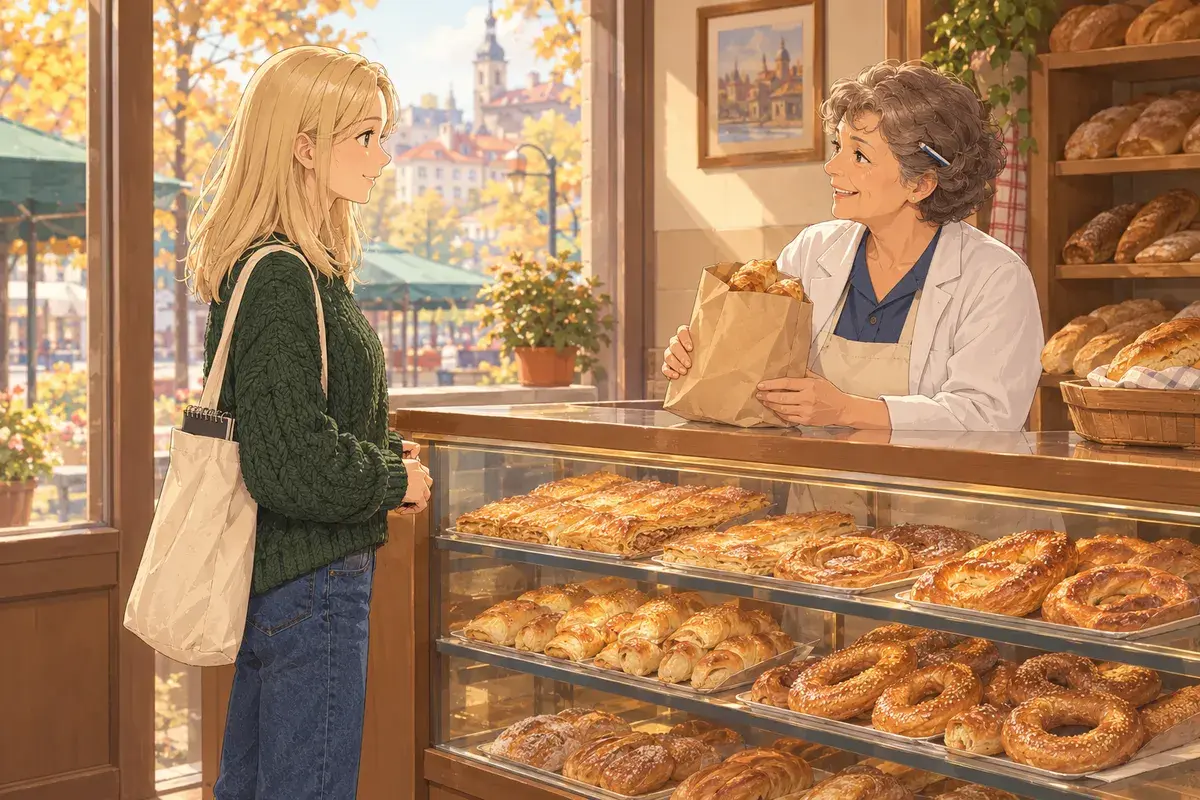
Serbian dialogue with translation · A1 · 14 lines
Овде или за понети? For here or to go?
Comic · 14 panels
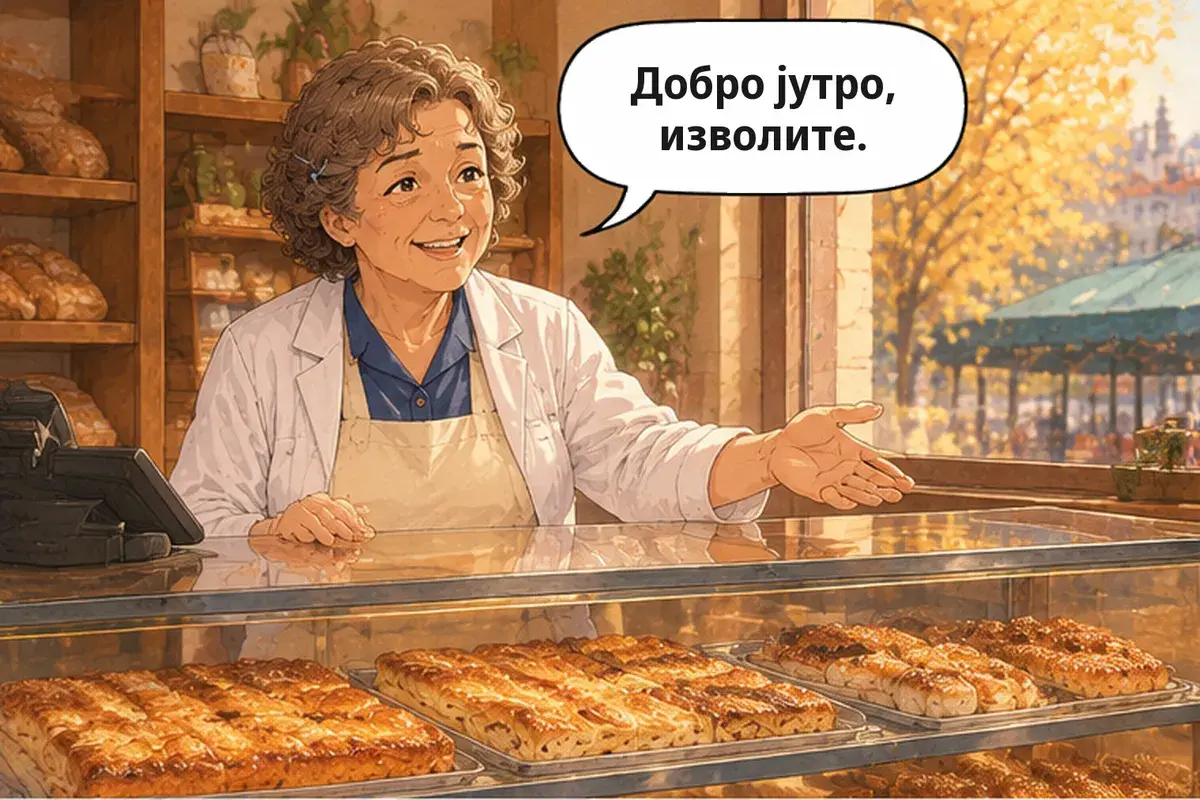
- Продавачица
Добро јутро, изволите.
Good morning, can I help you? (formal)
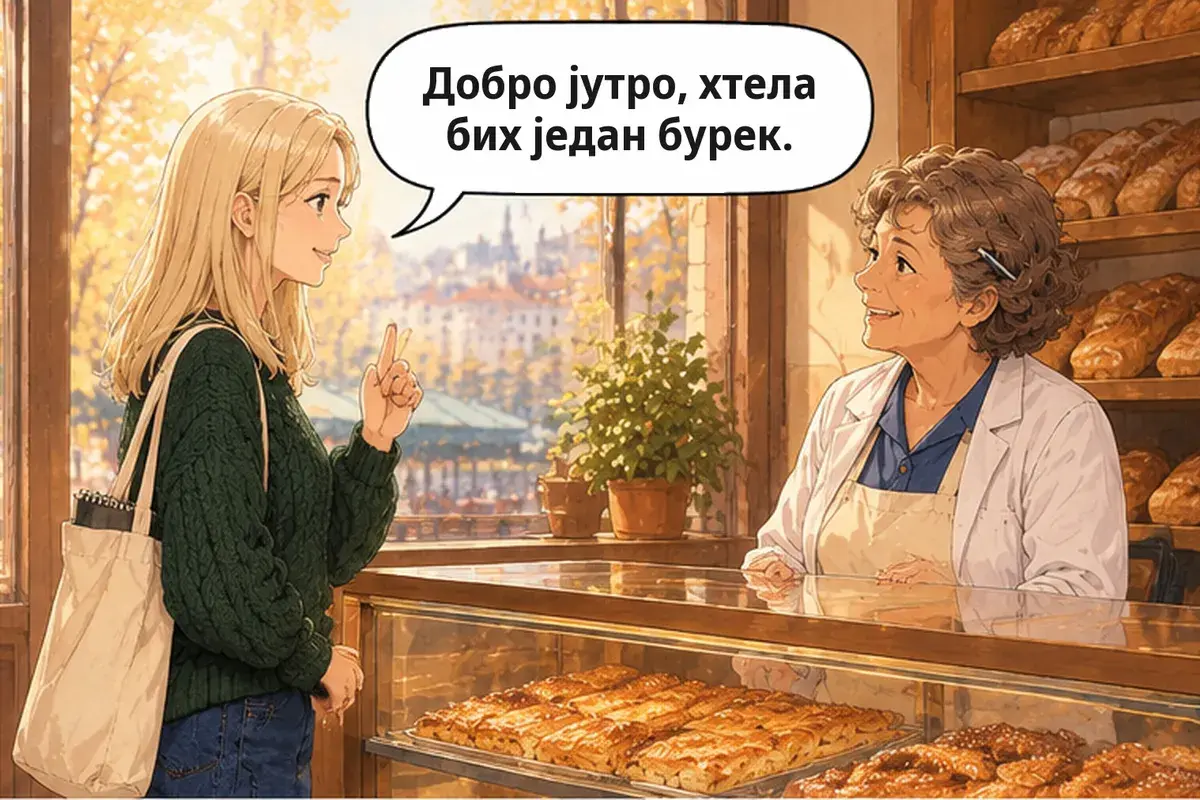
- Ана
Добро јутро, хтела бих један бурек.
Good morning, I'd like one burek (woman speaking).
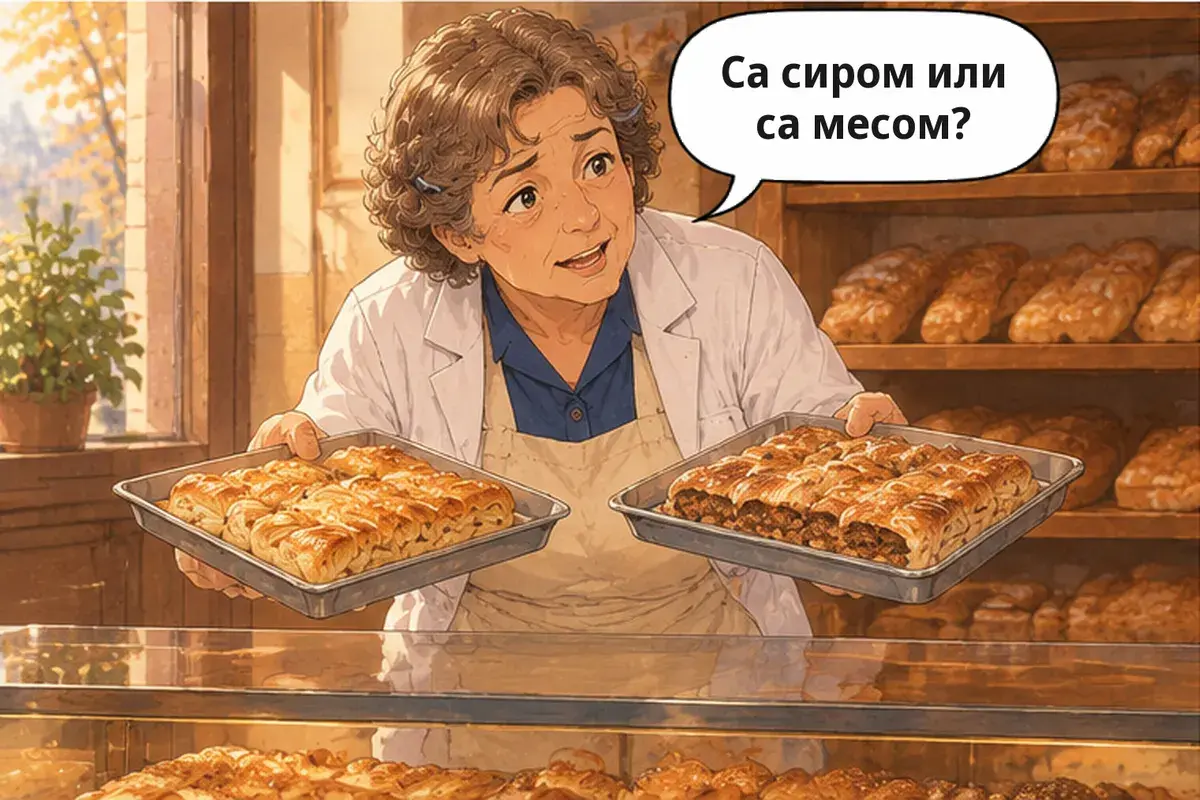
- Продавачица
Са сиром или са месом?
With cheese or with meat?
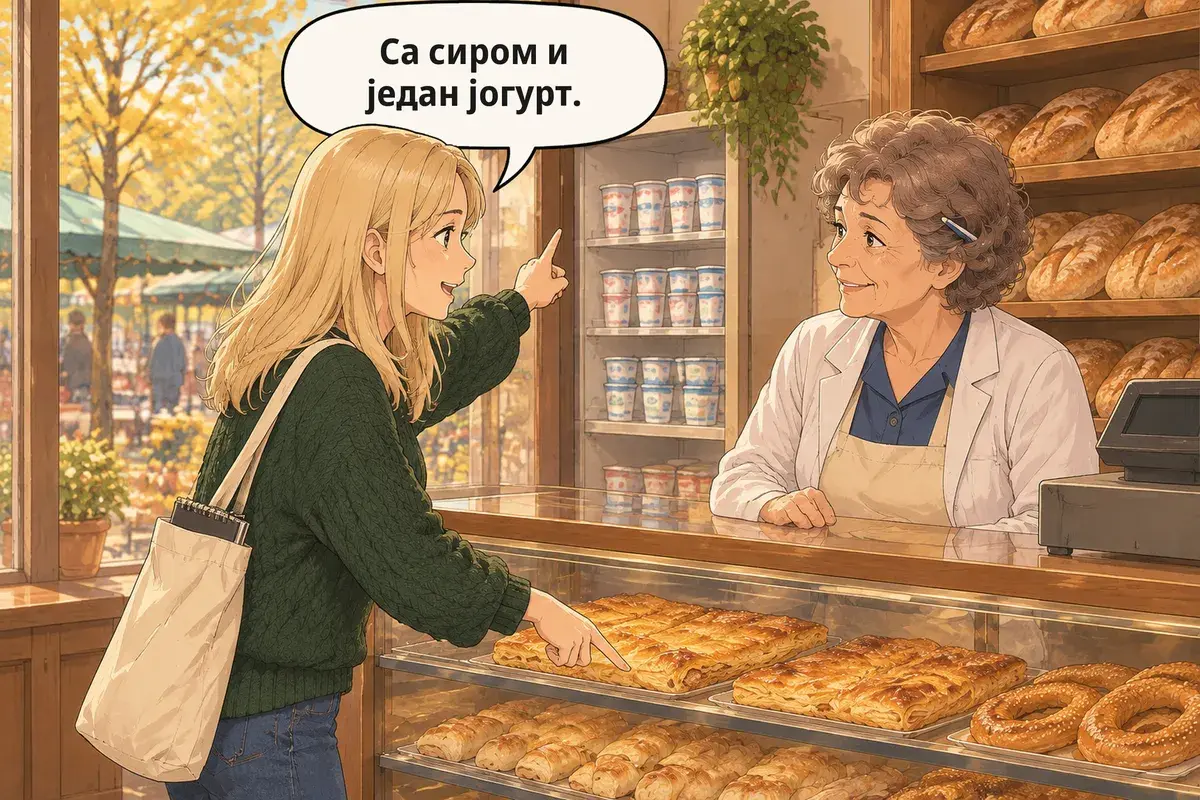
- Ана
Са сиром и један јогурт.
With cheese, and one yogurt.
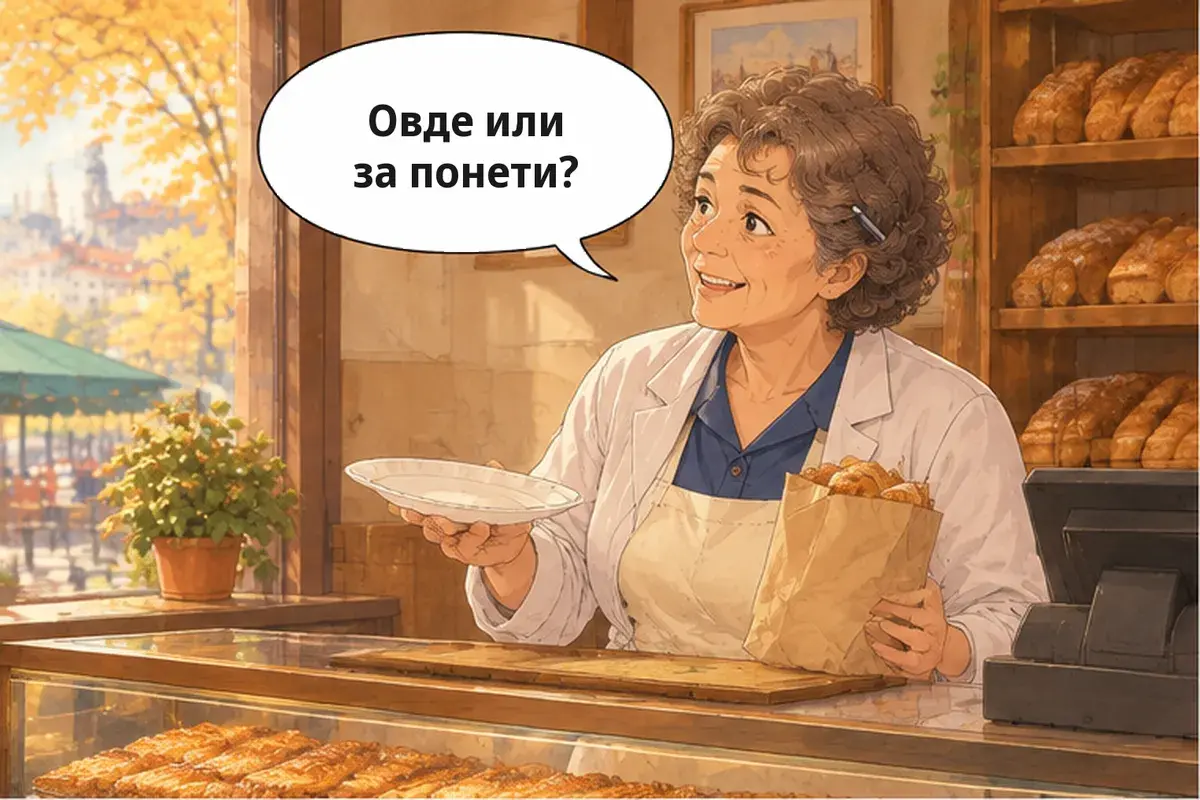
- Продавачица
Овде или за понети?
For here or to go?
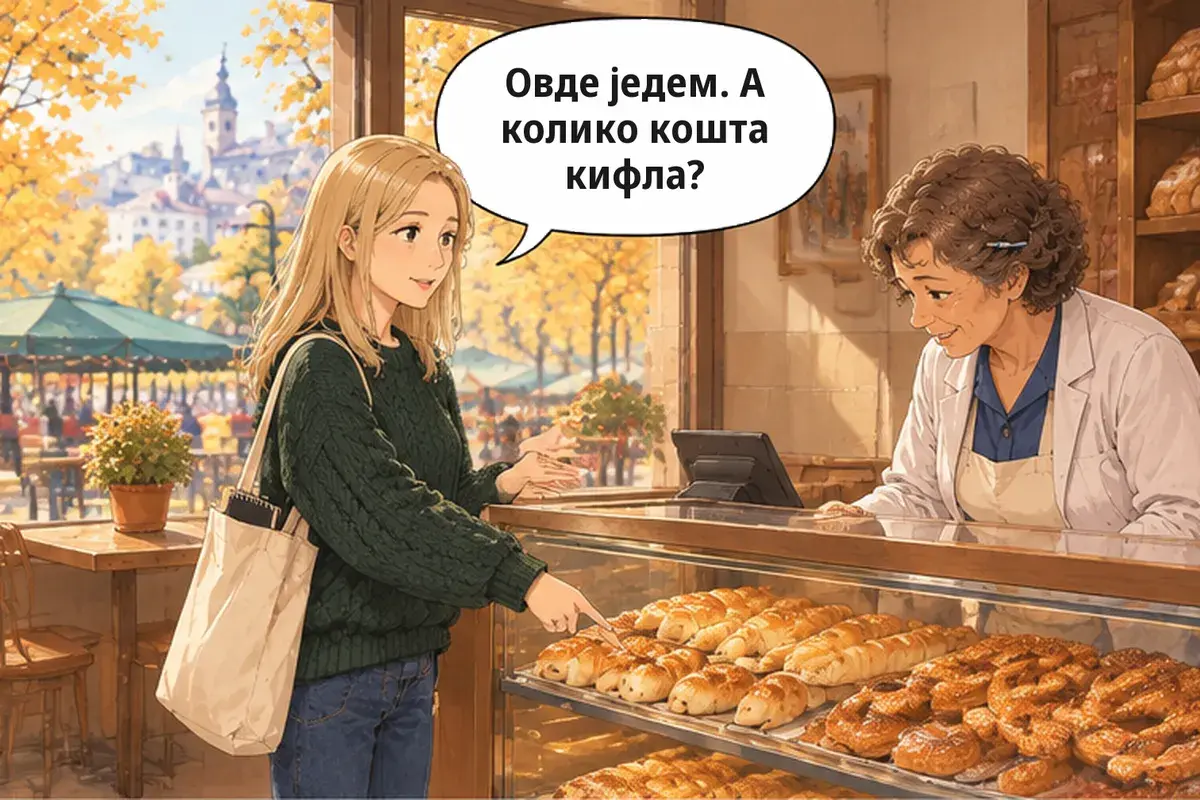
- Ана
Овде једем. А колико кошта кифла?
I'm eating here. And how much does a crescent roll cost?
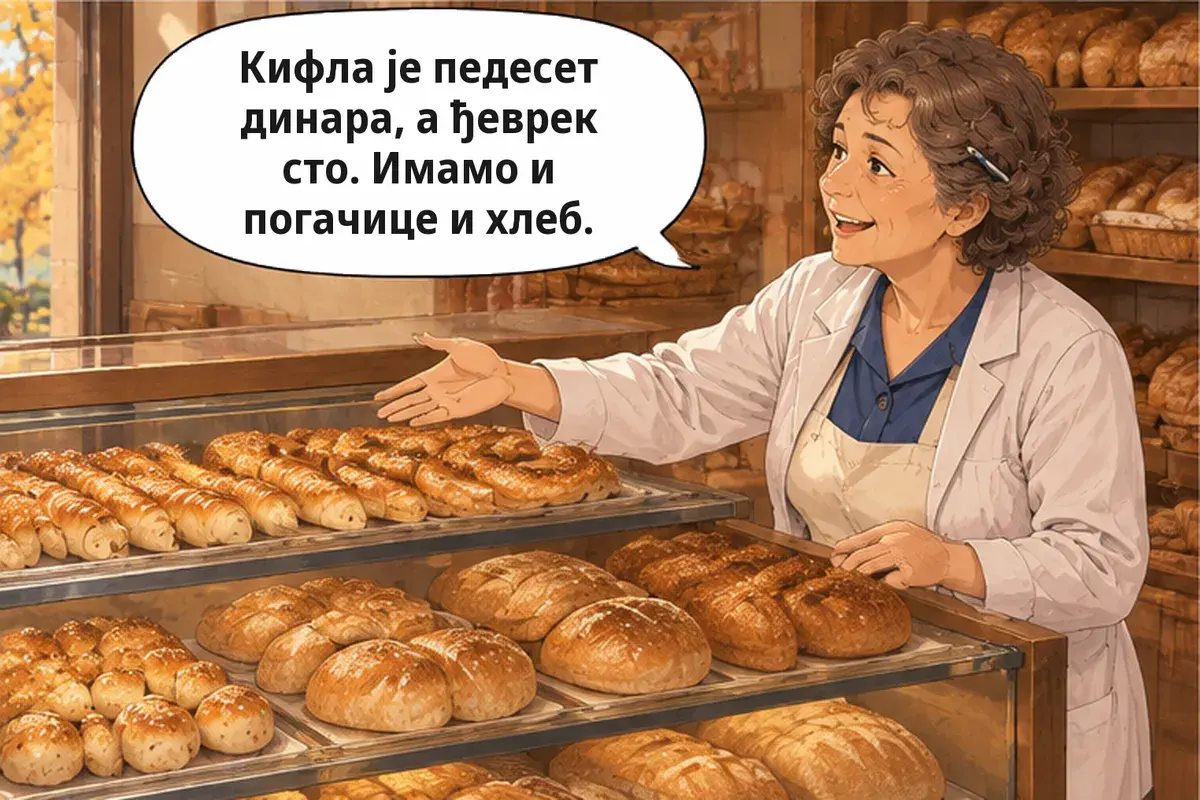
- Продавачица
Кифла је педесет динара, а ђеврек сто. Имамо и погачице и хлеб.
A crescent roll is fifty dinars, and a sesame bagel a hundred. We also have savory rolls and bread.
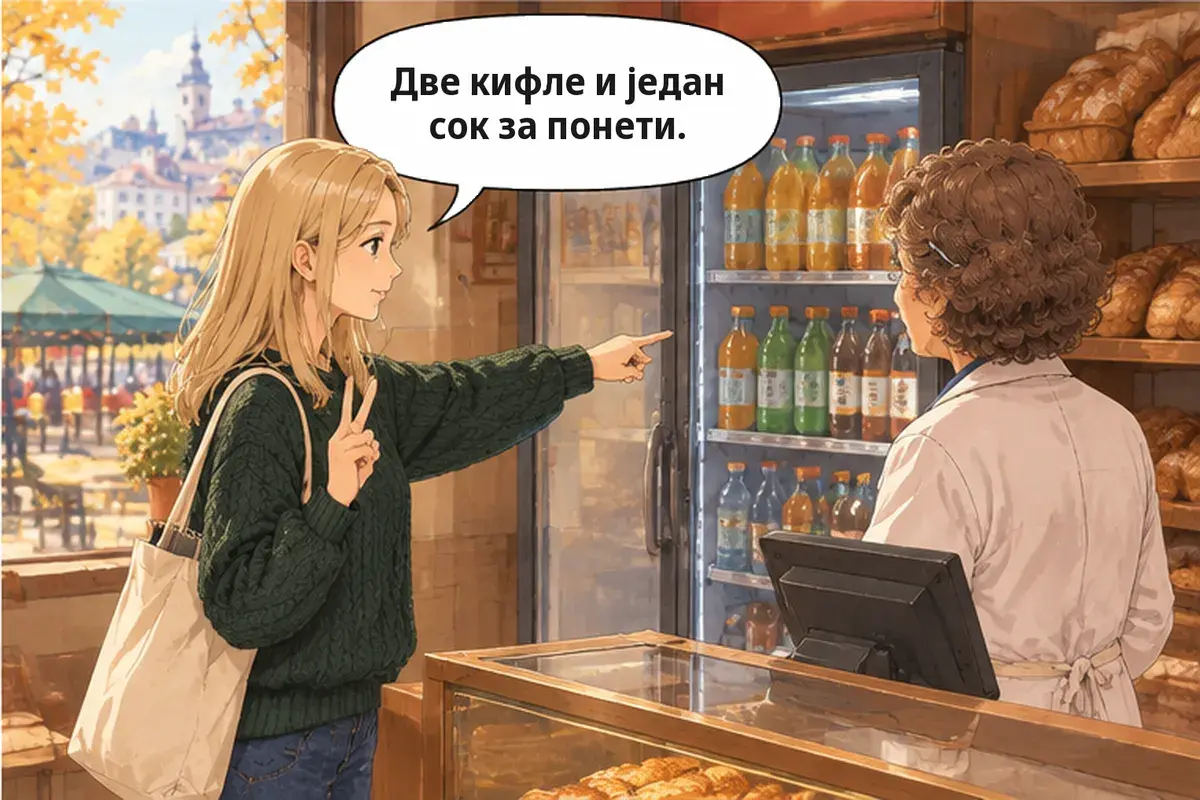
- Ана
Две кифле и један сок за понети.
Two crescent rolls and one juice to go.
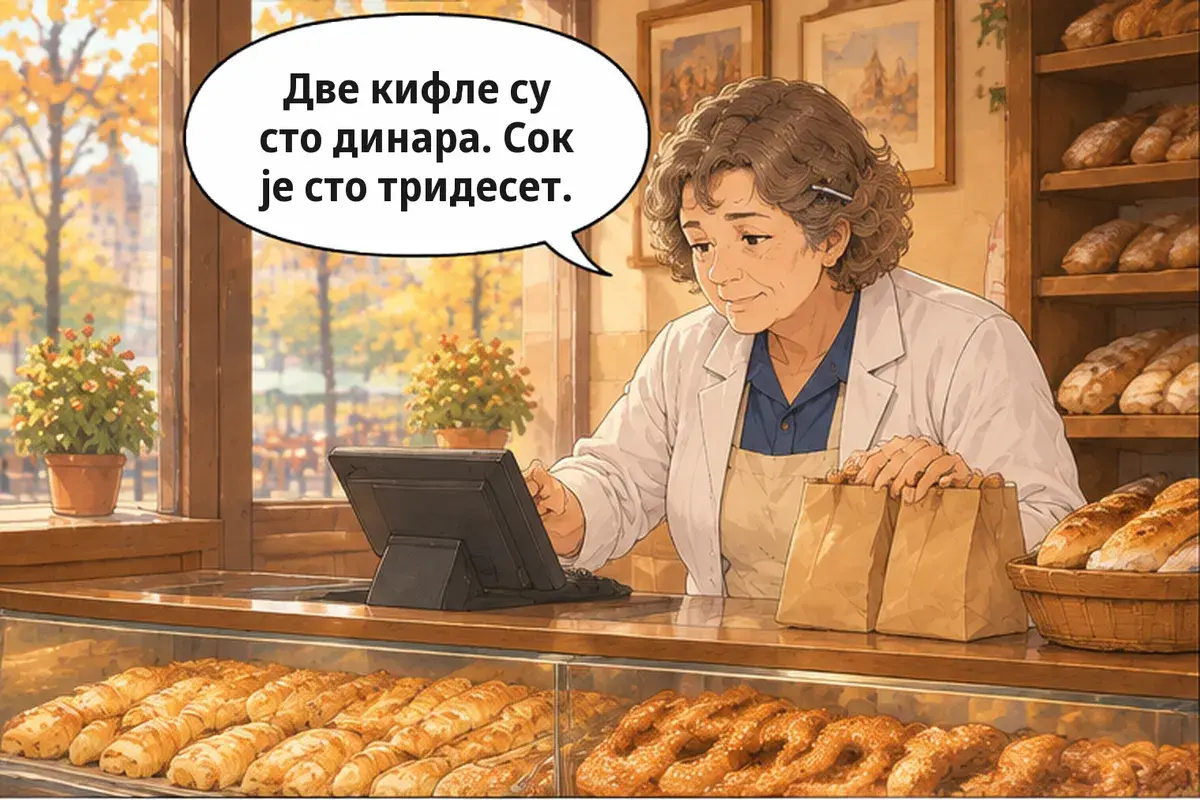
- Продавачица
Две кифле су сто динара. Сок је сто тридесет.
Two crescent rolls are a hundred dinars. The juice is a hundred and thirty.
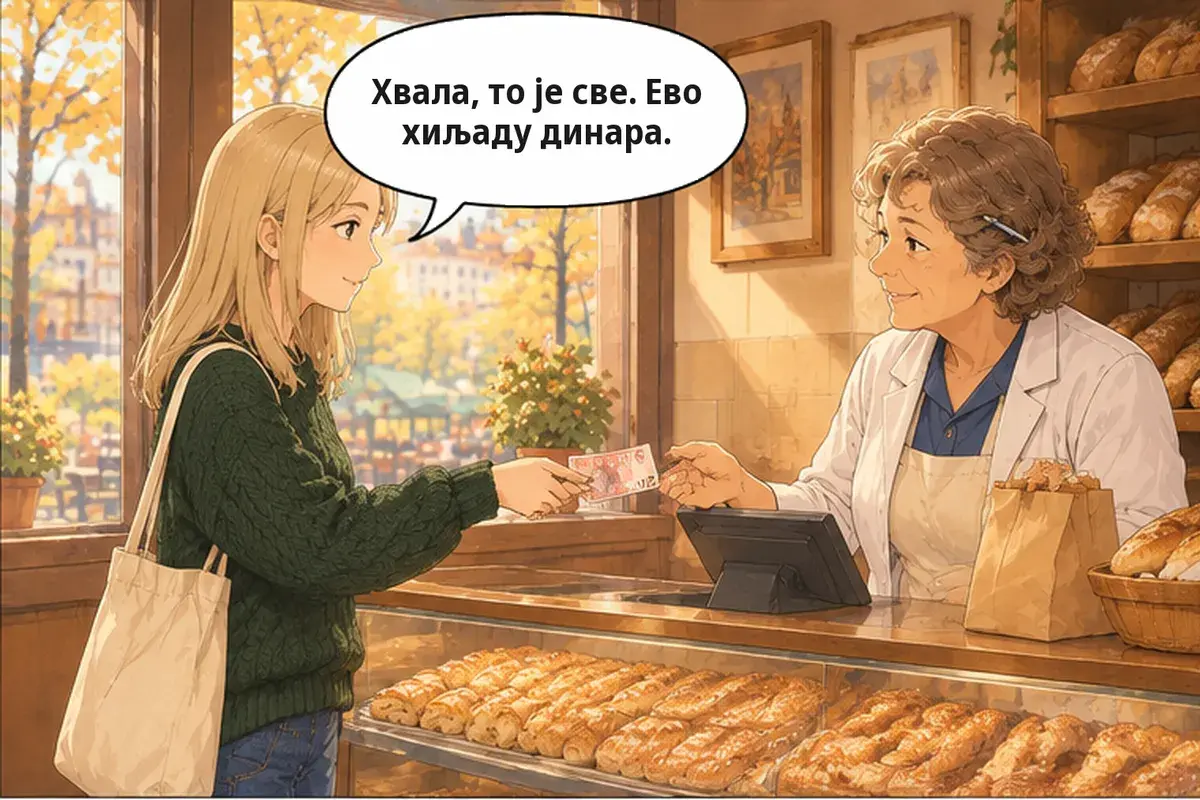
- Ана
Хвала, то је све. Ево хиљаду динара.
Thanks, that's all. Here's a thousand dinars.
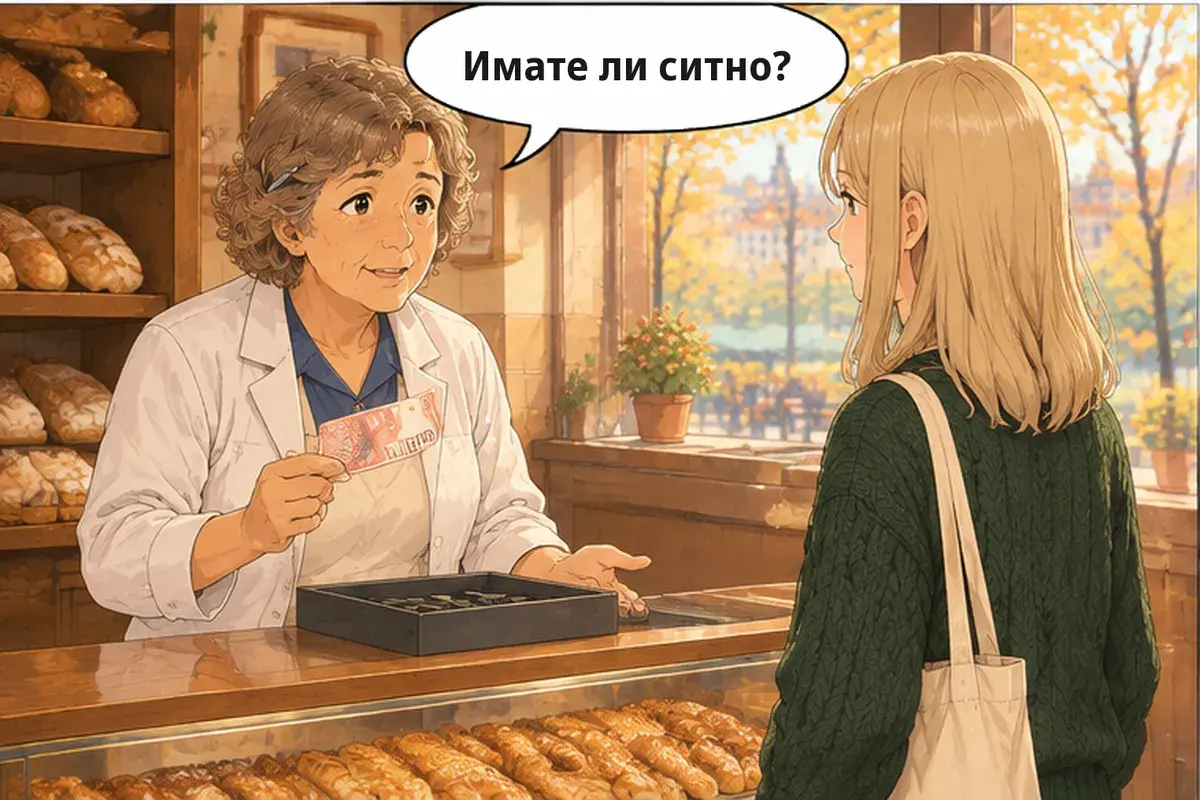
- Продавачица
Имате ли ситно?
Do you have any small change? (formal)
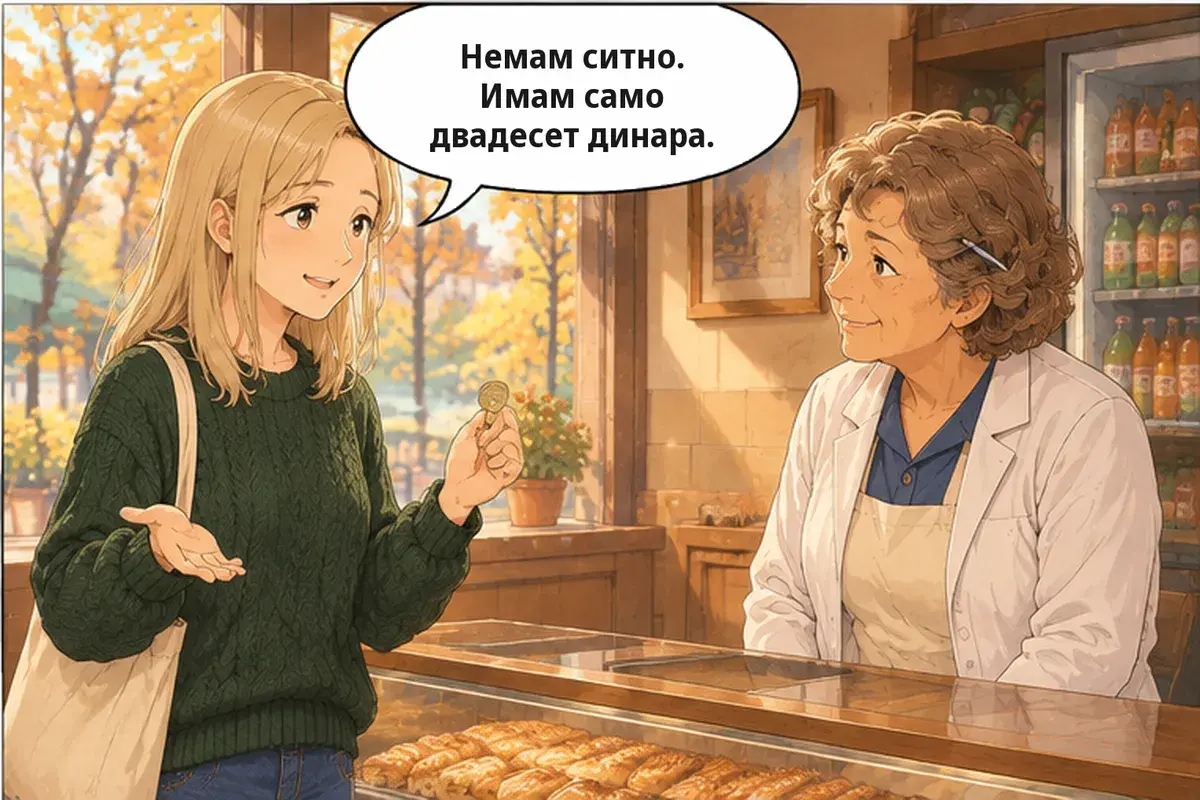
- Ана
Немам ситно. Имам само двадесет динара.
I don't have any small change. I only have twenty dinars.
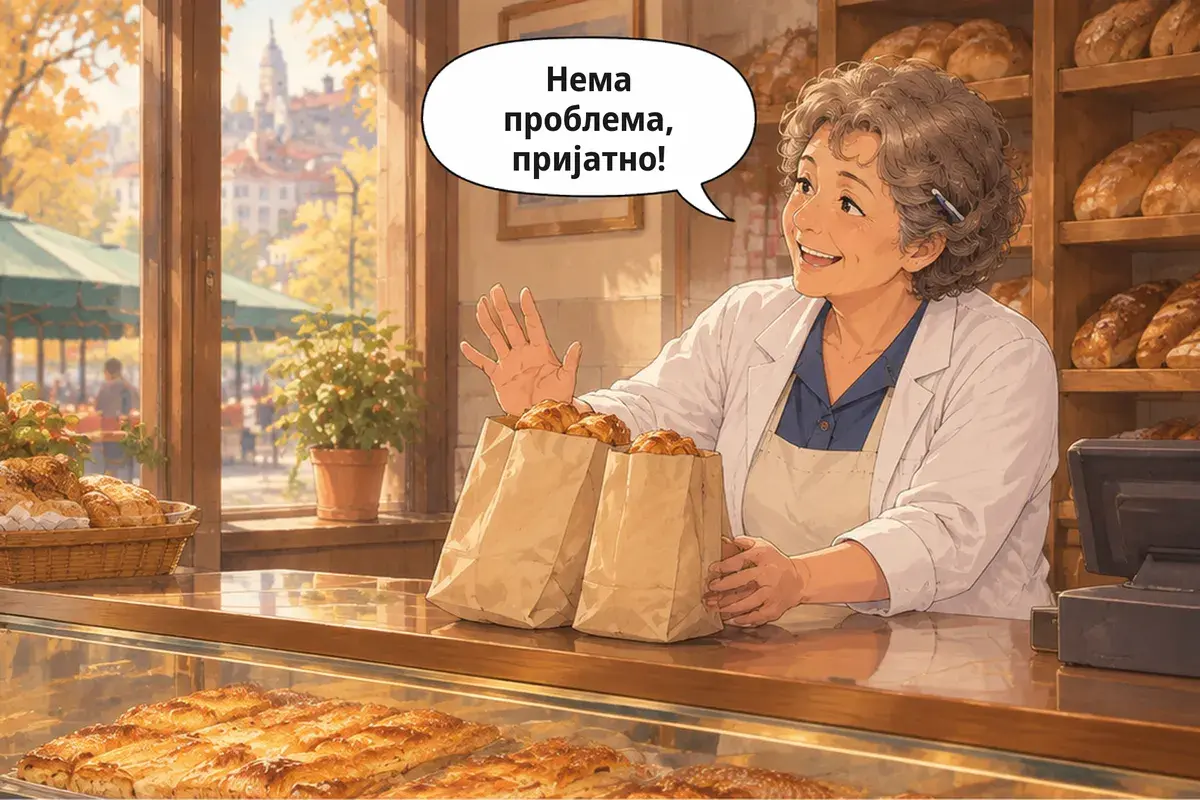
- Продавачица
Нема проблема, пријатно!
No problem, enjoy your meal!
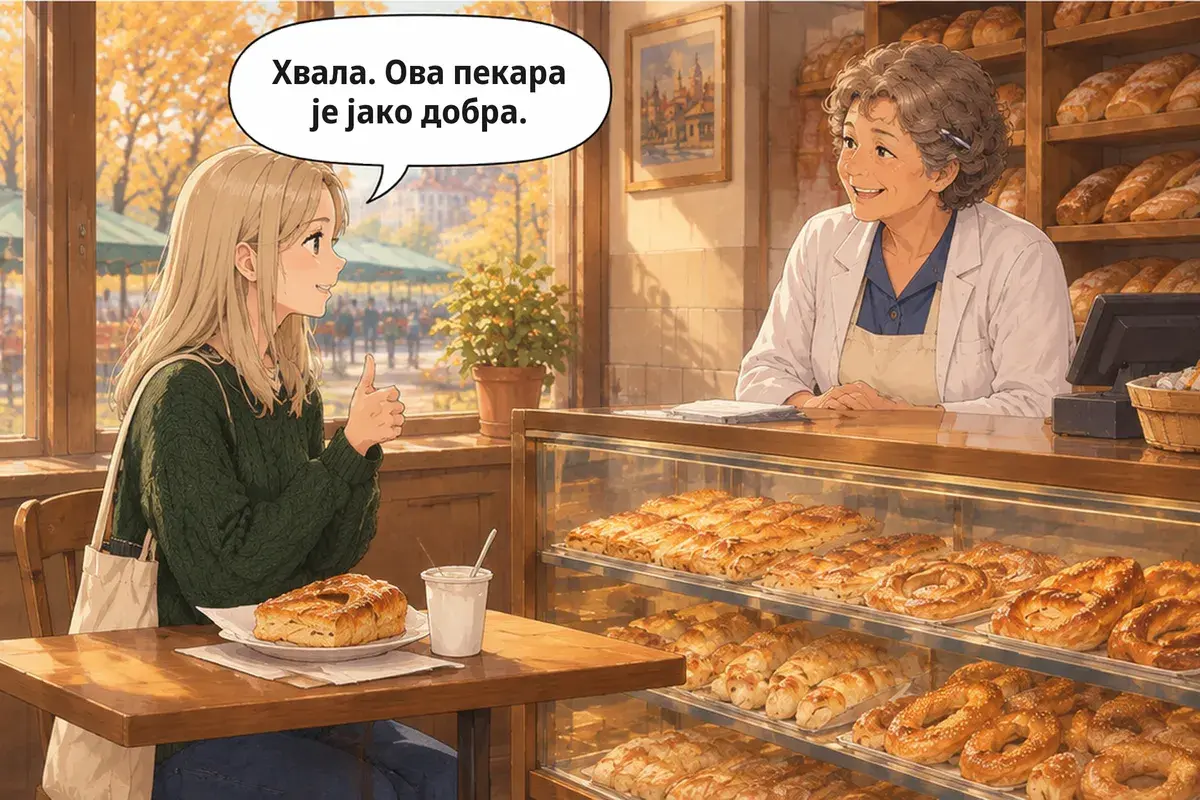
- Ана
Хвала. Ова пекара је јако добра.
Thanks. This bakery is very good.
Grammar for this text
- In
Хтела бих један бурек,хтела бихmeans "I'd like" said by a woman (a man saysхтео бих); it comes fromхтети(to want). The rule comes later, so take the phrase whole.бурекis the object here but doesn't change: masculine nouns for things keep their dictionary form in this role. - In
Са сиром или са месом?,саmeans "with", andсиромandмесомget the ending-ом(with what?). This is the instrumental case, covered in A2. - In
Овде једем. А колико кошта кифла?,једемmeans "I eat, I'm eating". It's from the irregular verbјести(једеш, једе, једемо, једете, једу), explained in unit 7. - In
Кифла је педесет динара, а ђеврек сто, a price is justје(is) + the number. In the second partјеandдинараare left out, as in English "and a bagel a hundred". InИмамо и погачице и хлеб,погачицеis the plural ofпогачица, andи … иmeans "both … and". - In
Две кифле и један сок за понети,двеis "two" for feminine nouns, soкифлаbecomesкифле;за понетиmeans "to go". InСок је сто тридесет(130) the number has no "and", andдинараis left out again. - In
Ево хиљаду динара, with an amount of money "a thousand" is usuallyхиљаду, notхиљада.ситноmeans small change;Немам ситноmeans "I don't have any small change" (немам=не+имам). Twenty dinars won't pay for it all, so the seller will give change from the thousand. Нема проблемаmeans "No problem" (afterнемаthe wordпроблемchanges: the genitive case, unit 12).Пријатно!means "Enjoy your meal!"
Words and grammar of the unit: Order at a bakery and a café.
Learn the words from the texts with flashcards
In the app, you can tap any word in a text to see its translation, forms and examples, and new words stick with flashcards. 15 minutes a day.
Start for freeEverything is open for free. No card needed to sign up.