
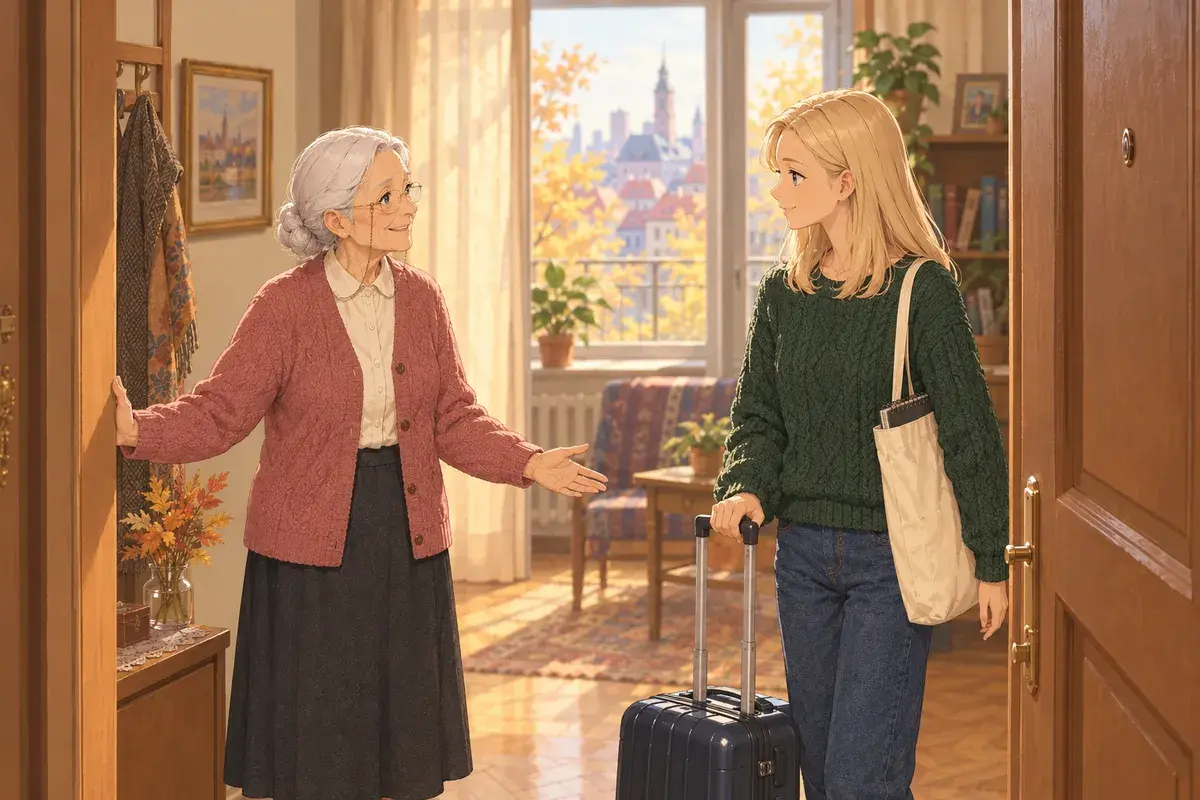
Serbian dialogue with translation · A1 · 13 lines
Изволите, уђите Please come in
Comic · 13 panels
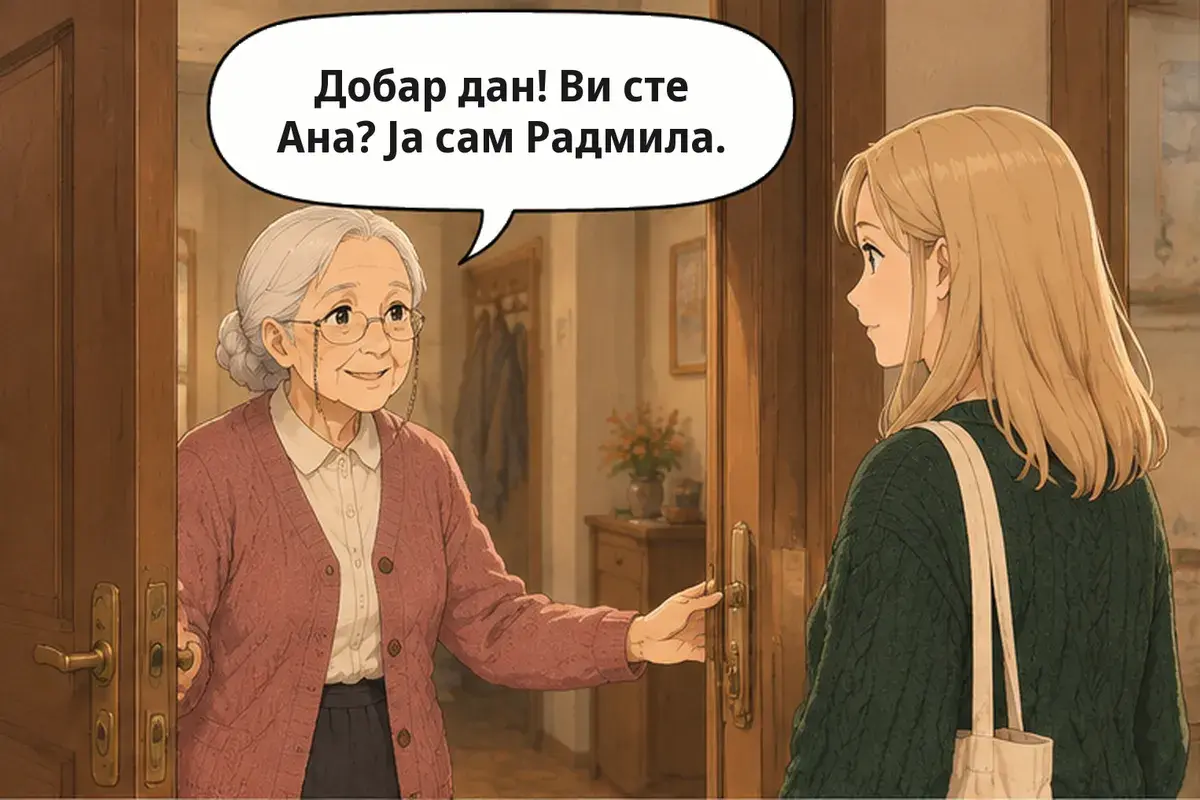
- Радмила
Добар дан! Ви сте Ана? Ја сам Радмила.
Good afternoon! Are you Ana? (formal) I'm Radmila.
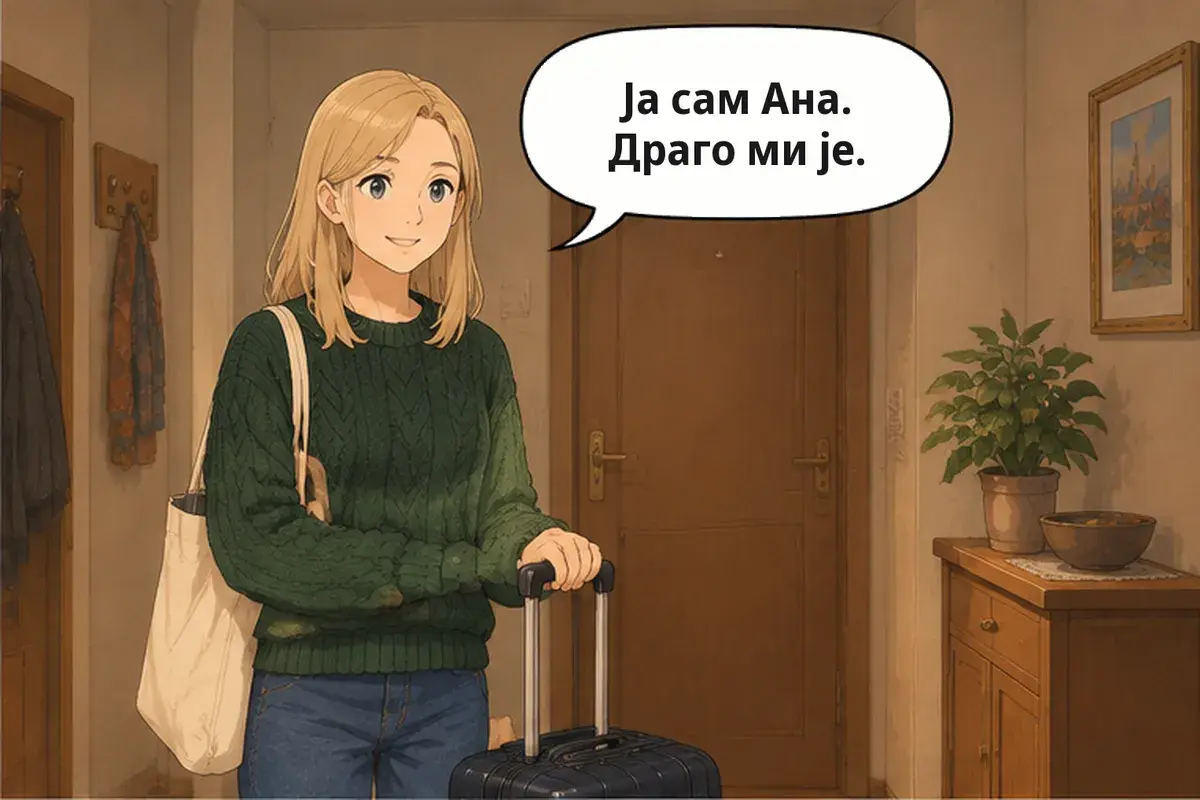
- Ана
Ја сам Ана. Драго ми је.
I'm Ana. Nice to meet you.
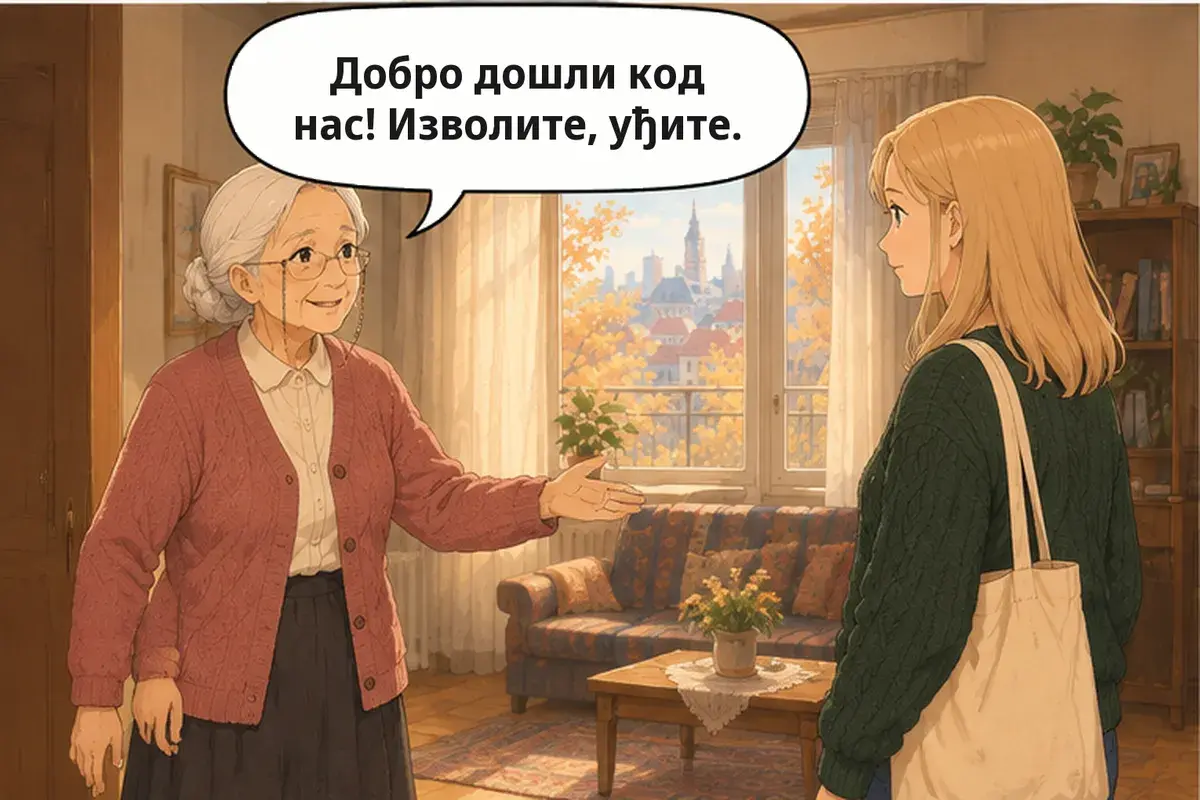
- Радмила
Добро дошли код нас! Изволите, уђите.
Welcome to our home! Please come in (formal).
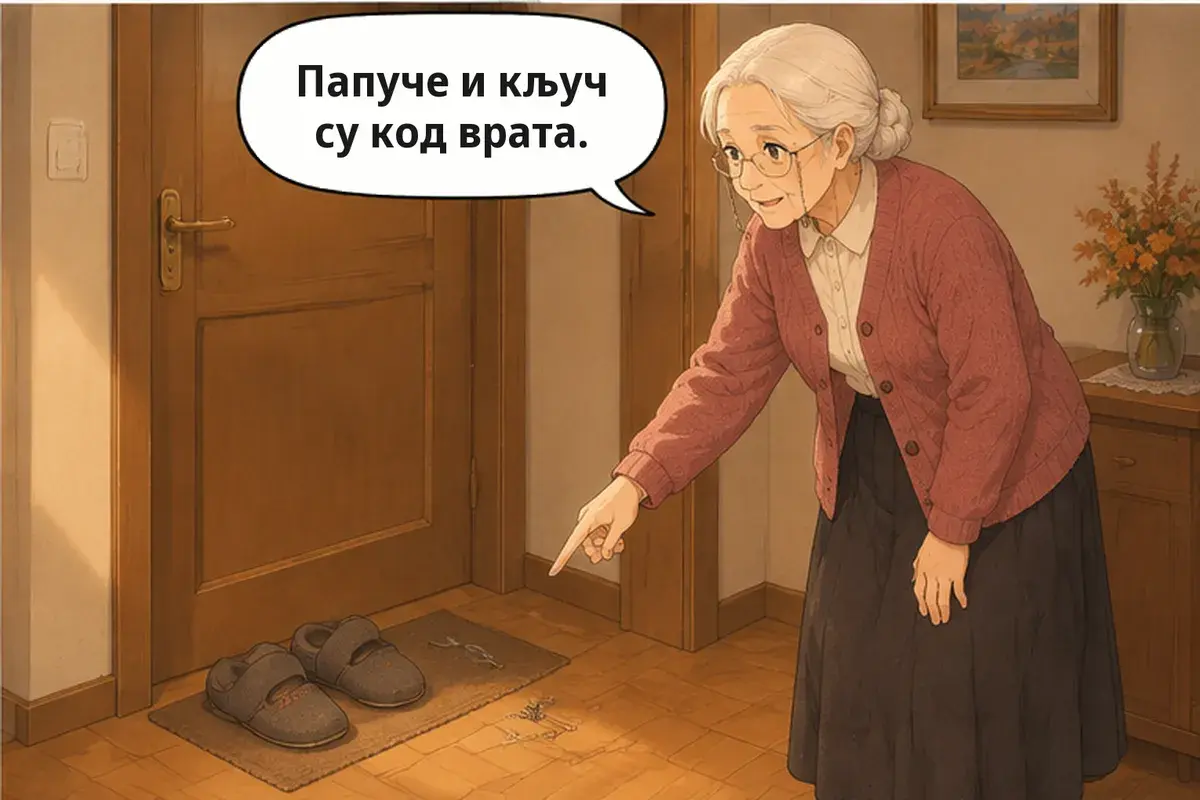
- Радмила
Папуче и кључ су код врата.
The slippers and the key are by the door.
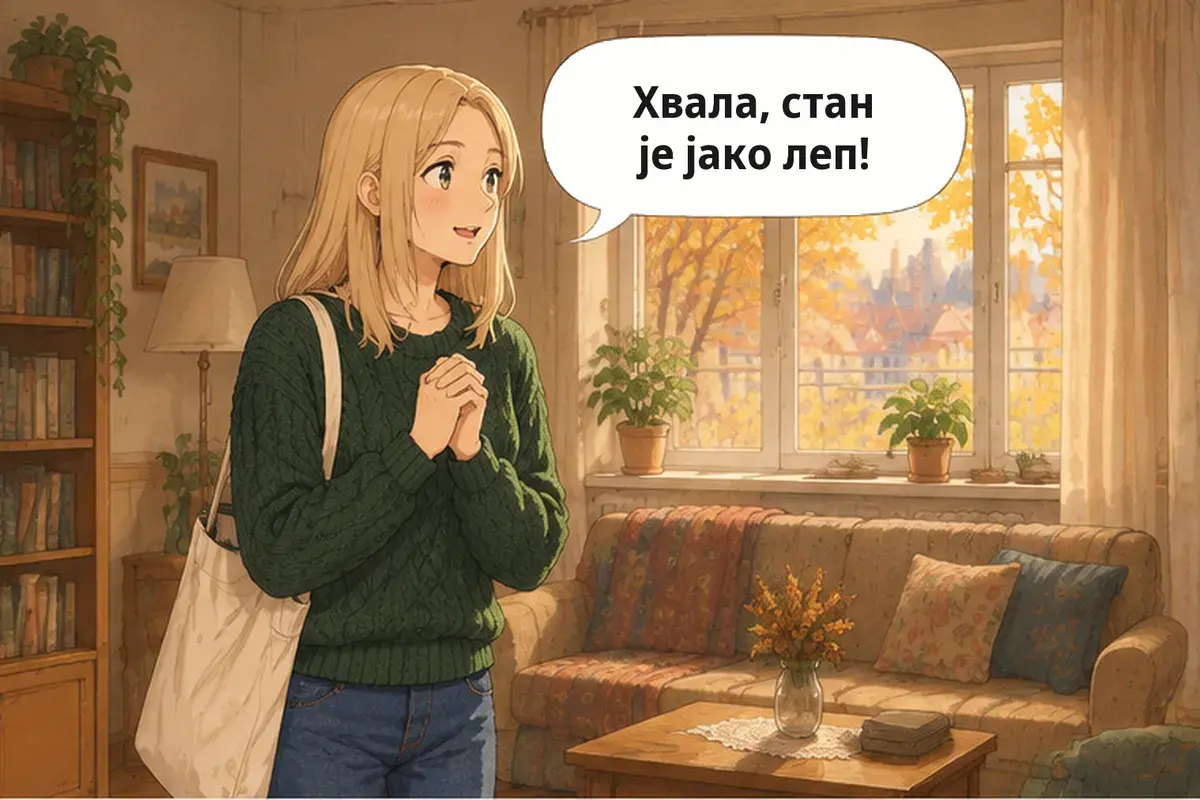
- Ана
Хвала, стан је јако леп!
Thanks, the apartment is very beautiful!
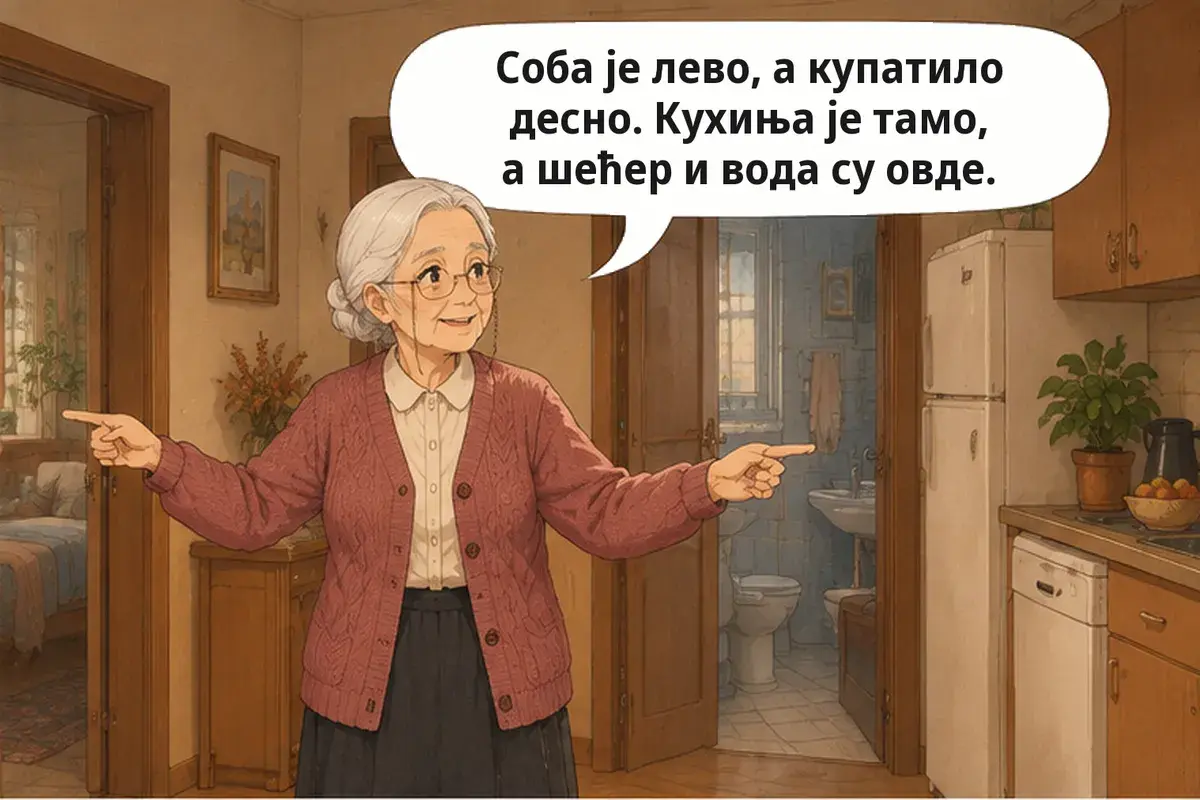
- Радмила
Соба је лево, а купатило десно. Кухиња је тамо, а шећер и вода су овде.
The room is on the left, and the bathroom is on the right. The kitchen is over there, and the sugar and water are here.
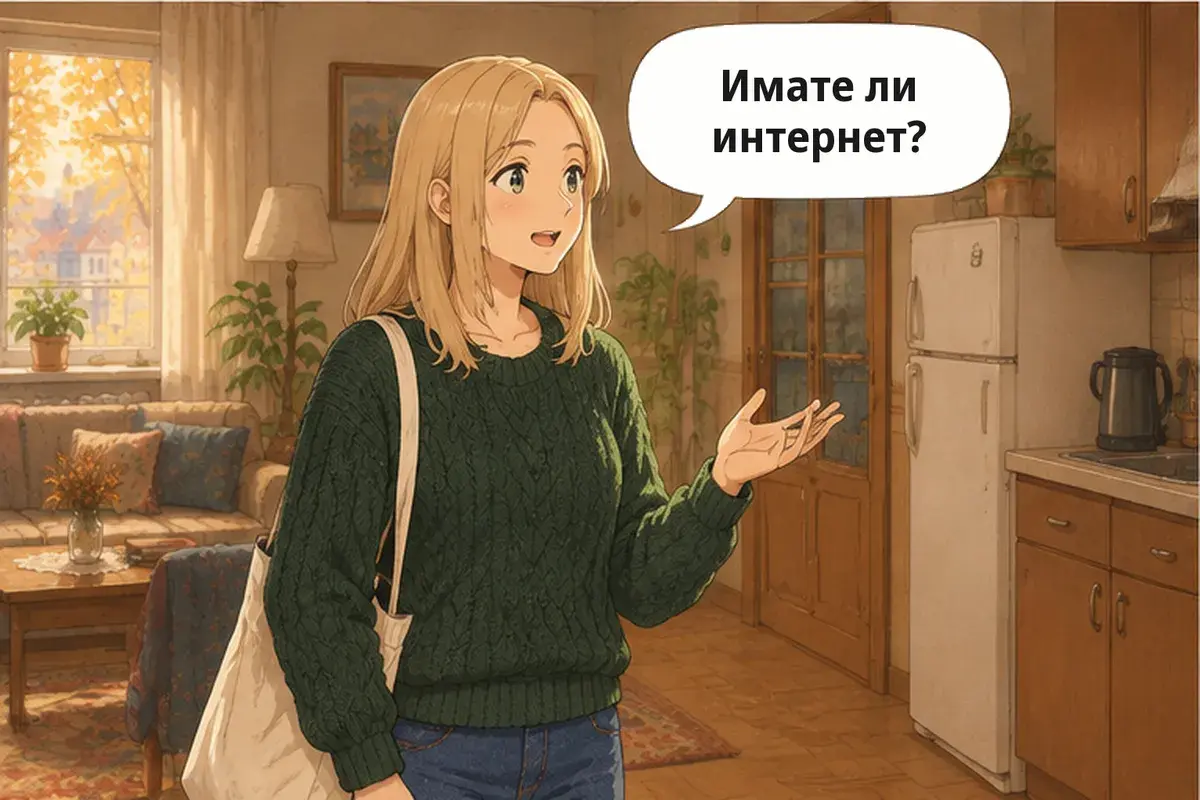
- Ана
Имате ли интернет?
Do you have internet? (formal)
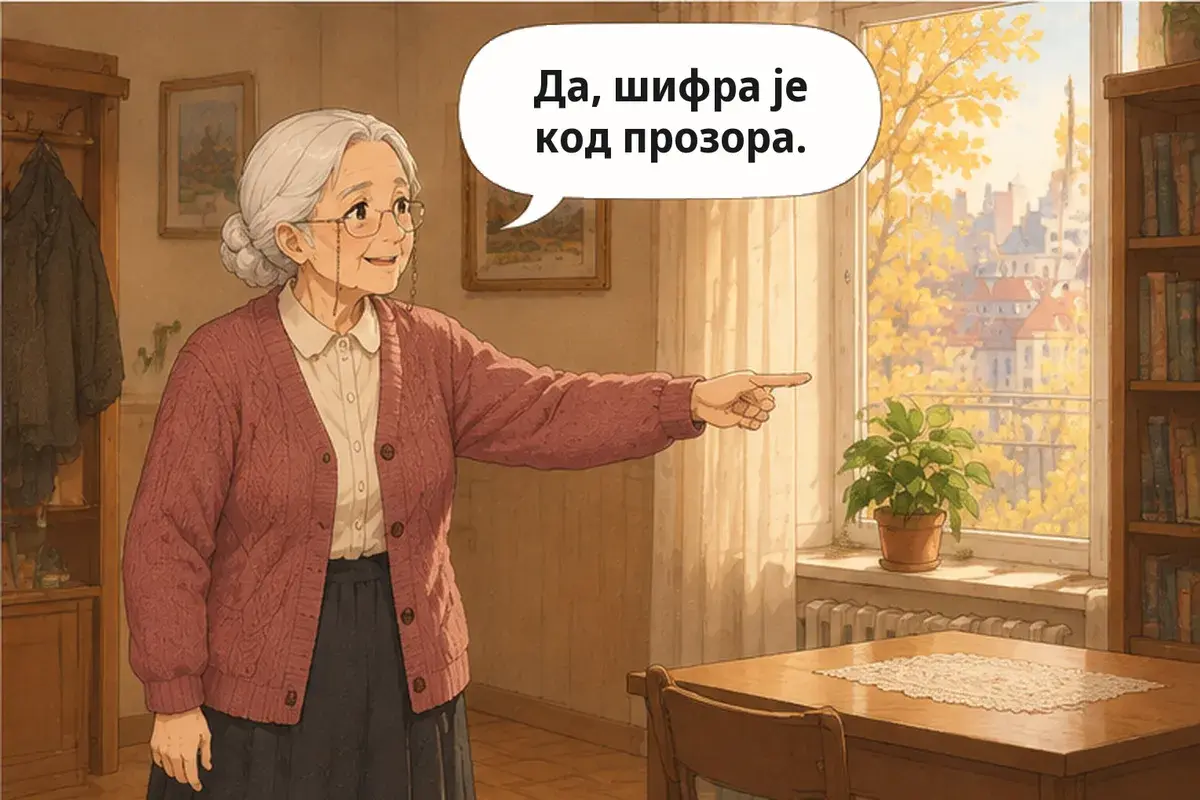
- Радмила
Да, шифра је код прозора.
Yes, the password is by the window.
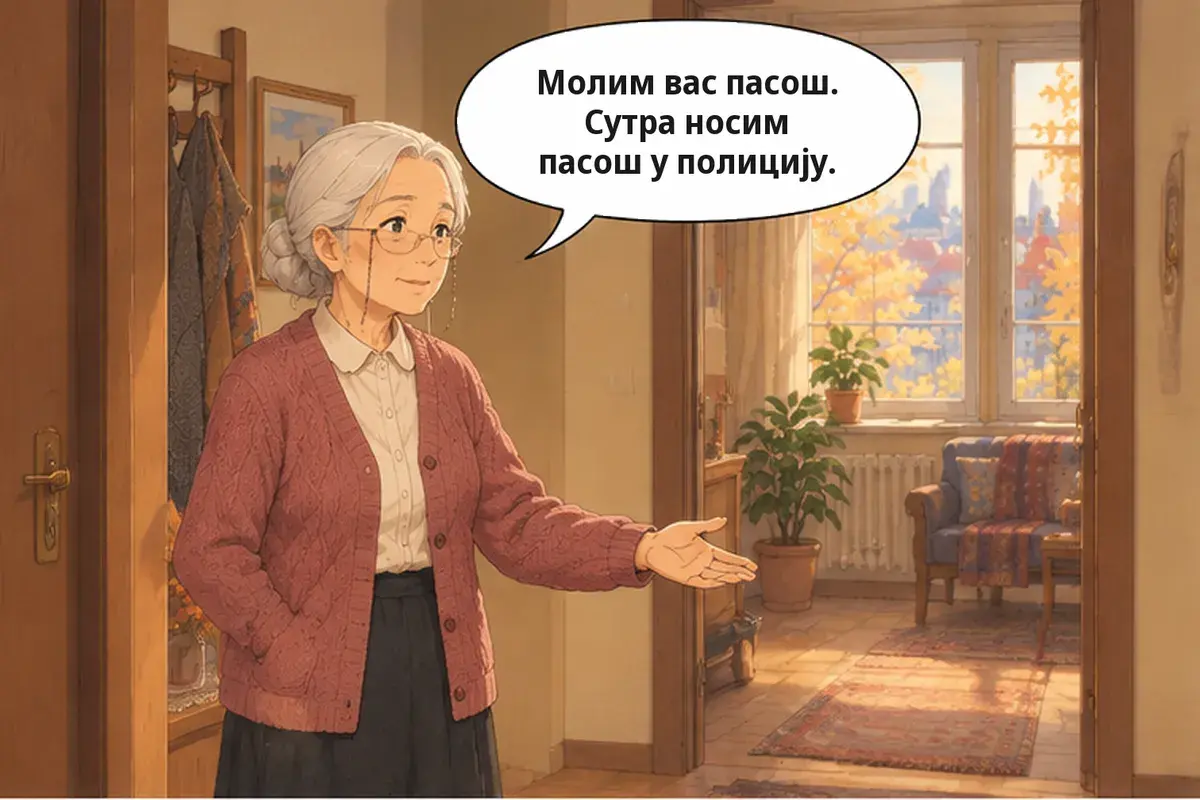
- Радмила
Молим вас пасош. Сутра носим пасош у полицију.
Passport, please (formal). Tomorrow I'm taking the passport to the police.
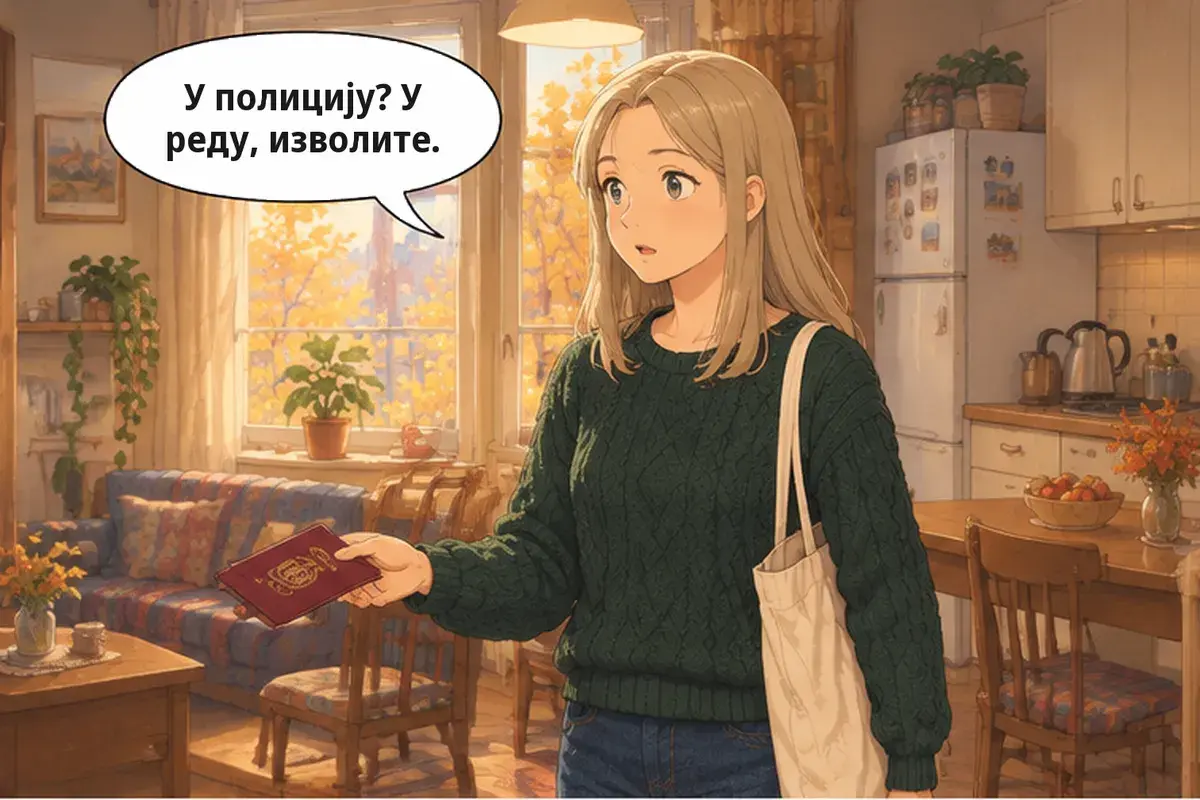
- Ана
У полицију? У реду, изволите.
To the police? All right, here you go (formal).
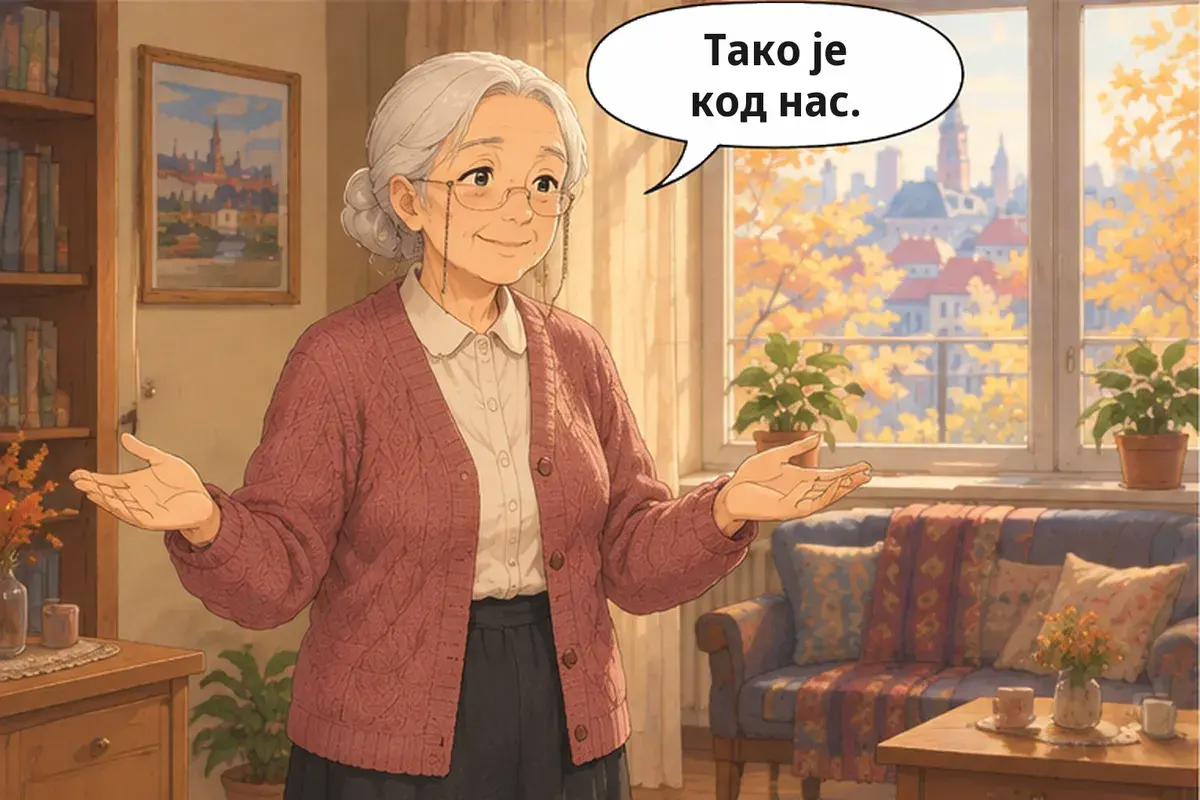
- Радмила
Тако је код нас.
That's how we do it here.
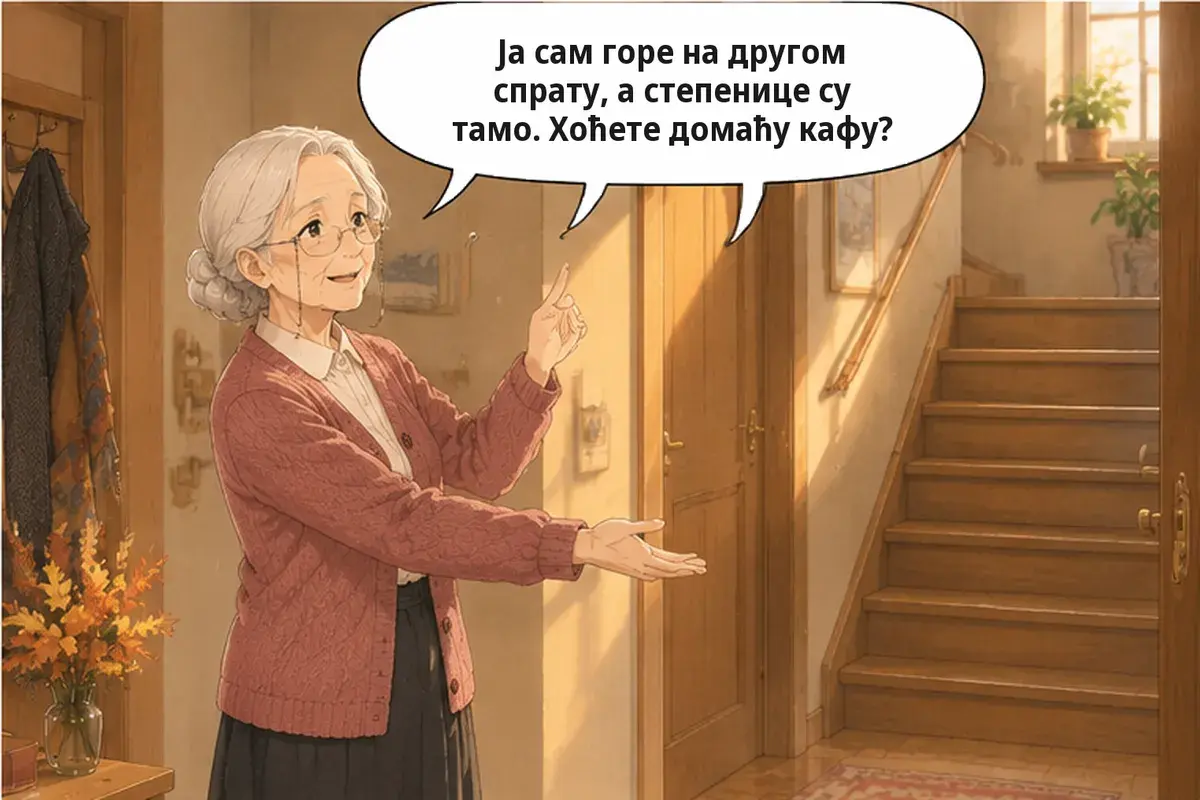
- Радмила
Ја сам горе на другом спрату, а степенице су тамо. Хоћете домаћу кафу?
I'm upstairs on the third floor, and the stairs are over there. Do you want some Serbian coffee? (formal)
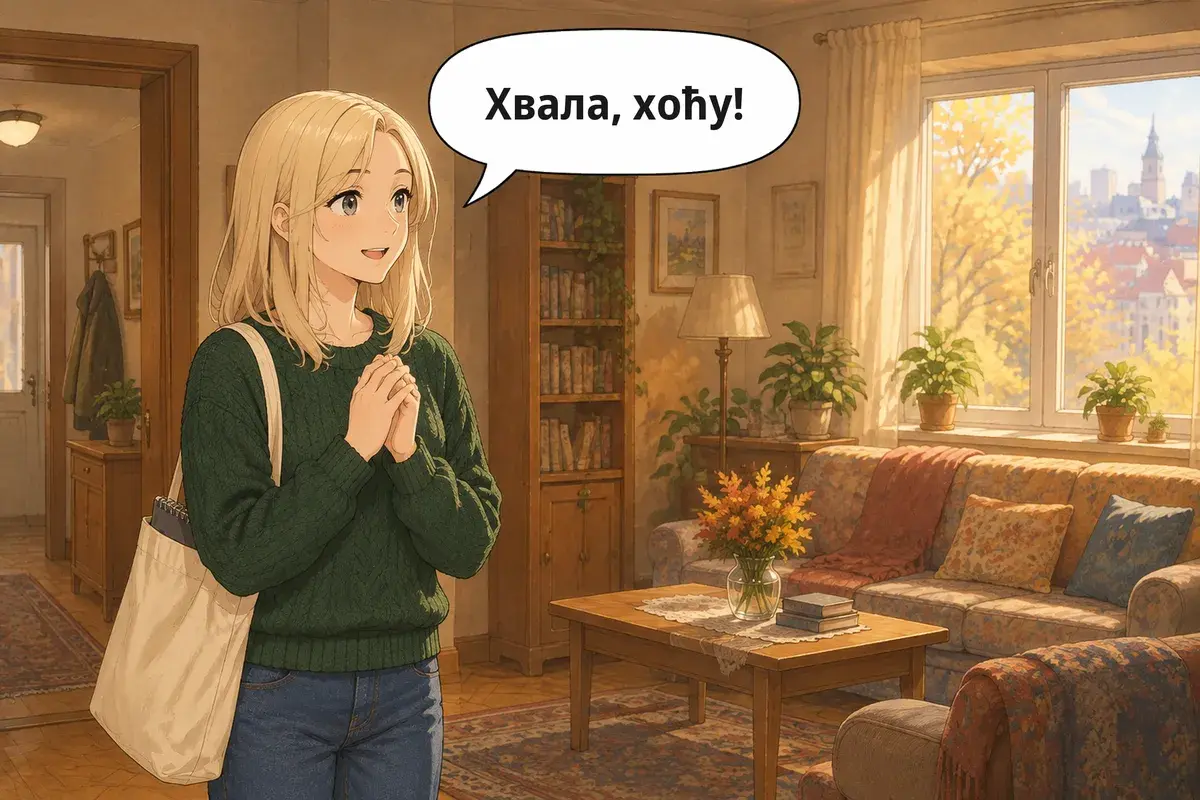
- Ана
Хвала, хоћу!
Thanks, I do!
Grammar for this text
Добро дошли код нас! Изволите, уђите.Добро дошлиis a set phrase: "welcome".код насmeans "at our place, to our home". Afterкодthe next word changes its ending (код прозора, код врата): this is the genitive case, unit 12.уђитеis a request to someone you callви, fromући(to come in). The imperative comes in A2; for now learn it as a set phrase.Папуче и кључ су код врата:папуче(slippers) andврата(door) are used in the plural, so the verb isсу(are). In Serbia people take off their shoes at home and put on slippers.Соба је лево, а купатило десно:левоandдесноmean "on the left" and "on the right". In the second halfјеis left out, just as English can say "the room is on the left, the bathroom on the right". Also:тамо— over there,овде— here.Да, шифра је код прозора:шифраis both "password" and "code";код прозораmeans "by the window".Молим вас пасош. Сутра носим пасош у полицију.молим васis "please" to someone you callви. The wordпасошis said twice, because the short word for "it" (га) comes in A2.носимmeans "I carry, I take": the verbносити, type-им. Withсутраthe present tense is about tomorrow, like English "I'm taking it tomorrow". A landlord has to register a foreign guest with the police, so Radmila needs the passport.Тако је код насmeans "That's how we do it here".Ја сам горе на другом спрату: floors are counted from the ground floor, soпрви спратis the second floor in American counting andдруги спратis the third. Ana livesна првом спрату, Radmilaна другом спрату(this "where" form is the locative case, unit 8).Хоћете домаћу кафу?хоћетеmeans "you want" (toви): the irregular verbхтети(хоћу, хоћеш, хоће, хоћемо, хоћете, хоће).домаћу кафуis Serbian coffee; the ending changes because it is the object (unit 5). An invitation for Serbian coffee at home means a visit of about an hour.
Words and grammar of the unit: Move into a rented apartment.
Learn the words from the texts with flashcards
In the app, you can tap any word in a text to see its translation, forms and examples, and new words stick with flashcards. 15 minutes a day.
Start for freeEverything is open for free. No card needed to sign up.