

Serbian dialogue with translation · A1 · 12 lines
Шта радиш у слободно време? What do you do in your free time?
Comic · 12 panels
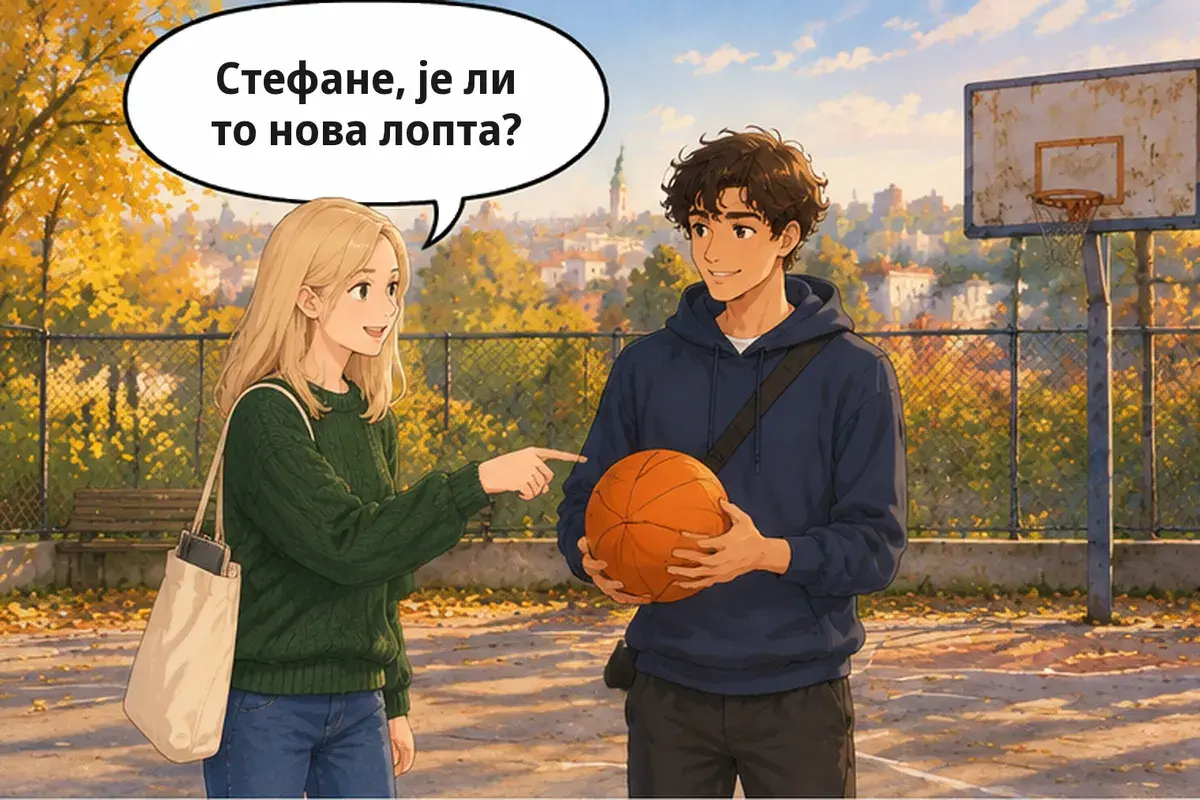
- Ана
Стефане, је ли то нова лопта?
Stefan, is that a new ball?
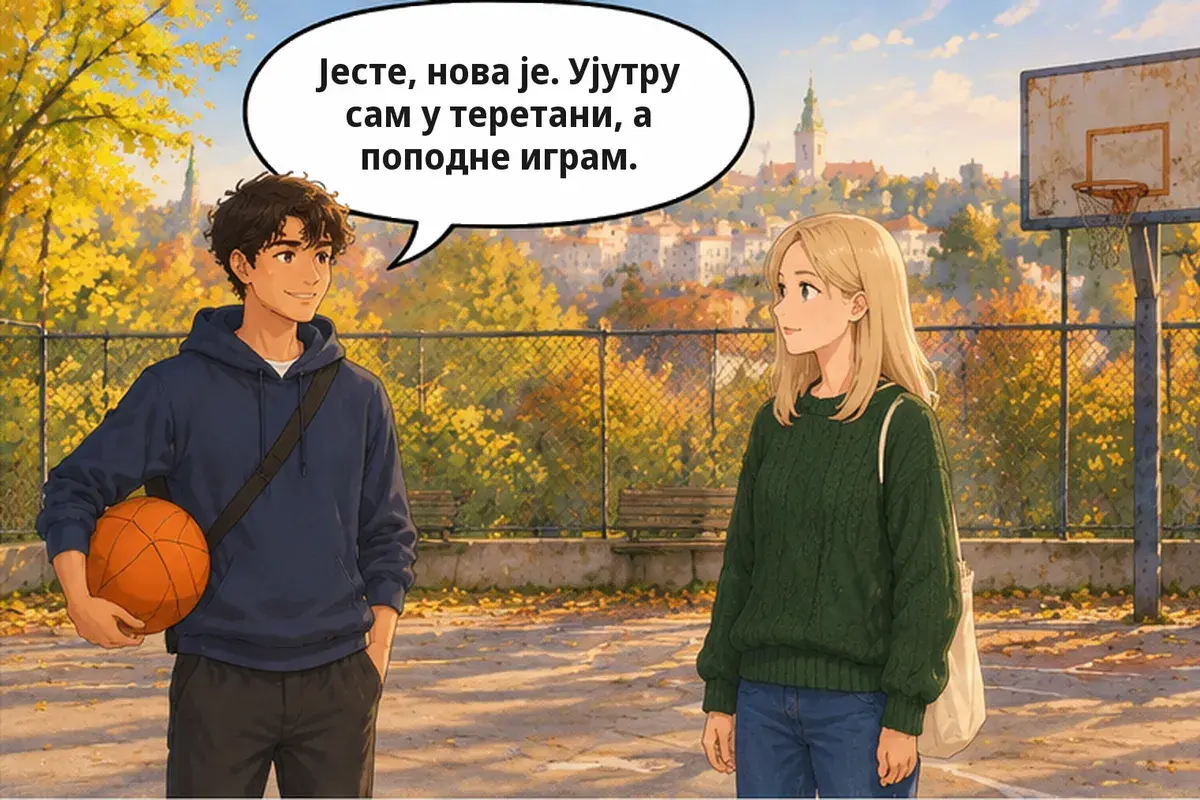
- Стефан
Јесте, нова је. Ујутру сам у теретани, а поподне играм.
Yes, it is. It's new. In the morning I'm at the gym, and in the afternoon I play.
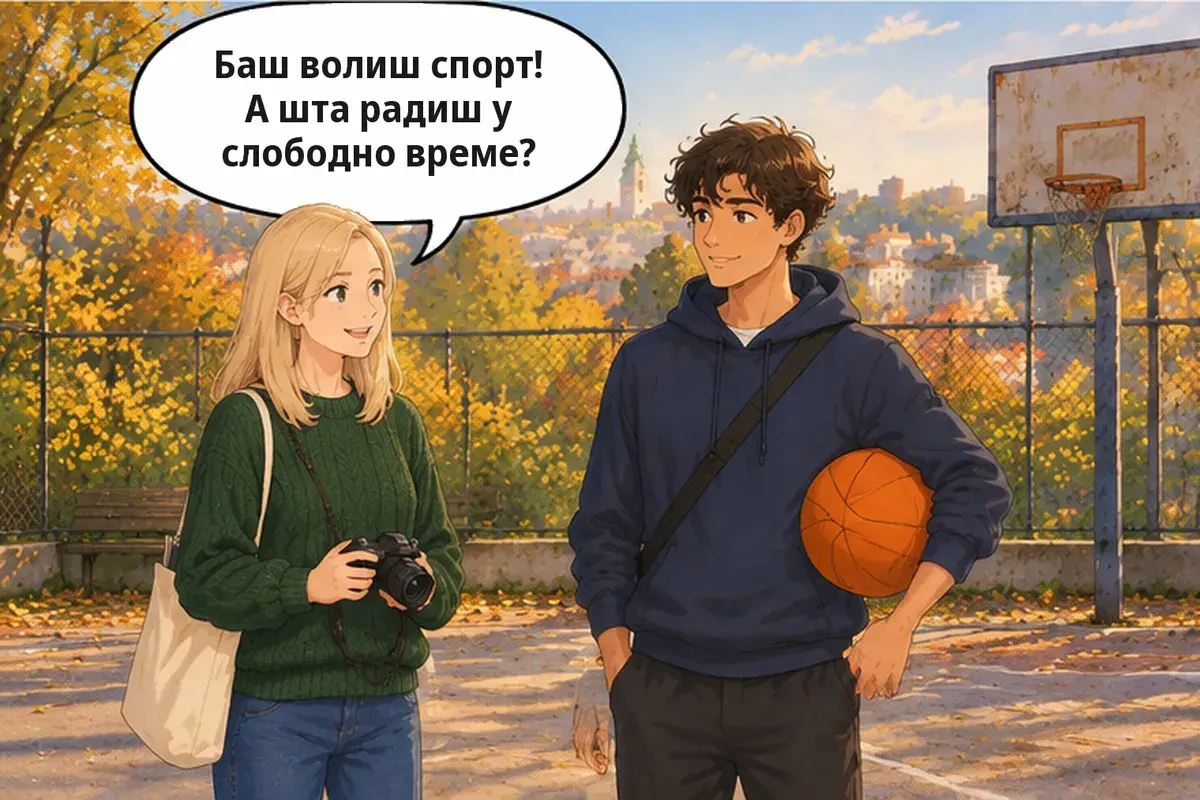
- Ана
Баш волиш спорт! А шта радиш у слободно време?
You really love sports! And what do you do in your free time?
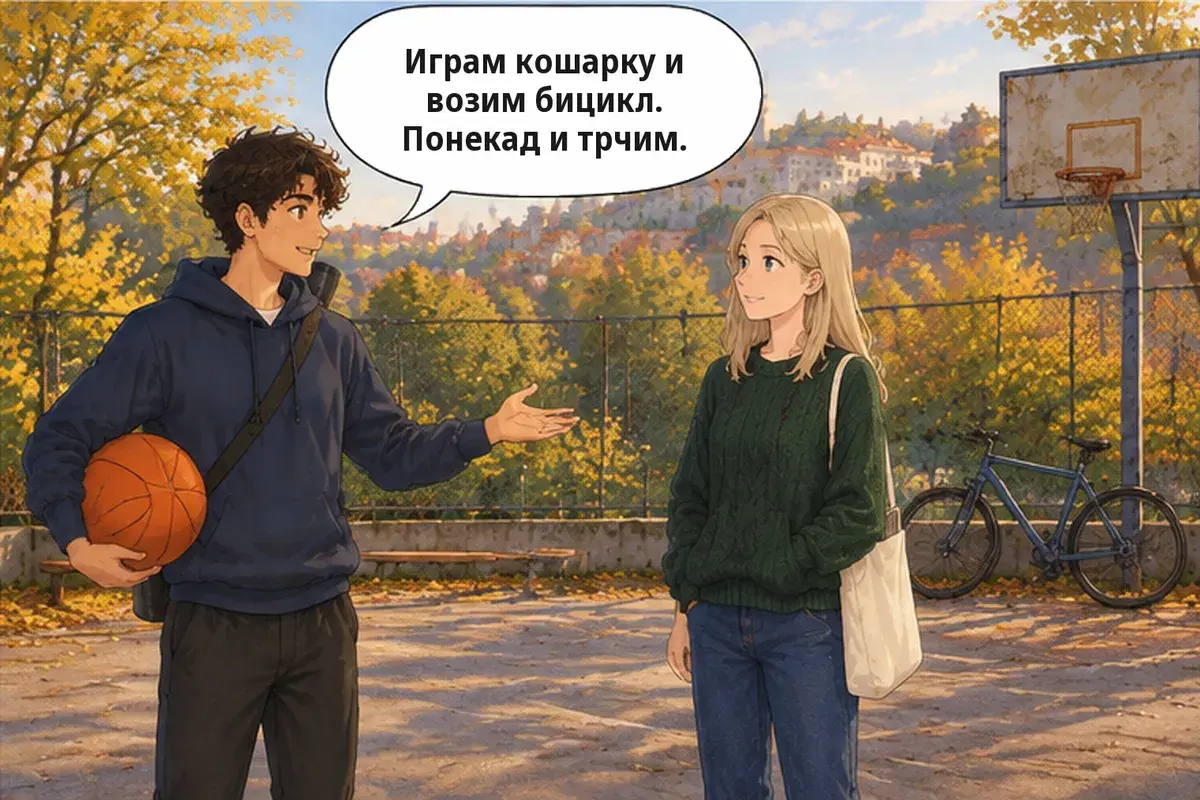
- Стефан
Играм кошарку и возим бицикл. Понекад и трчим.
I play basketball and ride a bike. Sometimes I run too.
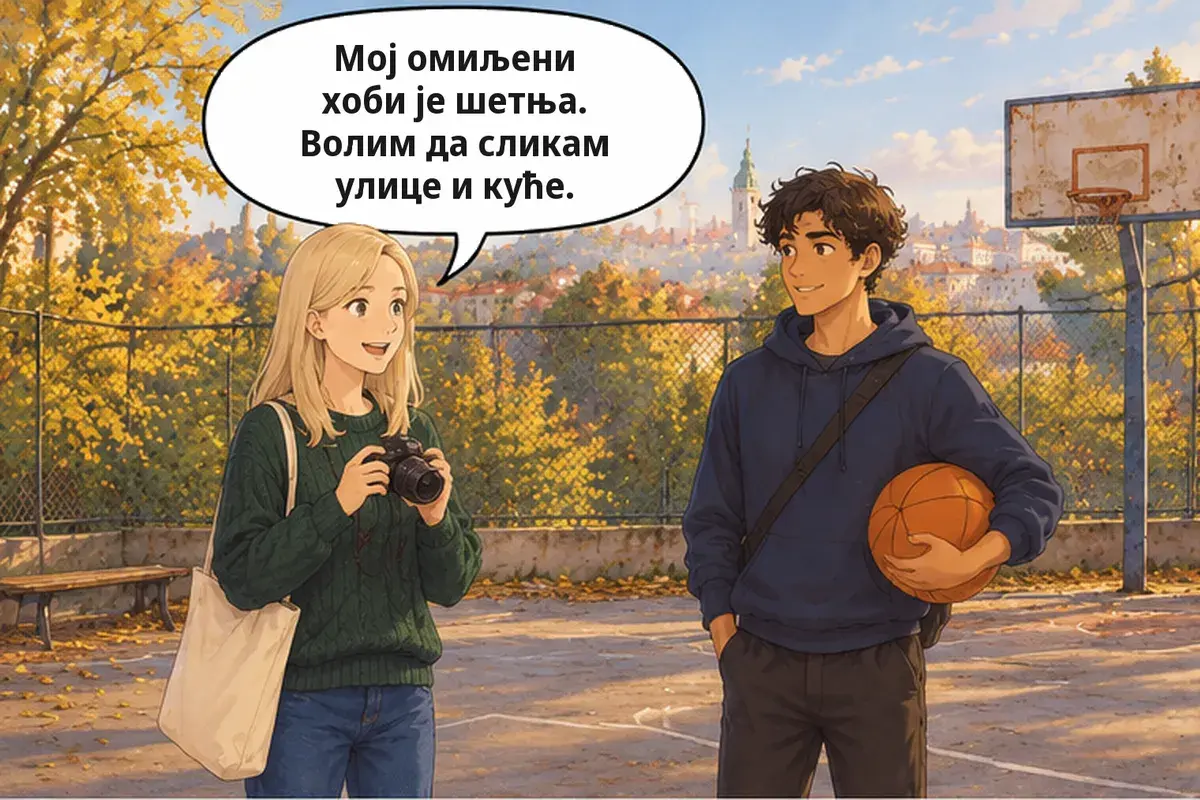
- Ана
Мој омиљени хоби је шетња. Волим да сликам улице и куће.
My favorite hobby is walking. I like to take photos of streets and houses.
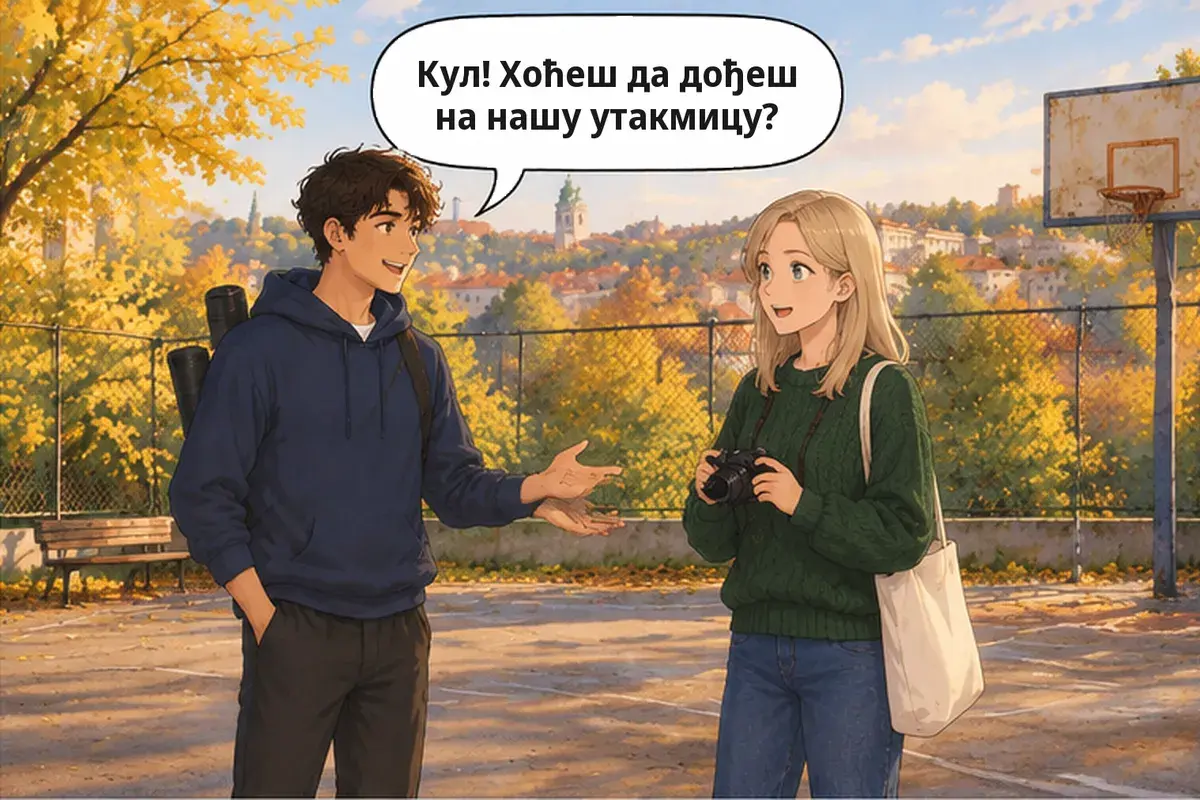
- Стефан
Кул! Хоћеш да дођеш на нашу утакмицу?
Cool! Do you want to come to our game?
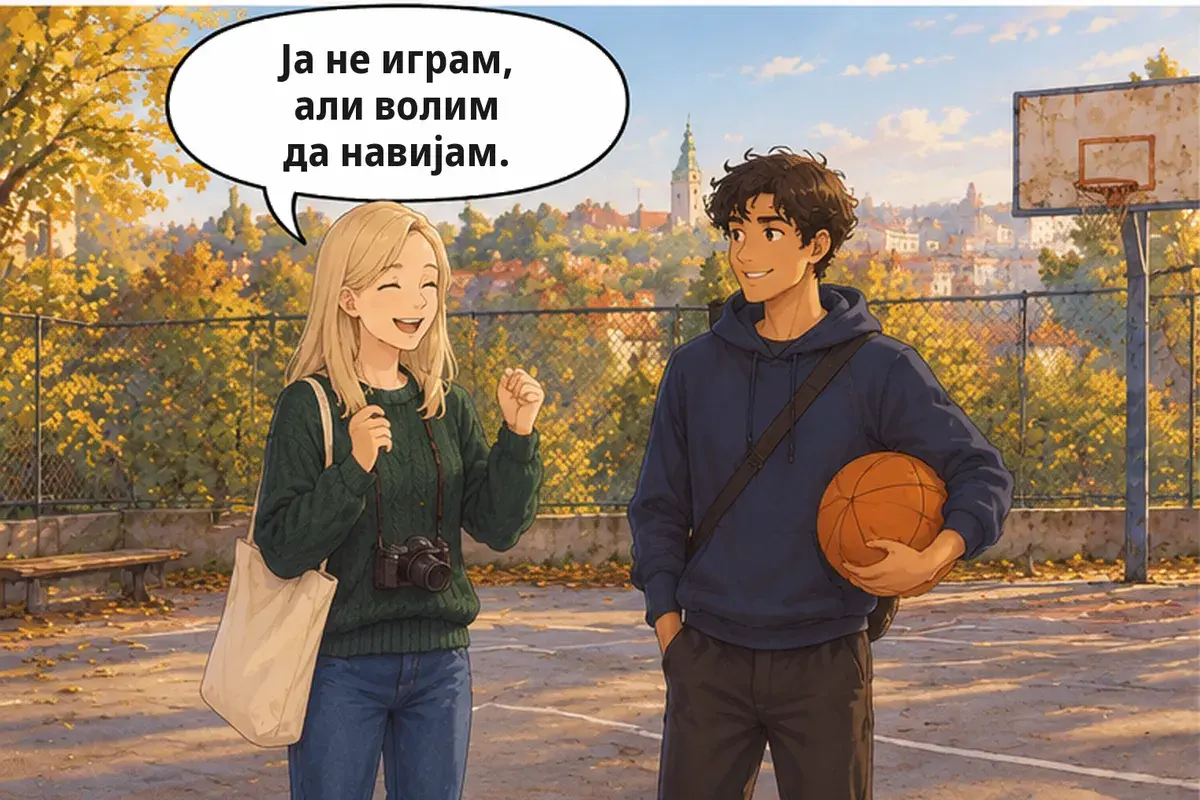
- Ана
Ја не играм, али волим да навијам.
I don't play, but I like to cheer.
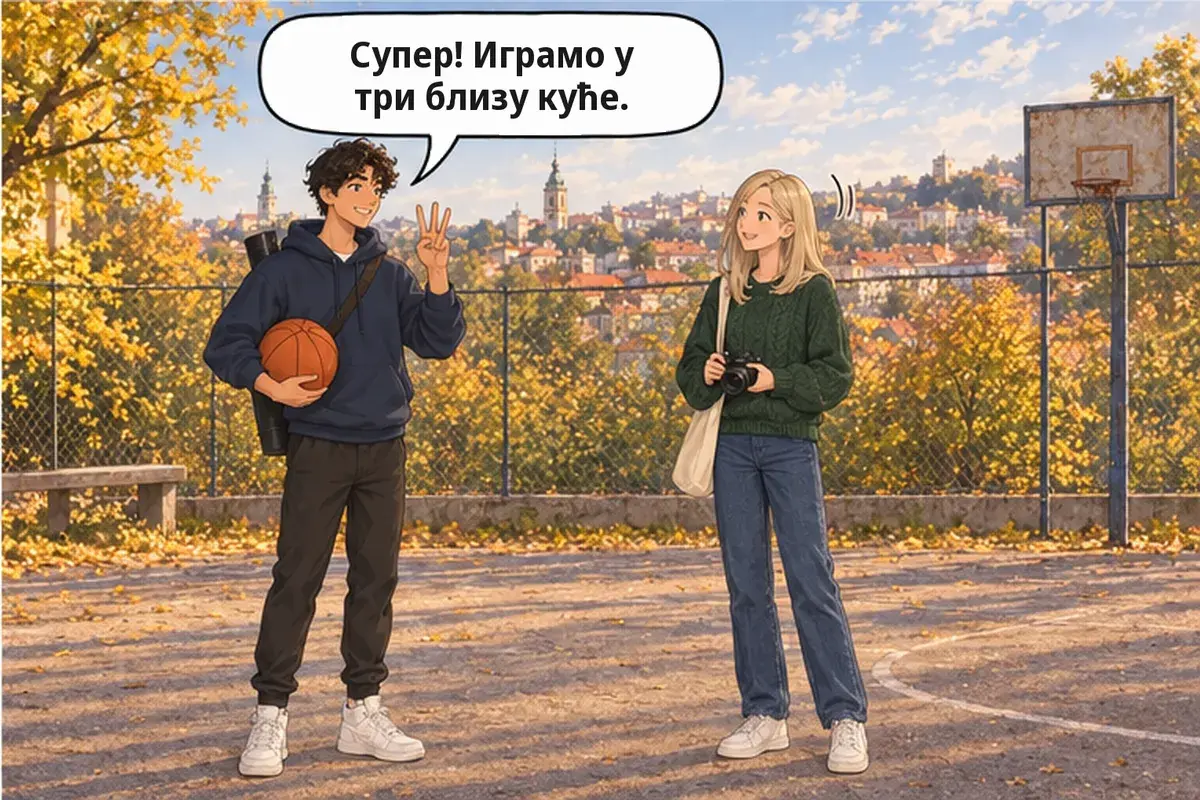
- Стефан
Супер! Играмо у три близу куће.
Great! We're playing at three near the house.
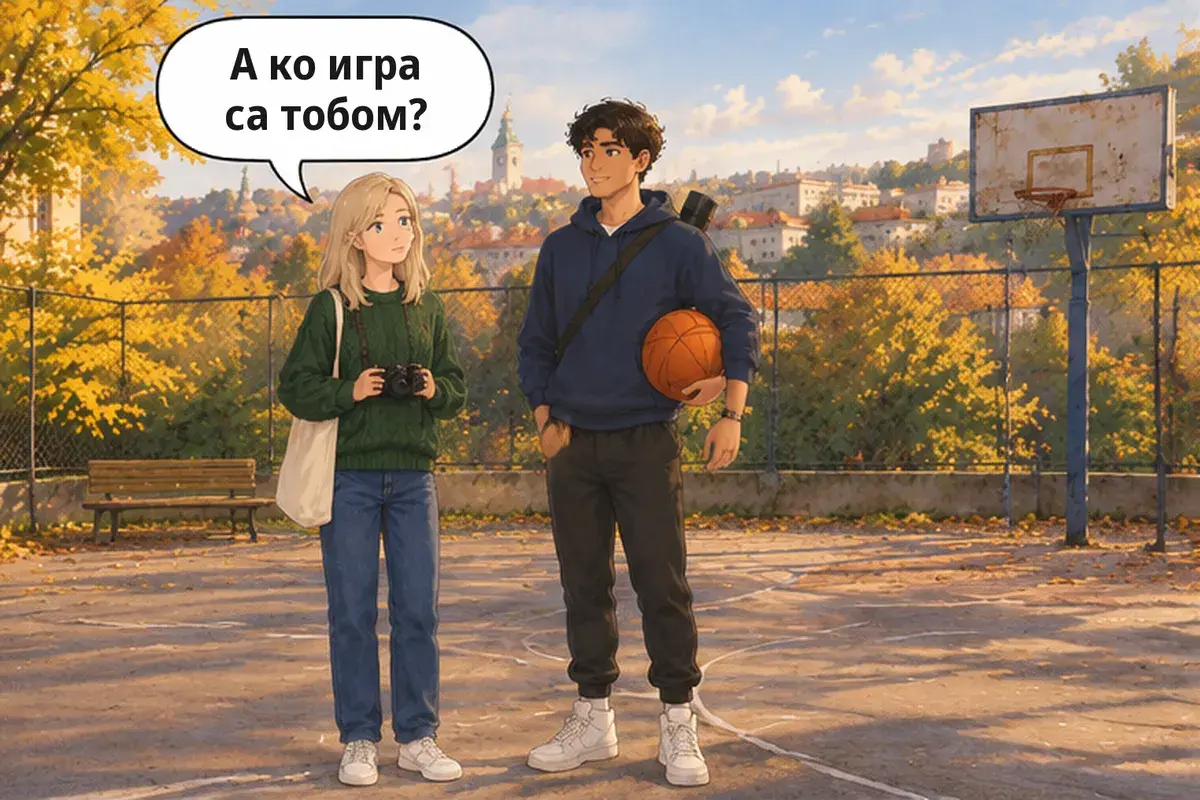
- Ана
А ко игра са тобом?
And who plays with you?
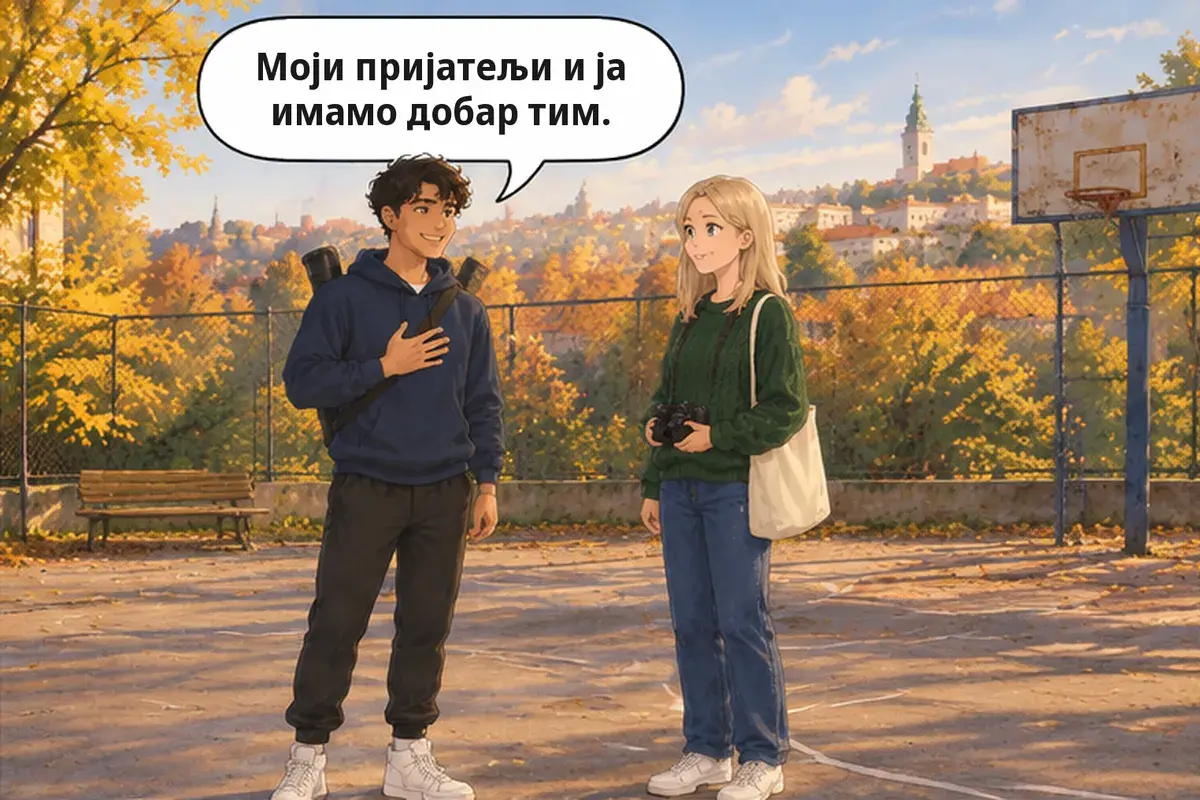
- Стефан
Моји пријатељи и ја имамо добар тим.
My friends and I have a good team.

- Ана
Добро, долазим. Ваш тим је мој тим!
OK, I'm coming. Your team is my team! (to several people)
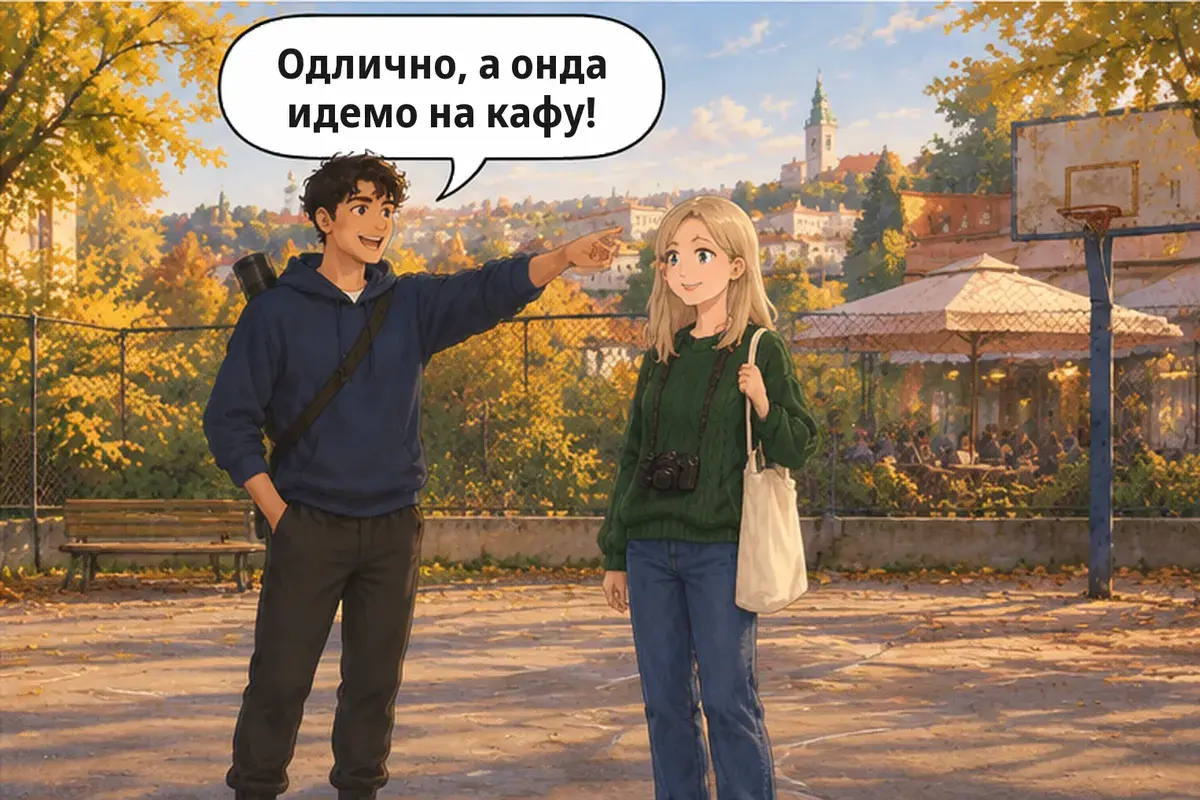
- Стефан
Одлично, а онда идемо на кафу!
Excellent, and then we're going for coffee!
Grammar for this text
Ујутру сам у теретани, а поподне играм—сам(am) is a clitic, a short word that stands second, right after the first word.у теретани— at the gym: 'where?' takes the locative (unit 8).играмhere means 'I play a game'.Играм кошарку и возим бицикл— no preposition, just like English:играти кошарку— to play basketball,возити бицикл— to ride a bike.кошарка→кошарку: the accusative, the object form.Мој омиљени хоби је шетња—је(is) stands after the first group of words,мој омиљени хоби, not after the first word.Волим да сликам улице и куће—волети да+ present: I like to…сликатиmeans both 'to take photos' and 'to paint'; Ana takes photos of the city.куће— houses, the plural ofкућа.Хоћеш да дођеш на нашу утакмицу?—хоћеш— you want (хтети).да дођеш— to come, fromдоћи: this form is never used alone, only afterда.нашу утакмицу— the accusative for 'where to?':наша→нашу.А ко игра са тобом?—са тобом(with you) is a set phrase: the instrumental case comes at A2, so learn it as a whole for now.Ваш тим је мој тим—вашhere is not the polite 'you': Ana means Stefan's whole team, several people. That's why the translation says (to several people).
Words and grammar of the unit: Talk about your hobbies.
Learn the words from the texts with flashcards
In the app, you can tap any word in a text to see its translation, forms and examples, and new words stick with flashcards. 15 minutes a day.
Start for freeEverything is open for free. No card needed to sign up.