

Serbian story with translation · A1 · 11 lines
Код врата је џем од шљива There's plum jam by the door
Comic · 4 panels
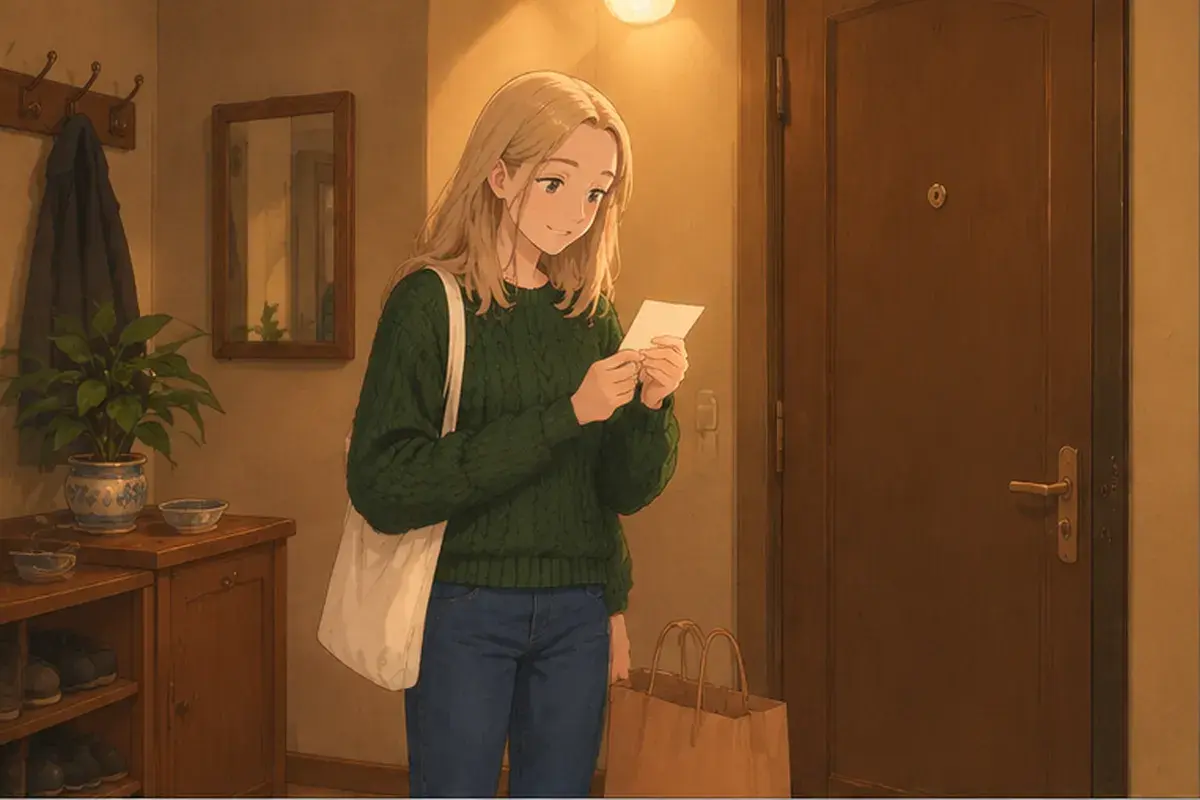
Порука од Радмиле.
A note from Radmila.
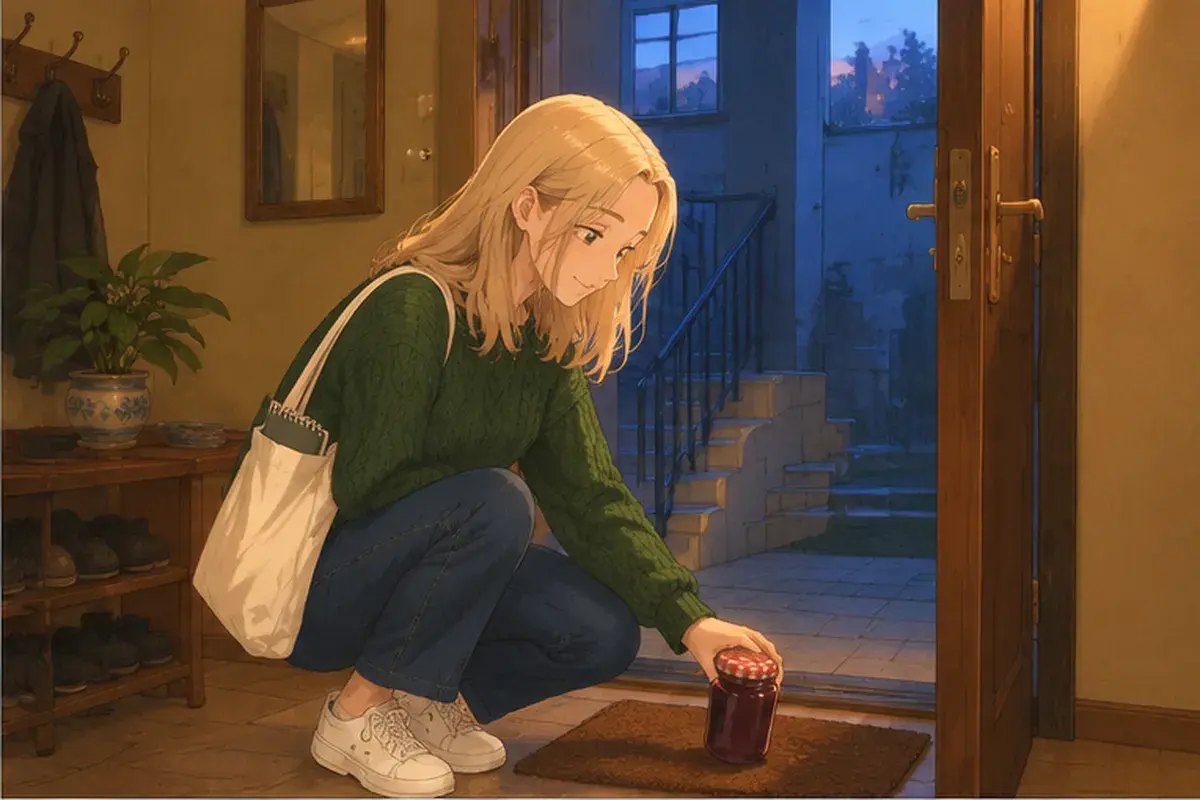
Ано, код врата је џем од шљива за ваше палачинке.
Ana, there's plum jam by the door for your crepes (formal).
У кеси су и јагоде из моје баште.
In the bag there are also strawberries from my garden.
Малине и вишње још нису зреле.
The raspberries and sour cherries aren't ripe yet.

Хвала вам на позиву.
Thank you for the invitation (formal).
Стефан и ја долазимо у пола осам.
Stefan and I are coming at seven thirty.
Стефан је увек гладан и може да поједе десет палачинака!
Stefan is always hungry and can eat ten crepes!
Он носи шлаг: без шлага не једе палачинке.
He's bringing whipped cream: he doesn't eat crepes without it.
Данас немам времена за продавницу. Кекс за чај правим код куће.
Today I don't have time for the store. I'm making cookies for tea at home.

Видимо се вечерас.
See you tonight.
Ваша Радмила
Yours, Radmila (formal)
Grammar for this text
Ано, код врата је џем од шљива—Аноis the calling form ofАна(the vocative); in English it's just Ana.код врата— by the door (врата— door, a word that exists only in the plural).од шљива— made of plums: afterодcomes the genitive plural, and forшљива(plum) it looks the same as the basic form.Хвала вам на позиву— a set phrase: Thank you for the invitation. The wordвам(to you) comes at A2. Radmila saysвиto Ana, as she does to everyone.Стефан и ја долазимо у пола осам—долазимо— we're coming (долазити, theмиform).у пола осам— at seven thirty: halfway to eight, not eight thirty.Видимо се вечерас— a set phrase: See you;вечерас— tonight.У кеси су и јагоде из моје баште—у кеси— in the bag (the locative, 'where':кеса→кеси);из моје баште— from my garden: afterизcomes the genitive,башта→баште.може да поједе десет палачинака—појести— to eat up (one finished action); afterможе даcomes its present formпоједе.Данас немам времена за продавницу— afterнемам(I don't have) comes the genitive:време→времена.Малине и вишње још нису зреле—зрео(ripe) takes the feminine plural formзреле, becauseмалинеandвишњеare feminine plural.Он носи шлаг: без шлага не једе палачинке—носи— he's carrying, he's bringing: Serbs say it about what a guest brings along. Afterбез(without) comes the genitive:шлаг→шлага.
Words and grammar of the unit: Buy groceries for dinner.
Learn the words from the texts with flashcards
In the app, you can tap any word in a text to see its translation, forms and examples, and new words stick with flashcards. 15 minutes a day.
Start for freeEverything is open for free. No card needed to sign up.