
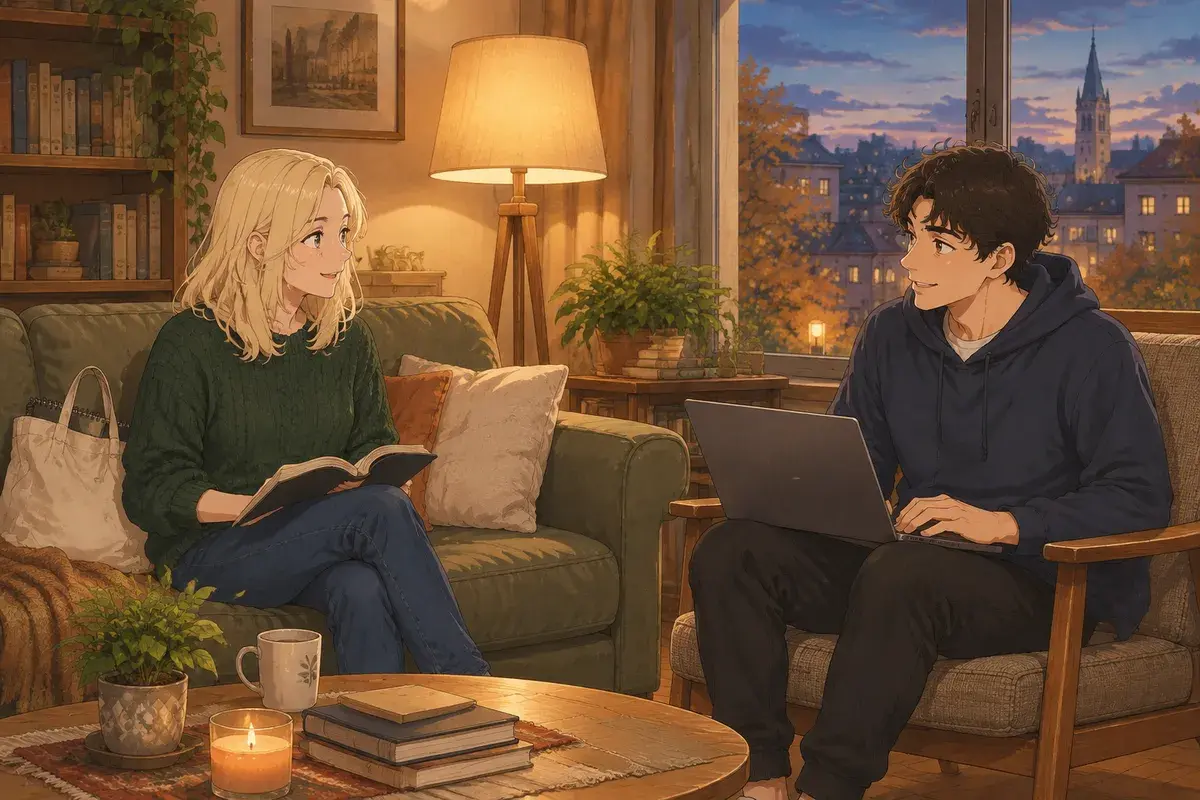
Serbian dialogue with translation · A1 · 13 lines
Ма дај, то је досадно! Come on, that's boring!
Comic · 13 panels
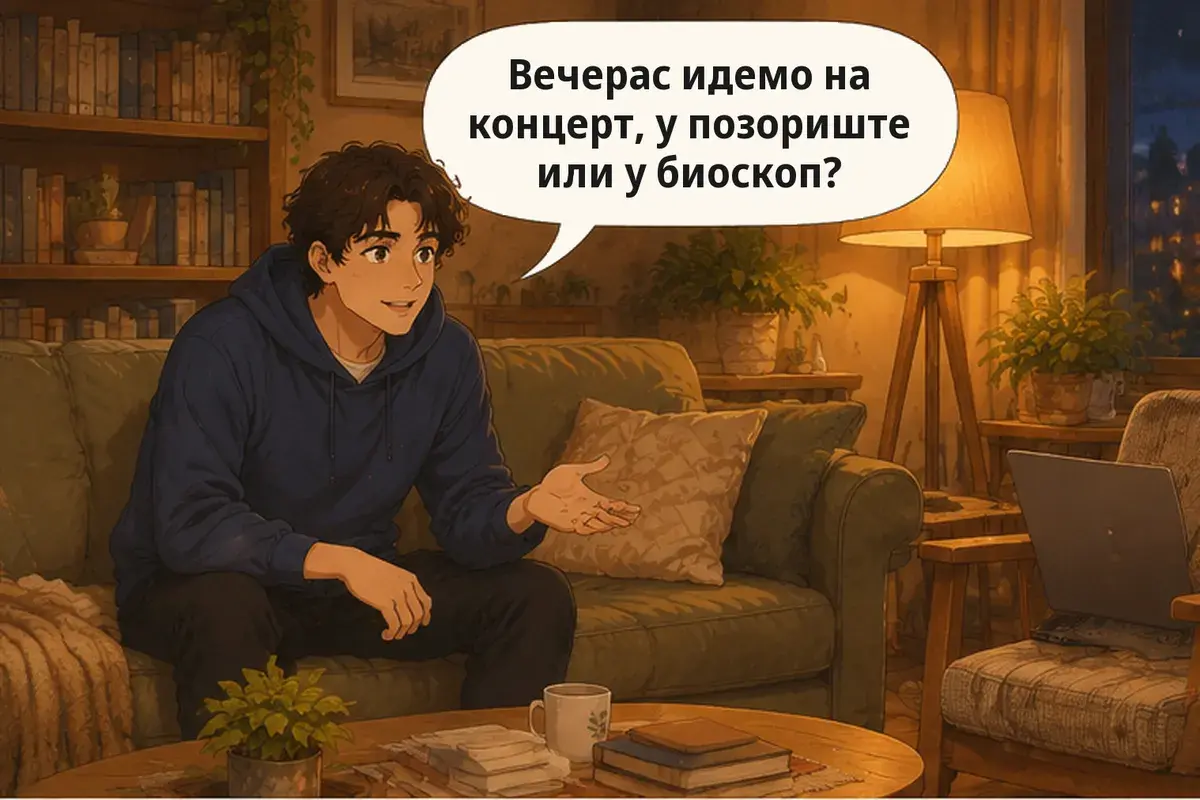
- Стефан
Вечерас идемо на концерт, у позориште или у биоскоп?
Are we going to a concert, the theater or the movies tonight?
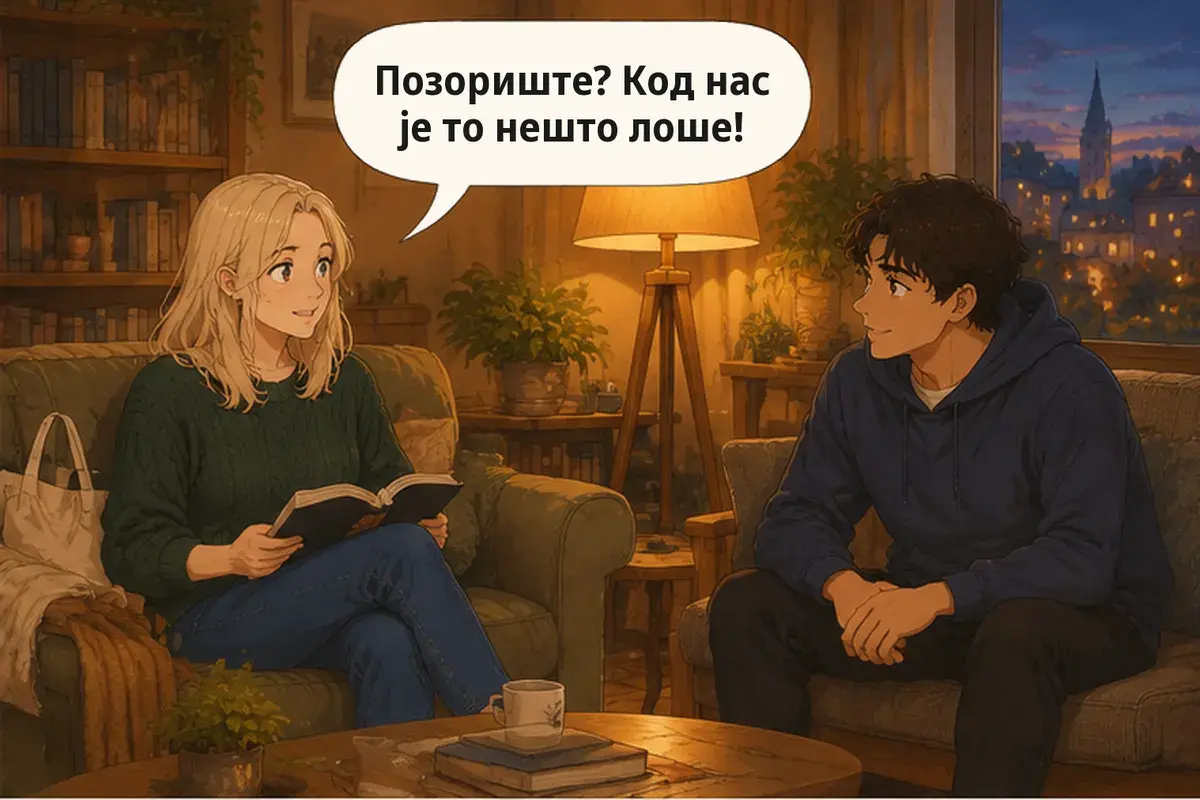
- Ана
Позориште? Код нас је то нешто лоше!
Pozorište? Back home, that's something bad!
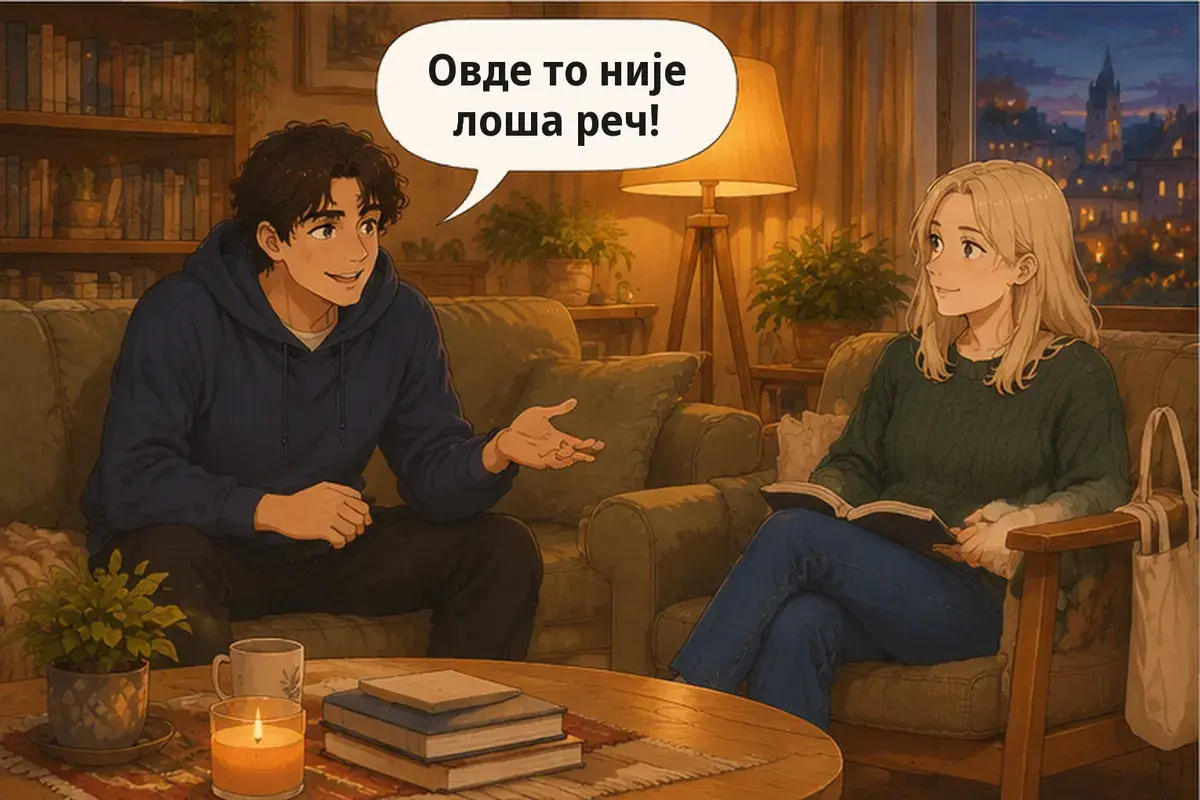
- Стефан
Овде то није лоша реч!
Here it's not a bad word!
- Ана
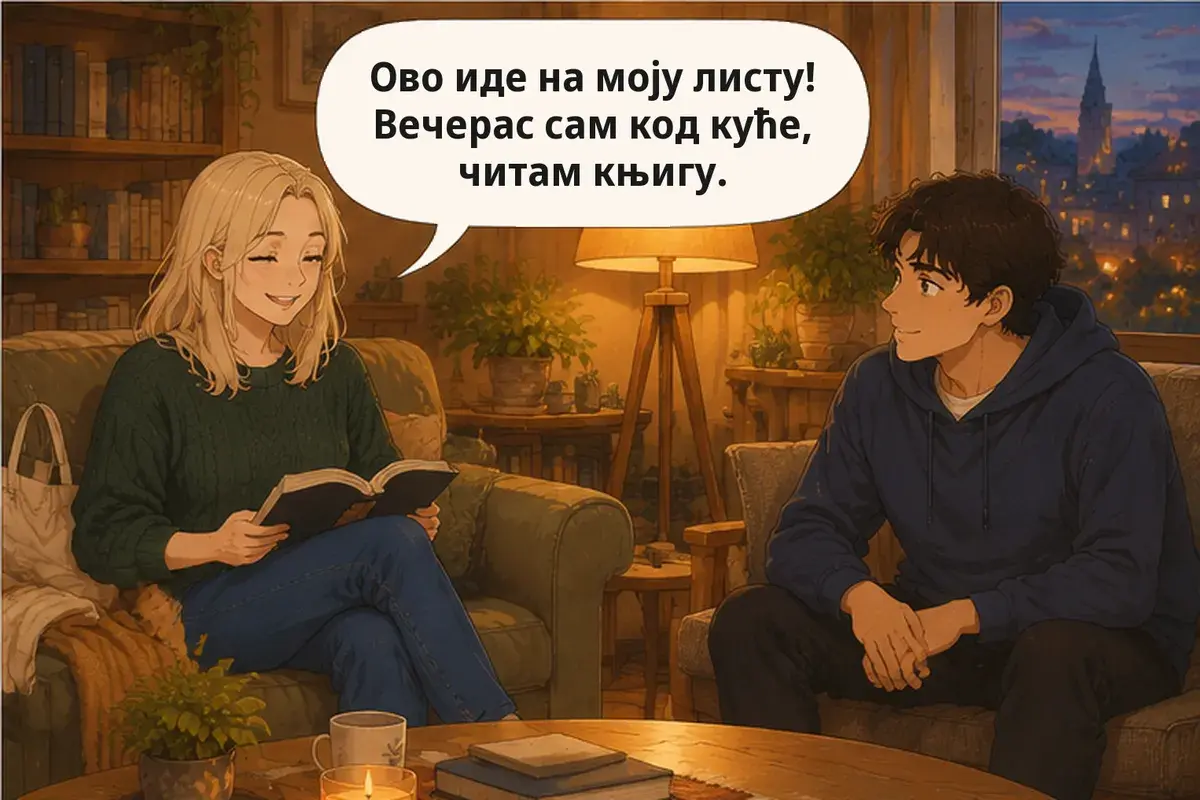
Ово иде на моју листу! Вечерас сам код куће, читам књигу.
This goes on my list! Tonight I'm at home, I'm reading a book.
- Стефан
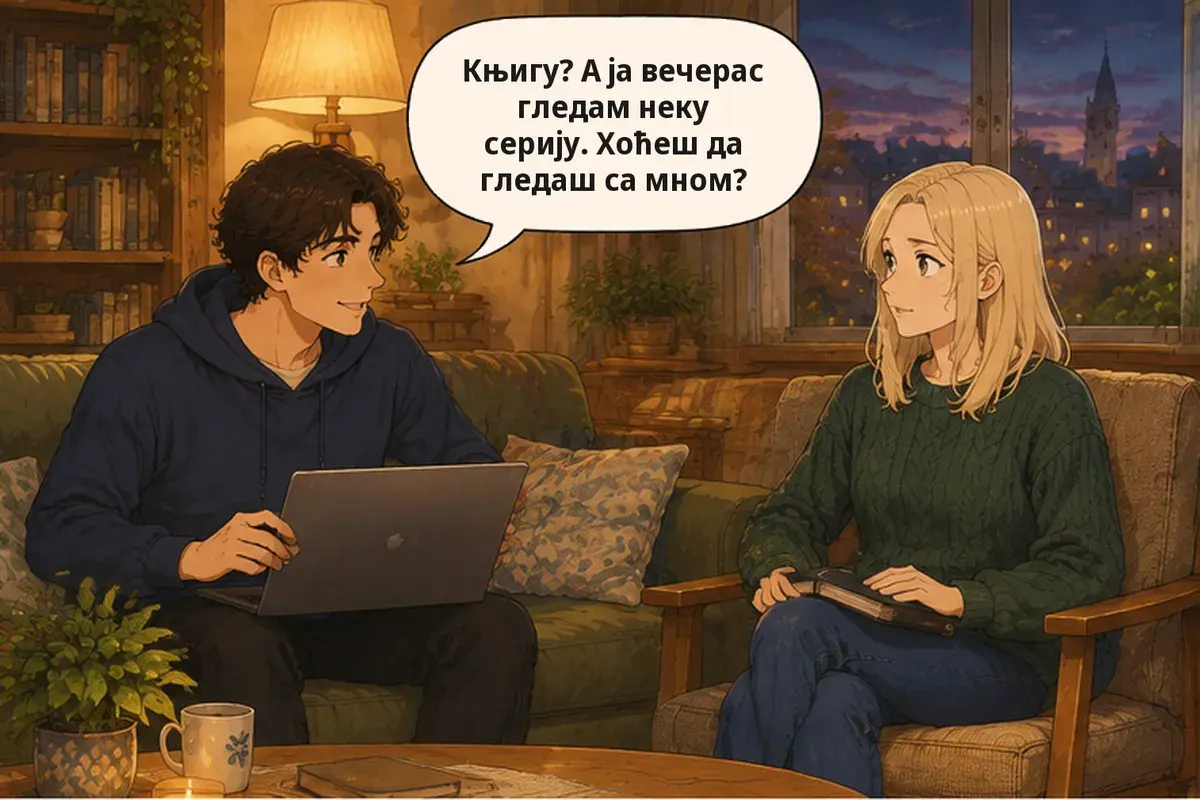
Књигу? А ја вечерас гледам неку серију. Хоћеш да гледаш са мном?
A book? And tonight I'm watching some series. Do you want to watch with me?
- Ана
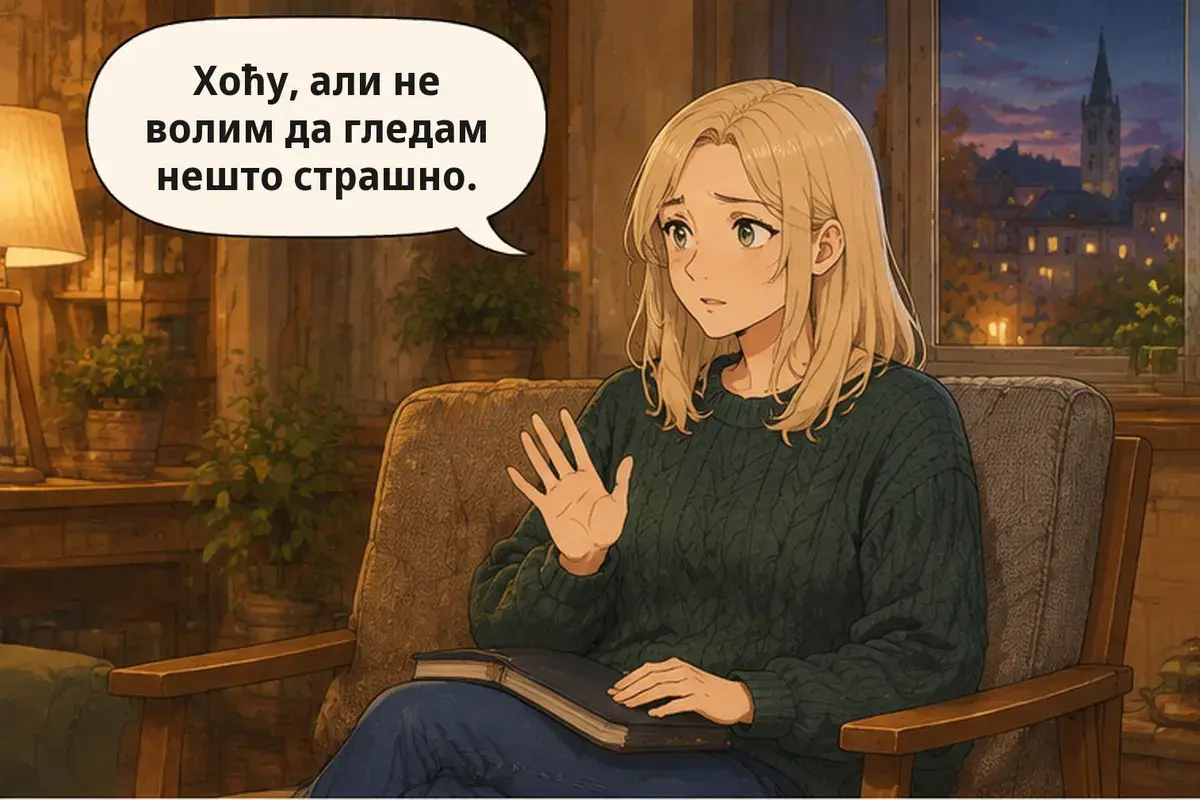
Хоћу, али не волим да гледам нешто страшно.
I do, but I don't like to watch anything scary.
- Стефан
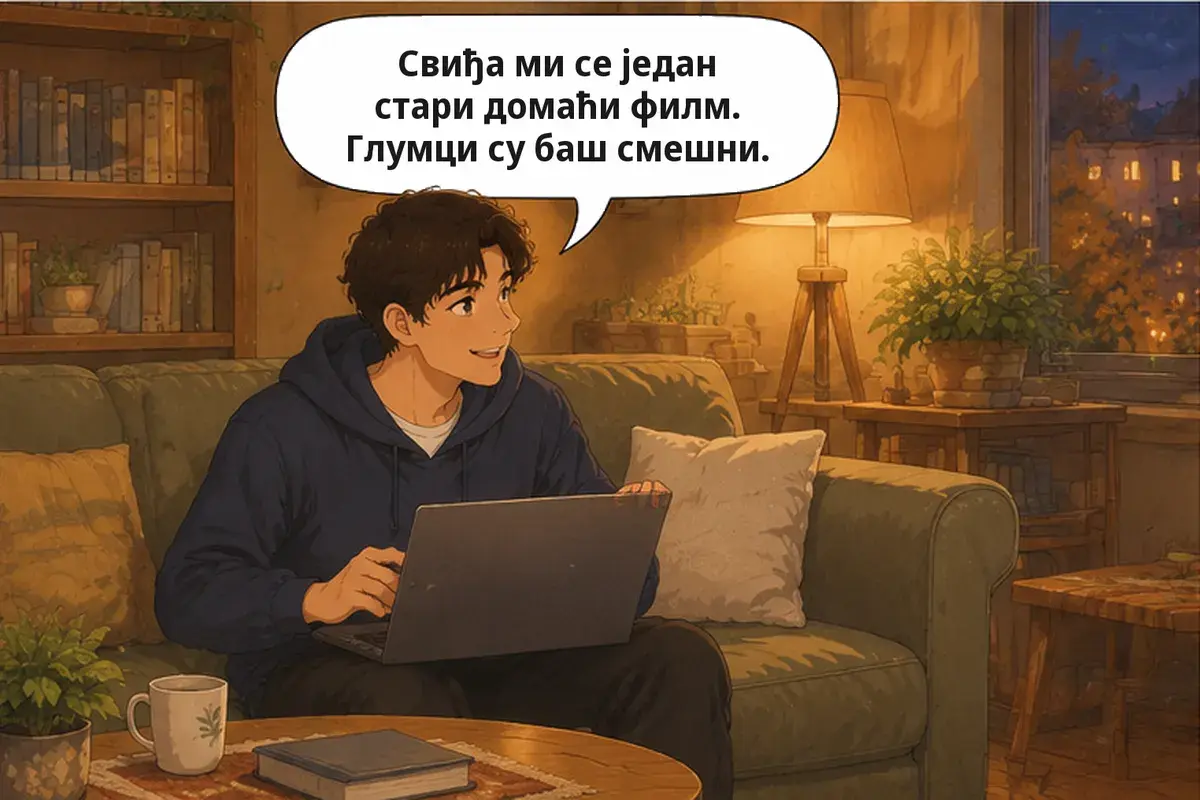
Свиђа ми се један стари домаћи филм. Глумци су баш смешни.
I like an old Serbian movie. The actors are really funny.
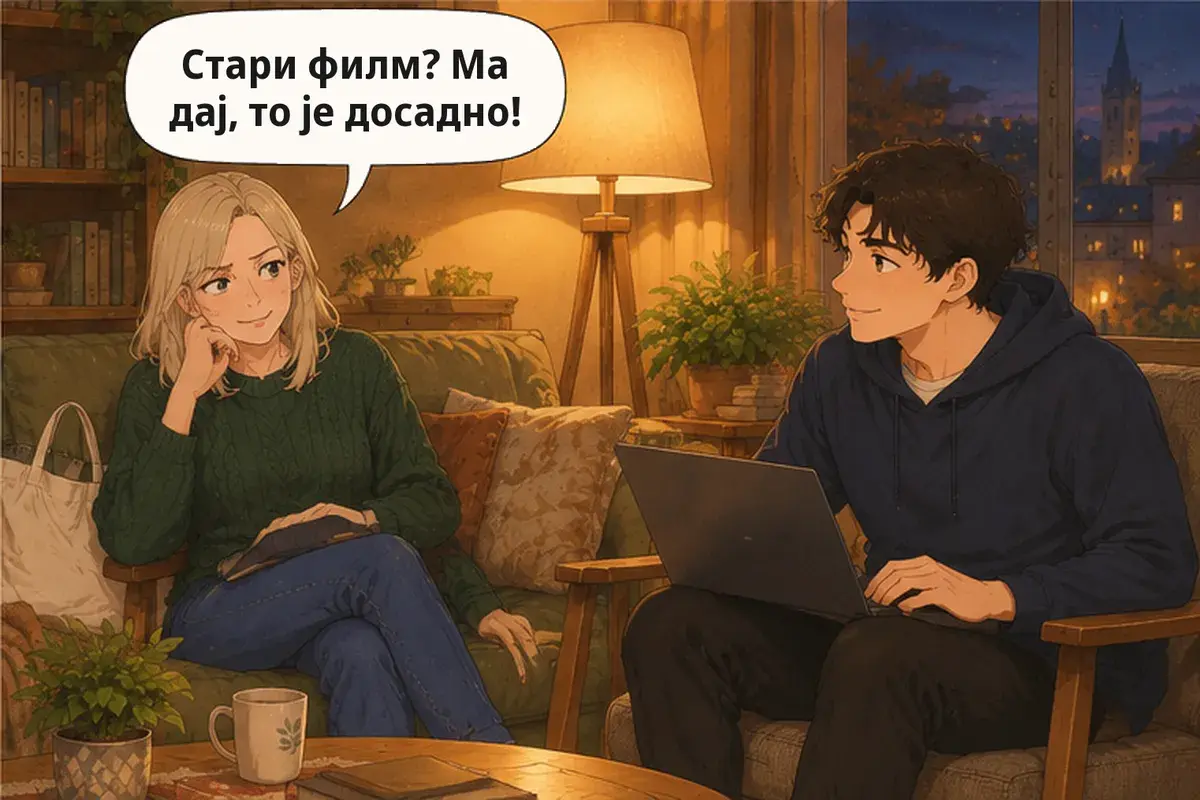
- Ана
Стари филм? Ма дај, то је досадно!
An old movie? Come on, that's boring!
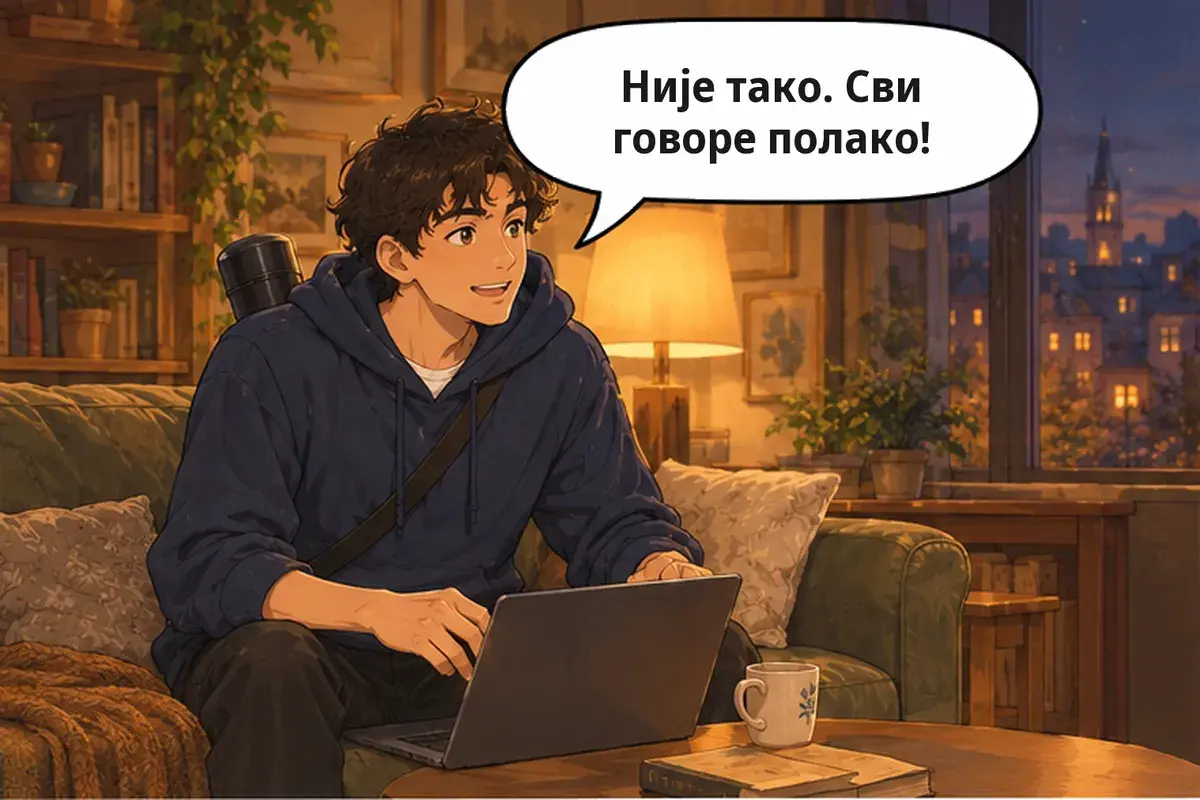
- Стефан
Није тако. Сви говоре полако!
It's not like that. Everyone speaks slowly!
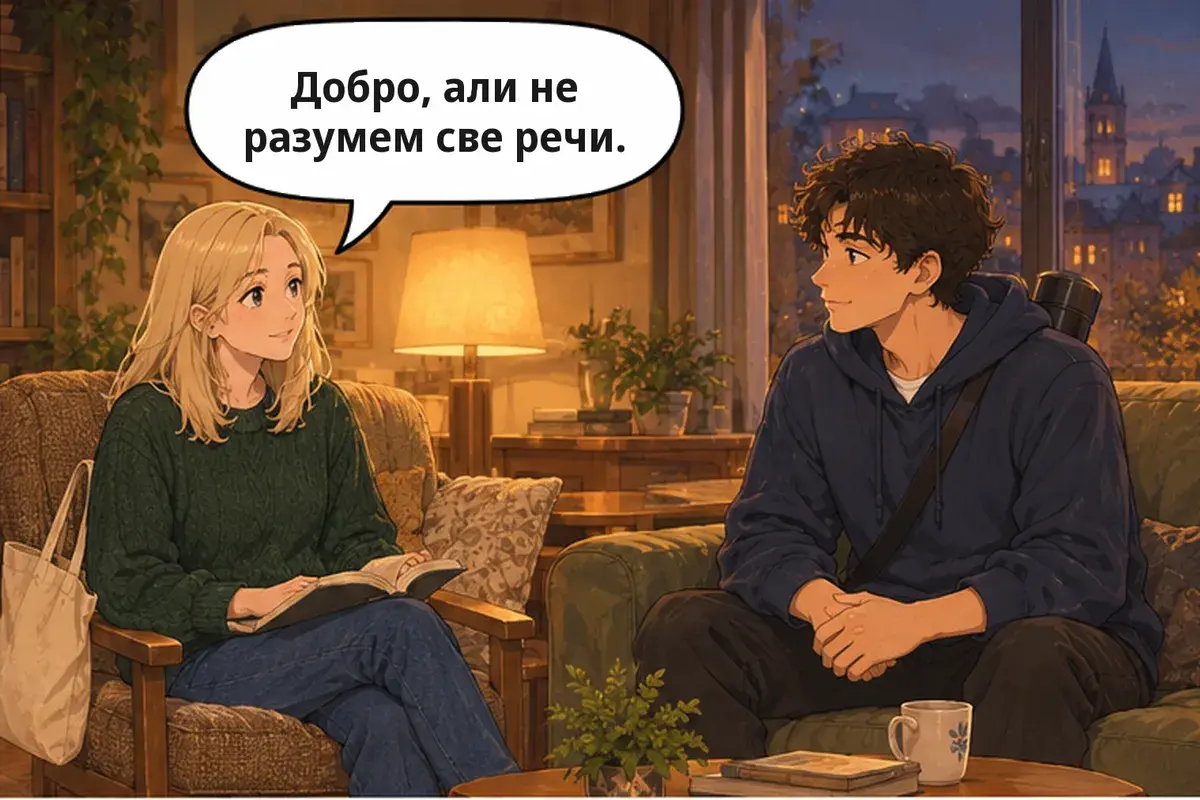
- Ана
Добро, али не разумем све речи.
OK, but I don't understand all the words.
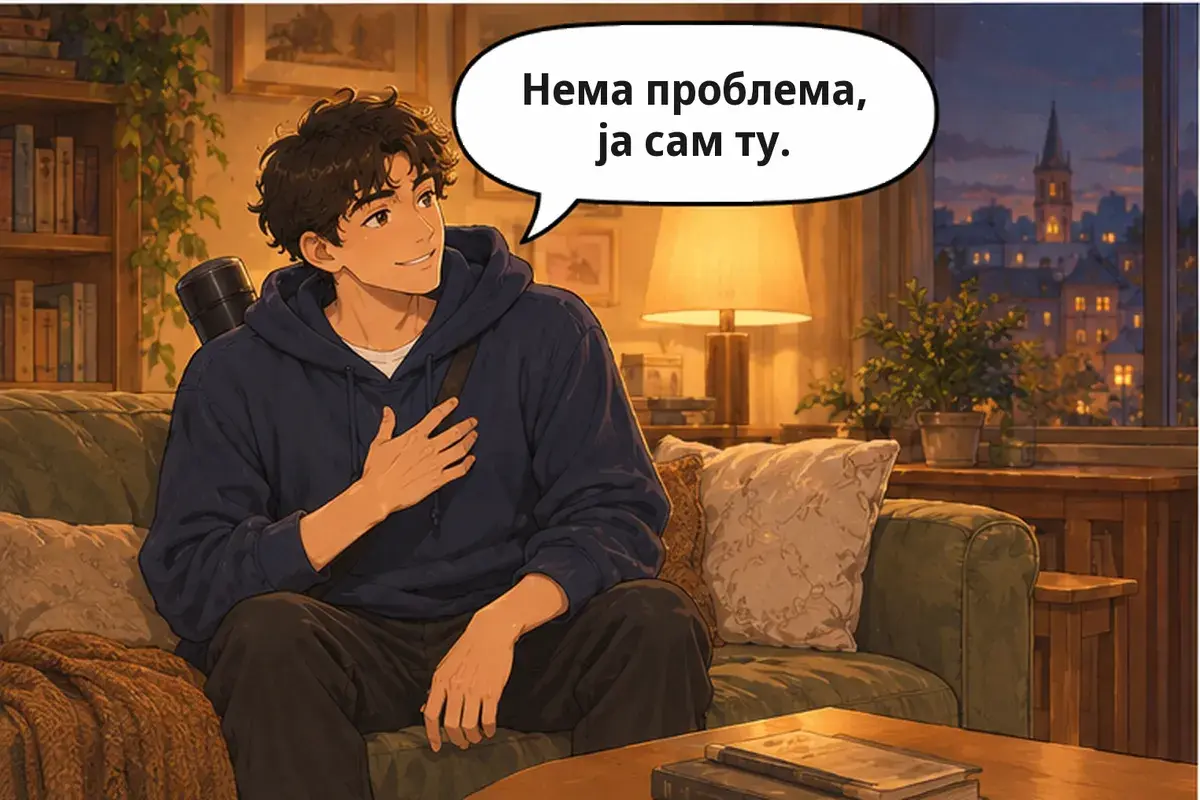
- Стефан
Нема проблема, ја сам ту.
No problem, I'm here.
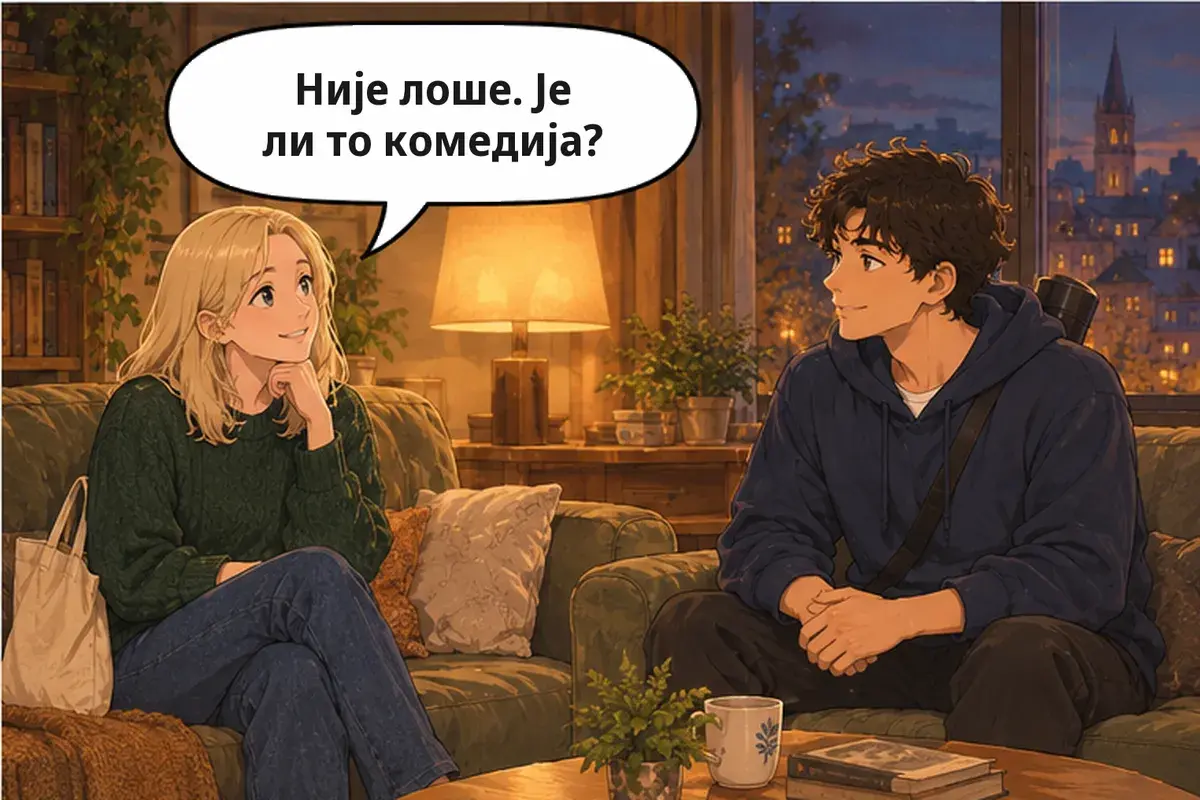
- Ана
Није лоше. Је ли то комедија?
Not bad. Is it a comedy?
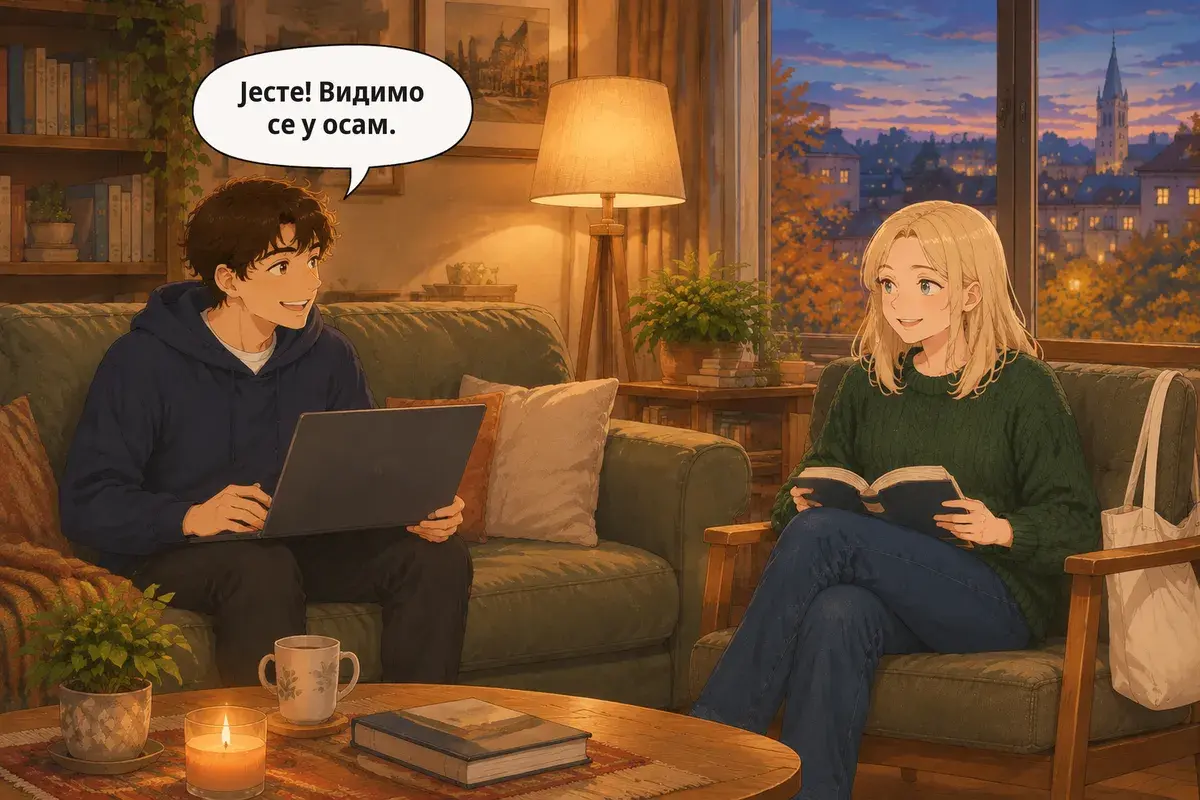
- Стефан
Јесте! Видимо се у осам.
Yes, it is! See you at eight.
Grammar for this text
Вечерас идемо на концерт, у позориште или у биоскоп?— 'where to?' takes the accusative. Forконцерт,позориштеandбиоскопit's the same as the dictionary form, so nothing changes.идемо— we're going, fromићи.Позориште? Код нас је то нешто лоше!— Ana is joking: in her languageпозориштеsounds like a word for something shameful. In Serbian it simply means theater.код нас— back home, where we're from;лоше— bad (the neuter form afterнешто).Ово иде на моју листу—ићи(to go) is used loosely here: it goes on my list. Serbian saysна(on) the list:на моју листу— the accusative:листа→листу,моја→моју.Вечерас сам код куће—самstands second;код куће— at home.Књигу? А ја вечерас гледам неку серију—књига→књигу,серија→серију(the object form).неку серију— some series:неки, нека, неко— some, some kind of.Хоћеш да гледаш—да+ present in theтиform (unit 10).са мном— with me: a set phrase; the instrumental comes at A2.Свиђа ми се један стари домаћи филм— a set phrase for 'I like':свиђа— one thing (филм),ми— to me. The rule comes at A2.домаћи филм— a Serbian movie, made here; not 'homemade'.Стари филм? Ма дај, то је досадно!—ма дај— a casual 'come on!';досадно— boring.Није лоше. Је ли то комедија?—није лоше— not bad: that's how Serbs say they like an idea.Је ли…?— is it…? (unit 2); the short 'yes' answer isЈесте!Funny actors mean a comedy, and Ana likes comedies.
Words and grammar of the unit: Talk about your hobbies.
Learn the words from the texts with flashcards
In the app, you can tap any word in a text to see its translation, forms and examples, and new words stick with flashcards. 15 minutes a day.
Start for freeEverything is open for free. No card needed to sign up.