

Serbian dialogue with translation · A1 · 12 lines
Ано, шта ви тачно радите? Ana, what exactly do you do? (formal)
Comic · 12 panels
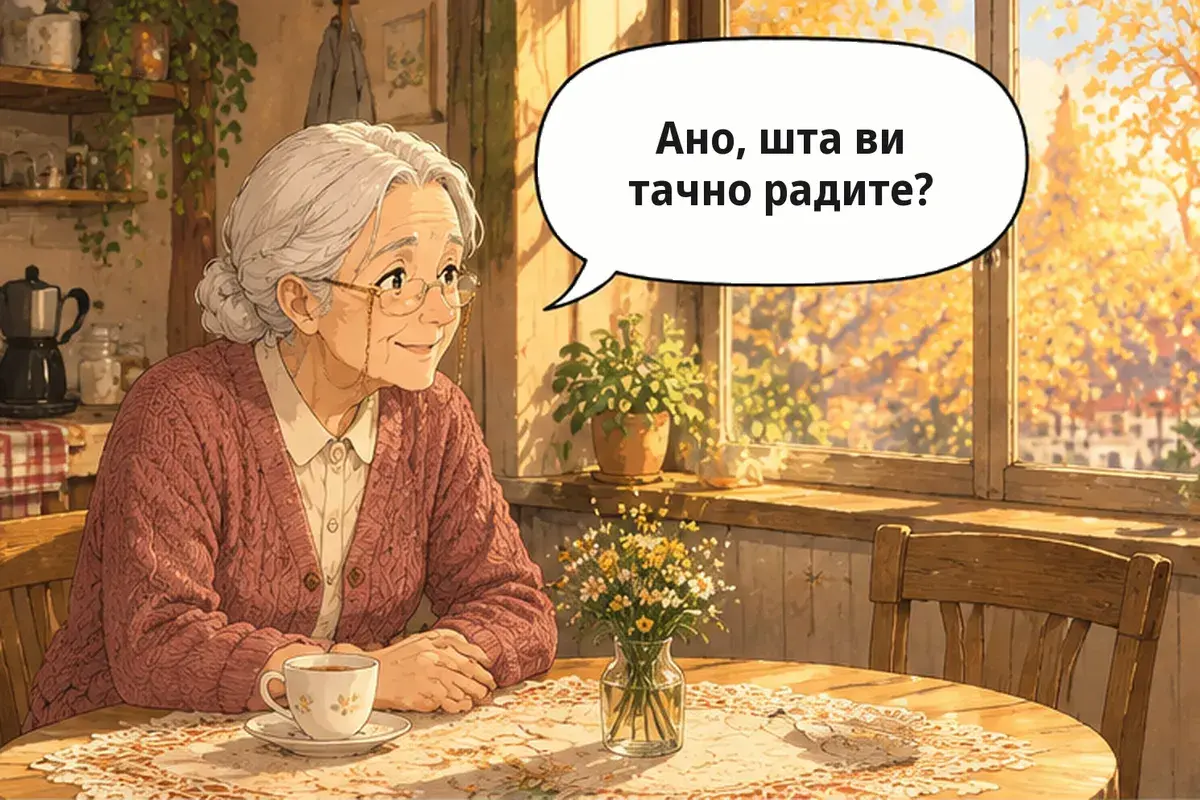
- Радмила
Ано, шта ви тачно радите?
Ana, what exactly do you do? (formal)
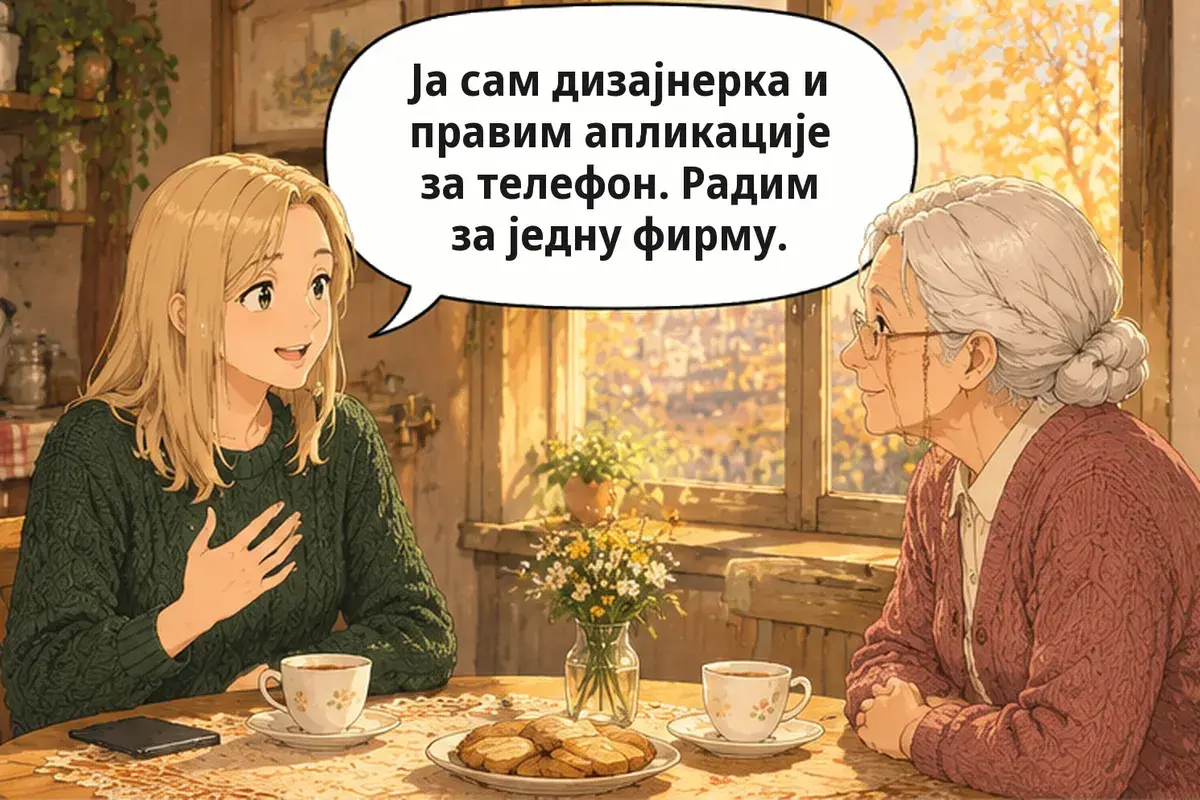
- Ана
Ја сам дизајнерка и правим апликације за телефон. Радим за једну фирму.
I'm a designer (woman speaking), and I make phone apps. I work for a company.
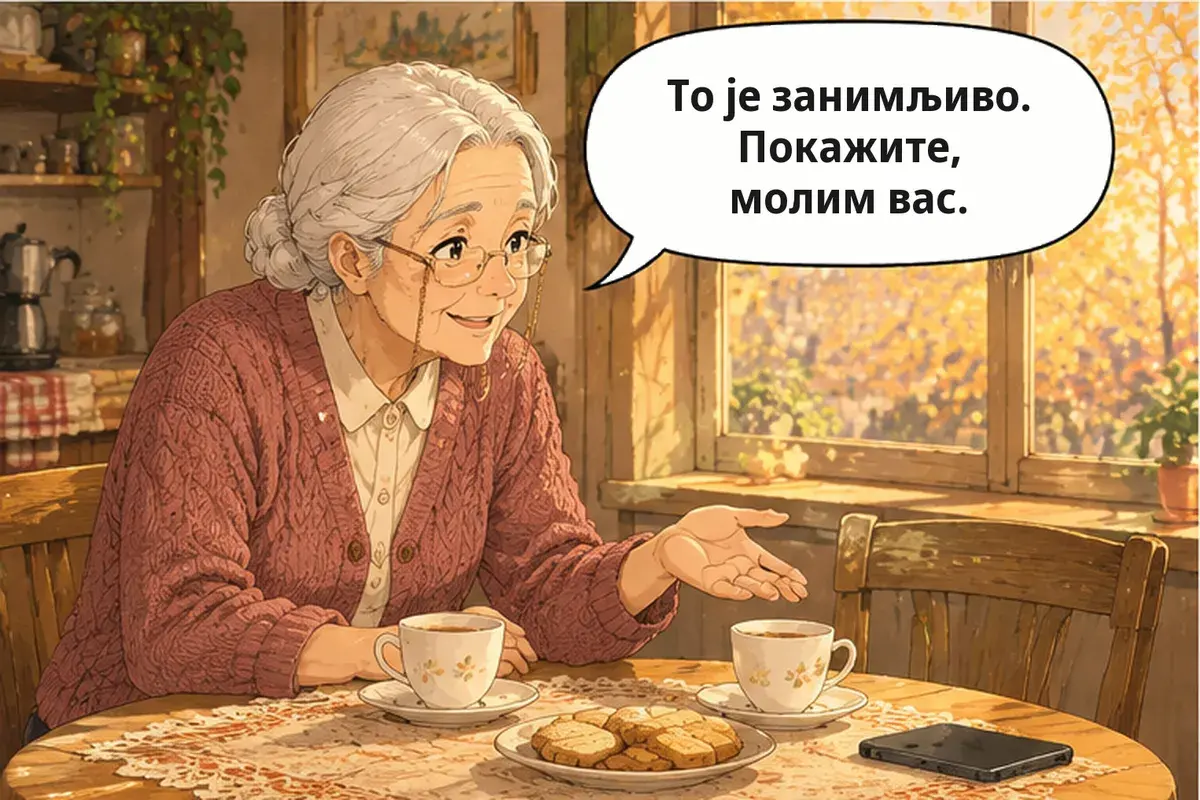
- Радмила
То је занимљиво. Покажите, молим вас.
That's interesting. Show me, please (formal).
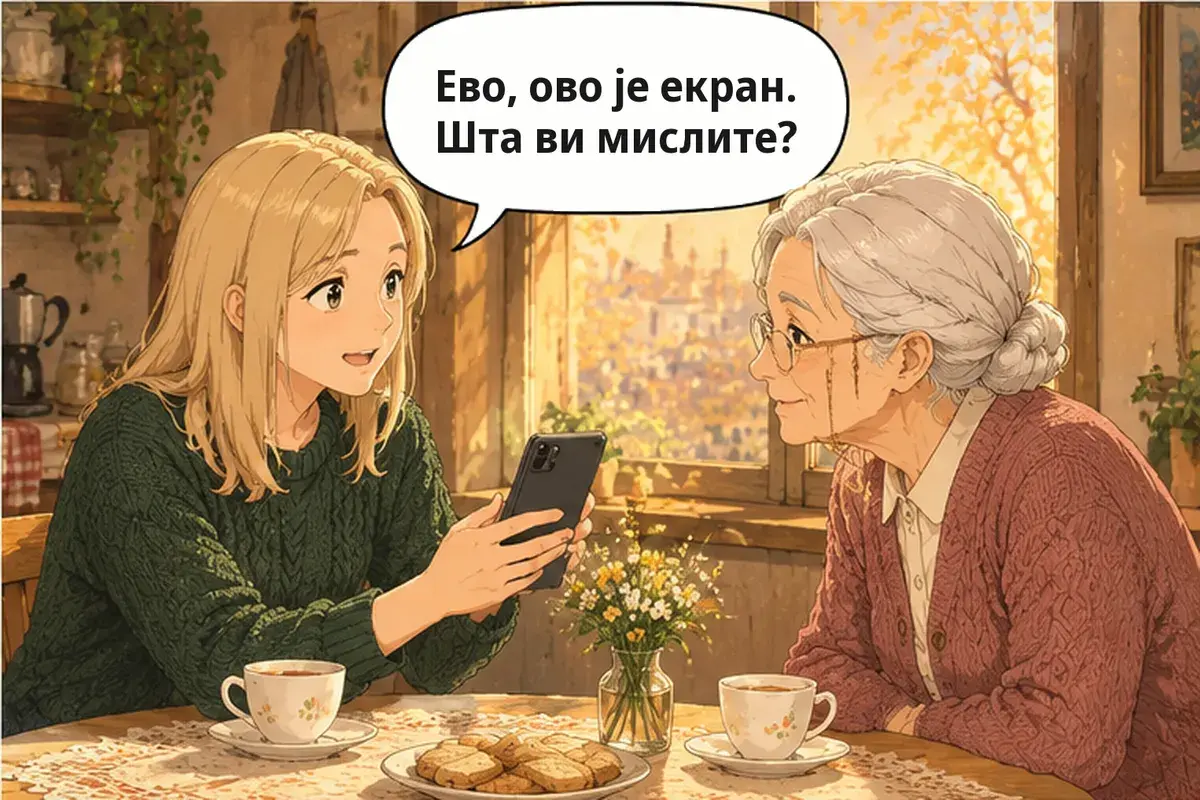
- Ана
Ево, ово је екран. Шта ви мислите?
Here, this is the screen. What do you think? (formal)
- Радмила
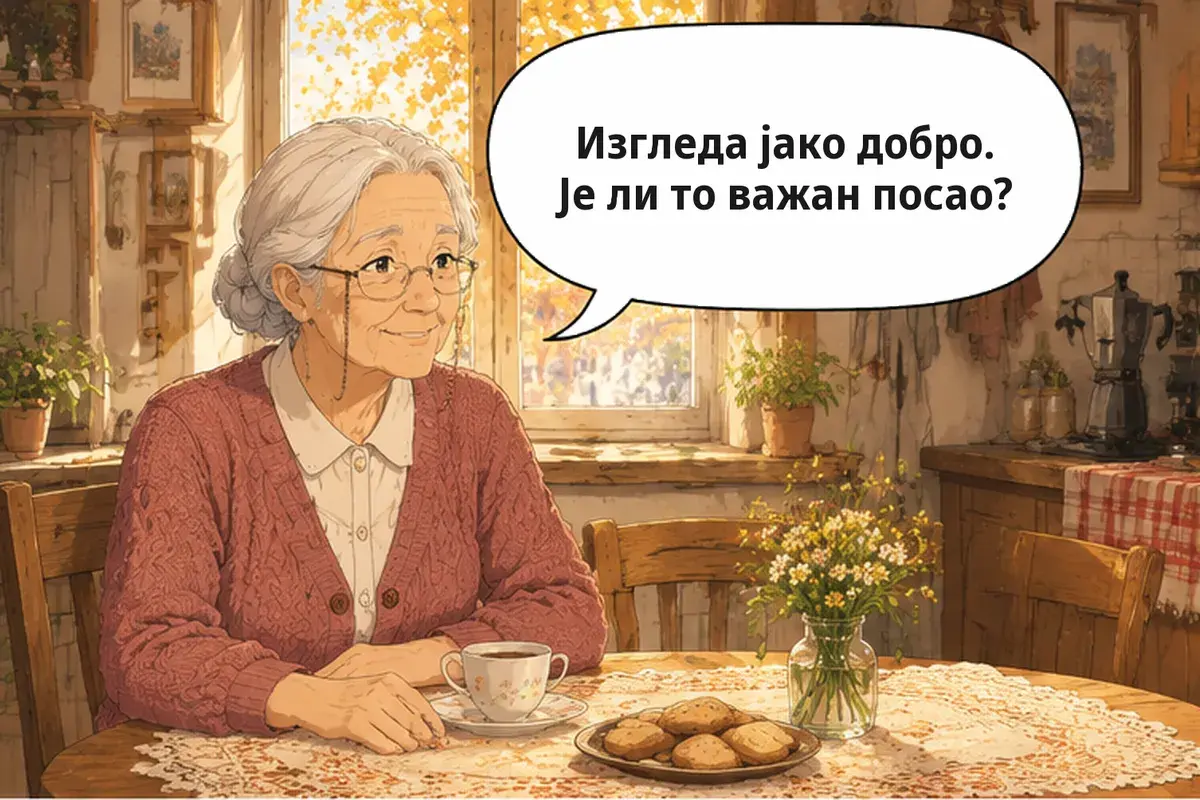
Изгледа јако добро. Је ли то важан посао?
It looks very good. Is that an important job?
- Ана
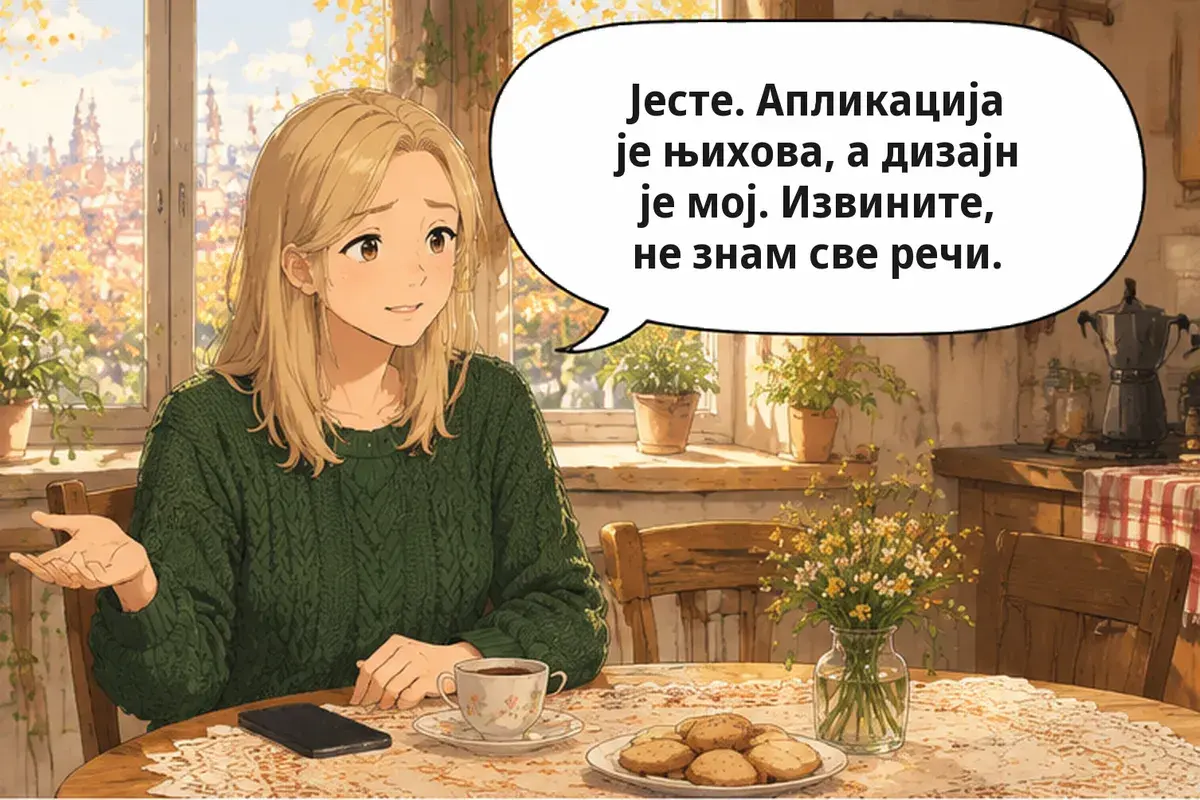
Јесте. Апликација је њихова, а дизајн је мој. Извините, не знам све речи.
Yes, it is. The app is theirs, and the design is mine. Sorry, I don't know all the words (formal).
- Радмила
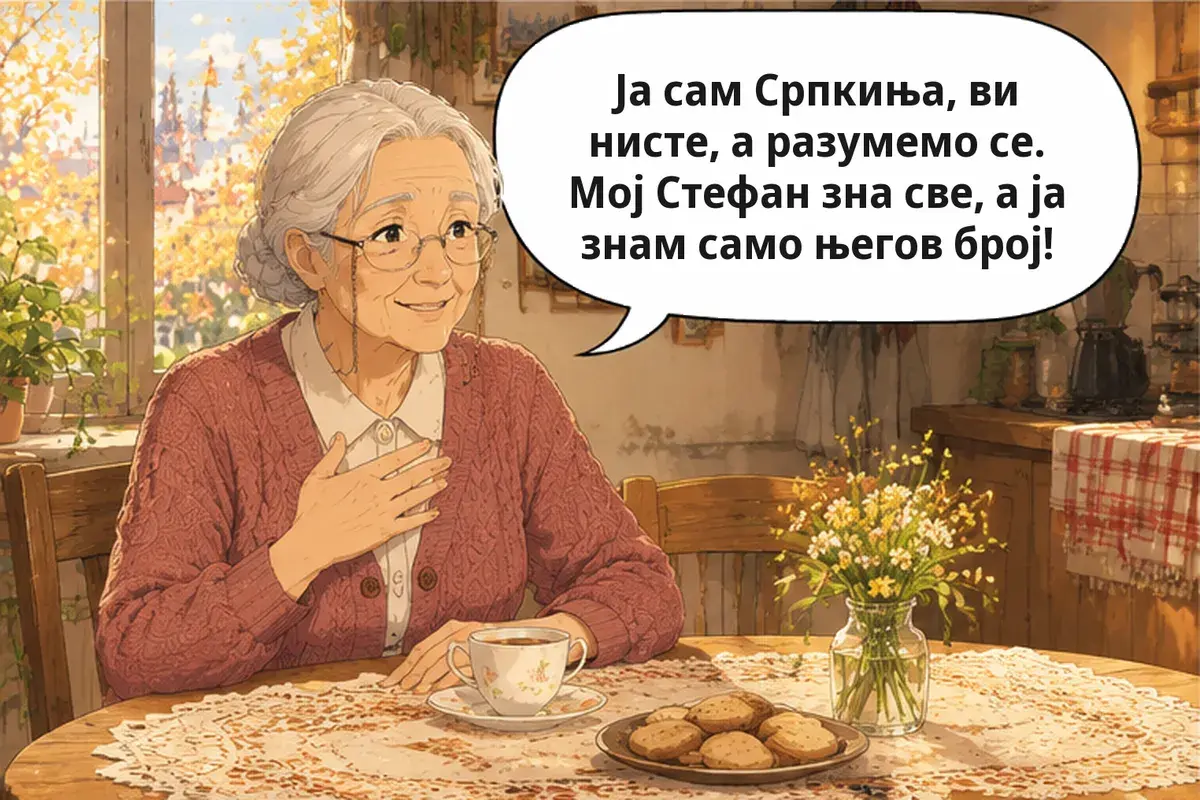
Ја сам Српкиња, ви нисте, а разумемо се. Мој Стефан зна све, а ја знам само његов број!
I'm a Serb, you're not, but we understand each other (woman speaking, formal). My Stefan knows everything, and I only know his number!
- Ана
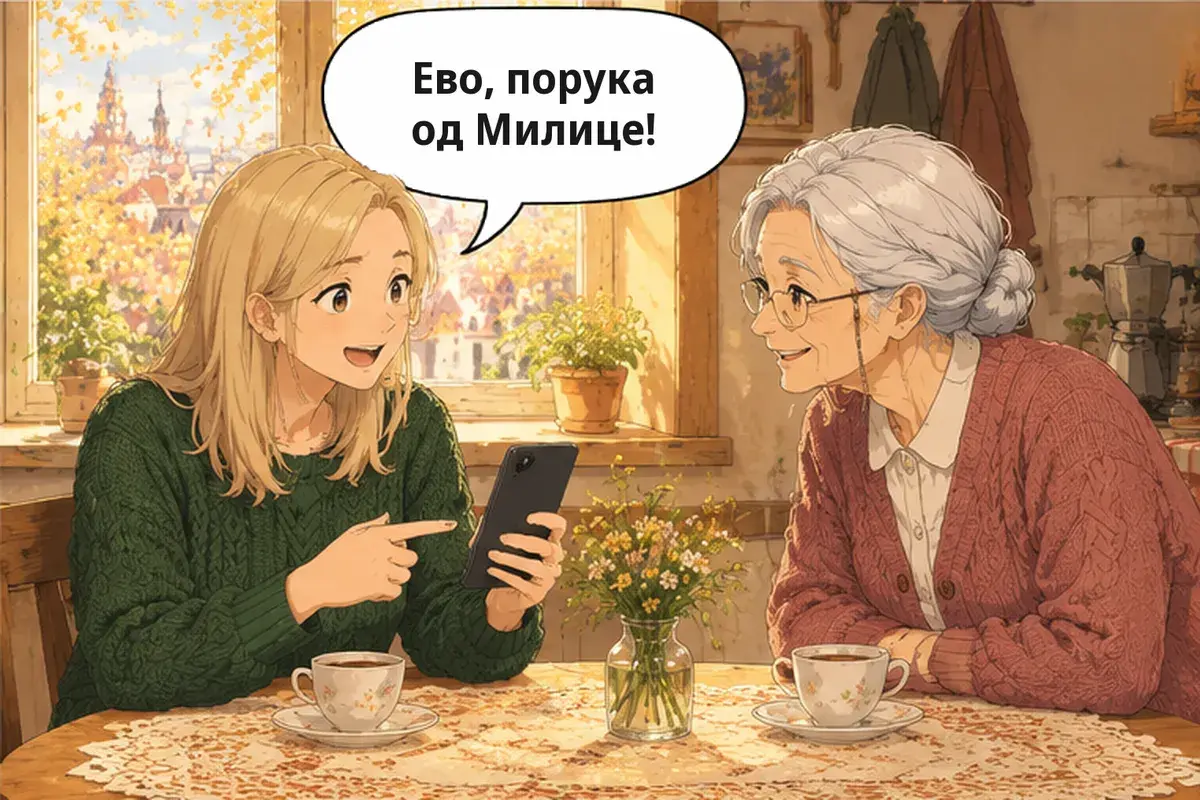
Ево, порука од Милице!
Here's a message from Milica!
- Радмила
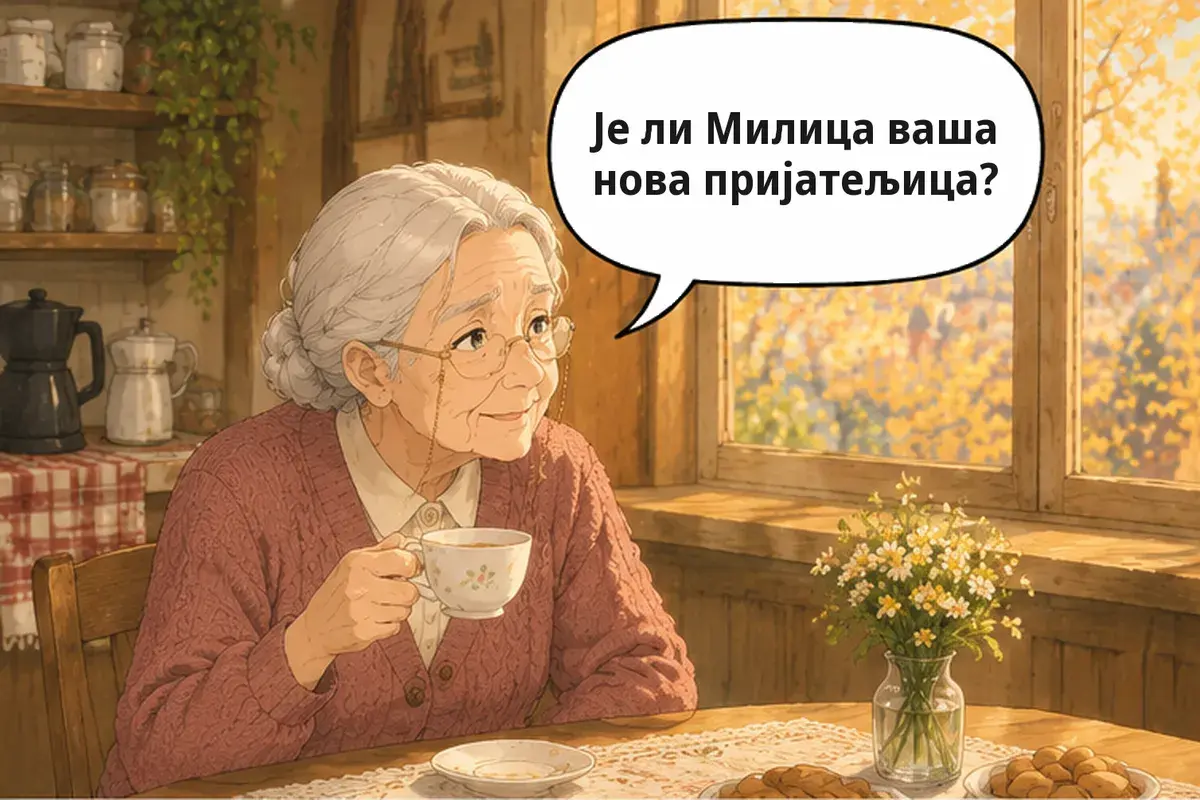
Је ли Милица ваша нова пријатељица?
Is Milica your new friend? (formal)

- Ана
Јесте. Она је менаџерка, а њена фирма се зове Битлаб.
Yes, she is. She's a manager, and her company is called Bitlab.
- Радмила
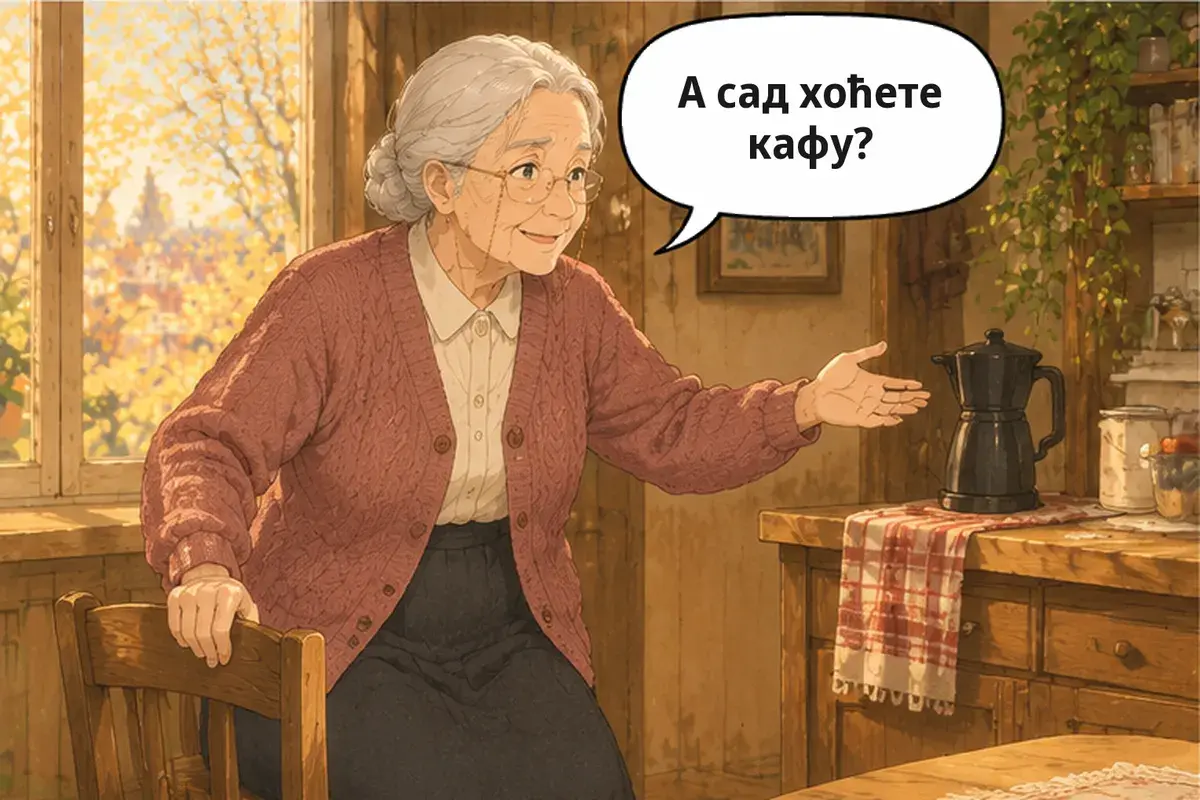
А сад хоћете кафу?
And now, do you want some coffee? (formal)

- Ана
Наравно, хвала вам!
Of course, thank you! (formal)
Grammar for this text
Ано, шта ви тачно радите?— Ana, what exactly do you do?Аноis Ana when you call her by name (the vocative, the calling form, unit 7); in English it's just "Ana". Radmila calls Anaви:ви радите.тачноhere means "exactly".Ја сам дизајнерка и правим апликације за телефон. Радим за једну фирму.— I'm a designer, and I make phone apps. I work for a company.правим— I make (правити).апликације— apps, the plural.за једну фирму— for a company: afterзаthe words change their ending,једна фирма → једну фирму(the accusative, unit 5).То је занимљиво. Покажите, молим вас.— That's interesting. Show me, please.покажите— show, a polite request toви(commands come in A2);молим вас— please. InШта ви мислите?(What do you think?)мислитеis theвиform ofмислити.Јесте. Апликација је њихова, а дизајн је мој.— Yes. The app is theirs, and the design is mine.њихова— theirs (the company's), becauseапликацијаis feminine.а— and, with a contrast; a comma goes before it.Ја сам Српкиња, ви нисте, а разумемо се.— I'm a Serb, you're not, but we understand each other.Српкиња— the woman's form ofСрбин.ви нисте— you're not.разумемо се— we understand each other.Мој Стефан зна све, а ја знам само његов број!— My Stefan knows everything, and I only know his number!његов број— his number (бројis masculine, so it'sњегов). A joke: her grandson knows all about phones and apps, and Grandma only knows his number.Ево, порука од Милице!— Here's a message from Milica! Afterодthe name changes its ending:Милица → Милице(unit 12).Она је менаџерка, а њена фирма се зове Битлаб.— She's a manager, and her company is called Bitlab.се зове— is called (звати се, unit 1);њена, becauseфирмаis feminine.А сад хоћете кафу?— And now, do you want some coffee?хоћете— you want (хтети, unit 3);кафу—кафаas the object (the accusative).
Words and grammar of the unit: Talk about your job.
Learn the words from the texts with flashcards
In the app, you can tap any word in a text to see its translation, forms and examples, and new words stick with flashcards. 15 minutes a day.
Start for freeEverything is open for free. No card needed to sign up.