
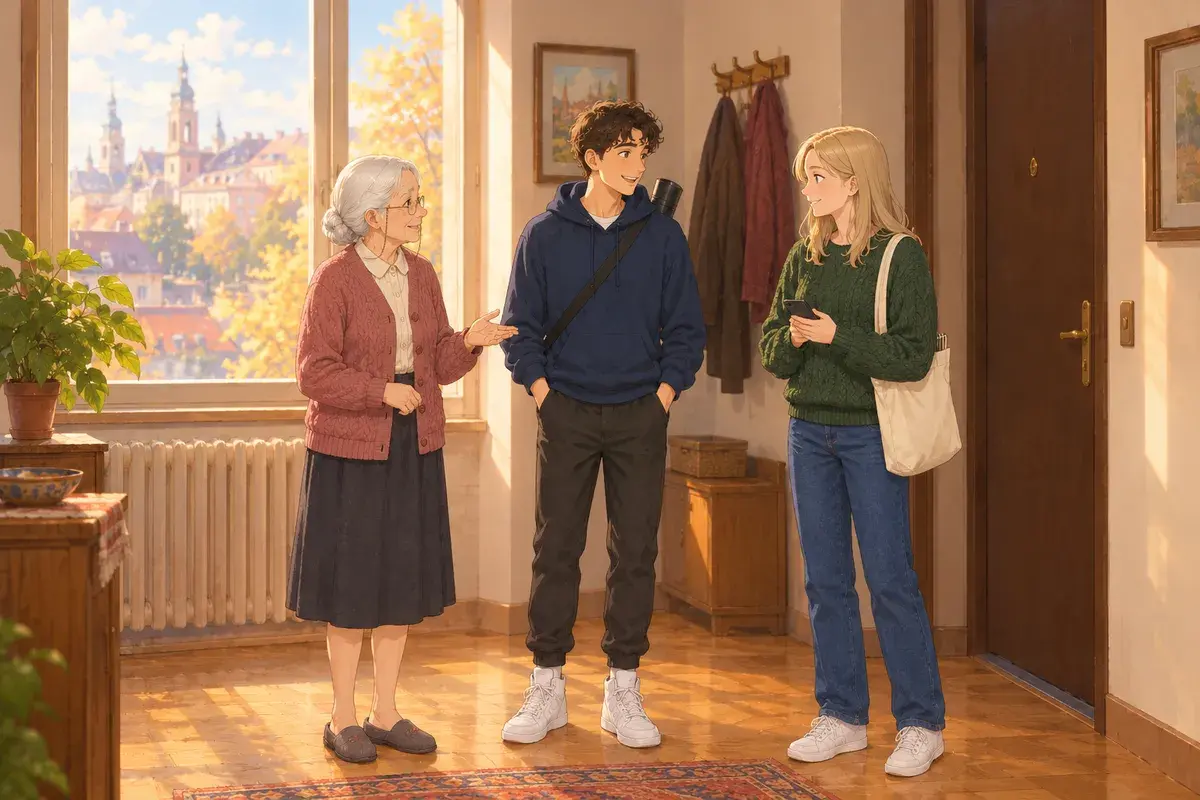
Serbian dialogue with translation · A1 · 11 lines
Нема фрке, то је мала ствар. No worries, it's just a small thing.
Comic · 11 panels
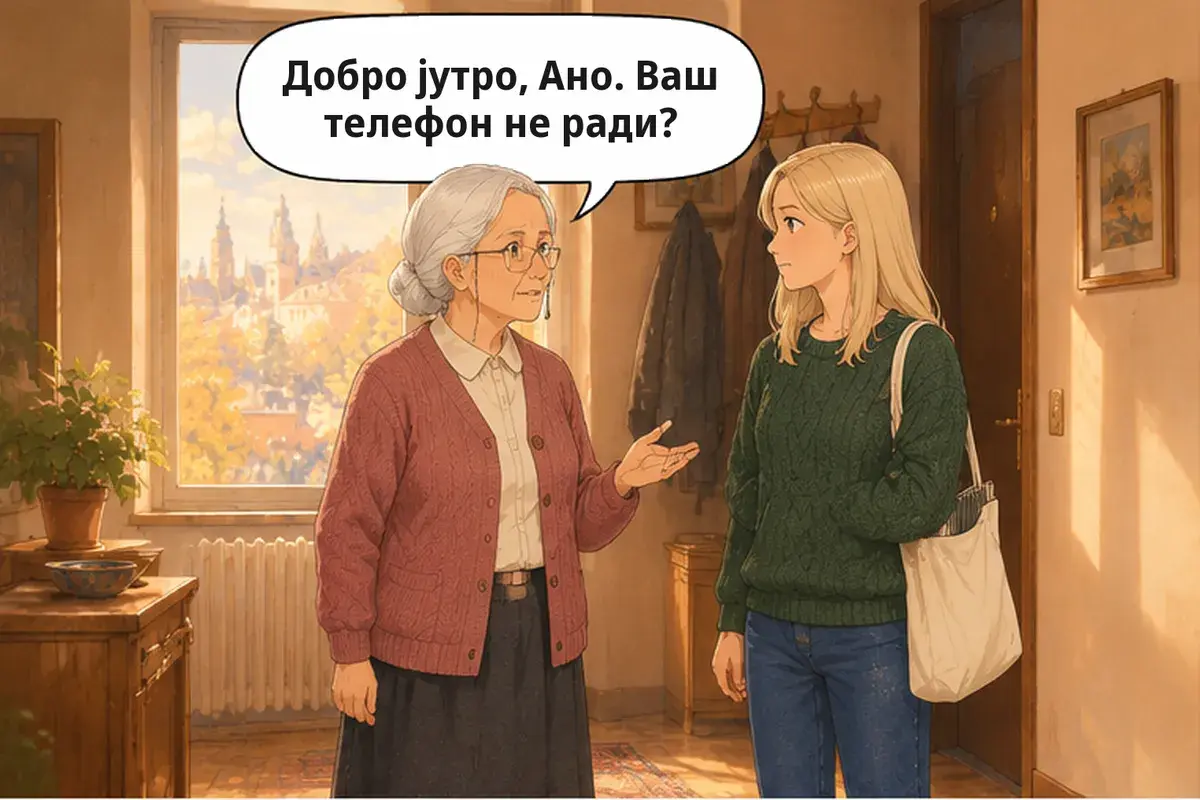
- Радмила
Добро јутро, Ано. Ваш телефон не ради?
Good morning, Ana. Your phone isn't working? (formal)
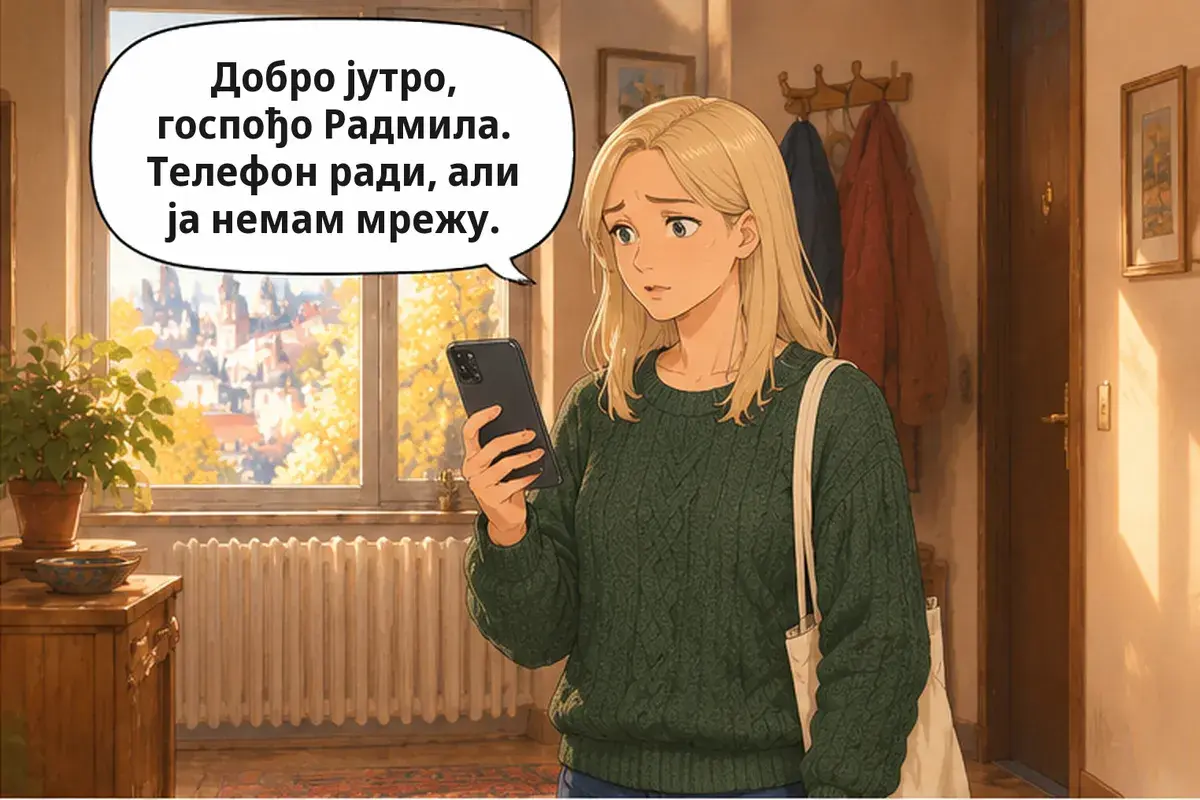
- Ана
Добро јутро, госпођо Радмила. Телефон ради, али ја немам мрежу.
Good morning, Mrs. Radmila. The phone works, but I have no network.
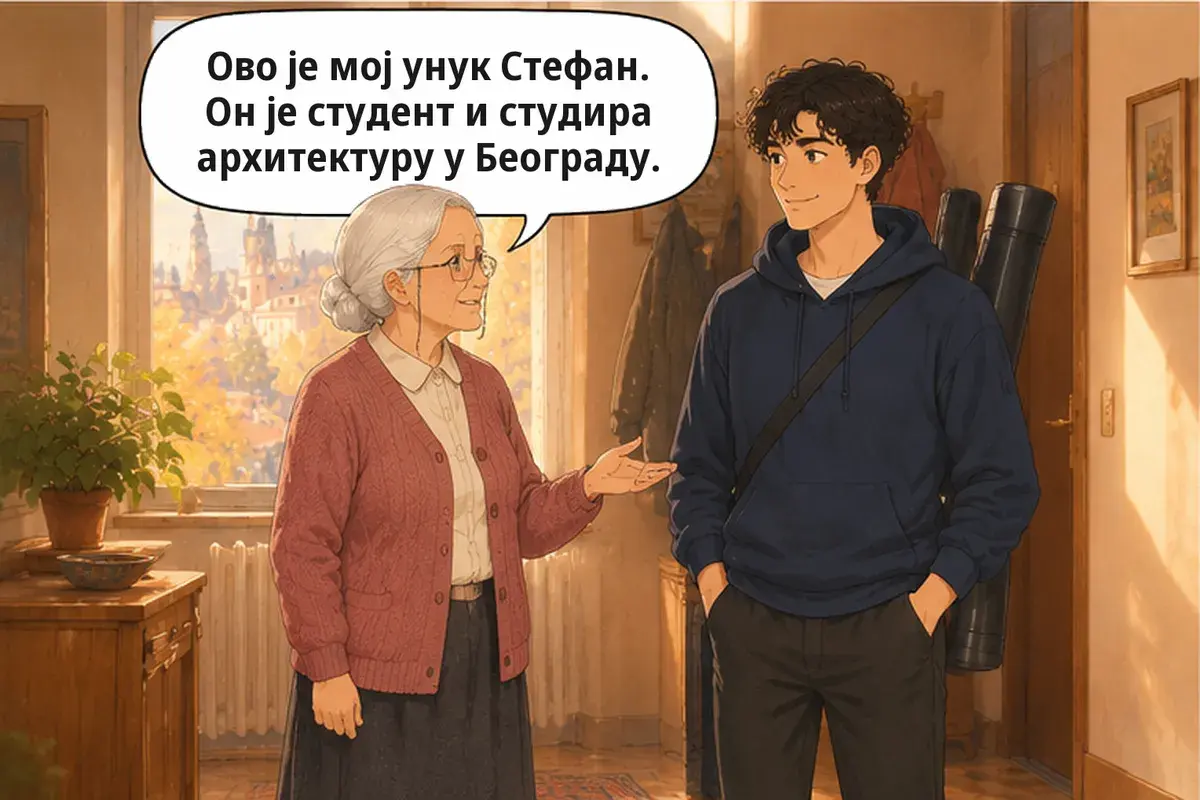
- Радмила
Ово је мој унук Стефан. Он је студент и студира архитектуру у Београду.
This is my grandson Stefan. He's a student and he studies architecture in Belgrade.
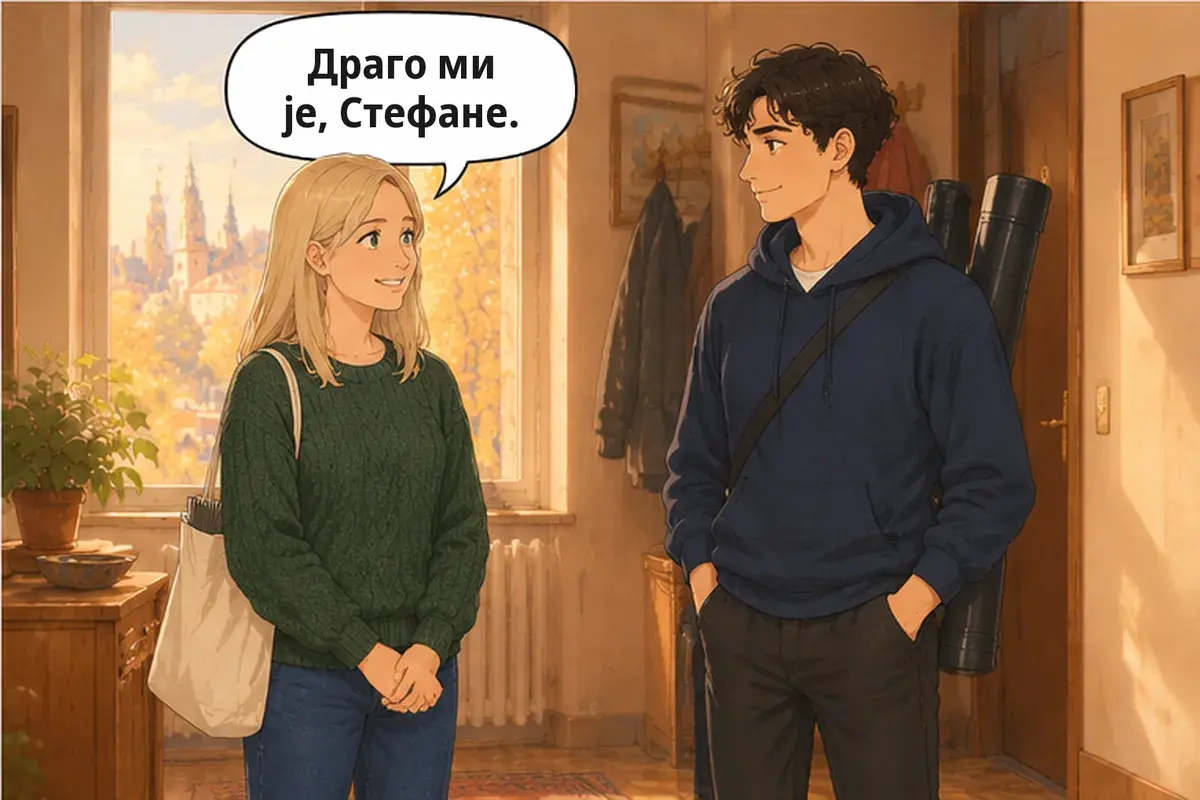
- Ана
Драго ми је, Стефане.
Nice to meet you, Stefan.
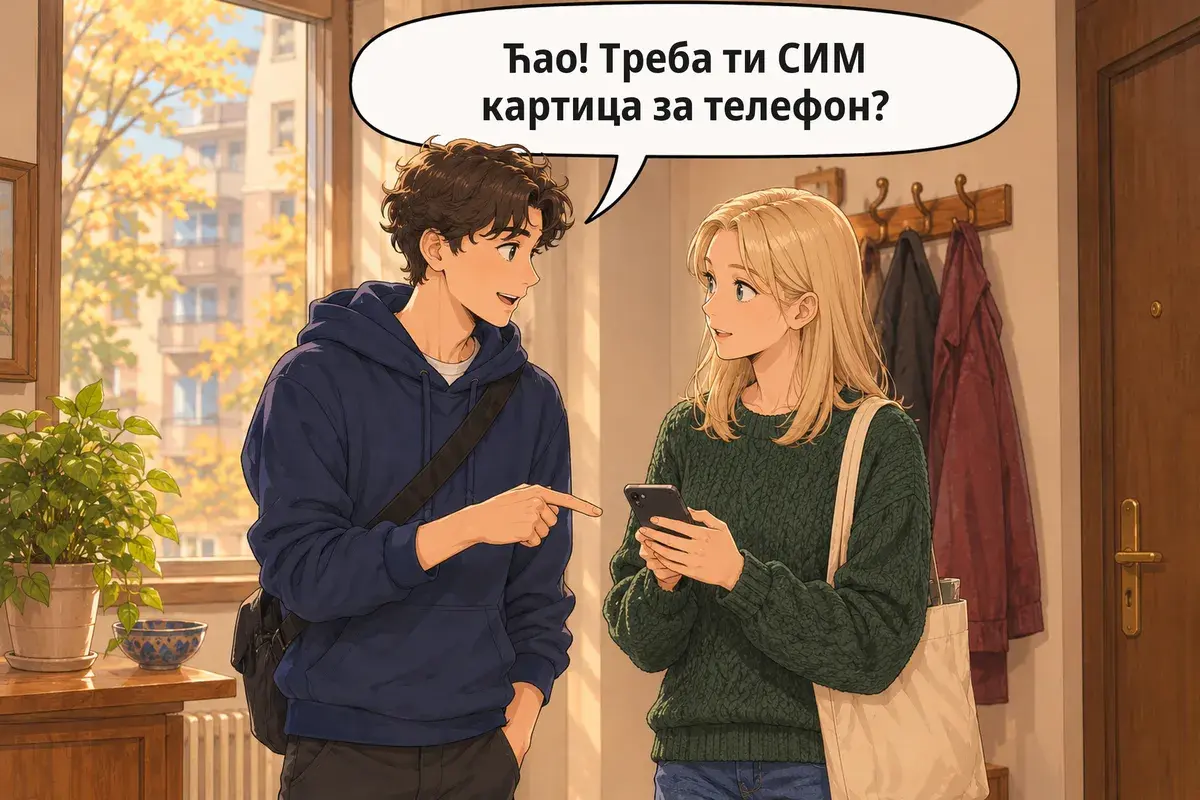
- Стефан
Ћао! Треба ти СИМ картица за телефон?
Hi! Do you need a SIM card for the phone?
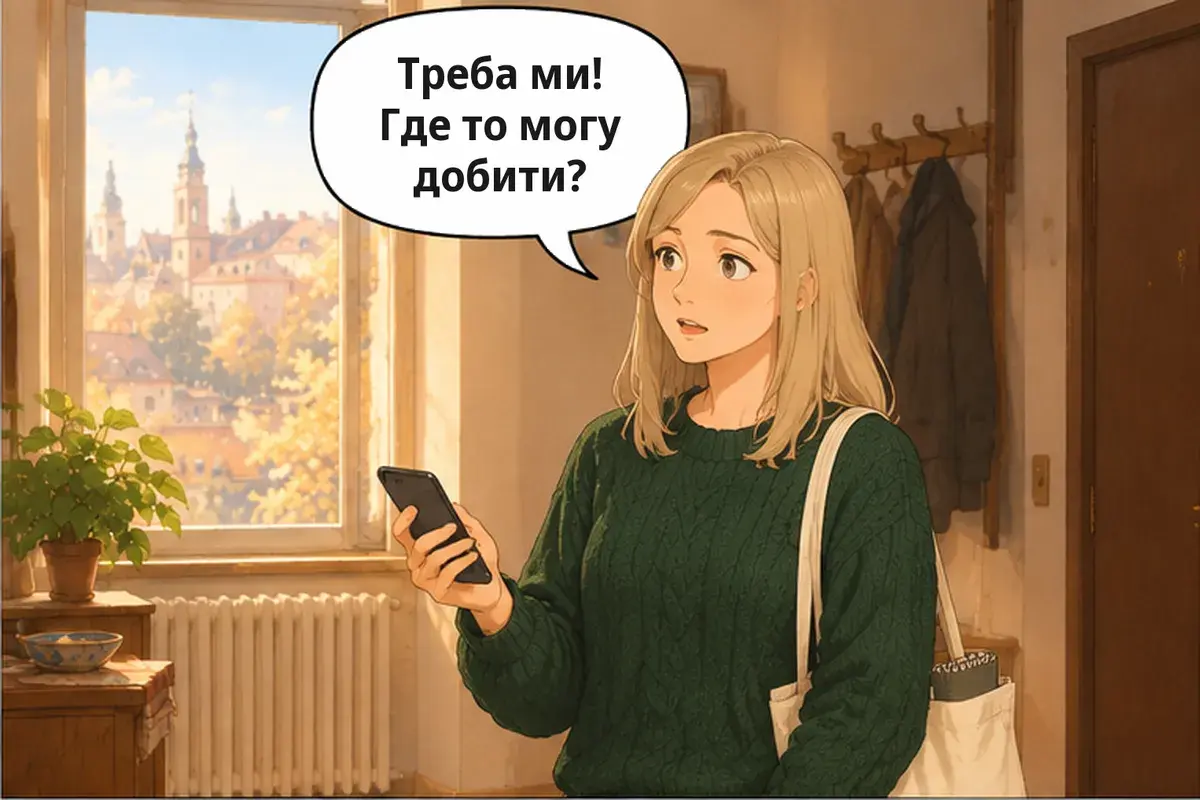
- Ана
Треба ми! Где то могу добити?
I do! Where can I get one?
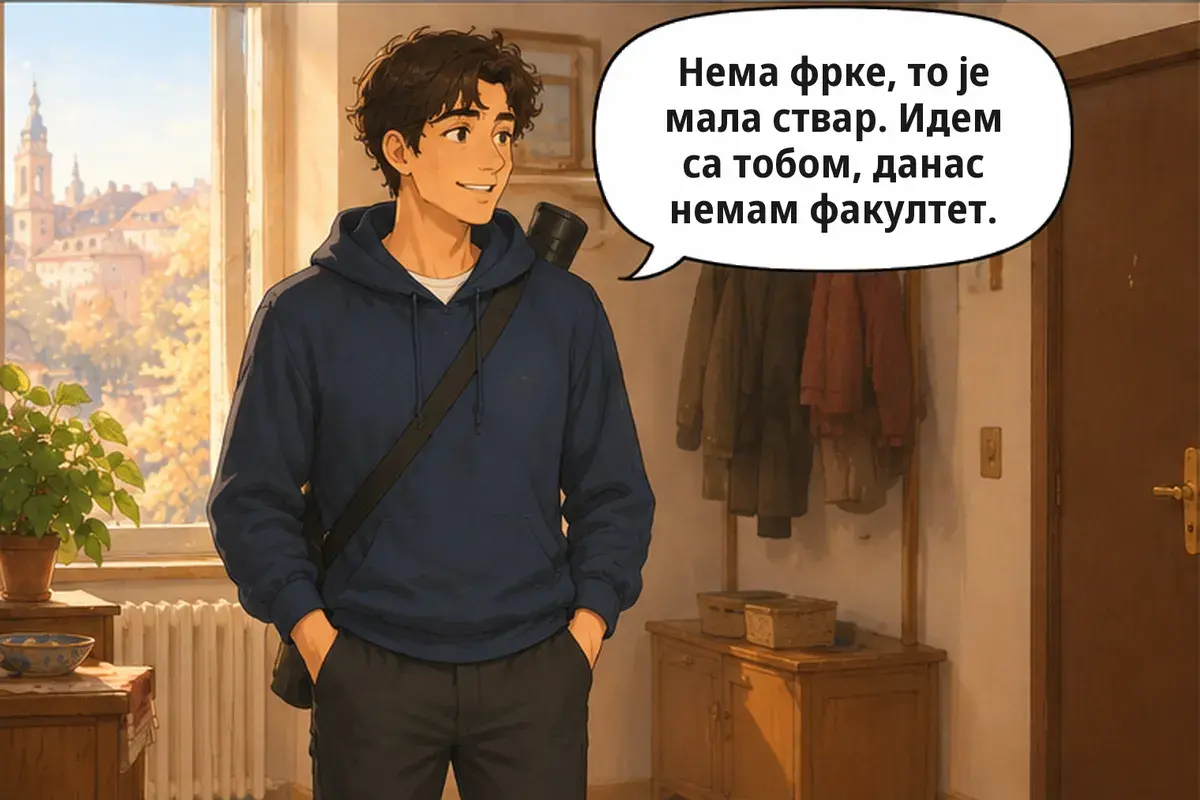
- Стефан
Нема фрке, то је мала ствар. Идем са тобом, данас немам факултет.
No worries, it's just a small thing. I'm going with you, I don't have classes today.
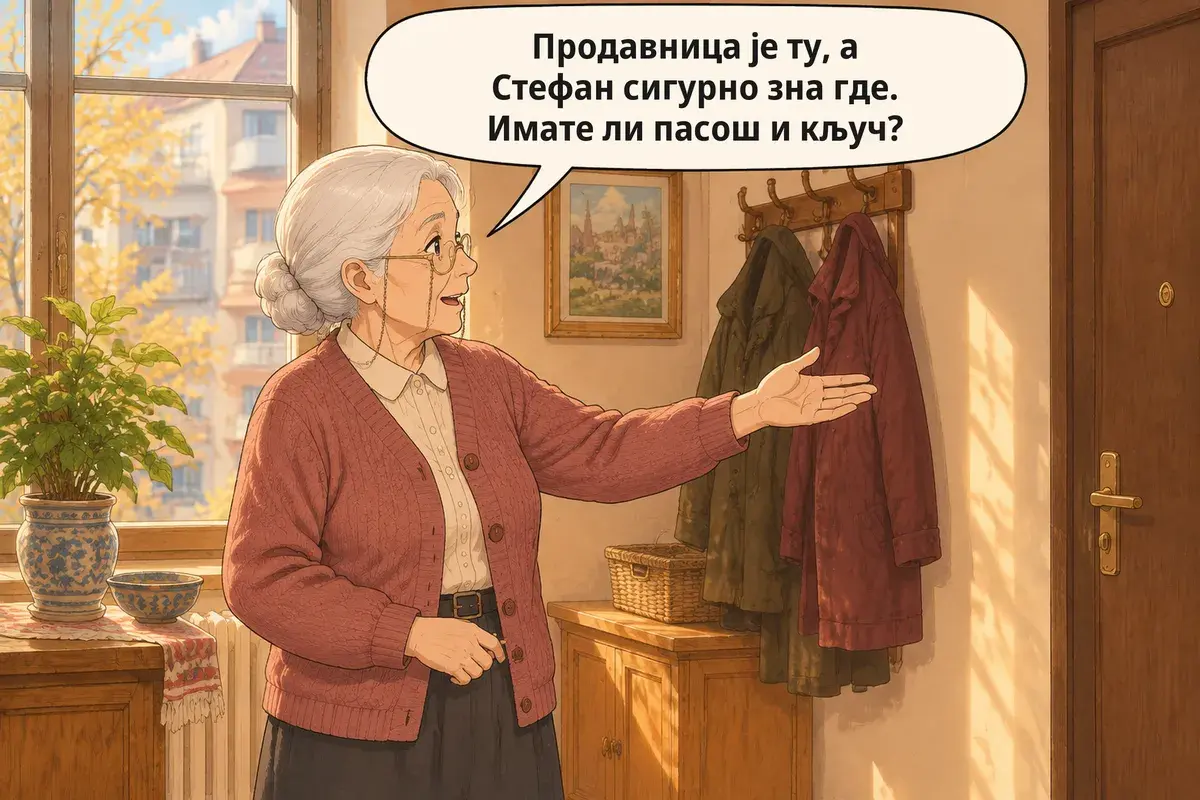
- Радмила
Продавница је ту, а Стефан сигурно зна где. Имате ли пасош и кључ?
The store is right here, and Stefan surely knows where. Do you have your passport and key? (formal)
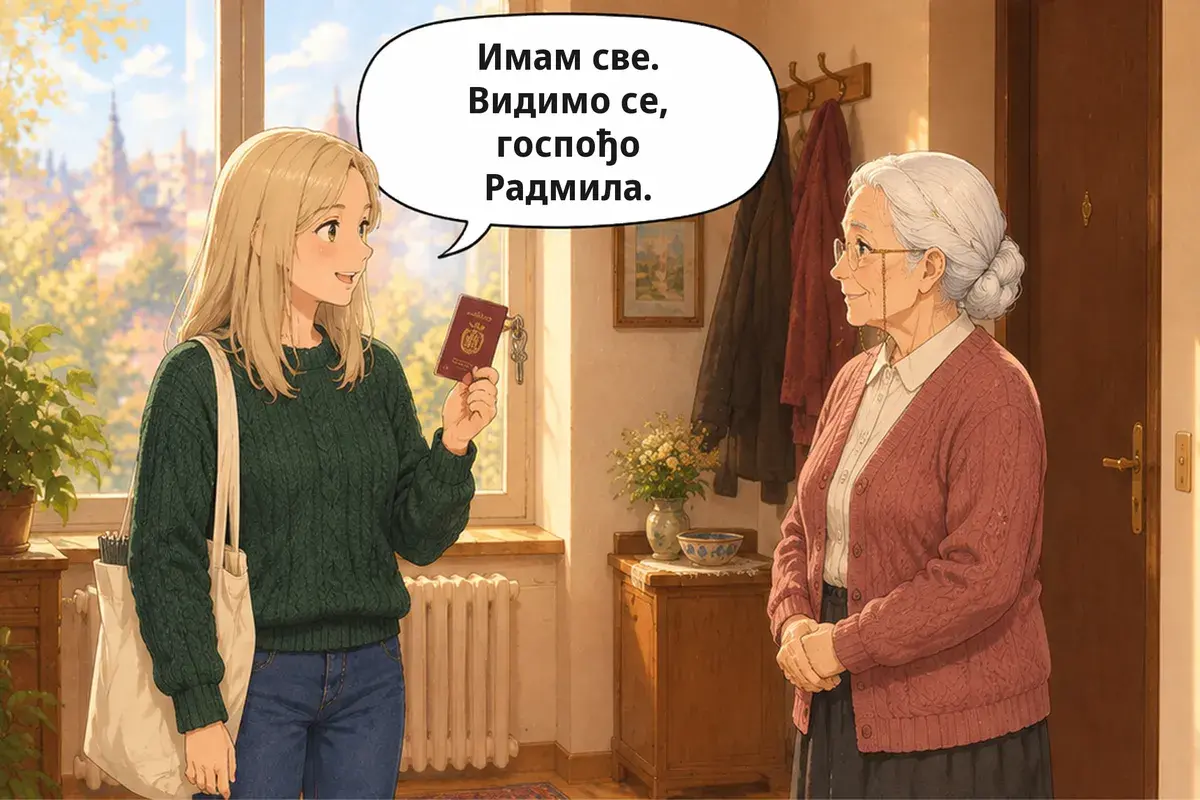
- Ана
Имам све. Видимо се, госпођо Радмила.
I have everything. See you, Mrs. Radmila.
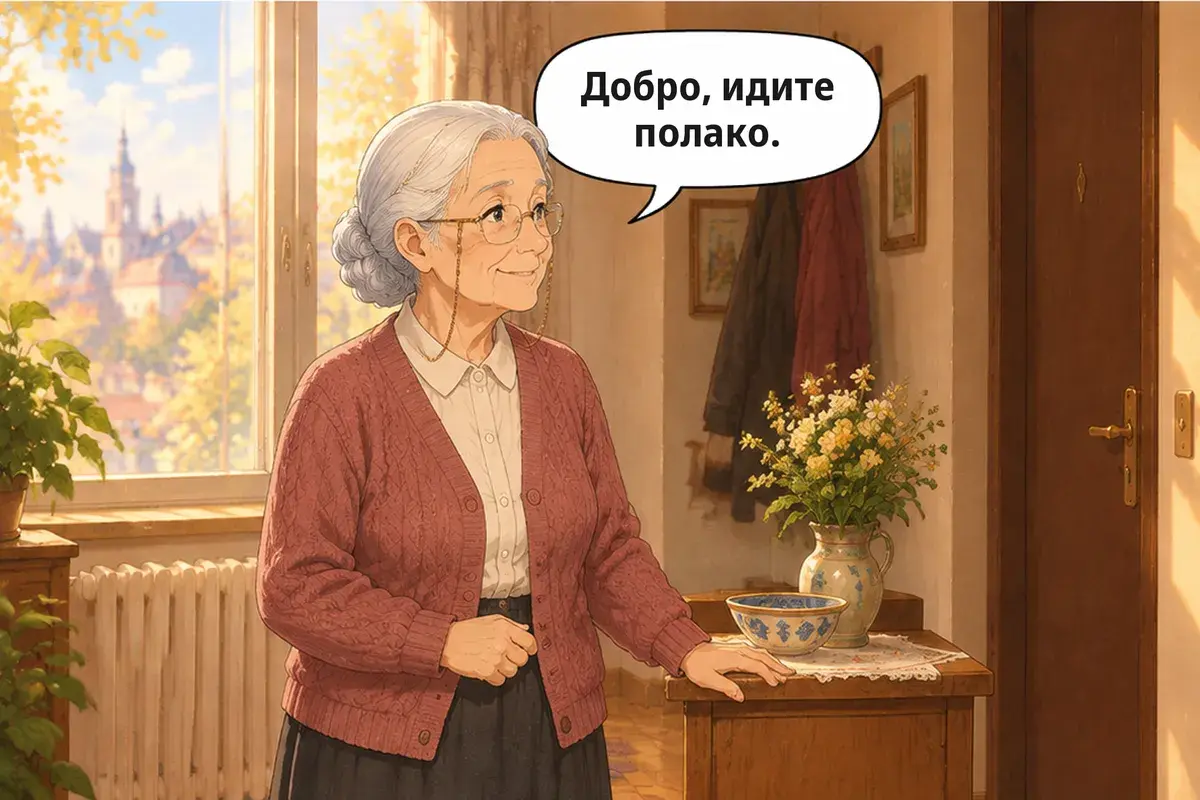
- Радмила
Добро, идите полако.
All right, go slowly (to several people).
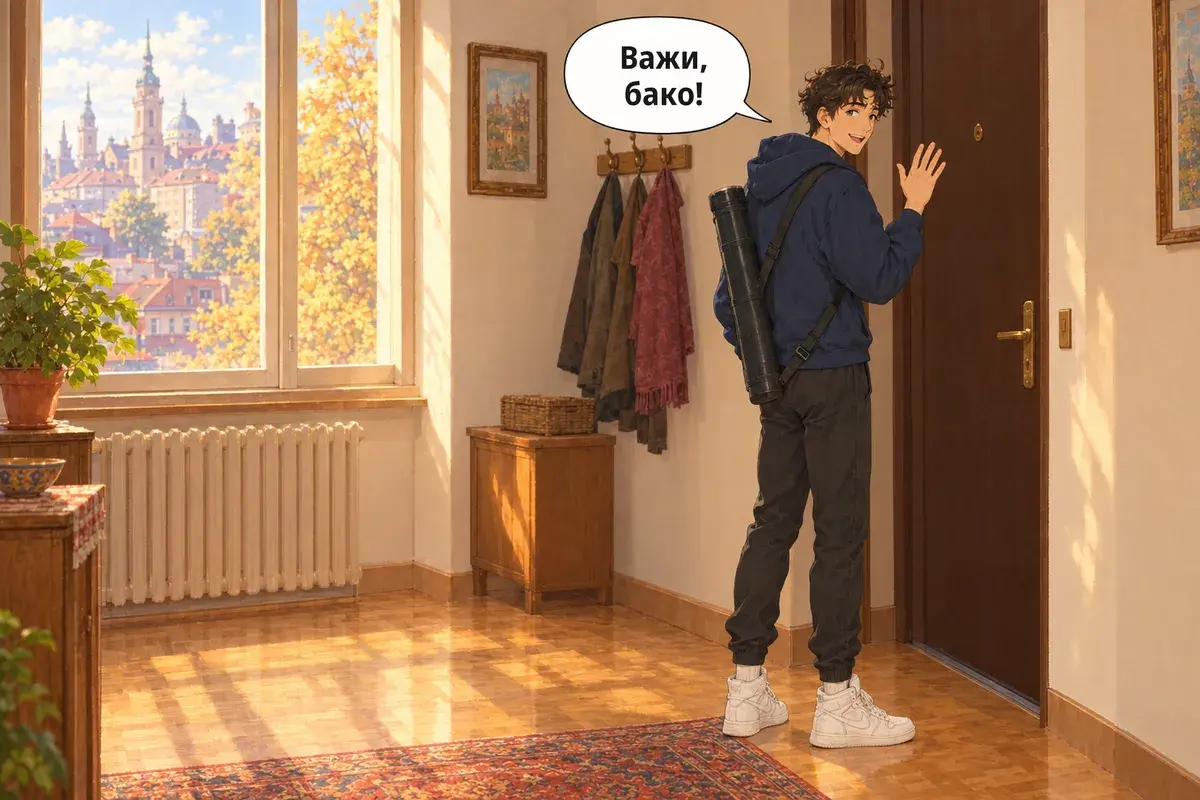
- Стефан
Важи, бако!
OK, Grandma!
Grammar for this text
Добро јутро, АноandВажи, бако!— when you call someone, the name changes its ending (the vocative, see the grammar of this unit):Ана→Ано,бака→бако. Ana calls Radmilaгоспођо Радмила(госпођа→госпођо). In English the name stays plain: Ana, Grandma, Mrs. Radmila.Ваш телефон не ради?— Your phone isn't working? A question only by intonation, as in unit 1;не ради— isn't working.ваш— your (formal): Radmila saysвиto Ana.Он је студент и студира архитектуру у Београду—студирати— to study at a university; what you study is simply the object (the accusative):архитектуру.у Београду— in Belgrade (the locative, the 'where' form, unit 8; for now a ready-made phrase).Треба ти СИМ картица за телефон?— Do you need a SIM card? The thing you need is the subject (картица), andтиhere means 'to you'. The answer isТреба ми!— I need one!: hereмиmeans 'to me', not 'we'. The rule comes at A2.Где то могу добити?—могу— I can: the irregular verbмоћи(ја могу, ти можеш, он може). After it the second verb stays in its dictionary form:добити— to get.Нема фрке, то је мала ствар— young people's slang, like 'no worries, no big deal';ствар— thing, matter.Идем са тобом—идемis fromићи(to go:ја идем, ти идеш, он иде, ми идемо, ви идете, они иду);са тобом— with you, the instrumental case (A2); for now a ready-made phrase.Данас немам факултет— I don't have classes today;факултетis a university or one of its schools.Идите полако— a ready-madeвиcommand fromићи(A2): Radmila says it to both of them.
Words and grammar of the unit: Buy a SIM card with your passport.
Learn the words from the texts with flashcards
In the app, you can tap any word in a text to see its translation, forms and examples, and new words stick with flashcards. 15 minutes a day.
Start for freeEverything is open for free. No card needed to sign up.