

Serbian dialogue with translation · A1 · 14 lines
Извини, је ли ово твој дизајн? Excuse me, is this your design?
Comic · 14 panels
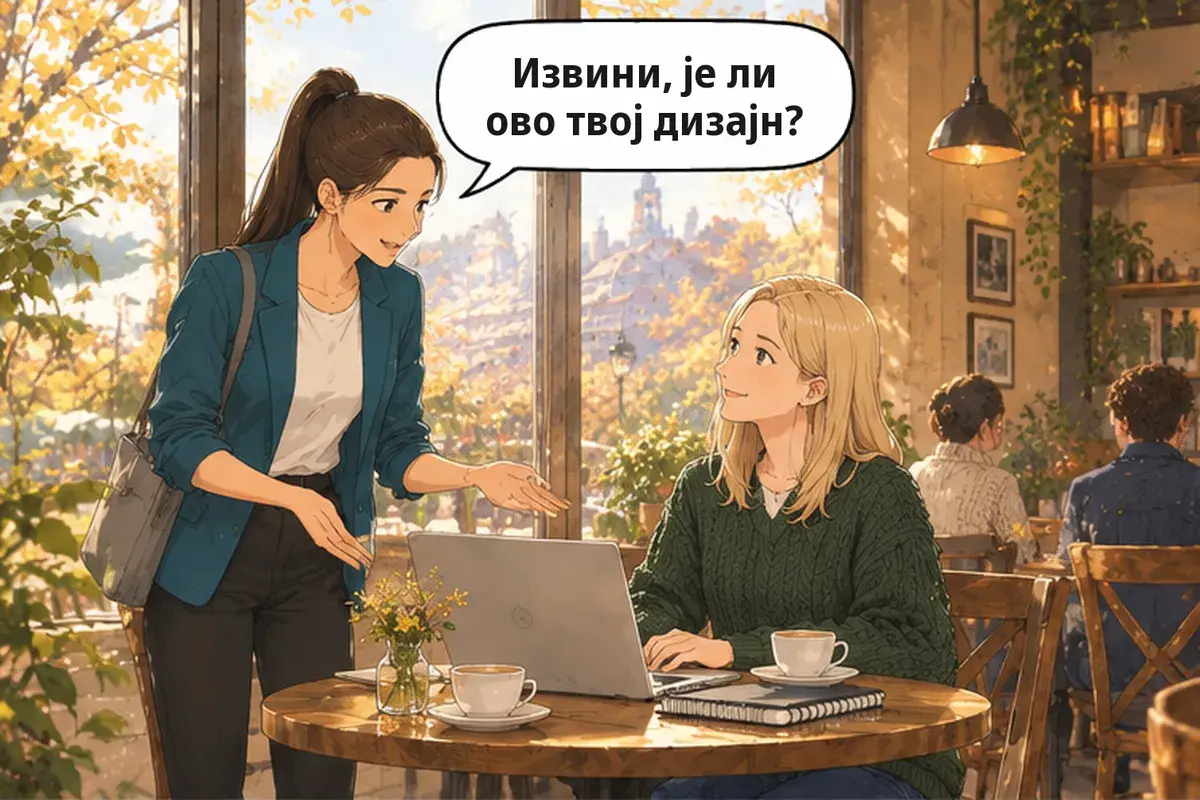
- Милица
Извини, је ли ово твој дизајн?
Excuse me, is this your design?
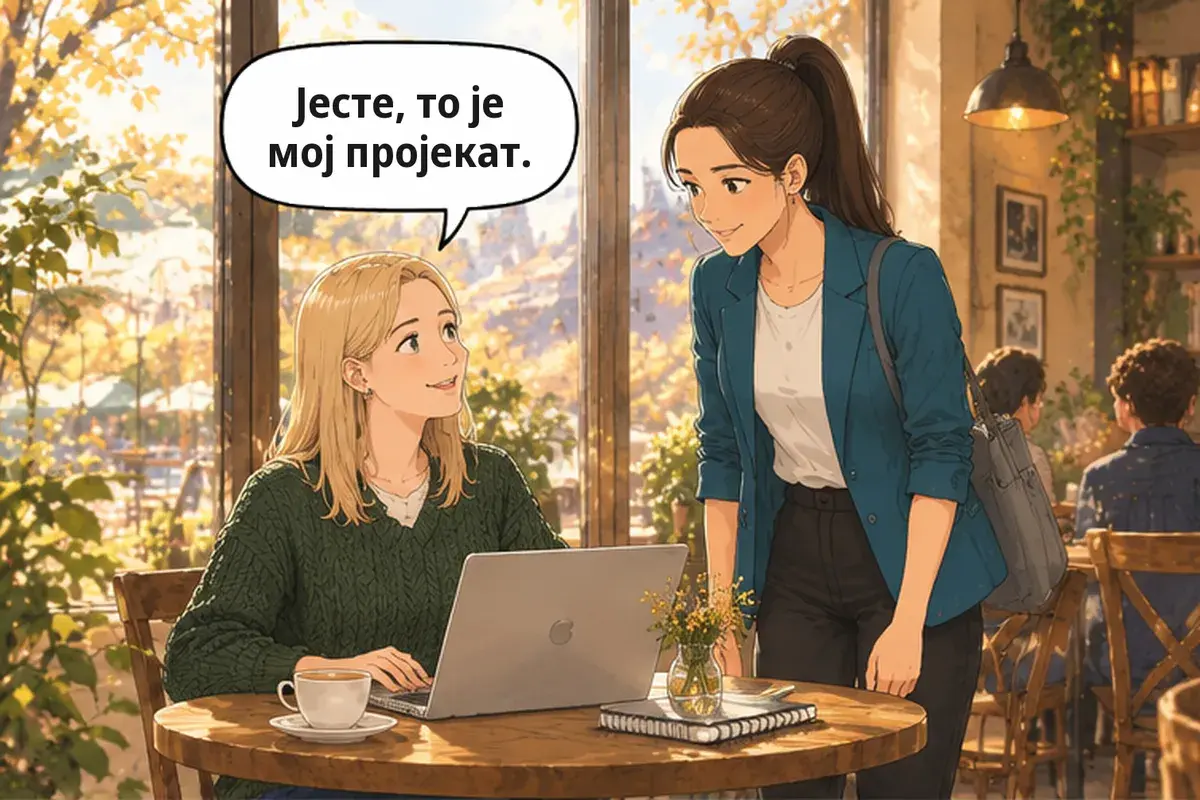
- Ана
Јесте, то је мој пројекат.
Yes, it's my project.
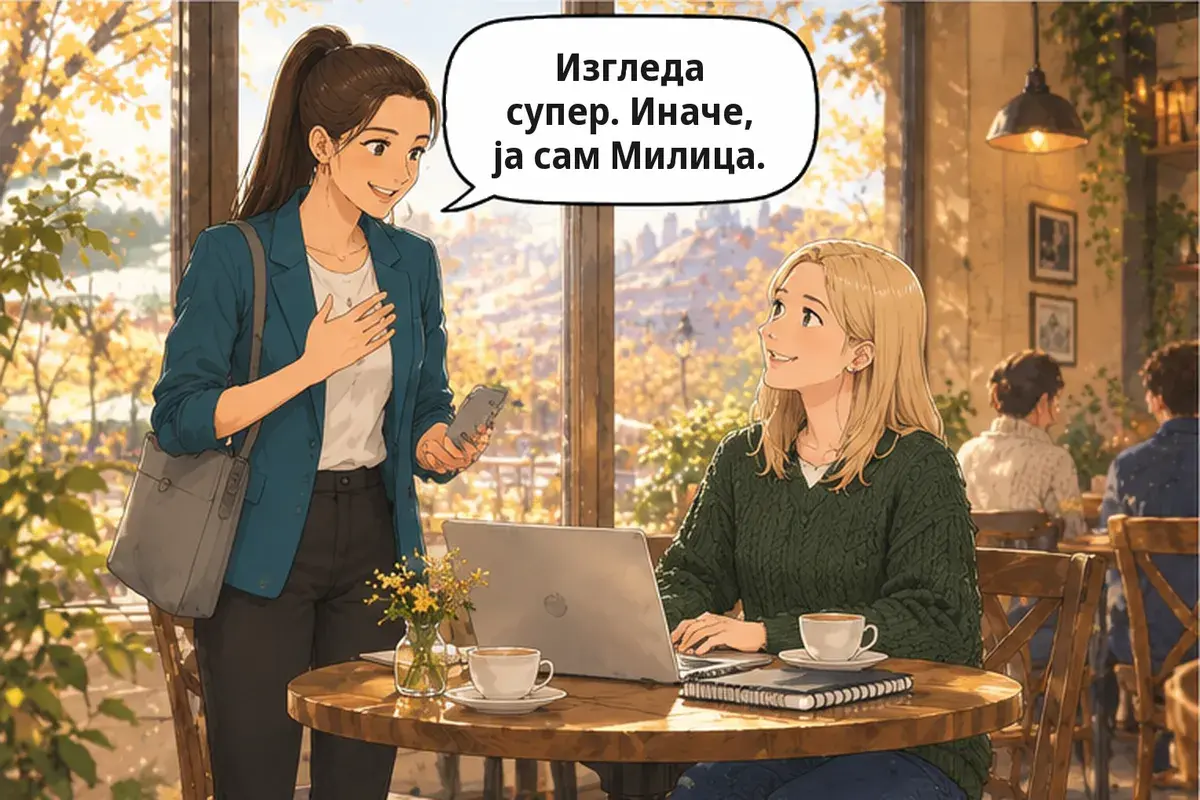
- Милица
Изгледа супер. Иначе, ја сам Милица.
It looks great. By the way, I'm Milica.

- Ана
Драго ми је. Ја сам Ана, дизајнерка.
Nice to meet you. I'm Ana, a designer (woman speaking).
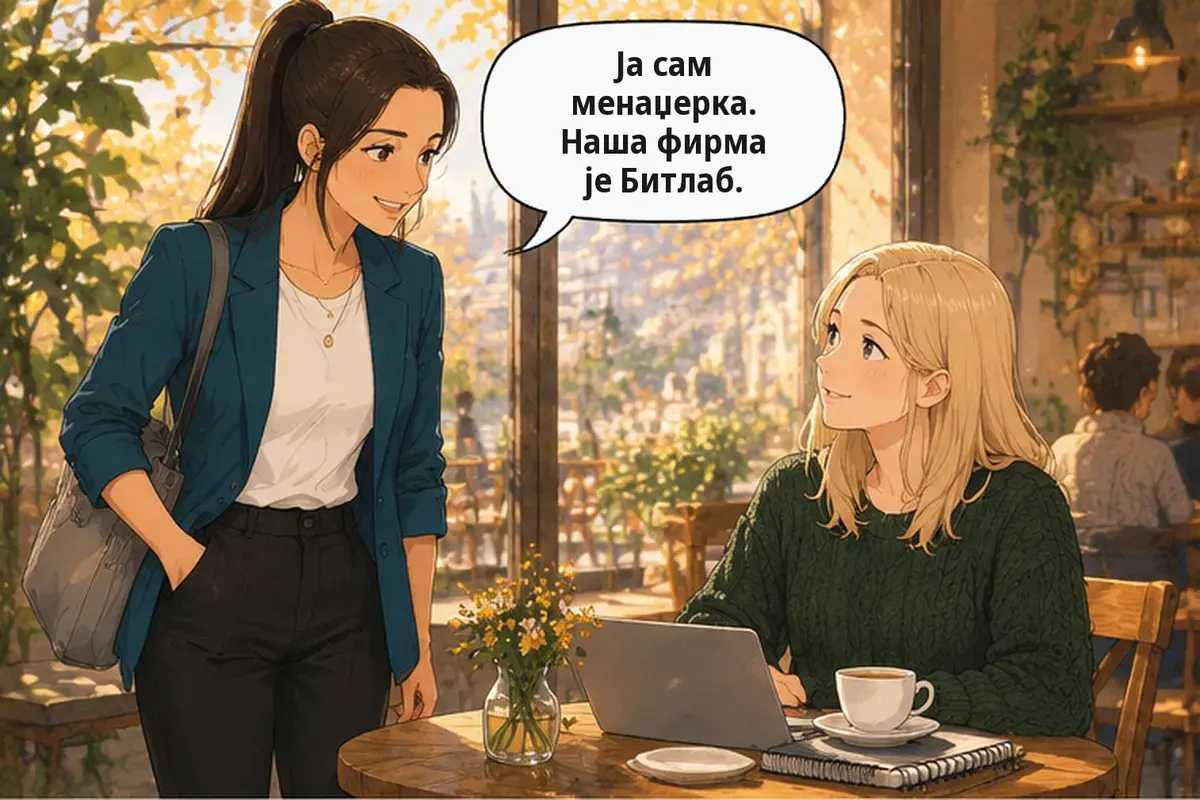
- Милица
Ја сам менаџерка. Наша фирма је Битлаб.
I'm a manager (woman speaking). Our company is Bitlab.
- Ана
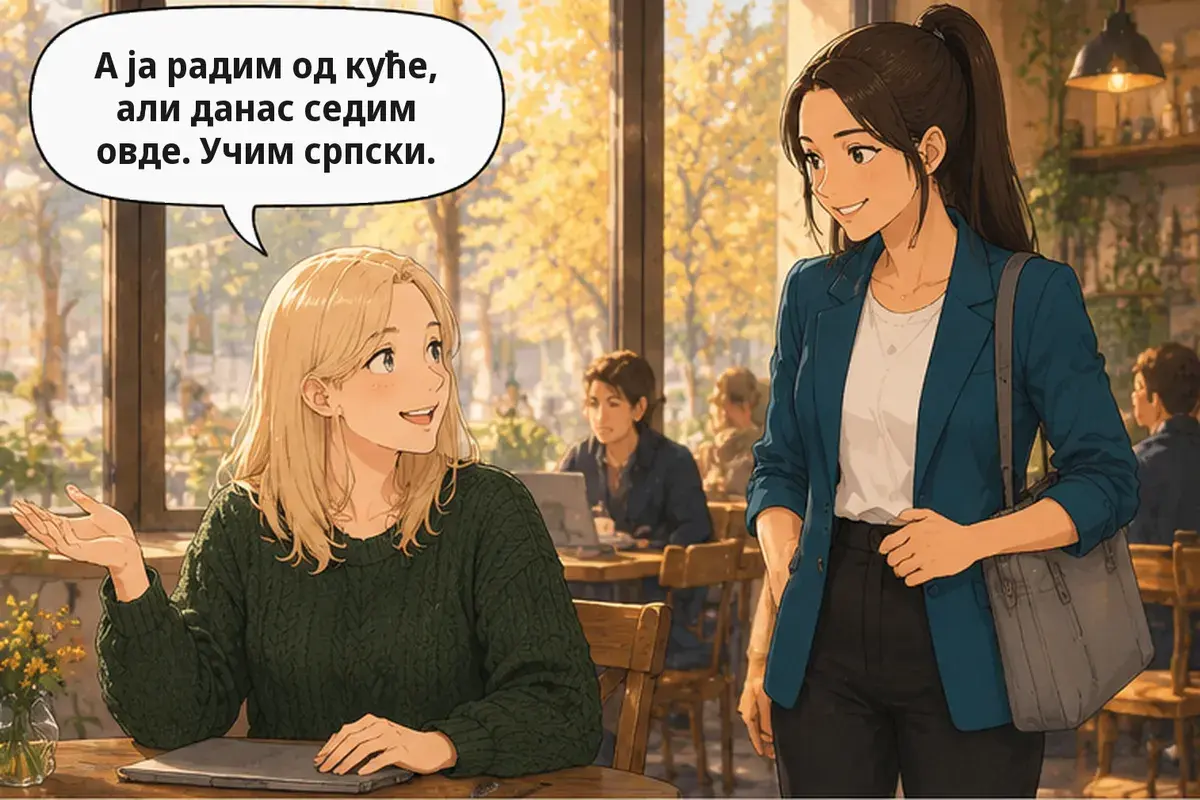
А ја радим од куће, али данас седим овде. Учим српски.
And I work from home, but today I'm sitting here. I'm learning Serbian.
- Милица
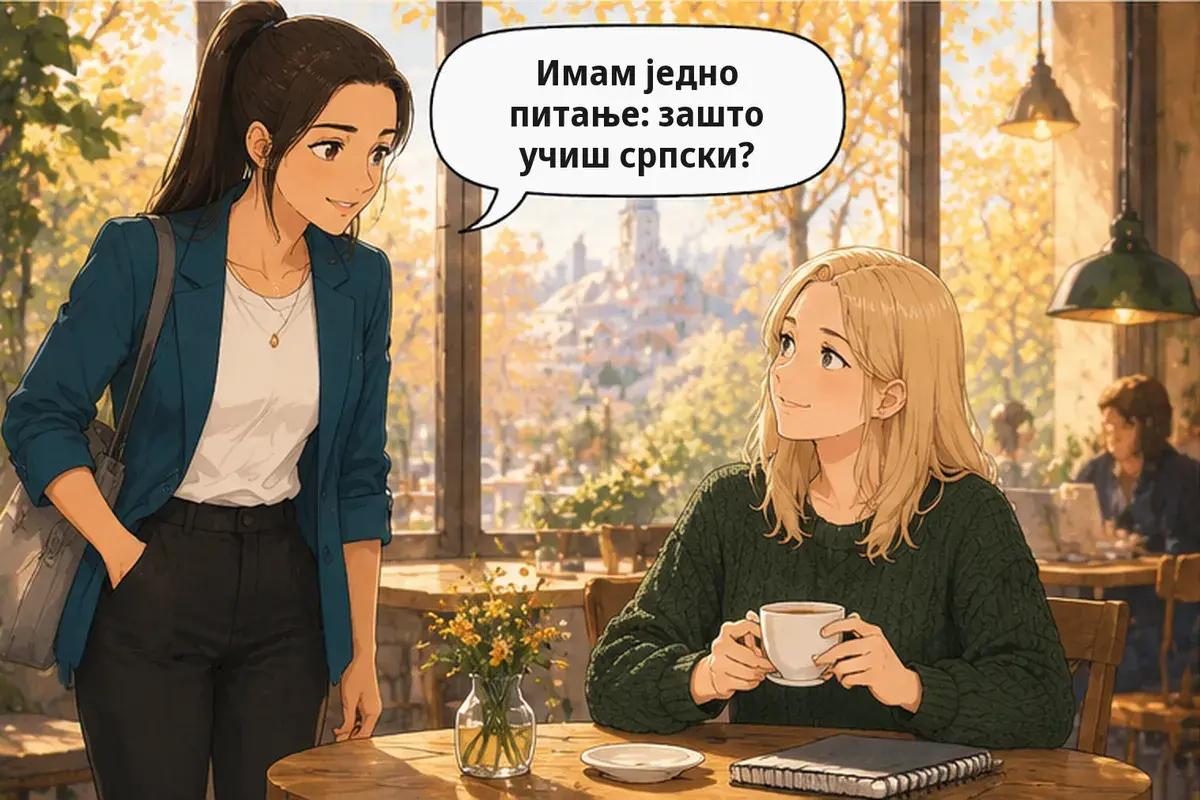
Имам једно питање: зашто учиш српски?
I have one question: why are you learning Serbian?

- Ана
Енглески знам, а српски је леп. И Београд је супер!
I know English, and Serbian is beautiful. Belgrade is great too!
- Милица
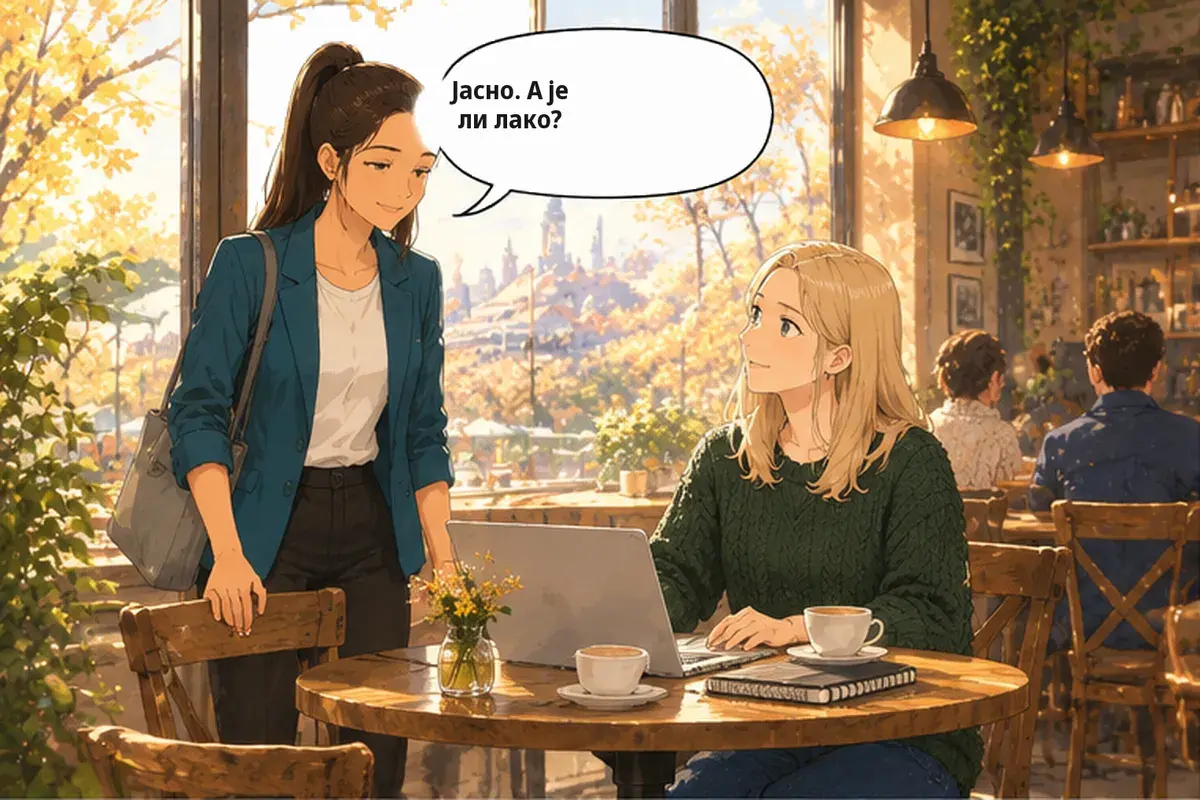
Јасно. А је ли лако?
I see. And is it easy?
- Ана
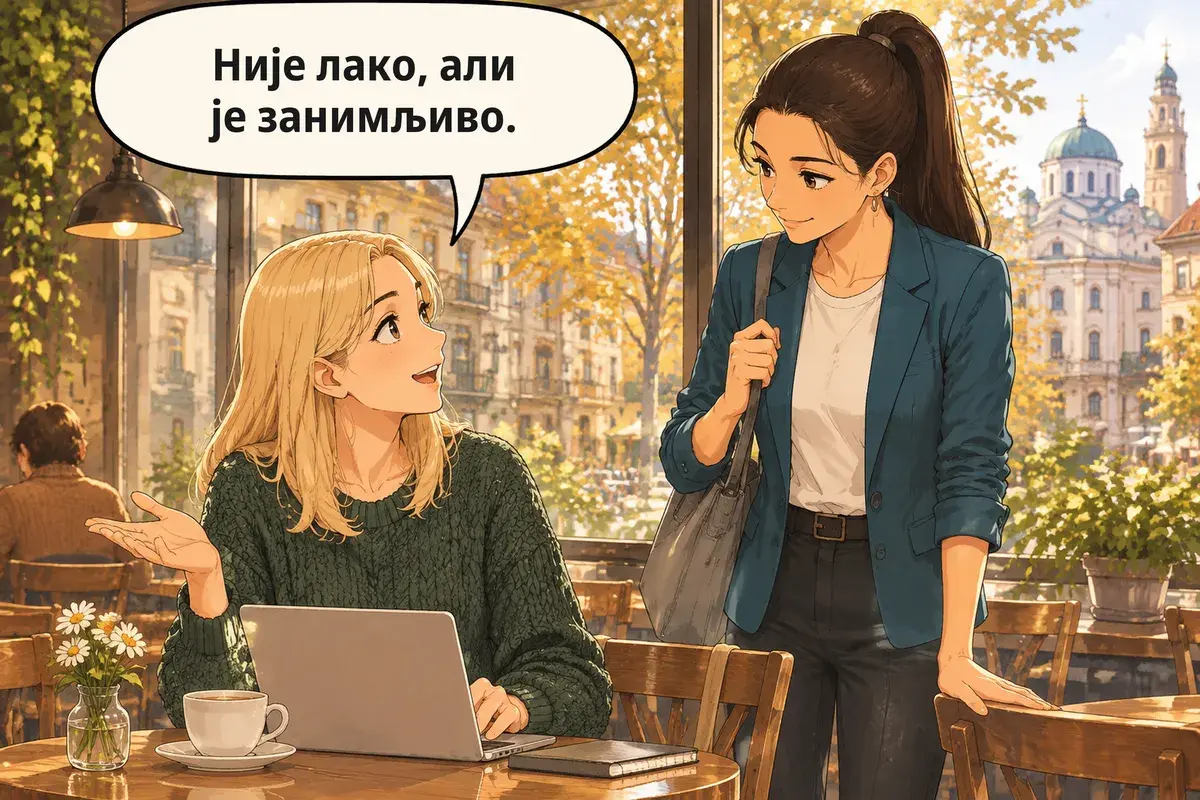
Није лако, али је занимљиво.
It's not easy, but it's interesting.

- Милица
Тачно, ти стварно добро говориш! Имаш ли Viber?
Right, you really speak well! Do you have Viber?
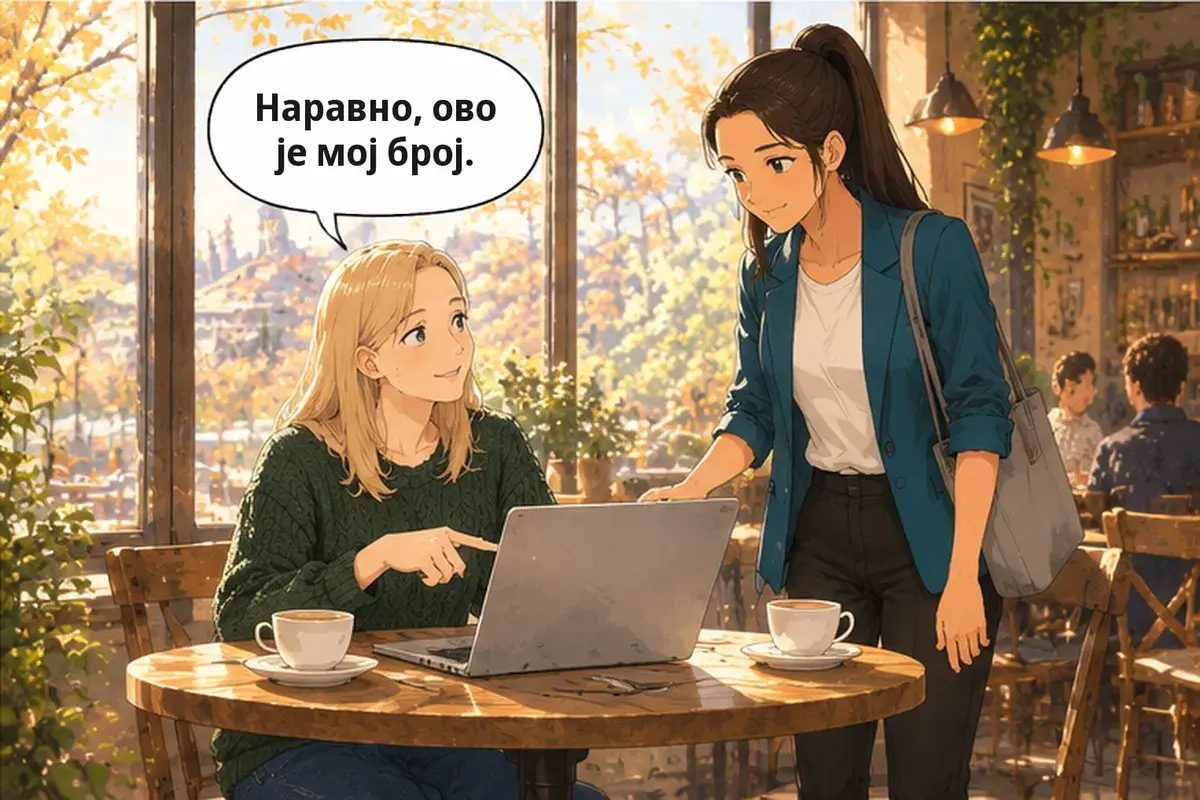
- Ана
Наравно, ово је мој број.
Of course, this is my number.

- Милица
Ајде, видимо се!
OK then, see you!
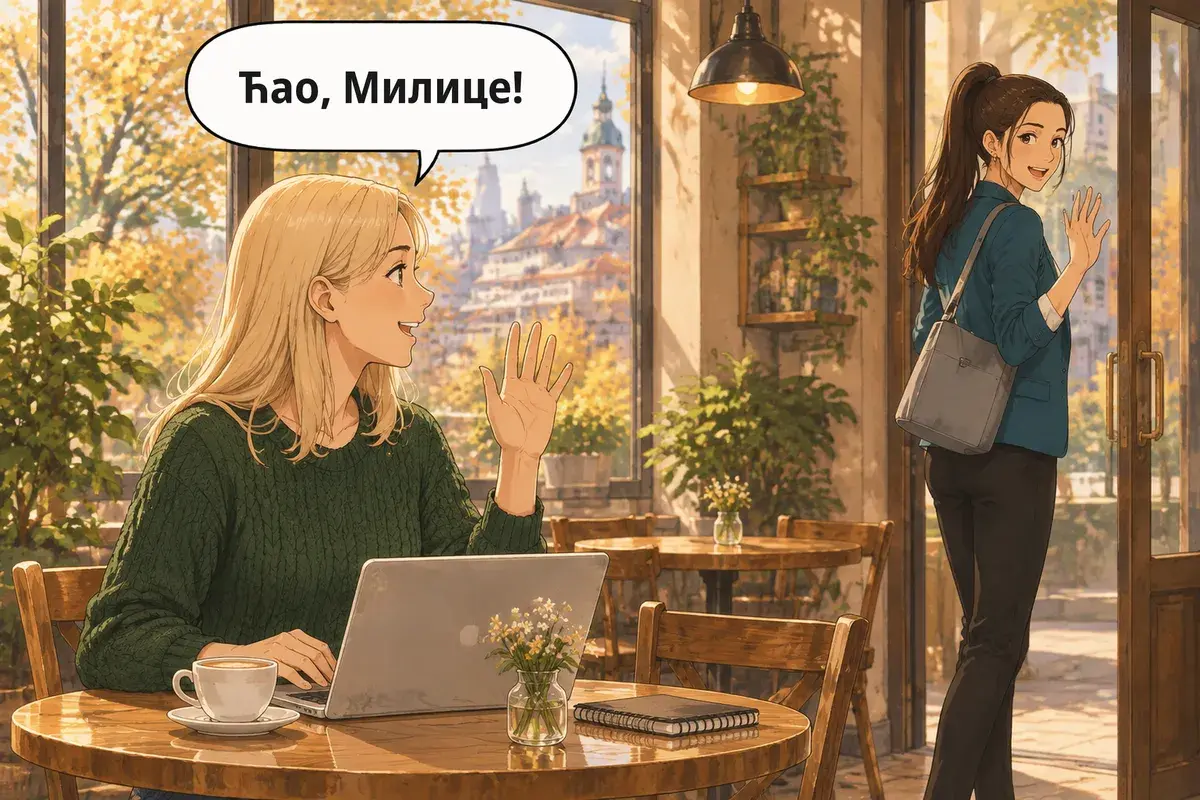
- Ана
Ћао, Милице!
Bye, Milica!
Grammar for this text
Извини, је ли ово твој дизајн?— Excuse me, is this your design? Milica calls Anaти, so she saysизвини; in unit 1 you met the politeизвините. Learn it as a set word for now (commands come in A2).је лиturns the sentence into a question, like "is it…?".твој— your:дизајнis masculine.Јесте— yes, it is (unit 2).Драго ми је.— Nice to meet you. A set phrase, word for word "it's dear to me";миmeans "to me" (the rule comes in A2). A woman names her job with the woman's form:менаџерка,дизајнерка(see the unit grammar).А ја радим од куће, али данас седим овде. Учим српски.— And I work from home, but today I'm sitting here. I'm learning Serbian.радим— I work (радити),седим— I'm sitting (седети),учим— I'm learning (учити, unit 1): all three end in-им, the ending for "I".од куће— from home, a set phrase (unit 12). A comma goes beforeали.Имам једно питање: зашто учиш српски?— I have one question: why are you learning Serbian?питање(question) is neuter, so it'sједно.зашто— why.учиш— you're learning: theтиform ends in-иш(unit 3).Енглески знам, а српски је леп.— I know English, and Serbian is beautiful.знам— I know (знати, unit 2);леп— beautiful, nice. A language is named with the adjective alone, with no word for "language". InИ Београд је супер!the wordиmeans "too".Није лако, али је занимљиво.— It's not easy, but it's interesting.лако— easy, the neuter form ofлак; it also stands in the questionА је ли лако?just before.Тачно, ти стварно добро говориш! Имаш ли Viber?— Right, you really speak well! Do you have Viber?тачно— right;говориш,имаш— theтиforms (unit 3);лиagain stands second.Ајде, видимо се!— OK then, see you!ајде— OK then, come on;видимо се— see you, word for word "we see each other". A set phrase (A2).
Words and grammar of the unit: Talk about your job.
Learn the words from the texts with flashcards
In the app, you can tap any word in a text to see its translation, forms and examples, and new words stick with flashcards. 15 minutes a day.
Start for freeEverything is open for free. No card needed to sign up.