
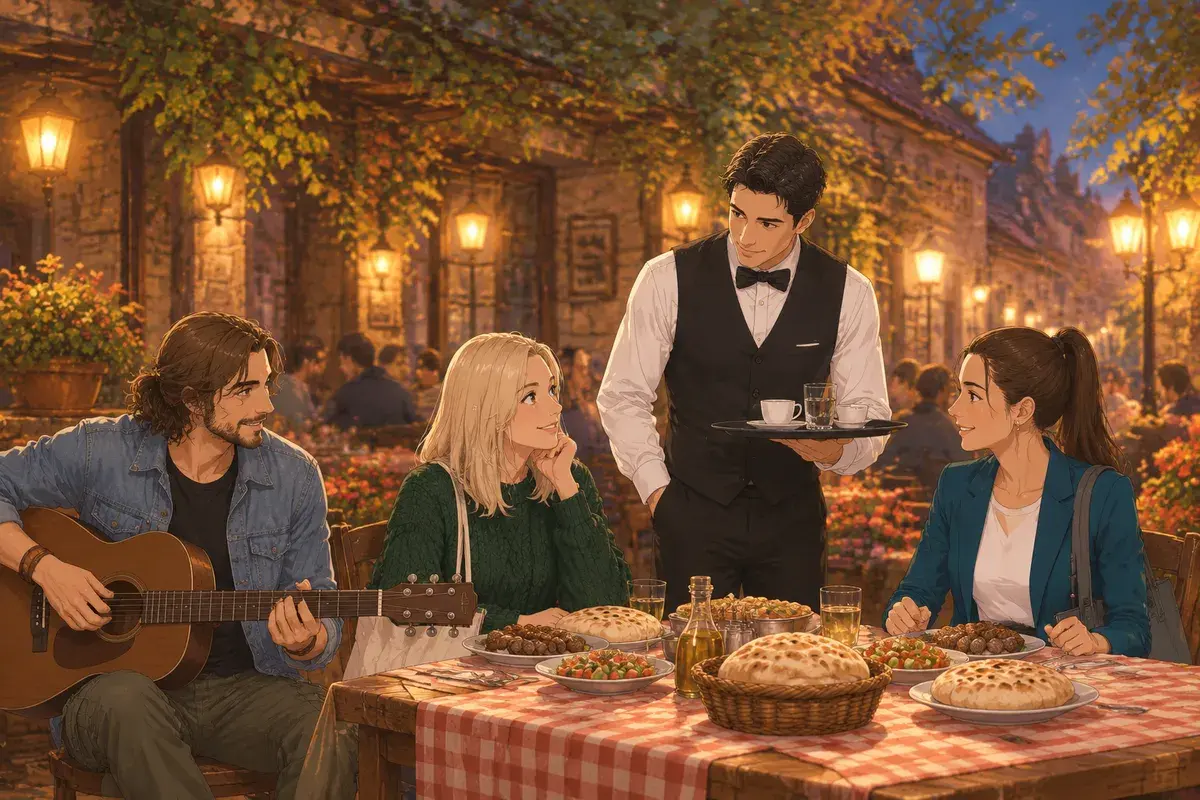
Serbian dialogue with translation · A1 · 14 lines
Шта желите да наручите? What would you like to order?
Comic · 14 panels
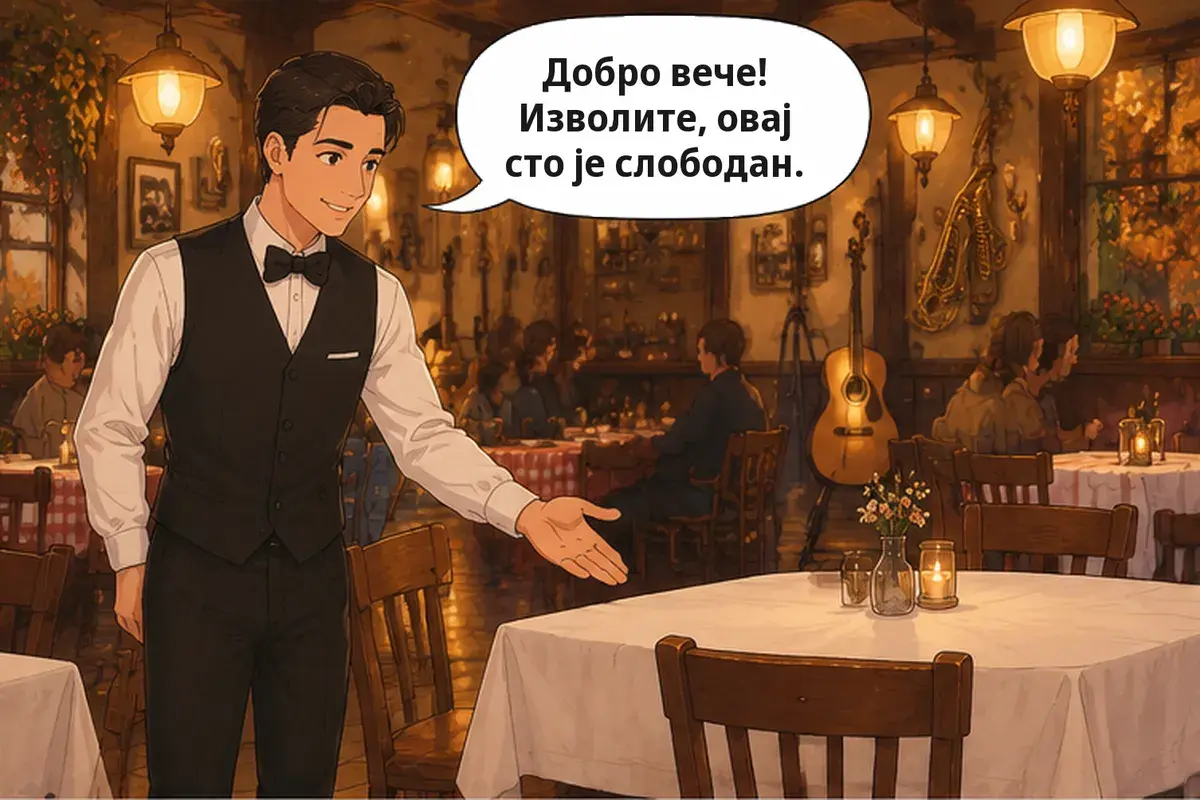
- Конобар
Добро вече! Изволите, овај сто је слободан.
Good evening! Here you go, this table is free (to several people).
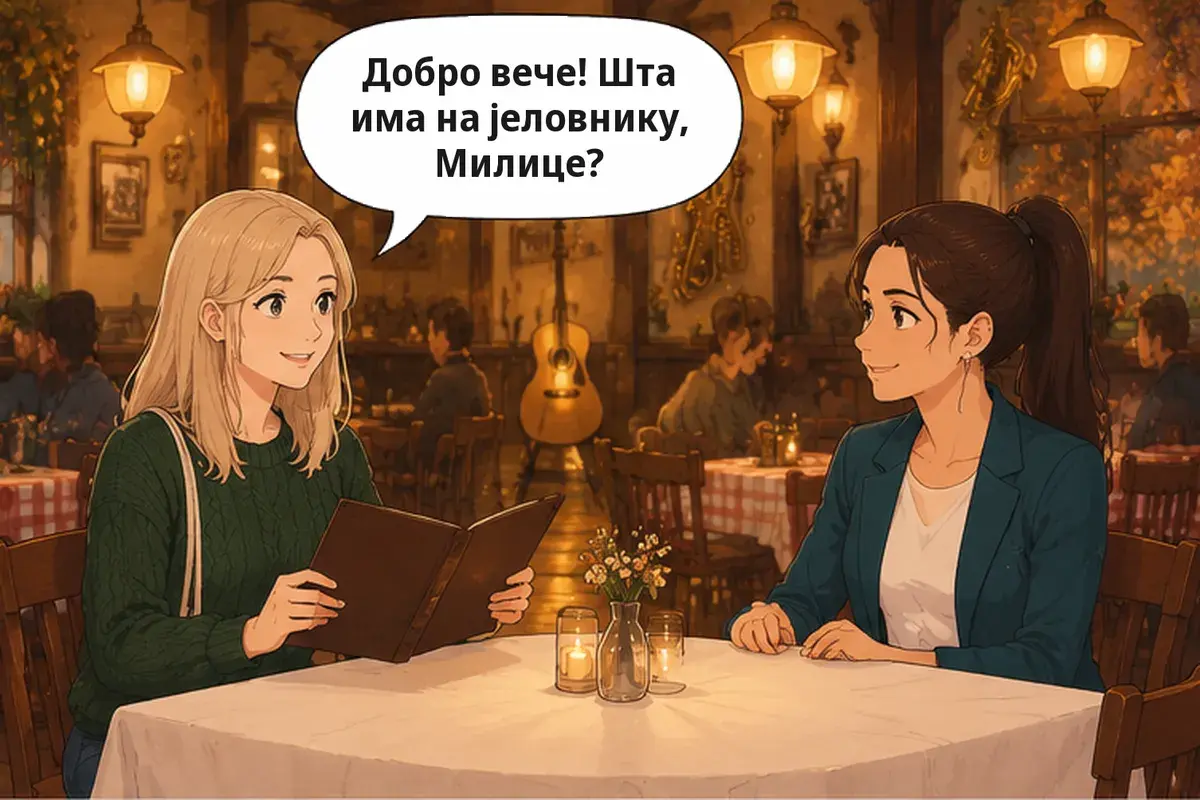
- Ана
Добро вече! Шта има на јеловнику, Милице?
Good evening! What's on the menu, Milica?
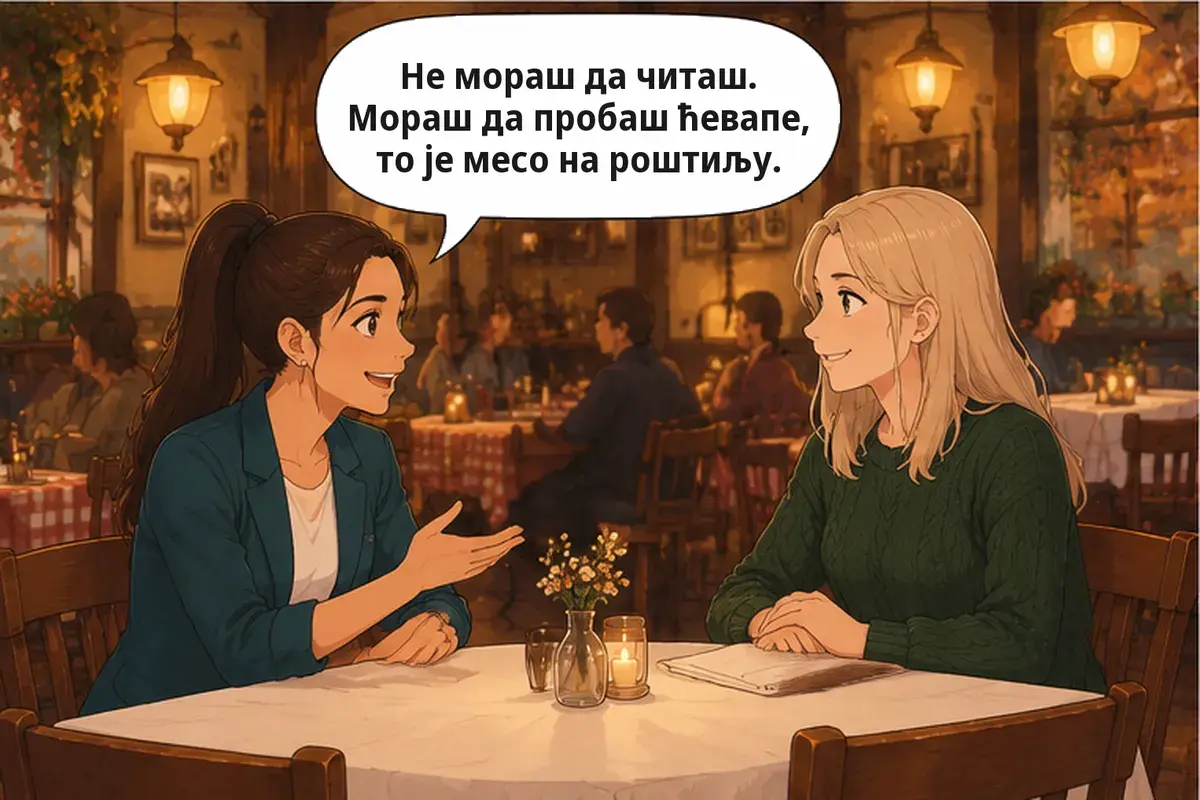
- Милица
Не мораш да читаш. Мораш да пробаш ћевапе, то је месо на роштиљу.
You don't have to read. You have to try the ćevapi, that's meat on the grill.
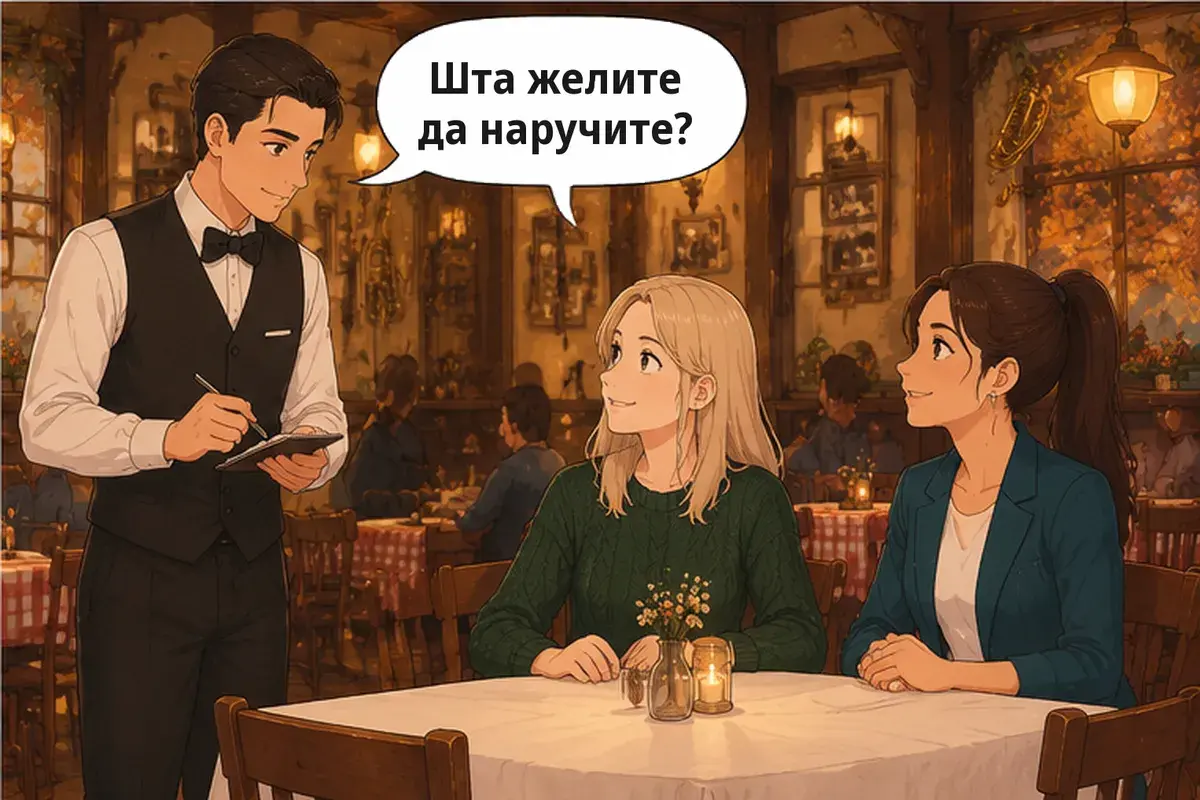
- Конобар
Шта желите да наручите?
What would you like to order? (to several people)
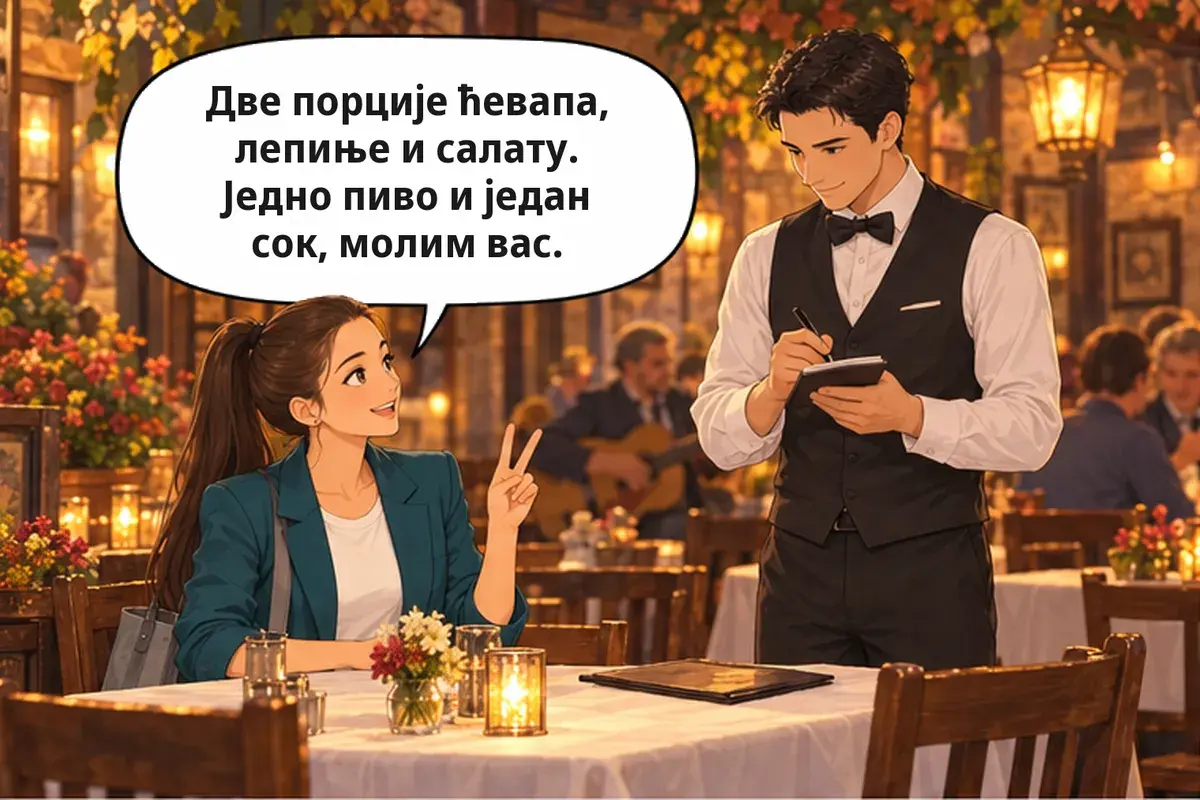
- Милица
Две порције ћевапа, лепиње и салату. Једно пиво и један сок, молим вас.
Two portions of ćevapi, flatbreads and a salad. One beer and one juice, please (formal).
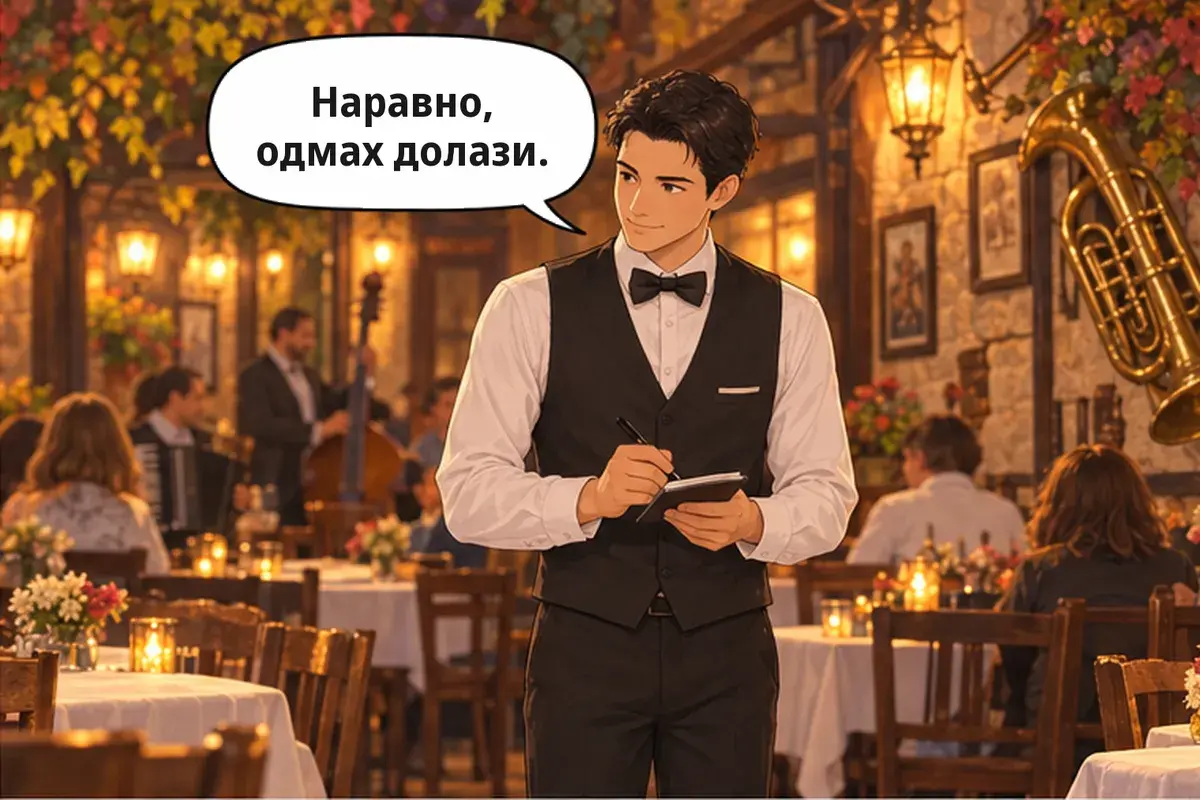
- Конобар
Наравно, одмах долази.
Of course, it's coming right away.
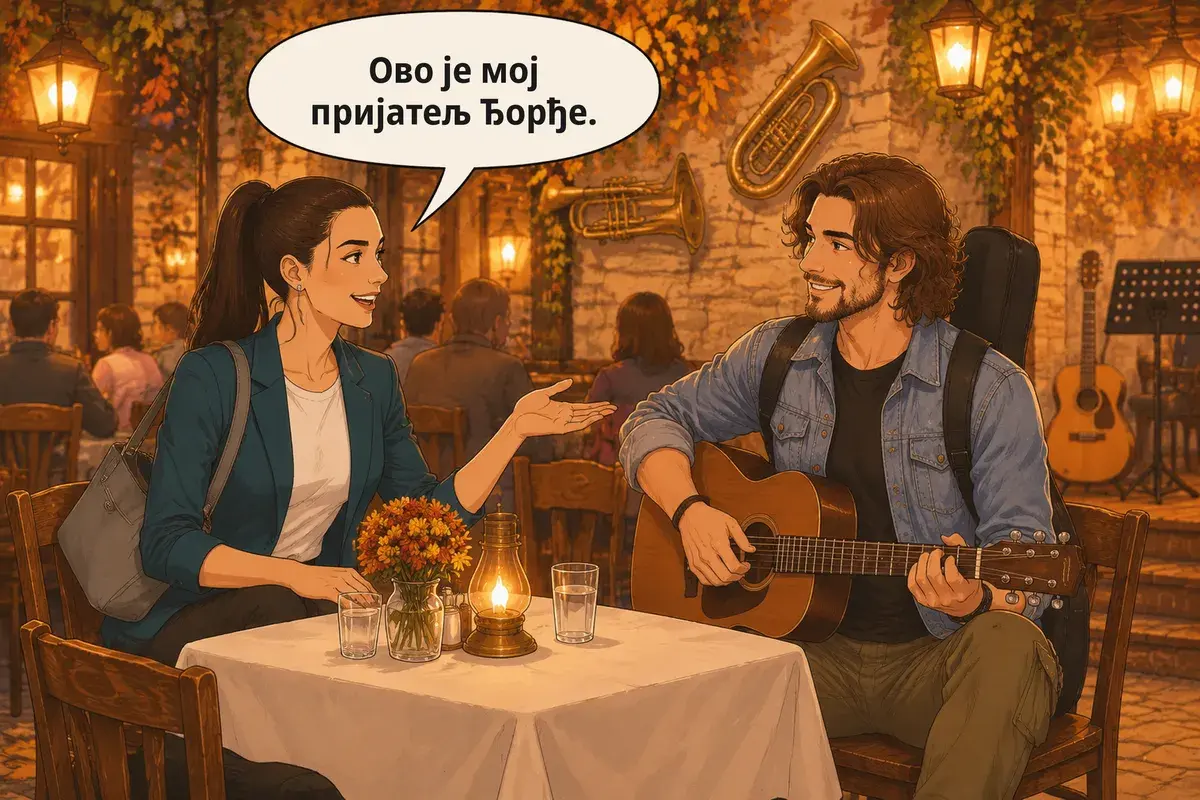
- Милица
Ово је мој пријатељ Ђорђе.
This is my friend Đorđe.
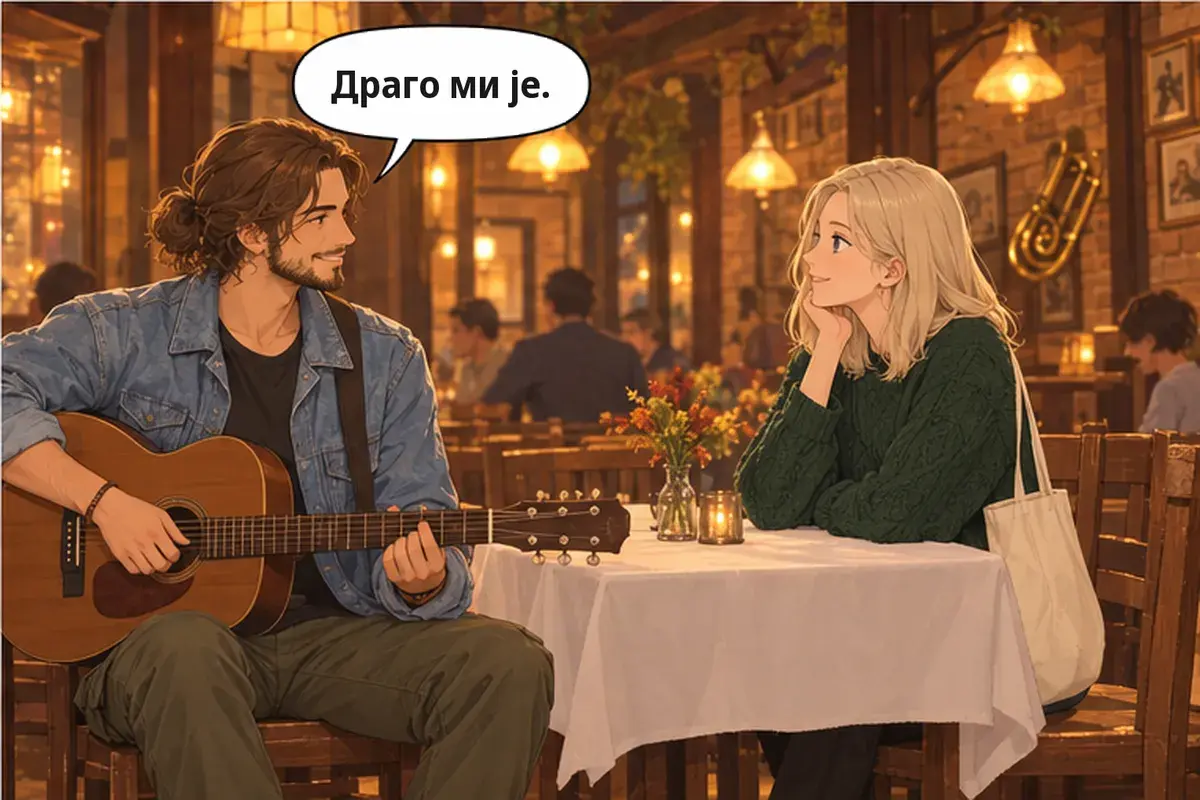
- Ђорђе
Драго ми је.
Nice to meet you.
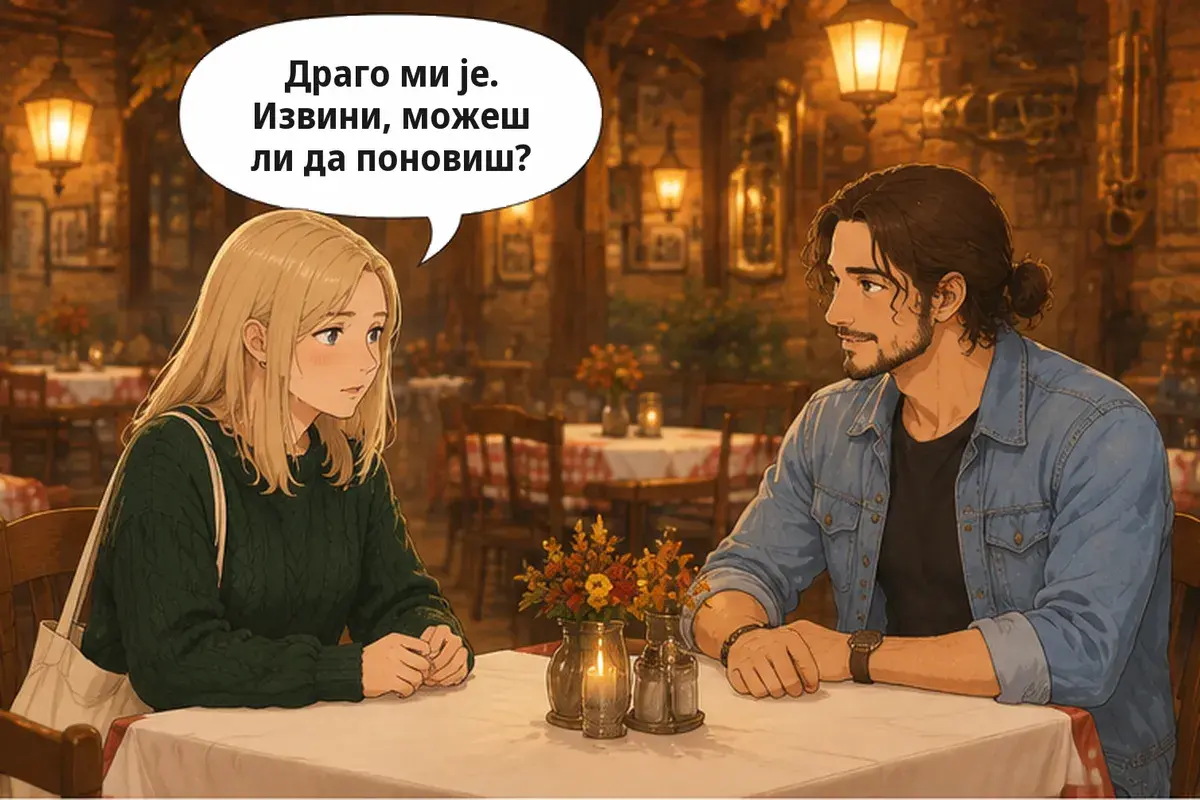
- Ана
Драго ми је. Извини, можеш ли да поновиш?
Nice to meet you. Sorry, can you repeat that?
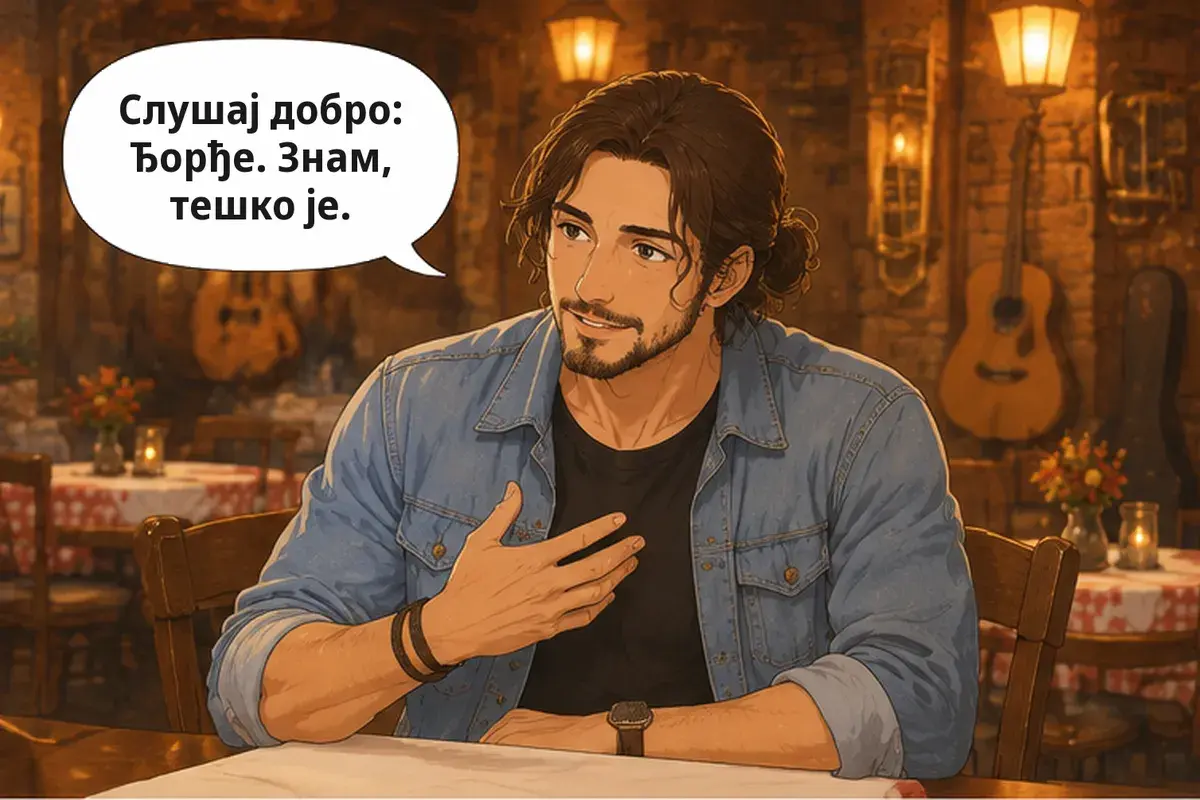
- Ђорђе
Слушај добро: Ђорђе. Знам, тешко је.
Listen carefully: Đorđe. I know, it's hard.
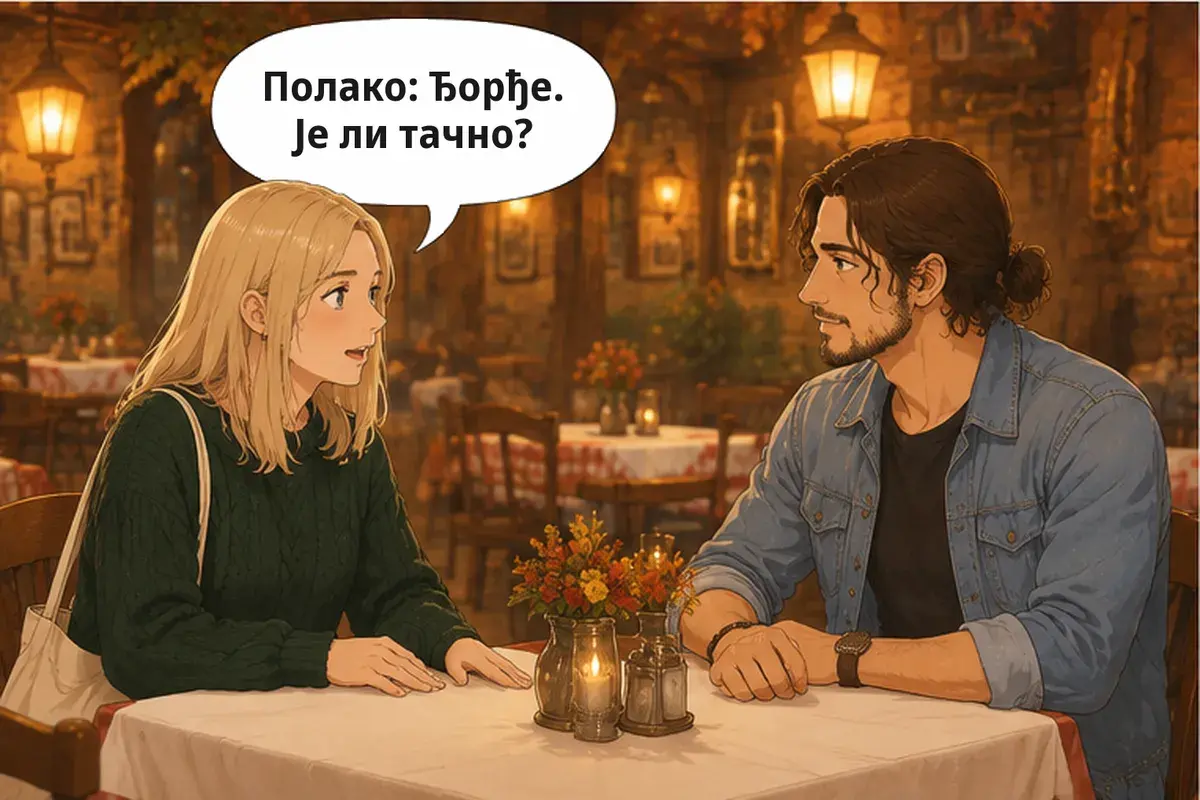
- Ана
Полако: Ђорђе. Је ли тачно?
Slowly: Đorđe. Is that correct?
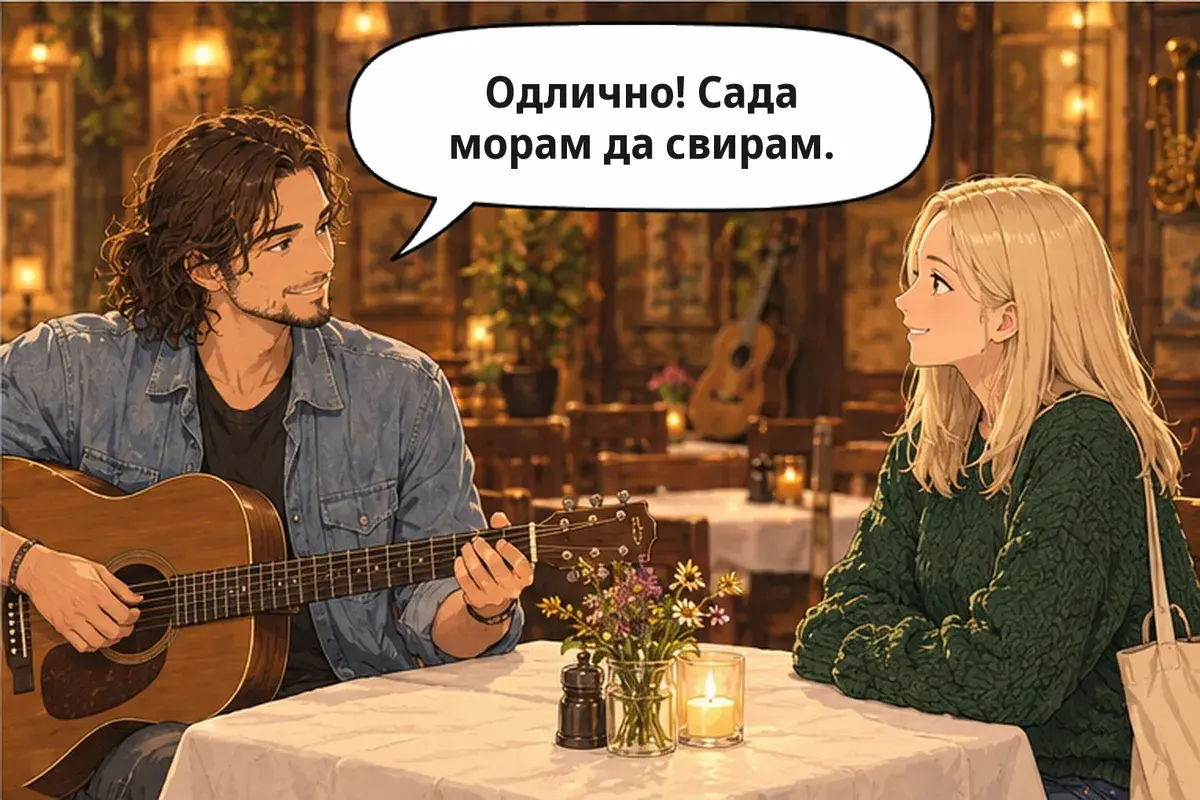
- Ђорђе
Одлично! Сада морам да свирам.
Great! Now I have to play.
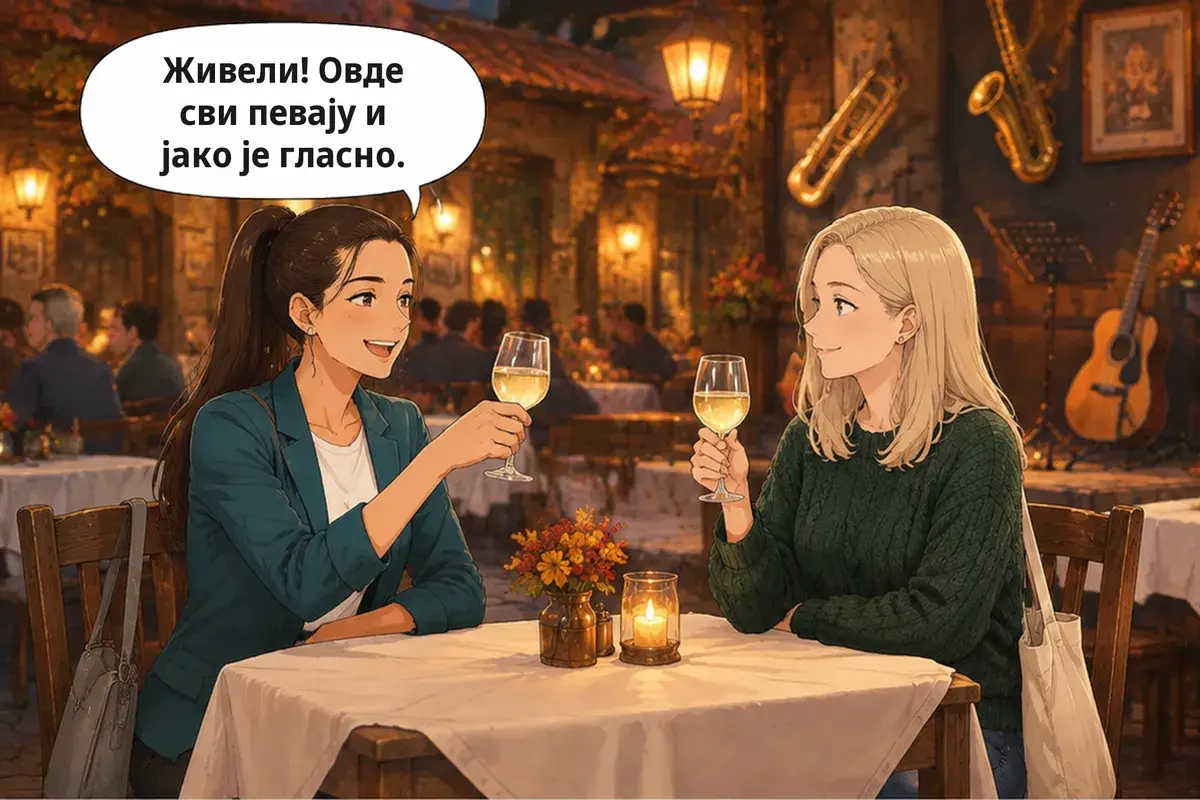
- Милица
Живели! Овде сви певају и јако је гласно.
Cheers! Everyone's singing here, and it's really loud.

- Ана
Ја само слушам песму и баш је лепо вече!
I'm just listening to the song, and it's a really nice evening!
Grammar for this text
Добро вече! Изволите, овај сто је слободан.—добро вече— good evening, the greeting for the evening.стоhere is 'table', not the numberсто(one hundred) from unit 4: same spelling, you tell them apart by meaning. Ana answers the waiter with the same greeting.Шта има на јеловнику, Милице?— 'what's on the menu?':на јеловникуanswers 'where?', so it takes the locative.Милицеis the calling form ofМилица(the vocative, unit 7).Не мораш да читаш. Мораш да пробаш ћевапе, то је месо на роштиљу.—не мораш— you don't have to, not 'you mustn't';мораш да пробаш— you have to try (моратиin theтиform).ћевапеis the accusative plural;на роштиљу— on the grill (locative).Шта желите да наручите?—желитеisжелетиin theвиform: the waiter speaks politely, and to two people.да наручите— to order.желитеsounds more polite thanхоћете.Две порције ћевапа, лепиње и салату—ћевапаmeans 'of ćevapi': a portion of what? That's the genitive, a set phrase for now (unit 12).лепиње— flatbreads, eaten with ćevapi;салатуis the accusative:салата → салату. InЈедно пиво и један сок, молим вас—пивоis neuter, soједно;сокis masculine, soједан;молим васis the polite 'please'.Драго ми је.— a set phrase, 'nice to meet you'; both people say it.Слушај добро: Ђорђе. Знам, тешко је.—слушај— listen (a command, the imperative, A2).Ђis a soft j sound, close to the d-y in 'did you' said fast. InСада морам да свирамboth verbs are in theјаform: 'now I have to play'.Живели!— the toast, 'cheers!'; people answer with the same word.
Words and grammar of the unit: Make plans to meet at a kafana.
Learn the words from the texts with flashcards
In the app, you can tap any word in a text to see its translation, forms and examples, and new words stick with flashcards. 15 minutes a day.
Start for freeEverything is open for free. No card needed to sign up.