

Serbian dialogue with translation · A1 · 13 lines
Хоћеш да идеш у кафану вечерас? Do you want to go to a kafana tonight?
Comic · 12 panels

- Милица
Хоћеш да идеш у кафану вечерас?
Do you want to go to a kafana tonight?
- Милица
Мој пријатељ Ђорђе свира гитару у једном бенду.
My friend Đorđe plays the guitar in a band.
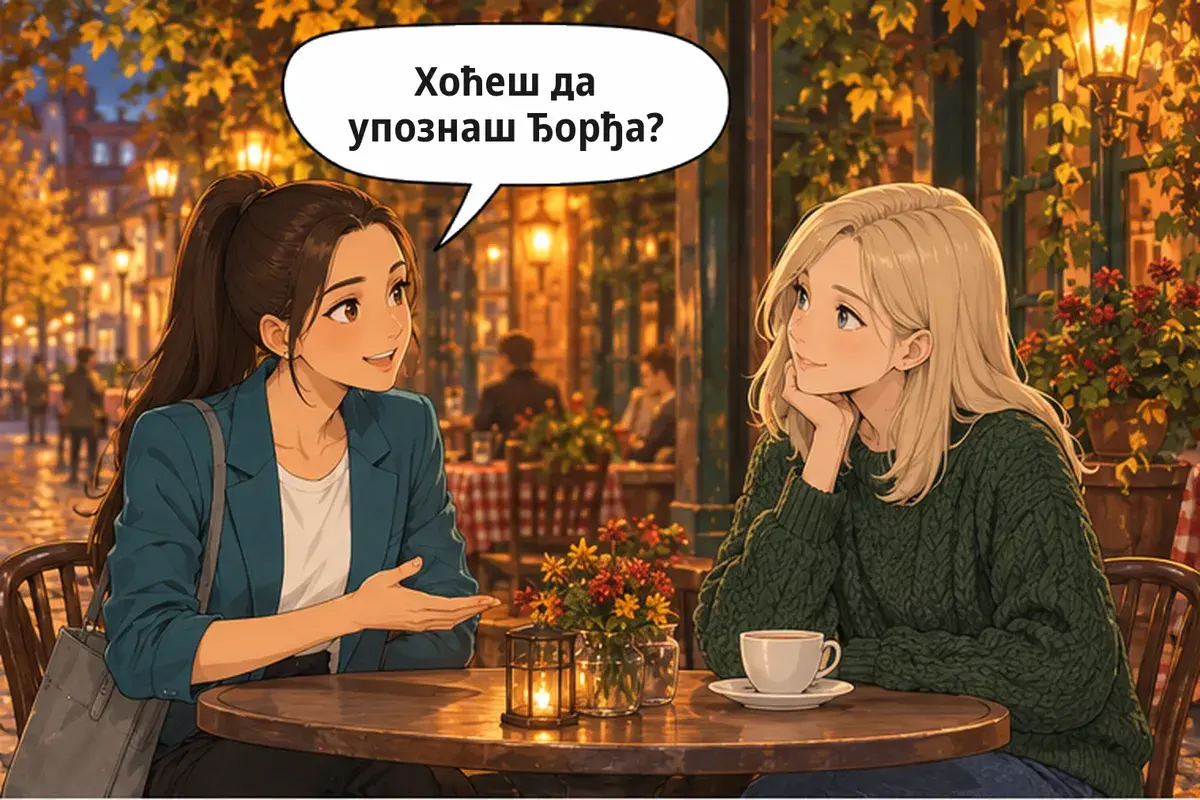
- Милица
Хоћеш да упознаш Ђорђа?
Do you want to meet Đorđe?
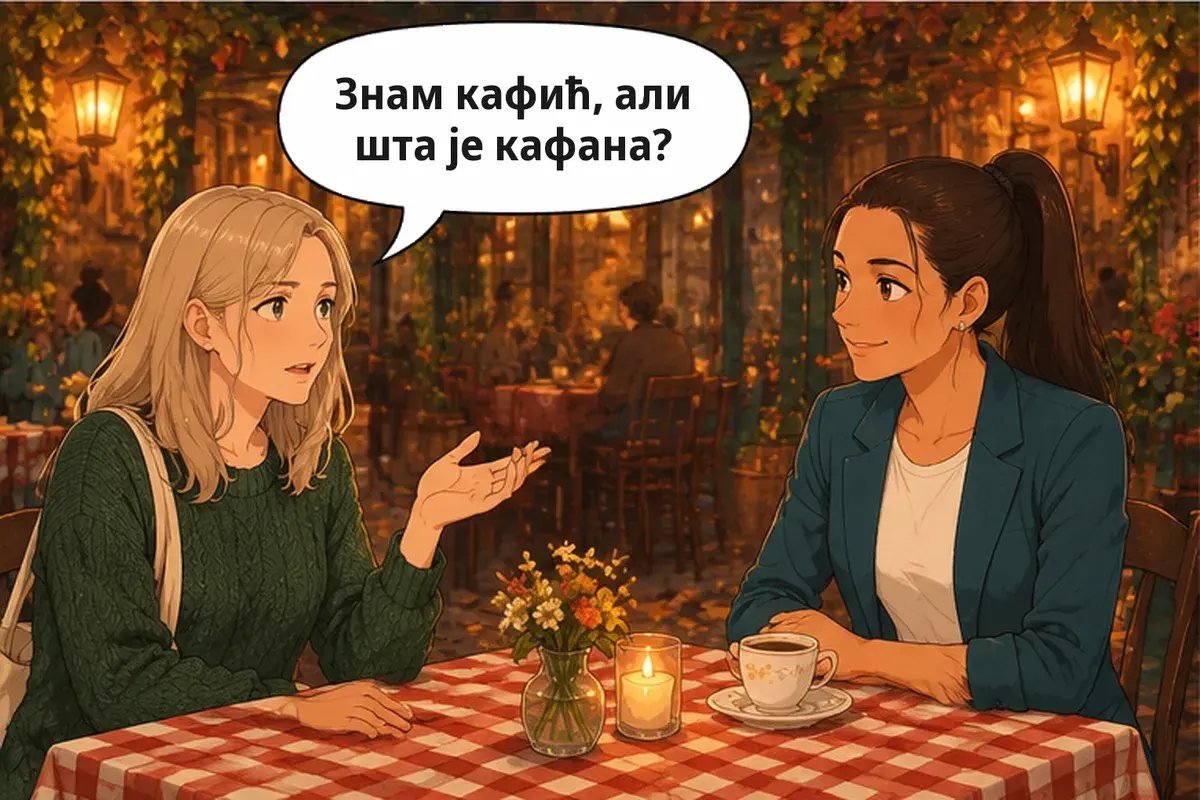
- Ана
Знам кафић, али шта је кафана?
I know what a café is, but what's a kafana?
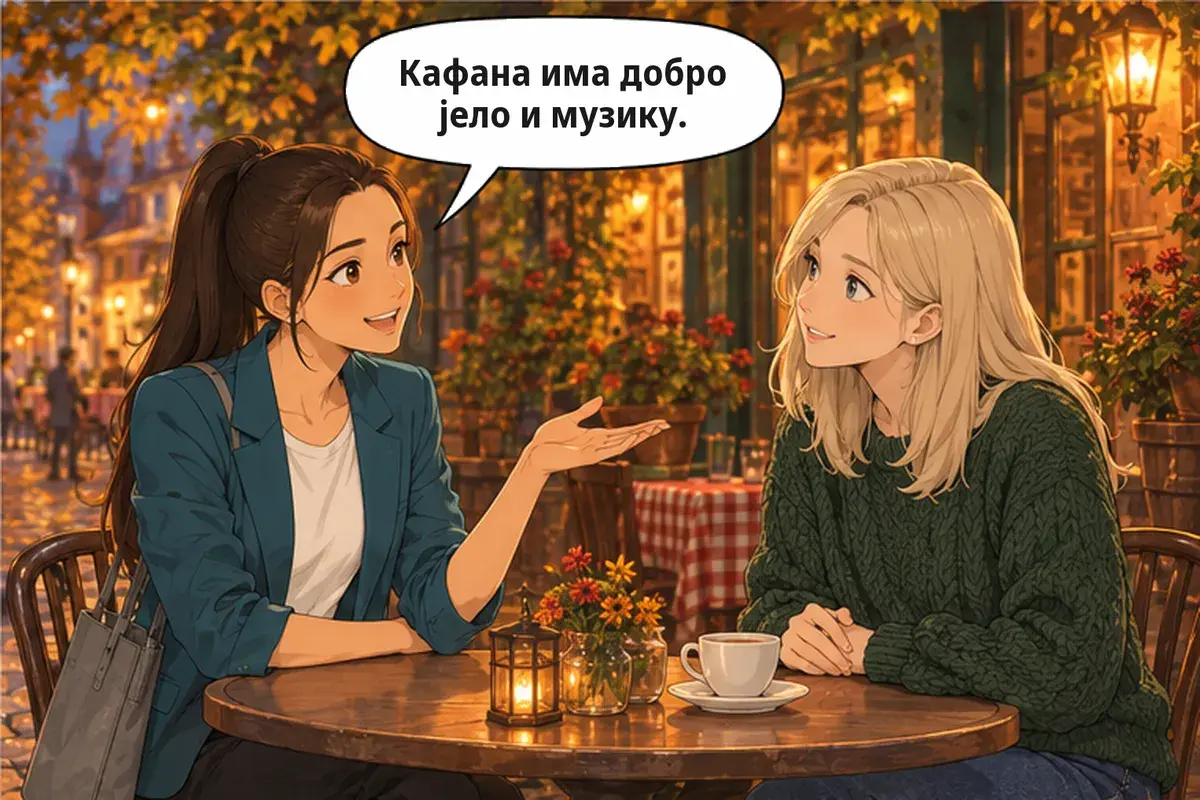
- Милица
Кафана има добро јело и музику.
A kafana has good food and music.

- Ана
Идеја је супер, али морам да радим до шест.
The idea is great, but I have to work until six.
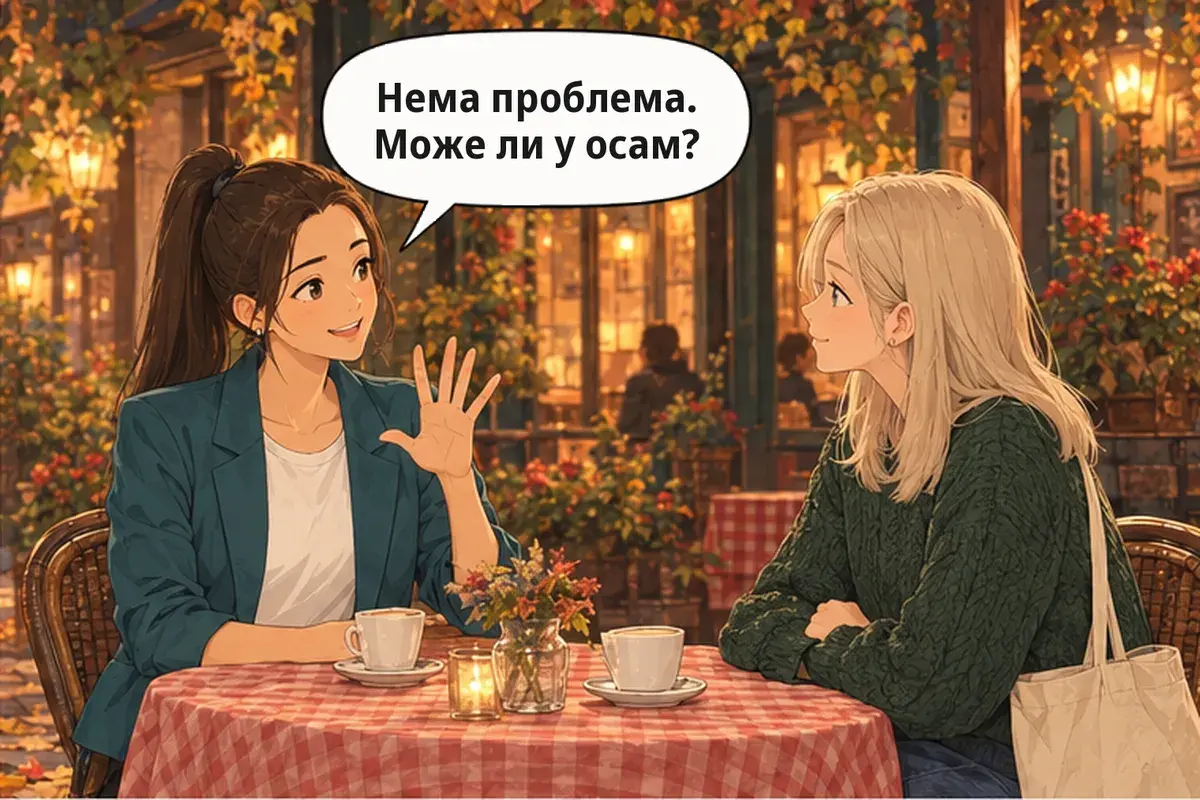
- Милица
Нема проблема. Може ли у осам?
No problem. Is eight OK?

- Ана
Може. До осам сам готова.
That works. I'm done by eight (woman speaking).

- Милица
Јеси ли сигурна? Можемо и сутра.
Are you sure? (to a woman) We can do tomorrow too.
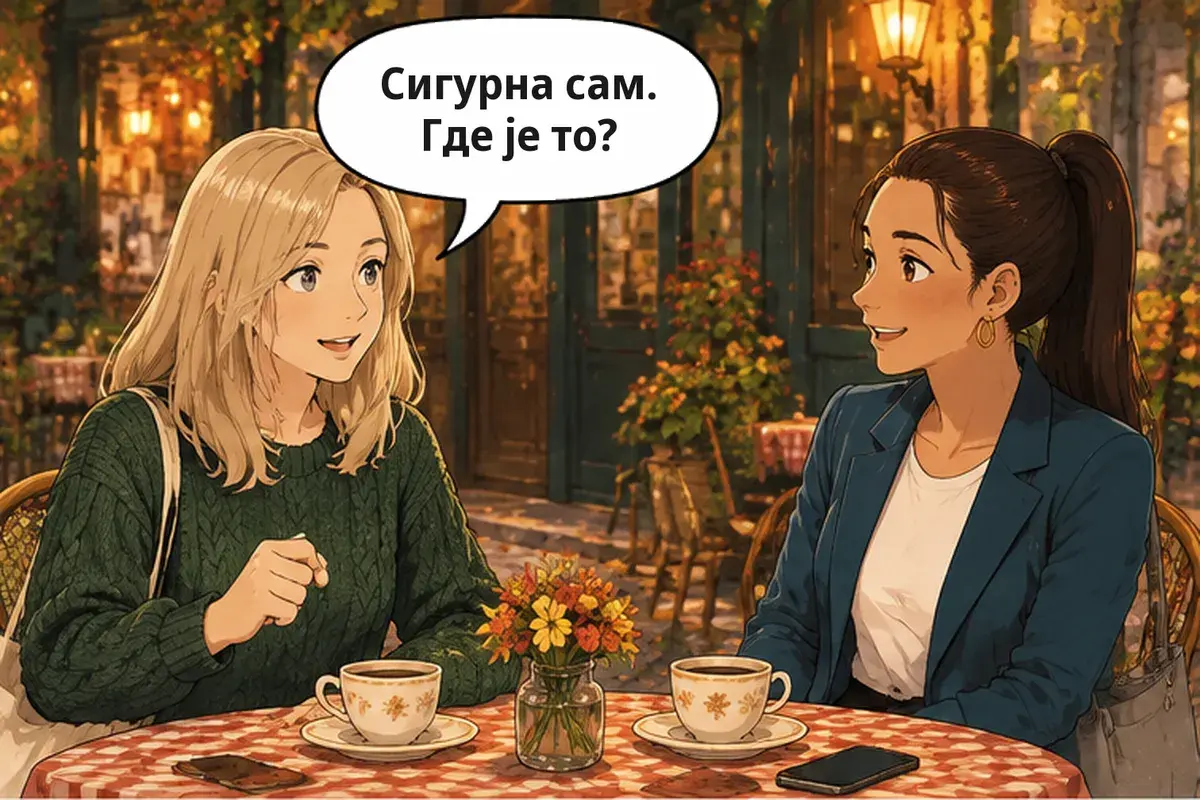
- Ана
Сигурна сам. Где је то?
I'm sure (woman speaking). Where is it?

- Милица
У Скадарлији. То није далеко, можеш аутобусом.
In Skadarlija. It's not far, you can go by bus.

- Ана
Договорено! Видимо се у осам.
It's a deal! See you at eight.

- Милица
Важи! Ја можда мало касним, али долазим.
OK! I might be a little late, but I'm coming.
Grammar for this text
Хоћеш да идеш у кафану вечерас?—хоћешisхтети(to want) in theтиform; after it comesда+ present tense:да идеш, word for word 'that you go', where English says 'to go'.идешisићи(to go) in theтиform (you sawидемin unit 7).у кафануanswers 'where to?', so it takes the accusative:кафана → кафану, likeкафуin unit 5.Мој пријатељ Ђорђе свира гитару у једном бенду.—свираisсвиратиin theонform;гитаруis the accusative, the object form:гитара → гитару.у једном бенду— in a band: it answers 'where?', so it takes the locative.Хоћеш да упознаш Ђорђа?—упознатиmeans 'to meet'; afterдаits form isупознаш. A man's name as the object takes the accusative:Ђорђе → Ђорђа.Знам кафић, али шта је кафана?— the words look alike, but the places are different: aкафићis a café where people drink coffee, aкафанаis a tavern with home-style food and live music.Морам да радим до шест.—морамisморатиin theјаform;да радимis theјаform too.до шест— until six: just the number, with no word for 'o'clock' (telling time comes in unit 11).Нема проблема. Може ли у осам?—нема проблема— no problem (a genitive form, unit 12);може ли— can it be, is it OK;лиstands second.у осам— at eight.До осам сам готоваandЈеси ли сигурна?—готова— done, the feminine form: Ana is speaking.сам(am) is a clitic, a short word that stands second, here after the first group of wordsдо осам.сигурна— sure, also feminine: Milica is asking Ana. Inможеш аутобусом— you can go by bus,аутобусомmeans 'by bus' (the instrumental case, A2); for now, learn the word as it is.
Words and grammar of the unit: Make plans to meet at a kafana.
Learn the words from the texts with flashcards
In the app, you can tap any word in a text to see its translation, forms and examples, and new words stick with flashcards. 15 minutes a day.
Start for freeEverything is open for free. No card needed to sign up.