

Serbian dialogue with translation · A1 · 14 lines
Кад почињеш да радиш? When do you start working?
Comic · 14 panels

- Милица
Ћао, Ано! Кад почињеш да радиш?
Hi, Ana! When do you start working?
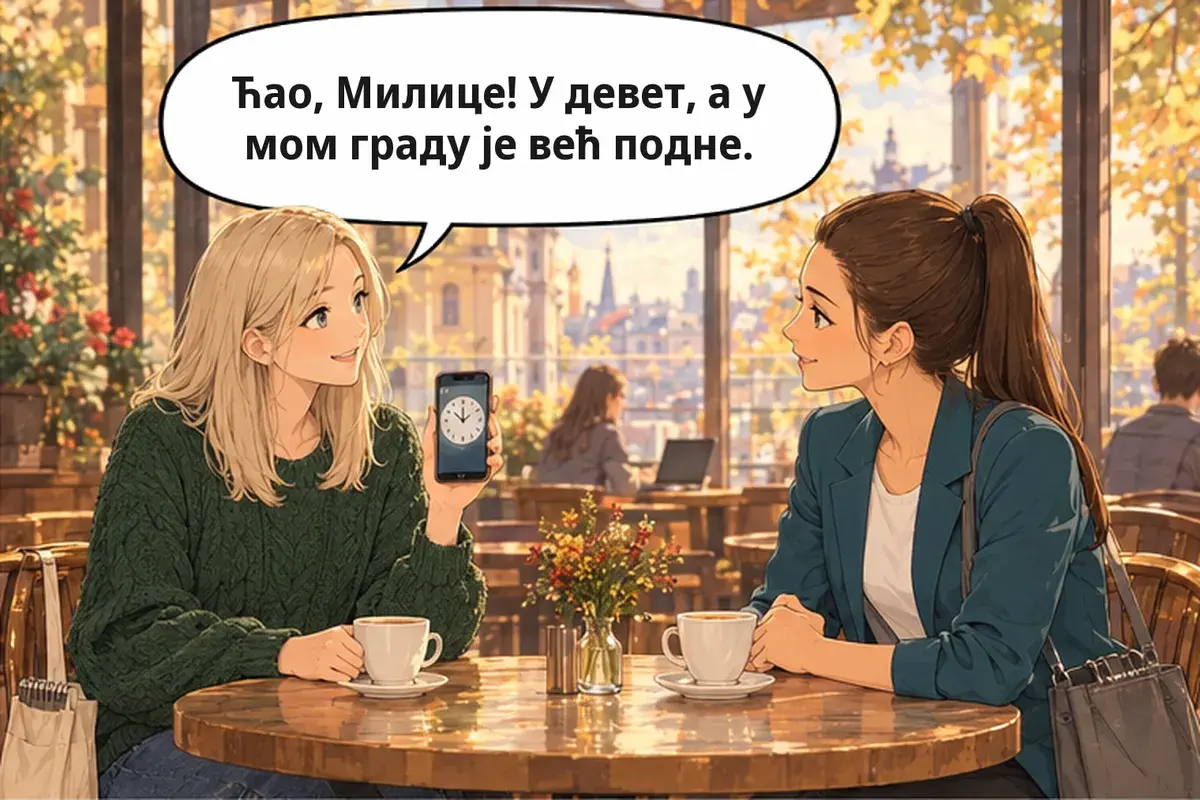
- Ана
Ћао, Милице! У девет, а у мом граду је већ подне.
Hi, Milica! At nine, and in my town it's already noon.

- Милица
То је велика разлика!
That's a big difference!

- Ана
Да, три сата. Састанци су у уторак и четвртак.
Yes, three hours. The meetings are on Tuesday and Thursday.

- Милица
А кад завршаваш посао?
And when do you finish work?

- Ана
Обично у шест, али понекад касно.
Usually at six, but sometimes late.

- Милица
Радиш и у недељу?
Do you work on Sunday too?

- Ана
Никад не радим у недељу. Викенд је слободан.
I never work on Sunday. The weekend is free.

- Милица
Супер, онда на кафу у петак?
Great, then coffee on Friday?

- Ана
Може! Радим само до пет сати.
Sure! I only work until five o'clock.

- Милица
Договорено! А колико је сати сада?
It's a deal! And what time is it now?

- Ана
Сада је пола једанаест.
It's ten thirty now.

- Милица
Имам састанак у дванаест, али може још једна кафа.
I have a meeting at twelve, but one more coffee is OK.

- Ана
То је добра идеја!
That's a good idea!
Grammar for this text
Кад почињеш да радиш?— When do you start working?почињеш— you start (fromпочињати). After it comesда+ the present:да радиш, word for word 'that you work'. English says start working or start to work; Serbian prefersда+ the present (unit 10). Thisдаmeans 'that', not 'yes'.Ћао, Милице!andЋао, Ано!— when you call someone by name, the name changes its ending:Милица → Милице,Ана → Ано. This is the vocative, the calling form (unit 7). In English it's just the name.У девет, а у мом граду је већ подне— at nine:у+ the number, no word for 'o'clock' needed.а— and, with a contrast (here and there).је— is, fromбити.Да, три сата— after 2, 3 and 4 the wordсатbecomesсата(the 2–4 form), after 5 and moreсати(the 5+ form):Радим само до пет сати— I only work until five o'clock. Both forms come from the genitive, a case that comes later; for now learn them as set phrases.Састанци су у уторак и четвртак—у уторак— on Tuesday;су— are, theони(they) form ofбити.Никад не радим у недељу.— English has one negative word here (never), Serbian needs two:никадandне.у недељу— on Sunday (недеља → недељу).Сада је пола једанаест— 10:30, not 11:30:пола(half) + the next hour.Колико је сати сада?— a set question: What time is it now?Имам састанак у дванаест, али може још једна кафа—може— it's possible, it's OK; the same word as Ana's answerМоже!(Sure!) above. Here: one more coffee is OK.
Words and grammar of the unit: Describe your day.
Learn the words from the texts with flashcards
In the app, you can tap any word in a text to see its translation, forms and examples, and new words stick with flashcards. 15 minutes a day.
Start for freeEverything is open for free. No card needed to sign up.