
Japanese dialogue with translation · A2 · 15 lines
お礼を言いたいです I want to say thank you
Comic · 15 panels
- マルク
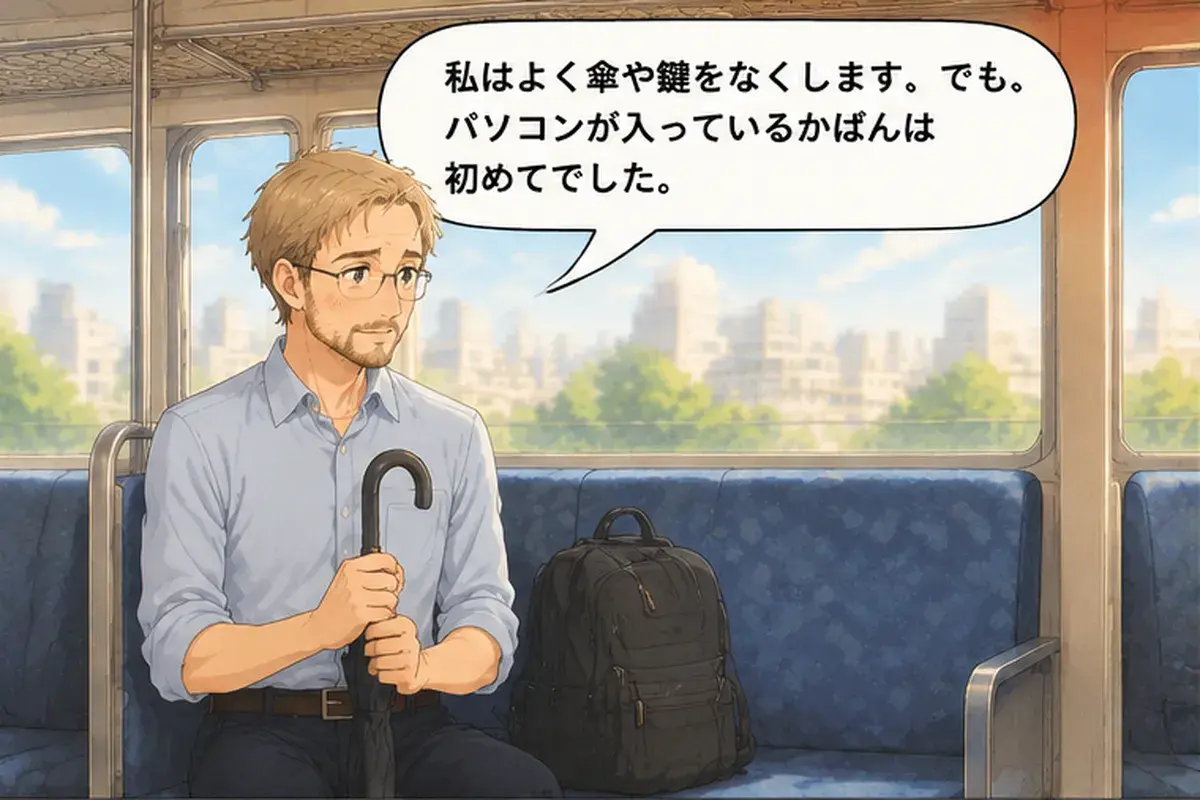
私はよく傘や鍵をなくします。でも、パソコンが入っているかばんは初めてでした。
I often lose umbrellas and keys. But a bag with a computer in it was a first.
- マルク
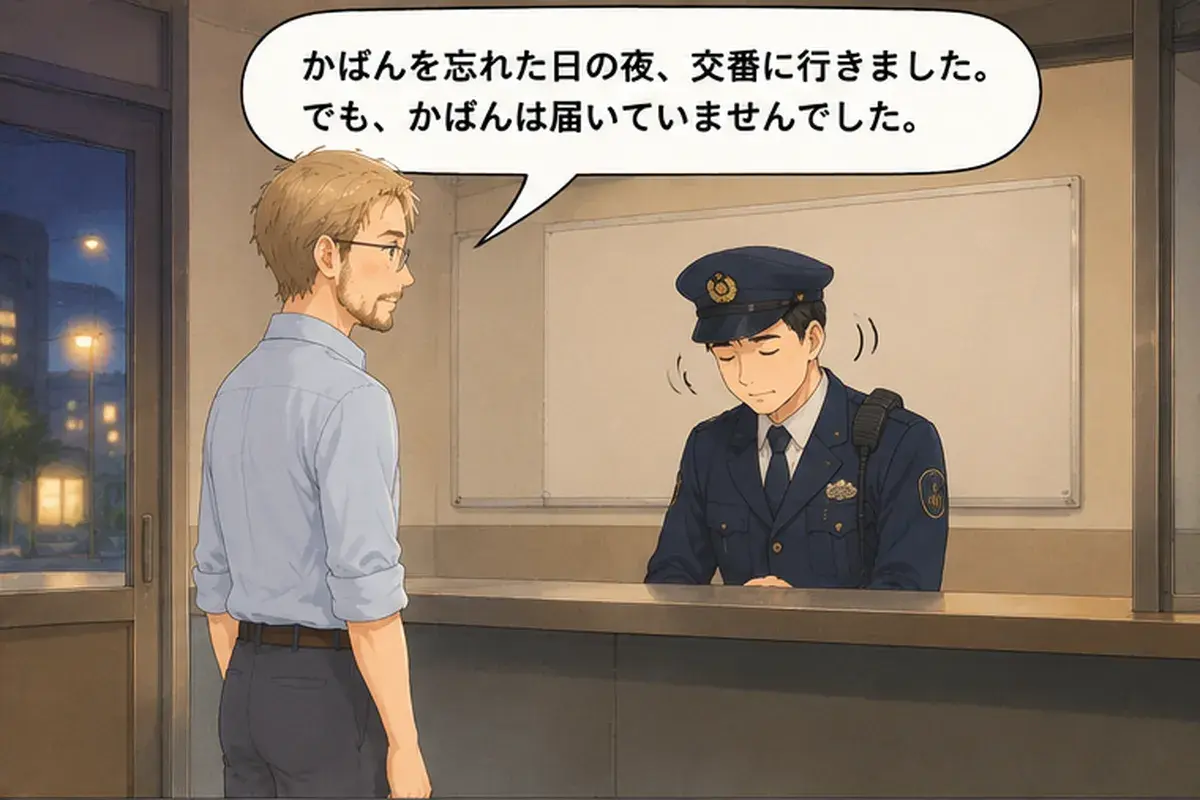
かばんを忘れた日の夜、交番に行きました。でも、かばんは届いていませんでした。
On the night of the day I forgot the bag, I went to the police box. But the bag hadn't been brought in.
- マルク
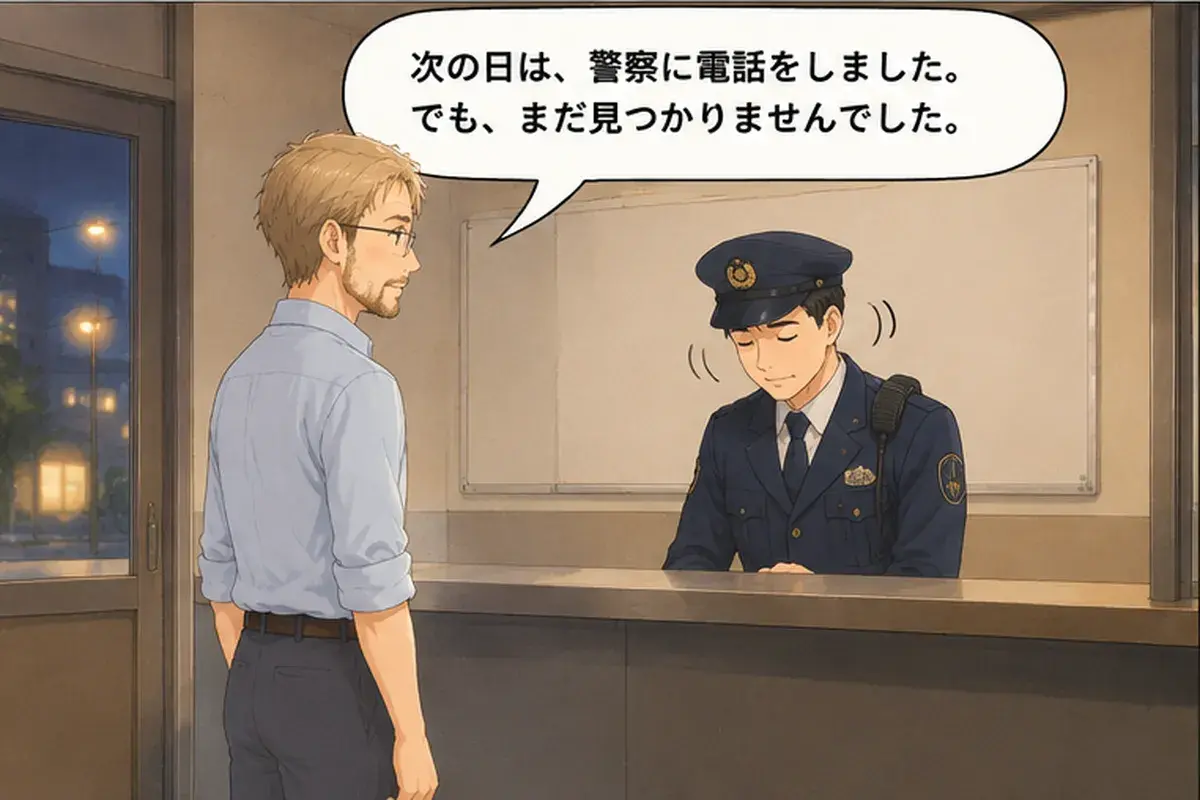
次の日は、警察に電話をしました。でも、まだ見つかりませんでした。
The next day, I called the police. But it still hadn't been found.
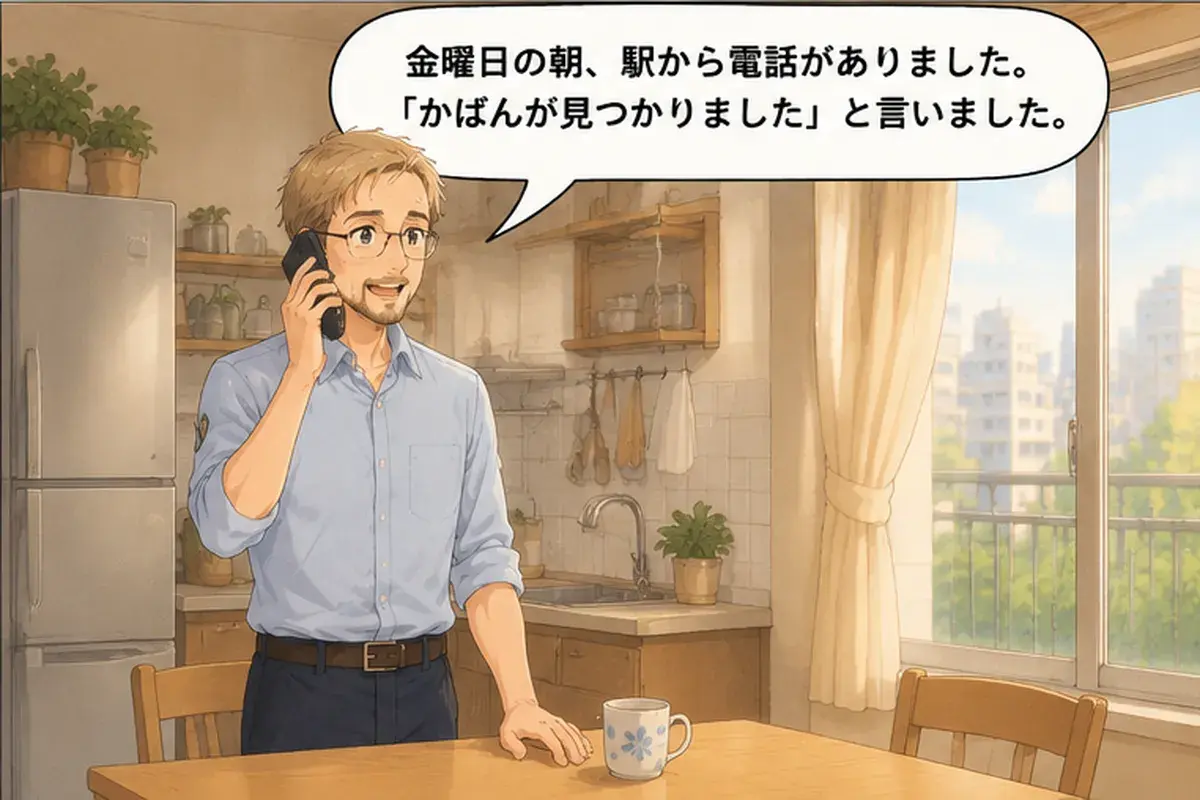
- マルク
金曜日の朝、駅から電話がありました。「かばんが見つかりました」と言いました。
On Friday morning, I got a call from the station. They said, "Your bag has been found."
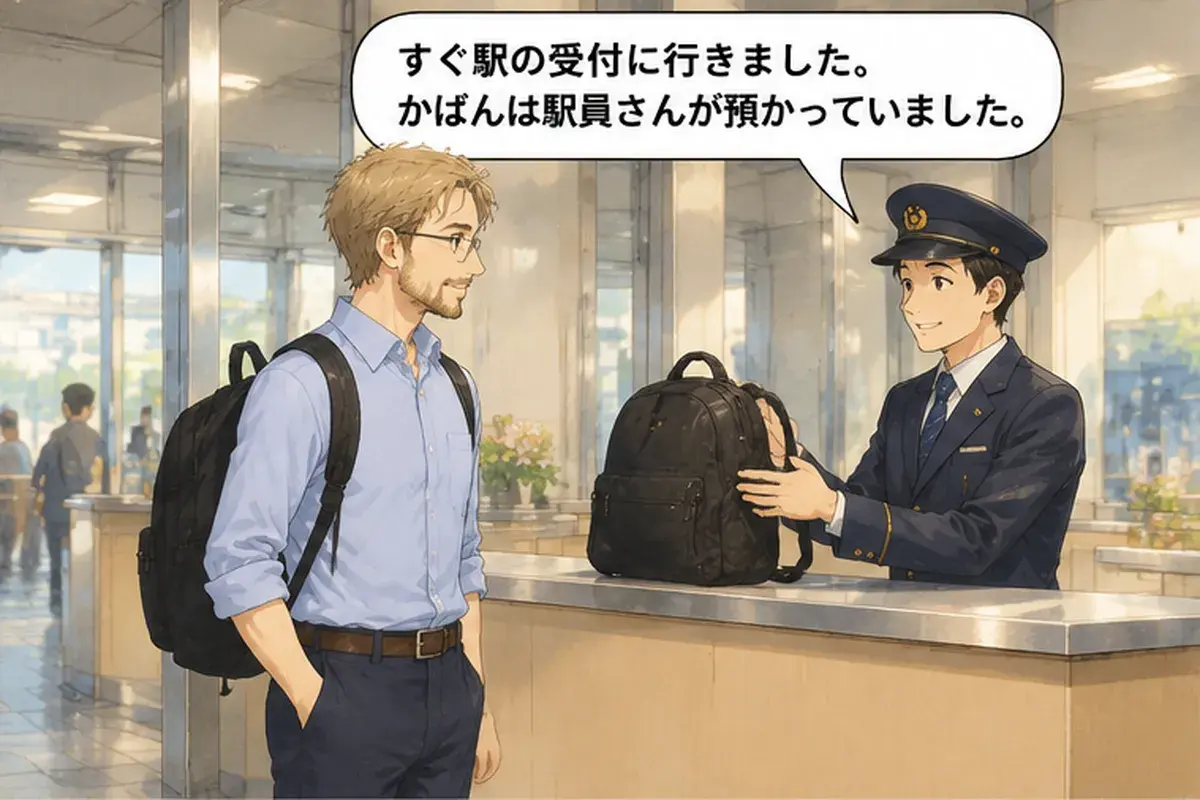
- マルク
すぐ駅の受付に行きました。かばんは駅員さんが預かっていました。
I went right away to the reception desk at the station. The station attendant had been holding the bag.
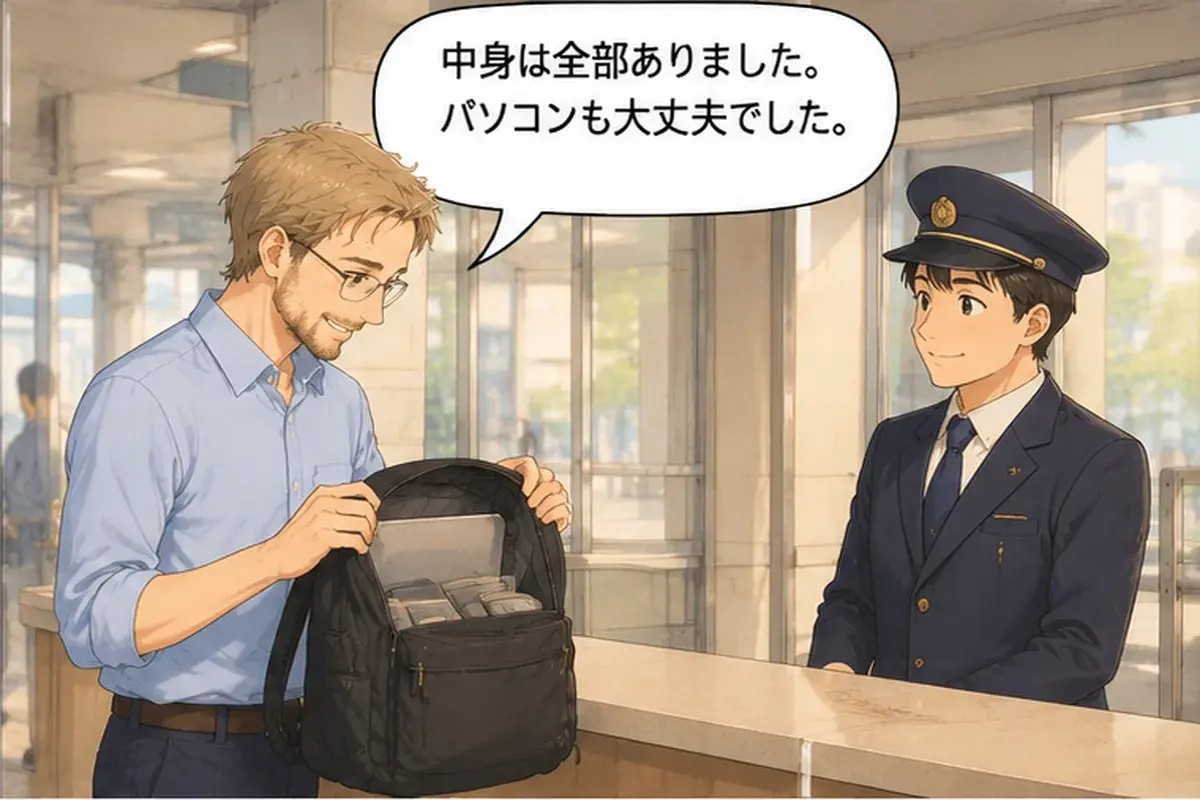
- マルク
中身は全部ありました。パソコンも大丈夫でした。
Everything inside was there. The computer was fine too.
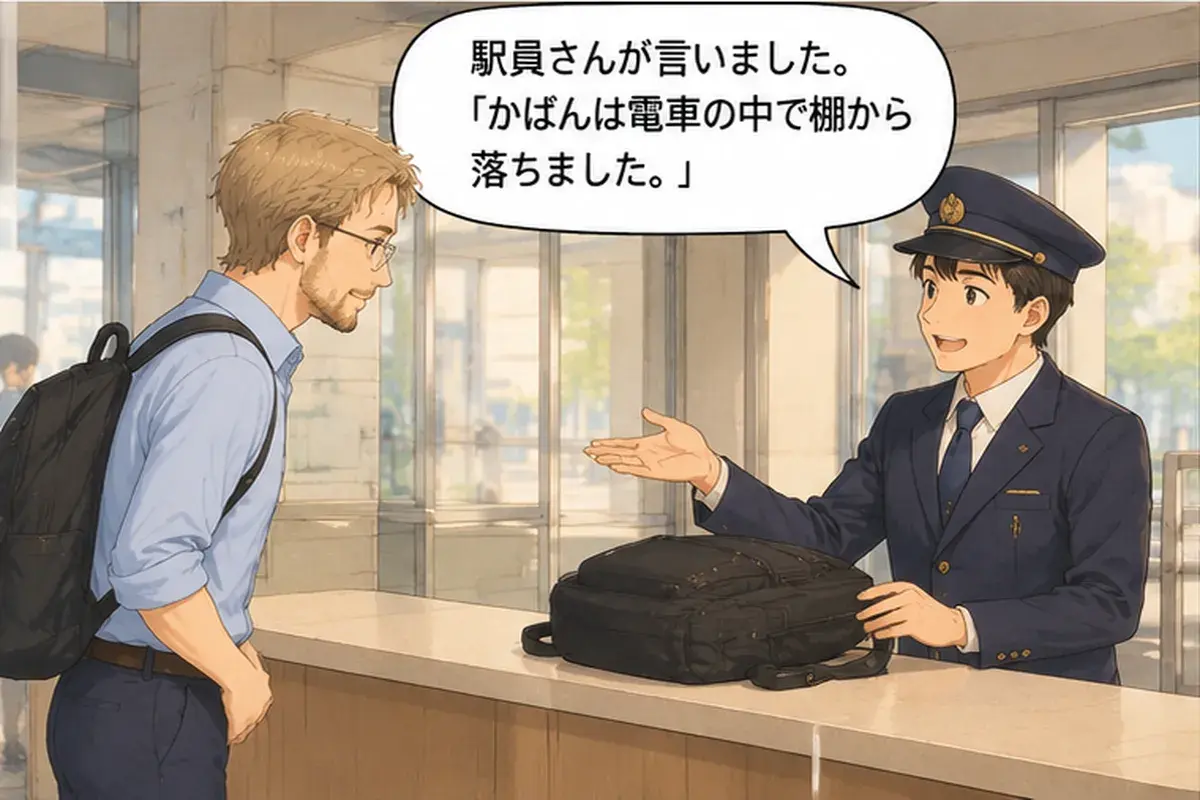
- マルク
駅員さんが言いました。「かばんは電車の中で棚から落ちました。」
The station attendant said, "Your bag fell off the shelf on the train."
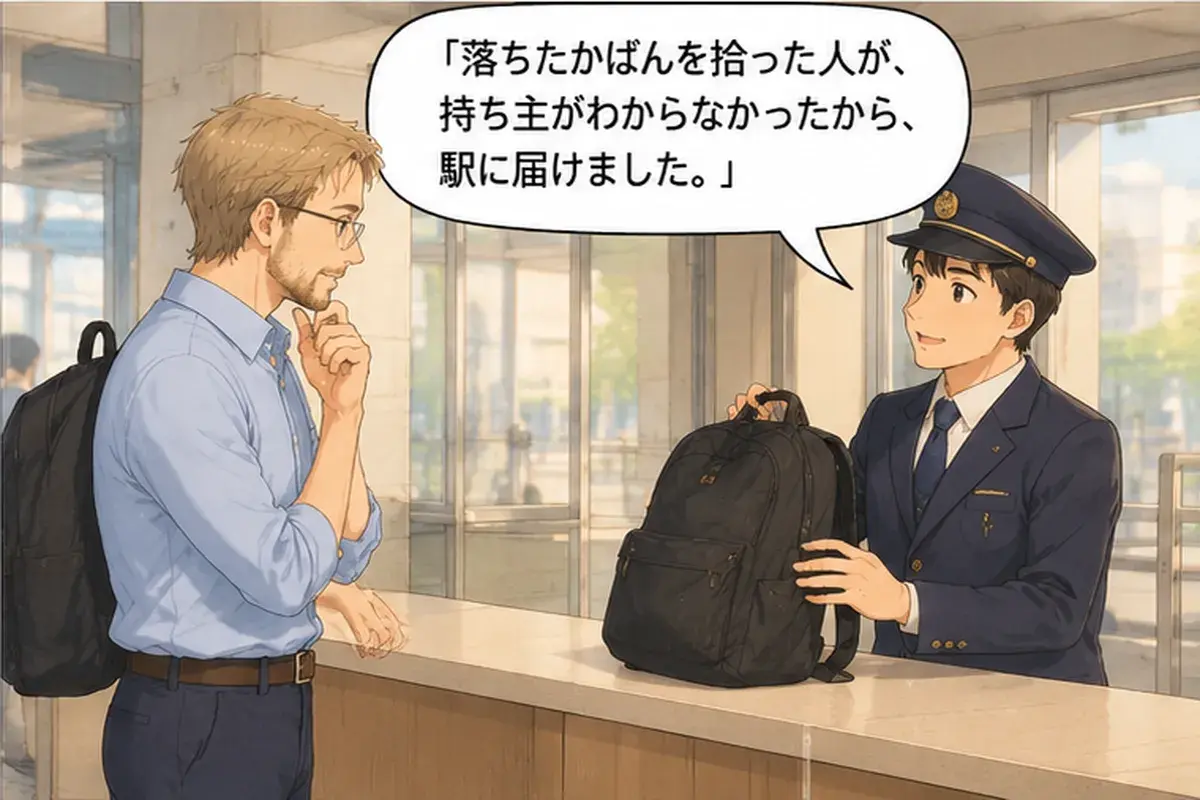
- マルク
「落ちたかばんを拾った人が、持ち主がわからなかったから、駅に届けました。」
"The person who picked up the fallen bag didn't know whose it was, so they brought it to the station."
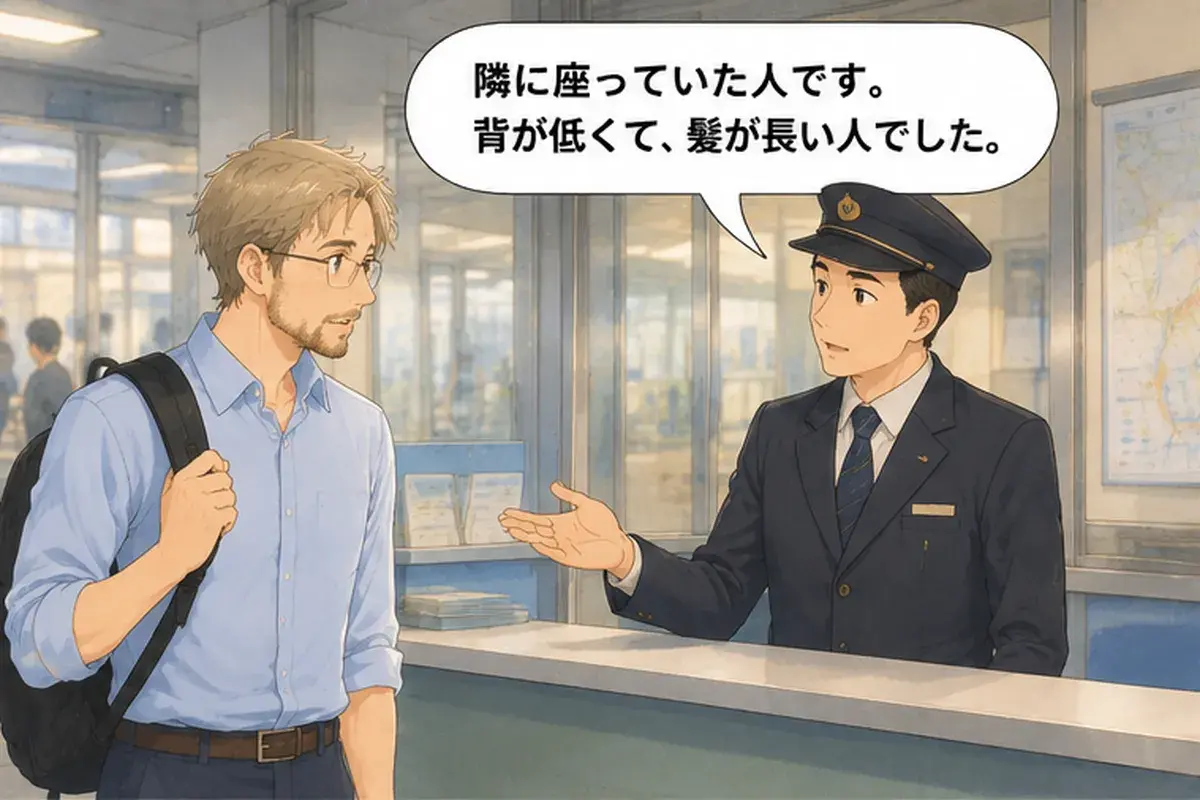
- マルク
「隣に座っていた人です。背が低くて、髪が長い人でした。」
"It was the person sitting next to you. A short person with long hair."
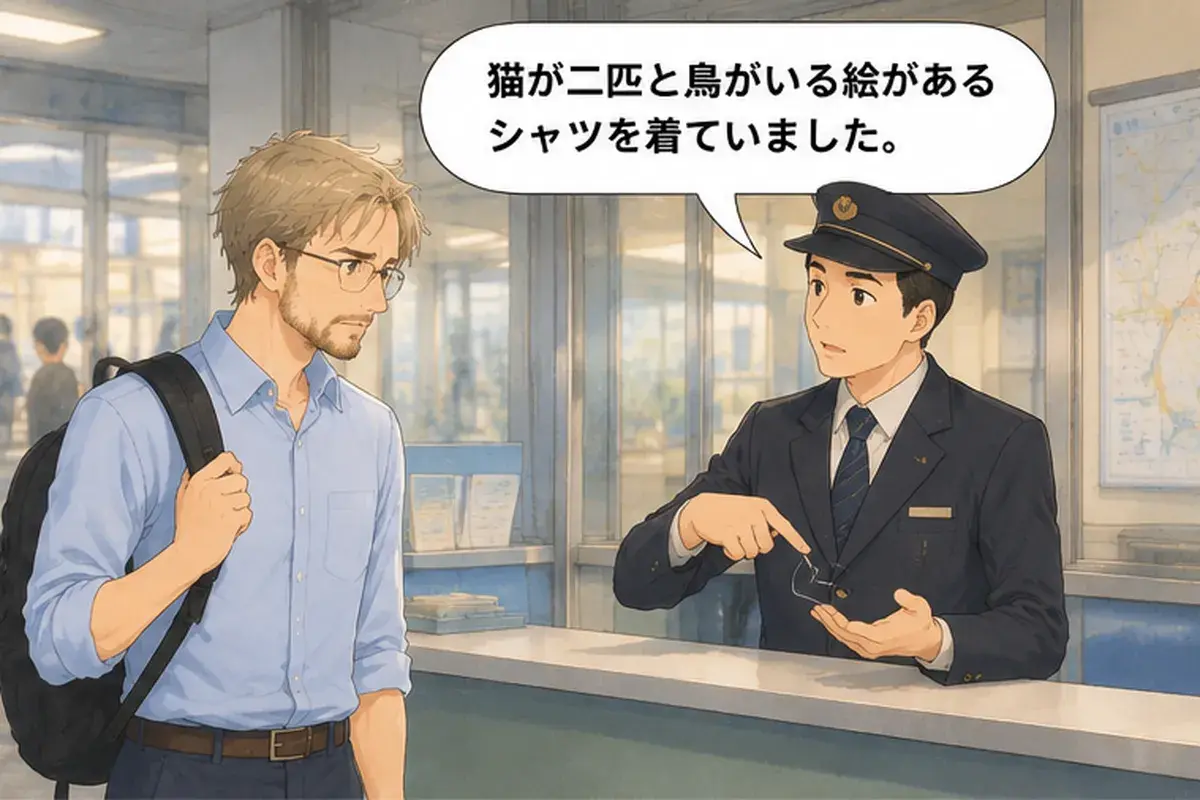
- マルク
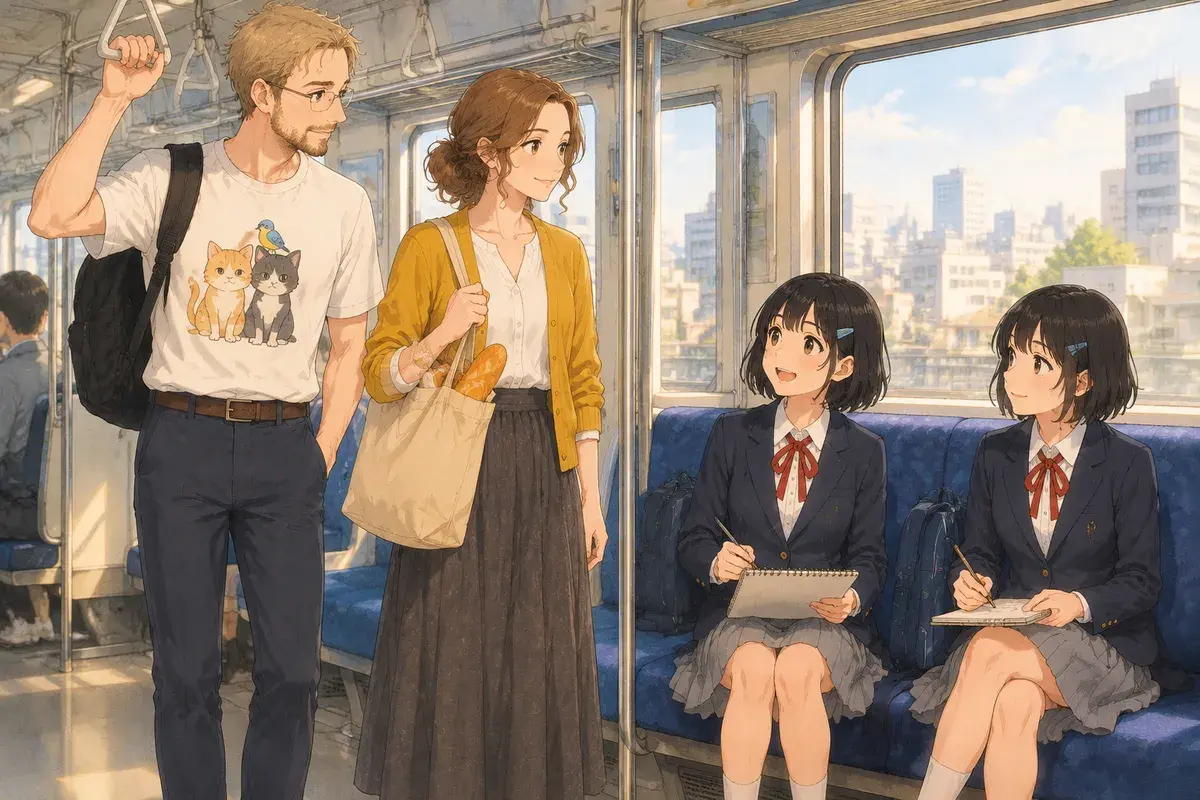
「猫が二匹と鳥がいる絵があるシャツを着ていました。」
"They were wearing a shirt with a picture of two cats and a bird."
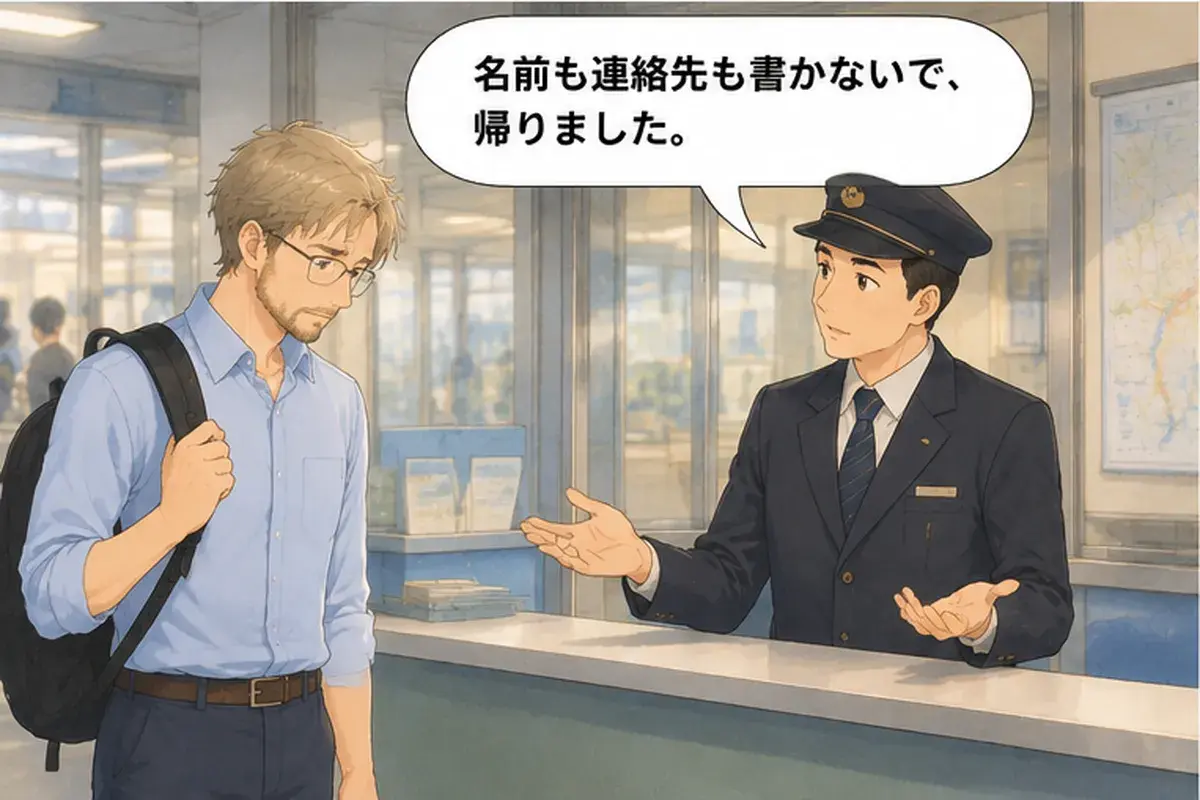
- マルク
「名前も連絡先も書かないで、帰りました。」
"They left without writing their name or contact information."
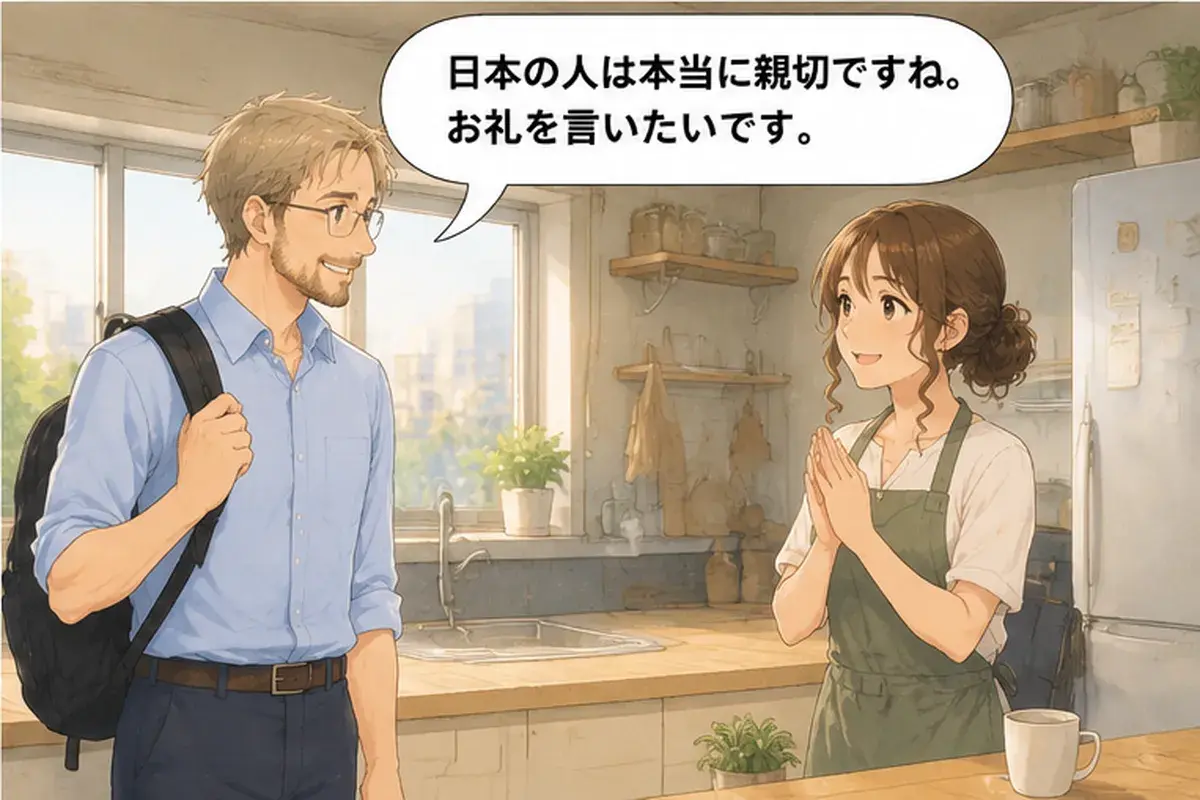
- マルク
日本の人は本当に親切ですね。お礼を言いたいです。
Japanese people are really kind, aren't they? I want to say thank you.
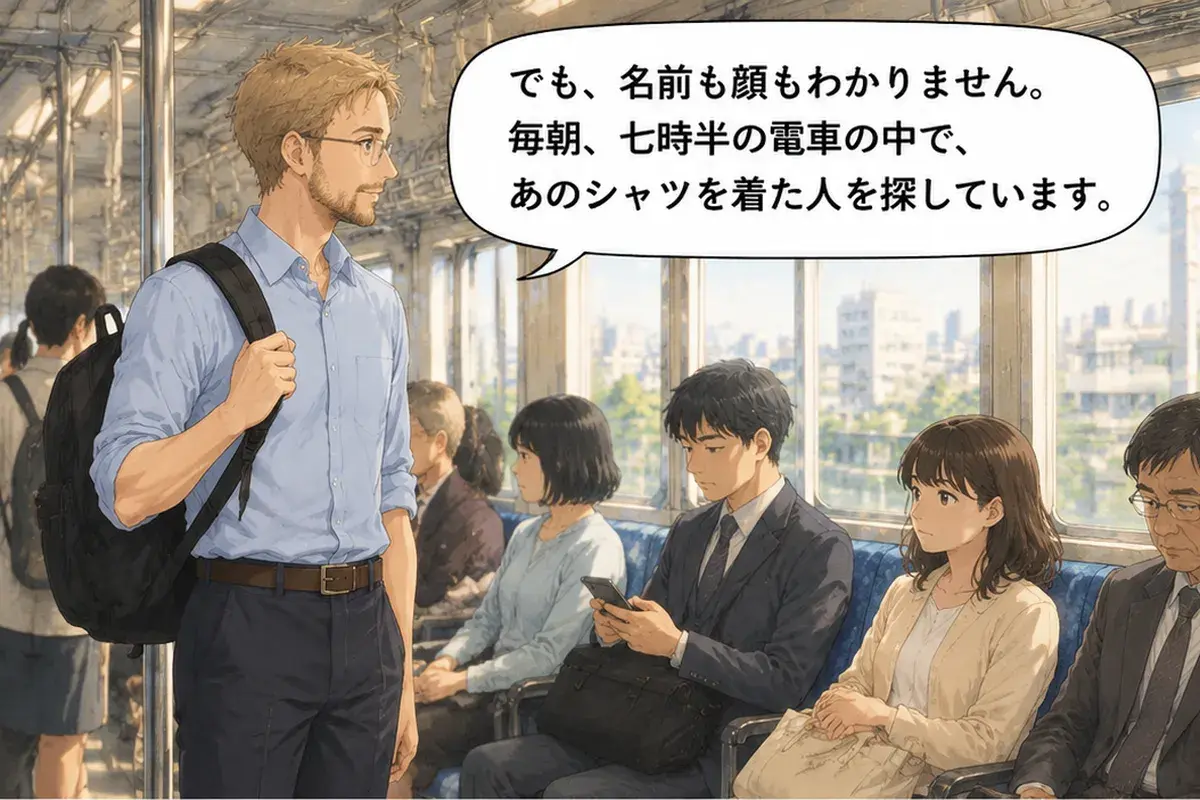
- マルク
でも、名前も顔もわかりません。毎朝、七時半の電車の中で、あのシャツを着た人を探しています。
But I don't know their name or their face. Every morning on the 7:30 train, I look for a person wearing that shirt.
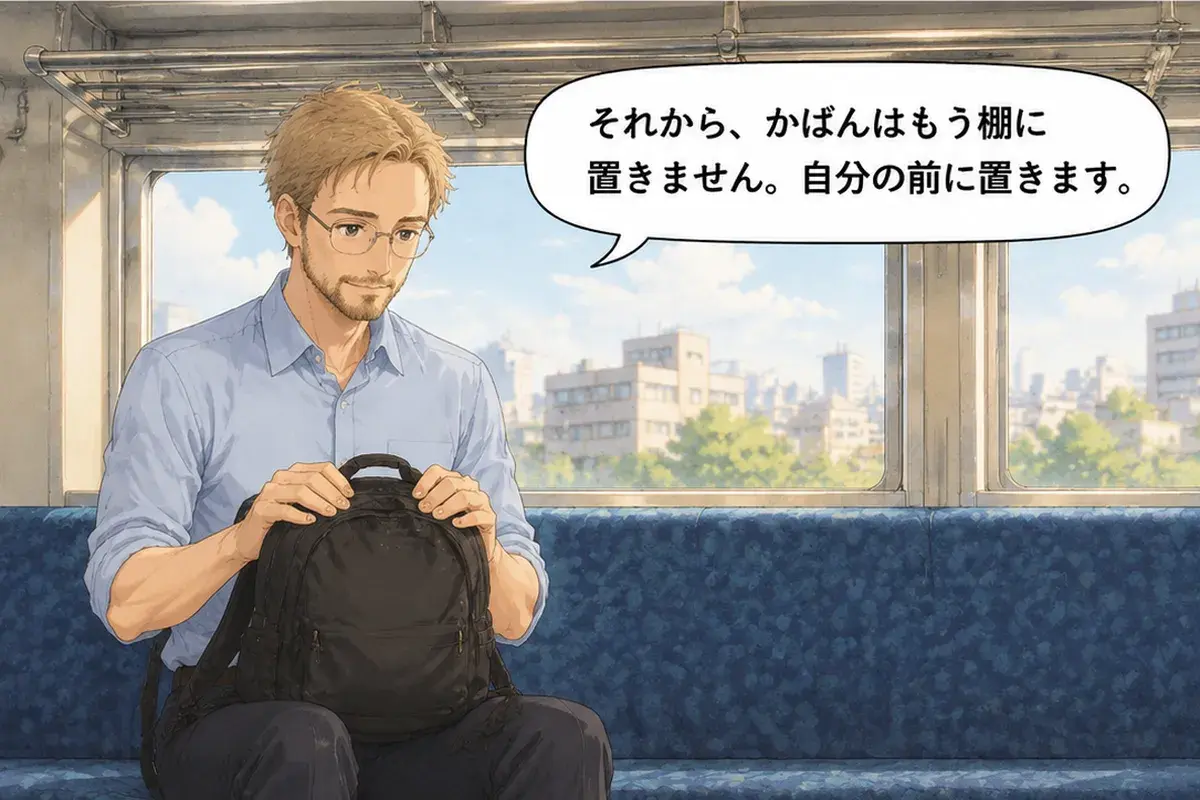
- マルク
それから、かばんはもう棚に置きません。自分の前に置きます。
Also, I don't put my bag on the shelf anymore. I put it in front of me.
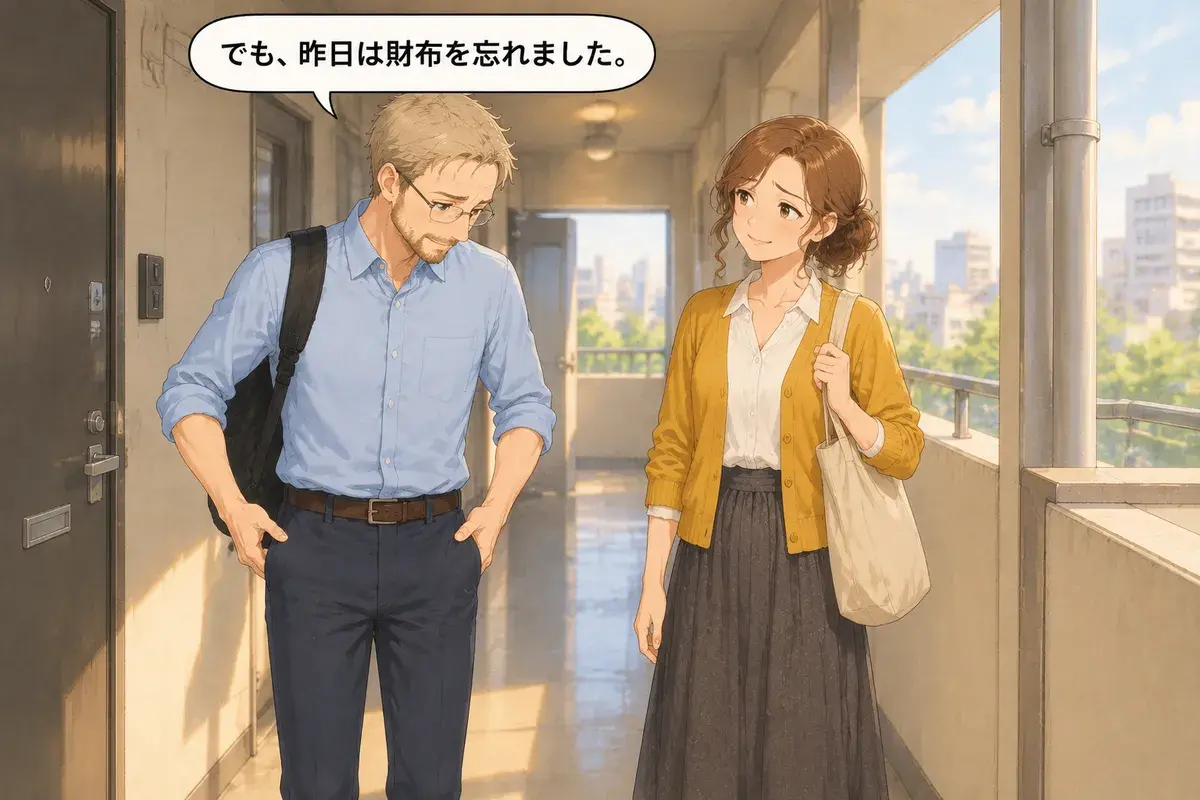
- マルク
でも、昨日は財布を忘れました。
But yesterday I forgot my wallet.
Grammar for this text
なくします—なくすmeans to lose something when you don't know where. If you remember where you left it, you say忘れる:傘 や 鍵 を なくします, but電車 に 忘れました.かばん を 忘れた 日— the day I forgot my bag. The plain past忘れたstands before日as a description.棚 から 落ちました—落ちるmeans "to fall": the bag fell by itself. If a person had dropped it, it would be落とした.落ちた かばん を 拾った 人— the person who picked up the fallen bag. Two descriptions in a row:落ちたdescribesかばん, and落ちた かばん を 拾ったdescribes人. Theをstays inside the description, as in a normal sentence. In持ち主 が わからなかった からthe plain form is fine beforeからeven in polite speech: the end of the sentence,届けました, shows the politeness.七時 半 の 電車— the same morning train as on the day the bag was lost: people in the same car ride the same train every day.隣 に 座って いた 人and背 が 低くて、 髪 が 長い 人— the person who was sitting next to you; a short person with long hair. Word for word: "height is low, hair is long", which is how Japanese describes a person.猫 が 二匹 と 鳥 が いる 絵 が ある シャツ— a shirt with a picture of two cats and a bird.匹counts the cats; birds have a different counter, so there is no number with鳥.書かないで、 帰りました— here〜ないでmeans "without doing something" (unit 3): they left without writing their name.「かばん が 見つかりました」 と 言いました— words in「」plusと 言いました(unit 7): they said, "Your bag has been found."自分 の 前 に 置きます—自分means "oneself, one's own": Mark puts the bag in front of himself.でも、 昨日 は 財布 を 忘れました— a joke: he no longer forgets the bag, but yesterday he forgot his wallet.
Words and grammar of the unit: Describe something you lost.
Learn the words from the texts with flashcards
In the app, you can tap any word in a text to see its translation, forms and examples, and new words stick with flashcards. 15 minutes a day.
Start for freeEverything is open for free. No card needed to sign up.