

Japanese dialogue with translation · A2 · 16 lines
パソコンが入っている黒いかばん A black bag with a computer in it
Comic · 13 panels
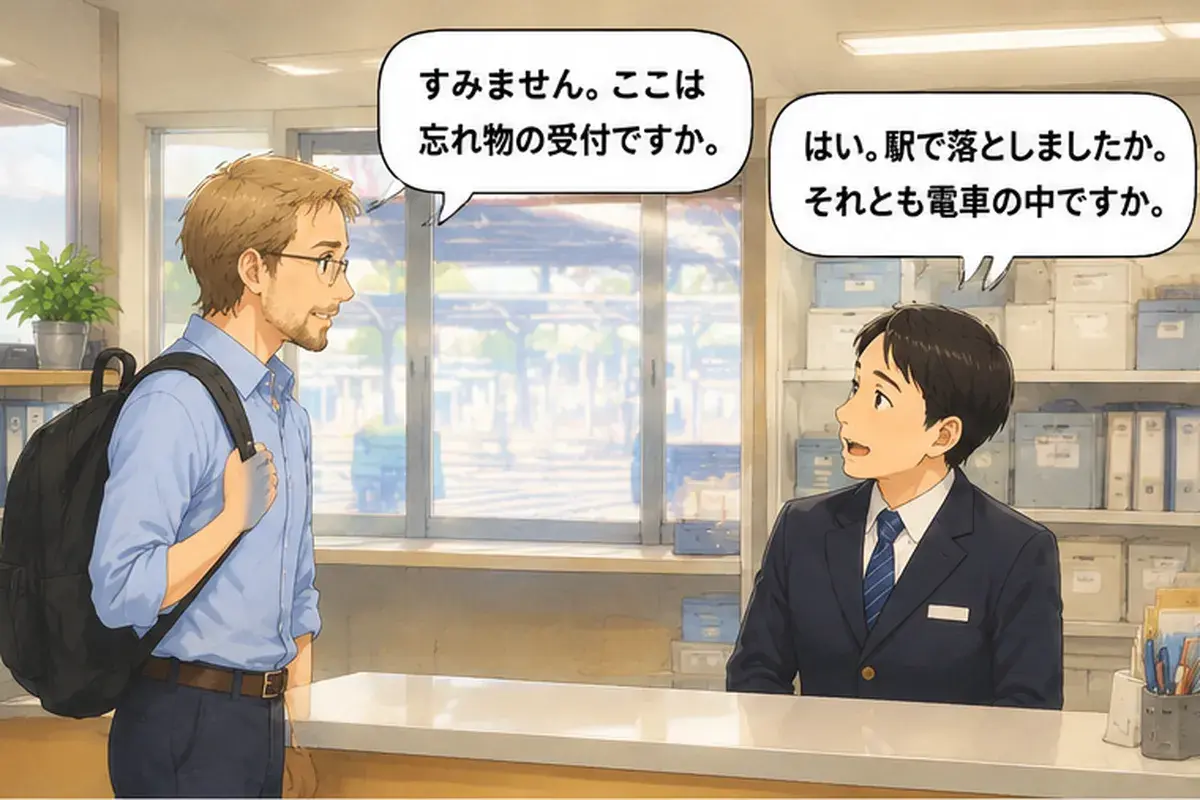
- マルク
すみません。ここは忘れ物の受付ですか。
Excuse me. Is this the desk for forgotten items?
- 駅員
はい。駅で落としましたか。それとも電車の中ですか。
Yes. Did you drop it at the station? Or was it on the train?
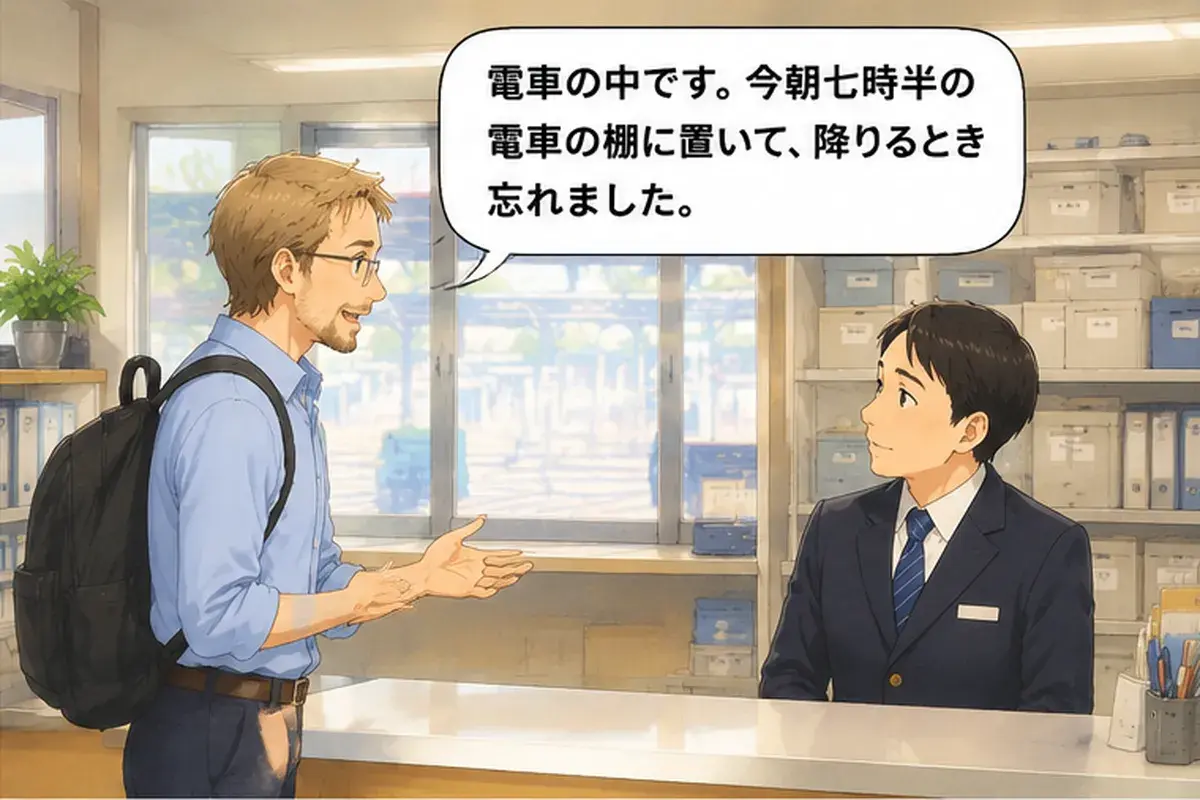
- マルク
電車の中です。今朝七時半の電車の棚に置いて、降りるとき忘れました。
On the train. This morning I put it on the shelf on the 7:30 train, and I forgot it when I got off.
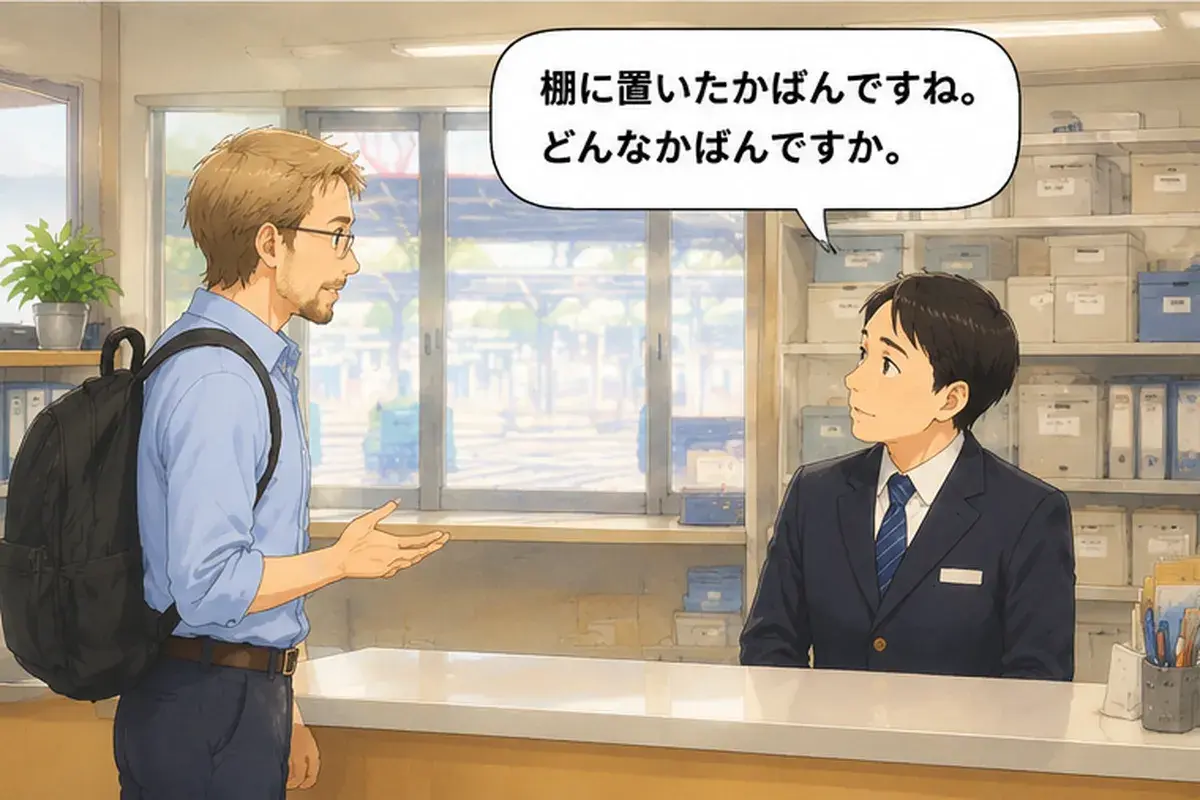
- 駅員
棚に置いたかばんですね。どんなかばんですか。
It's a bag you put on the shelf, right? What kind of bag is it?
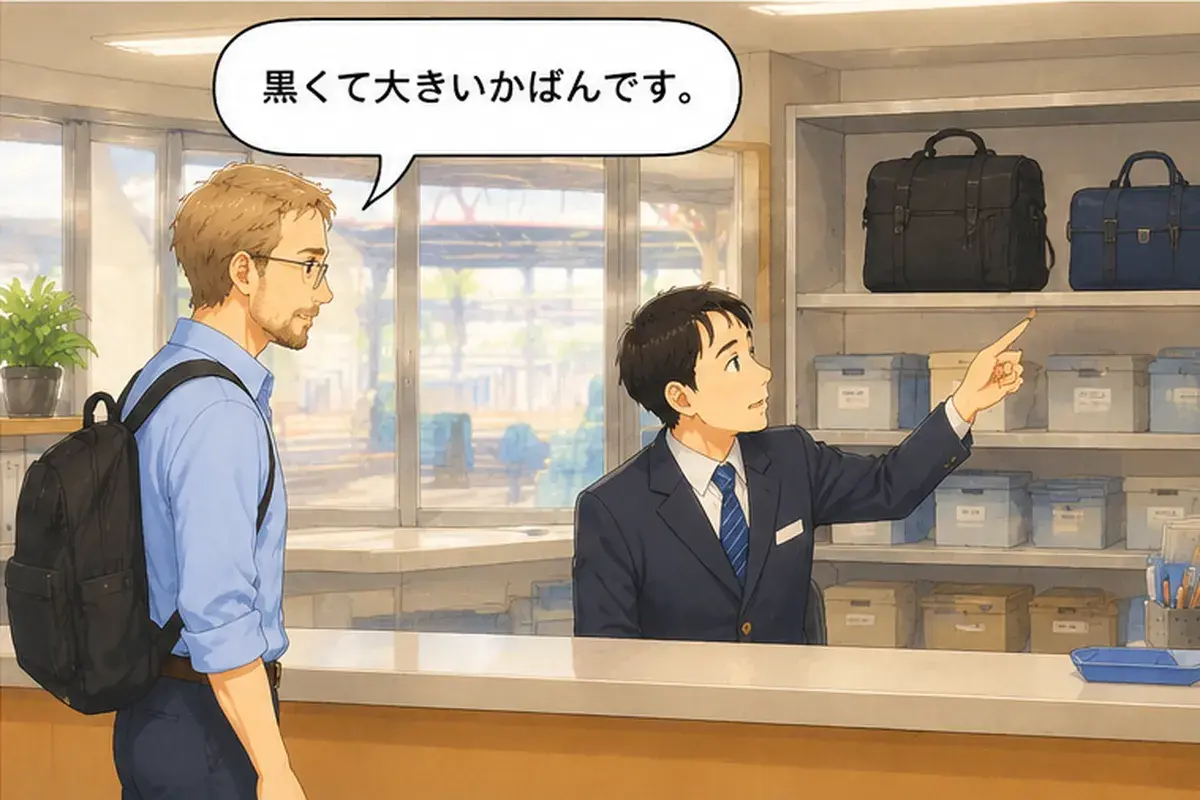
- マルク
黒くて大きいかばんです。
It's a big black bag.
- 駅員
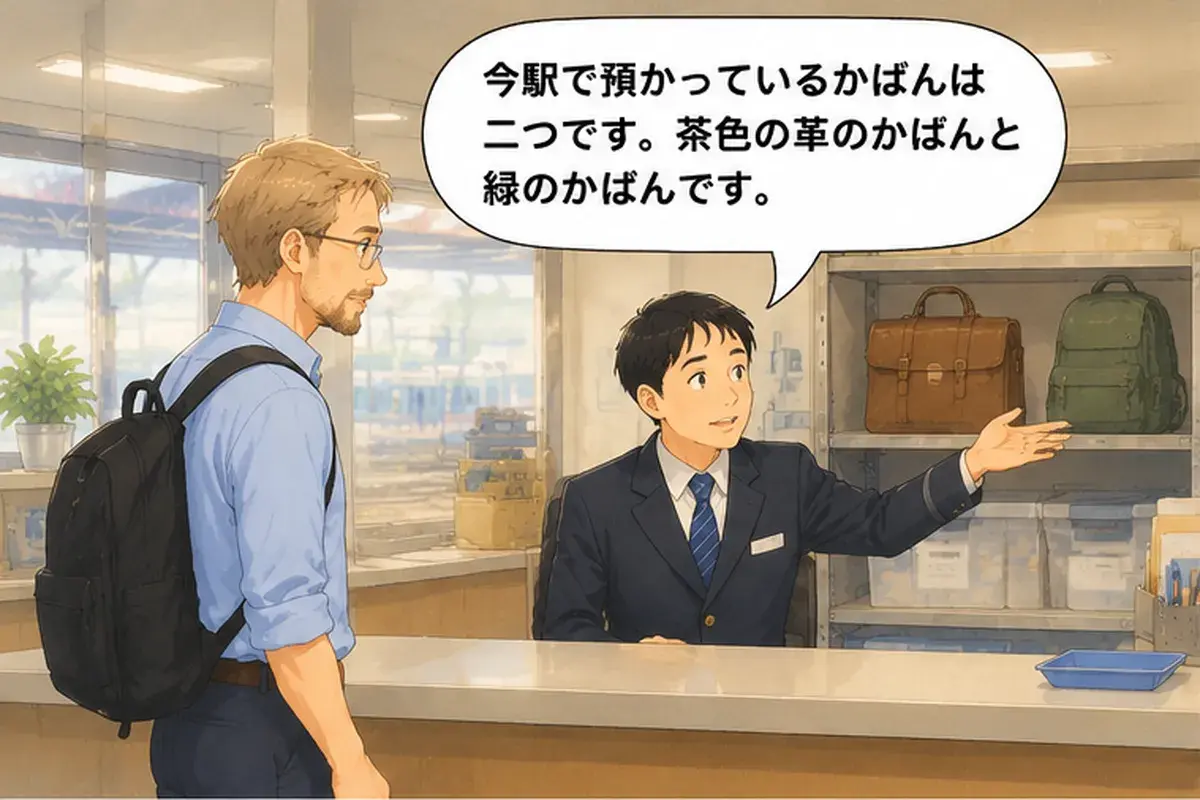
今駅で預かっているかばんは二つです。茶色の革のかばんと緑のかばんです。
We're holding two bags at the station now. A brown leather bag and a green bag.
- マルク
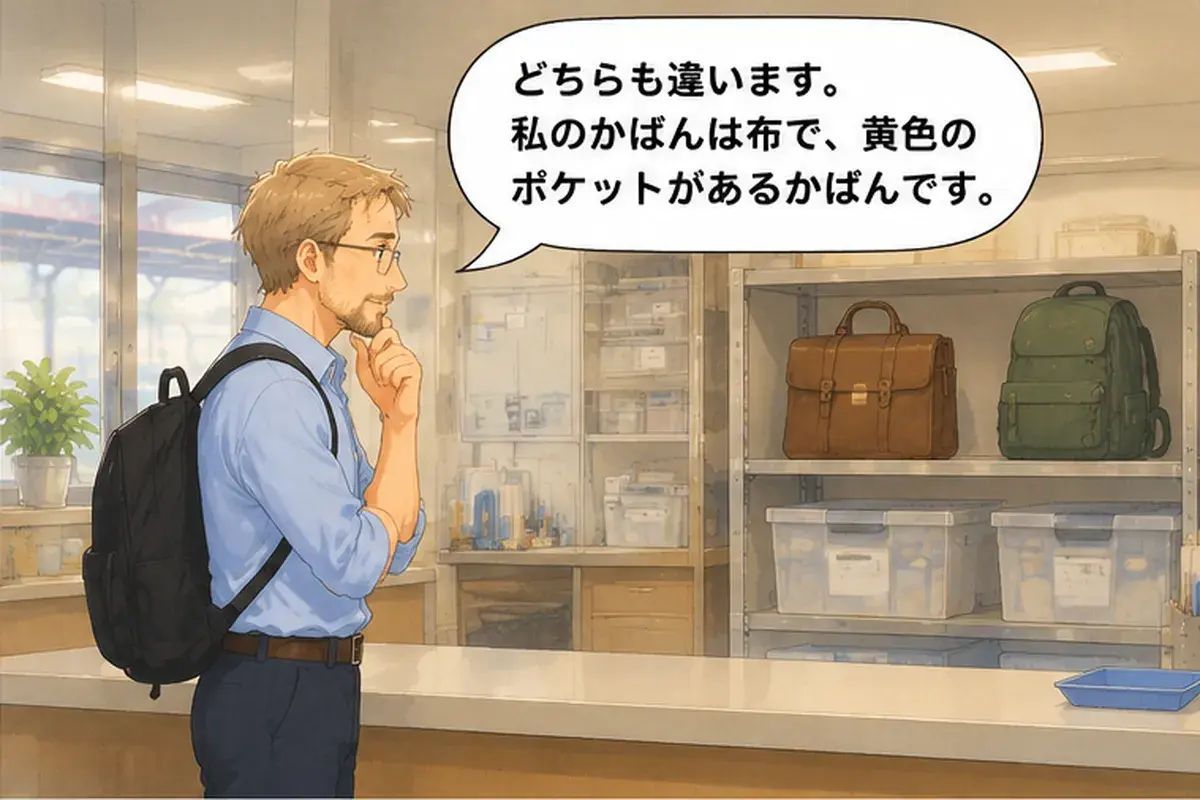
どちらも違います。私のかばんは布で、黄色のポケットがあるかばんです。
Neither of them. My bag is made of cloth, and it has a yellow pocket.
- 駅員
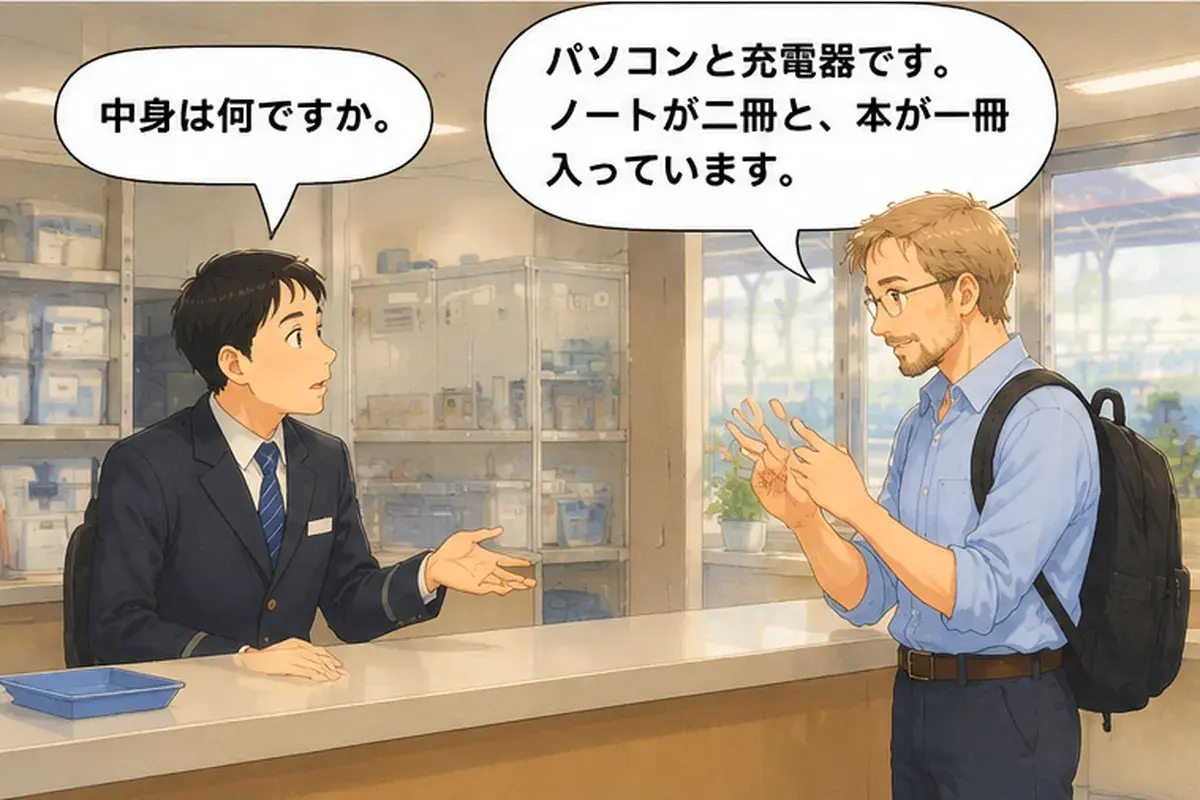
中身は何ですか。
What's inside?
- マルク
パソコンと充電器です。ノートが二冊と、本が一冊入っています。
A computer and a charger. There are two notebooks and one book in it.
- 駅員
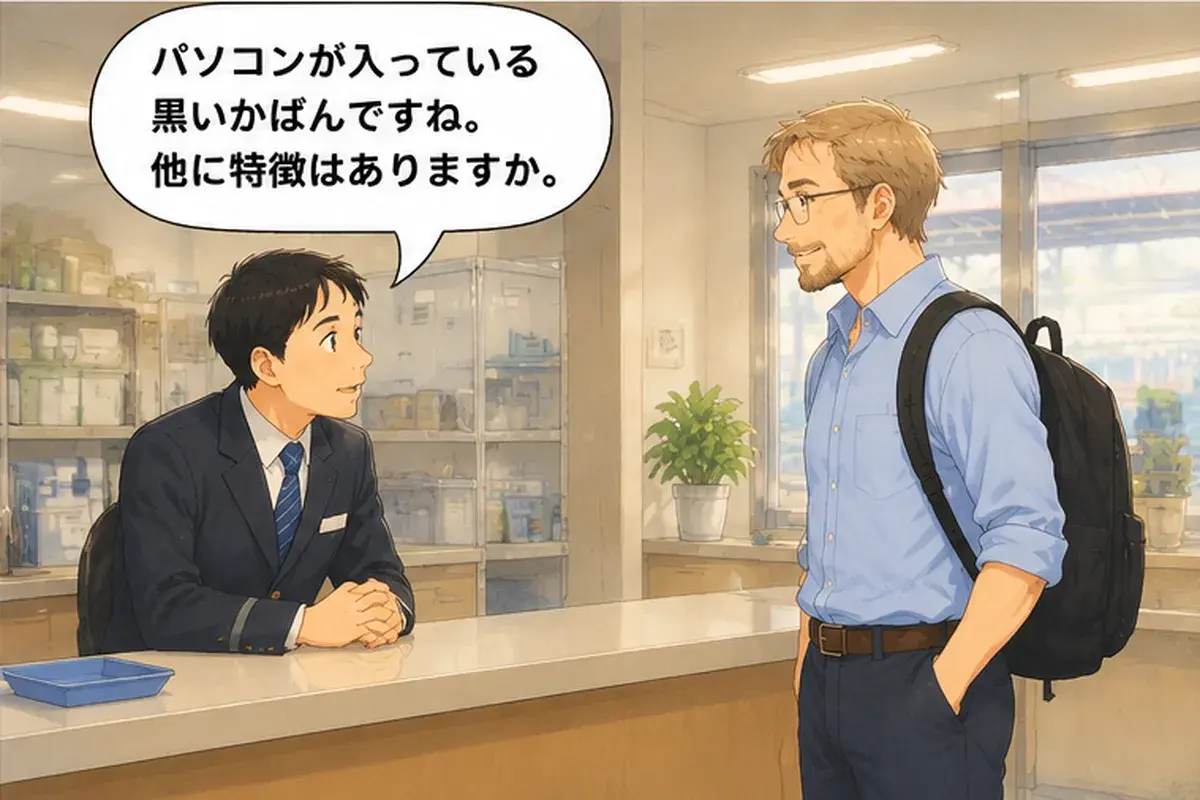
パソコンが入っている黒いかばんですね。他に特徴はありますか。
So it's a black bag with a computer in it, right? Does it have any other distinguishing features?
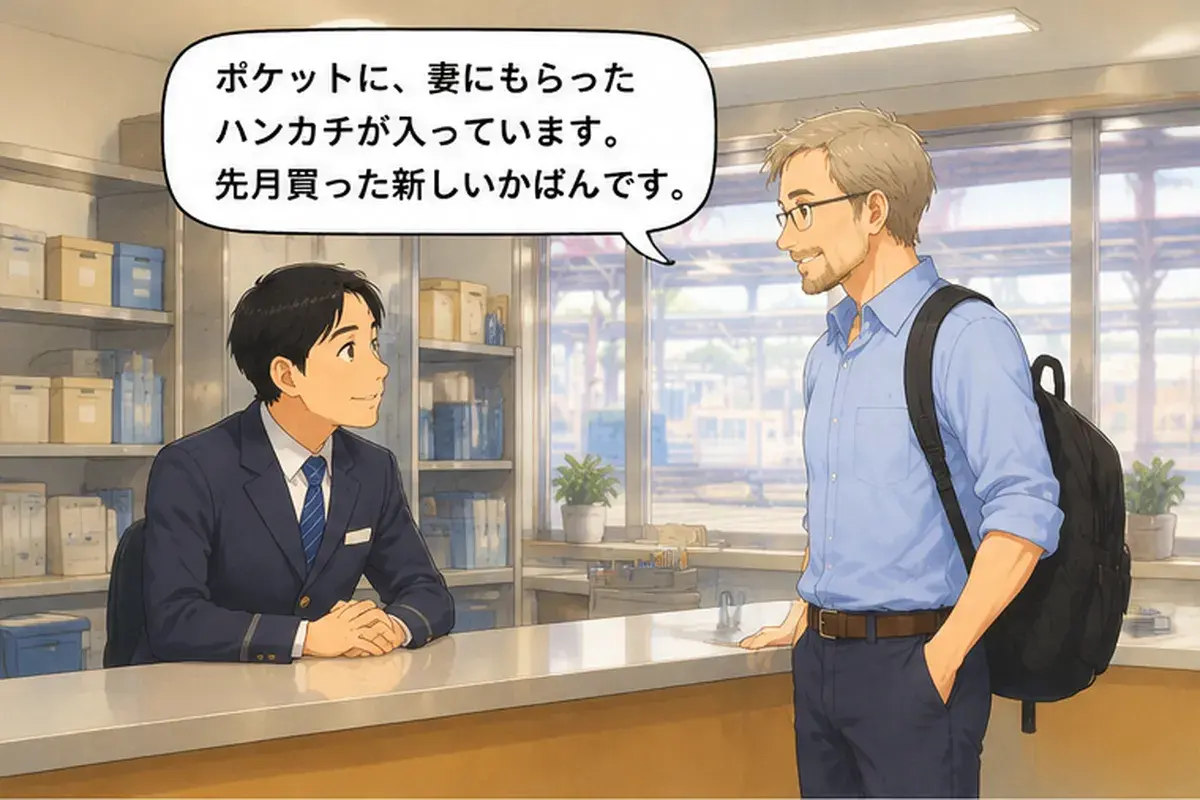
- マルク
ポケットに、妻にもらったハンカチが入っています。先月買った新しいかばんです。
In the pocket there's a handkerchief my wife gave me. It's a new bag I bought last month.
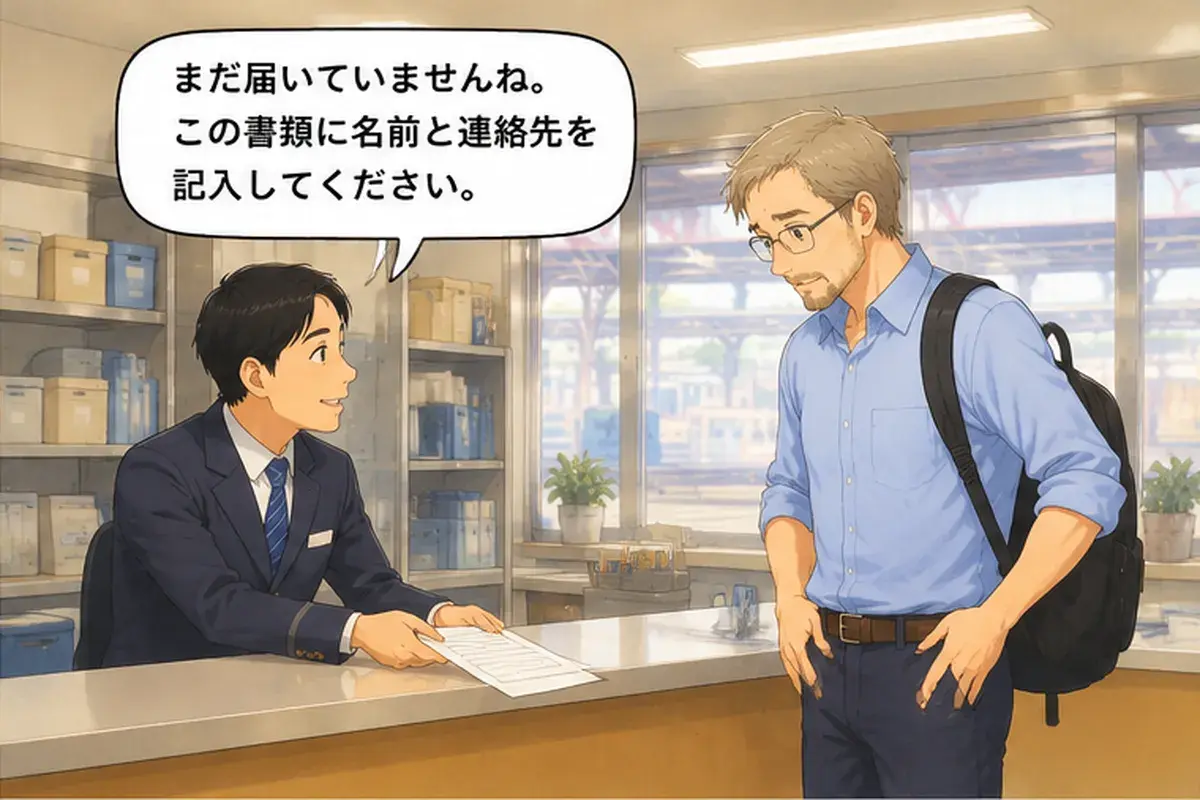
- 駅員
まだ届いていませんね。この書類に名前と連絡先を記入してください。
It hasn't come in yet. Please fill out your name and contact information on this form.
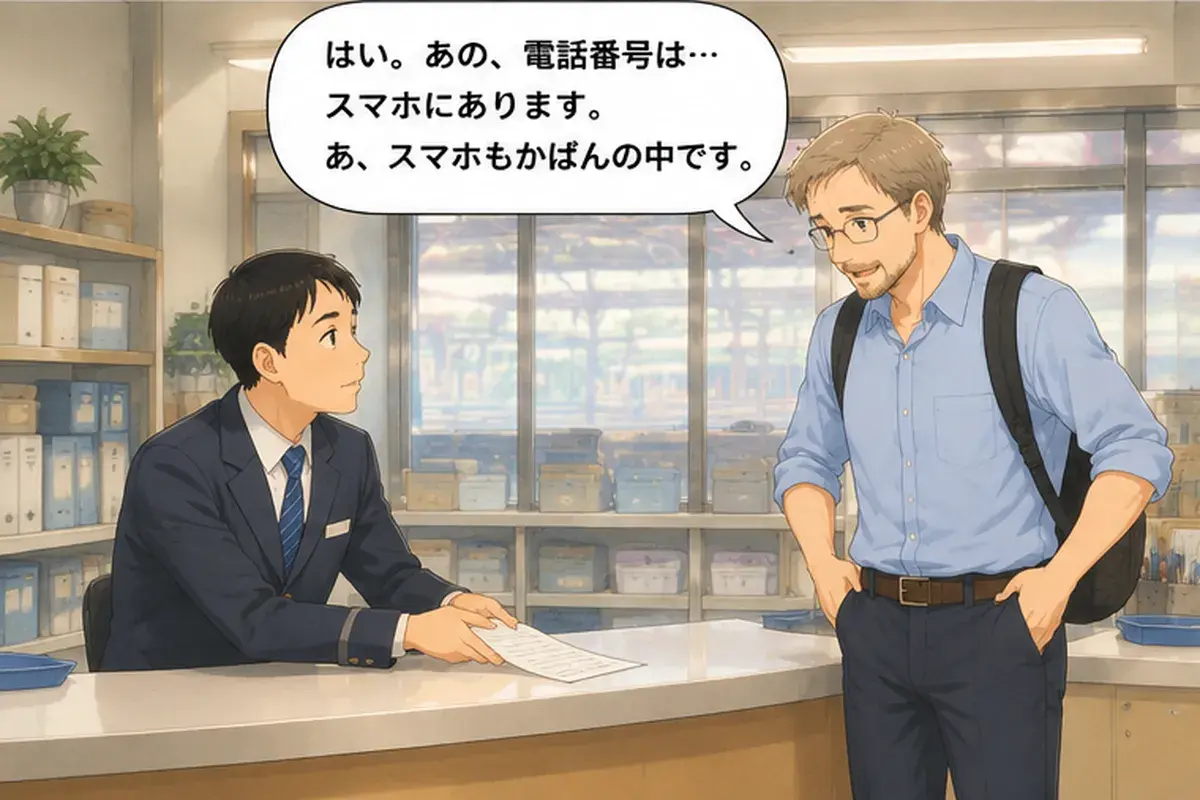
- マルク
はい。あの、電話番号は…スマホにあります。あ、スマホもかばんの中です。
Okay. Um, my phone number is... in my smartphone. Oh, my smartphone is in the bag too.
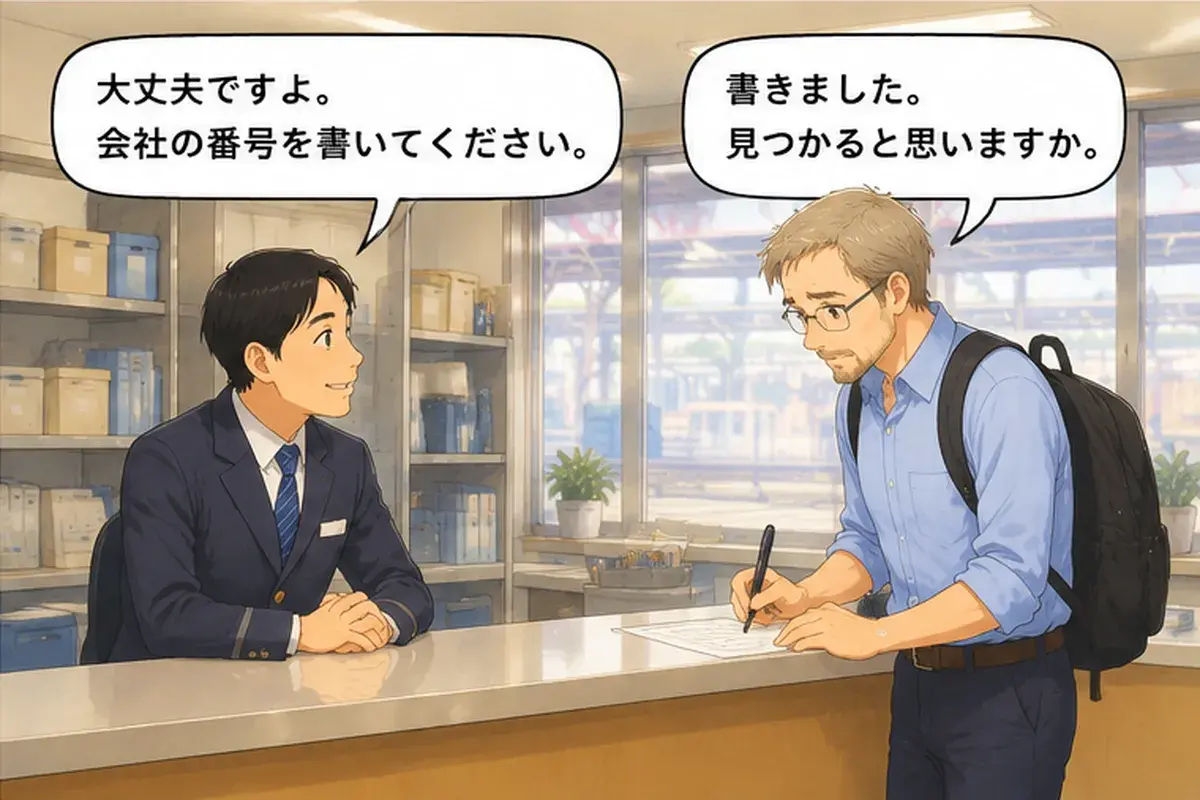
- 駅員
大丈夫ですよ。会社の番号を書いてください。
That's all right. Please write your company's number.
- マルク
書きました。見つかると思いますか。
I wrote it. Do you think it will be found?
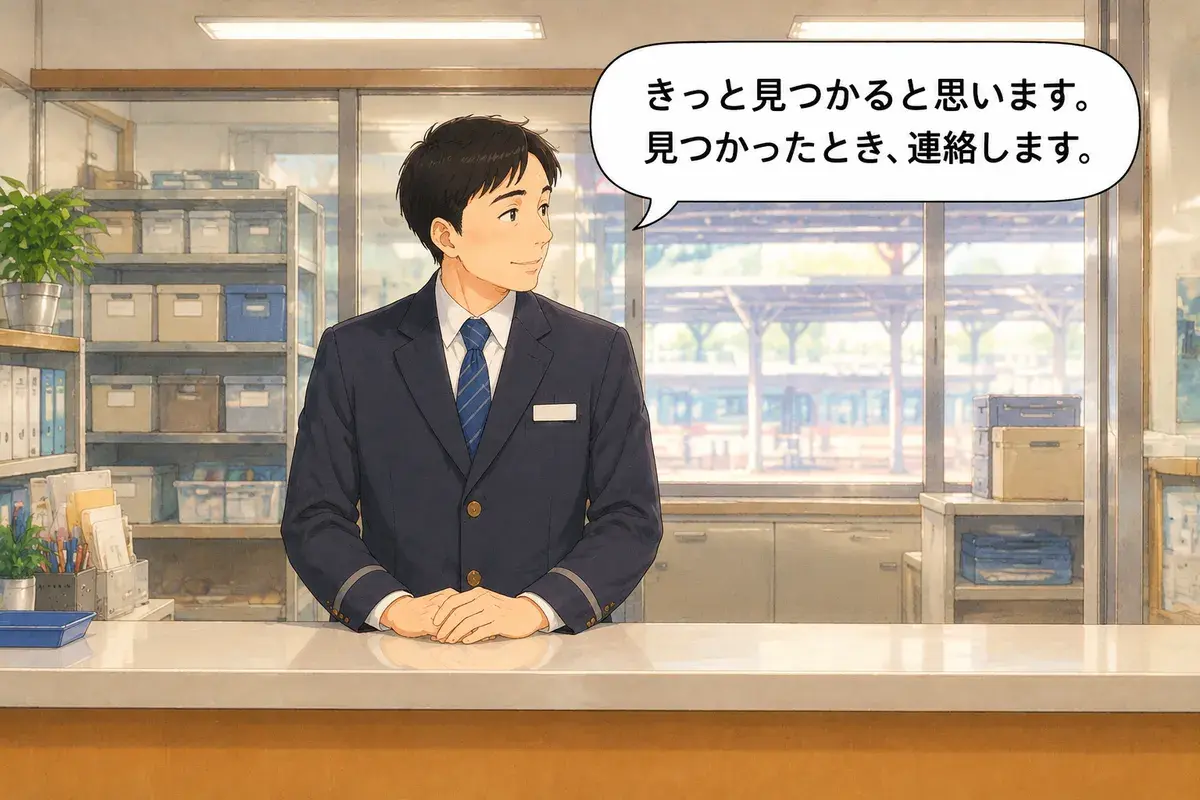
- 駅員
きっと見つかると思います。見つかったとき、連絡します。
I'm sure it will be found. When it's found, we'll contact you.
Grammar for this text
棚 に 置いた かばん— the bag you put on the shelf. Japanese has no word for "that" or "which": the description goes before the noun, in the plain form (置いたis the plain past). Read from the end: firstかばん, then which bag. Who put it there isn't said: "you" and "I" are dropped.パソコン が 入って いる 黒い かばん— the black bag with a computer in it. Inside the description the computer has its ownが; you don't need "in which", because入って いるalready carries that meaning.黄色 の ポケット が ある かばん— the bag with a yellow pocket. Same pattern:ポケット が あるis the description,かばんis the main word.妻 に もらった ハンカチ— the handkerchief my wife gave me.妻 に もらったmeans "got from my wife".妻is for your own wife; for someone else's wife you say奥さん.ノート が 二冊and本 が 一冊—冊counts notebooks and books.二冊is nisatsu,一冊is issatsu.まだ 届いて いません ね—届くmeans "to arrive, to come in": the bag hasn't come in to the station yet.見つかった とき、 連絡します— when it's found, we'll contact you.見つかったis the plain past beforeとき.あ、 スマホ も かばん の 中 です— a joke: the phone is in the bag too, so Mark can't give his number.
A small cultural note: stations have a desk for forgotten items (忘れ物 の 受付), and lost things are very often found in Japan.
Words and grammar of the unit: Describe something you lost.
Learn the words from the texts with flashcards
In the app, you can tap any word in a text to see its translation, forms and examples, and new words stick with flashcards. 15 minutes a day.
Start for freeEverything is open for free. No card needed to sign up.