

Japanese dialogue with translation · A2 · 13 lines
森さんは三時だと言いました Mori-san said it's at three
Comic · 13 panels
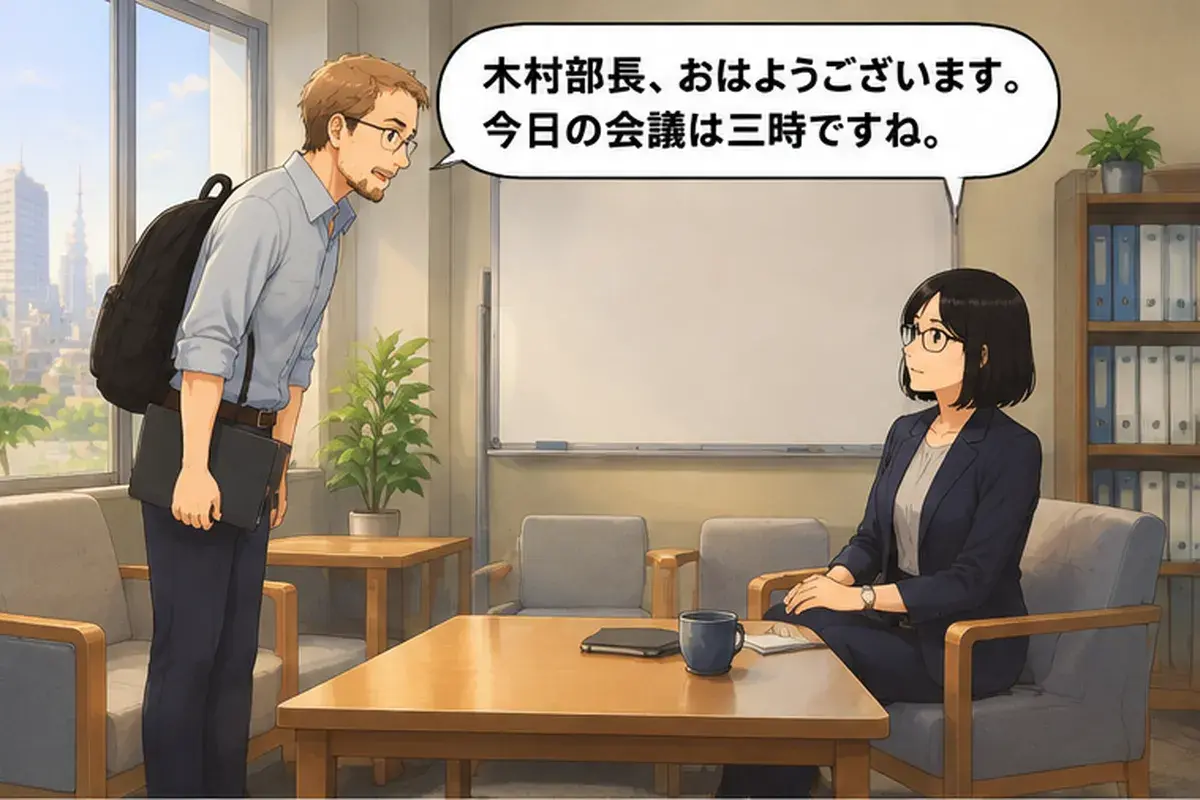
- マルク
木村部長、おはようございます。今日の会議は三時ですね。
Good morning, Manager Kimura. The meeting today is at three, right?
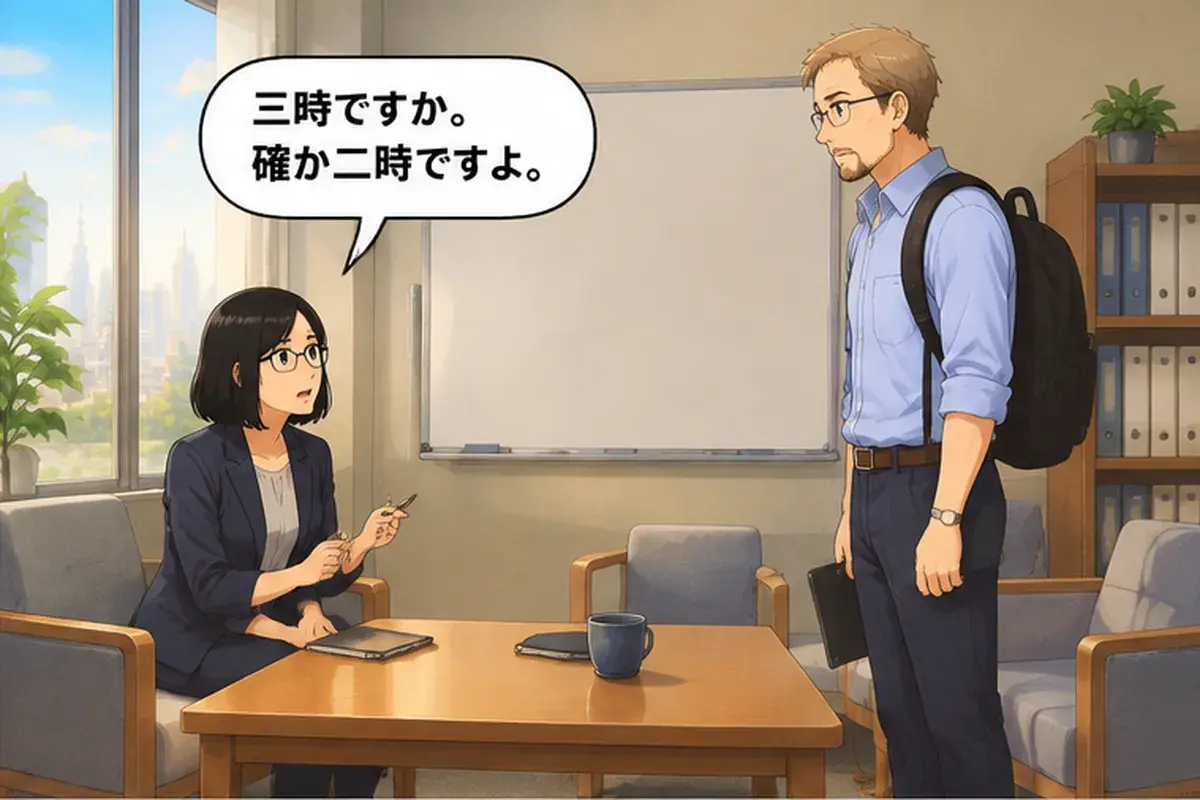
- 木村
三時ですか。確か二時ですよ。
At three? I'm pretty sure it's at two.
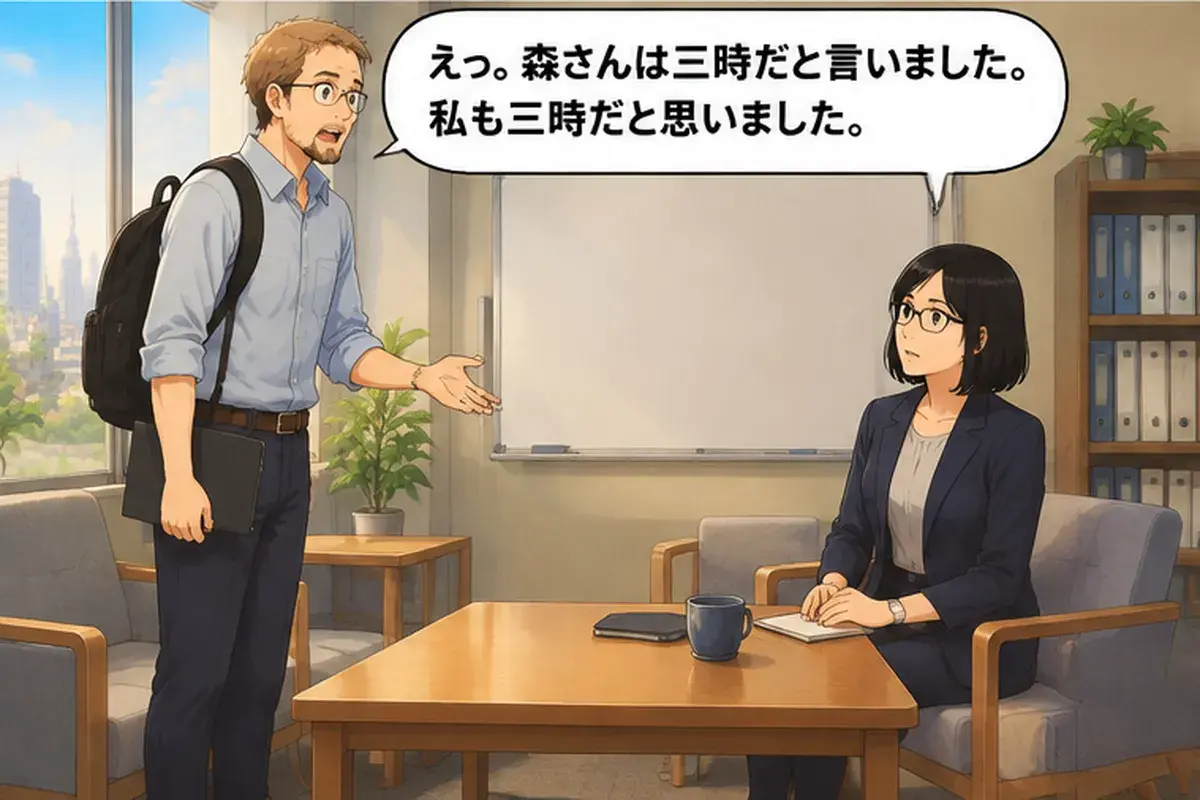
- マルク
えっ。森さんは三時だと言いました。私も三時だと思いました。
What? Mori-san said it's at three. I thought it was at three too.
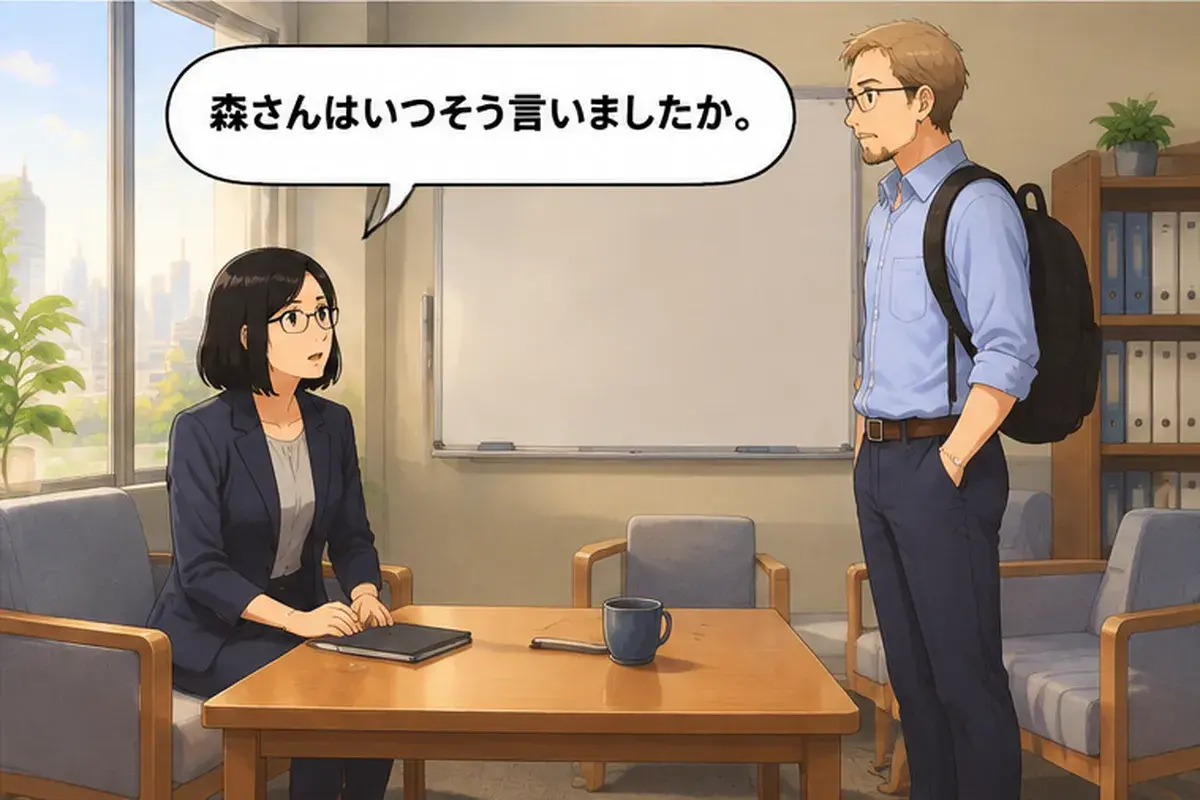
- 木村
森さんはいつそう言いましたか。
When did Mori-san say that?
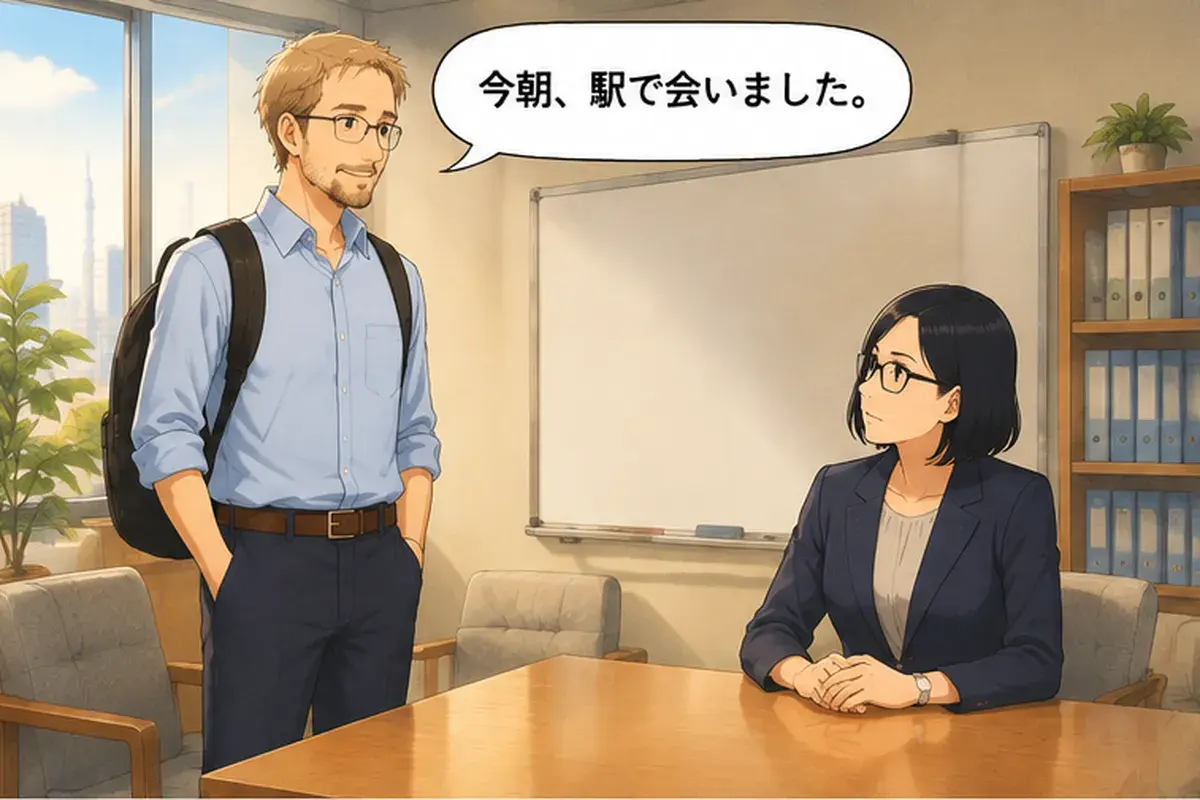
- マルク
今朝、駅で会いました。
We met at the station this morning.
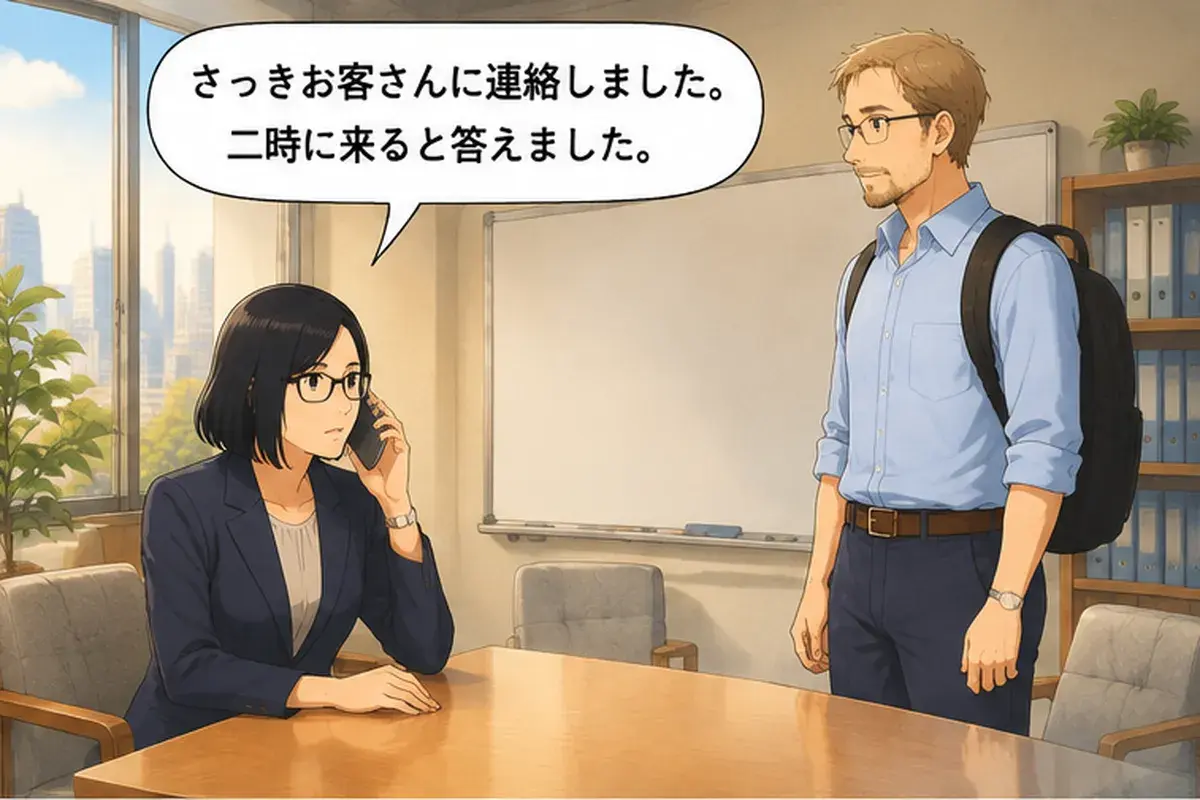
- 木村
さっきお客さんに連絡しました。二時に来ると答えました。
I contacted the customer a little while ago. They answered that they'd come at two.
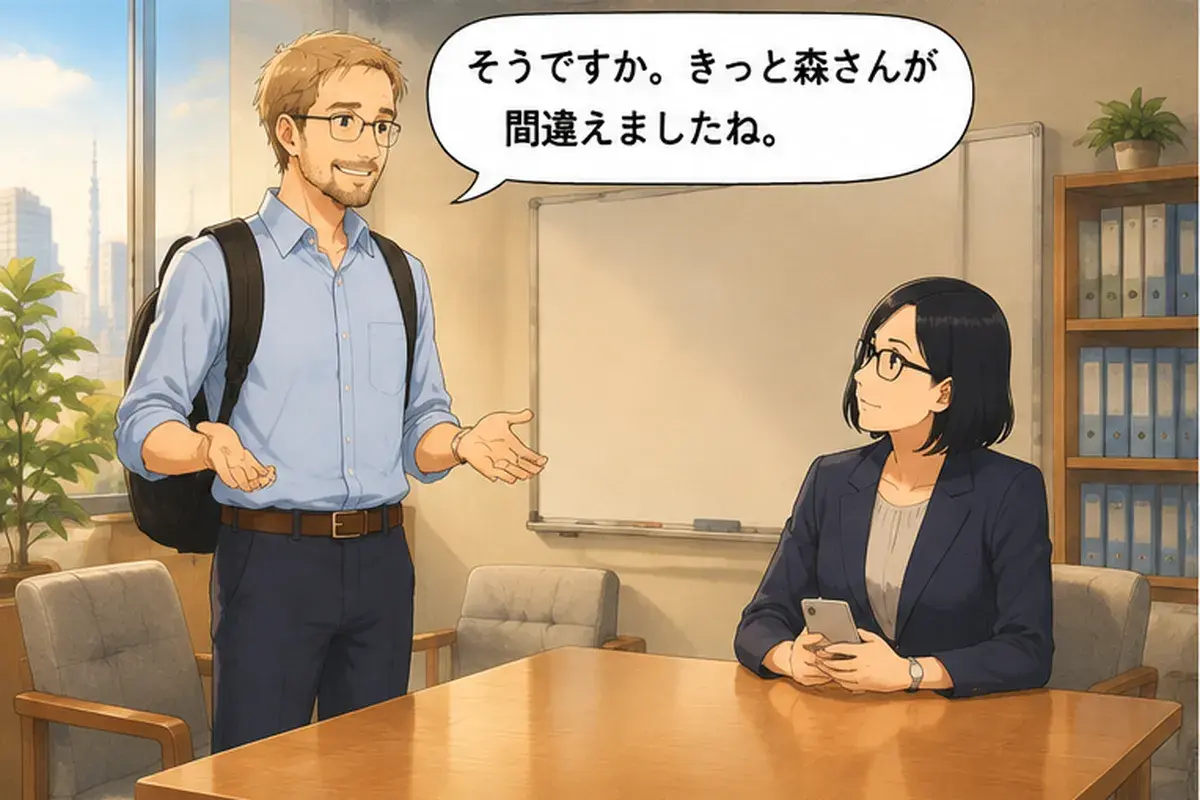
- マルク
そうですか。きっと森さんが間違えましたね。
I see. Mori-san must have made a mistake.
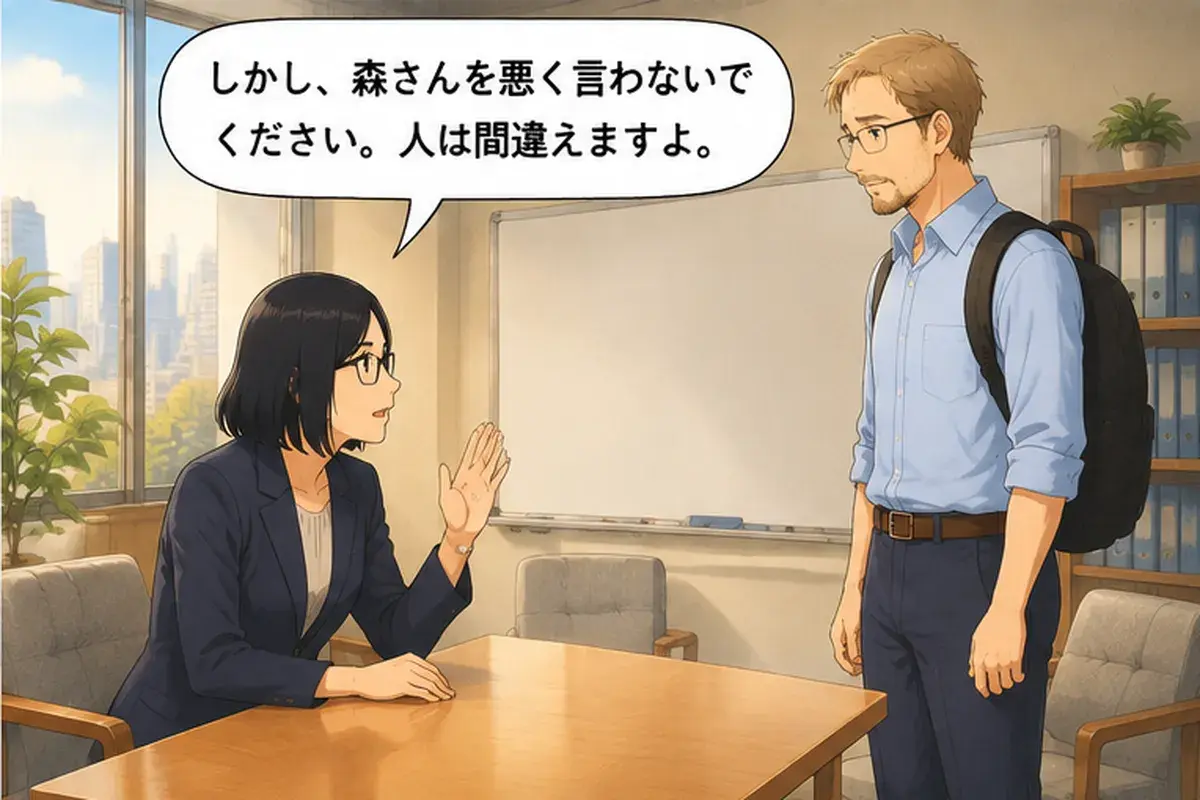
- 木村
しかし、森さんを悪く言わないでください。人は間違えますよ。
However, please don't speak badly of Mori-san. People make mistakes.
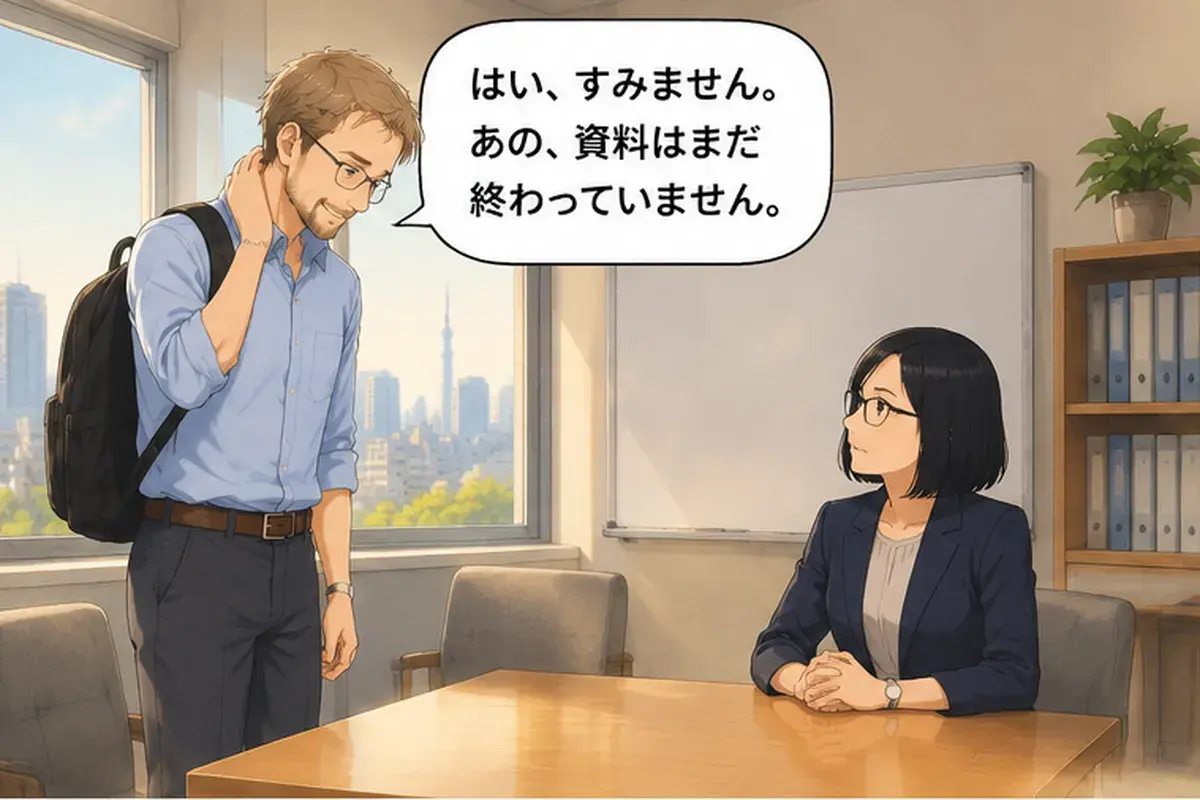
- マルク
はい、すみません。あの、資料はまだ終わっていません。
Yes, I'm sorry. Um, the materials aren't finished yet.
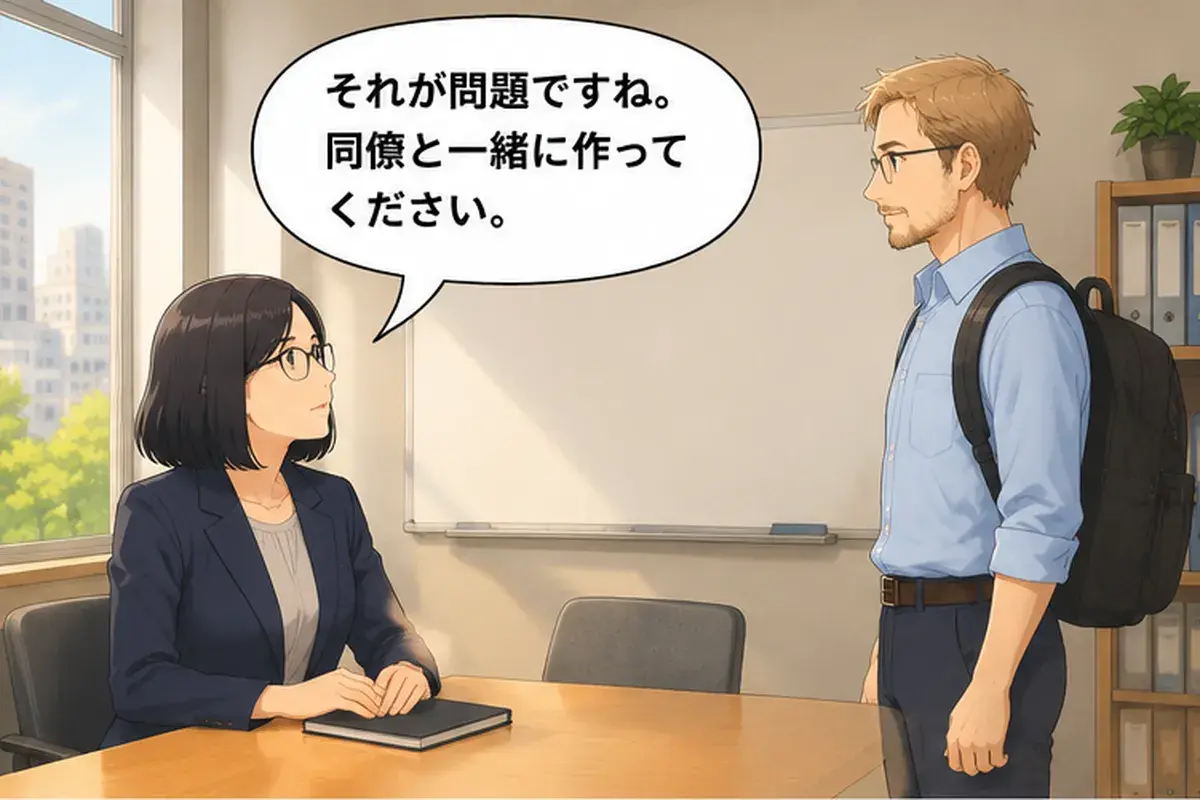
- 木村
それが問題ですね。同僚と一緒に作ってください。
That's the problem. Please make them together with your coworkers.
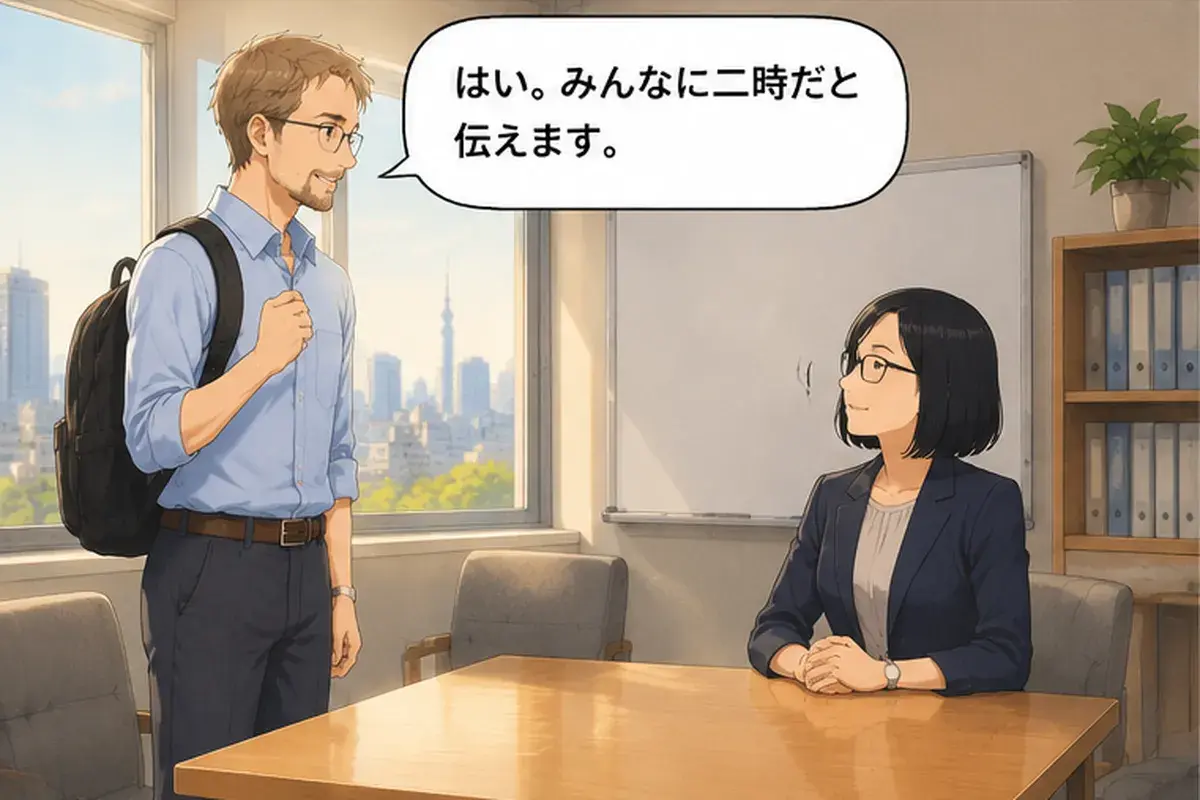
- マルク
はい。みんなに二時だと伝えます。
Yes. I'll tell everyone it's at two.
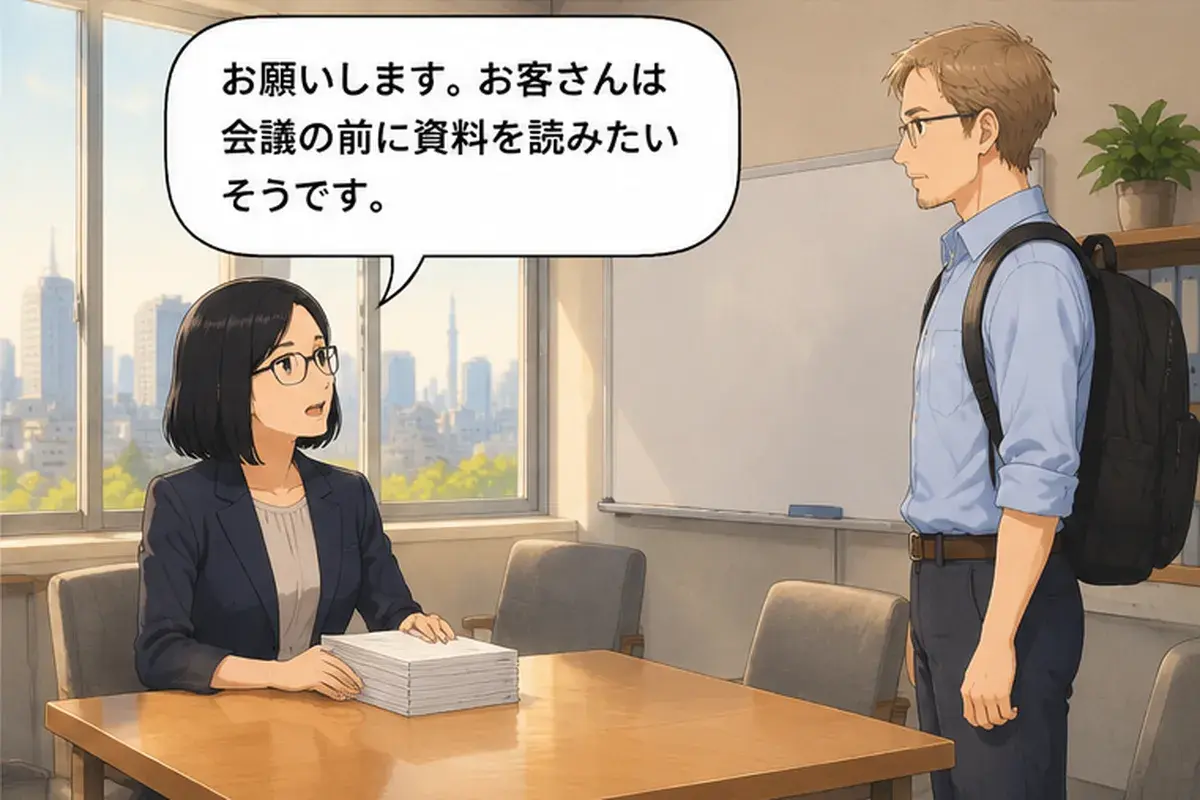
- 木村
お願いします。お客さんは会議の前に資料を読みたいそうです。
Please do. I hear the customer wants to read the materials before the meeting.
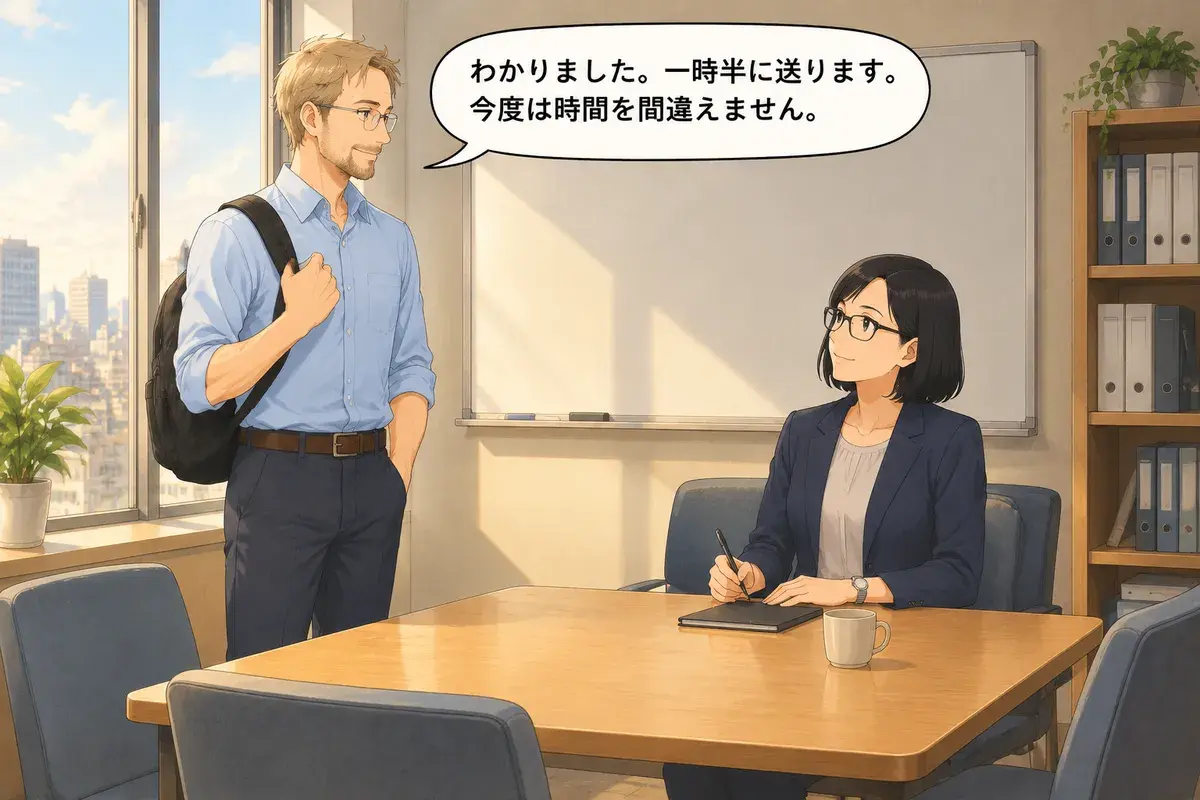
- マルク
わかりました。一時半に送ります。今度は時間を間違えません。
Understood. I'll send them at one thirty. This time I won't get the time wrong.
Grammar for this text
森 さん は 三時 だ と 言いました— Mori-san said it's at three. Mark passes on Mori-san's words. Inside is the plain form三時 だ("it's at three"); only the end is polite. Mark calls Ken by his first name when they talk, but in front of his boss he says森 さん: that is the custom at work.私 も 三時 だ と 思いました— I thought it was at three too.思いましたmeans he thought it back then, this morning.木村 部長— Manager Kimura.部長is a job title, "department manager". At a company you address a boss by title, often after the surname instead ofさん.確か 二時 です よ— I'm pretty sure it's at two.確かmeans "if I'm not mistaken": this is how Kimura-san disagrees gently, without saying "you're wrong".二時 に 来る と 答えました— they answered that they'd come at two.答えましたmeans "answered";来るis the customer's own word "I'll come", and the form doesn't change.連絡しました— I contacted them (by phone or in writing).悪く 言わないで ください— please don't speak badly of Mori-san. This is〜ないで ください(unit 3). Kimura-san is strict but fair: Mori-san made a mistake, but that's no reason to speak badly of Mori-san.しかし— however. A stiff word: it's used in formal or business talk, like Kimura-san here; between friends you sayでも.資料 を 読みたい そう です— I hear they want to read the materials.そう ですafter a plain form means "I hear": Kimura-san passes on what the customer told her. Beforeそうcomes the plain form読みたい; the politeness is only inです.今度 は 時間 を 間違えません— I won't get the time wrong this time. Mark refers to the morning mix-up: the meeting is at two, and he promises to send the materials at one thirty, ahead of time.
Words and grammar of the unit: Share your opinion about a movie.
Learn the words from the texts with flashcards
In the app, you can tap any word in a text to see its translation, forms and examples, and new words stick with flashcards. 15 minutes a day.
Start for freeEverything is open for free. No card needed to sign up.