
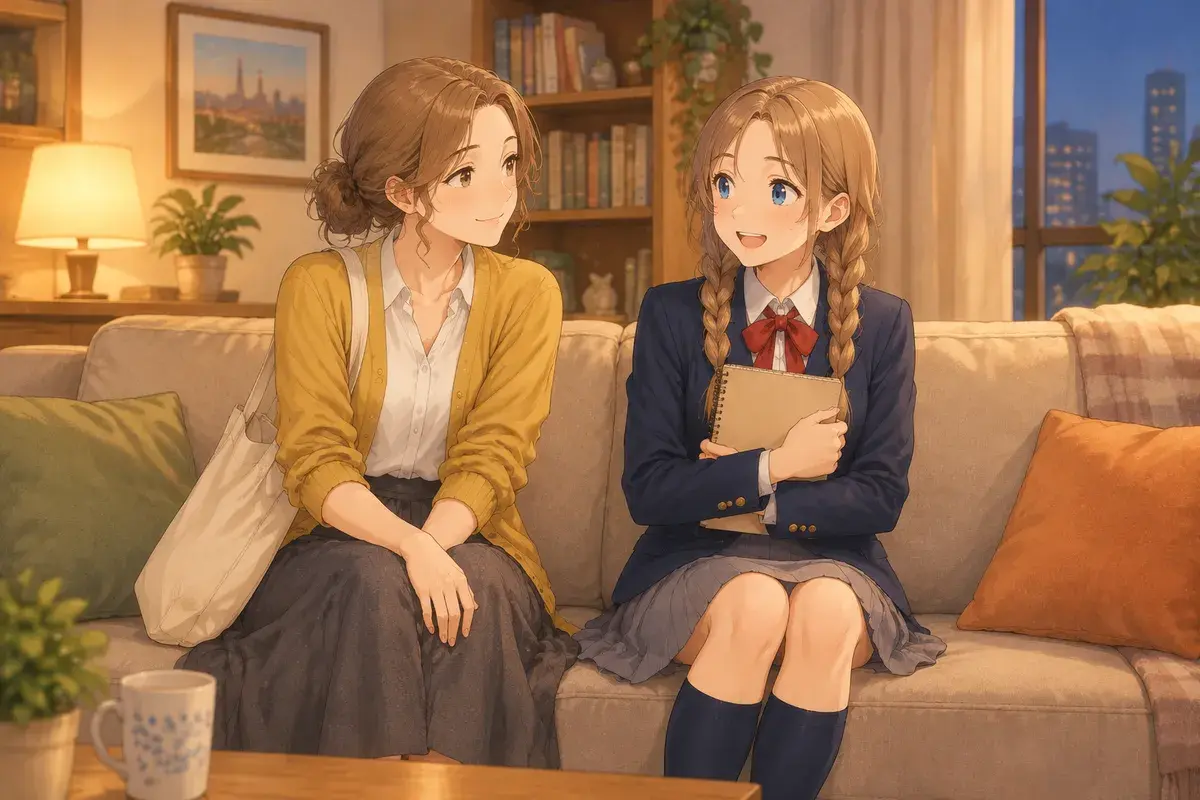
Japanese dialogue with translation · A2 · 16 lines
いい話だと思う I think it's a good story
Comic · 13 panels
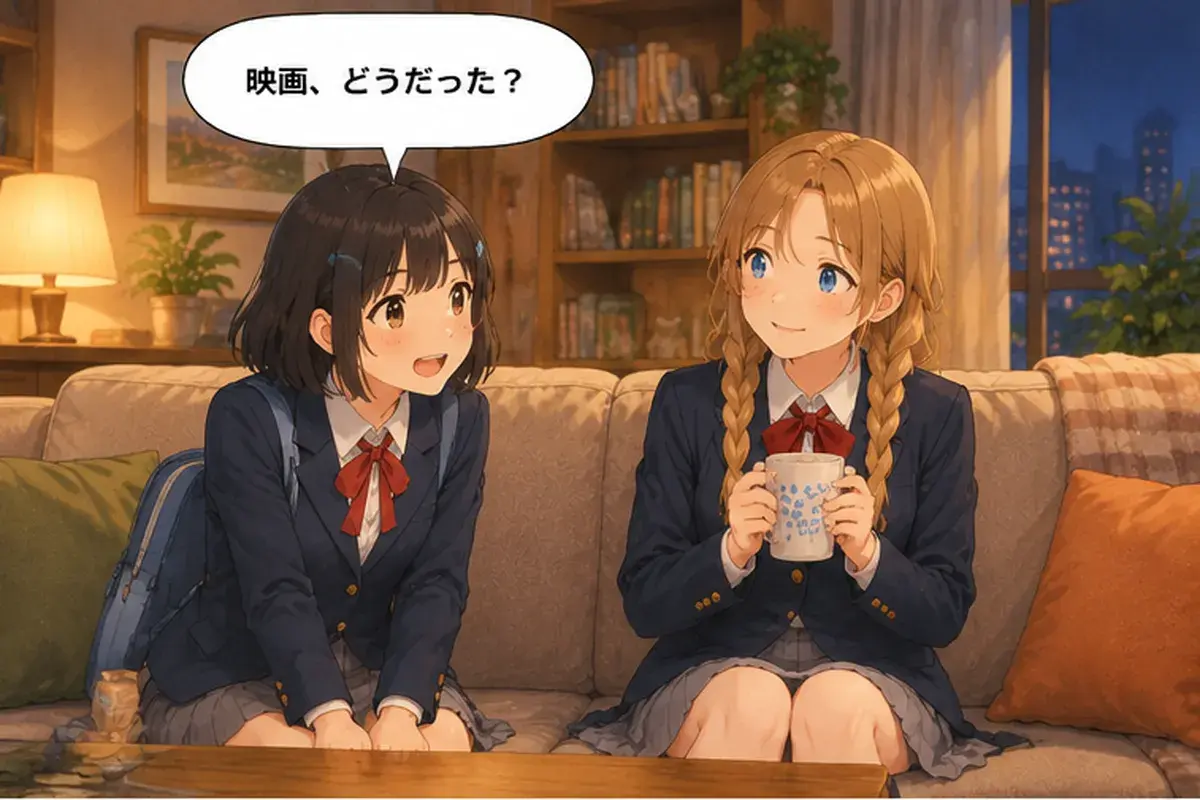
- ゆい
映画、どうだった?
How was the movie? (casual)
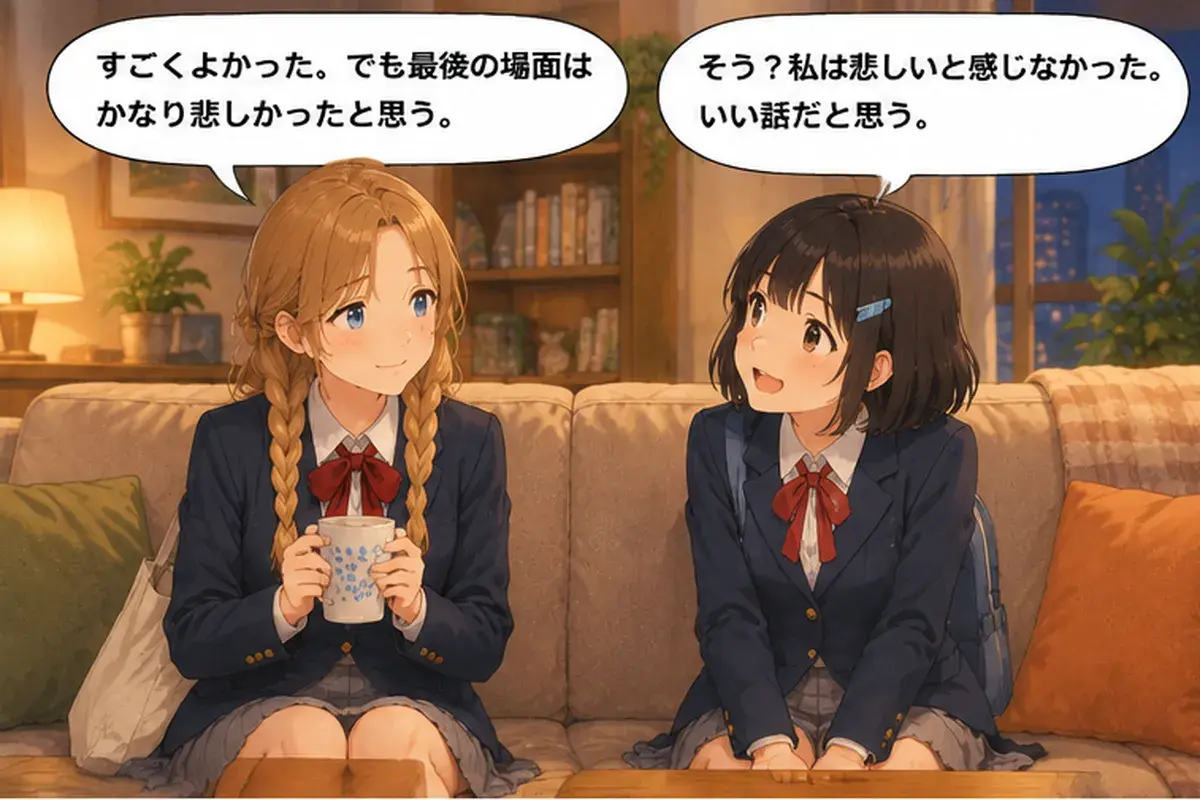
- ソーニャ
すごくよかった。でも最後の場面はかなり悲しかったと思う。
It was really good. But I think the last scene was pretty sad (casual).
- ゆい
そう?私は悲しいと感じなかった。いい話だと思う。
Really? I didn't feel it was sad. I think it's a good story (casual).
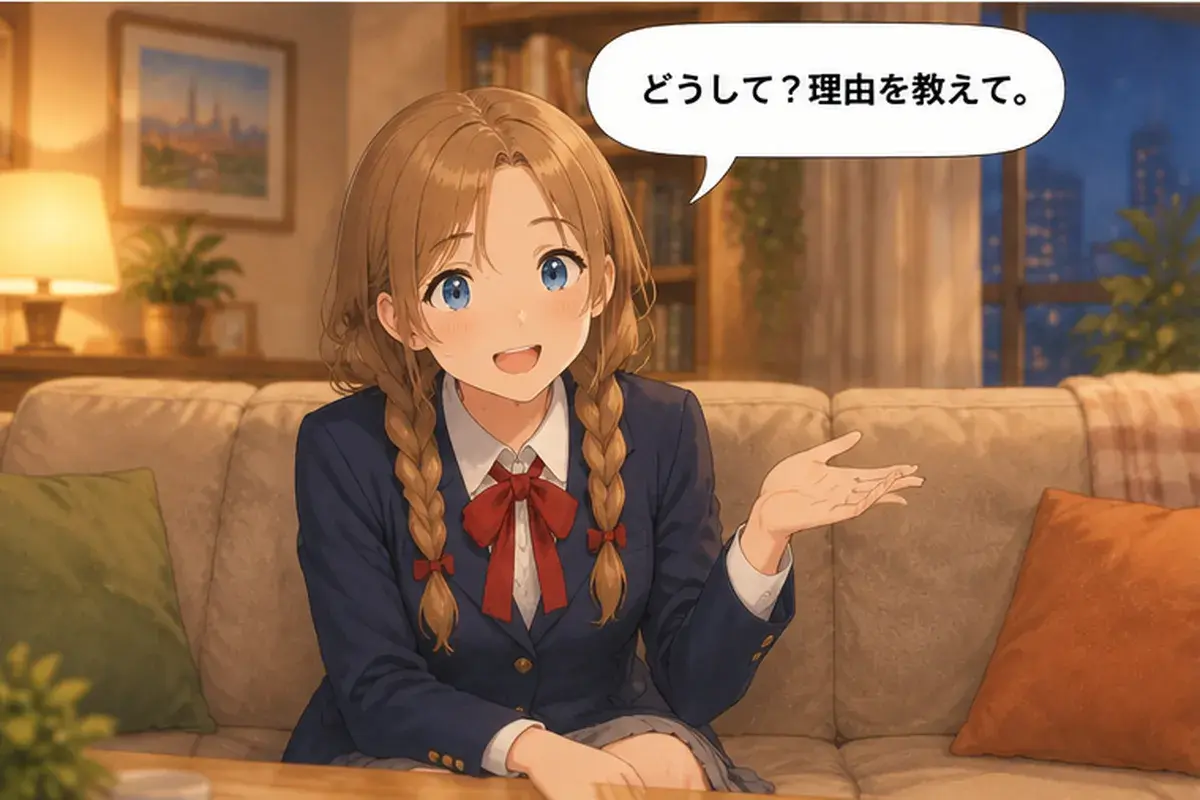
- ソーニャ
どうして?理由を教えて。
Why? Tell me the reason (casual).
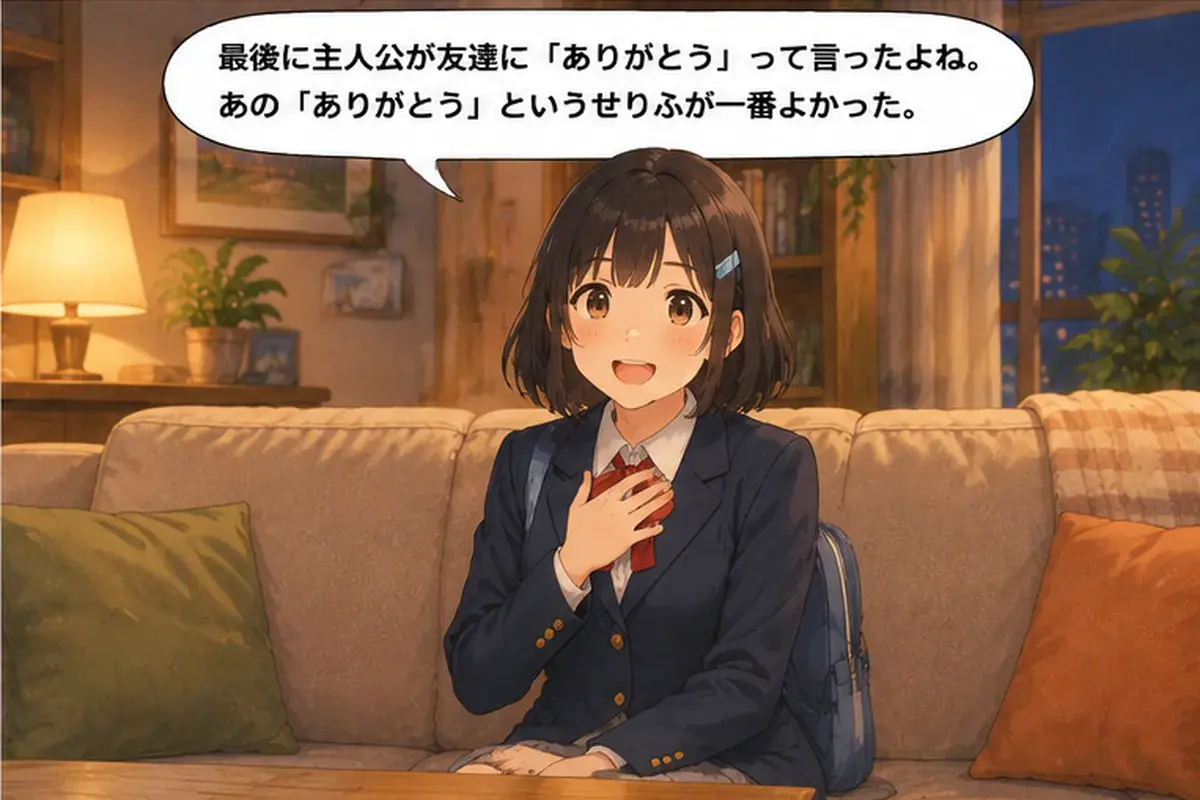
- ゆい
最後に主人公が友達に「ありがとう」って言ったよね。あの「ありがとう」というせりふが一番よかった。
At the end the main character said "thank you" to a friend, right? That "thank you" line was the best (casual).
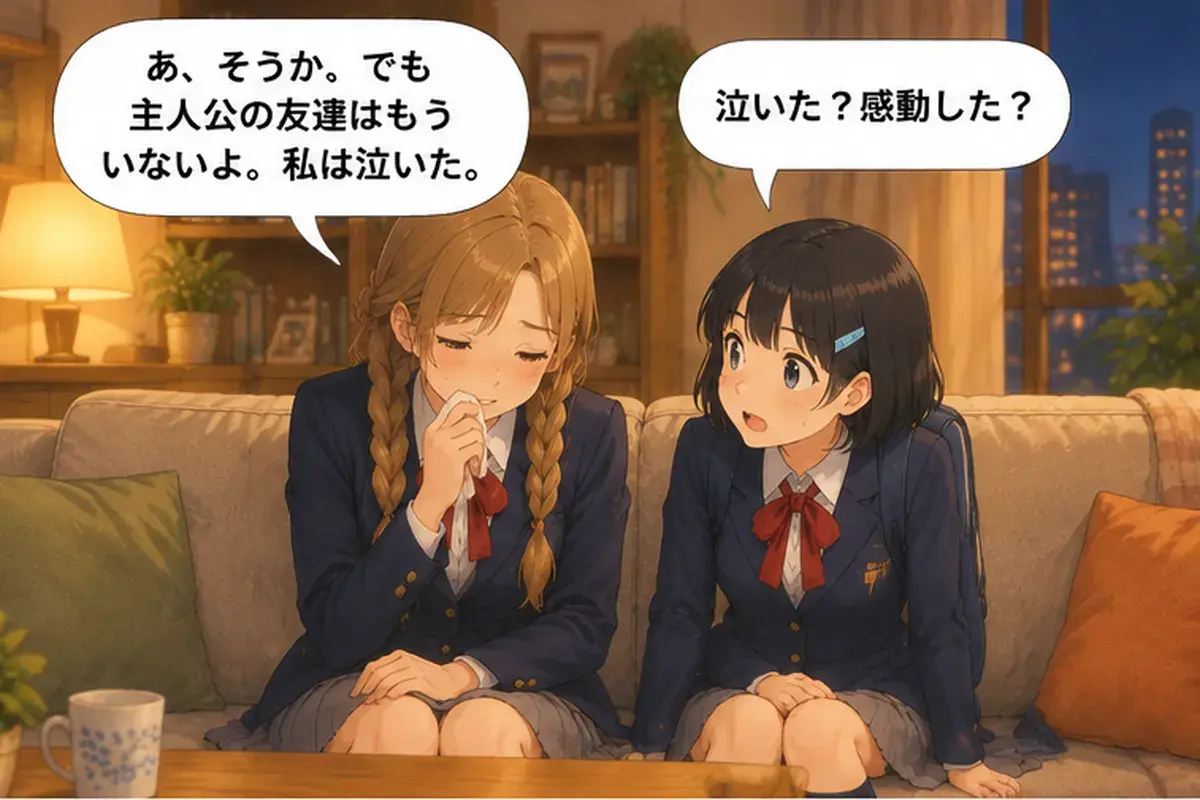
- ソーニャ
あ、そうか。でも主人公の友達はもういないよ。私は泣いた。
Oh, I see. But the main character's friend is gone now. I cried (casual).
- ゆい
泣いた?感動した?
You cried? Were you moved? (casual)
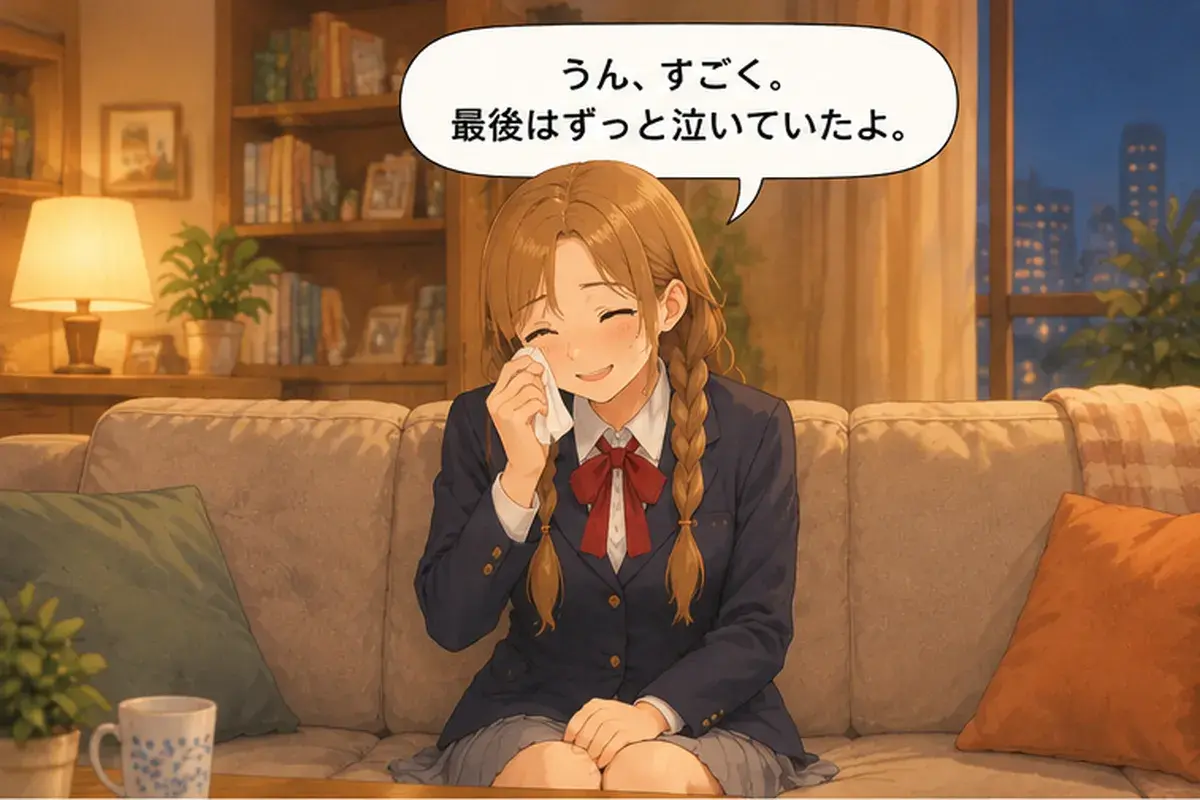
- ソーニャ
うん、すごく。最後はずっと泣いていたよ。
Yeah, a lot. I was crying the whole time at the end (casual).
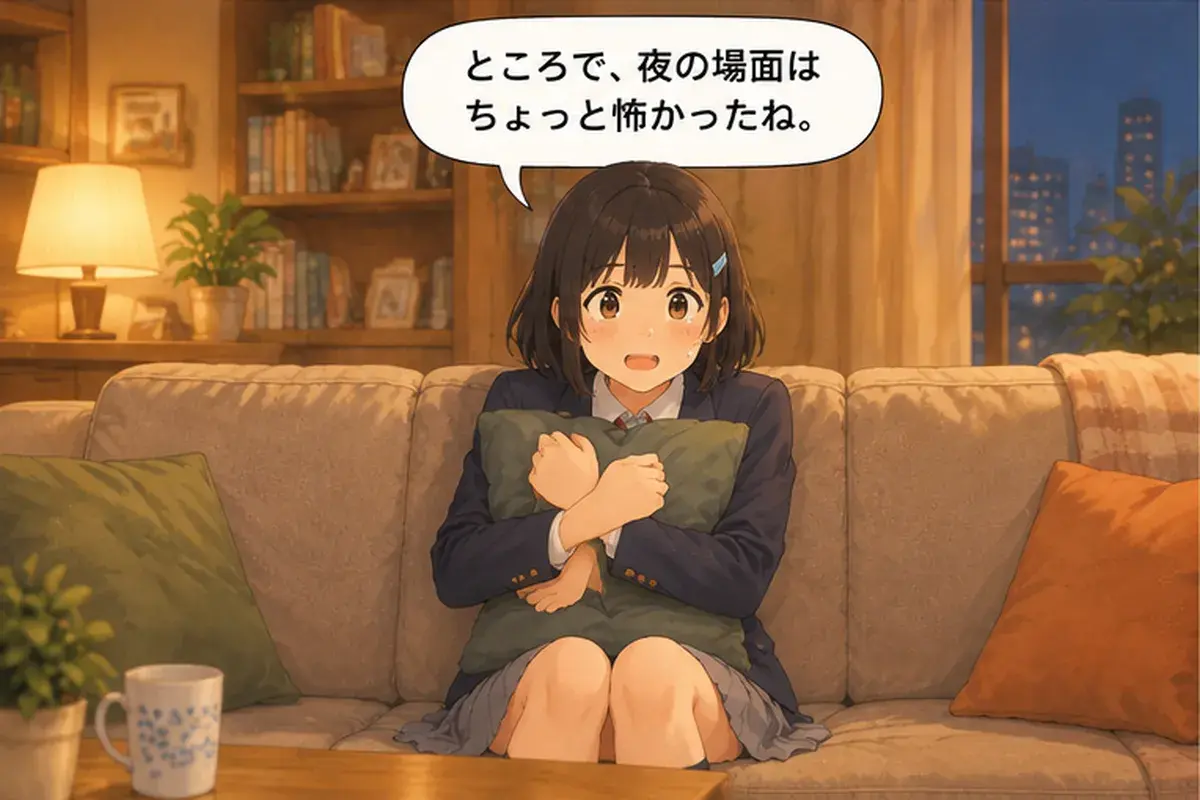
- ゆい
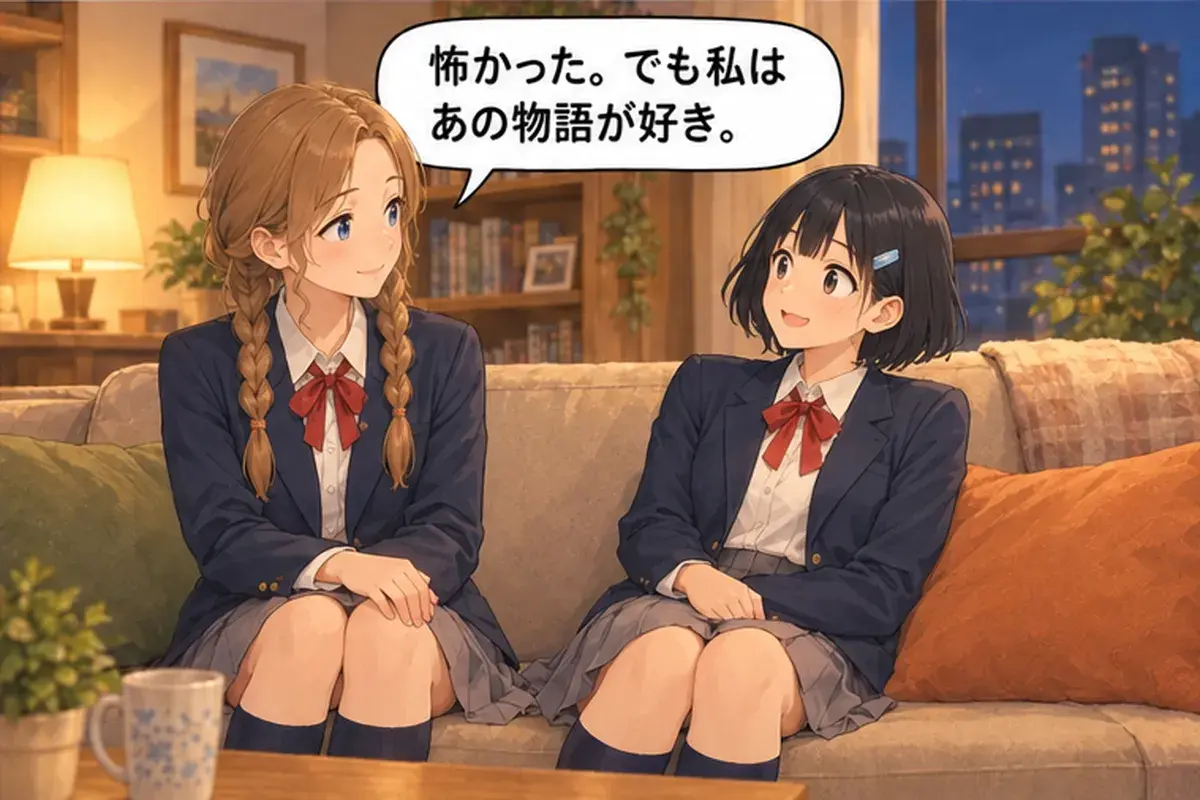
ところで、夜の場面はちょっと怖かったね。
By the way, the night scene was a little scary, wasn't it? (casual)
- ソーニャ
怖かった。でも私はあの物語が好き。
It was scary. But I like that story (casual).
- ゆい
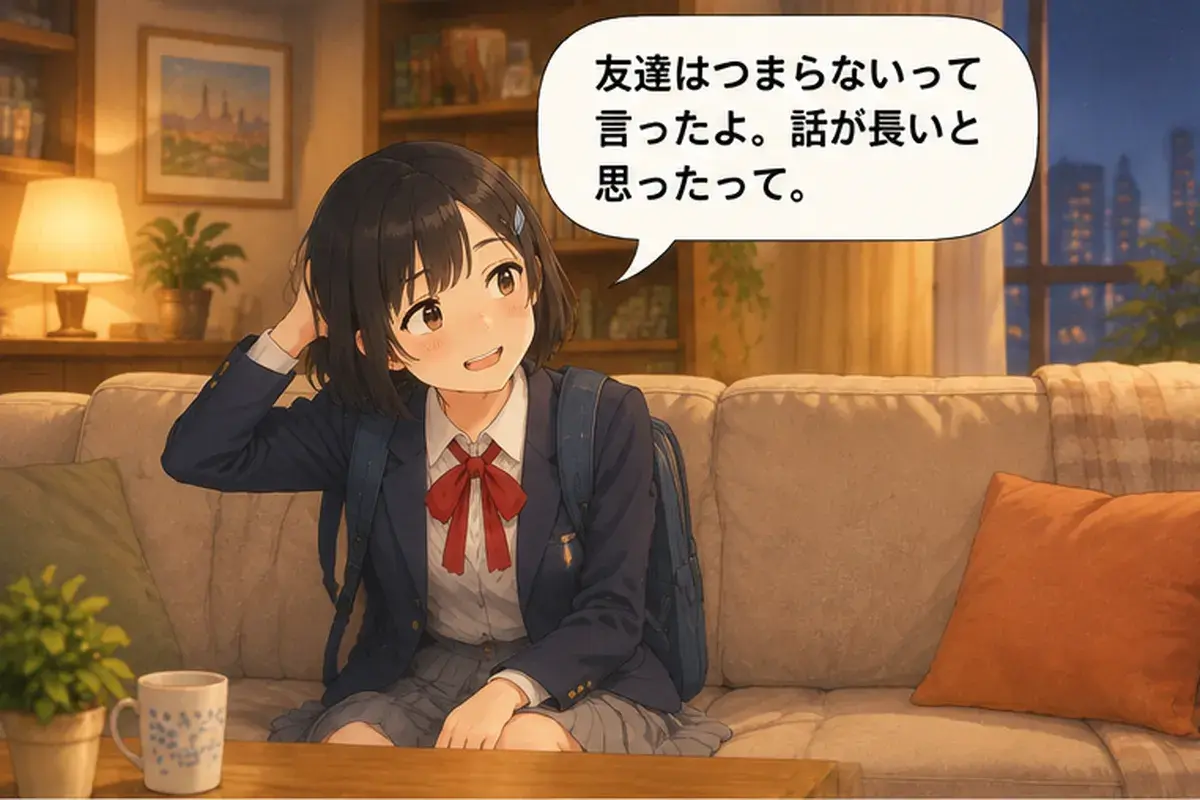
友達はつまらないって言ったよ。話が長いと思ったって。
My friends said it was boring. They said they thought the story was long (casual).
- ソーニャ
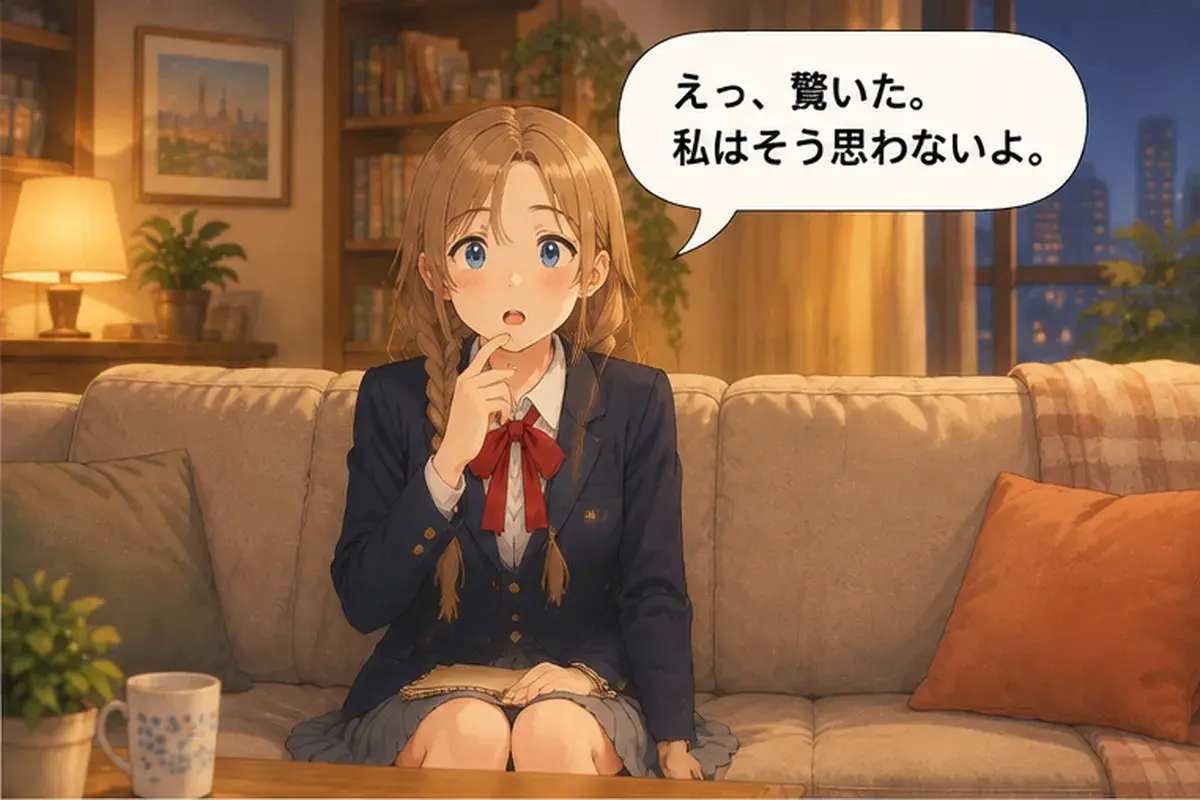
えっ、驚いた。私はそう思わないよ。
What? That surprised me. I don't think so (casual).
- ゆい
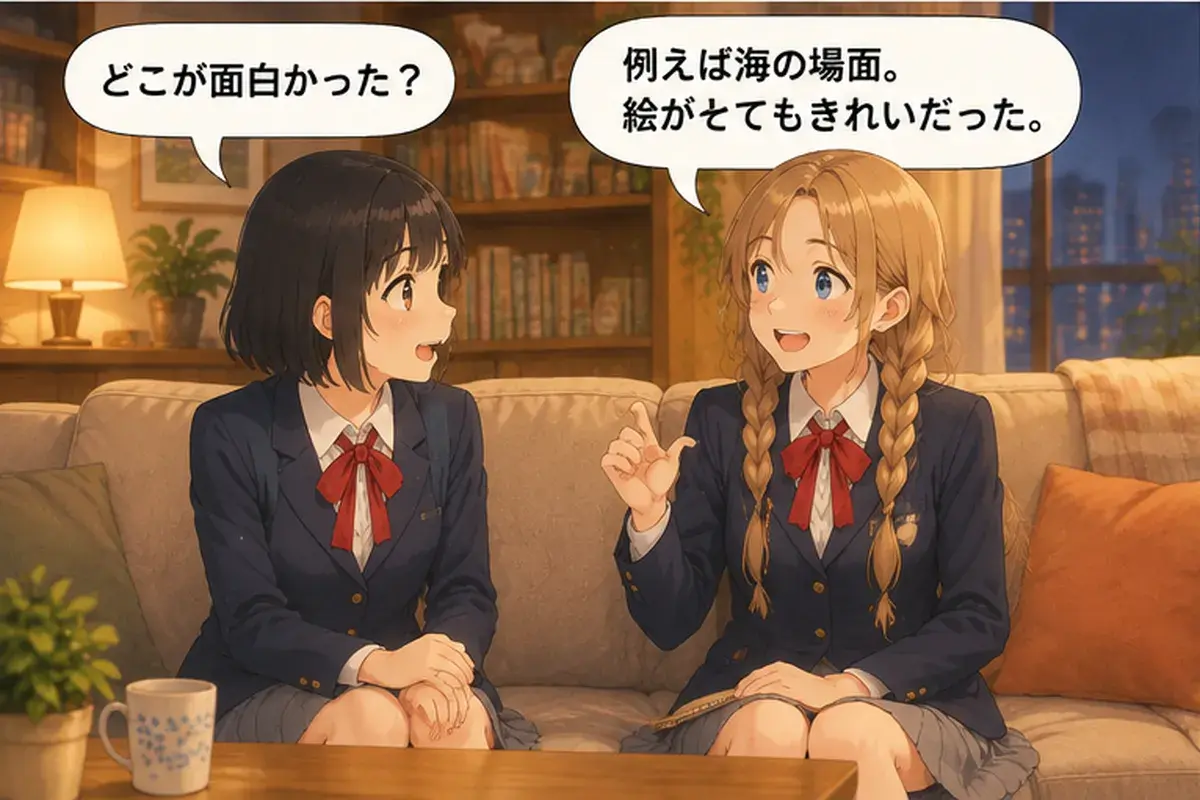
どこが面白かった?
Which part was interesting? (casual)
- ソーニャ
例えば海の場面。絵がとてもきれいだった。
For example, the scene at the sea. The art was really pretty (casual).
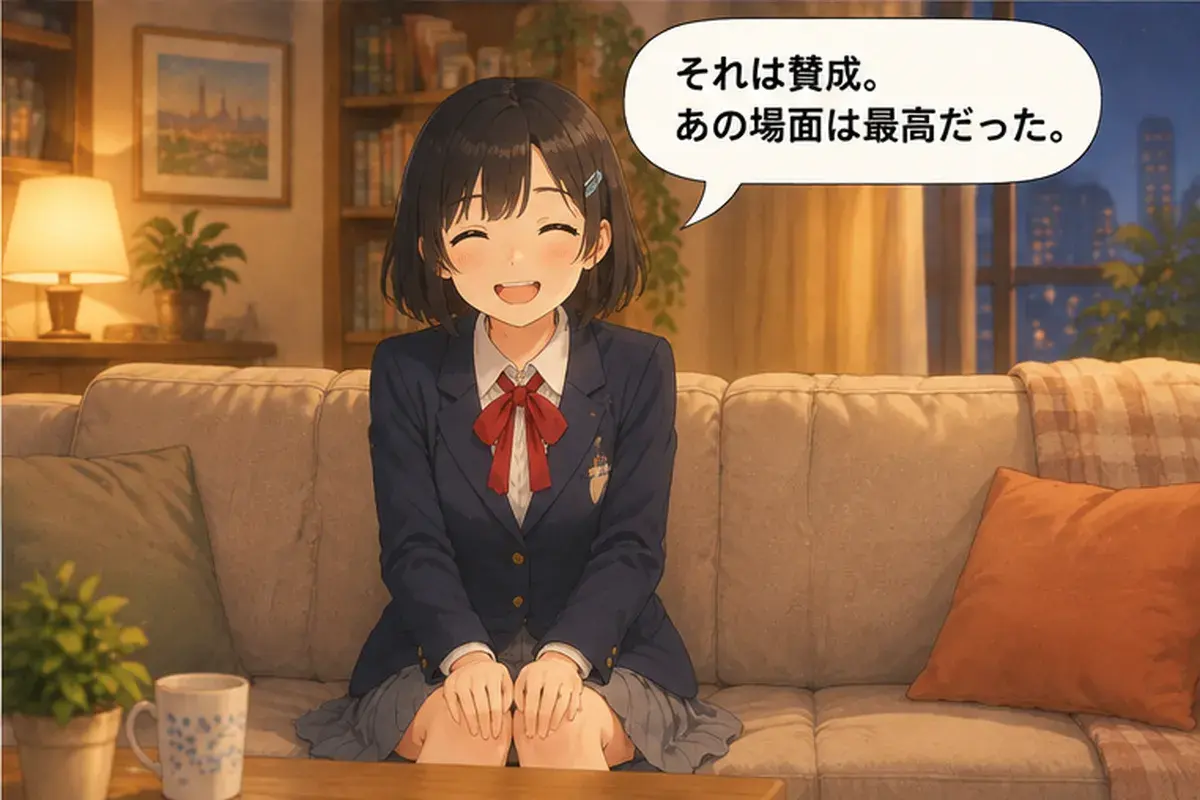
- ゆい
それは賛成。あの場面は最高だった。
I agree with that. That scene was the best (casual).
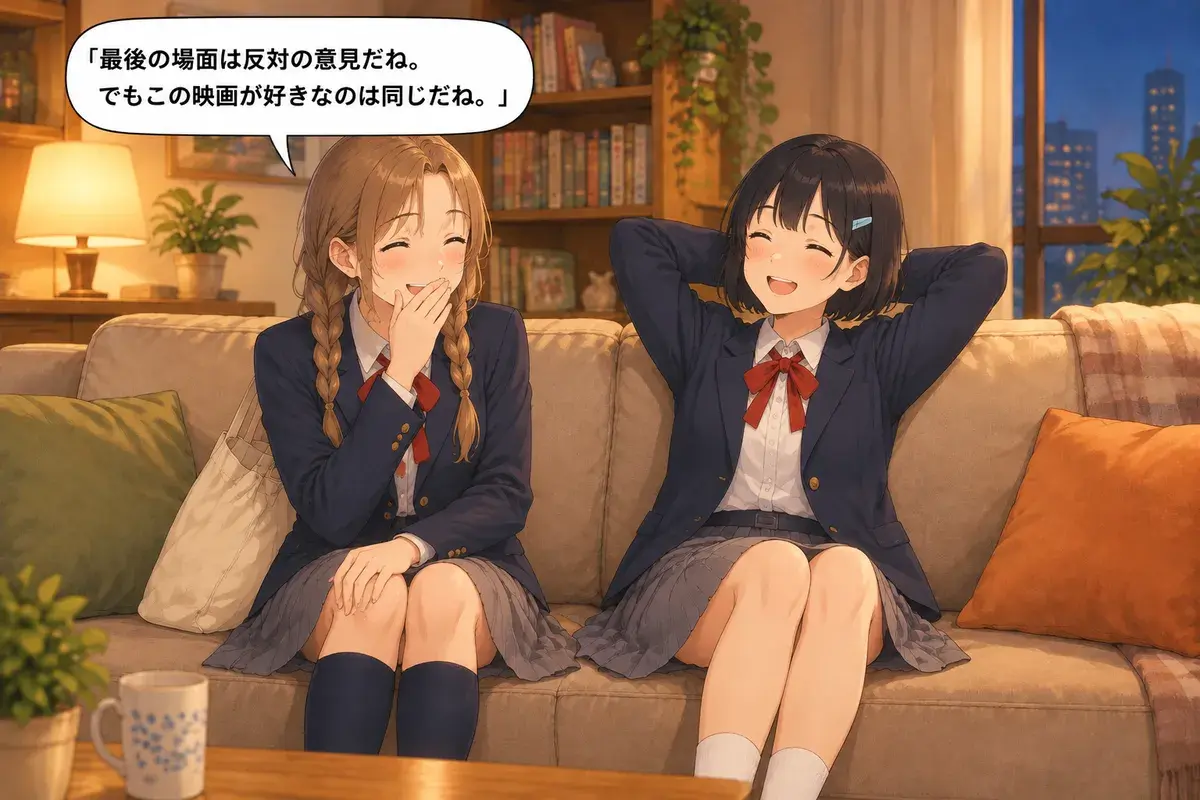
- ソーニャ
最後の場面は反対の意見だね。でもこの映画が好きなのは同じだね。
We have opposite opinions about the last scene, don't we? But we both like this movie (casual).
Grammar for this text
悲しかった と 思う— I think it was sad. Beforeとgoes the plain form (悲しかったis the plain past of悲しい), and思うreplaces思います: the friends talk casually. This is an opinion, not a fact.私 は そう 思わない よ— I don't think so.思わないis the plain negative of思う(u-verb:思わ+ない). Negating思うitself is the usual way to disagree with what someone just said.悲しい と 感じなかった— I didn't feel it was sad.感じる("to feel", ru-verb) takesと, just like思う.いい 話 だ と 思う— I think it's a good story. After a noun (話, described byいい) you putだbeforeと.「ありがとう」 って 言った— the main character said "thank you".ってis the casual replacement forと: this is how friends retell what someone said.「ありがとう」 という せりふ— the line "thank you".というlinks a name or a quote to the thing it names.友達 は つまらない って 言った よ— my friends said it was boring. Another retelling of someone else's words.長い と 思った って— they said they thought it was long.ってat the end means "they say": Yui passes on her friends' thought.理由 を 教えて— tell me the reason. In casual speech a request is just the te-form, withoutください.泣いた? 感動した?— You cried? Were you moved? In casual speech a question has noか: your voice goes up.この 映画 が 好き な の は 同じ だ ね— we both like this movie, don't we?のturns "we like this movie" into a noun ("the fact that..."). After好きyou putなbeforeの.ところで— by the way. Yui moves on to another scene.それ は 賛成— I agree with that. Here賛成is used withoutする.反対 の 意見— the opposite opinion. Here反対means "opposite", also withoutする.
Words and grammar of the unit: Share your opinion about a movie.
Learn the words from the texts with flashcards
In the app, you can tap any word in a text to see its translation, forms and examples, and new words stick with flashcards. 15 minutes a day.
Start for freeEverything is open for free. No card needed to sign up.