
Japanese dialogue with translation · A2 · 16 lines
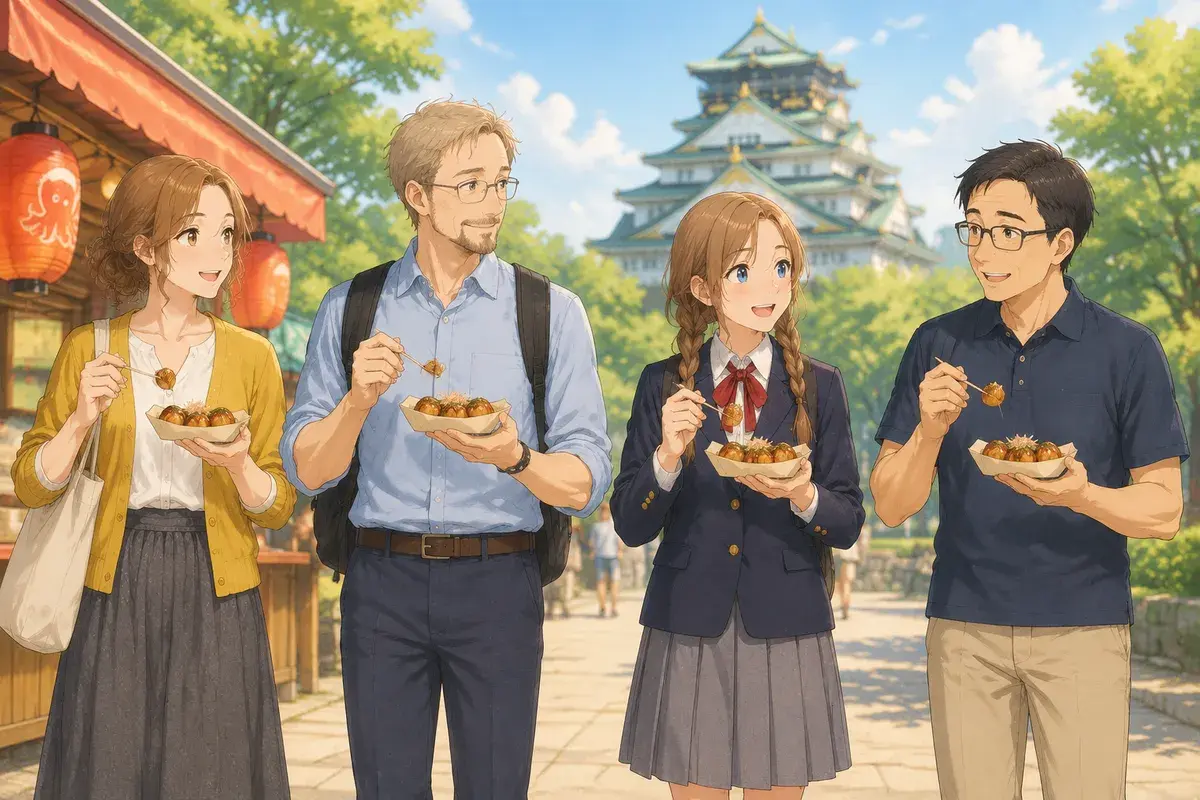
食べた後で、城へ行きましょう After we eat, let's go to the castle
Comic · 15 panels
- 息子
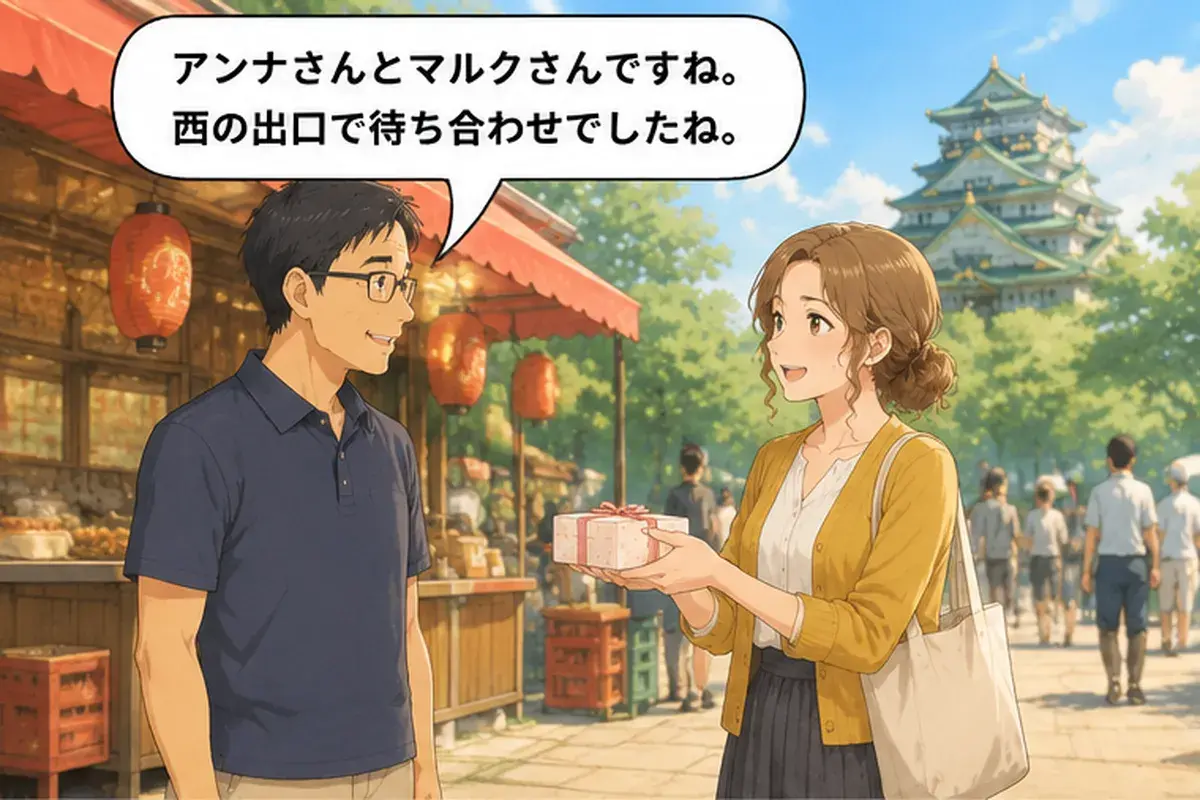
アンナさんとマルクさんですね。西の出口で待ち合わせでしたね。
You're Anna-san and Mark-san, right? We were supposed to meet at the west exit, weren't we?
- アンナ
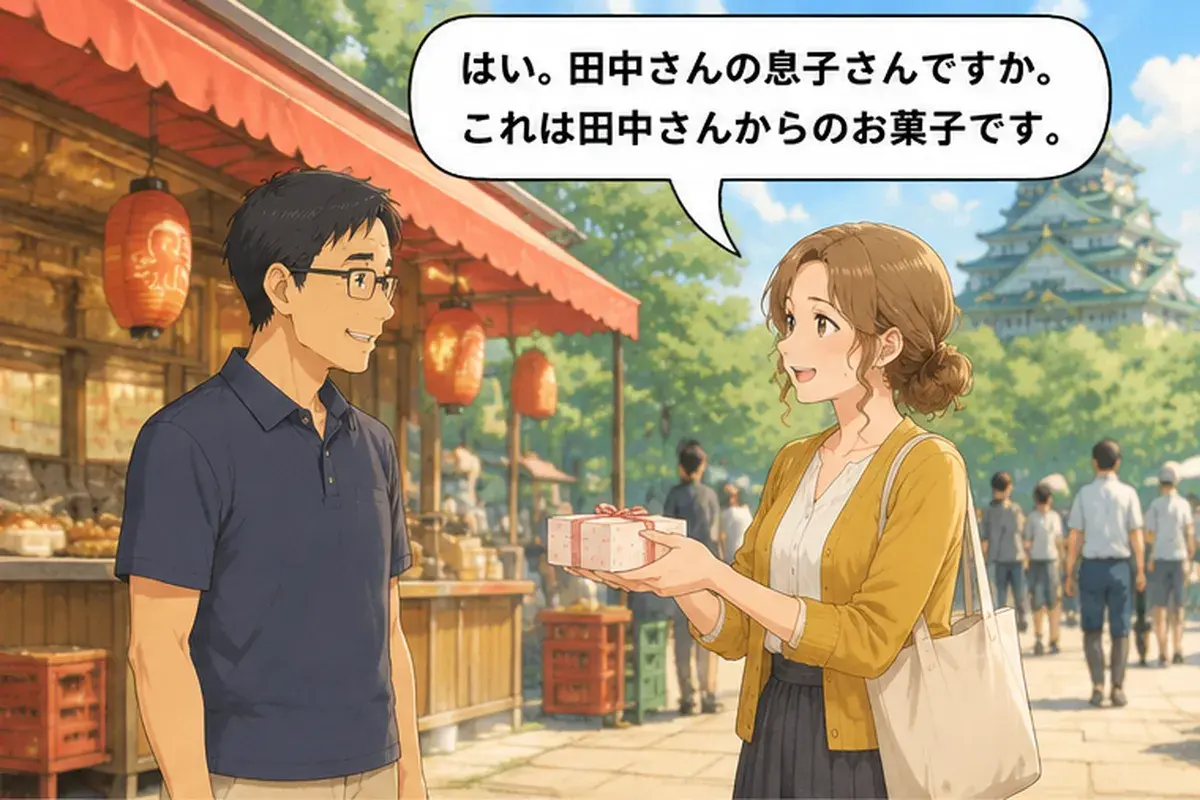
はい。田中さんの息子さんですか。これは田中さんからのお菓子です。
Yes. Are you Tanaka-san's son? These are sweets from Tanaka-san.
- 息子
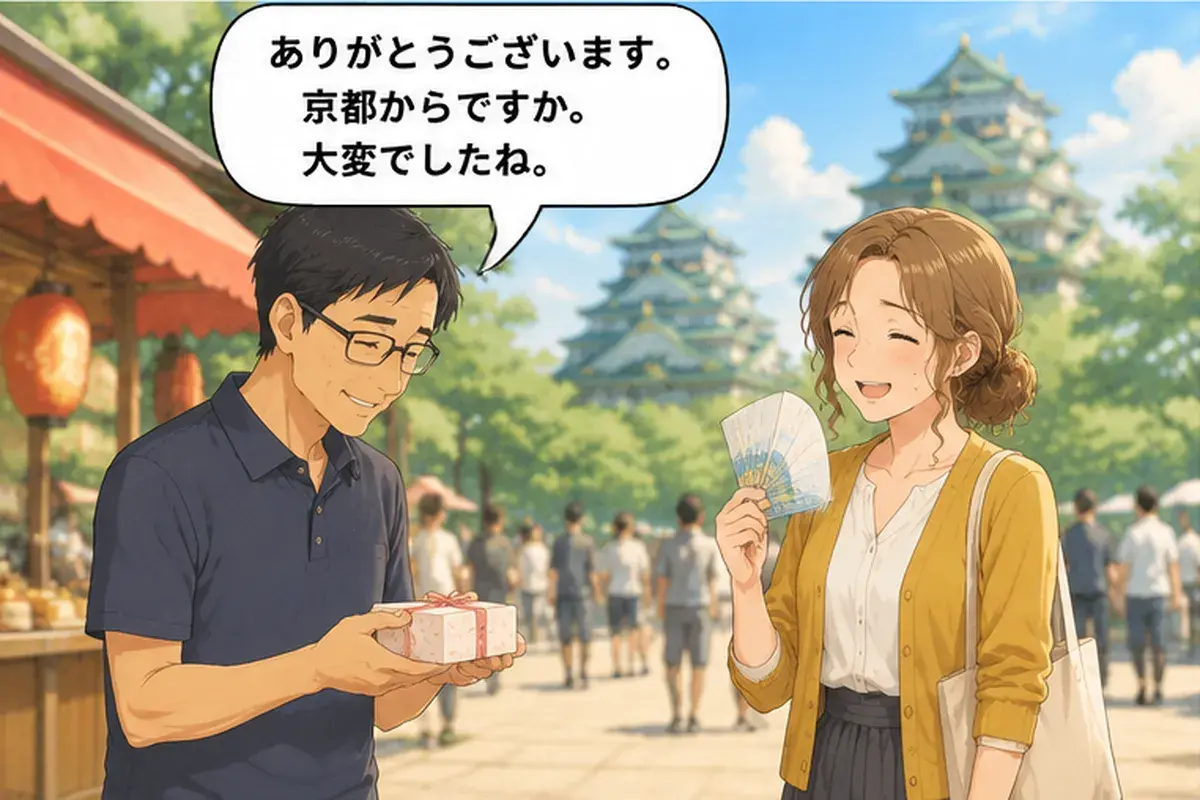
ありがとうございます。京都からですか。大変でしたね。
Thank you. Are you coming from Kyoto? That must have been tough.
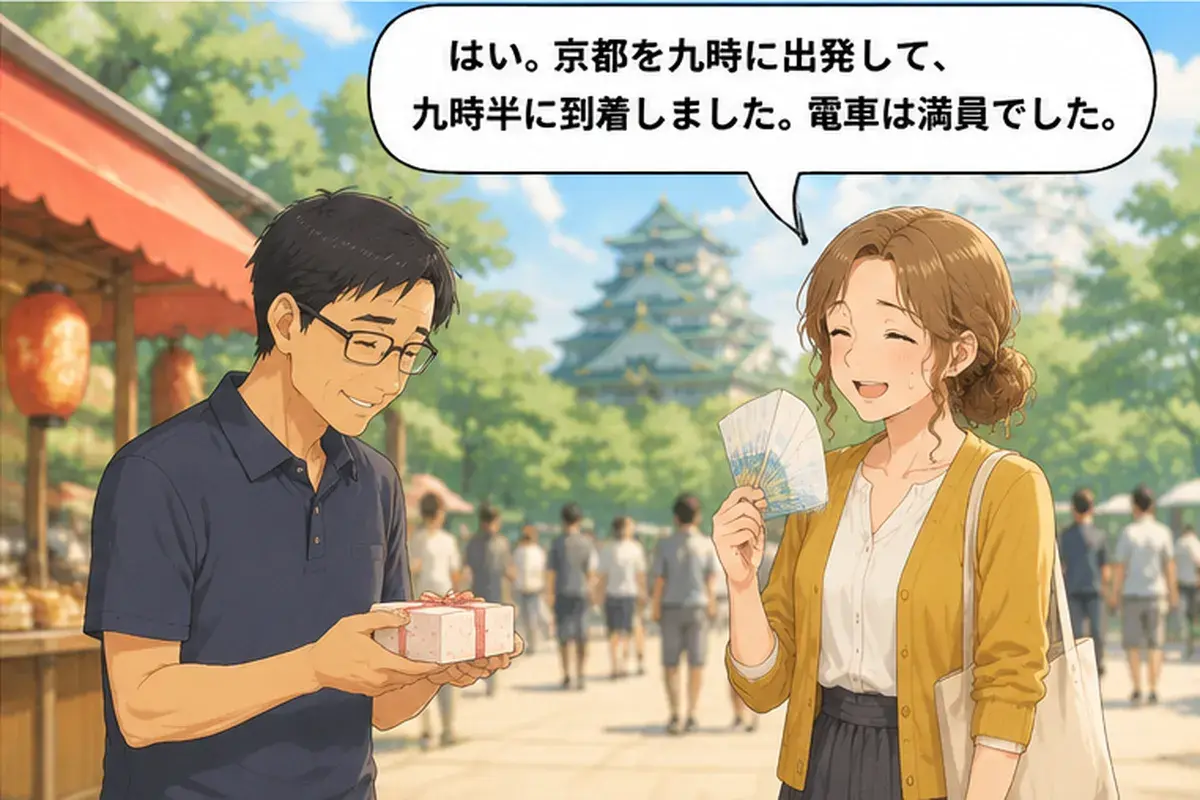
- アンナ
はい。京都を九時に出発して、九時半に到着しました。電車は満員でした。
Yes. We left Kyoto at nine and arrived at 9:30. The train was packed.
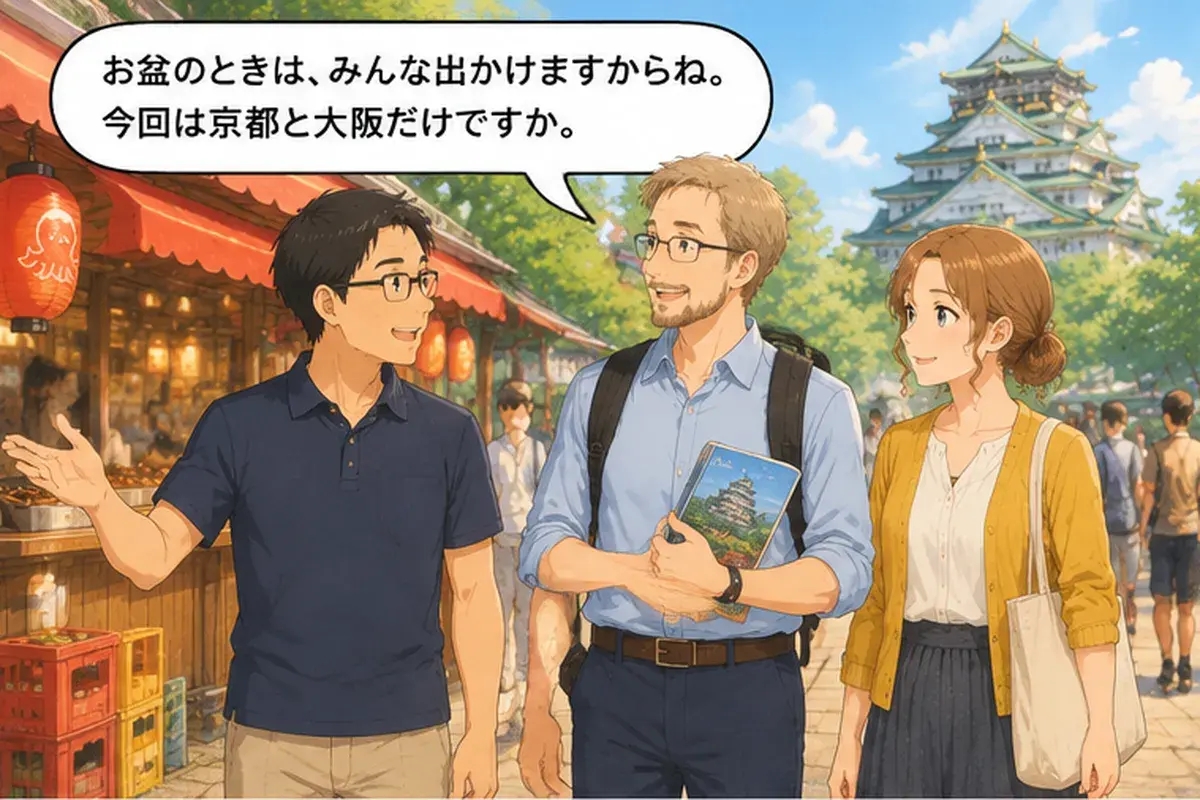
- 息子
お盆のときは、みんな出かけますからね。今回は京都と大阪だけですか。
During Obon, everybody goes somewhere, you know. Is it just Kyoto and Osaka this time?
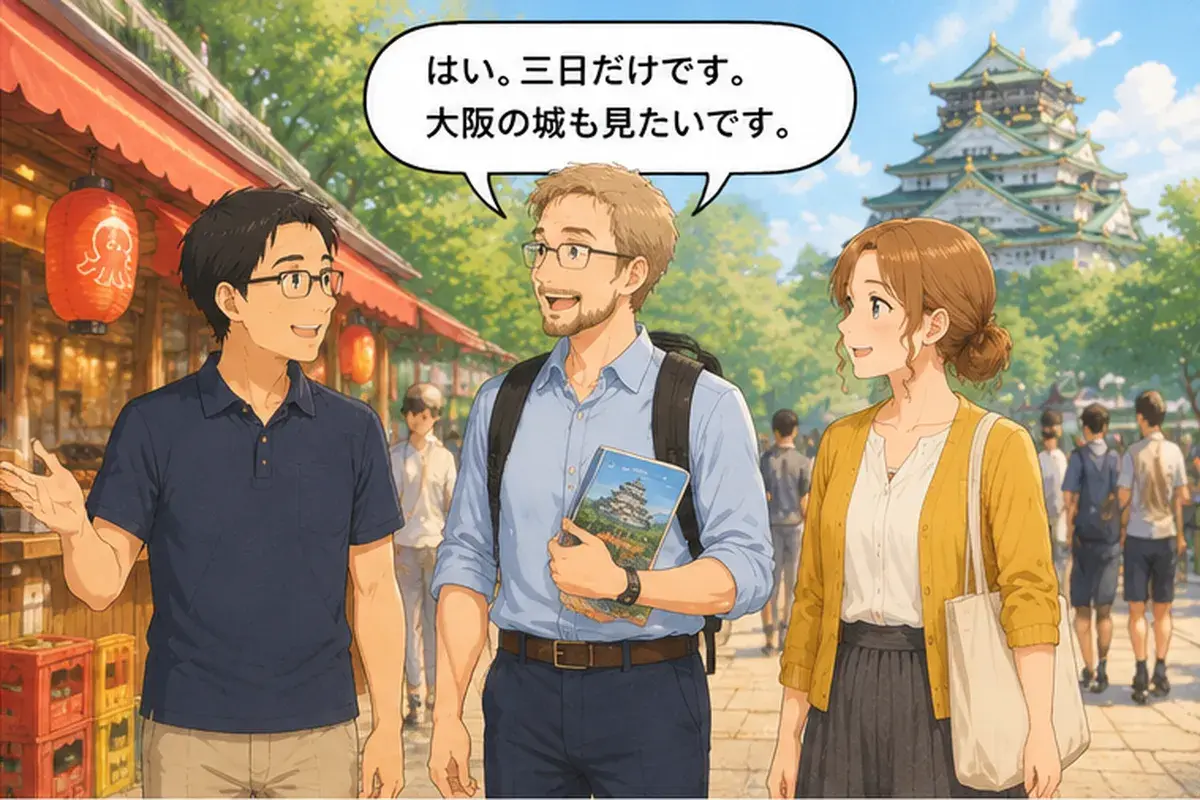
- マルク
はい。三日だけです。大阪の城も見たいです。
Yes. Just three days. I want to see Osaka Castle too.
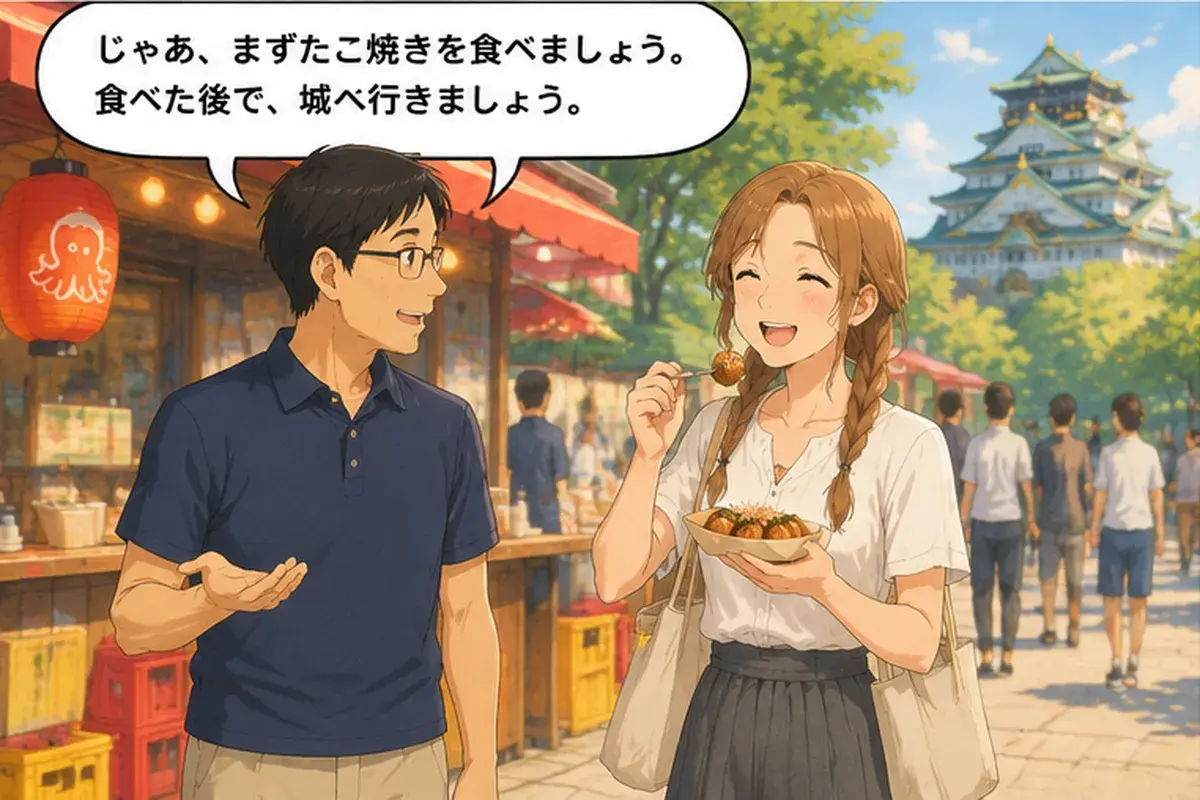
- 息子
じゃあ、まずたこ焼きを食べましょう。食べた後で、城へ行きましょう。
Then first, let's eat takoyaki. After we eat, let's go to the castle.
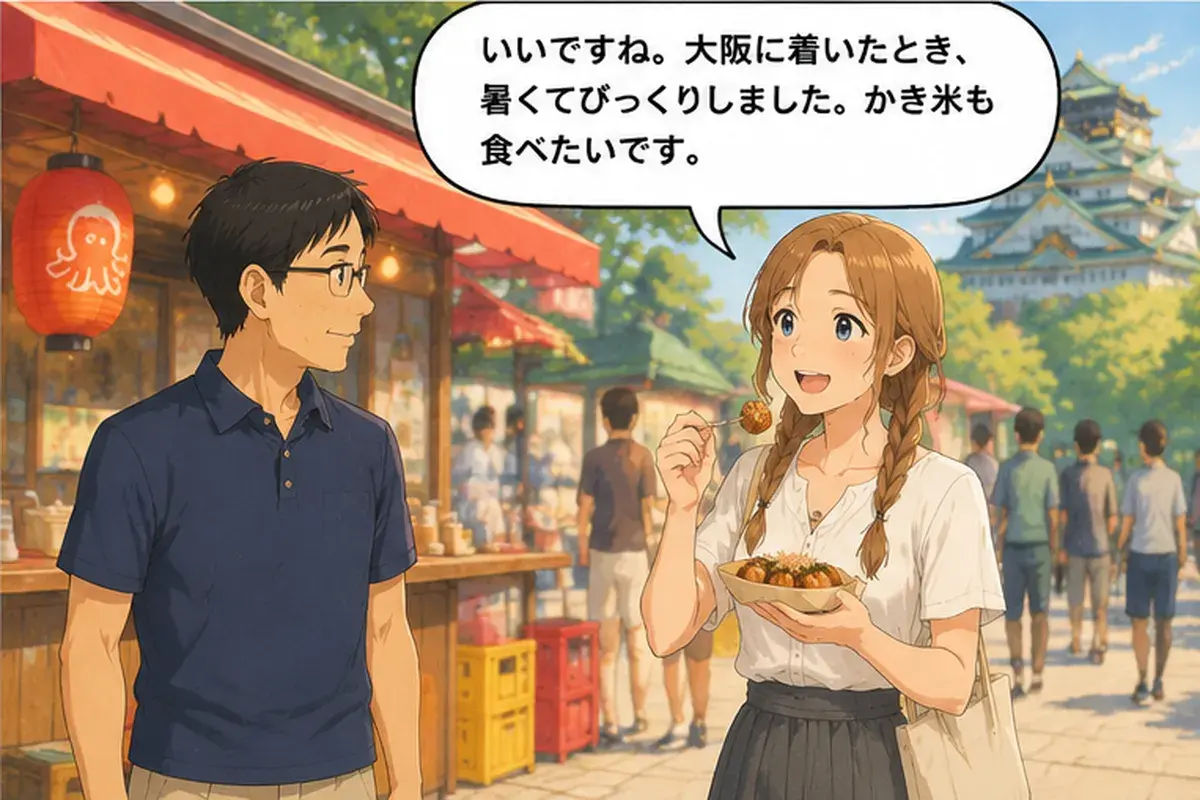
- ソーニャ
いいですね。大阪に着いたとき、暑くてびっくりしました。かき氷も食べたいです。
Sounds good. When we got to Osaka, I was shocked by the heat. I want to eat shaved ice too.
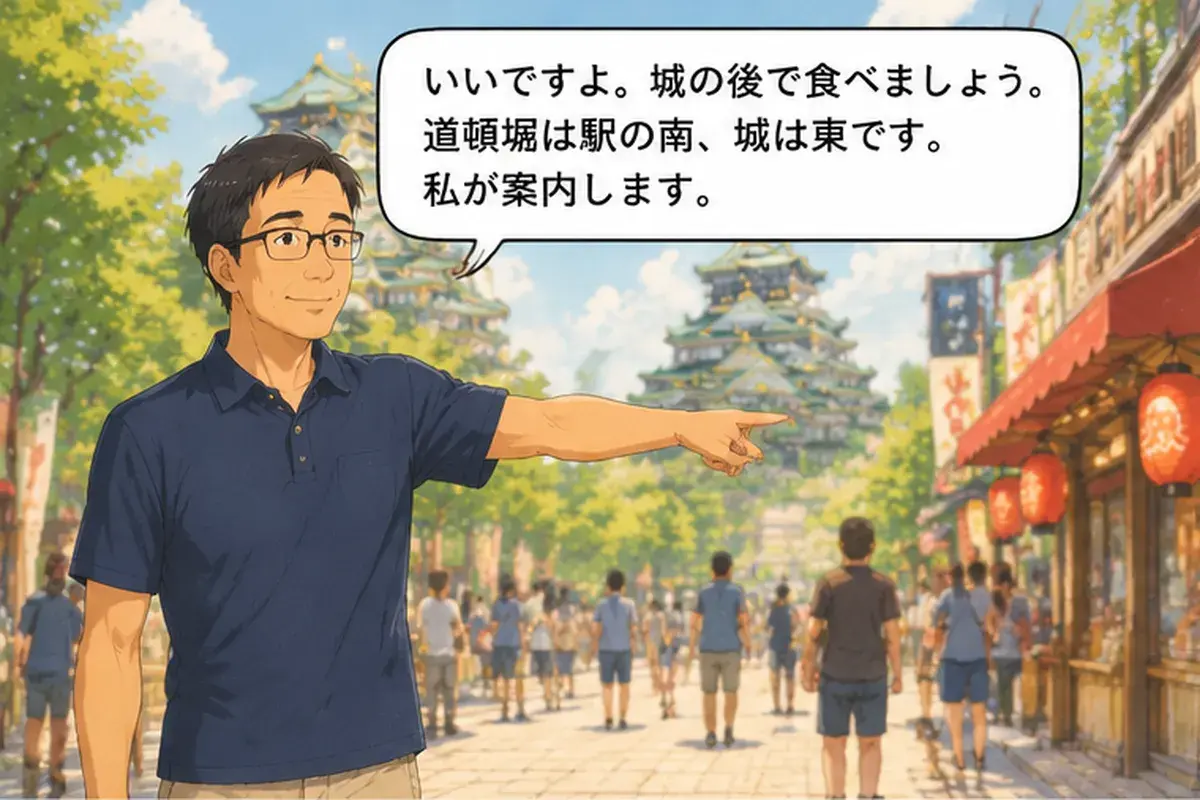
- 息子
いいですよ。城の後で食べましょう。道頓堀は駅の南、城は東です。私が案内します。
Sure. Let's eat it after the castle. Dotonbori is south of the station, and the castle is to the east. I'll show you the way.
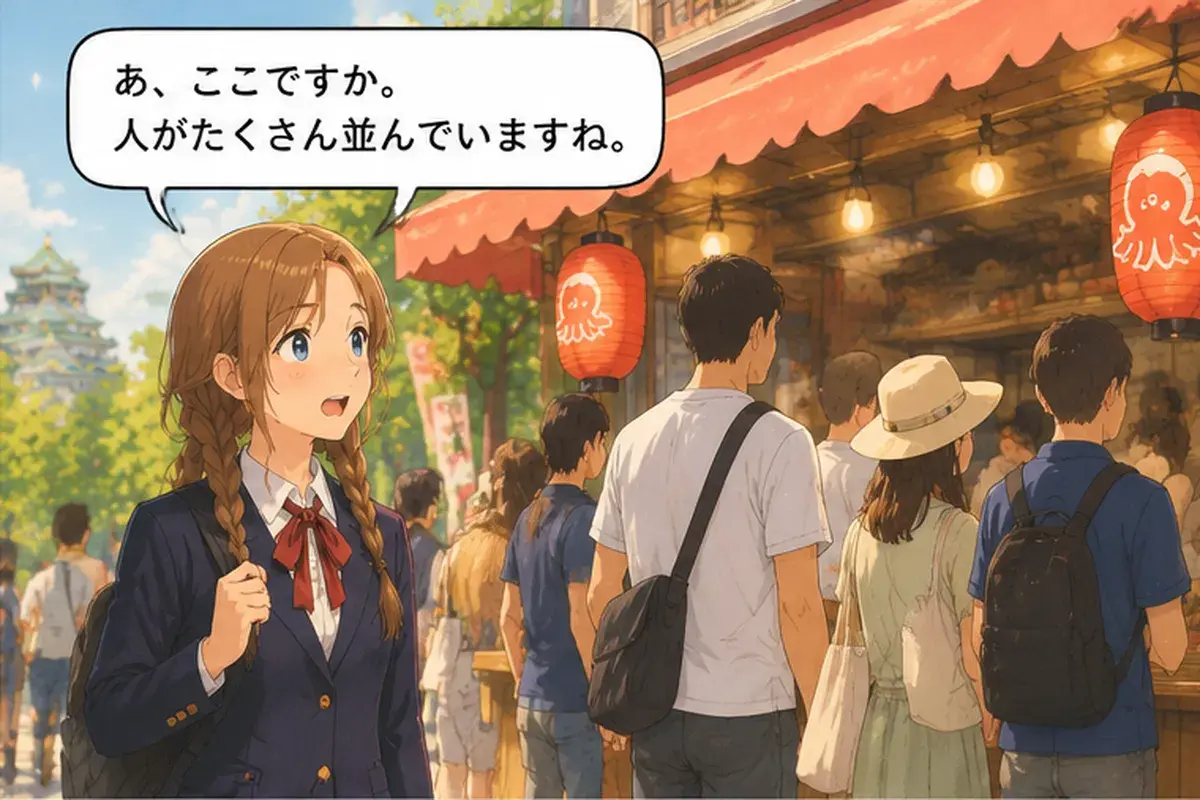
- ソーニャ
あ、ここですか。人がたくさん並んでいますね。
Oh, is it here? There are lots of people lined up.
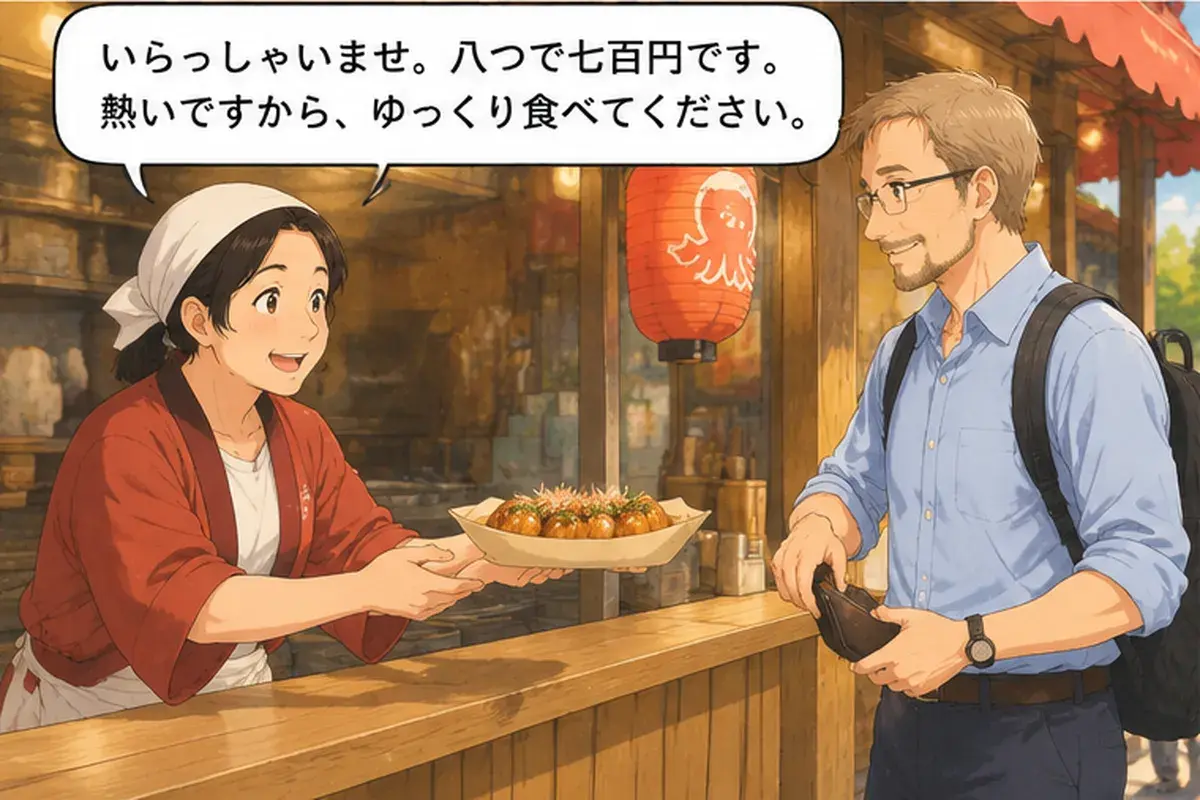
- 店員
いらっしゃいませ。八つで七百円です。熱いですから、ゆっくり食べてください。
Welcome! Eight pieces are 700 yen. They're hot, so please eat them slowly.
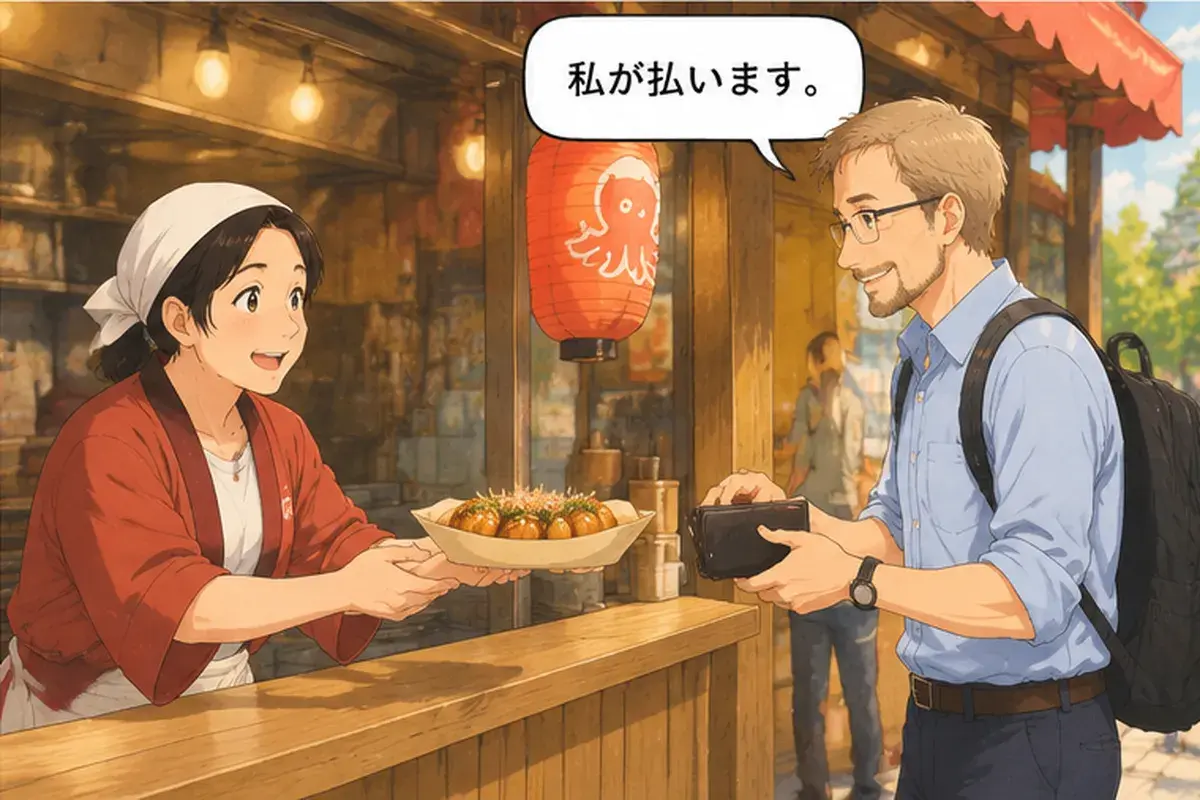
- マルク
私が払います。
I'll pay.
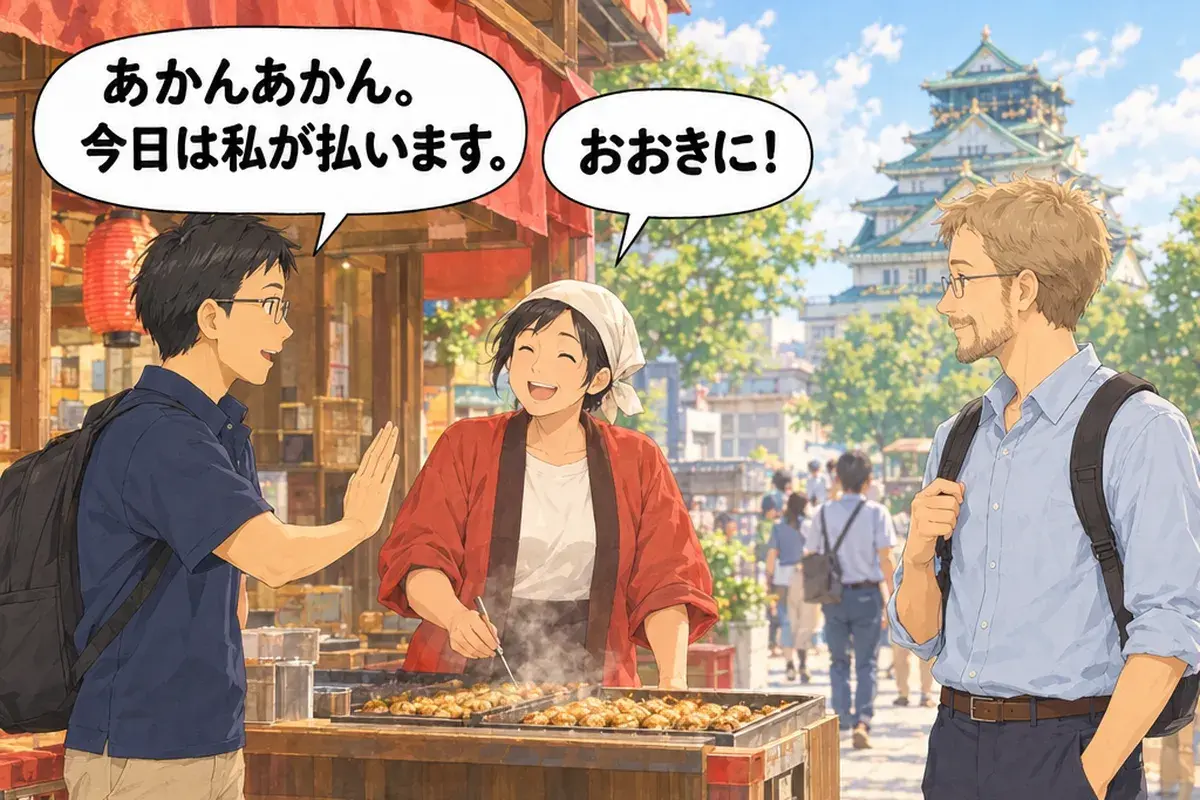
- 息子
あかんあかん。今日は私が払います。
No, no. Today I'm paying.
- 店員
おおきに!
Thanks!
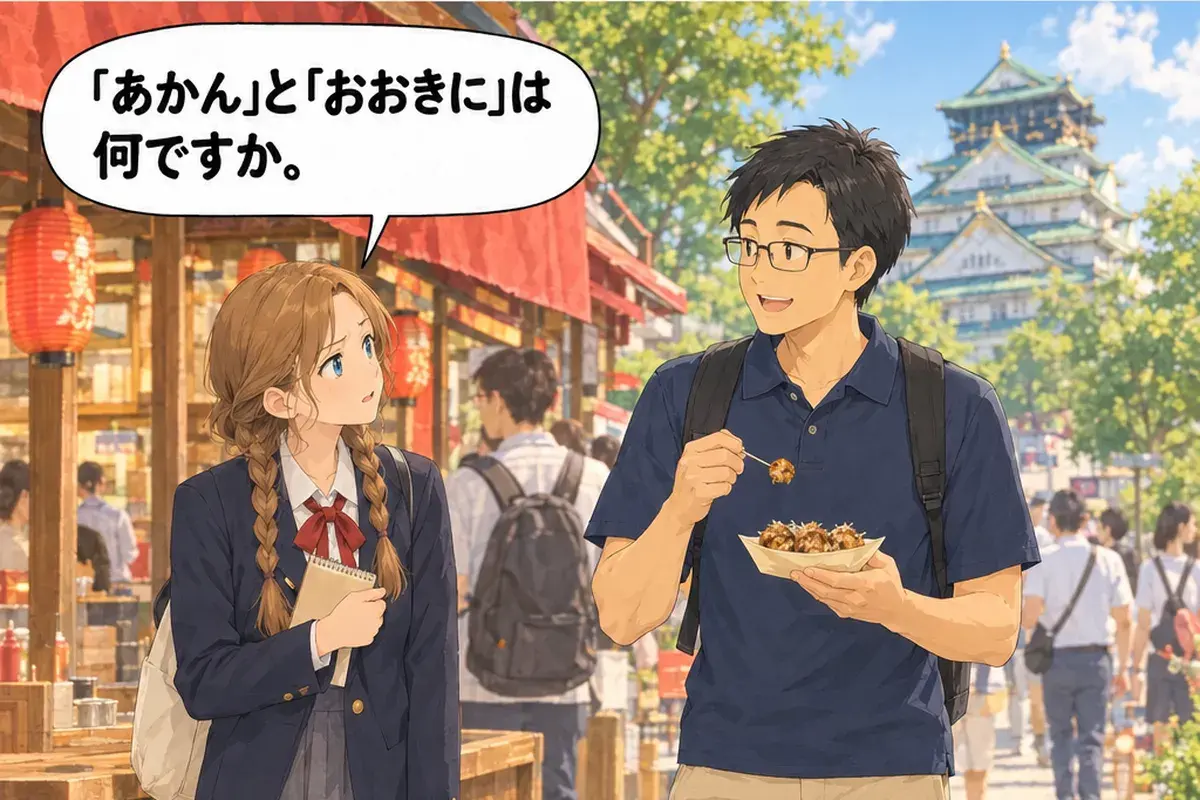
- ソーニャ
「あかん」と「おおきに」は何ですか。
What do "akan" and "ookini" mean?
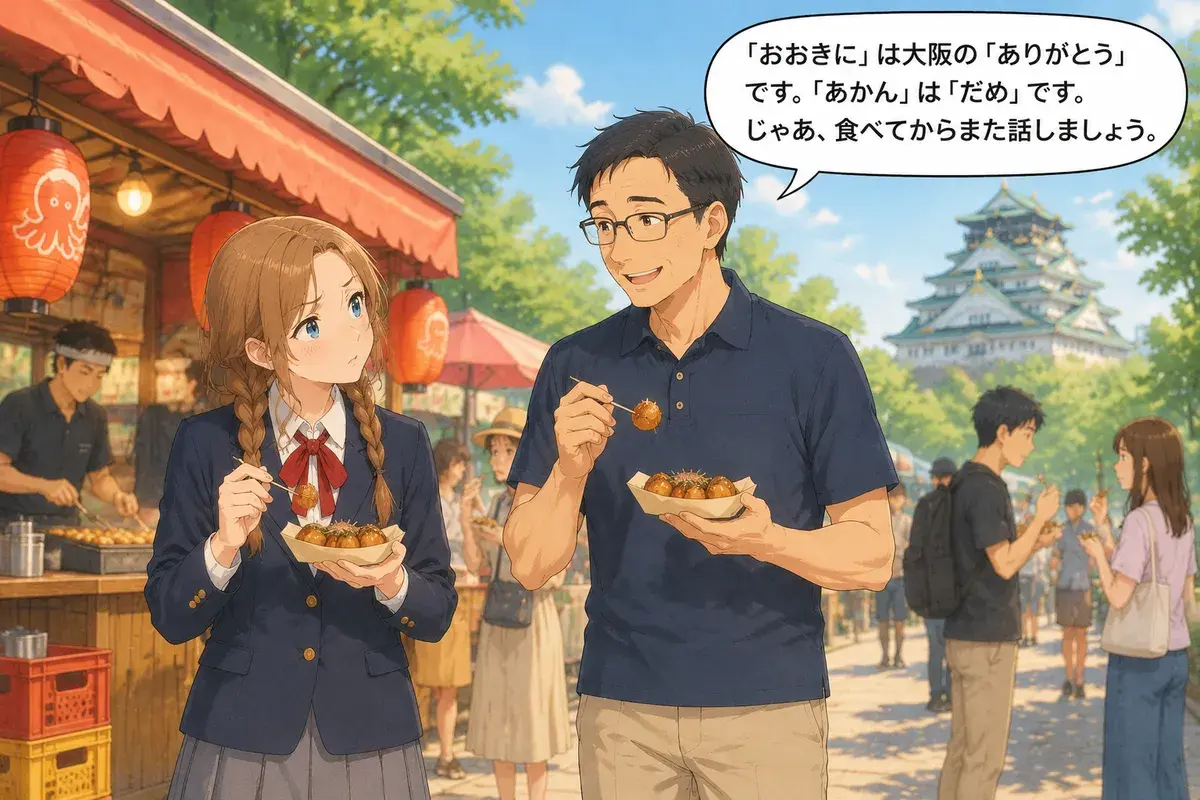
- 息子
「おおきに」は大阪の「ありがとう」です。「あかん」は「だめ」です。じゃあ、食べてからまた話しましょう。
"Ookini" is the Osaka way of saying "thank you." "Akan" means "no good." Well then, let's eat first and talk some more after that.
Grammar for this text
西 の 出口 で 待ち合わせ でした ね— We were supposed to meet at the west exit, weren't we?待ち合わせis an agreement to meet at a set place.でしたmeans "it was (arranged)", andねasks for agreement. A direction +の+ a word works like this:西 の 出口is "the west exit".お盆 の とき は、 みんな 出かけます から ね— During Obon everybody goes somewhere, you know.の ときmeans "during Obon".出かけますmeans to leave home and go somewhere. Hereからmeans "because".大阪 に 着いた とき、 暑くて びっくりしました— When we got to Osaka, I was shocked by the heat.着いた ときis the ta-form: "when we arrived", so we were already there.暑くてmeans "hot, and...".食べた 後で、 城 へ 行きましょう— After we eat, let's go to the castle. This is〜た 後で.城 の 後で 食べましょう— Let's eat after the castle. After a noun you needの.食べて から また 話しましょう— Let's eat first, and then talk some more.〜て からmeans first this, and only then that.私 が 案内します— I'll show you the way.案内するmeans to guide someone and show them around. It is a common way to offer help.あかん あかん— No, no. This is the Kansai dialect (Osaka, Kyoto).あかんmeans "no good, don't". It is good to recognize it, but you don't need to say it yourself.おおきに— Thanks. This is Kansai dialect too, and means the same asありがとう.
Words and grammar of the unit: Tell the story of a trip in order.
Learn the words from the texts with flashcards
In the app, you can tap any word in a text to see its translation, forms and examples, and new words stick with flashcards. 15 minutes a day.
Start for freeEverything is open for free. No card needed to sign up.