

Japanese story with translation · A2 · 16 lines
傘を出したとき、マルクがいませんでした When I took out the umbrella, Mark wasn't there
Comic · 15 panels

今年のお盆、家族三人で京都へ行きました。
This year at Obon, the three of us in the family went to Kyoto.
朝早く東京を出発して、九時に京都に到着しました。
We left Tokyo early in the morning and arrived in Kyoto at nine.
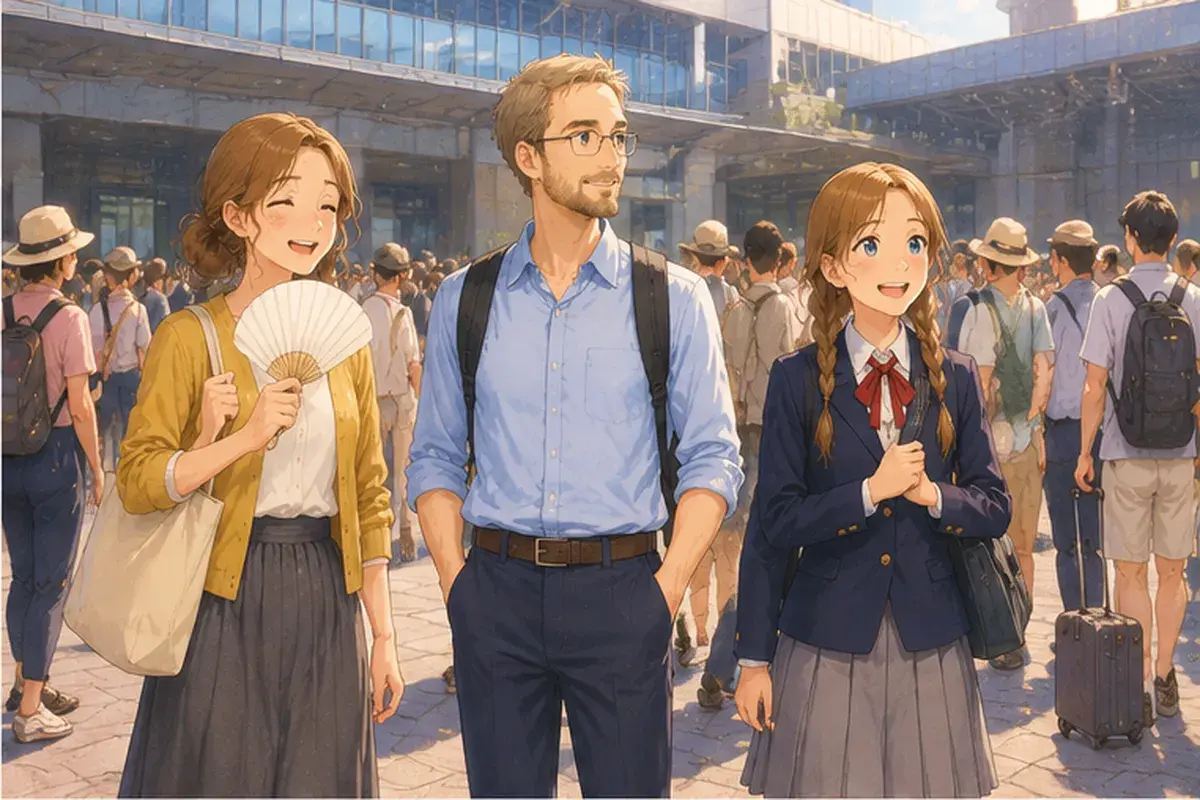
お盆のときは、駅の前も混んでいて、観光客がたくさんいました。
During Obon, it was crowded in front of the station too, and there were lots of tourists.

まずバスで清水寺へ向かいました。バスを待っているとき、暑くて大変でした。
First we headed for Kiyomizu-dera by bus. While we were waiting for the bus, it was hot and exhausting.
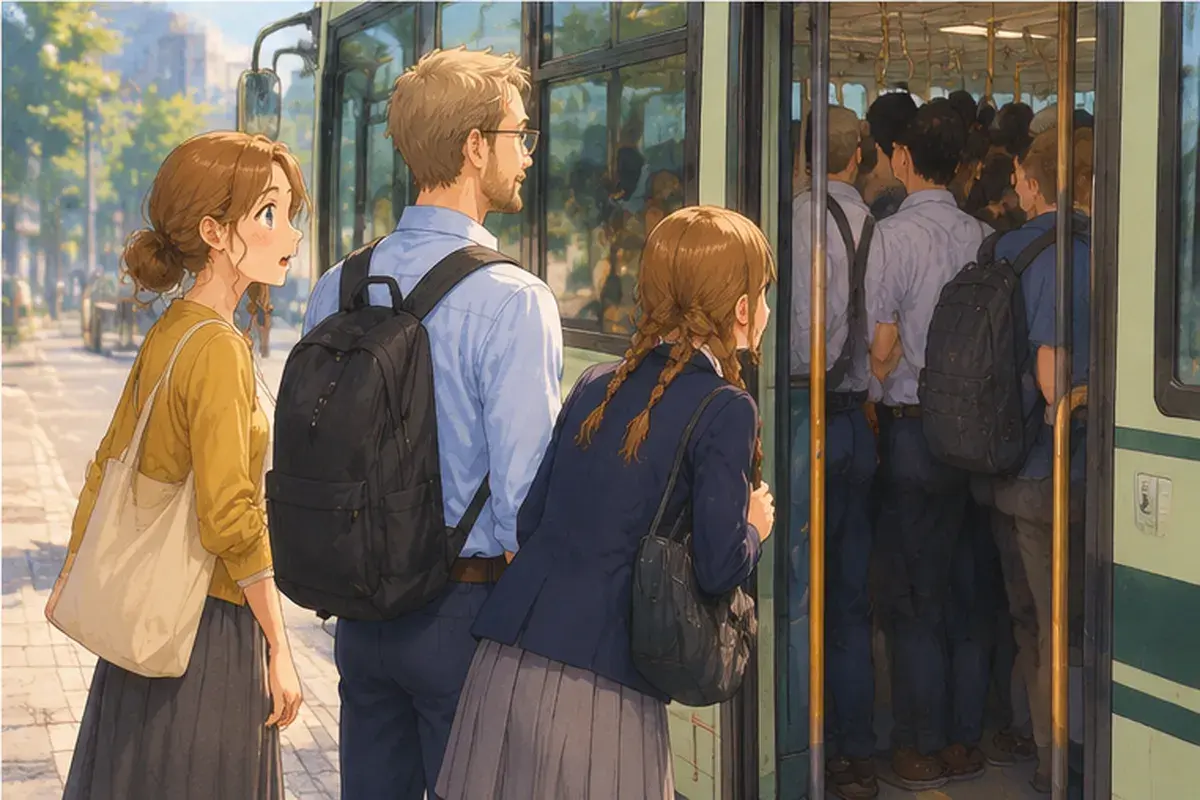
バスは二十分遅れました。やっと来たときは、もう満員でした。
The bus was twenty minutes late. When it finally came, it was already full.
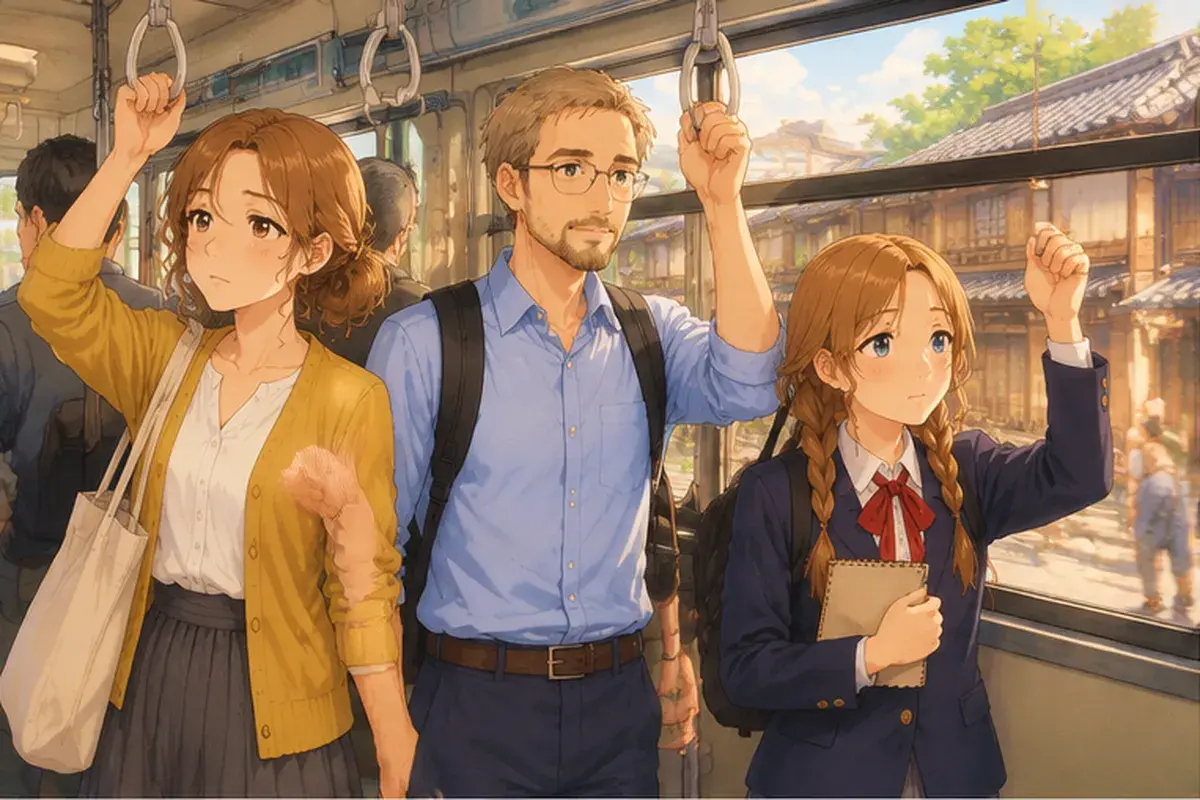
道も渋滞していて、バスは古い町をゆっくり通りました。
The roads were jammed too, and the bus passed slowly through the old town.

清水寺までの坂は長くて、人がとても多かったです。
The slope up to Kiyomizu-dera was long, and there were a lot of people.

大きい門の前で写真を撮ってから、階段を登りました。上からの景色はとてもきれいでした。
We took pictures in front of the big gate, and only then climbed the stairs. The view from the top was very beautiful.

その後、坂を戻って、途中の店に寄りました。そこで昼ご飯を食べました。
After that, we went back down the slope and stopped at a shop on the way. We had lunch there.

昼ご飯を食べた後で、ソーニャはゆいさんのお土産を買いました。
After we ate lunch, Sonya bought a souvenir for Yui-san.

店を出たとき、急に雨が降りました。傘は私の一本だけでした。
When we left the shop, it suddenly started to rain. The only umbrella was mine.

私が傘を出したとき、マルクがいませんでした。
When I took out my umbrella, Mark wasn't there.

マルクは電話に出ませんでした。三十分探しましたが、どこにも見つかりませんでした。
Mark didn't answer his phone. We looked for him for thirty minutes, but he was nowhere to be found.

やっとソーニャが坂の下の店でマルクを見つけました。マルクはそこで新しい傘を二本買っていました。
Finally Sonya found Mark at a shop at the bottom of the slope. He had bought two new umbrellas there.

結局もうバスには乗りませんでした。三本の傘で駅まで歩きました。
In the end, we didn't take the bus again. We walked to the station under three umbrellas.

最初は心配しましたが、最後はみんなで笑いました。
At first I was worried, but finally we all laughed together.
Grammar for this text
バス を 待って いる とき— while we were waiting for the bus. Here it is待って いる+とき: the action was still going on. The tense of the whole sentence comes at the end (でした).やっと 来た とき— when it finally came. Here the verb is in the ta-form: it had already come. The difference is whether the action was still going on or already finished.お盆 の とき— during Obon. After a noun you needの.大きい 門 の 前 で 写真 を 撮って から、 階段 を 登りました— We took pictures in front of the big gate, and only then climbed the stairs.〜て からmeans one thing first, and only then the next.昼ご飯 を 食べた 後で、 ソーニャ は ゆい さん の お土産 を 買いました— After we ate lunch, Sonya bought a souvenir for Yui-san. With〜た 後で("after"), the verb before後でis in the ta-form. The souvenir is the one Yui-san asked for in her messages.傘 を 出した とき、 マルク が いませんでした— When I took out my umbrella, Mark wasn't there. With〜た とき, you mean that exact moment: when I took it out, he was already gone.どこ に も 見つかりませんでした— He was nowhere to be found.見つかるmeans "to turn up" by itself: Mark didn't turn up.マルク を 見つけました— Sonya found Mark. When someone finds something, you use見つける.傘 は 私 の 一本 だけ でした— The only umbrella was mine. Long, thin things (an umbrella, a pen) are counted with本.一本is read ippon, and三本is read sanbon.マルク は 電話 に 出ませんでした— Mark didn't answer the phone.電話 に 出るmeans "to answer a call"; literally it is "to come out to the phone". We called, and he didn't pick up.
Words and grammar of the unit: Tell the story of a trip in order.
Learn the words from the texts with flashcards
In the app, you can tap any word in a text to see its translation, forms and examples, and new words stick with flashcards. 15 minutes a day.
Start for freeEverything is open for free. No card needed to sign up.