
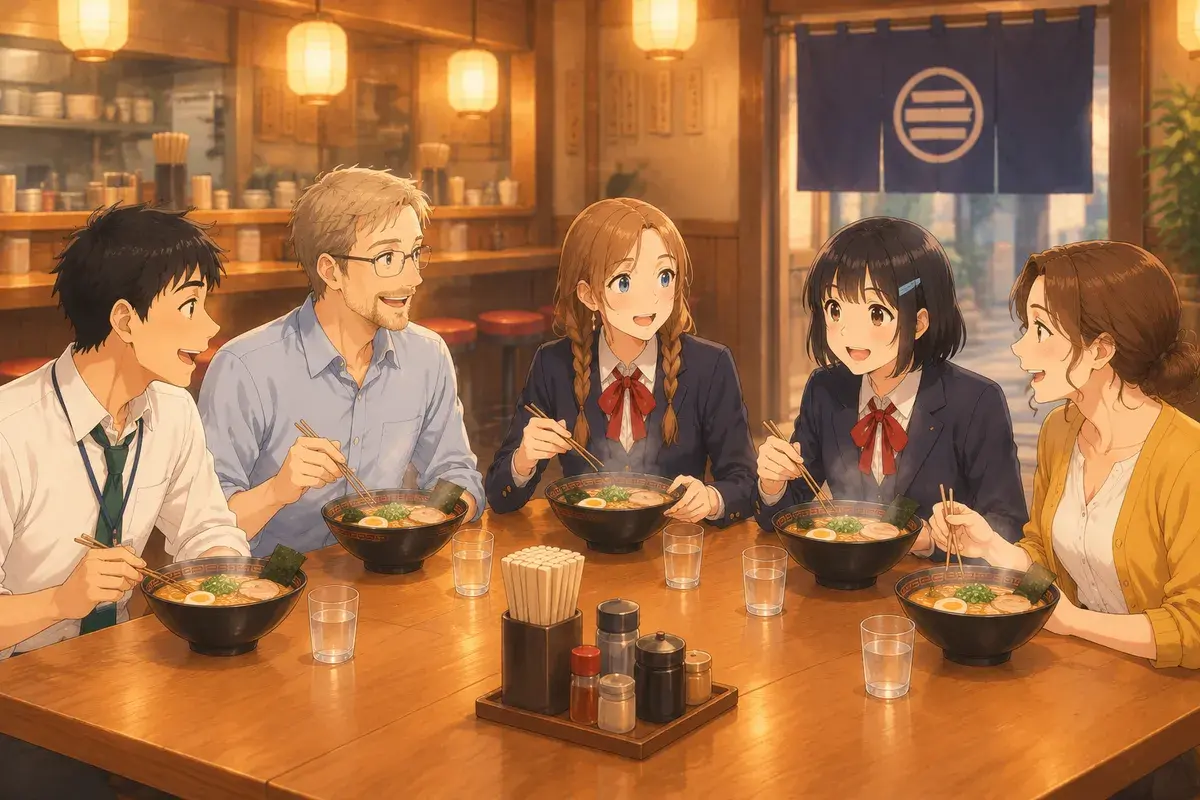
Japanese dialogue with translation · A2 · 13 lines
僕の秘密の店ですよ It's my secret place
Comic · 12 panels
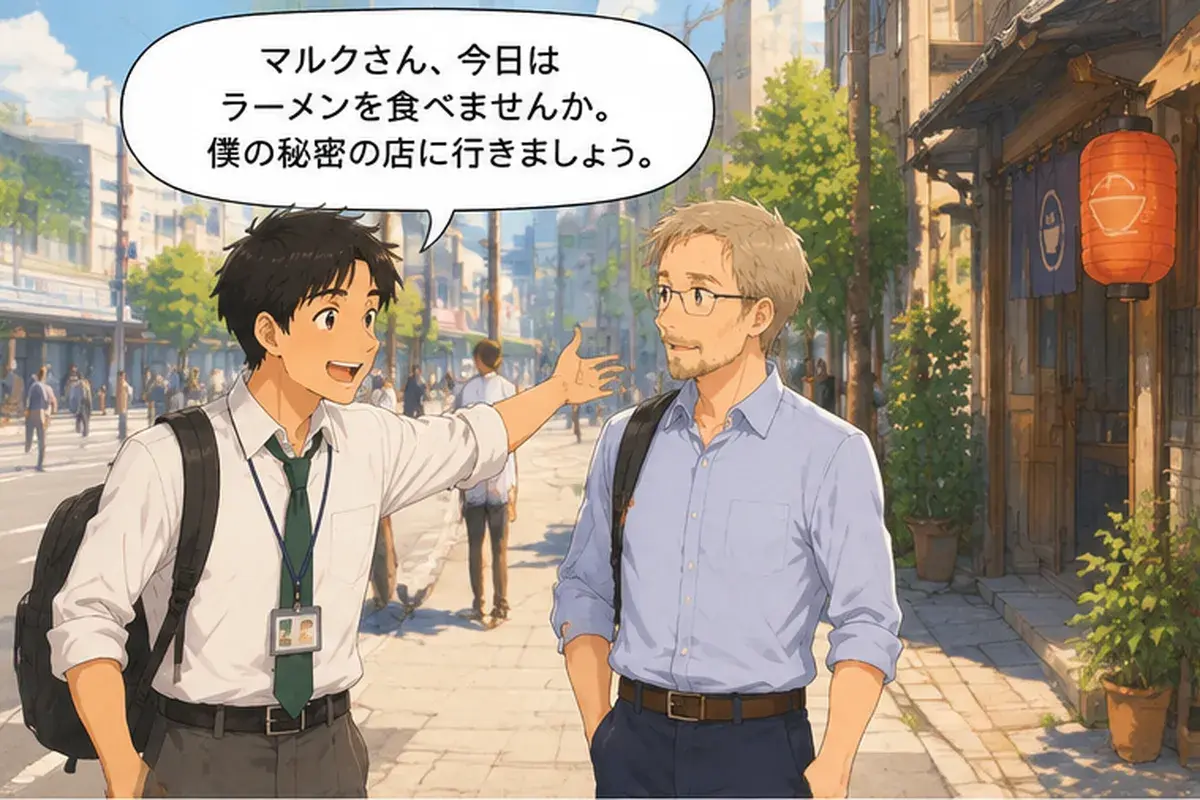
- けん
マルクさん、今日はラーメンを食べませんか。僕の秘密の店に行きましょう。
Mark-san, would you like to eat ramen today? Let's go to my secret place.
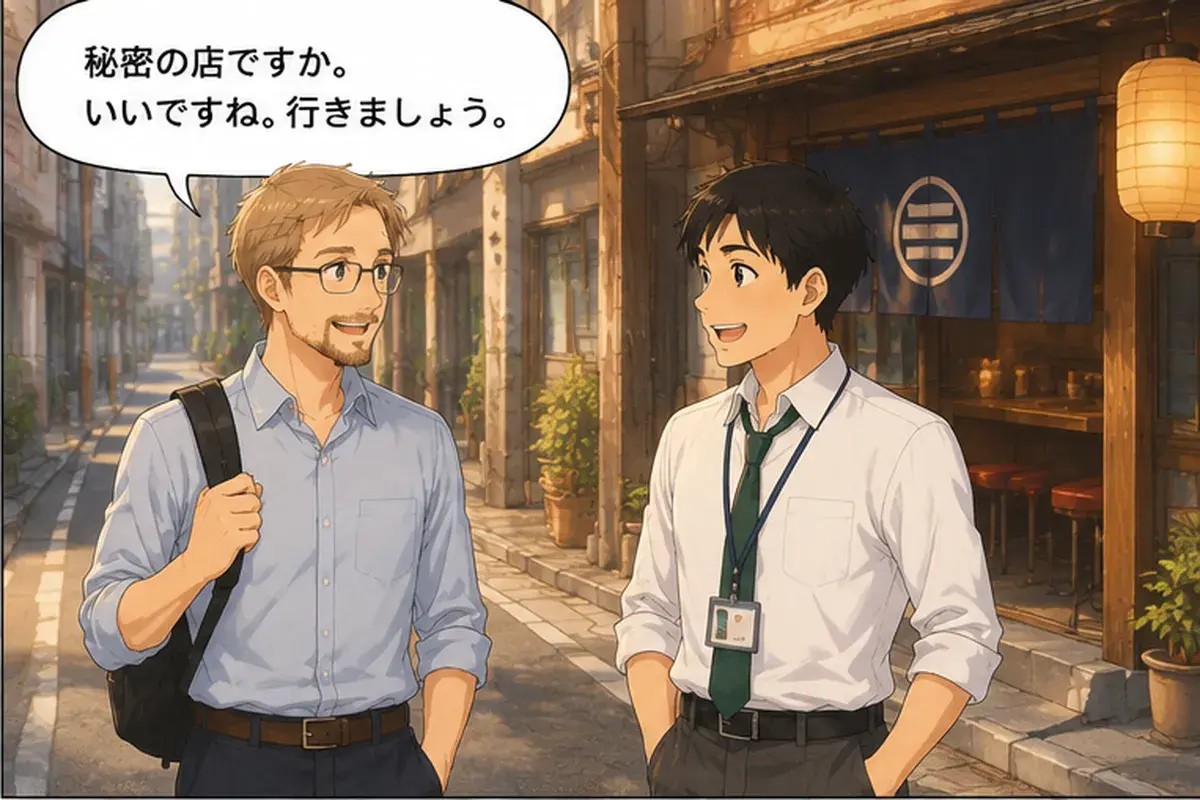
- マルク
秘密の店ですか。いいですね。行きましょう。
A secret place? That sounds good. Let's go.
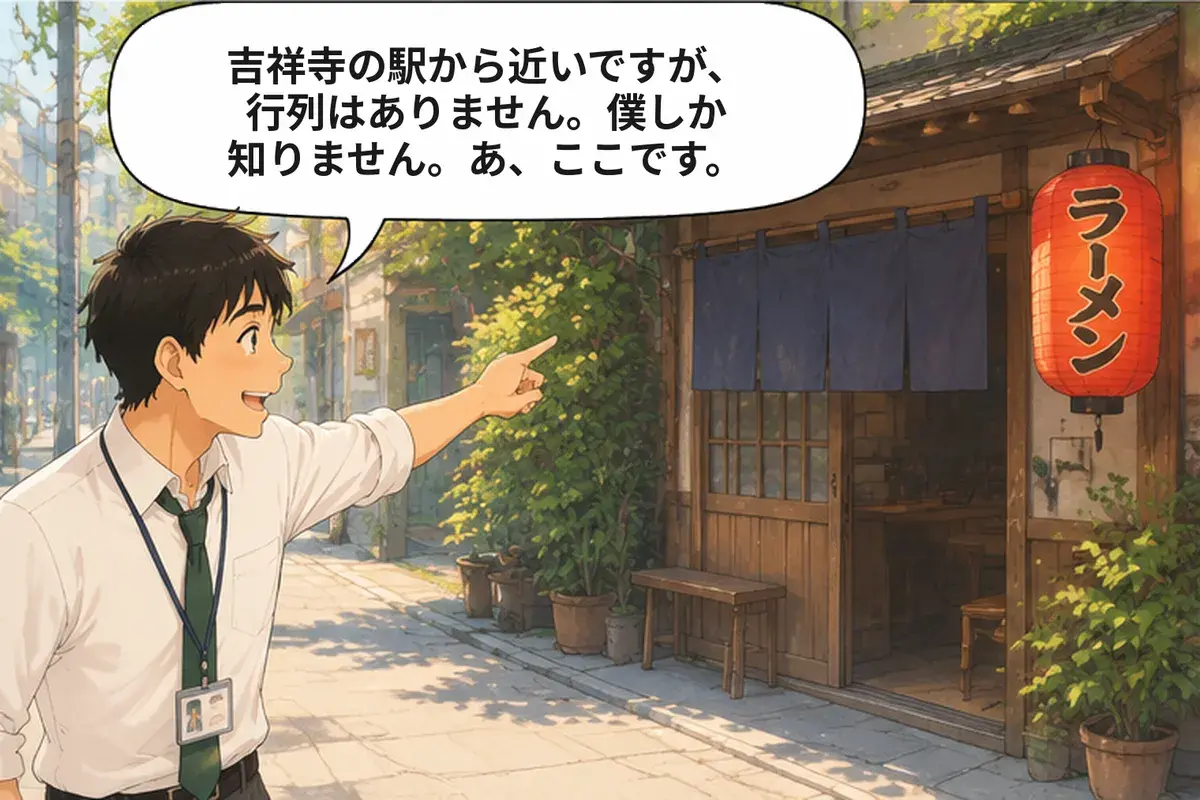
- けん
吉祥寺の駅から近いですが、行列はありません。僕しか知りません。あ、ここです。
It's close to Kichijoji Station, but there's no line. Only I know it. Oh, here it is.
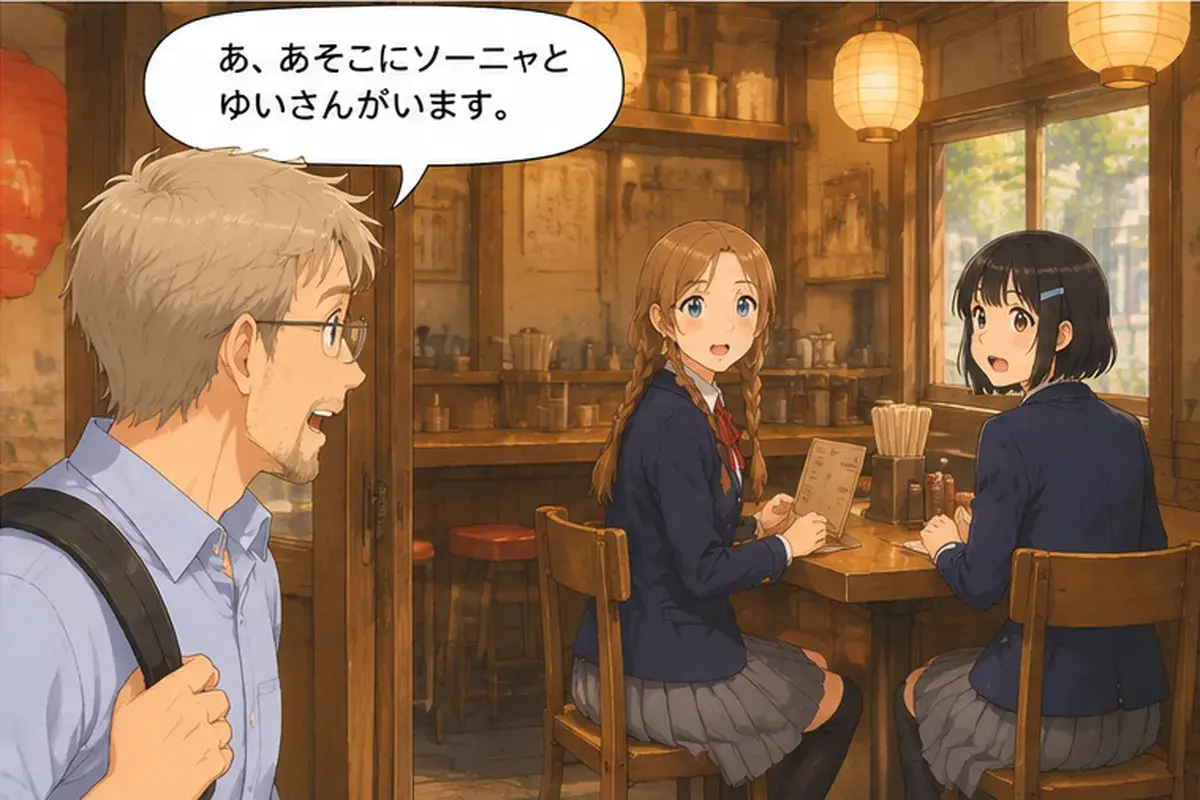
- マルク
あ、あそこにソーニャとゆいさんがいます。
Oh, Sonya and Yui-san are over there.
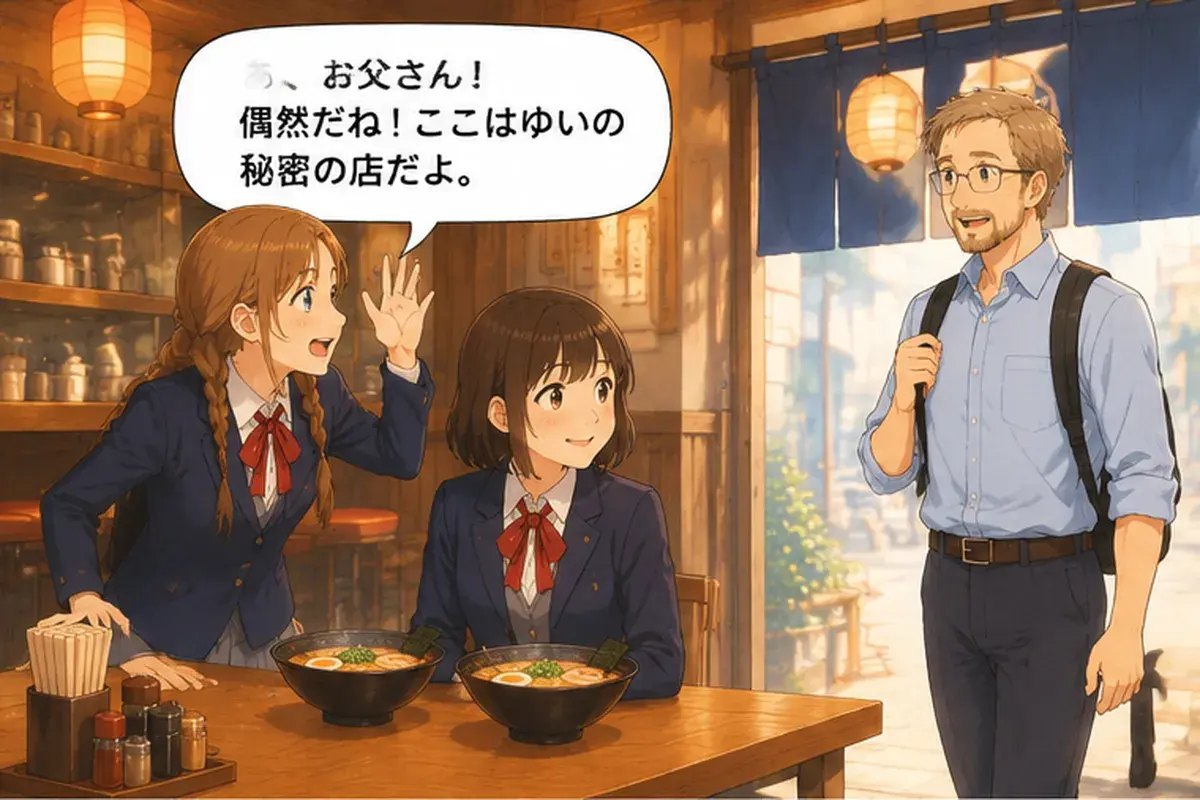
- ソーニャ
あ、お父さん!偶然だね!ここはゆいの秘密の店だよ。
Oh, Dad! What a coincidence! This is Yui's secret place. (casual)
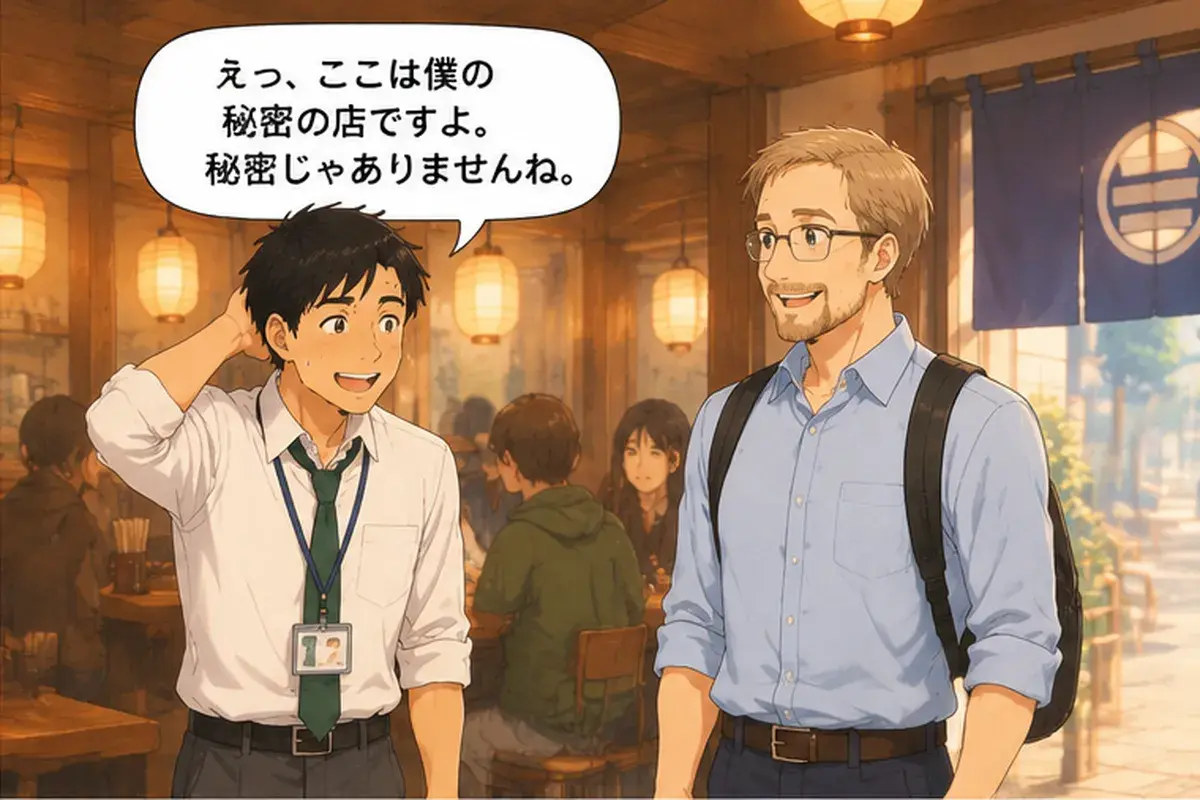
- けん
えっ、ここは僕の秘密の店ですよ。秘密じゃありませんね。
What? This is my secret place. So it isn't a secret, is it?
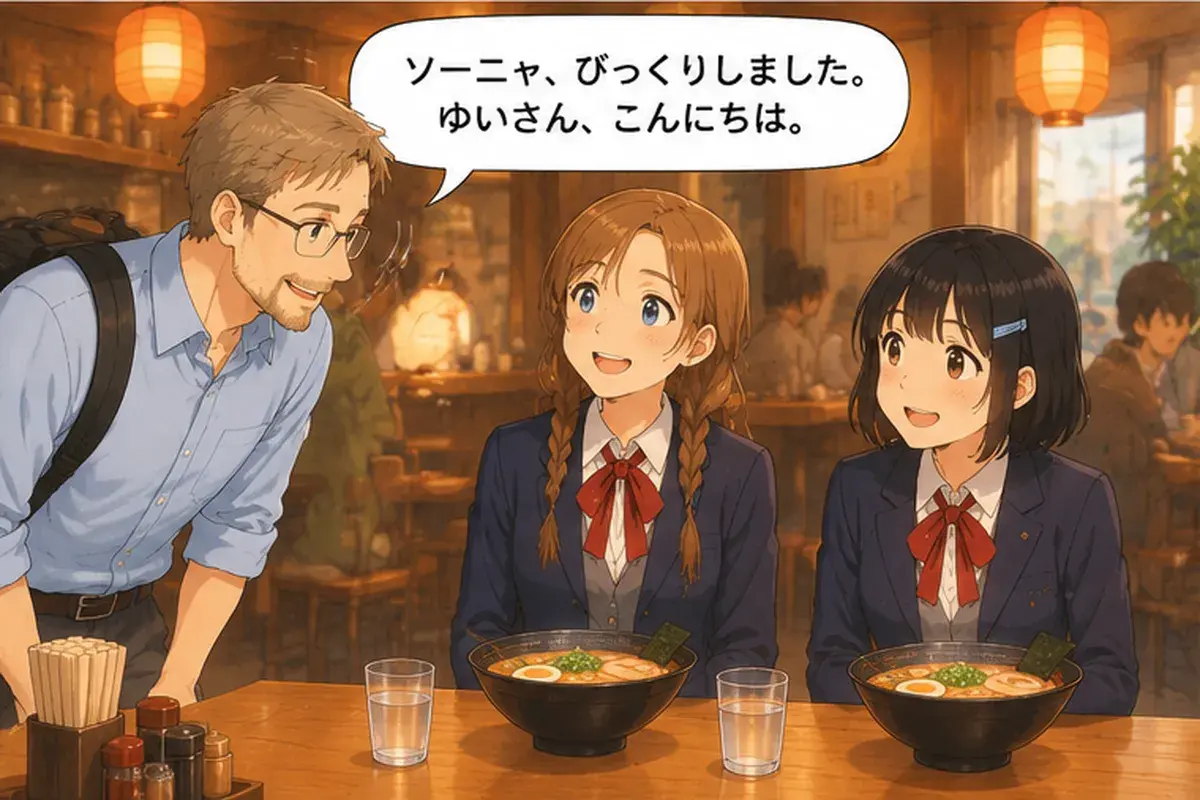
- マルク
ソーニャ、びっくりしました。ゆいさん、こんにちは。
Sonya, I was surprised. Yui-san, hello.
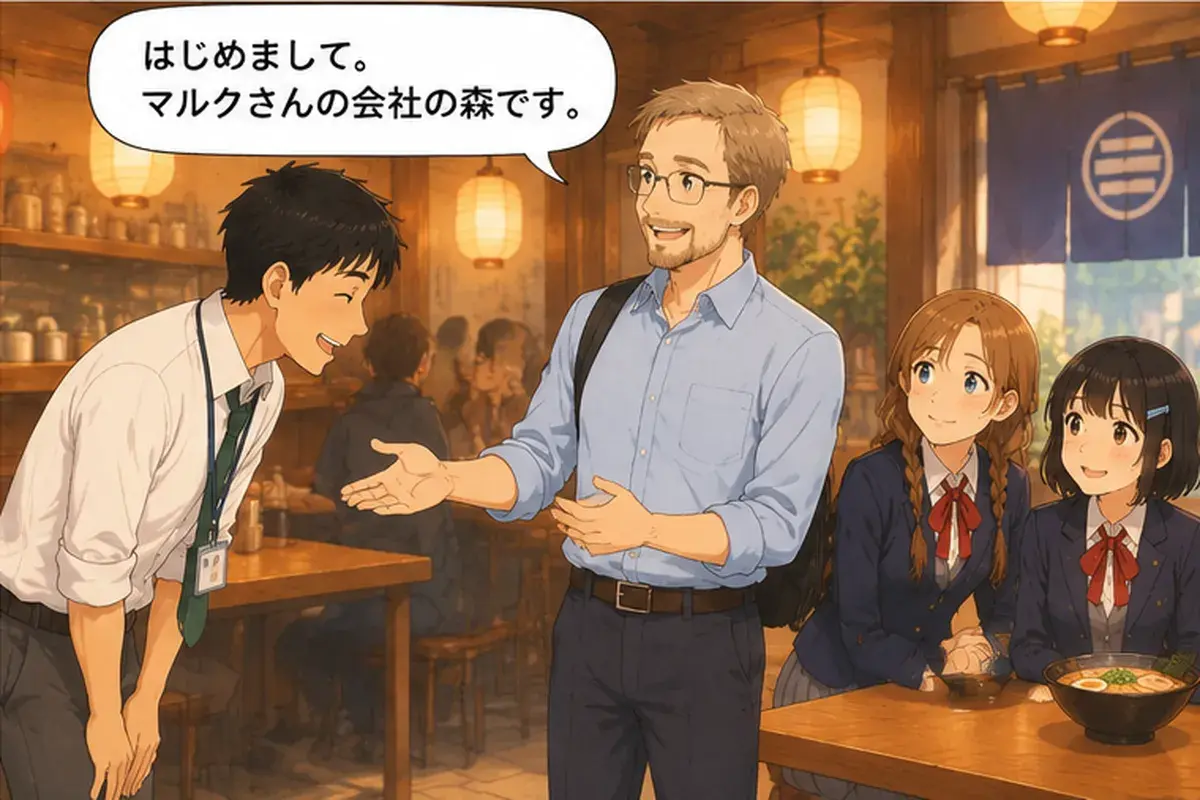
- けん
はじめまして。マルクさんの会社の森です。
Nice to meet you. I'm Mori, from Mark-san's company.
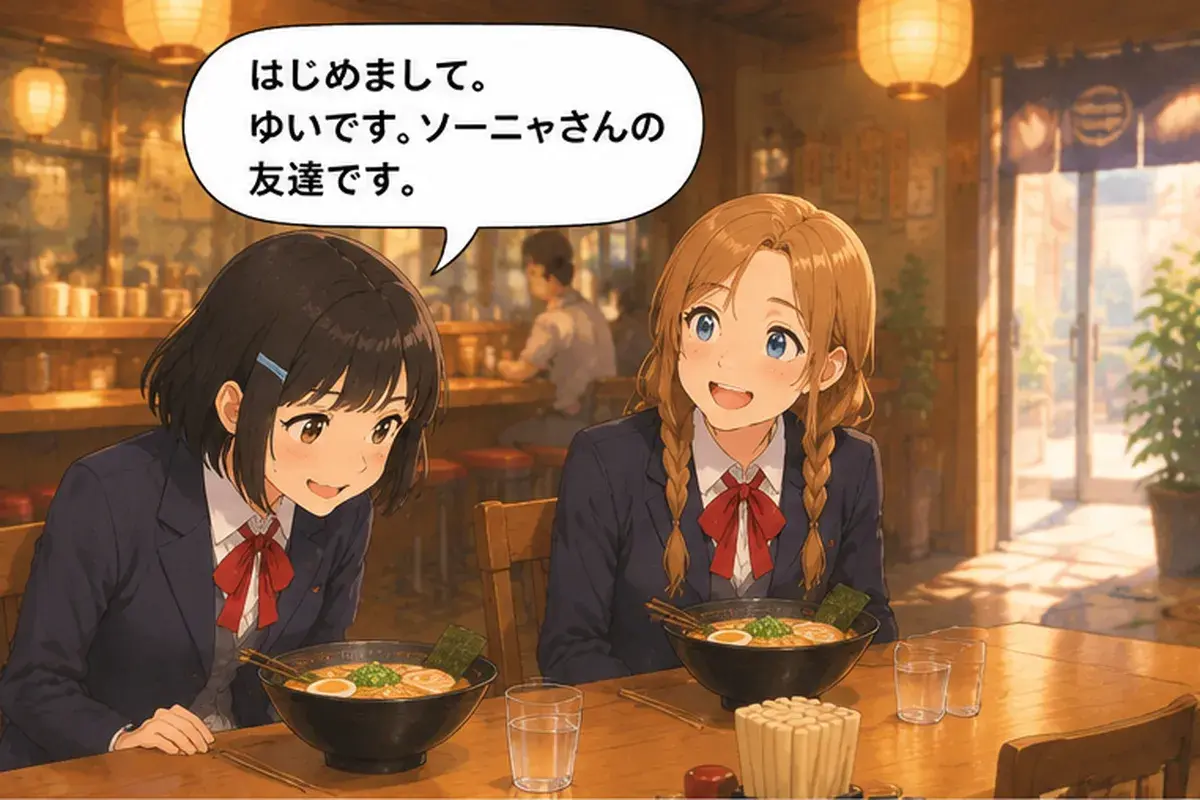
- ゆい
はじめまして。ゆいです。ソーニャさんの友達です。
Nice to meet you. I'm Yui. I'm Sonya-san's friend.
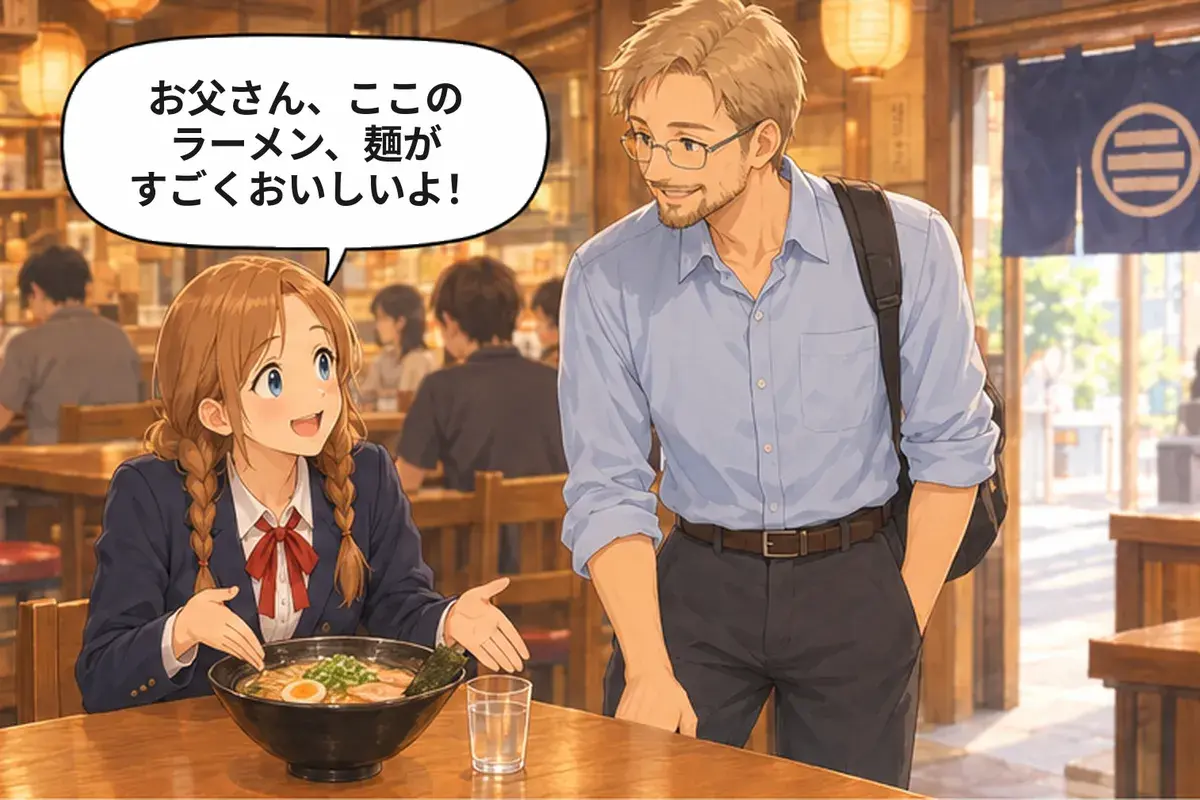
- ソーニャ
お父さん、ここのラーメン、麺がすごくおいしいよ!
Dad, the noodles in the ramen here are really good! (casual)
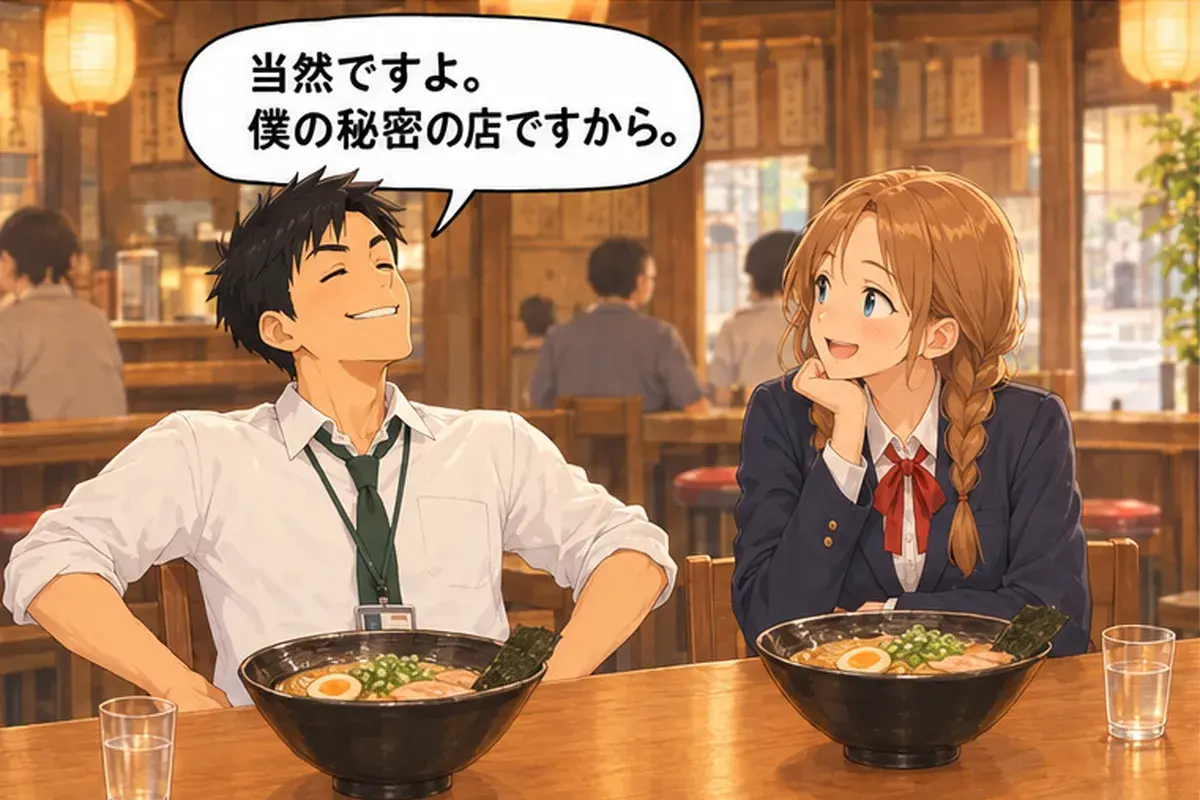
- けん
当然ですよ。僕の秘密の店ですから。
Of course. It's my secret place, after all.
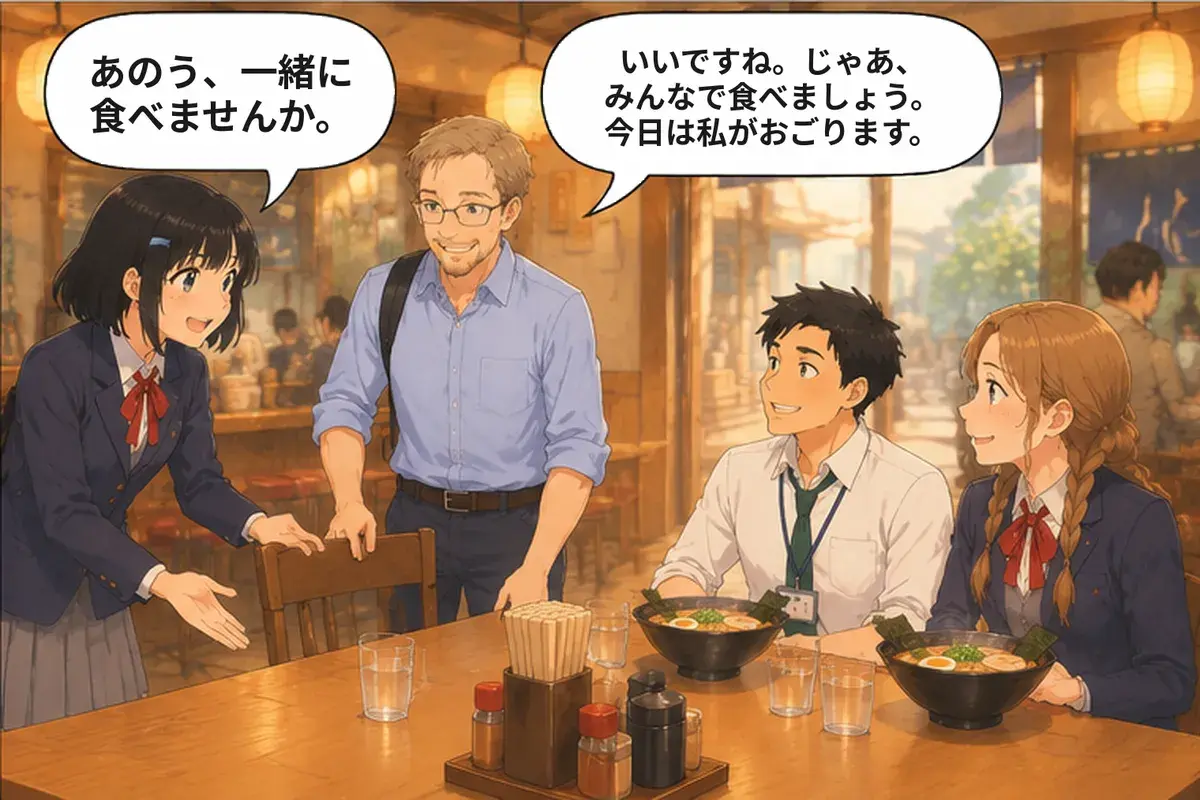
- ゆい
あのう、一緒に食べませんか。
Um, would you like to eat together?
- マルク
いいですね。じゃあ、みんなで食べましょう。今日は私がおごります。
That sounds good. Then let's all eat together. Today it's my treat.
Grammar for this text
僕 の 秘密 の 店— "my secret place".僕means "I": it's how a man or boy talks about himself, and Ken says it even in polite speech. A woman would say私.のlinks the words in a chain: "my secret place".近い です が、行列 は ありません— "It's close, but there's no line."行列is a line of people: a good ramen shop usually has one, but here there's nobody, because the place is secret.がmeans "but".僕 しか 知りません— "Only I know it." This isしか … ない("only", unit 3) in the polite form:知りませんmeans "nobody but me knows".偶然 だ ね— "What a coincidence!" Sonya talks to her father casually:偶然means "by chance, coincidence",だ ねmeans "isn't it".ここ の ラーメン、 麺 が すごく おいしい よis casual too: there is noです, andすごくmeans "very" (fromすごい). First comes the topic,ここ の ラーメン, then what she says about it: "the noodles are really good".秘密 じゃ ありません ね— "So it isn't a secret, is it?" Ken speaks politely, so he saysじゃ ありません; Sonya would say秘密 じゃ ない.ソーニャ、 びっくりしました— "Sonya, I was surprised." This is the polite past: Mark speaks politely even to his daughter.マルク さん の 会社 の 森 です— "I'm Mori, from Mark-san's company." With people he doesn't know, even children, Ken gives his family name and company. His first name isけん, and森is his family name.ゆい です。 ソーニャ さん の 友達 です— "I'm Yui. I'm Sonya-san's friend." With adults Yui speaks politely, even though she talks casually with Sonya.当然 です よ— "Of course." Ken is still proud of his "secret" place.今日 は 私 が おごります— "Today it's my treat."おごるmeans "to treat, to pay for everyone".私 がstresses "I": "I'm the one treating". It's a casual word, but Mark speaks politely with Ken, so he saysおごります.
Words and grammar of the unit: Talk casually with friends.
Learn the words from the texts with flashcards
In the app, you can tap any word in a text to see its translation, forms and examples, and new words stick with flashcards. 15 minutes a day.
Start for freeEverything is open for free. No card needed to sign up.