

Japanese dialogue with translation · A2 · 14 lines
ジブリの映画に行かない Want to go to a Ghibli movie?
Comic · 14 panels
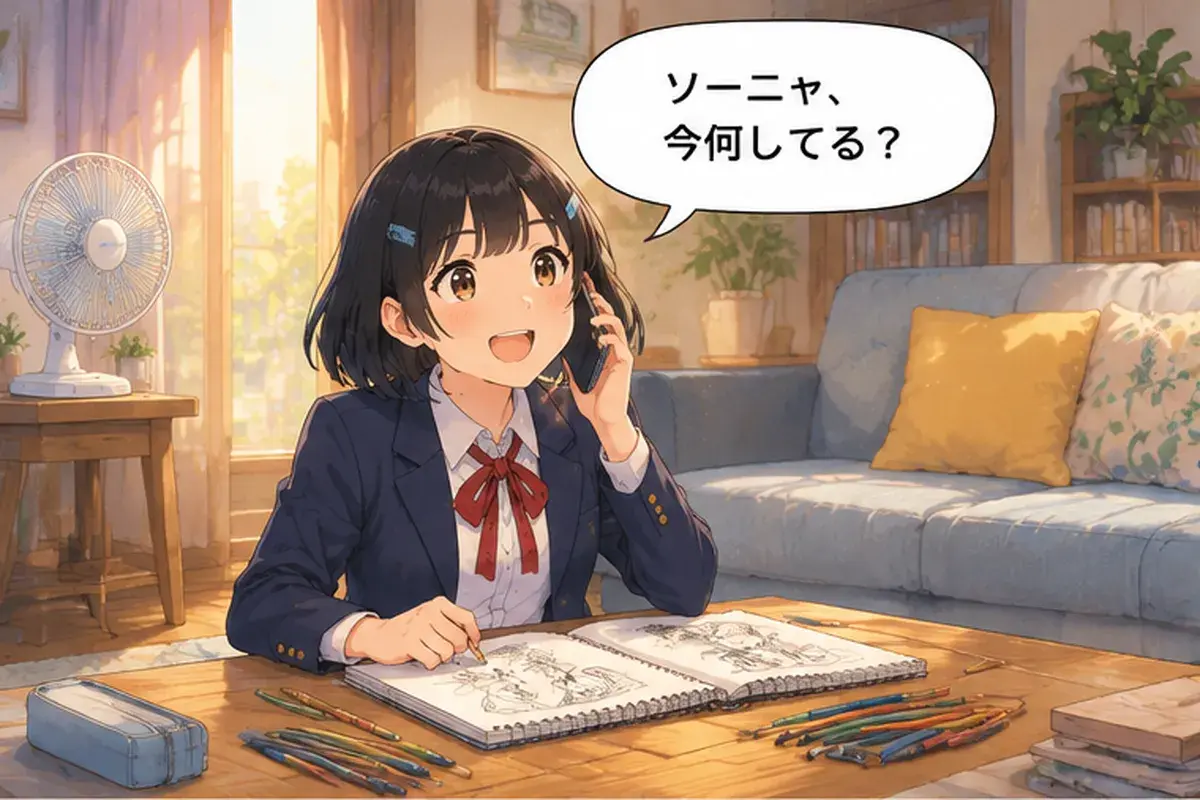
- ゆい
ソーニャ、今何してる?
Sonya, what are you doing now? (casual)
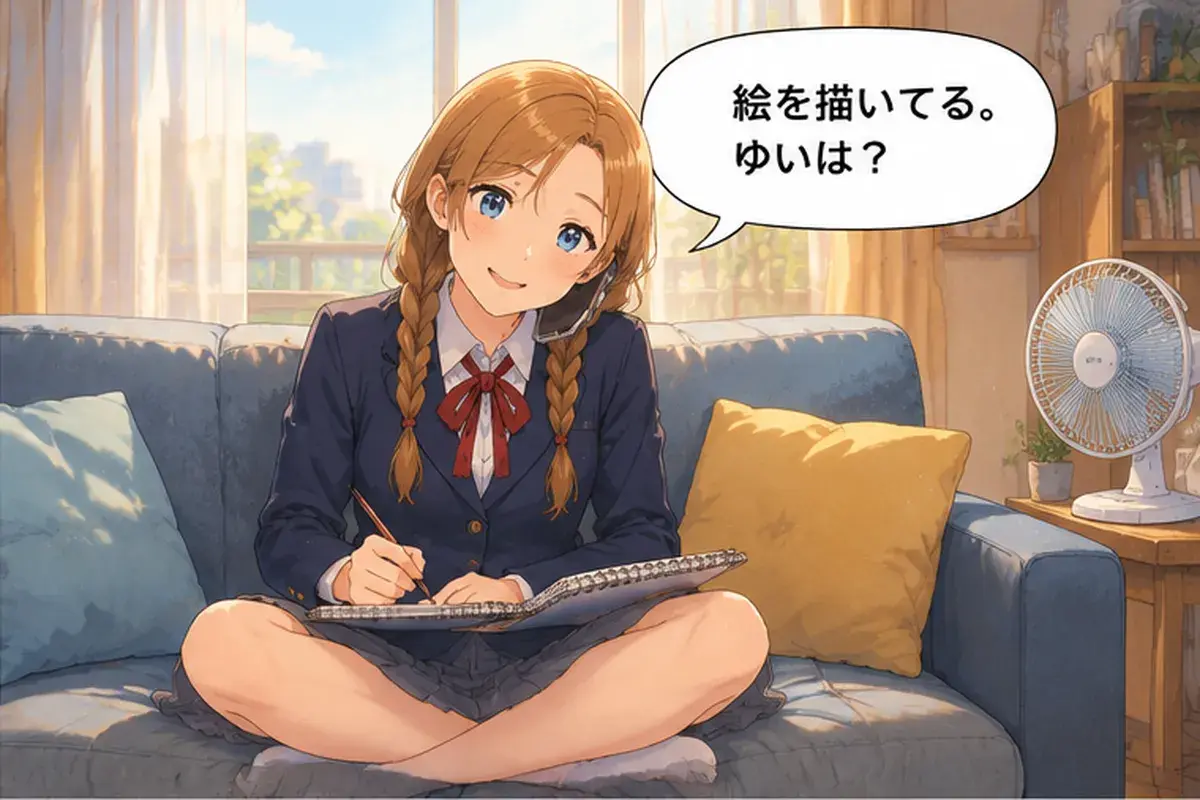
- ソーニャ
絵を描いてる。ゆいは?
I'm drawing. What about you, Yui? (casual)
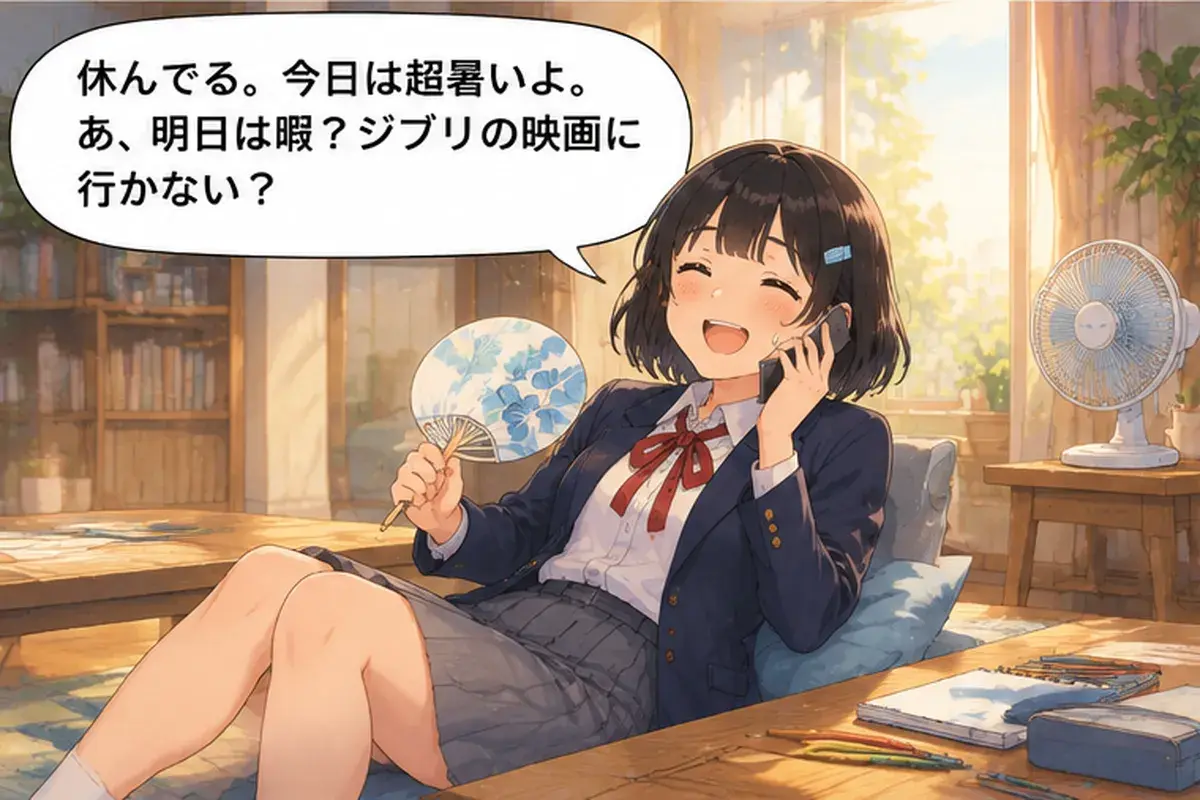
- ゆい
休んでる。今日は超暑いよ。あ、明日は暇?ジブリの映画に行かない?
I'm taking a break. It's super hot today. Oh, are you free tomorrow? Want to go to a Ghibli movie? (casual)
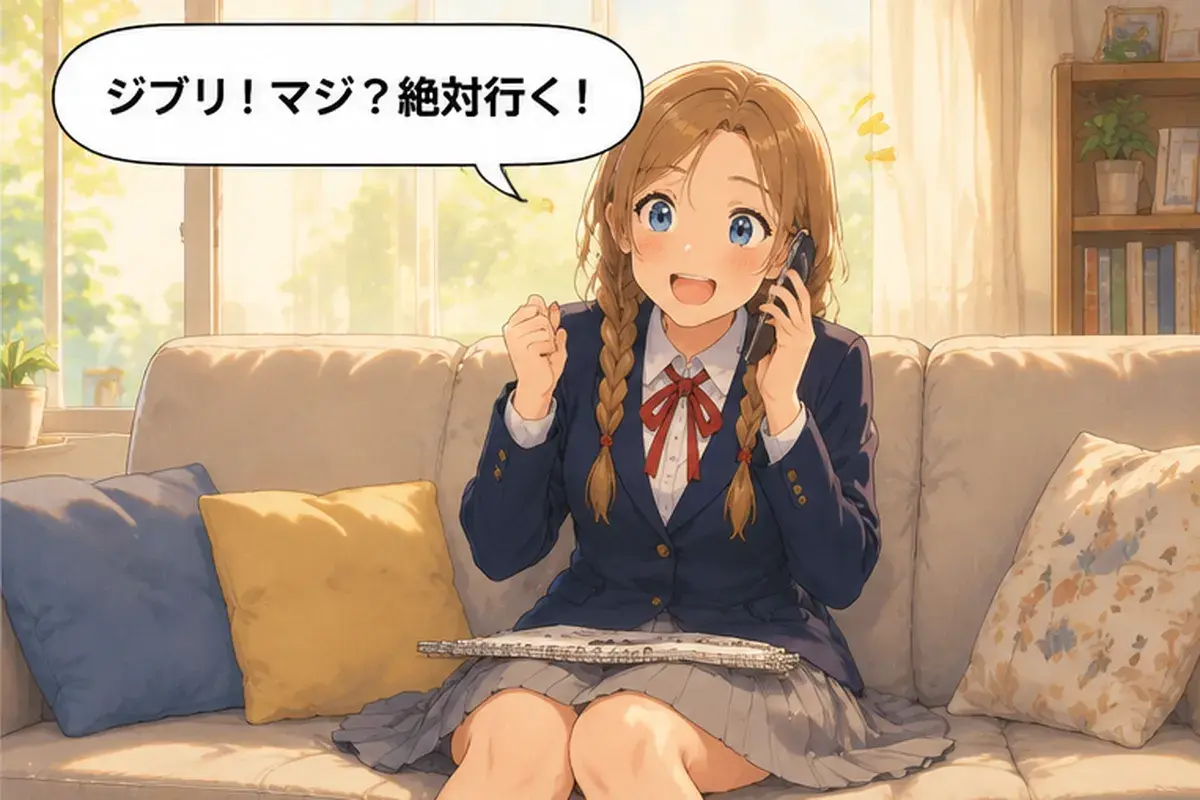
- ソーニャ
ジブリ!マジ?絶対行く!
Ghibli! Seriously? I'm definitely going! (casual)
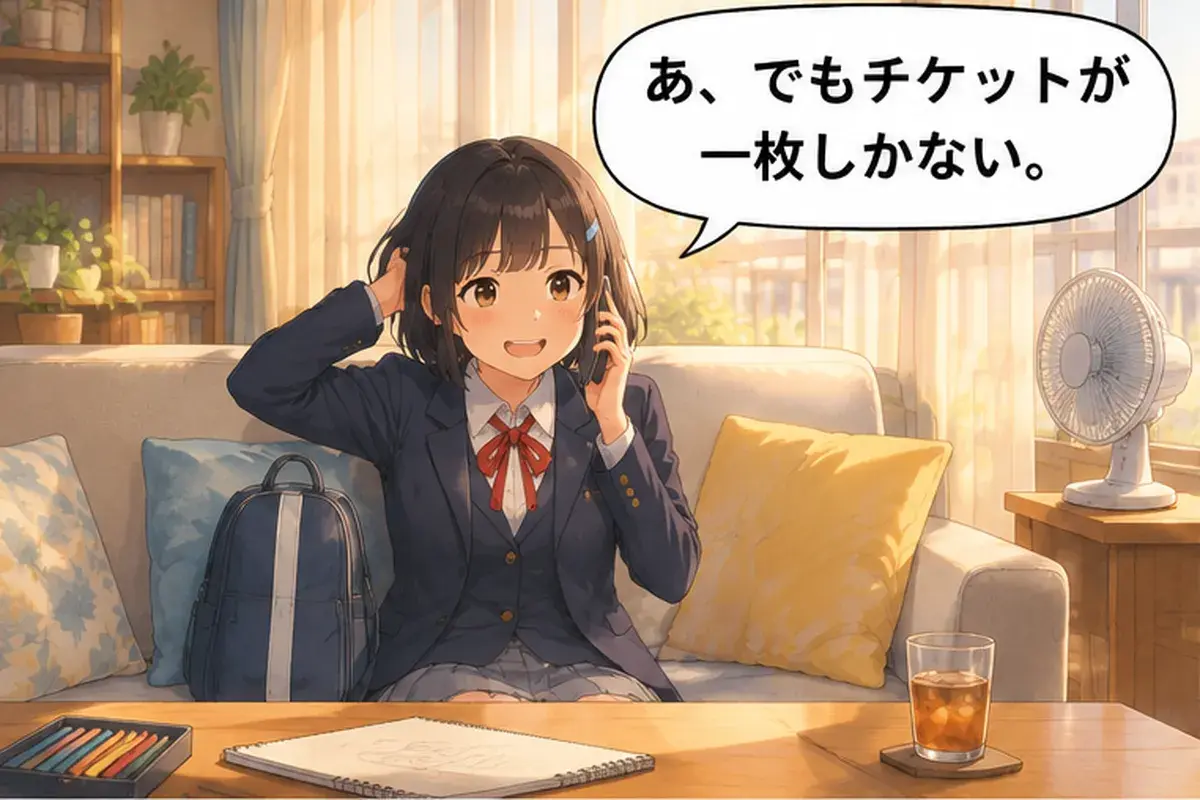
- ゆい
あ、でもチケットが一枚しかない。
Oh, but there's only one ticket. (casual)
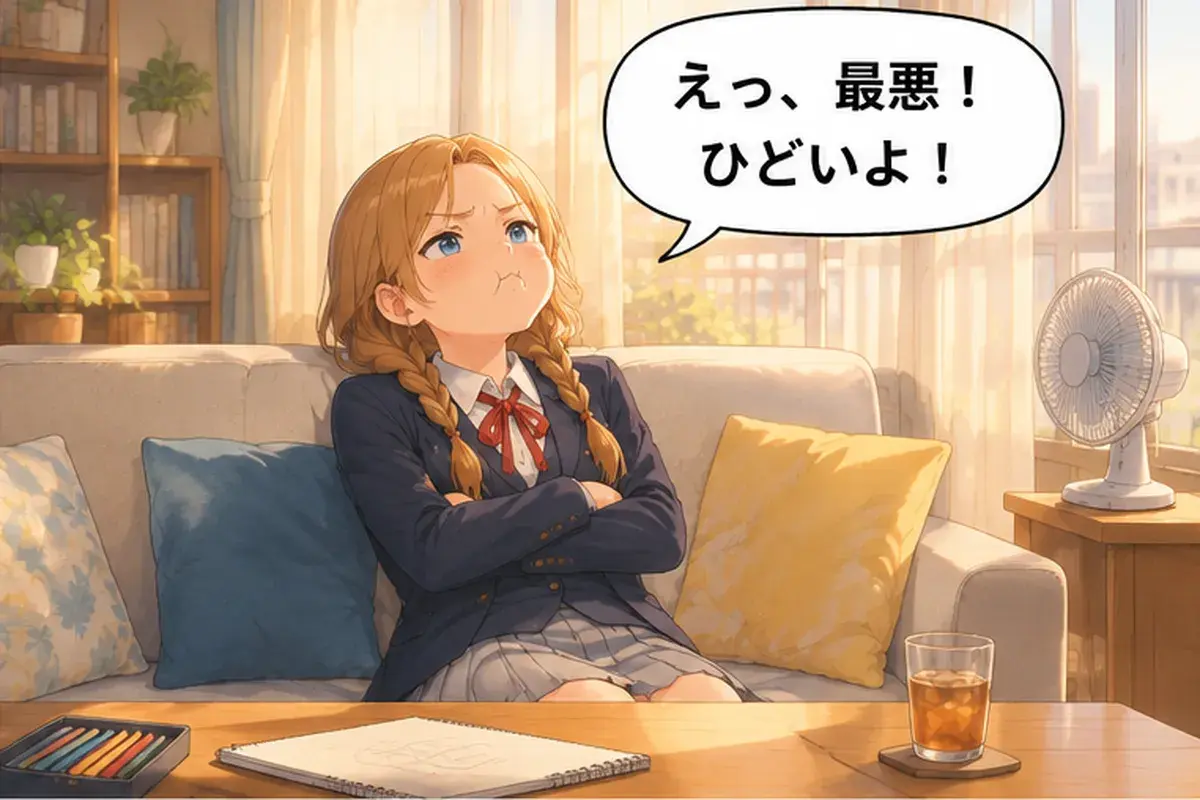
- ソーニャ
えっ、最悪!ひどいよ!
What? That's the worst! That's awful! (casual)
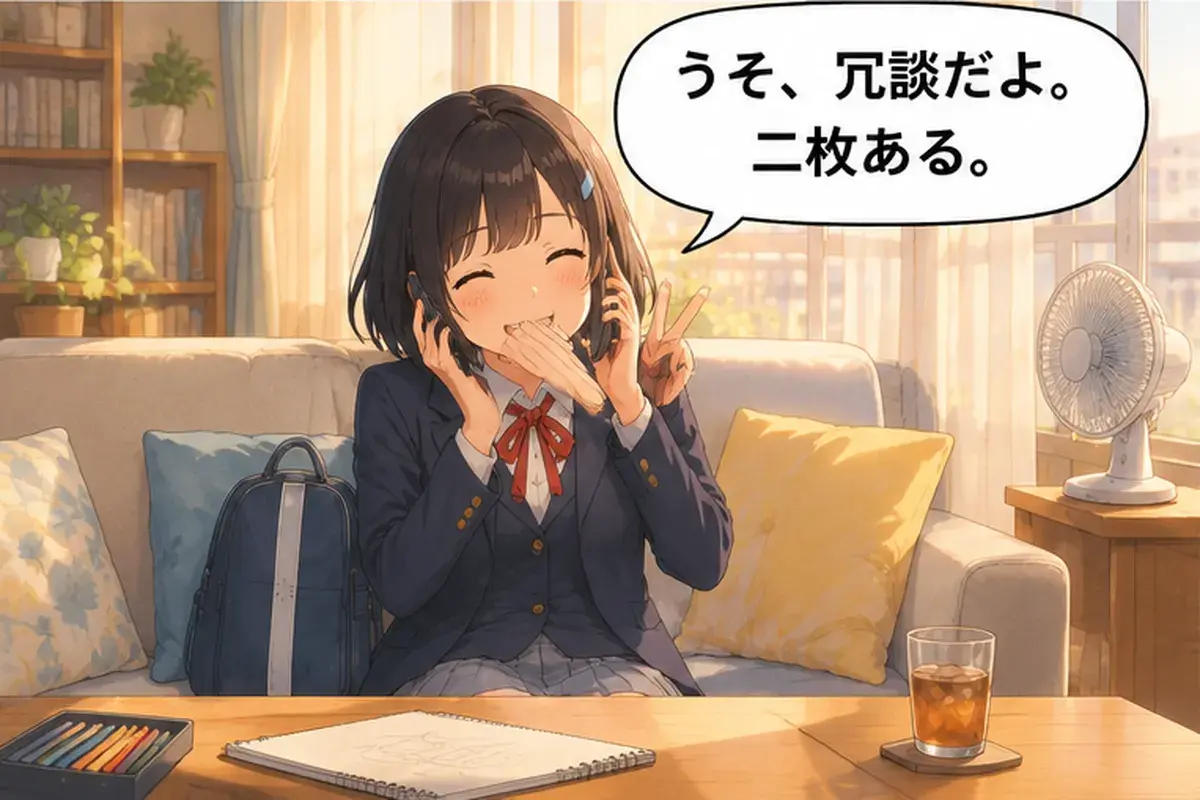
- ゆい
うそ、冗談だよ。二枚ある。
I lied, just kidding. There are two. (casual)
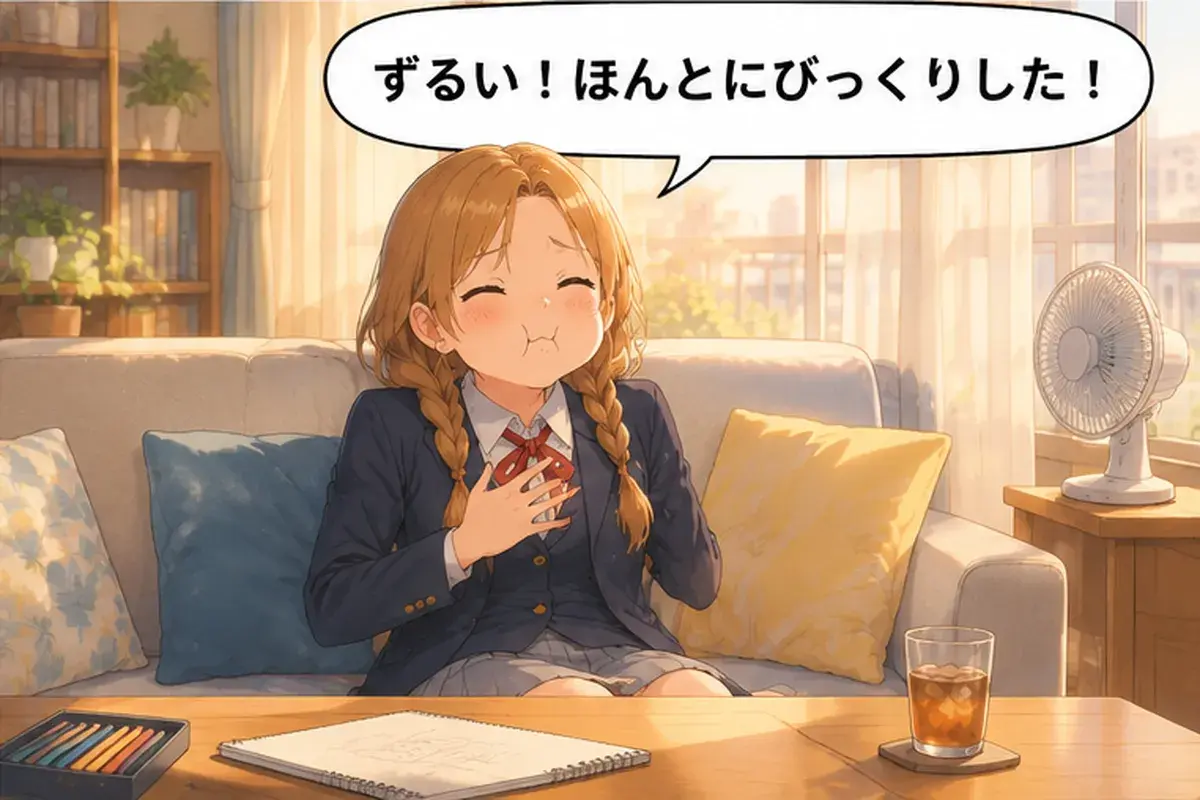
- ソーニャ
ずるい!ほんとにびっくりした!
No fair! I was really surprised! (casual)
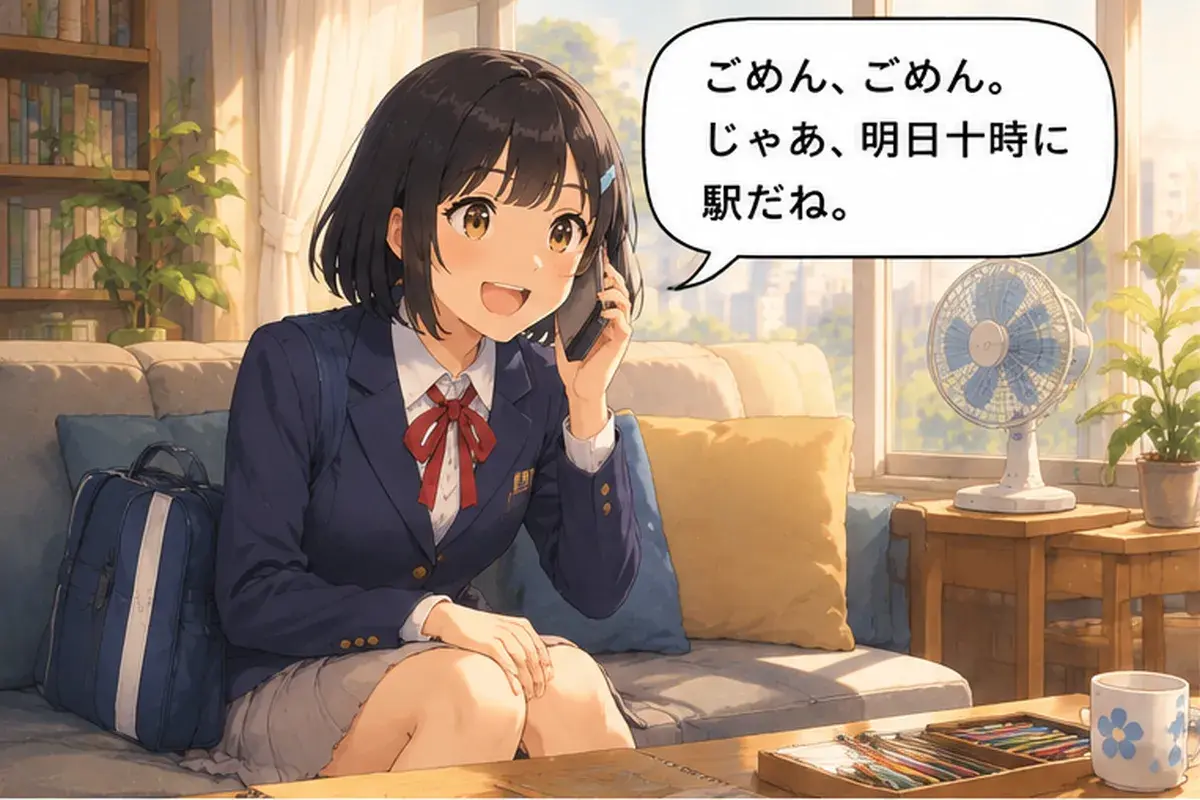
- ゆい
ごめん、ごめん。じゃあ、明日十時に駅だね。
Sorry, sorry. OK then, ten o'clock at the station tomorrow. (casual)
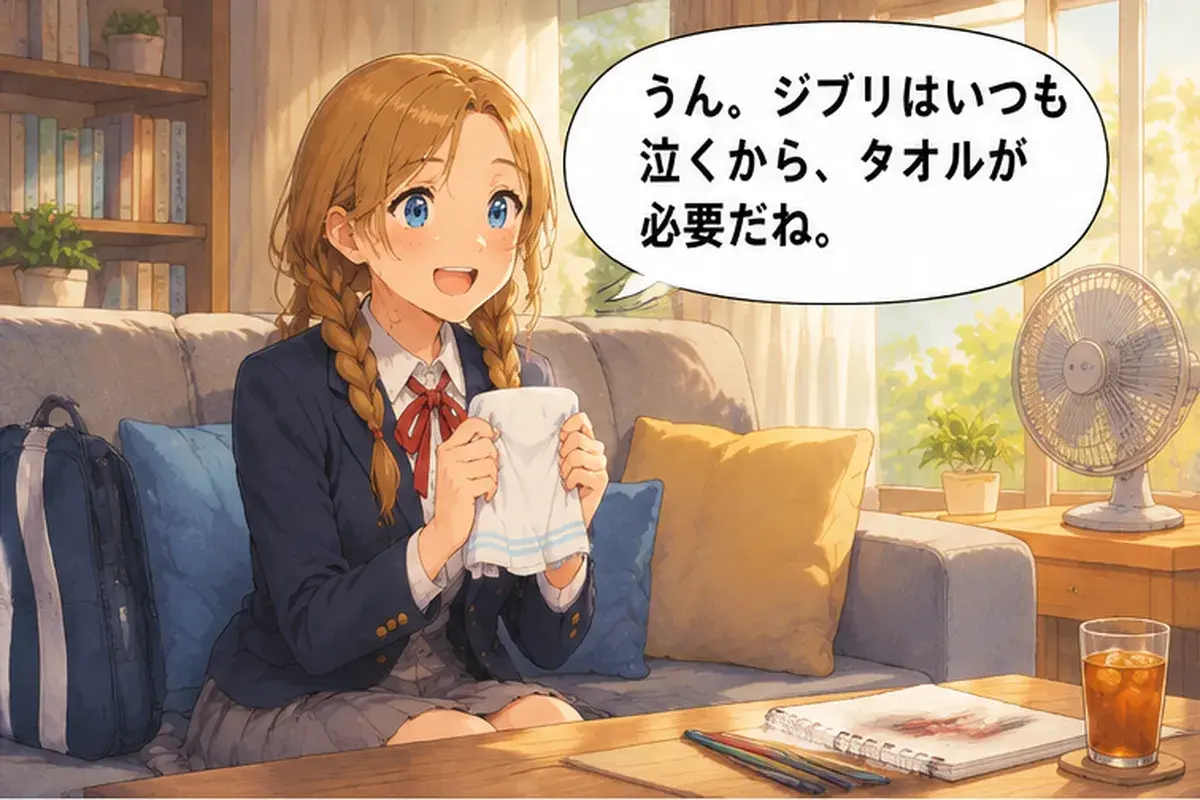
- ソーニャ
うん。ジブリはいつも泣くから、タオルが必要だね。
Yeah. I always cry at Ghibli movies, so we'll need a towel, right? (casual)
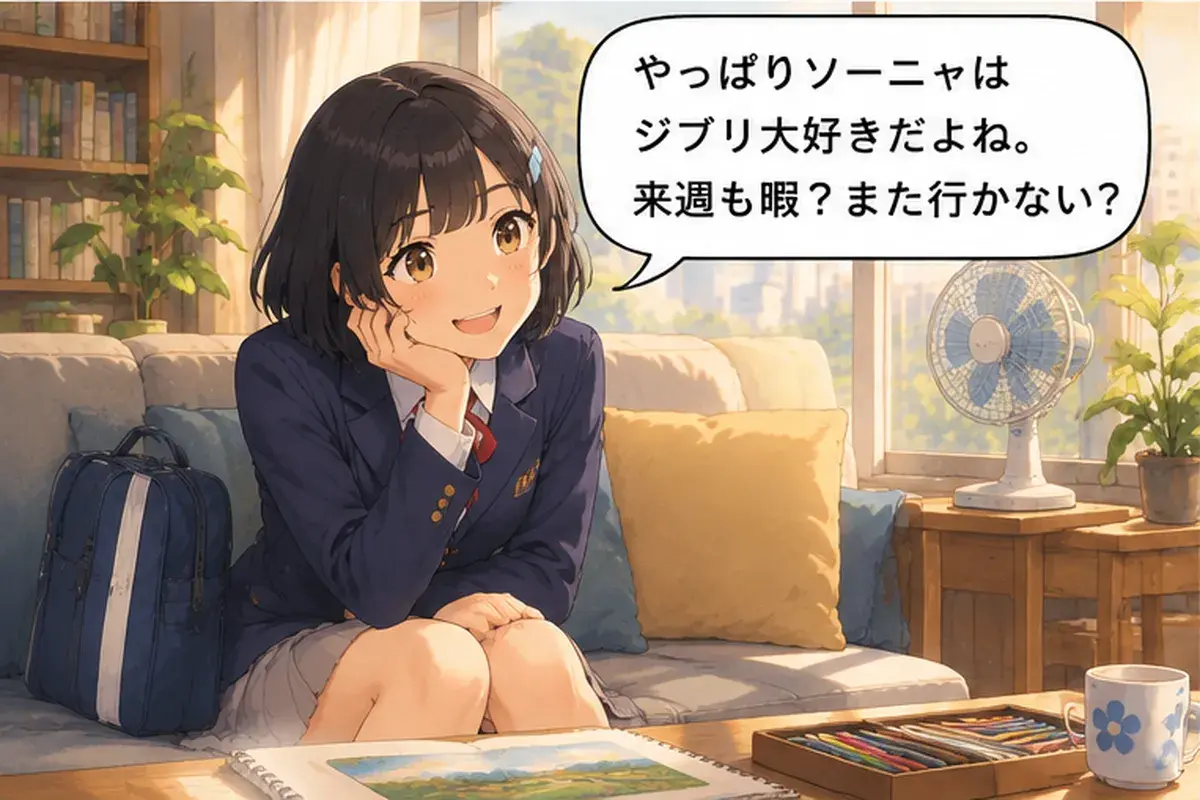
- ゆい
やっぱりソーニャはジブリ大好きだよね。来週も暇?また行かない?
I knew it, you love Ghibli, right? Are you free next week too? Want to go again? (casual)
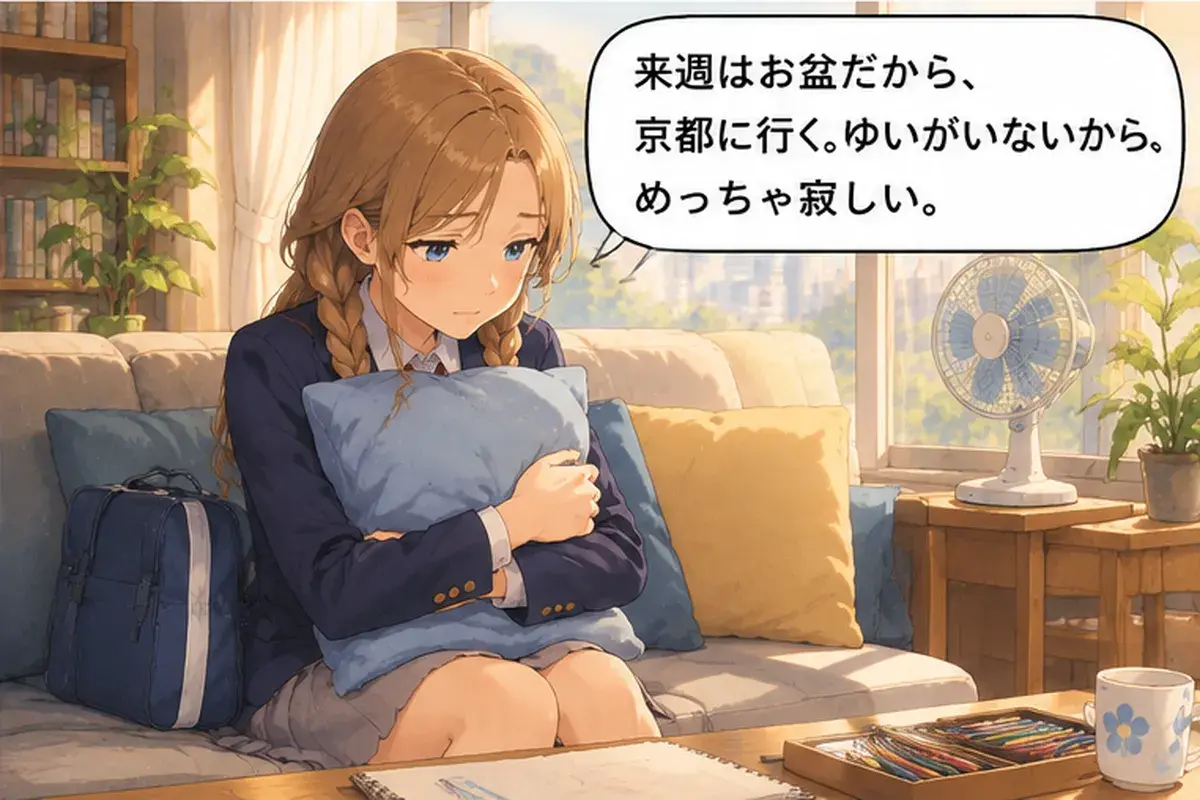
- ソーニャ
来週はお盆だから、京都に行く。ゆいがいないから、めっちゃ寂しい。
Next week is Obon, so I'm going to Kyoto. You won't be there, so I'll be really lonely. (casual)
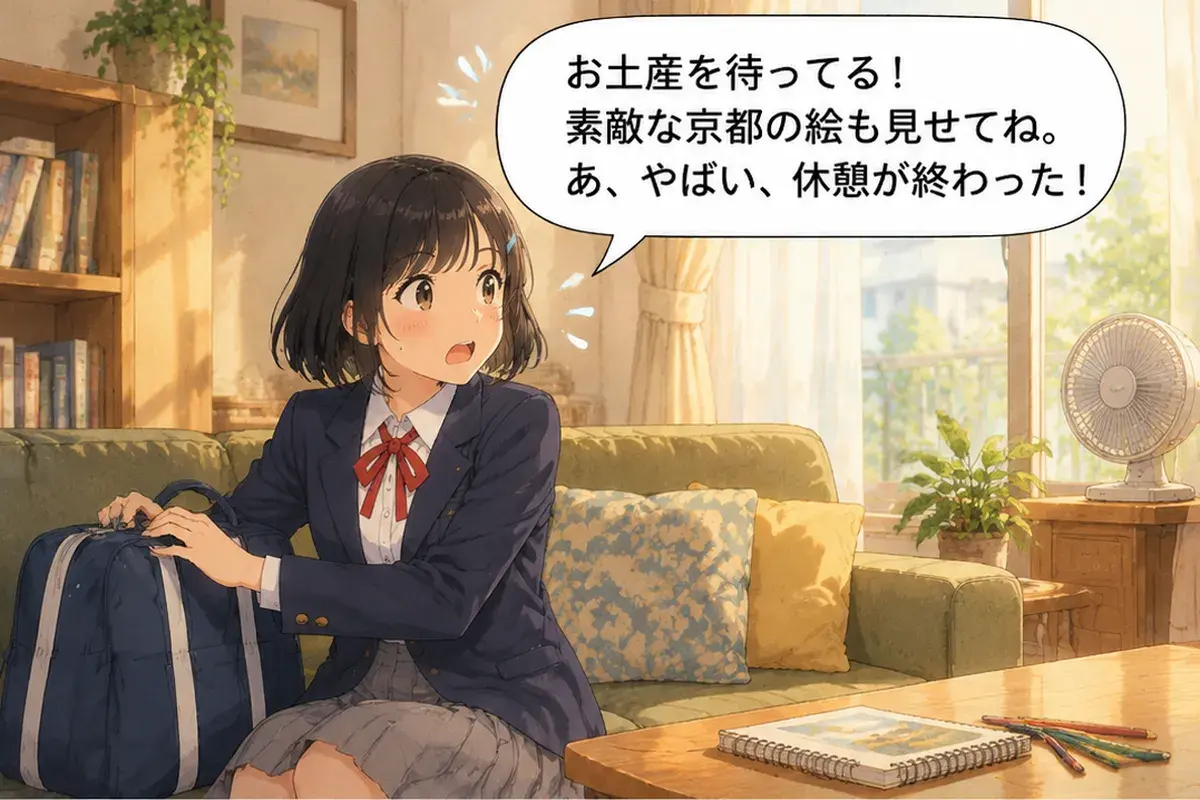
- ゆい
お土産を待ってる!素敵な京都の絵も見せてね。あ、やばい、休憩が終わった!
I'm waiting for my souvenir! Show me your nice Kyoto drawings too, OK? Oh no, my break is over! (casual)
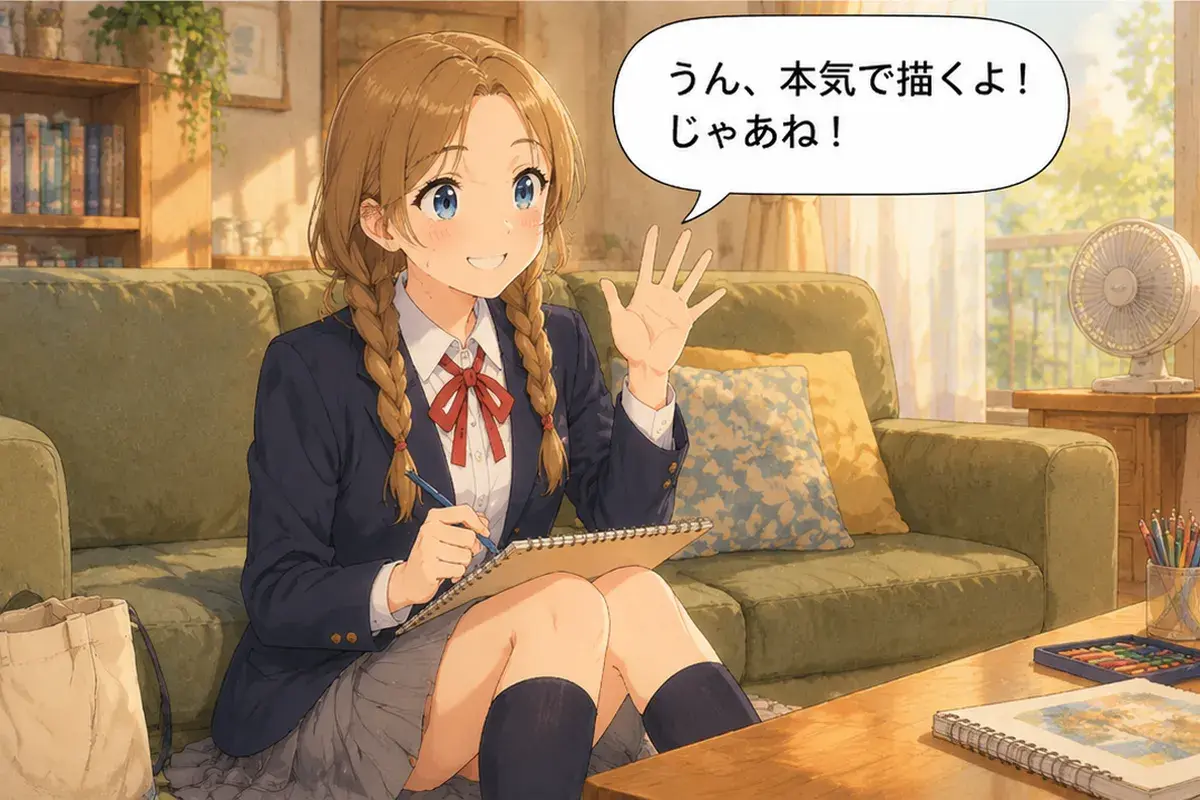
- ソーニャ
うん、本気で描くよ!じゃあね!
Yeah, I'll draw them seriously! See you! (casual)
Grammar for this text
今 何 してる?— "What are you doing now?"してるisして いるwithoutい(unit 5): "I'm doing it right now". The answer repeats the verb:絵 を 描いてる— "I'm drawing."ジブリ の 映画 に 行かない?— "Want to go to a Ghibli movie?"〜に 行く("go to...") in theないform with a question is an invitation: "Shall we go?".ジブリis the name of the studio.チケット が 一 枚 しか ない— "There's only one ticket."しか … ないmeans "only" (unit 3): the negative is at the end, but the meaning is "there's just one". Don't confuse it with "there is no ticket".うそ、冗談 だ よ— "Not true, I'm joking."うそis literally "a lie", here "just kidding".冗談 だ よmeans "it's a joke, you know". It's how you admit you were teasing.ずるい!— "No fair!", a friendly complaint.最悪andひどいare playful shouts ("the worst", "awful"), only for friends.ほんと に びっくりした— "I was really surprised."ほんとis the casual本当.びっくりしたis the plain past: "I was surprised".超 暑い,マジ?andめっちゃ 寂しいare youth slang: "super hot", "seriously?", "really lonely". Adults don't talk this way.本気 で 描く よ— "I'll draw them seriously."じゃあ ね— "See you" for friends.ゆい が いない から— "because you won't be there".いないis the plain form ofいません. For a person useいる / いない, for a thingある / ない.寂しいisn't "alone" but "sad without you".
Words and grammar of the unit: Talk casually with friends.
Learn the words from the texts with flashcards
In the app, you can tap any word in a text to see its translation, forms and examples, and new words stick with flashcards. 15 minutes a day.
Start for freeEverything is open for free. No card needed to sign up.