

Japanese dialogue with translation · A2 · 14 lines
タメ口でいいよ Casual talk is fine
Comic · 8 panels
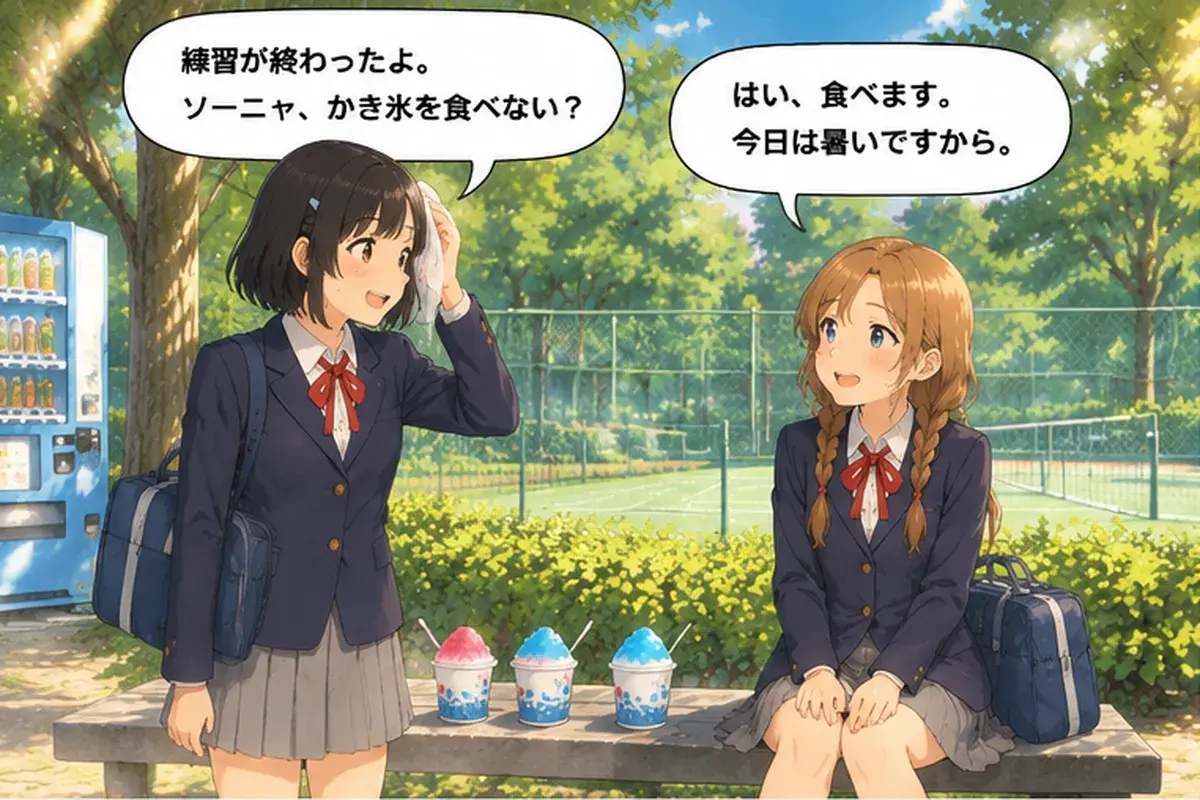
- ゆい
練習が終わったよ。ソーニャ、かき氷を食べない?
Practice is over. Sonya, want some shaved ice? (casual)
- ソーニャ
はい、食べます。今日は暑いですから。
Yes, I'll have some, because it's hot today.
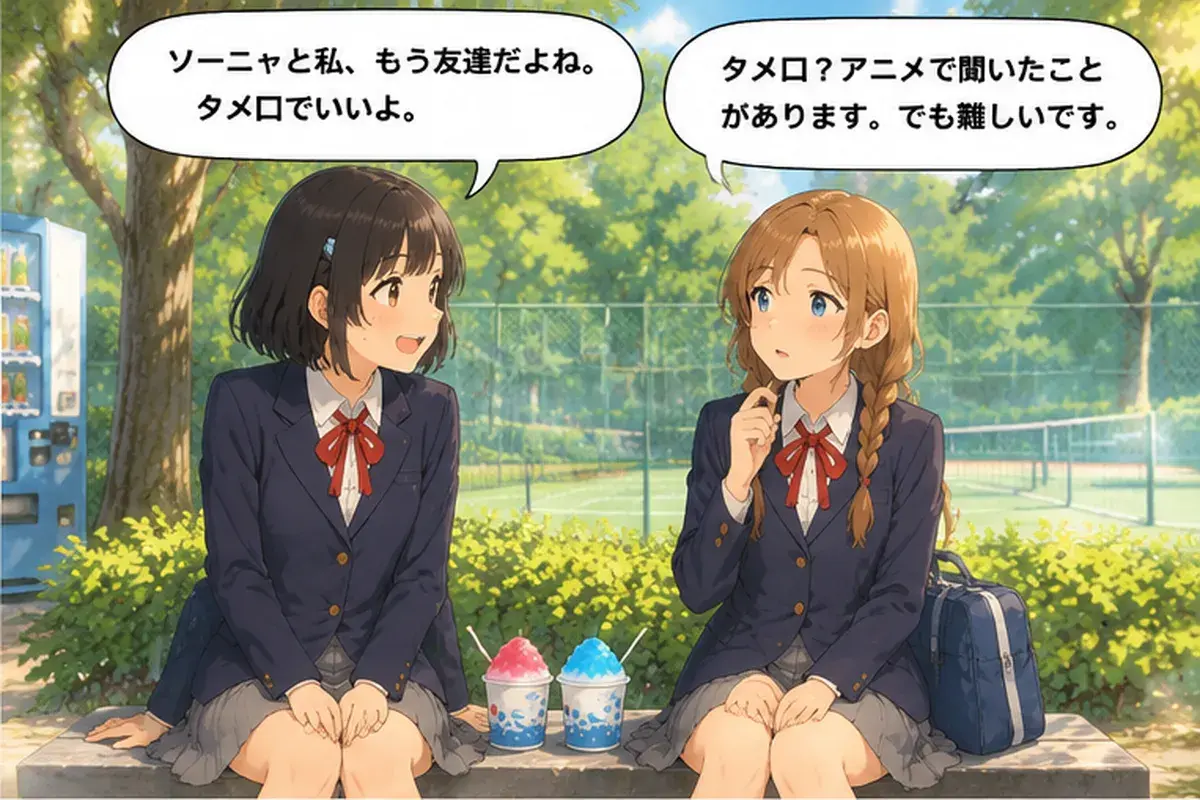
- ゆい
ソーニャと私、もう友達だよね。タメ口でいいよ。
You and I are friends now, right? You can talk casually. (casual)
- ソーニャ
タメ口?アニメで聞いたことがあります。でも難しいです。
Casual speech? I've heard it in anime. But it's hard.
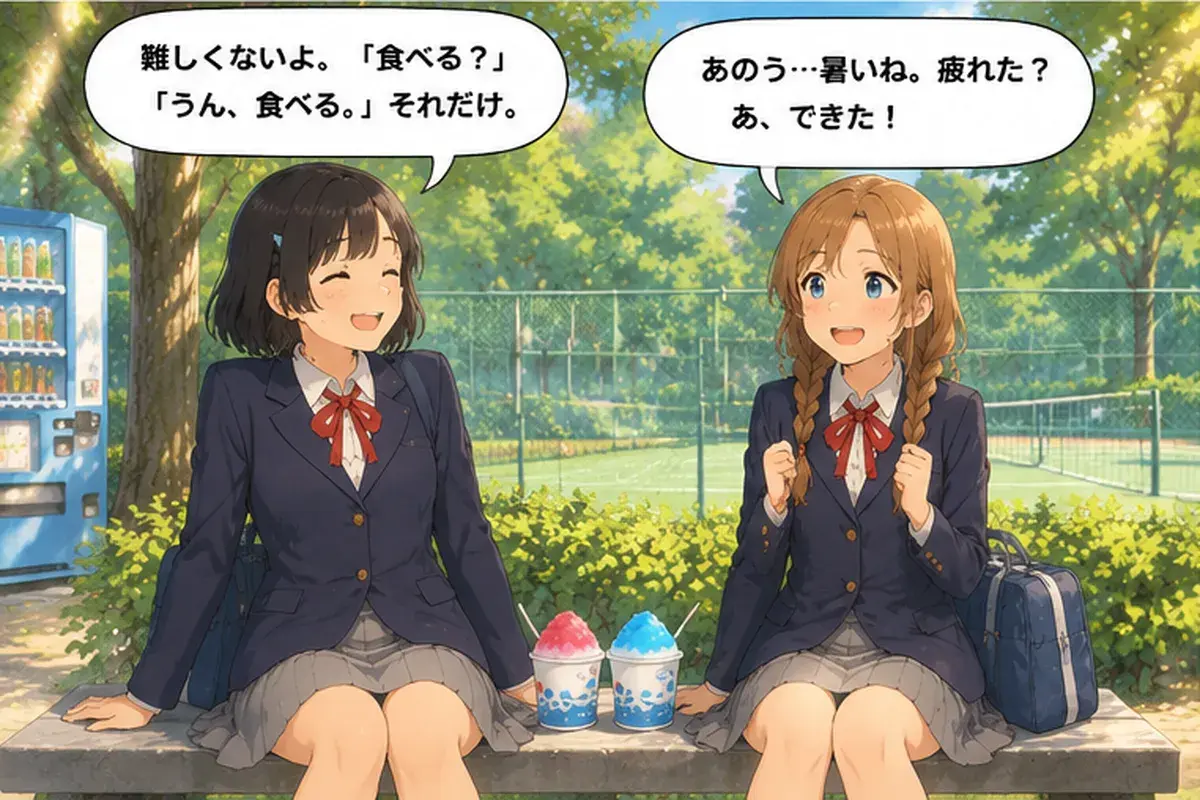
- ゆい
難しくないよ。「食べる?」「うん、食べる。」それだけ。
It's not hard. "Will you eat?" "Yeah, I will." That's all. (casual)
- ソーニャ
あのう…暑いね。疲れた?あ、できた!
Um... It's hot, isn't it? Are you tired? Oh, I did it! (casual)
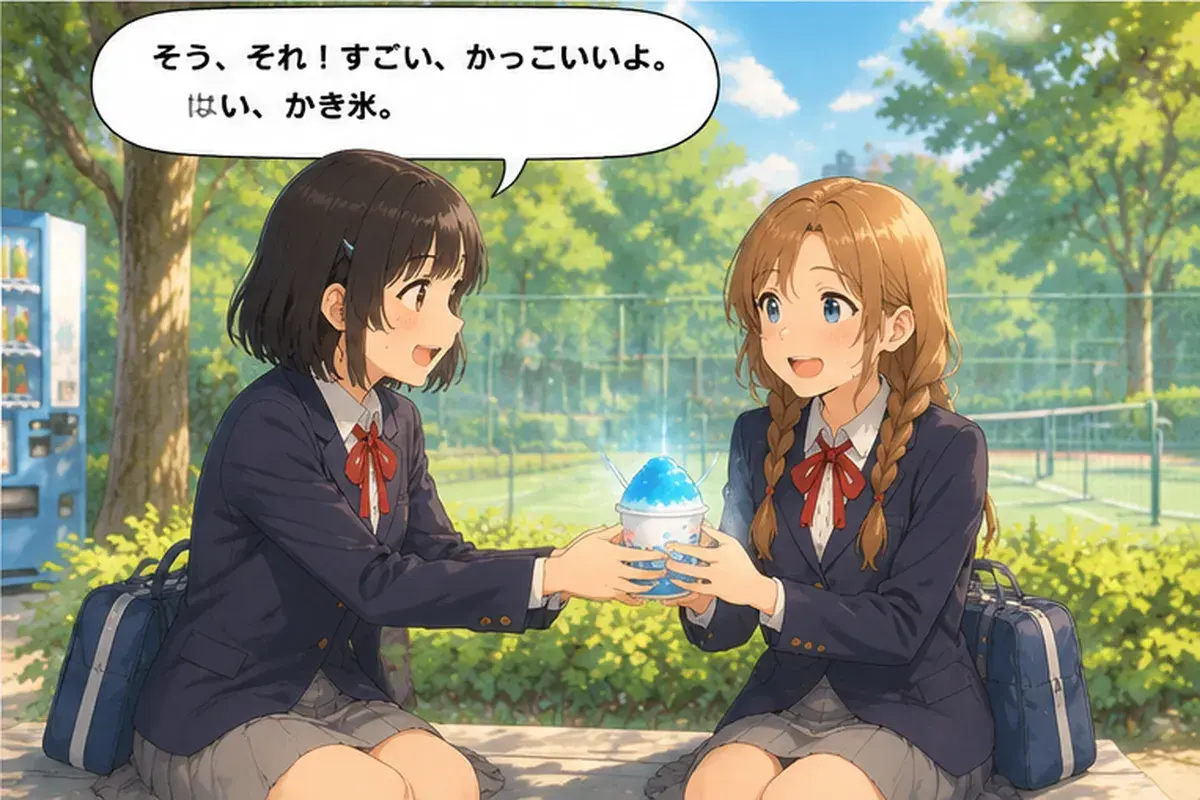
- ゆい
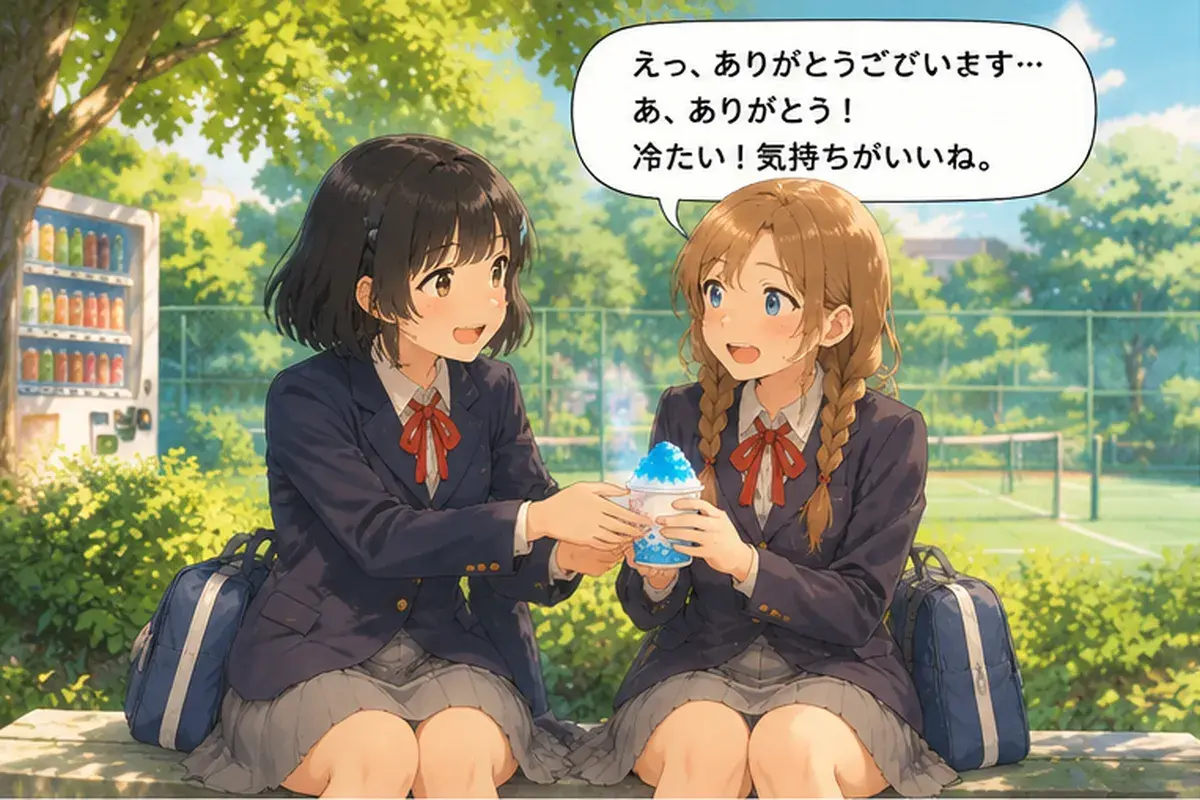
そう、それ!すごい、かっこいいよ。はい、かき氷。
Right, that's it! Wow, that's cool. Here's your shaved ice. (casual)
- ソーニャ
えっ、ありがとうございます…あ、ありがとう!冷たい!気持ちがいいね。
Huh? Thank you very much... Oh, thanks! It's cold! That feels nice, doesn't it? (casual)
- ゆい
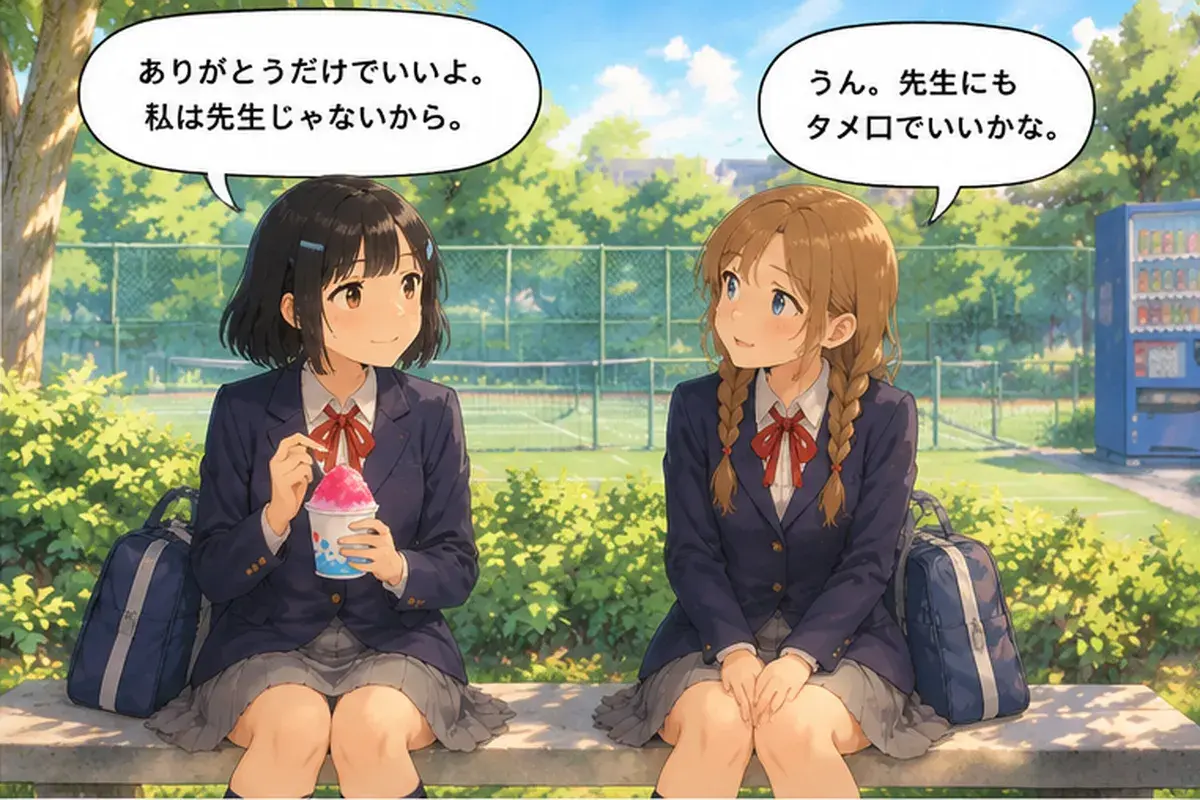
ありがとうだけでいいよ。私は先生じゃないから。
Just "thanks" is fine, because I'm not a teacher. (casual)
- ソーニャ
うん。先生にもタメ口でいいかな。
Yeah. I wonder if I can talk casually with teachers too. (casual)
- ゆい
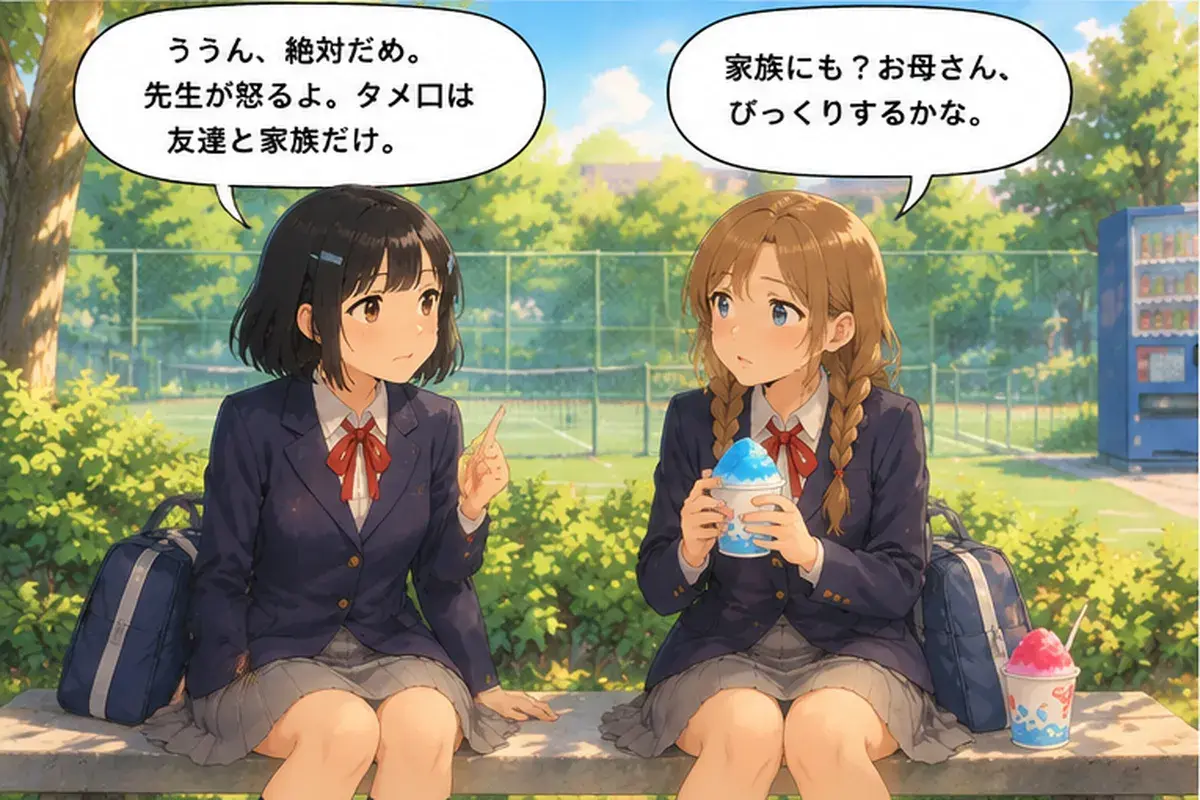
ううん、絶対だめ。先生が怒るよ。タメ口は友達と家族だけ。
Nope, absolutely not. The teacher will get angry. Casual talk is only for friends and family. (casual)
- ソーニャ
家族にも?お母さん、びっくりするかな。
With family too? I wonder if Mom will be surprised. (casual)
- ゆい
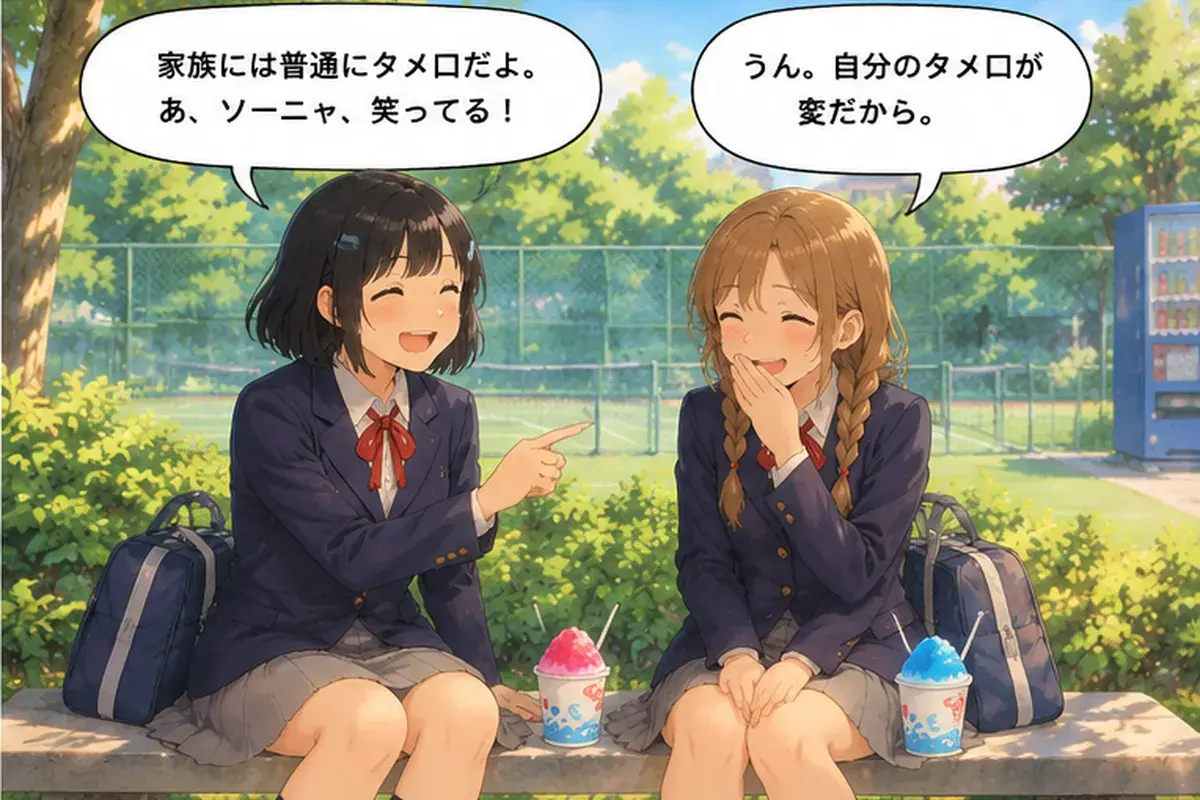
家族には普通にタメ口だよ。あ、ソーニャ、笑ってる!
With family, it's just normal to talk casually. Oh, Sonya, you're laughing! (casual)
- ソーニャ
うん。自分のタメ口が変だから。
Yeah. Because my own casual speech sounds weird. (casual)
Grammar for this text
タメ口 で いい よ— "Talking casually is fine."タメ口is talk between equals and friends;でhere means "in this way";いいmeans "it's fine, that's enough".ソーニャ と 私、もう 友達 だ よね— "Sonya and I are friends now, right?" Instead of友達 ですthere isだ: in casual speech the copula is short.よねmeans Yui isn't really asking, she expects you to agree. A girl says私about herself.食べない?— not "Won't you eat?" but an invitation: "Want some?", "Shall we eat?". The negative form sounds softer than食べる?.難しくない よ— "It's not hard." An i-adjective has noですand noだ:難しいbecomes難しくない.ありがとう ございます… あ、ありがとう— "Thank you very much... Oh, thanks." Sonya said it politely out of habit and corrected herself. Between friendsありがとうis enough.先生 じゃ ない から— "because I'm not a teacher".から("because") comes after a plain form. And in変 だ から("because it's weird") a na-adjective needsだbeforeから.ううん、絶対 だめ— "Nope, absolutely not."ううんis "nope" for friends,絶対 だめmeans "no way, never".先生 が 怒る よ— "The teacher will get angry."怒るmeans "to get angry", in the plain form.びっくりする かな— "I wonder if she'll be surprised."かなis a question to yourself.
Words and grammar of the unit: Talk casually with friends.
Learn the words from the texts with flashcards
In the app, you can tap any word in a text to see its translation, forms and examples, and new words stick with flashcards. 15 minutes a day.
Start for freeEverything is open for free. No card needed to sign up.