
Japanese dialogue with translation · A2 · 16 lines
着物はまだ着ていません I haven't worn a kimono yet
Comic · 11 panels
- ソーニャ
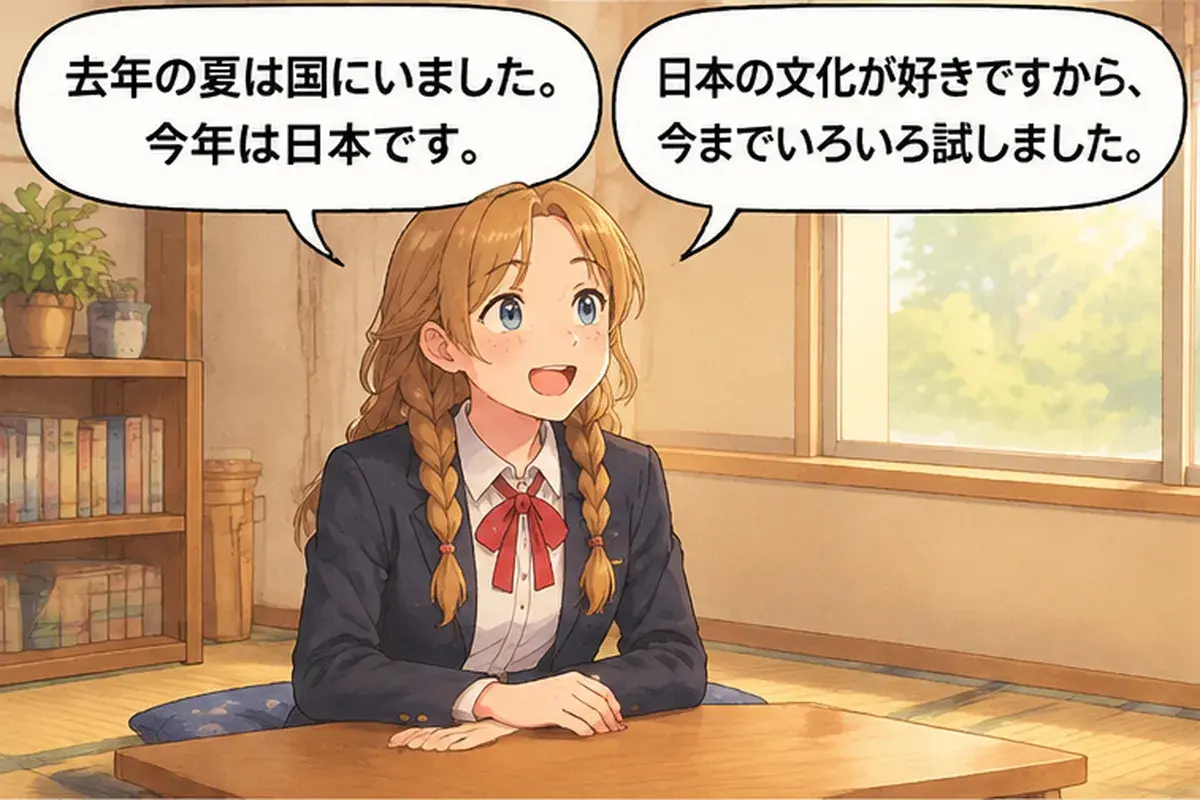
去年の夏は国にいました。今年は日本です。
Last summer I was in my home country. This year I'm in Japan.
- ソーニャ
日本の文化が好きですから、今までいろいろ試しました。
I like Japanese culture, so I've tried a lot of things so far.
- ソーニャ
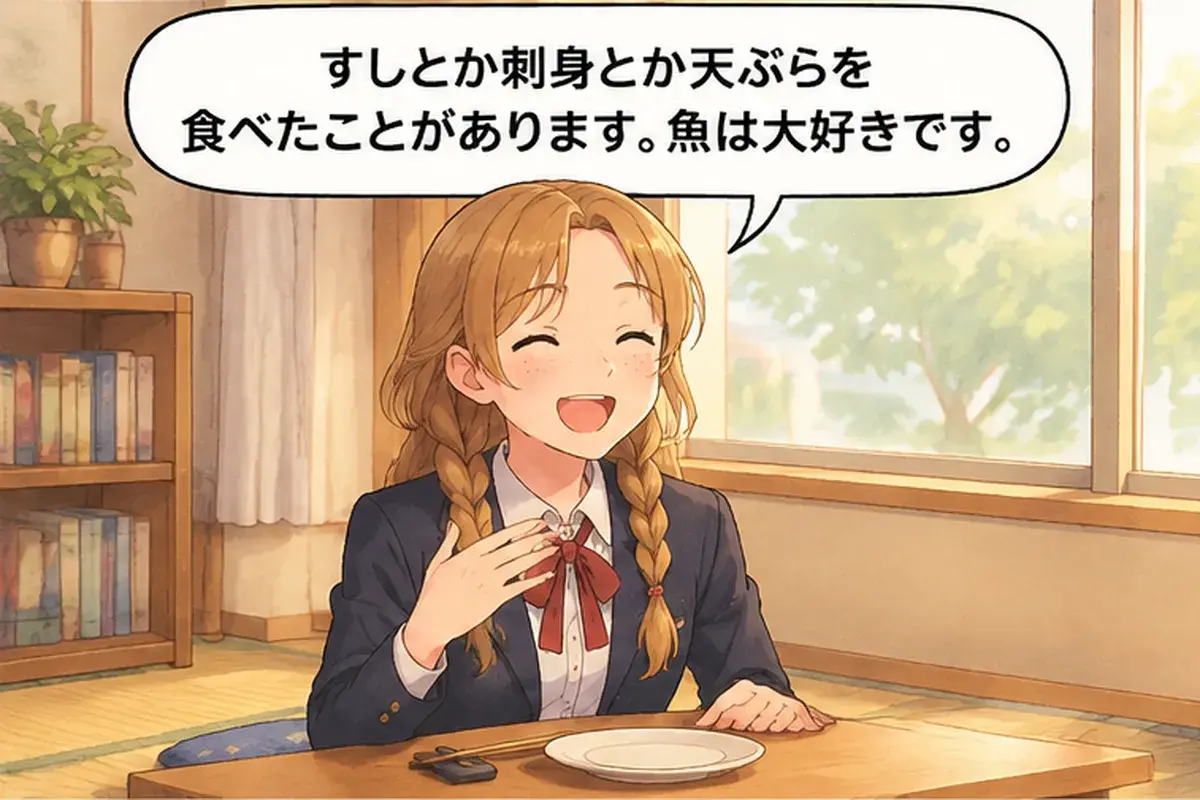
すしとか刺身とか天ぷらを食べたことがあります。魚は大好きです。
I've eaten sushi, sashimi, tempura, and things like that. I love fish.
- ソーニャ
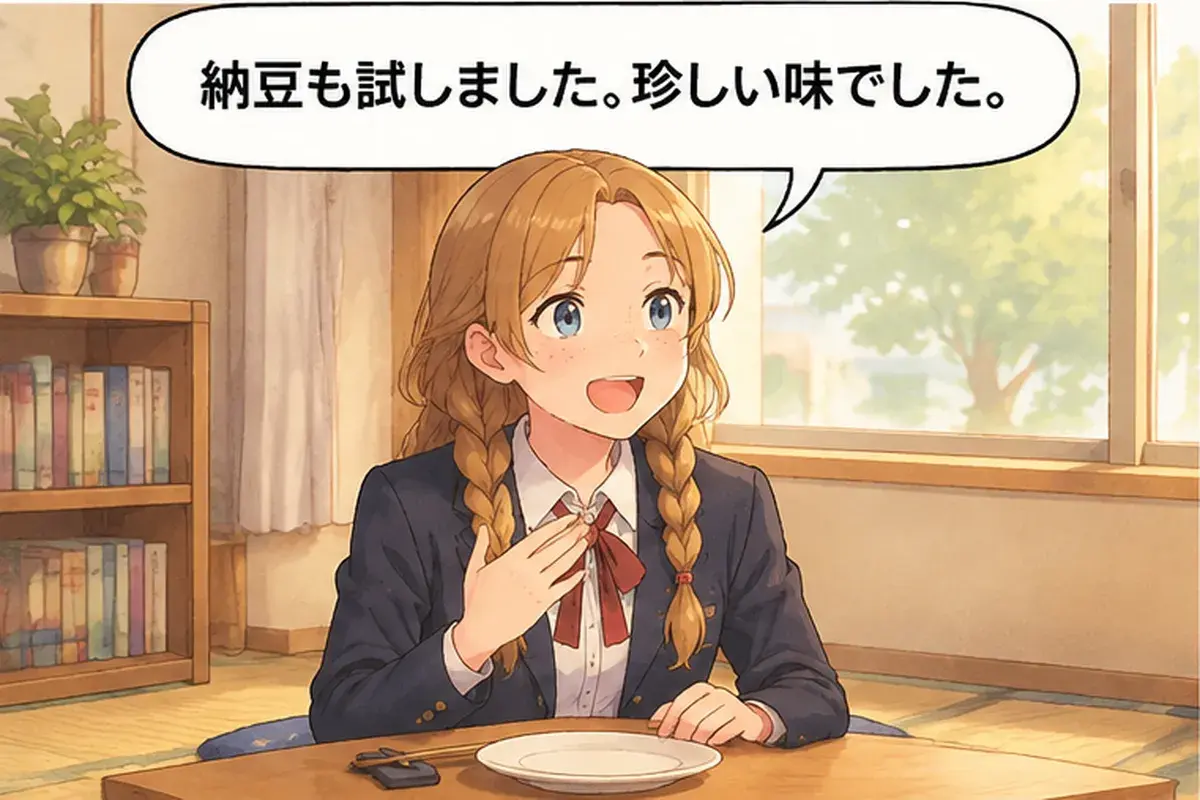
納豆も試しました。珍しい味でした。
I tried natto too. It had an unusual taste.
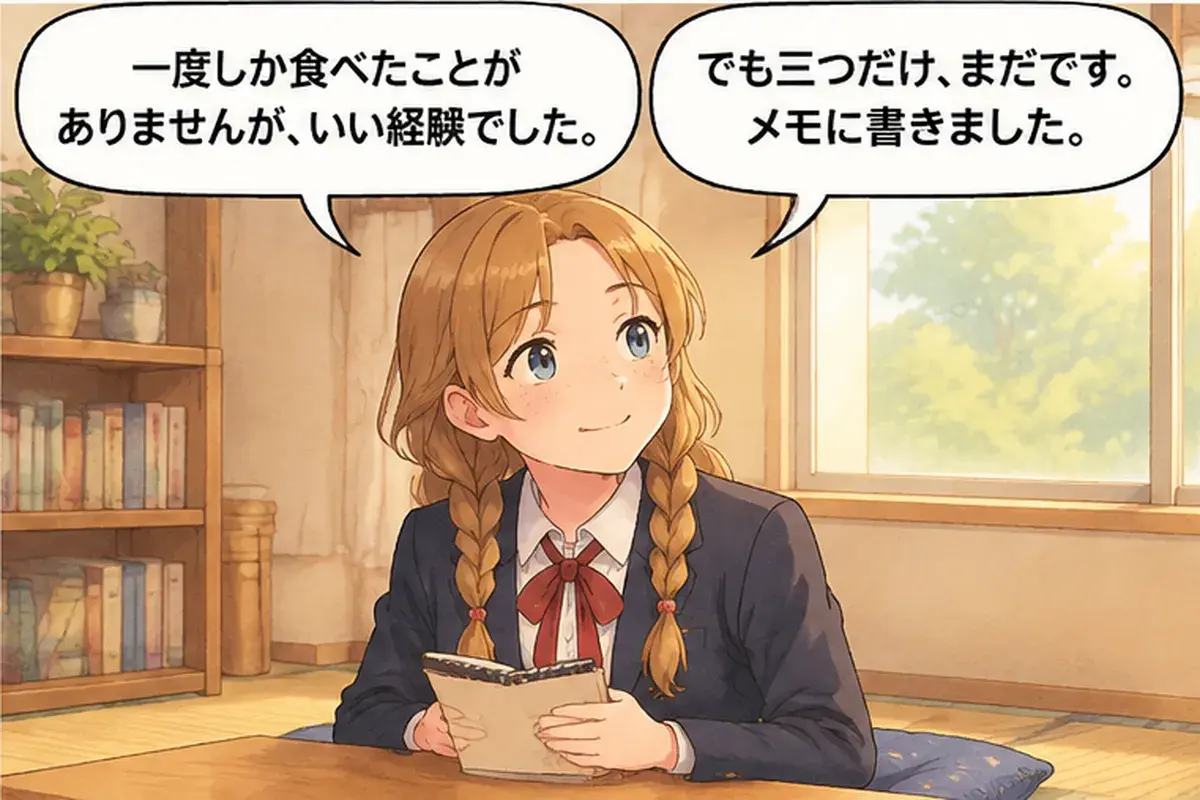
- ソーニャ
一度しか食べたことがありませんが、いい経験でした。
I've only had it once, but it was a good experience.
- ソーニャ
でも三つだけ、まだです。メモに書きました。
But there are just three things I haven't done yet. I wrote them in my notes.
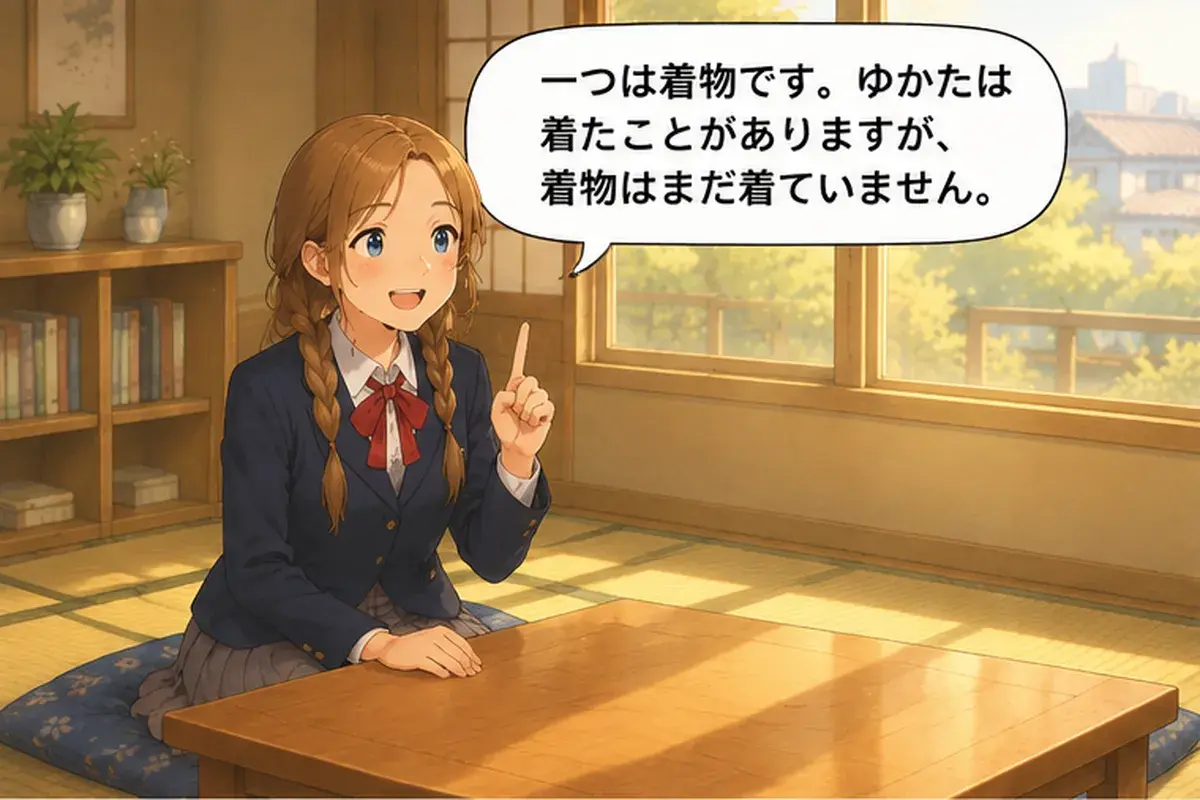
- ソーニャ
一つは着物です。ゆかたは着たことがありますが、着物はまだ着ていません。
One is a kimono. I've worn a yukata, but I haven't worn a kimono yet.
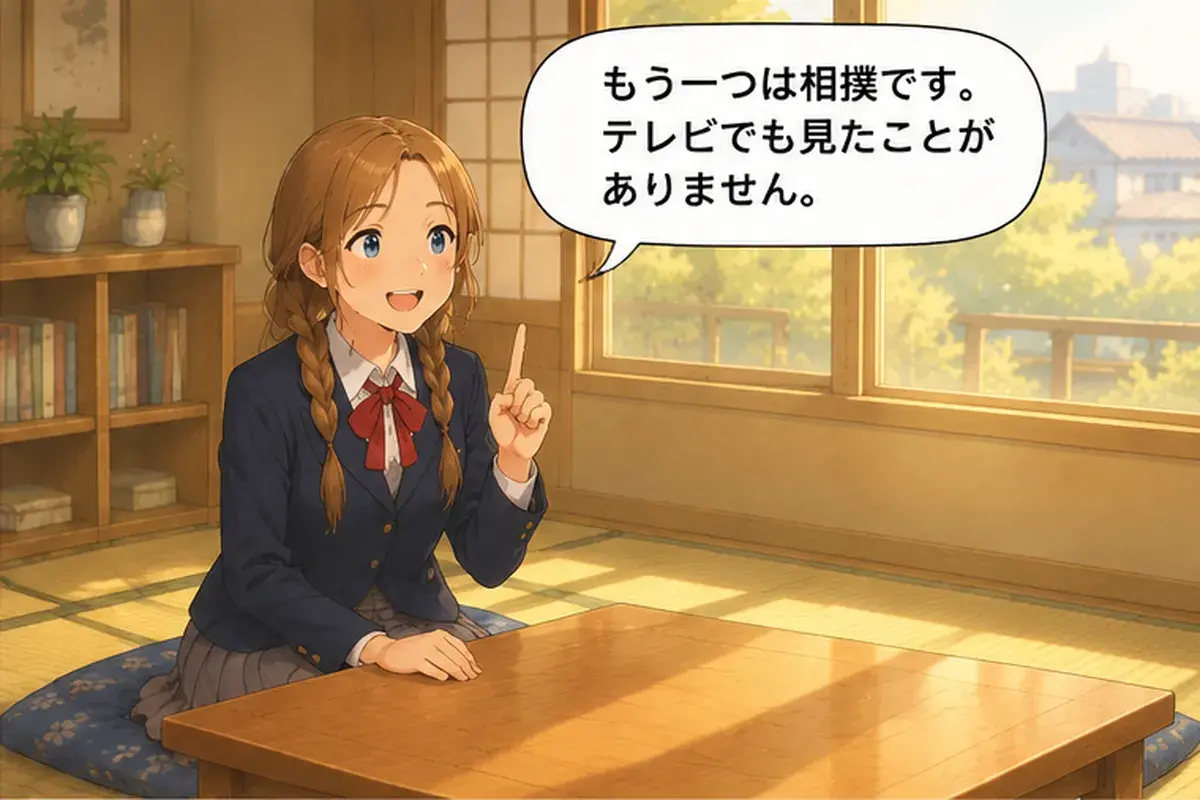
- ソーニャ
もう一つは相撲です。テレビでも見たことがありません。
Another is sumo. I've never seen it, even on TV.
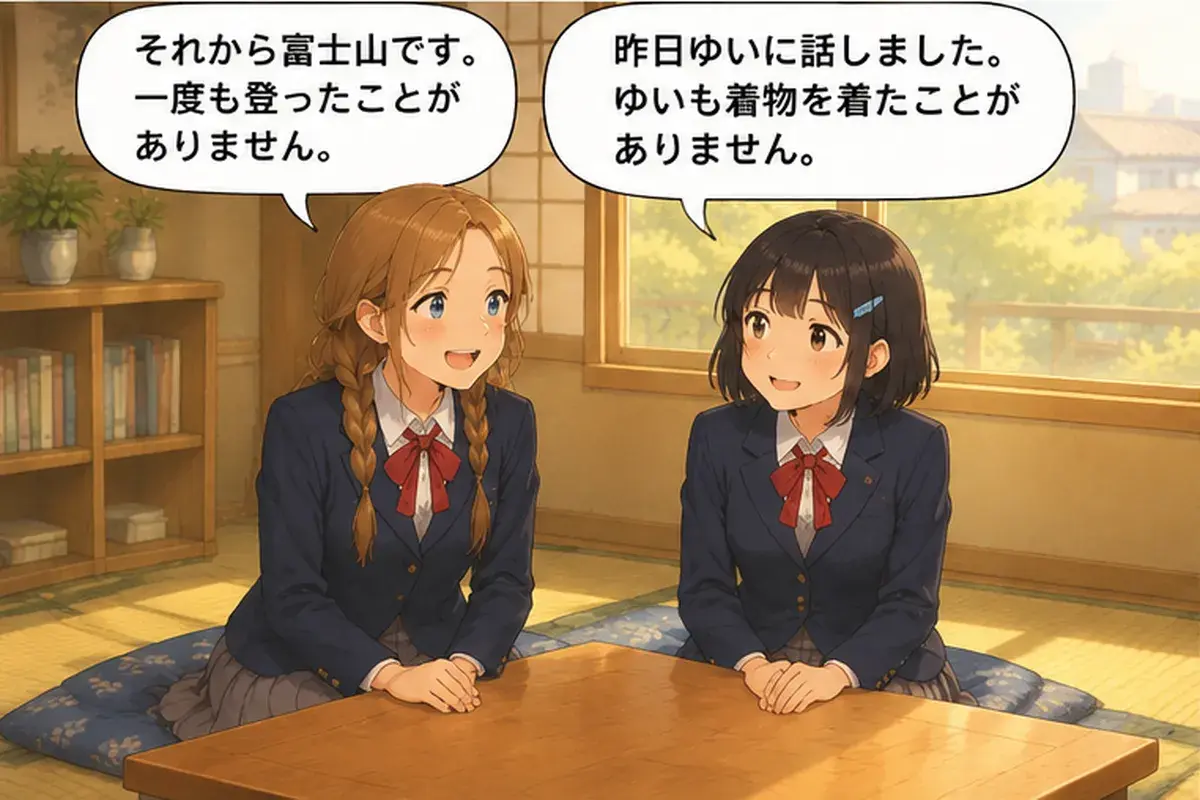
- ソーニャ
それから富士山です。一度も登ったことがありません。
And then Mount Fuji. I've never climbed it, not even once.
- ソーニャ
昨日ゆいに話しました。ゆいも着物を着たことがありません。
Yesterday I told Yui. Yui has never worn a kimono either.
- ソーニャ
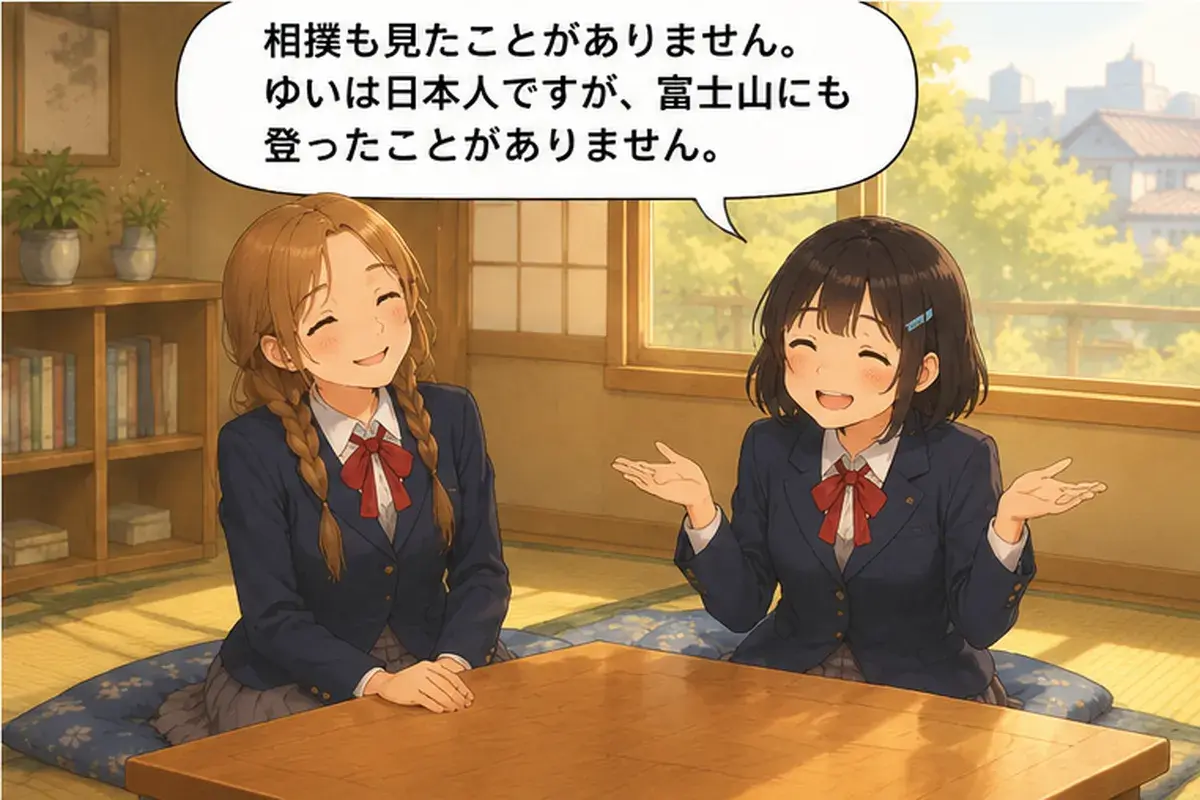
相撲も見たことがありません。ゆいは日本人ですが、富士山にも登ったことがありません。
She's never seen sumo either. Yui is Japanese, but she's never climbed Mount Fuji either.
- ソーニャ
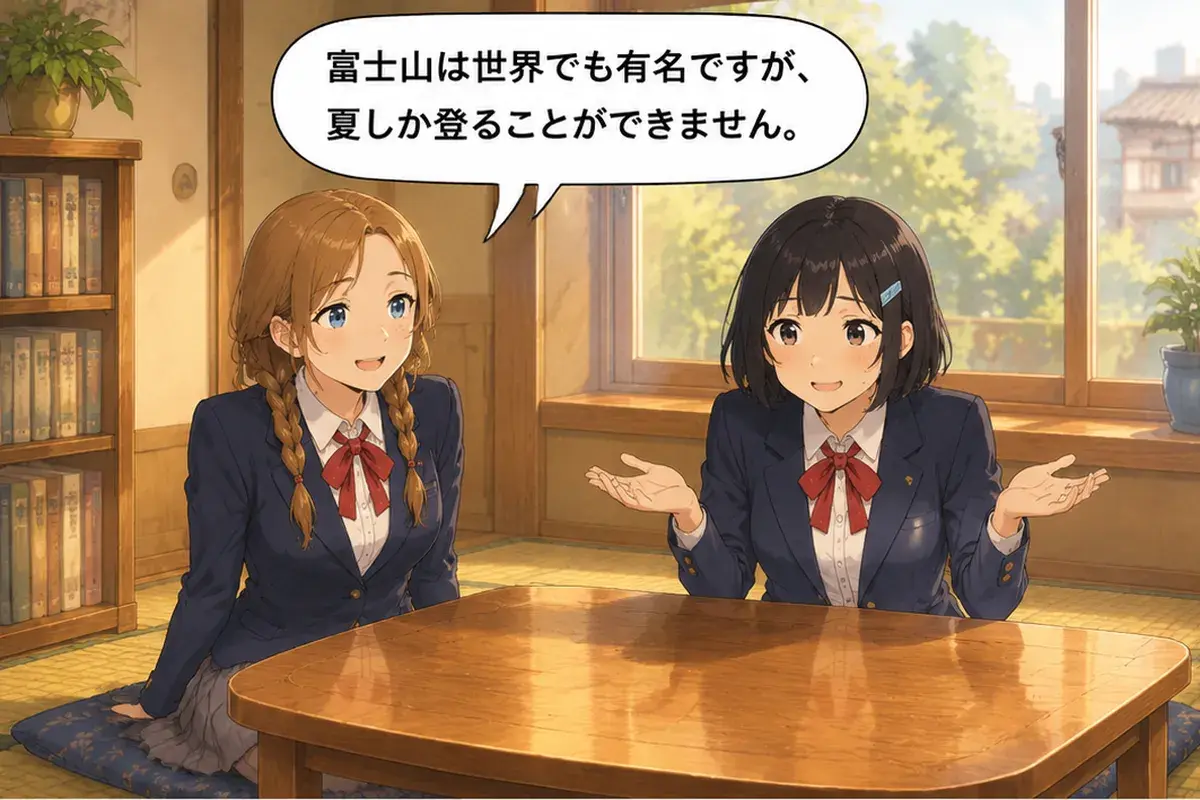
富士山は世界でも有名ですが、夏しか登ることができません。
Mount Fuji is famous all over the world, but you can only climb it in the summer.

- ソーニャ
でも今年はお盆の旅行がありますから、時間がありません。
But this year we have the Obon trip, so I don't have time.
- ソーニャ
ゆいと約束をしました。来年の夏に一緒に登ります。
I made a promise to Yui. Next summer we'll climb it together.
- ソーニャ
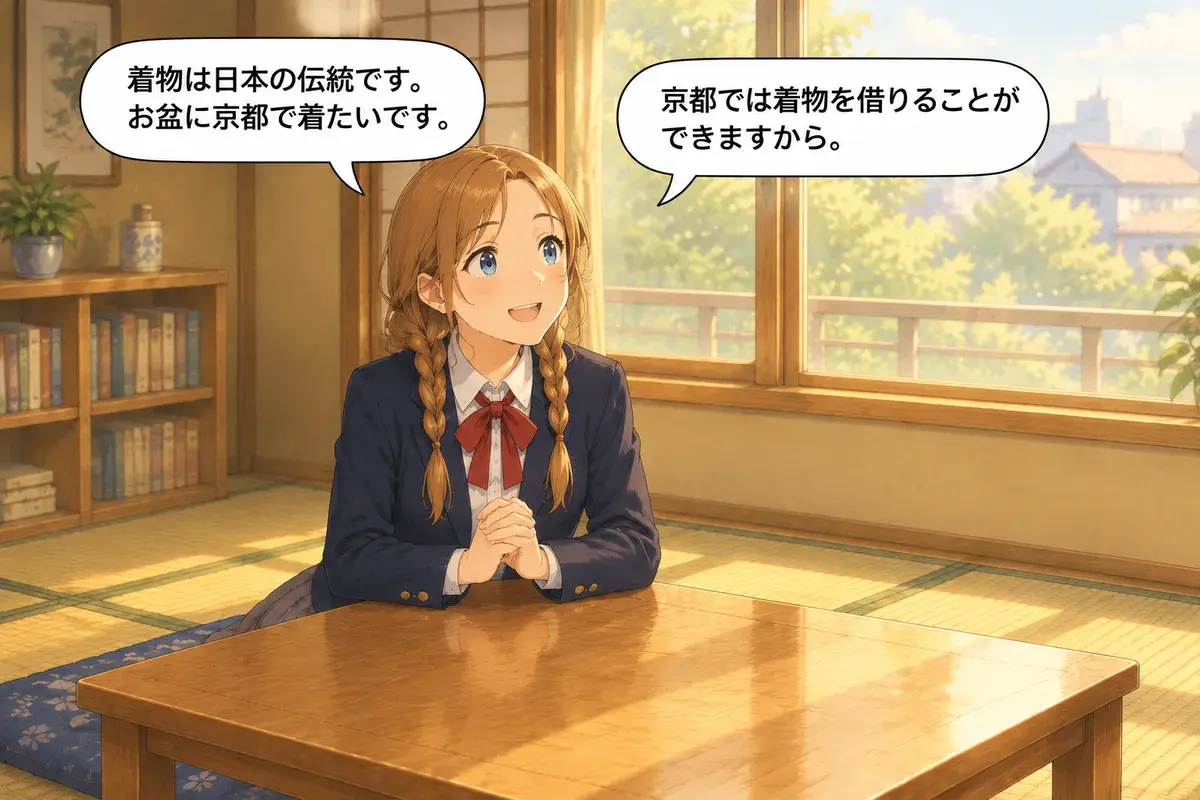
着物は日本の伝統です。お盆に京都で着たいです。
The kimono is a Japanese tradition. I want to wear one in Kyoto at Obon.
- ソーニャ
京都では着物を借りることができますから。
Because in Kyoto you can rent a kimono.
Grammar for this text
すし とか 刺身 とか 天ぷら を 食べた こと が あります— I've eaten sushi, sashimi, tempura, and things like that.とかgoes after each item. It's the casual "and stuff like that."食べた こと が ありますmeans "I've eaten it at some point."納豆 も 試しました— I tried natto too.試すmeans "to try something to see what it's like." For the food itself you say食べました;試しましたmeans "I decided to try something new."一度 しか 食べた こと が ありません が、 いい 経験 でした— I've only had it once, but it was a good experience.しかalways goes with a negative: "only once."経験means "experience." People sayいい 経験 でしたeven about something that didn't taste so good.ゆかた は 着た こと が あります が、着物 は まだ 着て いません— I've worn a yukata, but I haven't worn a kimono yet. Aゆかたis a light summer cotton kimono worn at festivals. A着物is the real silk one, and it's hard to put on. Two patterns side by side:着た こと が ありますmeans you have the experience;まだ 着て いませんmeans "not yet" (but I plan to). Hereがmeans "but."テレビ でも 見た こと が ありません— I've never seen it, even on TV.でもafter a noun means "even."ゆい は 日本人 です が— Yui is Japanese, but... In the middle of a sentence,がmeans "but."ゆい と 約束 を しました— I made a promise to Yui.約束means "promise, agreement";約束 を しますmeans "to make a plan or promise."世界 でも 有名 です が、 夏 しか 登る こと が できません— It's famous even around the world, but you can only climb it in the summer.でもafter a noun means "even."夏 しか … できませんmeans "only in summer": the Fuji trails are open from July to early September.京都 で は 着物 を 借りる こと が できます から— Because in Kyoto you can rent a kimono.借りるmeans "to rent, to borrow."〜こと が できますmeans "can" (unit 1).からat the end explains the previous line: "I want to wear one, because you can rent one there."今年 は お盆 の 旅行 が あります から、 時間 が ありません— This year we have the Obon trip, so I don't have time. The season is still open, but Sonya has no time: the Obon trip is coming up.
Words and grammar of the unit: Talk about your experiences.
Learn the words from the texts with flashcards
In the app, you can tap any word in a text to see its translation, forms and examples, and new words stick with flashcards. 15 minutes a day.
Start for freeEverything is open for free. No card needed to sign up.