
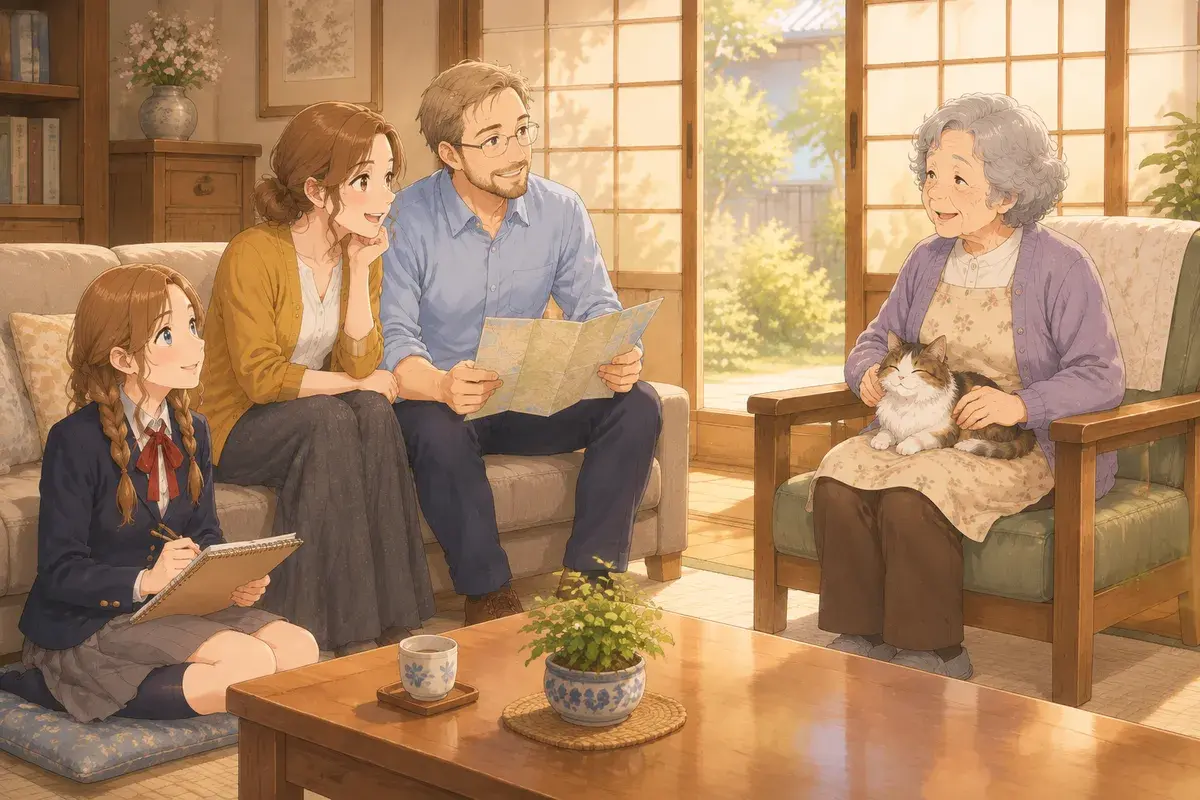
Japanese dialogue with translation · A2 · 16 lines
京都へ行ったことがありますか Have you ever been to Kyoto?
Comic · 11 panels
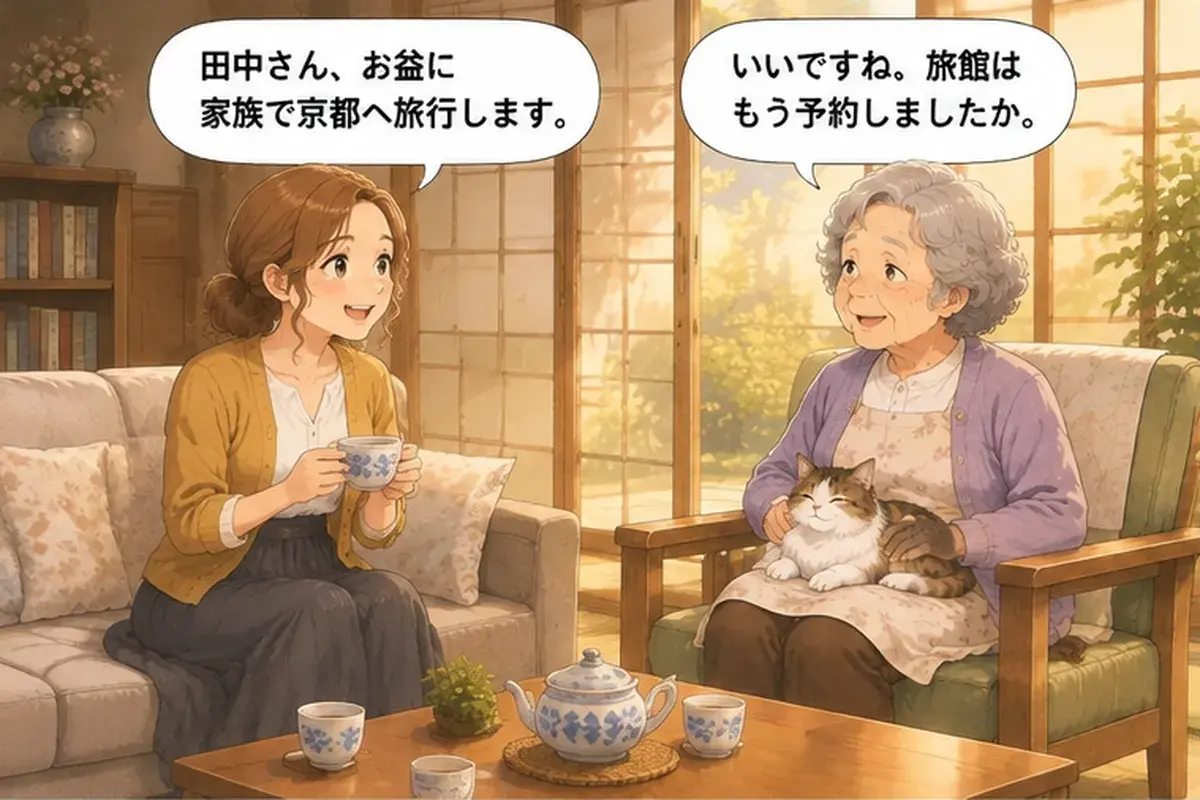
- アンナ
田中さん、お盆に家族で京都へ旅行します。
Tanaka-san, we're traveling to Kyoto with the whole family for Obon.
- 田中
いいですね。旅館はもう予約しましたか。
That sounds good. Have you booked the ryokan yet?
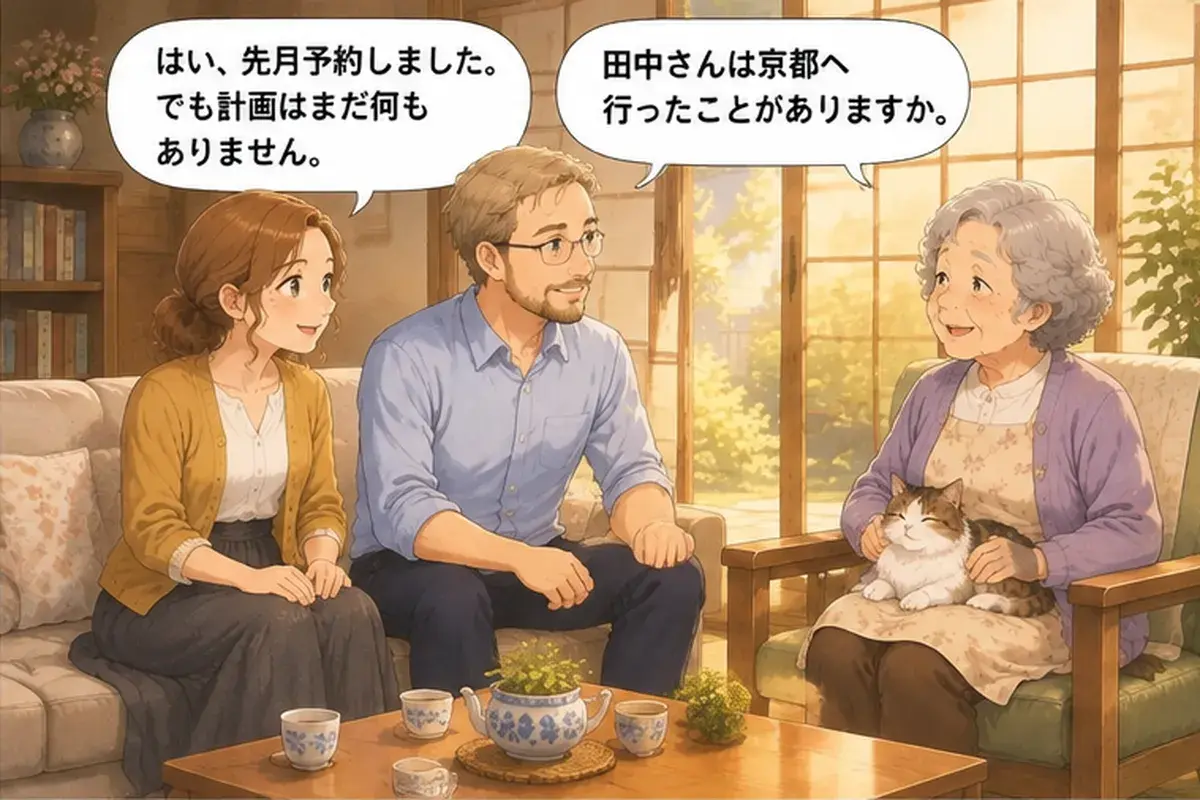
- アンナ
はい、先月予約しました。でも計画はまだ何もありません。
Yes, we booked it last month. But we don't have any plans yet.
- マルク
田中さんは京都へ行ったことがありますか。
Tanaka-san, have you ever been to Kyoto?
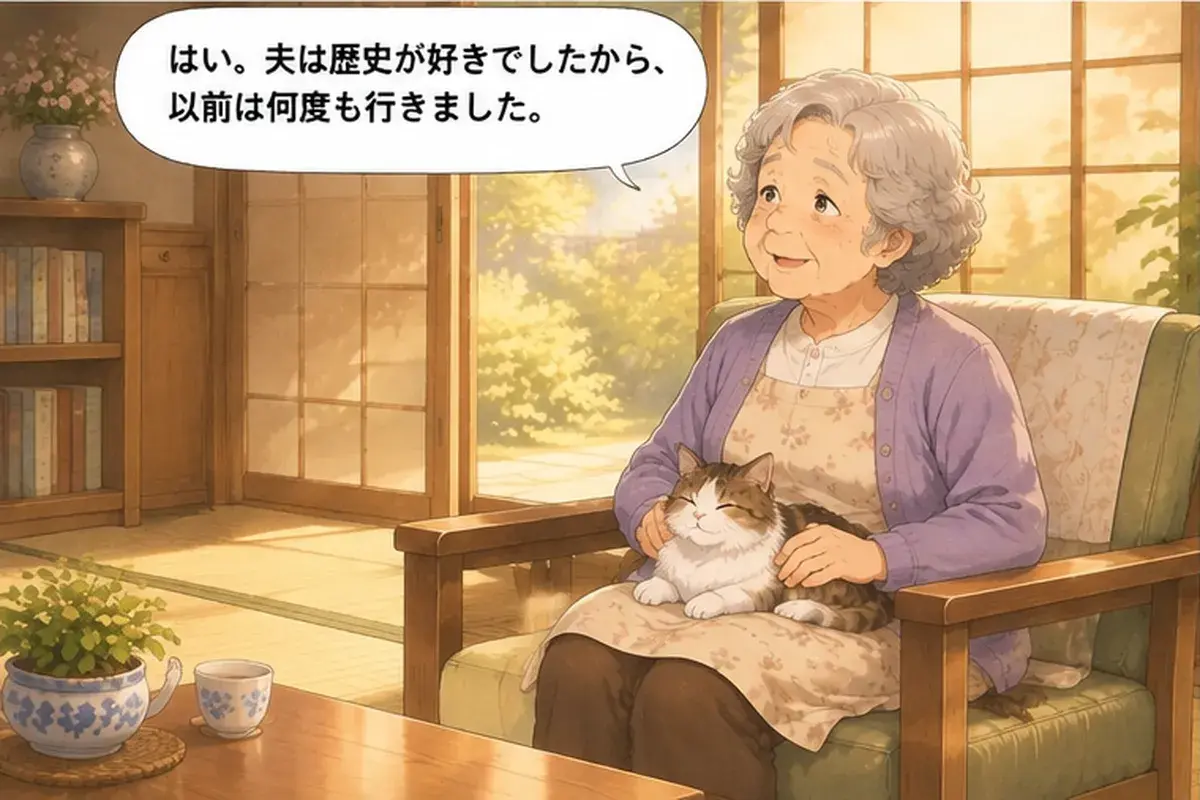
- 田中
はい。夫は歴史が好きでしたから、以前は何度も行きました。
Yes. My husband liked history, so I went many times before.
- 田中
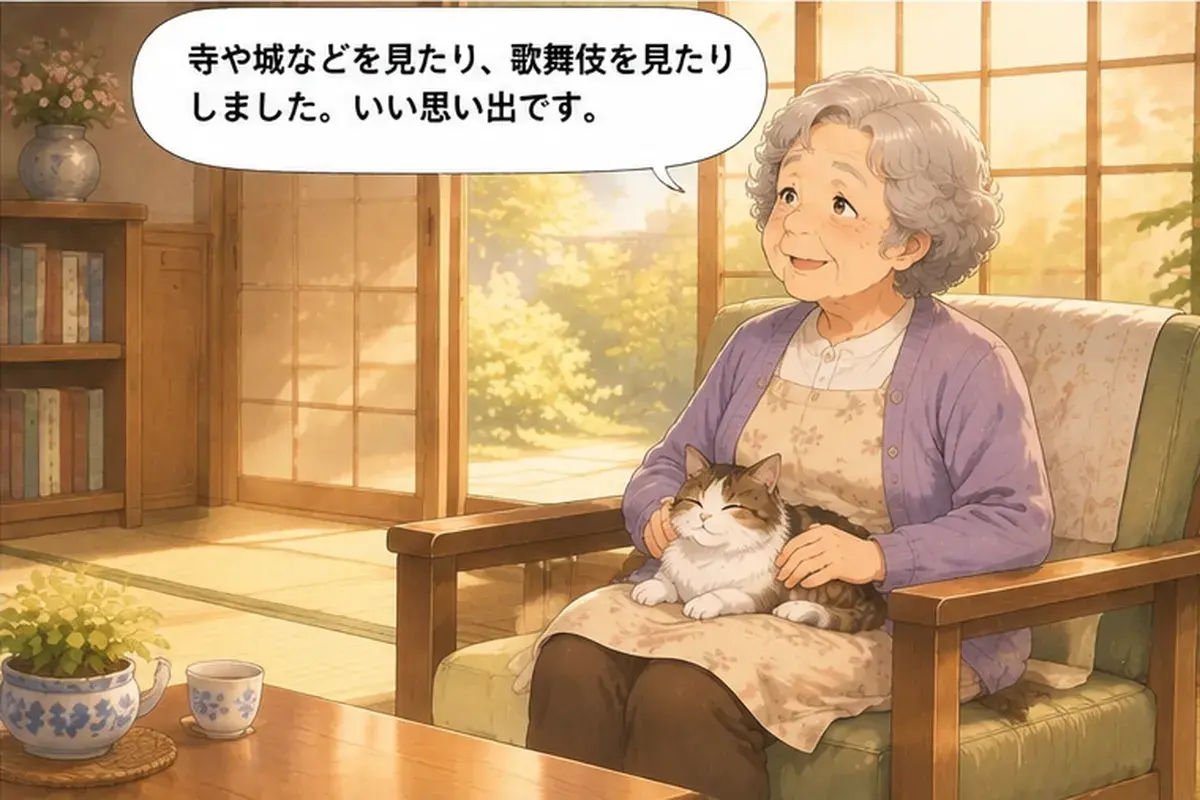
寺や城などを見たり、歌舞伎を見たりしました。いい思い出です。
We saw temples, castles, and so on, and watched kabuki. They're good memories.
- ソーニャ
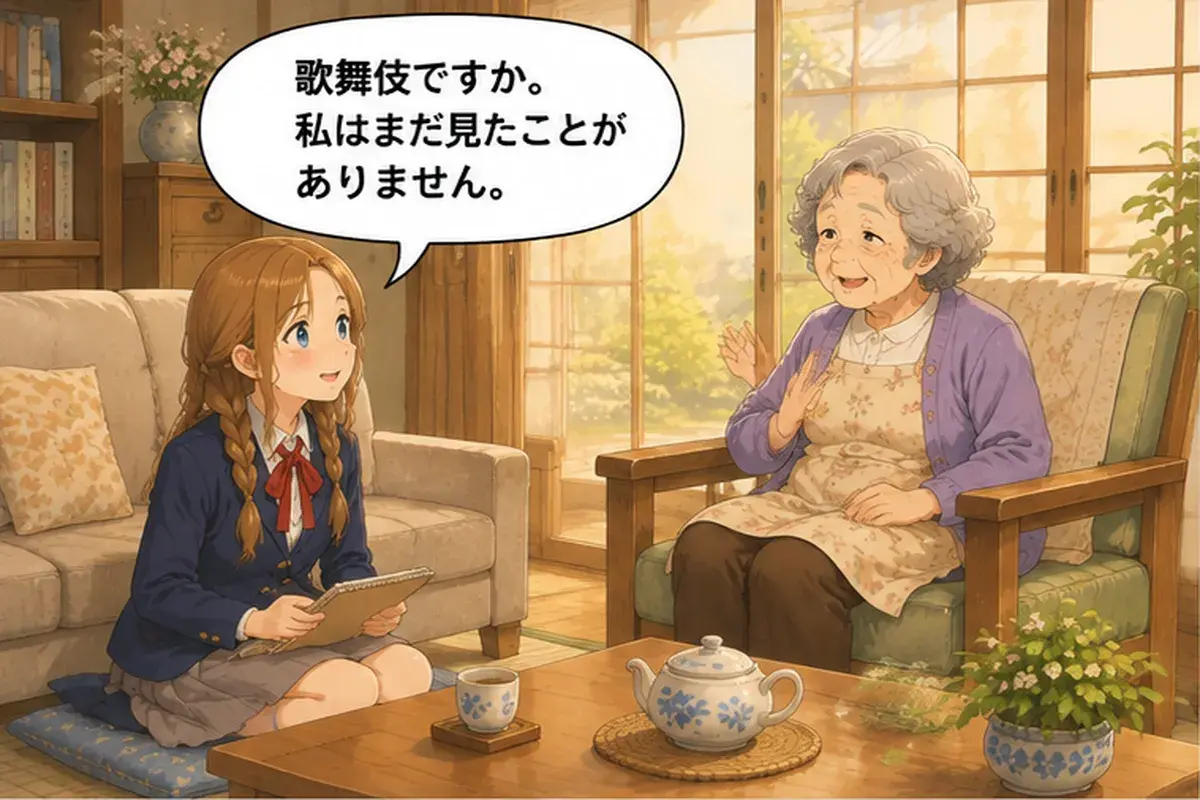
歌舞伎ですか。私はまだ見たことがありません。
Kabuki? I've still never seen it.
- 田中
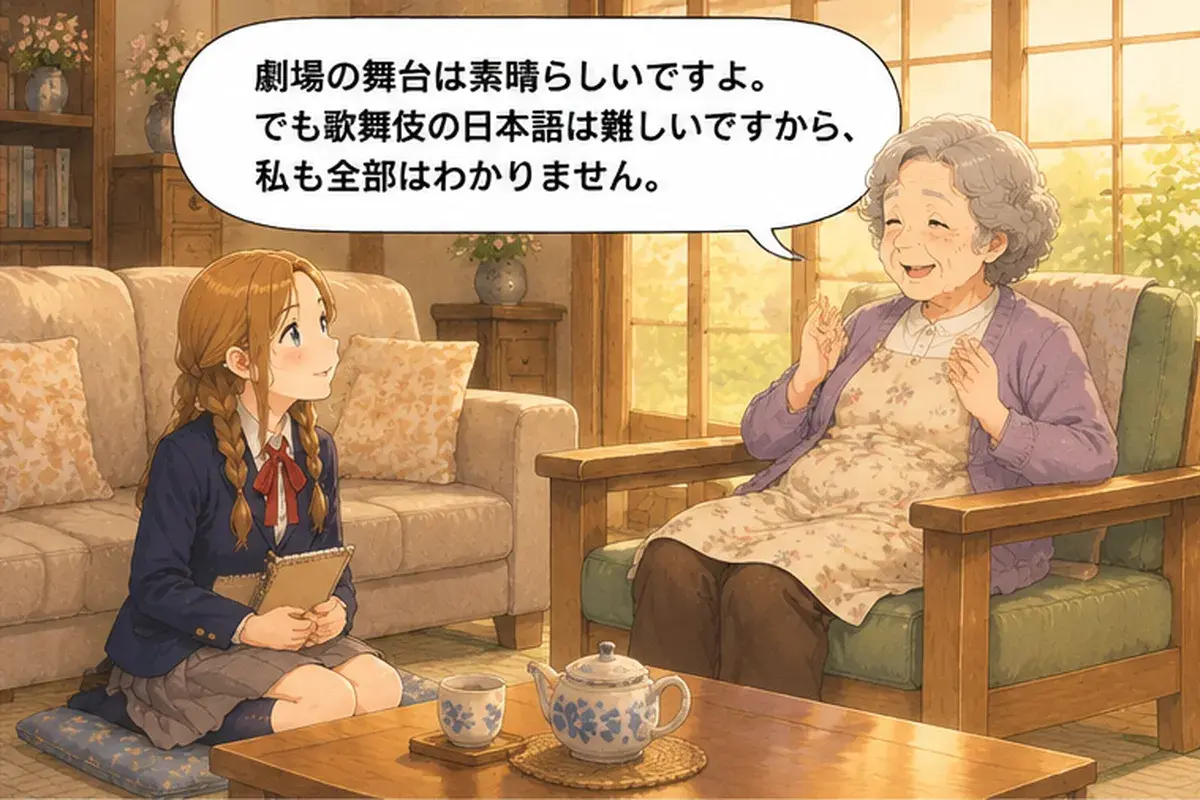
劇場の舞台は素晴らしいですよ。でも歌舞伎の日本語は難しいですから、私も全部はわかりません。
The stage at the theater is wonderful. But the Japanese in kabuki is difficult, so even I don't understand all of it.
- マルク
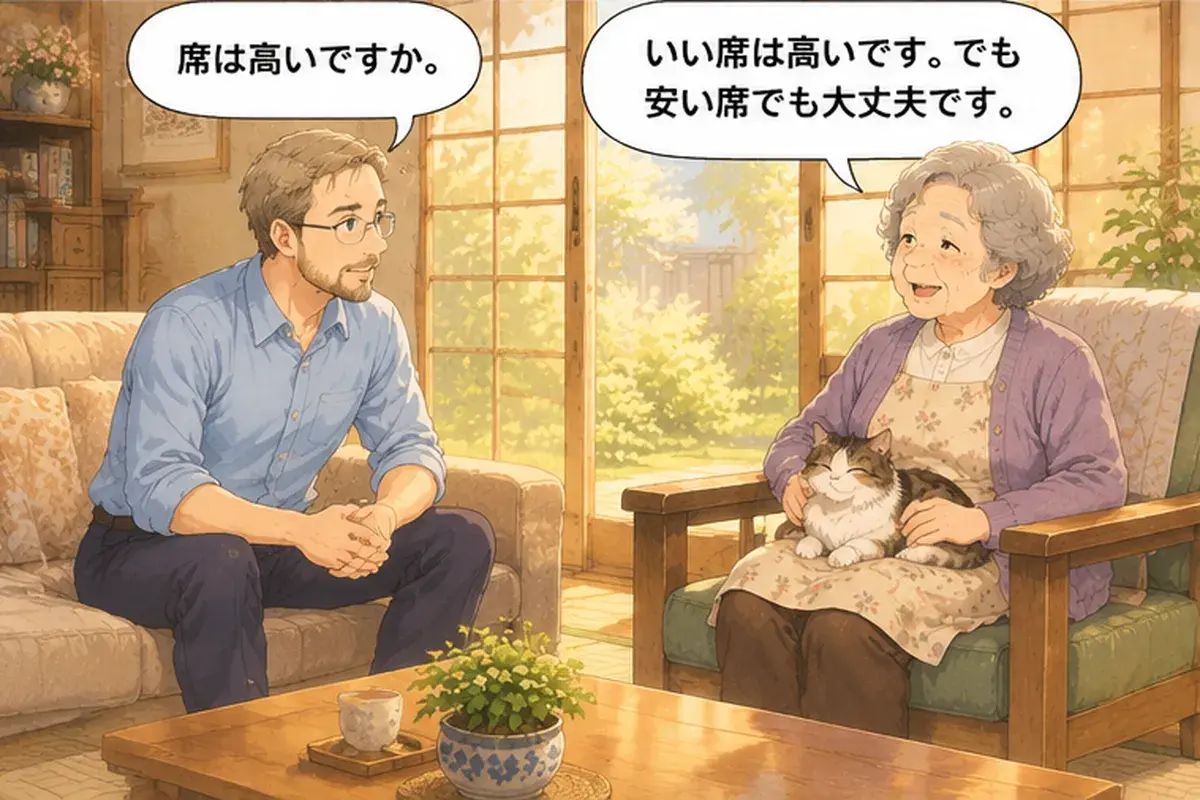
席は高いですか。
Are the seats expensive?
- 田中
いい席は高いです。でも安い席でも大丈夫です。
Good seats are expensive. But cheap seats are fine too.
- 田中
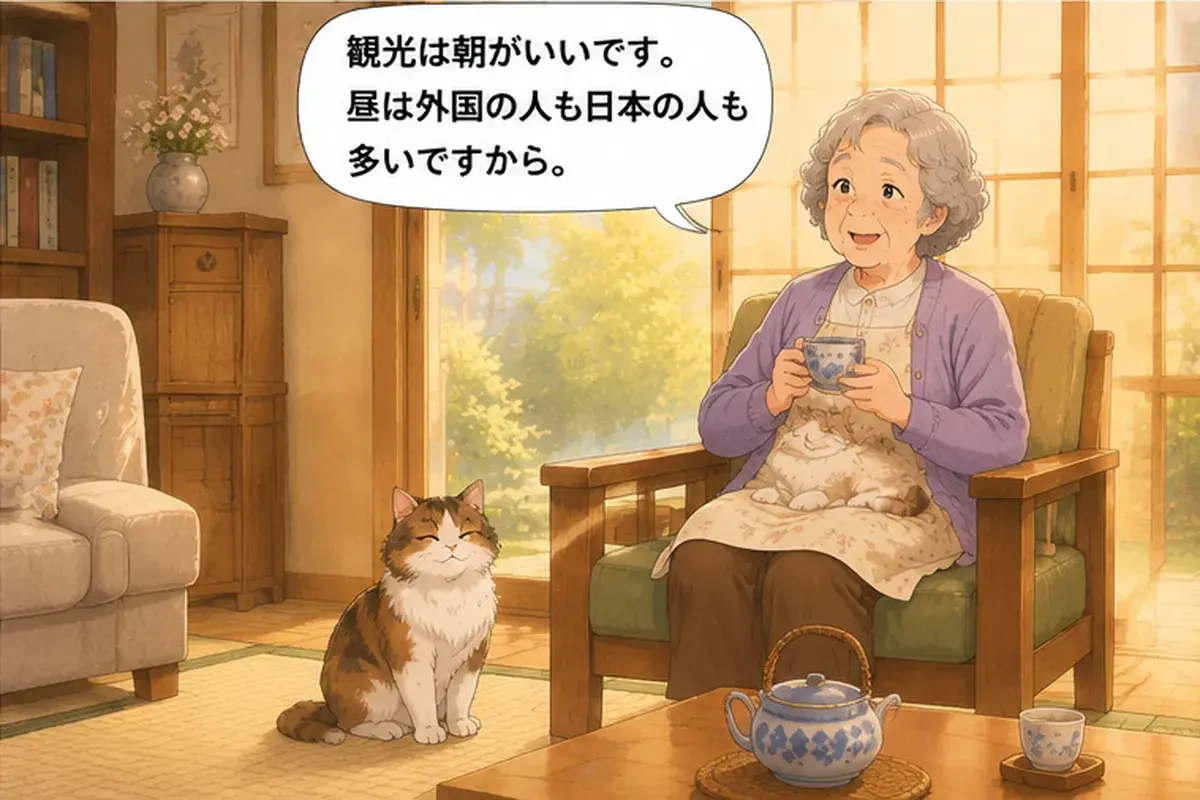
観光は朝がいいです。昼は外国の人も日本の人も多いですから。
Sightseeing is best in the morning, because in the middle of the day there are lots of people, both foreigners and Japanese.
- アンナ
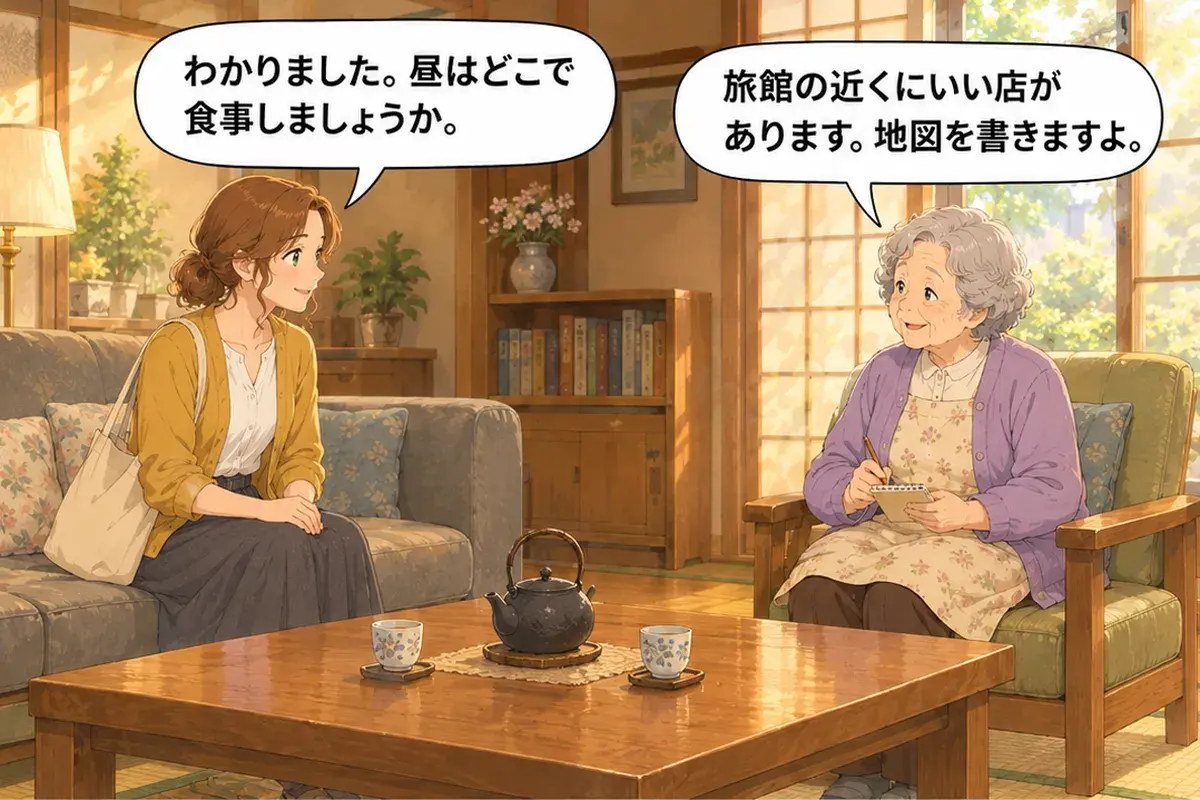
わかりました。昼はどこで食事しましょうか。
I see. Where shall we have a meal in the middle of the day?
- 田中
旅館の近くにいい店があります。地図を書きますよ。
There's a good restaurant near the ryokan. I'll draw you a map.
- マルク
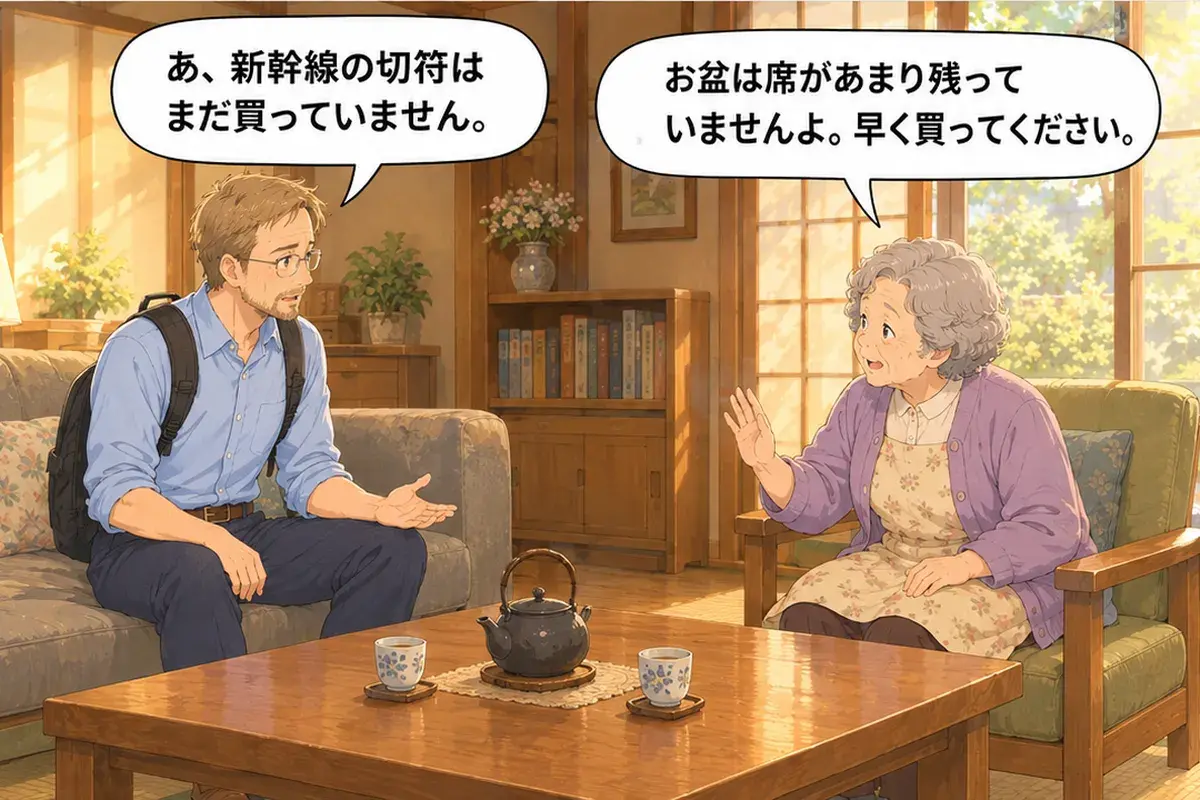
あ、新幹線の切符はまだ買っていません。
Oh, we haven't bought the bullet train tickets yet.
- 田中
お盆は席があまり残っていませんよ。早く買ってください。
There aren't many seats left for Obon. Please buy them soon.
- アンナ
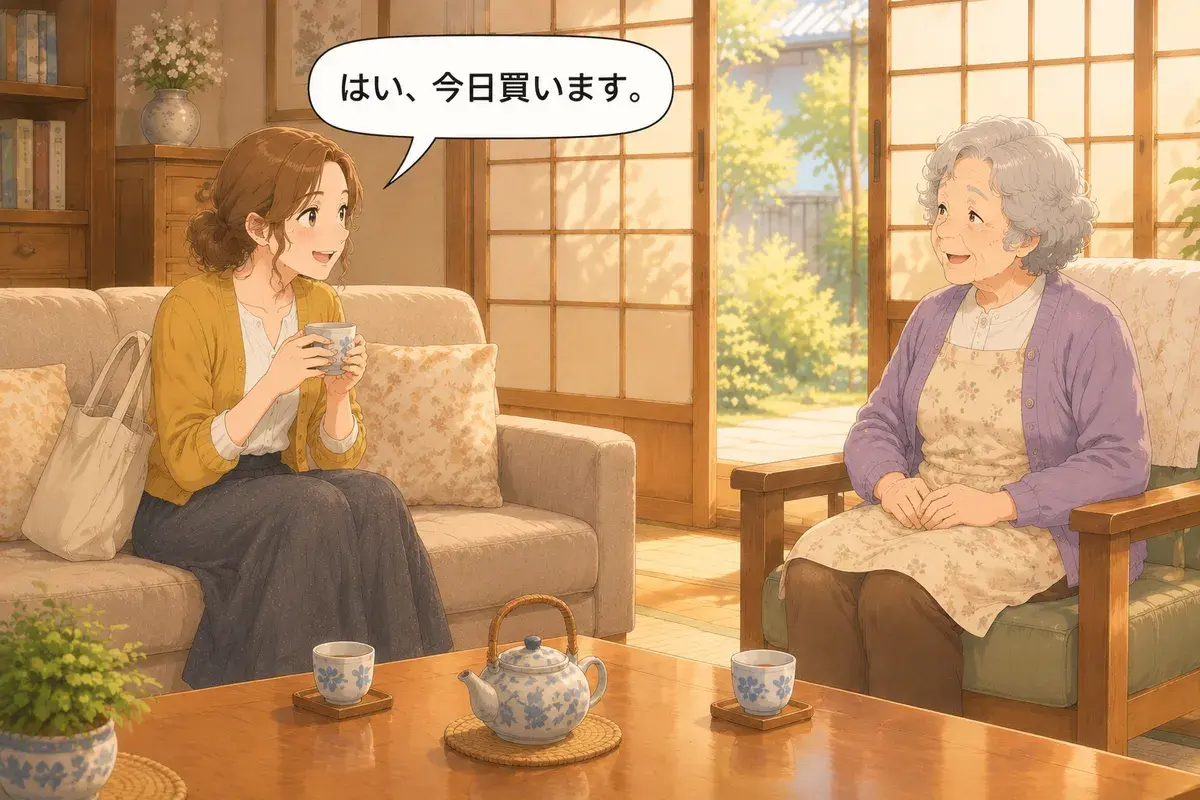
はい、今日買います。
Yes, we'll buy them today.
Grammar for this text
京都 へ 行った こと が あります か— Have you ever been to Kyoto? It asks about experience.行ったis the ta-form of行く.行くis an exception, just like its te-form行って. More in the unit grammar.以前 は 何度 も 行きました— I went many times before.何度means "how many times," and withもit means "many times."以前 はmeans "before (but not anymore)": Tanaka-san's husband has passed away.夫 は 歴史 が 好き でした から— because my husband liked history.寺 や 城 など を 見たり、 歌舞伎 を 見たり しました— We saw temples, castles, and so on, and watched kabuki. These are two examples out of many.やjoins the items andなどmeans "and so on."をcomes afterなど. The tense goes only at the end:しましたis the past.私 も 全部 は わかりません— Even I don't understand all of it.はafter全部makes the negative partial: "not all," not "nothing." Kabuki uses old-fashioned language, and even Japanese people don't understand all of it.安い 席 でも 大丈夫 です— Cheap seats are fine too.でもafter a noun means "even." It is not theでもat the start of a sentence ("but").新幹線 の 切符 は まだ 買って いません— We haven't bought the bullet train tickets yet.まだ 〜て いませんmeans "not yet" (but we plan to).買いませんでしたwould mean "we didn't buy them" (and that's that).席 が あまり 残って いません よ— There aren't many seats left.残るmeans "to remain";残って いませんmeans "almost none are left." At Obon the whole country travels to see family, and train tickets sell out early.
Words and grammar of the unit: Talk about your experiences.
Learn the words from the texts with flashcards
In the app, you can tap any word in a text to see its translation, forms and examples, and new words stick with flashcards. 15 minutes a day.
Start for freeEverything is open for free. No card needed to sign up.